Tag: Samsung TV

  • Conviva data shows 10% streaming growth worldwide in Q1

    Conviva data shows 10% streaming growth worldwide in Q1

    Mumbai: Global streaming grew 10 percent globally, including continued growth in mature markets like North America (5 percent) and Europe (9 percent), during the Q1 of 2022 as compared to 2021, according to the latest Conviva’s State of Streaming report, the continuous measurement analytics platform for streaming media.

    “Despite recent news of Netflix’s subscriber contraction, streaming continues to grow worldwide, encompassing an ever-growing stable of platforms offering unique and original content. In mature markets like the US and Europe, viewers are upscreening from small devices to Smart TVs, setting the foundation for streaming to overtake linear TV on the big screen” said Conviva president, CEO Keith Zubchevich.

    Conviva’s Q1 2022 report found big screens (which includes connected TVs, smart TVs and gaming consoles) continue to be the streaming device of choice, responsible for 77 percent of all streamed minutes globally in Q1 2022. Within the big screen category, smart TV viewing time grew by 34 percent while desktops and gaming consoles declined by 15 percent versus Q1 2021. Connected TV device viewing slightly declined again this quarter, down 1 percent YOY. Within the connected TV category, Roku maintained the largest share of viewing time (31 percent) with Amazon Fire coming in second at 16 percent.

    When it came to actual minutes streamed, Android TV was the big leader in growth across all the top big screens—up 78 percent. In yet another win for smart TVs, LG TV, Samsung TV, and Vizio TV all also had double-digit growth, up about 20 percent.

    Quality Improves with One Exception: Globally, bitrate/picture quality (up 17.3 percent), buffering (down nearly 1 percent) and video start failures (down 17.6 percent) all improved significantly. Video start times were the one negative mark in terms of quality, as the wait for videos to start increased in every region, up 30 percent globally. Viewers in Africa waited the longest (8 seconds) while Europe had the fastest start time, waiting just four seconds on average.

    In Q4 2021, the streaming industry saw advertising delays and increased buffering, but streaming advertising bounced back nicely in Q1 2022. Ad impressions were up 18 percent and ad attempts were up 14 percent, thanks in part to big, live sporting events like the Super Bowl, March Madness and the Winter Olympics.

    TikTok Reigns for Sports Leagues: Streaming on social platforms continues to be a key way for sports leagues to engage fans, and according to Conviva, TikTok was the only platform to grow its streaming audience share for every sports league measured. Bundesliga, Serie A, and the Premier League increased their audience share for streaming videos on TikTok the most at 6 percent each with the NFL coming right behind them with 4 percent growth on TikTok YOY. In fact, both Superbowl teams – the Rams and the Bengals – gained over 100k TikTok followers in a single day (Feb 13-14).

    Methodology: Conviva’s data is primarily collected using proprietary sensor technology with a global footprint of more than 500 million unique viewers watching 200 billion streams per year across nearly four billion applications streaming on devices. Embedded directly within streaming video applications, the sensor measures across content and ads to analyze nearly three trillion real-time transactions per day for its customers. In the State of Streaming report, the year-over-year data from Q1 2022 as compared to Q1 2021 was normalized based on Conviva’s customer base. The social media data consists of data from over 2800 accounts, over 1.8 million posts, and over 10 billion engagements across Facebook, Instagram, Twitter, and YouTube in Q1 2022. Social data for professional sports leagues was collected from individual leaderboard lists for each sports league that totaled 262 individual team accounts and tallied over five billion cross-platform engagements in Q1 2022.

  • Programmatic is enabling the transition of OTTs to open internet: Tejinder Gill

    Programmatic is enabling the transition of OTTs to open internet: Tejinder Gill

    Global technology platform The Trade Desk helps marketers advertise on the ‘open internet’ i.e., outside the ecosystems of Google and Facebook. The Trade Desk can deliver campaigns across a multitude of devices such as computers, mobile devices, OTT, connected TV (CTV) to reach quality audiences at scale via video, audio, display and native ads.

    Founded in November 2009, the company launched in India almost a year ago, setting up their leadership teams in Delhi and Bangalore. It immediately integrated with leading OTT players including Disney+ Hotstar, Zee5, SonyLIV, MX Player and Voot and publishers to enable programmatically-driven advertising and bring transparency to the purchase of online inventory.

    The Trade Desk is only a demand-side platform, meaning it optimises and solves for advertisers only. It helps them understand the break-up of their media investments at scale in a complicated supply-side ecosystem that has up to seven to eight partners. Its most important USP (unique selling point) is that it offers marketers more choices to advertise outside the established walled garden ecosystems.

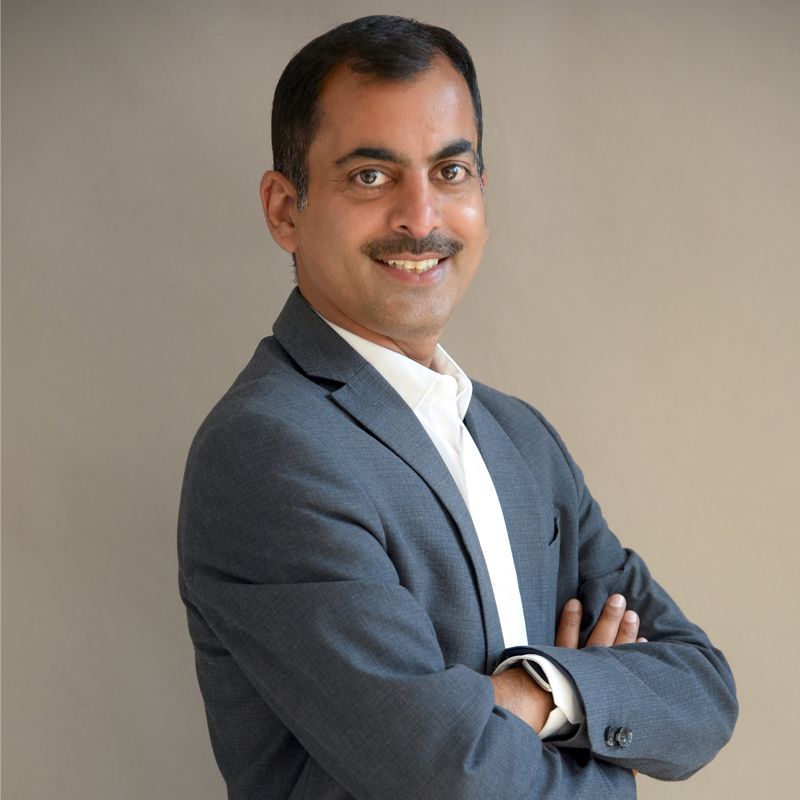
    Helming The Trade Desk’s business in India is Tejinder Gill who is responsible for the business growth strategy, executing the company’s vision and long-term goals and leading the product development. He is spearheading the expansion of programmatic across digital, audio, video and connected TV for Trade Desk. Gill has more than 17 years of experience, starting his career in 2008 with Yahoo, he was later part of LinkedIn’s leadership team for six years and Truecaller’s executive management team for nearly five years.

    In conversation with IndianTelevision.com, The Trade Desk India general manager Tejinder Gill spoke about the challenge that the company is trying to solve, online advertising trends, growth of advertising video-on-demand (AVOD), moving away from third-party identifiers and more.

    Edited excerpts:

    On the challenges addressed by The Trade Desk

    We are all about open internet which means anything outside the walled gardens. The biggest keyword missing in India, when it comes to digital media buying, is choice. Marketers want to get a certain reach and scale that you can only get within the walled gardens. So, the vision we saw was how to build an open internet advertising platform at scale.

    Let’s say, $100 is spent on advertising. Almost $53 goes to Google, $28 goes to Facebook and the remaining $19 is shared among the rest of the players which includes any player other than these two. The biggest reason that marketers are looking for a third choice is that these platforms make their own rules. They withhold data and the inability to measure performance in these walled gardens has led to a lot of frustration among marketers.

    I have observed that 70 per cent of the time spent by a user is on the open internet while 70 per cent of marketer’s budgets are spent on walled gardens. This is disproportionate. The biggest challenge for me is to educate marketers and partners about the benefit of the open internet and how we can solve for reach and scale.

    Think about the open internet as a bunch of different islands and walled gardens as continents. However big you are, you will always remain an island. Our platform makes these islands come together, and talk to each other so that everything is more accessible. The future will see all publishers come under the open internet umbrella. And programmatic is enabling this transition.

    Publishers still have direct sales teams to sell their premium inventory and sponsorships but the bulk of their inventory is now available on programmatic. That means all their pipes are connected to us. We’re building a marketplace where advertisers can pick and choose any inventory they want. They can use any measurement tool or any data partner that they want.  Individually, you can never win the game of scale, but together the open internet is a very strong value proposition for marketers to move away from walled gardens.

    When I joined the company 16 months ago, and the next month we complete a year of launch in India, programmatic talent was a big issue. We addressed this with Trade Desk-Edge Academy certifications, and interestingly, 40 per cent of members who have taken the certification in Asia-Pacific (APAC) are from India. I have built a diverse leadership team across Delhi and Bangalore since then.

    We’ve done strategic partnerships with publishers, OTTs and connected TV manufacturers to be the platform of choice for marketers. This includes partnerships with Samsung TV, OTT platforms such as Disney+ Hotstar, Zee5, SonyLIV, Voot and MX Player and audio streaming services such as Gaana, JioSaavn, and Spotify.

    On the rise of programmatic video advertising

    The OTT consumer base has gone up in the last two years. There are new players entering the global and local markets creating more competition. While linear TV has been there for many years, consumer trends are changing. Some consumers are opting for cutting the chord as a result of the adoption of OTT platforms. OTT offers a seamless viewing experience across devices making it the preferred platform for consumers and building an attractive reach and scale for marketers.

    Online curated content platforms (OCCs) are offering premium high-quality content. An OTT platform attracts a large and diverse audience. The biggest difference between a user-generated content platform and an OCC platform is brand safety. Since curated content will be safer and more positive in nature, brands will want to invest in it. It also helps that you can put a data layer on top of it that delivers better performance, measurement and offers real-time insights to marketers.

    The biggest difference between linear and OTT platforms is the application of data intelligence. Linear TV has always relied on third party intelligence. The impact of an OTT campaign is measurable and you can take the insights and apply them to any other campaign.

    It is also more controlled. For example, suppose you want to target a consumer only three times a day then you can apply a frequency cap. If you want to target him once on Disney+ Hotstar, Voot and SonyLIV then you can adjust your parameters accordingly. This translates to a better consumer experience.

    The one thing that marketers love about programmatic is optimising their media dollars and talking to the same user across the media funnel. This means that whether I’m watching TV, mobile, laptop, OTT or audio, the same message will be played in a different format across.

    A study we did last year in partnership with YouGov found that 55 per cent of Indians prefer to see an ad versus paying for content. This indicates that the future business model for OTT platforms will be one that will be supported by subscription and advertising.

    Our founder Jeff Green predicted three years ago that Netflix will embrace advertising. Today, international players such as Disney+ and Netflix are planning to launch ad-supported models.

    On moving away from third-party cookies

    Third-party cookies are a three-decade-old technology and a shrinking part of the internet. Now, we have to think of a more sophisticated solution and we’ve created our own identifier called UnifiedID 2.0. It is a string of numbers and letters that cannot be reverse engineered to reveal the identity of the user, say for example his email ID.

    If third-party cookies go away, what are the scenarios that marketers arrive at? Walled gardens get more control over the internet. Paywalls keep consumers from accessing content. Consumers having to login multiple times to access the internet.

    That’s why the future will have multiple identity solutions that will be interoperable, meaning that these identity solutions will work across the ecosystem and will need to talk to each other. Our identity solution has got a lot of adoption in the Western market and we’re hoping APAC will start running it soon.

    On the trends in programmatic video advertising

    There are a few trends that I see.

    Connected TV (CTV) will drive the next phase of growth. We expect CTV to hit 40 million devices in the country in the next two years. This means that budgets will start moving from linear TV to connected TV.

    Marketers will start asking everyone about more real-time business outcomes. Marketers will move away from metrics such as CPA (cost-per-action), CPC (cost-per-click), CPM (cost-per-mile) and start measuring in more detail. For example, in-store footfall.

    A cookie-less future is good. It is happening for the benefit of the entire industry. Advertising will be able to target with more precision enabling brands to present different ad opportunities at different points in time. I think this is a new approach for the future.

    Five years ago, when we launched programmatic the idea was to automate the entire paperwork also known as programmatic guarantee. That’s not the real advantage of programmatic. Programmatic is all about decisioning i.e., it is about choices. If a marketer wants to buy audiences who may reside on OTT, mobile, CTV then he can find them across channels and devices. That’s the biggest trend that will drive programmatic in India over the next two years.

    Decisioning is different from upfront media buying. In upfront media buying, an advertiser blocked the front page of a Times of India or a 15 sec slot on a channel. The advertiser would pay upfront and get the ad displayed.

    In a real-time environment, the advertiser wants more control. He wants to pick up the right audience, at the right time and at the right price. The advertiser can control whether that ad should reach 1000 or one million consumers and pay for the reach that he wants. The journey of the ad needs to be mapped. That’s why I say decisioning will take precedence over the existing programmatic guarantee.

  • Samsung’s free video service TV Plus launches in India

    Samsung’s free video service TV Plus launches in India

    KOLKATA: India’s online video ecosystem has seen exponential growth in the last couple of years, especially after the pandemic. All the tech, media, and electronic giants are eying to capitalise on the booming OTT space. 

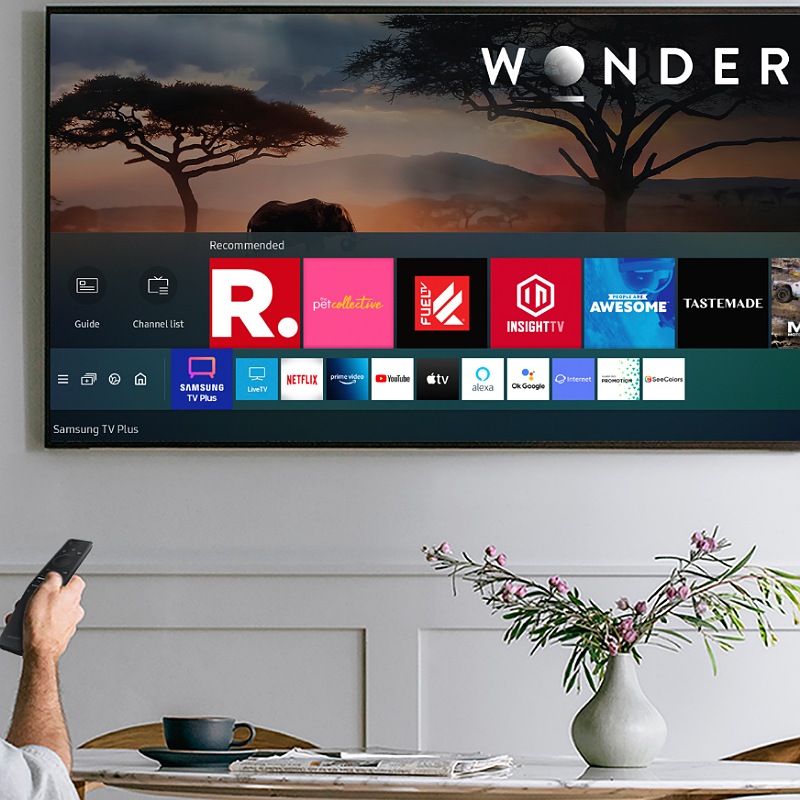
    Samsung is the latest addition to the list, with the launch of Samsung TV Plus, a service which offers its smart TV users free TV content, as well as ad-supported select live channels and on-demand videos, with no additional device such as a set top box. To access the service, all that the consumers will need is a Samsung Smart TV (2017 model onwards) and an internet connection.

    With the introduction of TV Plus, consumers will get instant access to exciting content across genres such as news, lifestyle, technology, gaming and science, sports and outdoors, music, movies and bingeable shows, without any subscription.

    TV Plus will also be available on most Samsung Galaxy smartphones and tablet devices with O OS or higher software version. Services for Galaxy smartphones are expected in April 2021. The TV Plus app can be downloaded from both the Samsung Galaxy Store and Google Play Store.

    The innovative service is being introduced keeping in mind the change in consumer behaviour during the pandemic led lockdown period, when consumers, especially millennials and Gen Z, began to explore their televisions more and more for new and exciting content. In India, Samsung TV Plus will immediately be live across all Smart TV models from 2017 to 2021 and users will be able to access 27 global and local channels. More partners will be on-boarded soon to make the service more robust.

    “Over the last one year, consumers have been spending more time at home. Their television sets and smartphones have become the centers of their lives, for both entertainment as well as information. We also noticed that consumers now immensely value great media content, the reason why we chose to introduce Samsung TV Plus in India. Over the next few months, we expect to scale TV Plus to add more channels and content,” Samsung India services director Reshma Prasad Virmani said.

    Samsung is India’s top brand of televisions for over a decade and offers a range of smart TVs, ranging from Rs 18,900 to Rs 15,79,900.

    With the launch in India, Samsung TV Plus is now available in 14 countries including the US, Canada, Korea, Switzerland, Germany, Austria, UK, Italy, France, Spain, Australia, Brazil and Mexico.

  • Contract hires senior CDs to beef up Tata Docomo team

    Contract hires senior CDs to beef up Tata Docomo team

    MUMBAI: Contract Advertising has brought on board Abhishek Chaswal and Rupesh Sahay as VP and senior creative directors on the Tata Docomo business. Both Chaswal and Sahay will be reporting to Contract Delhi executive creative director Mayur Hola.


     “Rupesh and Abhishek together bring a unique blend to Contract. Chaswal has his own special blend of madness and indeed an unfettered, entrepreneurial spirit. His approach to communication is unique and media agnostic. Rupesh on the other hand is a multi-talented and supremely gifted individual. A national award winning documentary film maker, he is also a brilliant art director and one of the most responsible leaders I have come across. I am sure that together they will make Contract proud and enjoy their time here as much as Contract will enjoy having them,” said Hola.


    Chaswal, who joins in from Cheil was responsible for the work on Delhi Daredevils, Halonix and the Samsung TV range. With an experience of close to 14 years, Chaswal started his career in a direct marketing agency as a copywriter. Eventually he moved into main stream advertising where he worked with agencies such as Everest, Euro RSCG (now, Havas) and Leo Burnett. During the course of his career he has worked across a broad spectrum of brands such as PSI, Aaj Tak, Mortein, MakeMyTrip, Max New York Life, Voltas, Minute Maid, The Indian Express, Bilt and Tetra Pak to name a few. A well awarded creative, Chaswal’s work has received recognition in national and international advertising award shows like Goafest, New York Festivals, Adfest and The Work.


     “I join Contract with the hunger to realise brave ideas that work for the brand as well as for the audience and the agency; and with Ashish Chakravarty leading the creative, I am sure the journey to the sweet spot will be memorable,” said Chaswal.


    It’s a homecoming of sorts for Sahay for whom this is a second stint at Contract.  Sahay joins in from DDB Mudra where he was the senior CD. A graduate of the Banaras Hindu University, he has worked at McCann Erickson, Rediffusion-Y&R, Saatchi & Saatchi & RK Swamy BBDO during the course of his career. His brand roster includes Coca-Cola, Reebok, Aircel, Videocon, General Motors, Nescafe, and Domino’s Pizza to name a few. A very talented and highly awarded creative, Rupesh has won the 61st National Film Award for his short film ‘The Lost Behrupiya’.


     “This is my second stint at Contract and this place has always been very energetic. I am really excited to join good talented bunch of people. For me joining Contract is joining strong creative people such as Ashish Chakravarty, Vineet Mahajan and Mayur Hola,” said Sahay.


    Contract Advertising won the creative mandate for Tata Docomo in April. Post which the agency has made some very senior level hires to service the business which includes the hiring of Shruti Verma, who came on board last month as senior VP to head the Tata Docomo business.