Tag: Samsung Electronics

  • Samsung working on tech breakthrough for 27-inch QD-Oled monitors for esports

    Samsung working on tech breakthrough for 27-inch QD-Oled monitors for esports

    MUMBAI: For gaming enthusiasts, this could be a godsend. Samsung Electronics’ offshoot Samsung Display is currently working on a new Oled display monitor which would have a record refresh rate, according to reports appearing in south Korean media. The size of the panel: 27 inches. The resolution: QHD/1440p or 2560X1440 pixels. 

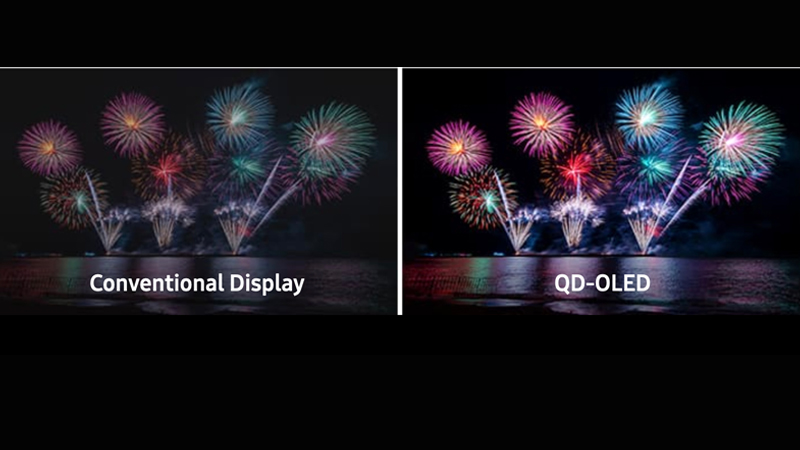
    Samsung Display combined quantum dot and Oled technologies, and achieved a 500Hz refresh rate for the first time ever in an Oled display. The display is in the final stage of development as Samsung seeks potential partners in the gaming monitor business. Hope is that commercial manufacture should begin soon and the new panel should arrive in the market during H1 2025.  Some say the launch could happen at CES in Las Vegas. The product is targeted at the esports market. 

    QD-Oled panels reportedly offer superior color vibrancy, deeper contrast, and improved performance compared to traditional LCDs. This aligns with a broader trend among display manufacturers like LG Display and Samsung Display, which  compete to push the boundaries of high-refresh-rate Oled  monitors in various sizes and resolutions. Samsung’s  achievement has outpaced the displays of both Asus and LG which have a maximum refresh rate of 480Hz.

    Research firms have pointed out that while  annual global monitor growth is expected to take place at one per cent between now and 2028, Oled displays are expected to grow at 34 per cent per annum on an average in the same period.

    According to online panel analyst, FlatPanelsHD , 2025 could come up with a new trend for 27-inch QD-Oled and WOled monitors.Chinese firm  Light Soul is burning the midnight oil and is planning to release a 27-inch QD-Oled monitor with a 4k resolution, a 240 Hz refresh rate and 1000 nits of peak brightness. 

    On the larger screen front, LG is likely to come out with a 45 inch WOled panel with a resolution greater than the existing 3440×1440 pixel resolution. Expectations are that it could touch  5120×2160 pixels. This could spark off another trend for monitor manufacturers and developers.

  • Global TV shipments rise for second quarter in a row in Q3 2024

    Global TV shipments rise for second quarter in a row in Q3 2024

    MUMBAI: This is one piece of research that deserves closer attention. Global market research firm Counterpoint Research data around a week ago showed that TV shipments have maintained their buoyancy in Q3 2024. The growth year on year for the period was at 11 per cent to  62 million units, which was the second quarter in succession that the TV market showed a rise. Research data also showed that growth was distributed even across all regions, except Japan. East Europe showed the maximum jump at 24 per cent. North America and western Europe also showed healthy growth. 


    Global TV shipments

    Model wise, premium TV sets consisting of OLED, QD LCD, and MiniLED LCD shipments rose 51 per cent year on year, which was an all-time high. A lot of that growth came courtesy the Chinese brands Hisense and TCL, which more than doubled their shipments year on year, climbing to second and third place. Samsung of  course led this segment at 30 per cent, but it lost 13 per centage points of market share to the Chinese brands. Because of the Chinese aggression, LG was pushed to the fourth spot. 

    The premium TV segment saw shipments of MiniLED LCD TVs rising 102 per cent year on year, racing past OLEDs which accelerated by a mere 13 per cent year on year. QD LCD TVs also climbed past four million units –  50 per cent growth year on year.


    Premium TV shipments

    Overall for TV shipments, Samsung Electronics retained its top slot with a 15 per cent market share, but that  had slipped marginally compared to the previous quarter.  HiSense sprinted ahead of TCL by increasing its shipments by 19 per cent. LG was at the fourth spot with a close to 10 per cent share, by shipping out mor  seven per cent more TV sets.

    Counterpoint Research researcher Lim Soo-jung said, “In the TV market where replacement demand is the main issue, the fact that there has been year on year growth for two consecutive quarters can be interpreted as a shortened replacement cycle,” adding, “As TV companies continue to release new high-definition, large-screen models, it stimulates consumer purchases for users who want to enjoy videos on a larger screen at home.”


  • Atul Jain takes helm as MD & CEO of Aptech Ltd.

    Atul Jain takes helm as MD & CEO of Aptech Ltd.

    Mumbai: Aptech Ltd. appoints Atul Jain as its new managing director & chief executive officer. Jain will drive Aptech’s strategic vision, focusing on sustainable growth and innovation to strengthen the brand’s legacy in an evolving market.

    As MD & CEO, Jain will collaborate with the board to align Aptech’s operations with its core mission and values, emphasising integrity, creativity, and industry leadership. His efforts will center on shaping the company’s brand and outreach strategies to expand Aptech’s impact in vocational training.

    “I am deeply honoured and grateful to the Board of Directors at Aptech Ltd. for this incredible opportunity. Leading Aptech at this critical juncture is both a privilege and a great responsibility. My focus will be on empowering our teams, fostering collaboration, and leading the charge towards operational excellence. Together, we will continue to innovate, adapt, and deliver exceptional value to all our stakeholders, ensuring Aptech not only meets its goals but defines the future of the industry.” Jain stated.

    Jain, an IIT-Delhi and IIM-Calcutta alumnus, brings over three decades of experience across sales, marketing, operations, and strategy. Before Aptech, he held leadership roles at Orient Electric Ltd. and Samsung Electronics in India and Korea. His industry influence includes a tenure as chairman of CII’s Indian Fan Manufacturers Association and involvement with CEAMA and Delhi Management Association.


  • Discovery and Samsung join forces for tiger conservation

    Discovery and Samsung join forces for tiger conservation

    Mumbai: Discovery Inc in partnership with Samsung is raising awareness among global audiences for the need to protect and conserve tigers in the wild through a content partnership around Discovery’s Project CAT (Conserving Acres for Tigers). 


    The collaboration entails the production of a short film “Eye to Eye with the Tiger,” which follows wildlife photographer Yashas Narayan as he journeys through India on a mission to track, and film and photograph a tiger in the wild with Galaxy S21 Ultra 5G. “The jungle is full of symbiotic relationships. It’s remarkable to see how animals depend on each other. I am delighted to have captured some raw moments that emphasise how important tigers are in the circle of life,” said Narayan.

    Directed by BAFTA Award-winning filmmaker Vikram Singh, “Eye to Eye with the Tiger” shines a light on the dangers this majestic animal faces in the wild. Guided by a local conservationist Narayan searches for tiger tracks and takes note of signs from prey species while taking video footage and still images simultaneously with the Galaxy S21 Ultra 5G. The film reaches its climax when he comes face to face with a tiger hunting prey, a shot that brings to life the mission of Project CAT.

    “Discovery is a purpose-driven company with a strong commitment to conservation and protecting wildlife. Tigers are among the most revered species on the planet and today we extend our mission to ensure a future for tigers so there will always be stories to tell through this first of its kind partnership with Samsung and Project CAT,” said Discovery global vice president – standards and social good Jessica Beatus.

    Discovery supports nearly six million acres of tiger habitat across India, Bhutan and Russia through its Project CAT. Launched in partnership with World Wildlife Fund (WWF), the initiative aims to help protect and support the conservation of a transboundary tiger landscape that is a global priority for tiger conservation. This key area also supports local economies, alternative livelihoods, and climate justice for the most marginalised. Discovery joined the ambitious goal of conservation groups to double the wild tiger population by 2022, the next Year of the Tiger in the Chinese Zodiac, said the statement.

    “Through our collaboration, we look forward to both showcasing the beauty of one of the world’s most majestic animals with our super high-resolution camera whilst simultaneously raising awareness around the importance of the conservation of tigers in the years to come,” stated Samsung Electronics VP and head of global digital marketing group & mobile communications business Jung Suh.

  • Samsung introduces latest innovations at Consumer Electronics Show 2021

    Samsung introduces latest innovations at Consumer Electronics Show 2021

    NEW DELHI: Samsung opened the Consumer Electronics Show 2021 with a crisp, 30-minute keynote, sharing its vision for the future and introducing a slew of new products at the virtual press conference. Among fresh launches is its new range of bespoke refrigerators that you can mix, match and combine into different configurations. Samsung has also launched its first MicroLED TV, which will be commercially available in a couple of months in a whopping, 110-inch avatar. 

    The South Korean electronics conglomerate also detailed its AI ecosystem and smart home software, as well as its sustainability efforts. Alongside the catchy demos of its smart home gizmos, two of Samsung's sustainability efforts caught the eye. The first is its shift to its DRAMs and SSDs in its data centres and servers, which can apparently make a 7TWh (Tera-Watt-hour) difference in energy consumption. The second is its proposed software updates to older Galaxy range of smartphones, which can turn them into specific use-case devices such as baby monitors or long-range remotes for appliances.

    Samsung Electronics president and head of Samsung Research Sebastian Seung said, “Our world looks different, and many of you have been faced with a new reality–one where, among other things, your home has taken on a greater significance. Our innovations are designed to provide more personal and more intuitive experiences that express your personality. We’re hard at work to bring you next-generation innovation, with AI as the core enabler, for your better tomorrow.”

    Here are a few highlights and launches at the Samsung event:

        Samsung Bespoke 4-Door Flex: The latest version of the Bespoke refrigerator features changeable panels that come with a choice of colours and materials that made the original a success, allowing consumers to adjust their fridge for form and function. The new four-door model will be available in North America this spring.

        110-inch MicroLED: This new screen features self-lit inorganic LED with a slim and nearly bezel-less Infinity Screen design that seamlessly blends into the living space. The result is a spectacularly immersive viewing experience with astounding picture quality. The 110-inch MicroLED also adds “4Vue” (Quad View), a four-way viewing option—so you can keep up with multiple sports at once, or stream a tutorial while playing a video game. Also, for US consumers, more than 160 free channels1 are available through Samsung TV Plus. MICRO LED will be rolled out globally beginning this spring.

        Lifestyle TV: Samsung’s cutting-edge lifestyle TV lineup includes The Serif, The Frame, The Sero and The Terrace—a recently launched 4K QLED outdoor TV—as well as Samsung The Premiere, a cinema-like quality 4K laser projector.

        SmartThings Cooking: A new service from Samsung SmartThings is designed to make your culinary journey seamless. An automatic Meal Planner powered by Whisk’s Food AI recommends meals for the whole week, makes shopping lists with the ingredients you need, and connects to grocery retailers for one-stop shopping straight from the Family Hub refrigerator or your mobile screen. Recipe instructions can be sent directly to synced Samsung cooking devices to minimize hassles and mistakes.

        Samsung Health Smart Trainer on Samsung 2021 TVs: Samsung Health seamlessly transforms the home into a personal gym, and the new Smart Trainer4 feature tracks and analyses posture in real time, just like a personal trainer. During and post-workout, Smart Trainer provides feedback on form, helps you count your reps, and estimates calories burned. Also includes video and interactive training via Bixby-enabled voice control.

         JetBot 90 AI+: Coming to the US 1H 2021, this new vacuum cleaner uses object recognition technology to identify and classify objects to decide the best cleaning path. LiDAR and 3D sensors allow JetBot 90 AI+ to avoid cables and small objects, while still cleaning hard-to-reach corners in your home. Also outfitted with a camera, JetBot 90 AI+ is integrated with the SmartThings app to assist you with home monitoring.

        Samsung Bot Care: Designed to use AI to recognise and respond to your behaviour. It will be able to act as both a robotic assistant and companion, helping to take care of the details in your life. It will also learn your schedule and habits and send you reminders to help guide you throughout your busy day.

        Samsung Bot Handy: Will rely on advanced AI to recognize and pick up objects of varying sizes, shapes and weights, becoming an extension of you and helping you with work around the house. Samsung Bot Handy will be able to tell the difference between the material composition of various objects, utilising the appropriate amount of force to grab and move around household items and objects, working as your trusted partner to help with house chores like cleaning up messy rooms or sorting out the dishes after a meal.

    Samsung is continuing to build on its Samsung Bot Retail, which would guide users outside the home in retail environments, and GEMS, its health-focused exoskeleton as mobility aide. These innovations allow robots and robotic devices to co-exist with humans, enhancing their lives and catering to a variety of lifestyles and different environments.

  • Samsung Electronics appoints Inderpreet Sethi as head of marketing communication for visual device category

    Samsung Electronics appoints Inderpreet Sethi as head of marketing communication for visual device category

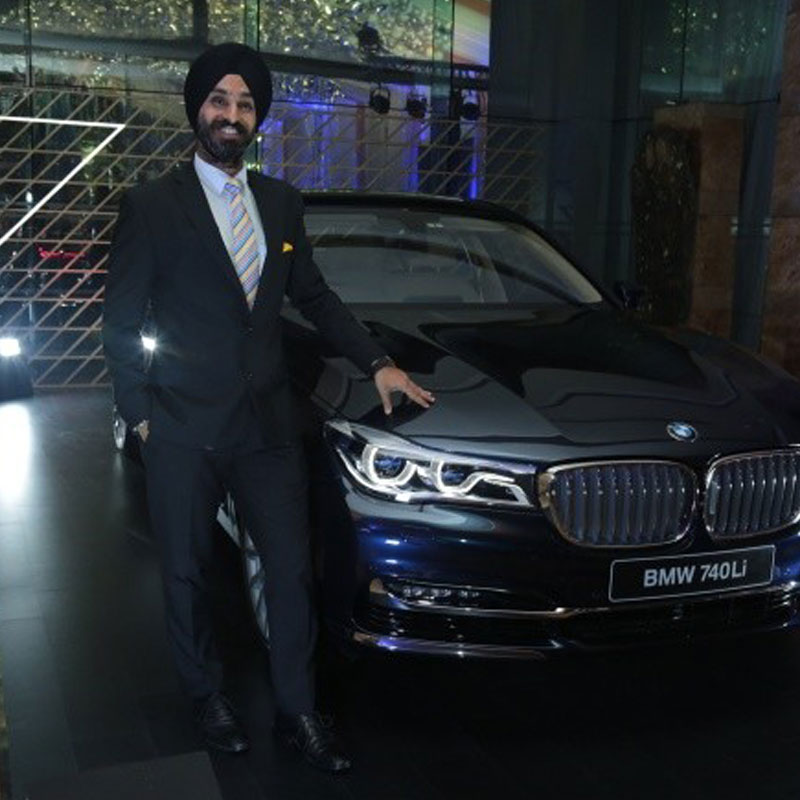
    NEW DELHI-  Samsung Electronics has appointed Inderpreet Singh Sethi as head of marketing communications for the visual device category (TV and audio devices). He updated his new role on LinkedIn.

    In his new role, Sethi will be reporting to Vice President Trivikram Thakore who is leading the marketing communications for the consumer electronics business for Samsung.

    With over 10 years of experience in branding, marketing, and sales, Sethi has worked with major automobile companies like BMW India and Tata Motors.

    Prior to this, he was leading the marketing communication and media at Great Wall Motors Company Ltd, a Chinese automobile manufacturer that recently announced its entry into the Indian market with Rs 6,500 crore ($1 billion) investment plan.

    He worked with BMW India for more than four years where his responsibilities included overseeing the company’s overall marketing and branding strategy basis, looking after communication and media planning for the group.

    Sethi started his career with Tata Motors and worked for around five years as a brand manager mainly for hatchbacks. He played a key role in the launch of Bolt, Indica, and Vista in the market and also prepared a complete go-to-market strategy for the brand in accordance with annual budgets.

  • Xiaomi, Vivo top in Q42019 smartphone shipments; Samsung at No 3 spot

    Xiaomi, Vivo top in Q42019 smartphone shipments; Samsung at No 3 spot

    MUMBAI: How the Chinese mobile brands are making merry in India. The latest study  from Counterpoint Research shows that Chinese brands today account for a 72 per cent share of 2019 smartphone shipments in India as against 60 per cent in 2018. 

    Xiaomi regsitered a sales increase of seven per cent in Q42019 and five year for the whole year to continue to retain its marketshare of  27 per cent and 28 per cent respectively placing it at the No 1 position in India. In fact, India is a bigger market for it then is its home country China. What droves shipments this year was the fact that it expanded its offline retail presence as well as the strong performance of its Redmi Note series.

    Vivo shipped 136 per cent more handsets in Q42019 and 76 per cent more in 2019 overall, to  capture shares of 21 per cent and 16 per cent in the two periods respectively. In fact, its performance in Q42019 saw it dislodge Samsung from its second position. The south Korean megacorp had flat growth in Q42019 and it degrew five per cent in the whole of 2019. Its market share slipped from 20 per cent in Q4 2018 to 19 per cent in Q42019, even as it calendar year sales fell from 24 per cent in 2018 to 21 per cent in 2019.

    Samsung shipments were driven by its upgraded A and M series (A50s, A30s, M30s and A20s). This is the first time Samsung transitioned to a completely new portfolio targeting different channels (offline with A series and online with M series).


    [[{“fid”:”947049″,”view_mode”:”default”,”fields”:{“format”:”default”,”alignment”:”center”,”field_file_image_alt_text[und][0][value]”:”Marketshare figures of mobile handset makers in calendar year 2019″,”field_file_image_title_text[und][0][value]”:”Marketshare figures of mobile handset makers in calendar year 2019″},”link_text”:null,”type”:”media”,”field_deltas”:{“1”:{“format”:”default”,”alignment”:”center”,”field_file_image_alt_text[und][0][value]”:”Marketshare figures of mobile handset makers in calendar year 2019″,”field_file_image_title_text[und][0][value]”:”Marketshare figures of mobile handset makers in calendar year 2019″}},”attributes”:{“alt”:”Marketshare figures of mobile handset makers in calendar year 2019″,”title”:”Marketshare figures of mobile handset makers in calendar year 2019″,”height”:224,”width”:750,”class”:”media-element file-default media-wysiwyg-align-center”,”data-delta”:”1″}}]]


    Oppo shipments almost doubled YoY in Q4 2019, due to demand for its budget segment device A5s and the good performance of its recently launched devices A9 2020 and A5 2020 in the offline segment. Oppo is now aggressively moving towards higher price points with the introduction of the Reno series.It witnessed a 96 per cent growth in its shipments which saw its marketshare growing  from seven per cent (Q42018) to 12 per cent in Q42019. 

    On an annualised basis, however, it trails behind realme which witnessed a spurt of 255 per cent in shipments as its share for the year grew to 10 per cent for the calendar year 2019 from three per cent in 2018. realMe continued to retain its marketshare of eight per cent in Q42019 by shipping 15 per cent more handsets.

    The Transsion group Itel, Infinix, and Tecno) reached its highest ever market share in Q4 2019. Transsion remained strong in tier 3, tier 4 cities and rural India. Itel was the number one smartphone brand in the entry-level sub-Rs 4,000 (US$ 60) price segment, while Tecno and Infinix showcased YoY growth in the Rs  6000-Rs  10000 (US$ 86-US$ 142) segment by bringing aggressive features at lower price-points like 6.6-inch displays, 20:9 aspect ratio, 5000 mAH battery, etc.

    itel emerged as the number one feature phone brand in Q4 2019 followed by Samsung and Lava.  Apple was one of the fastest-growing brands in Q4 2019 driven by multiple price cuts on its XR device, thanks to local manufacturing in India. Additionally, 2019 saw the fastest rollout of Apple’s new iPhones (11 series) in India, with aggressive pricing and a good channel strategy. In fact, the new series especially iPhone 11 was introduced at a lower price point than the last year’s iPhoneXR. This has helped to gain share during the festive season and in its launch quarter in India.

    [[{“fid”:”947059″,”view_mode”:”default”,”fields”:{“format”:”default”,”alignment”:”center”,”field_file_image_alt_text[und][0][value]”:”Smartphone makers marketshare in Q42019″,”field_file_image_title_text[und][0][value]”:”The big boys who make smartphones: Q42019 marketshare”},”link_text”:null,”type”:”media”,”field_deltas”:{“2”:{“format”:”default”,”alignment”:”center”,”field_file_image_alt_text[und][0][value]”:”Smartphone makers marketshare in Q42019″,”field_file_image_title_text[und][0][value]”:”The big boys who make smartphones: Q42019 marketshare”}},”attributes”:{“alt”:”Smartphone makers marketshare in Q42019″,”title”:”The big boys who make smartphones: Q42019 marketshare”,”height”:235,”width”:748,”class”:”media-element file-default media-wysiwyg-align-center”,”data-delta”:”2″}}]]

    Says Counteproint Research analyst  Anshika Jain:  “During 2019 we have seen all major Chinese players expanding their footprint in offline and online channels to gain market share. For example, Xiaomi, realme and OnePlus ave increased their offline points of sale, while brands like Vivo have expanded their online reach with Z and U series. 2019 also marked the fifth anniversary in India for some OEMs. Several have seen significant growth from their first full year of operation. For example, over the past four years, Xiaomi, Vivo, and OnePlus have grown 15x, 24x, and 18x respectively. This highlights that OEMs are mature enough to capture the next wave of growth and further expand their operations in India.” 

    Counterpoint ends by saying that all major brands are now aiming to expand in the mid to high price tier, which is likely to be the fastest-growing segment in 2020.

  • Samsung is 2017 ‘Spikes Asia Advertiser of the Year’

    MUMBAI: Spikes Asia has announced that this year’s Advertiser of the Year will be awarded to Samsung Electronics following a hugely successful 2016 Festival where the company were recognised with 21 Spikes awards.

    The Award honours brands that set themselves apart through the quality of their campaigns and recognises innovative marketing and inspiring creative communications. Terry Savage, Chairman Cannes Lions and Vice-Chairman, Spikes Asia said, “Samsung Electronics is one of the world’s leading brands. By experimenting with what is possible through technology they try to make our lives and the world around us better.”

    “Working with agencies across the region Samsung provides freedom to push the creative standard and we’re delighted to be able to recognise their commitment to excellence. Their campaigns encompass the full spectrum of cutting-edge technological expertise and creative bravery and we look forward to seeing what the future brings”, he continued.

    Winning Samsung campaigns at last year’s Festival ranged from product demonstrations using device detecting technology in ‘Celebrity Tantrum’ to demonstrate the features of the new screen to fearless marketing in launching the Galaxy S7 in the region using CRM and social media to convert attitudes in ‘Right the Wrong’. While the ambition to improve people’s lives through ‘Touchable Ink’, a tactile ink that could be used by printers to make products and packaging more accessible for the visually impaired was lauded and awarded 3 Grands Prix, 1 Gold, 1 Silver and 2 Bronze Spikes.

    In 2017 Samsung has shown remarkable growth, overcoming brand challenges amid a difficult market environment. To launch the Galaxy S8 and S8+, ‘The New Normal’ and ‘Breaking Out’ were released following a successful introduction of both ‘The Ostrich’ and ‘This is a Phone’ campaigns. In addition to these short films, Samsung is also rolling out a series of digital, social and out-of-home activations across the globe, such as ‘Whale’ and ‘Astronaut.’

    Younghee Lee, Chief Marketing Officer of Samsung Electronics and Head of Global Marketing for Samsung’s Mobile Business will accept the Award onstage at the Spikes Asia Awards Ceremony on Friday 29 September. Speaking on the announcement she said, “Our brand work is the first articulation of the evolution to create a new connection with our consumers through a shared value-based approach, rooted firmly in our company’s philosophy ‘that meaningful progress can only happen when you dare to defy barriers. Samsung is a brand focused on creating real human value with its technology and we want to build upon our tech prowess to become a human-focused lifestyle brand.”

  • Reliance Jio to raise Rs 3000 crore via debentures

    Reliance Jio to raise Rs 3000 crore via debentures

    MUMBAI: Even as it gears up to launch its much touted 4G service pan India, Mukesh Ambani’s Reliance Jio Infocomm is planning to raise Rs 3000 crore by issuing secured redeemable non-convertible debentures on private placement basis.


    As was reported earlier by Indiantelevision.com, Reliance Jio is slated to launch its 4G services across India on 28 December, which also happens to be the birth anniversary of the family’s patriarch Dhirubhai Ambani.


    In a regulatory filing, Reliance Jio said, “… pursuant to the approval of the board of directors and shareholders, the company proposes to issue secured redeemable non-convertible debentures aggregating up to Rs 3,000 crore on private placement basis,”


    It may be recalled that in May this year, Reliance Jio had taken a 12-year loan of Rs 4500 crore from Korea Trade Insurance Corporation (K-sure) for its 4G rollout. The funds were to be used to finance goods and services from Samsung Electronics and Ace Technologies Corp, which are being tapped for its infrastructure rollout. Thereafter in July, the company announced plans to raise Rs 4,500 crore through debentures.


    Reliance Jio is currently present across all 29 Indian states, with a direct physical presence in approximately 18,000 cities and towns, and more than one lakh villages. Ambani plans to launch 4G services with an approximate investment of Rs 100,000 crore.