Tag: Samsung Electronics

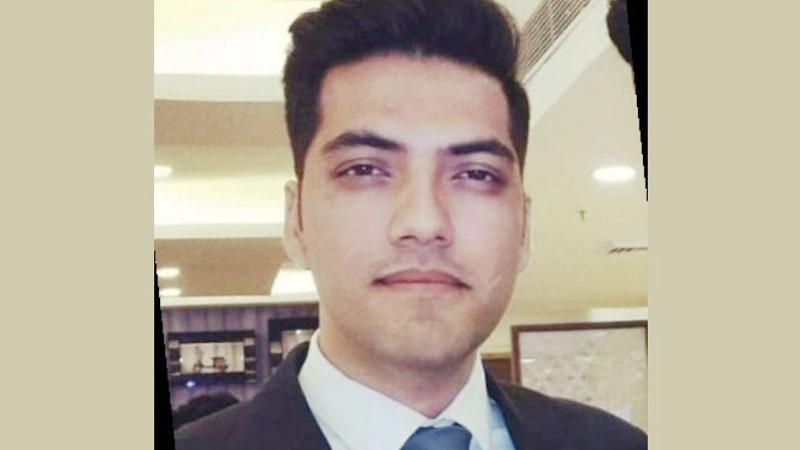
  • Amazon expands Anish’s empire across Middle East and Africa

    Amazon expands Anish’s empire across Middle East and Africa

    DUBAI: Amazon has promoted a veteran marketing executive to oversee both deal-making across the Middle East and North Africa and marketing operations in South Africa, as the American e-commerce giant doubles down on emerging markets.

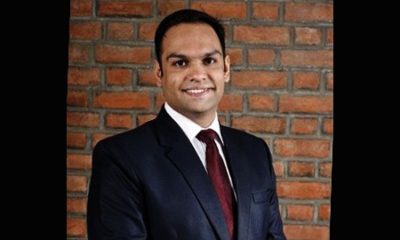
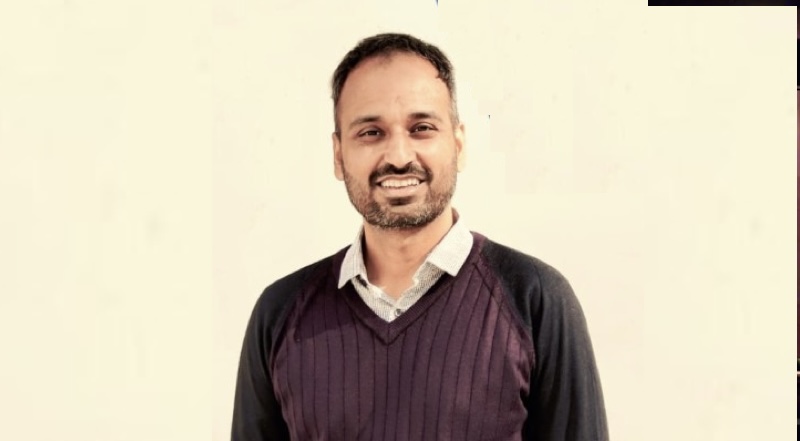
    Anish  Rajan, who previously orchestrated Amazon India’s flagship sale events generating over $2 billion in revenue, has been handed the expanded role effective September 2025. His promotion adds south African marketing responsibilities to his existing mandate as head of deals and events across the United Arab Emirates, Saudi Arabia and Egypt.

    The appointment reflects Amazon’s growing ambitions in regions where it sees significant untapped potential. Rajan’s west Asian operation already contributes 23 per cent of the region’s annual revenue, whilst launching Amazon-first innovations that have since been rolled out globally.

    His track record spans 15 years across e-commerce, consumer electronics and logistics. Before joining Amazon in 2020, he held senior marketing roles at Samsung Electronics and led marketing communications for fashion platform Jabong during its high-growth phase.

    At Amazon India, Anish spearheaded the deals programme that accounted for 39 per cent of store revenue, building scalable systems and customer experience improvements that were subsequently adopted across Amazon’s global marketplaces.

    His earlier career included stints at Micromax, where he led brand strategy and product launches, and DHL Express, where he managed global partnerships including Formula 1 and Manchester United, overseeing a $30 million retail portfolio.

    The dual-region role positions Anish at the centre of Amazon’s emerging markets strategy, where the company is competing fiercely with local players and other global platforms for market share.

  • VIP Industries bags Orient Electric’s former boss as new chief executive

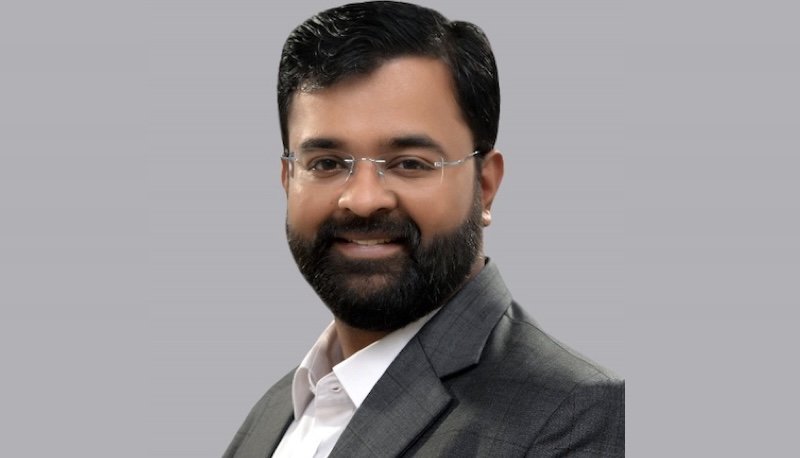
    VIP Industries bags Orient Electric’s former boss as new chief executive

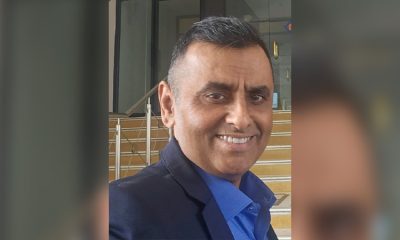
    MUMBAI: VIP Industries, India’s largest luggage manufacturer, has appointed Atul Jain as its new chief executive and managing director. Jain previously transformed Orient Electric, where he delivered 60 per cent revenue growth and a 2.5-fold increase in market capitalisation during his six-year tenure.

    The executive brings a formidable pedigree in digital transformation and sustainability. At Orient Electric, a CK Birla Group company, he strengthened sales and product teams whilst launching premium offerings and investing in brand-building. His efforts yielded a 400 basis points improvement in margins between 2017 and 2023.

    Before Orient Electric, Jain spent six years at Samsung Electronics, rising to global senior director for home appliances with oversight of 20 emerging markets. He also served as country head for consumer electronics in India, where he grew the durables business at double the industry rate.

    His career spans blue-chip companies including a stint as chief operating officer at Chinese technology firm LeEco. Earlier roles included chief marketing officer at Bharti Airtel and brand manager at Coca-Cola.

    Jain has been an active angel investor since 2016, backing startups in consumer goods, education technology and sustainability. He also served as chairman of the Indian Fan Manufacturers’ Association from 2019 to 2021.
    VIP Industries, known for its Skybags and Aristocrat brands, has been seeking to revitalise its business as travel demand rebounds post-pandemic. The company’s shares have gained 12 per cent this year but remain below pre-Covid levels.

  • Mars appoints Nitin Guleria as head of media to lead global strategy

    Mars appoints Nitin Guleria as head of media to lead global strategy

    MUMBAI: Mars has announced the appointment of Nitin Guleria as its new Head of Media, effective September 2025.

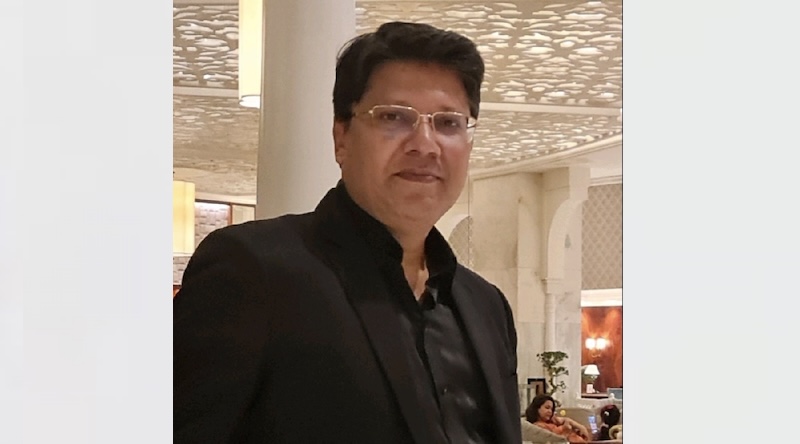
    With more than 15 years of experience across global media, marketing, and communications, Guleria brings a wealth of expertise to the role. He joins Mars from Samsung Electronics, where he served as deputy general manager for over seven years, leading media and marketing initiatives across mobile and consumer electronics.

    Prior to Samsung, Guleria held leadership positions at Groupm’s Essence, where he directed cross-media planning for Google’s hardware division, and at Interpublic Group’s Cadreon, specialising in programmatic media strategy. He began his career with Optimise Media Group and Shoogloo, gaining early experience in business development, client servicing, and performance-driven marketing.

    At Mars, Guleria is expected to strengthen the company’s media strategy, drive integrated communications, and deliver impactful consumer engagement across key markets.

  • Samsung bets big on AI Home at IFA 2025

    Samsung bets big on AI Home at IFA 2025

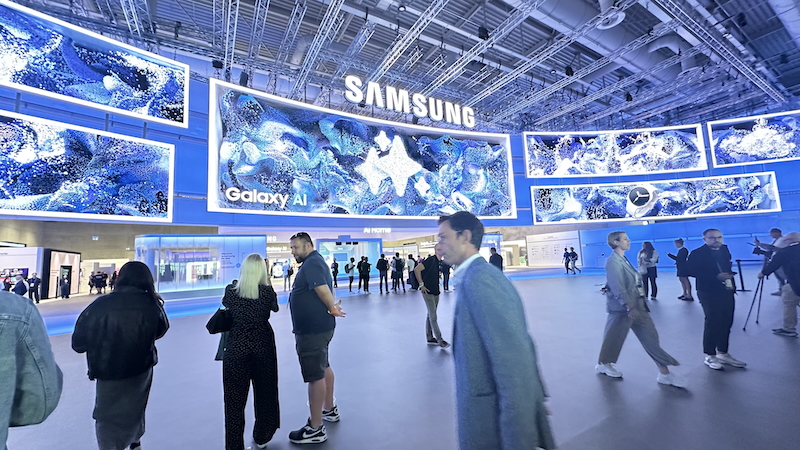
    BERLIN: At Innovation For All (IFA) 2025, Samsung Electronics took centre stage with one message: artificial intelligence has moved out of the lab and into the living room. Under the banner “AI Home: Future Living, Now,” the South Korean conglomerate unveiled its vision of domestic life powered by adaptive technology — one that it claims is already attainable and accessible to millions.

    Executive vice president and head of digital appliances Cheolgi Kim framed the pitch as a shift in how technology should exist within human life. “At Samsung, we’re not just imagining the future of AI; we’re building it into everyday life,” he said. “This is the beginning of a new era — where technology supports your life in the background so that you can live it more fully.”

    The ambition is bold: move beyond the fragmented world of “smart” gadgets towards a seamless ecosystem that not only responds but anticipates. The stakes are equally high. With AI now the battleground for Big Tech and consumer electronics, Samsung is vying to prove that homes are where AI will have its most profound — and profitable — impact.

    Samsung’s SmartThings platform lies at the heart of this proposition. Once marketed as a connected-home app, it is now evolving into what the company describes as a “home operating system.” AI routines automate lighting, temperature and shading; blinds align with the weather forecast; heating systems learn daily habits; and appliances self-optimise without prompting.

    Consumer appetite, Samsung insists, is real. A global survey commissioned by the company shows two-thirds of respondents find the concept of an AI-enabled home appealing. Forty-four per cent cited streamlined chores, while 45 per cent liked the idea of controlling devices by phone or voice. More tellingly, 93 per cent described the home as a sanctuary, and 80 per cent saw it as a social hub — a place where technology should enhance human connection, not interfere with it.

    Samsung’s pitch, then, is about invisibility. The AI Home is not meant to dazzle with futuristic gimmicks but to fade into the background, adjusting conditions subtly to improve comfort and efficiency.

    The company knows that energy bills remain top of mind worldwide. According to its research, 66 per cent of consumers believe AI can help reduce costs. The SmartThings Energy service provides real-time monitoring, nudging households towards savings. Samsung claims it can cut washing-machine power use by up to 70 per cent — a figure it highlights repeatedly.

    AI SMART HOME BY Samsubng

    The emphasis on energy efficiency is strategic. Unlike voice assistants or robotic gadgets that risk being dismissed as novelties, tangible cost savings could be the lever that convinces consumers to invest in AI-enabled ecosystems. It also aligns with regulatory pressures in Europe, where energy performance standards are tightening.

    With smart homes comes a perennial concern: security. Four in ten consumers surveyed by Samsung expect AI to enhance home safety. The firm has responded with Knox Vault, a hardware-level data safeguard, and Knox Matrix, which provides cross-device protection across its ecosystem. The language here is deliberate: “vaults” and “matrices” are meant to signal seriousness, reassuring customers that AI will not become a Trojan horse for hackers.

    In a market where trust is fragile — particularly in Europe, where data privacy is heavily policed — Samsung’s ability to frame AI as safe as well as smart may determine adoption.

    Perhaps the most visible manifestation of Samsung’s AI strategy is its Bespoke AI appliance line. This year’s models showcase a shift from novelty to genuine utility:
    * Jet Bot Steam Ultra: now equipped with enhanced object recognition that can detect even transparent liquids — addressing one of the biggest challenges in robotic cleaning.
    * Bespoke AI Washer: featuring AI Wash+, it analyses fabric load and dirt levels to adjust cycles. It surpasses the threshold for Grade A energy efficiency by 65 per cent.
    * Bespoke AI Dishwasher: dynamically optimises cycles based on how dirty the dishes are, then pops its door open to accelerate drying.
    * Extractor Induction Hob: integrates the extractor into the hob itself, maximising kitchen space — a design nod to compact European apartments.

    These are not futuristic concept devices but commercial products. Samsung is betting that incremental intelligence built into everyday machines will persuade consumers to trade up.

    Samsung’s push is not confined to the kitchen or laundry. The company is embedding what it calls Vision AI Companion into larger displays, positioning it as a natural, almost human-like presence that can converse, guide and entertain. Unlike voice assistants locked into narrow commands, Vision AI is pitched as a trusted “companion” — a word chosen to evoke emotional connection.

    Hardware remains a showstopper. The 115-inch Micro RGB display delivers cinema-quality visuals with striking depth and vibrancy, while the Movingstyle TV, a portable touchscreen with a built-in battery, targets younger consumers with flexible living spaces. The Samsung Sound Tower, meanwhile, promises 18 hours of portable battery life, customisable lighting and app-controlled sound effects — signalling that AI is also about fun.

    Samsung’s AI story extends beyond the home and into its most recognisable product line: Galaxy smartphones. Having rolled out Galaxy AI to more than 200m devices in 2024, the firm now aims to double that reach, targeting 400m devices by end-2025.

    The company frames this as “democratising AI”. Features once reserved for flagships will trickle down to mid-range devices, creating a seamless experience across phones, tablets and wearables. With rivals from Apple to Huawei making similar plays, scale will be crucial.

    IFA, Europe’s premier consumer electronics show, is as much about theatre as technology. Samsung embraced the spectacle with a 50-metre-wide media art installation at Berlin’s CityCube entrance. Created with French digital artist Maotik, the piece visualises “wind” as flowing data waves — an abstract metaphor for AI’s invisible yet transformative role.

    The exhibition itself, running from 5–9 September, invites visitors to walk through fully staged AI Home environments. The message is clear: AI is not a far-off dream. It is a present-day reality to be touched, tested and bought.

    Why such a push now? First, competition. Apple, Amazon, and Chinese firms such as Xiaomi are all racing to dominate the home AI market. Google and Microsoft are extending their reach through partnerships and cloud AI services. For Samsung, whose strength lies in hardware, the opportunity is to integrate AI deeply into devices that already sit in millions of homes.

    Second, consumer economics. Global demand for white goods is relatively flat. By adding intelligence, Samsung hopes to revive upgrade cycles and command premium prices. Energy savings and convenience are framed as justifications for those higher upfront costs.

    Finally, brand positioning. By declaring that “AI is here”, Samsung differentiates itself from rivals still speaking of AI in aspirational terms. It wants to own the narrative that artificial intelligence is not just about chatbots or productivity tools, but about life’s most intimate space: the home.

    Samsung’s pitch is compelling but not without hurdles. Convincing sceptical consumers that AI is worth paying for will require more than glossy demos. Regulatory scrutiny around data will intensify. And rivals will not cede the living room easily.

    Yet if Samsung is right, the next frontier for AI is not in boardrooms or studios but kitchens and bedrooms. The company’s IFA showcase was a declaration of intent: to weave AI so seamlessly into daily life that, eventually, people may stop noticing it at all.

    For now, the AI Home is a vision Samsung insists you can live in today. The test will be whether the world believes it — and buys it.

  • Shivam Ranjan takes the global brand head role at Motorola Mobility

    Shivam Ranjan takes the global brand head role at Motorola Mobility

    MUMBAI:  Motorola Mobility, a Lenovo company, has announced the appointment of Shivam Ranjan as its new global head of brand, Motorola. Ranjan, expressing “immense gratitude and humility,” will now oversee worldwide brand strategy and end-to-end marketing communications for all Motorola products, software, and services.

    This promotion follows Ranjan’s significant contributions to Motorola Mobility’s growth in the Asia Pacific region, where he most recently served as head of marketing for two and a half years. During this period, he was responsible for marketing across key markets including India, Australia, Japan, Korea, and Indonesia.

    Prior to that, he spent five years and eight months as head of marketing for Motorola India, where he managed all aspects of marketing, public relations, brand management, and alliances for smartphones, tablets, consumer appliances, home audio, and televisions. His tenure saw him lead product marketing, digital and ATL communication, media planning, and CRM for numerous launches and campaigns.

    Ranjan acknowledged the instrumental guidance of his mentor and manager, Prashanth Mani, whose leadership in APAC he credited with shaping his professional journey. He also extended “heartfelt thanks” to Ruben Castano and Sergio Buniac for entrusting him with this global responsibility.

    With over 15 years of diverse experience spanning marketing, brand management, corporate communication, strategy, business development, project management, and IT, Ranjan brings a wealth of expertise to his new role.

    Before his nearly six-year stint at Motorola Mobility, he held senior marketing and brand roles at Airtel Payments Bank and Samsung Electronics, where he spearheaded 360-degree communication strategies for product launches and managed significant marketing budgets. His earlier career also includes roles in business strategy and IT. An MBA from a top global B-school, Ranjan’s appointment signals Motorola’s commitment to further strengthening its global brand presence.

  • Win blows into Cannes with ideas that are worth their metaverse in gold

    Win blows into Cannes with ideas that are worth their metaverse in gold

    MUMBAI: If Cannes is the playground for global creativity, Women Inspiring Network (Win) just brought the rulebook rewrite. On 18 June, amid the Riviera’s sparkle and the swirl of creativity at Cannes Lions 2025, Win is set to take over the iconic Hotel Martinez with the Win Lounge, a full day of boundary-breaking conversations on marketing, innovation, and leadership. But this isn’t just another panel fest. Think of it as a high-octane, insight-loaded salon for the world’s most disruptive thinkers.

    Adding sonic flair to the soirée is the debut of the Win Voices podcast, a platform spotlighting raw and unfiltered narratives from global game-changers. The vibe? Less conference, more cultural reset.

    The theme lineup reads like a cheat code to the future:

    1    Disrupting the Default: The New Playbook for Inclusive Innovation

    2    Culture is Capital: The New Frontier of Creative Influence

    3    Marketing in the Metaverse: Redefining Brand Engagement

    4    Beyond Advertising: Building Purpose-Driven Brands

    5    The Purpose Playbook: Philanthropic Families and the Art of Giving Big

    6    Metamorphosis of Marketing: Rebuilding Enterprises with Data, AI & Creativity

    The cast? Star-studded. From Snap’s Resh Sidhu, Spotify’s Bridget Evans, M·A·C Cosmetics’ Aïda Moudachirou-Rébois, and Samsung’s Antonia Faulkner, to Gumgum’s Phil Schraeder, Tigress Tigress’ Meera Sharath Chandra, Seeme Index’s Asha Shivaji, and WeTransfer’s Julia Linehan, the Win Lounge boasts a speaker lineup as sharp as a Cannes jury.

    And it’s not just media and tech titans. Voices from social impact and philanthropy like Neera Nundy of Dasra will add depth to the dialogue. “When families bring purpose to their philanthropy, they don’t just fund programmes, they shape futures,” she shared.

    Win founder Stuti Jalan summed it up with flair: “This is more than a gathering. It’s a game-changing celebration of creativity, courage, and connection.”

    Brands like Google, Apple, M·A·C Cosmetics, Samsung Electronics, Snap Inc., Publicis Groupe, and Influencer.com are already on the guest list. And this is just the start Win will next turn up at Climate Week in New York on 24 September, bringing its trademark fusion of inspiration and impact to the UNGA stage.

    So yes, Cannes might be about lions. But this June, the Win Lounge promises to roar the loudest and leave echoes of brilliance long after the rosé has run dry.

  • Ashim Gupta’s role at  Salesforce’s expanded

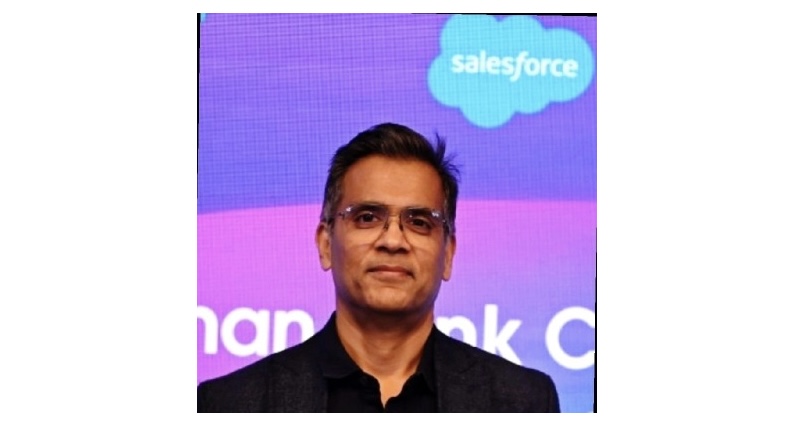
    Ashim Gupta’s role at Salesforce’s expanded

    MUMBAI: Ashim Gupta, a seasoned communications strategist, has expanded his remit at Salesforce, now overseeing communications for South Asia and South East Asia, after a successful tenure as vice president communications-India. This promotion underscores Gupta’s proven track record in building brand narratives across diverse sectors.

    Gupta, who joined Salesforce in January 2024, has swiftly ascended the ranks, joining the India leadership team and now extending his influence across a wider region. His career spans over two decades, featuring prominent roles at Uber, Samsung Electronics, Volvo group trucks operations, General Motors, The Economic Times, Max India and Healthcare, Spark Minda, and Tetra Tech.

    His achievements are notable: at Volvo, he boosted the company’s media share of voice, secured multiple media awards, and pioneered social media strategies. At General Motors, he earned a President’s Award and led the company’s social media foray in India’s automotive sector. At The Economic Times, he led an award winning brand communication team. At Max India he created strong brand equity. At Spark Minda, he initiated internal communication audits and innovative publications.

    Gupta’s experience extends beyond corporate communications. He founded Good Living, a trade journal, and launched the Solitaire brand of interior exhibitions. His expertise in media relations, social media management, and strategic communications positions him to amplify Salesforce’s brand presence in the dynamic markets of South and South East Asia.

  • Hyundai-Samsung debut Private 5G Redcap Tech to power smart factories

    Hyundai-Samsung debut Private 5G Redcap Tech to power smart factories

    MUMBAI: The future of smart manufacturing just got faster, leaner, and sharper. Hyundai Motor Company and Samsung Electronics have teamed up to bring Private 5G (P-5G) Redcap (Reduced Capability) technology to the factory floor, promising seamless communication, reduced power consumption, and cost efficiency. The game-changing tech will take centre stage at MWC25 Barcelona from 3–6 March 2025, where Hyundai will showcase its impact on the mobility manufacturing sector.

    Hyundai has always pushed the envelope in future mobility, from electrification to software-driven innovations. Now, with Samsung’s cutting-edge network solutions, it has become the first in the mobility manufacturing sector to verify P-5G Redcap technology. The collaboration aims to revolutionise how factories communicate, automate, and optimise workflows.

    “Hyundai Motor was the first Korean company to implement P-5G in mass production,” said Hyundai Motor and Kia VP & head of the E-forest center Jae Min Lee. “We are also the industry’s first to verify P-5G Redcap technology, reinforcing our global leadership in smart manufacturing solutions. We will continue to accelerate its commercialisation.”

    Samsung’s Networks Business also sees this partnership as a beacon for the industry. “The recent collaboration with Hyundai Motor represents how the two leaders in their respective industries can creatively drive business innovation and unlock new real use cases by merging best-in-class expertise. Samsung’s Redcap-powered private 5G network solutions will open up more possibilities for enterprises, manufacturers, and public institutions, serving as a gateway to driving more efficient 5G networks,” said Samsung Electronics VP & head of B2B·B2G business development, Simon Lee.

    Since January 2025, Hyundai has rigorously tested Samsung’s P-5G solutions, including radio, core, and management systems, using its in-house vehicle inspection equipment at Samsung’s Suwon campus. The companies even developed a custom vehicle inspection device to put the network’s capabilities to the test.

    The results? Seamless, interference-free communication, crucial for centralising control over industrial robots and devices. P-5G Redcap simplifies configurations, shrinks infrastructure requirements, and optimises bandwidth use—all while cutting costs and power consumption. Compared to traditional Wi-Fi, it offers superior speed, data processing, connection stability, and low latency.

    Previously, high-performance equipment dominated Redcap applications, but Hyundai has now integrated Qualcomm’s Snapdragon X35 5G Modem-RF System chipsets into its Diagnostic Scan (D Scan) system. This enables high-speed wireless communication for vehicle inspection tools, cameras, and tablets, ensuring a more efficient workflow.

    Samsung’s P-5G solution, equipped with optimised Redcap software, more than doubles uplink capacity for real-time IoT data transmission while keeping power consumption in check. Its integrated management system automates network functions, adding another layer of efficiency.

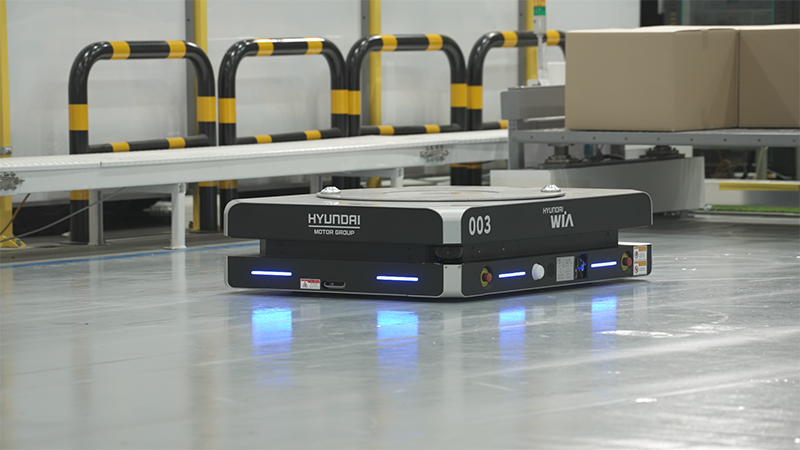
    Hyundai has already put this cutting-edge technology into action. In October 2024, it deployed P-5G Redcap at its Ulsan plant in South Korea, equipping the facility with dozens of automated guided vehicles. Over at Hyundai Motor Group Metaplant America (HMGMA), more than 200 autonomous mobile robots now operate seamlessly, thanks to the technology’s adaptation to local regulations.

    The results have been staggering. Communication disruptions and downtime have plummeted, allowing Hyundai to patent a dual wireless communication solution that combines 5G networks with Wifi. Since deployment, the system has maintained zero communication-related downtime—a major feat in industrial automation.

    Looking ahead, Hyundai plans to integrate P-5G into its new EV-dedicated plant in Ulsan, set to open in 2026. As the company continues its Redcap rollout, it is laying the groundwork for a smarter, faster, and more connected manufacturing ecosystem.

  • Udit Sharma gets back to sports at JioStar

    Udit Sharma gets back to sports at JioStar

    MUMBAI: He left Hotstar as head of ad sales in June 2022 after working there for more than five years. Udit Sharma then joined Sharechat as chief revenue officer for less than two years, and One Impression as chief business officer for around a year.

    Now the hardcore sales professional is back with his old colleagues at JioStar as executive vice-president, business head – for premium sports and agency relationships. Announcing his joining the firm on linkedin, Udit said: “’India should not and will not be a one-sports country’ – With this conviction, I am super excited to be joining Ishan Chatterjee, Kiran Mani and Sanjog Gupta to lead with the premium sports business at Jiostar.”

    The Singapore (Masters in Engineering  in microelectronics from Nanyang Technological University)-educated Udit, completed his MBA from Tuck School of Business at Dartmouth in 2010.  After his bachelors in engineering, he was placed at ST Microelectronics as an IC design engineer where he worked for four years and even completed his master’s degree. He was then hired by Samsung Electronics as a global strategist in the chairman’s office in Seoul before being promoted to business development manager -Samsung Pay in 2013.

    Returning to India (Gurugram), he had a short stint with Zomato as vice-president global business head -cashless, after which he joined Freecharge where stayed for a year and quit as assistant vice-president – head category management & business development to join Hotstar.

  • Komal Kakkar heads to HP India as head of  corporate  communications

    Komal Kakkar heads to HP India as head of corporate communications

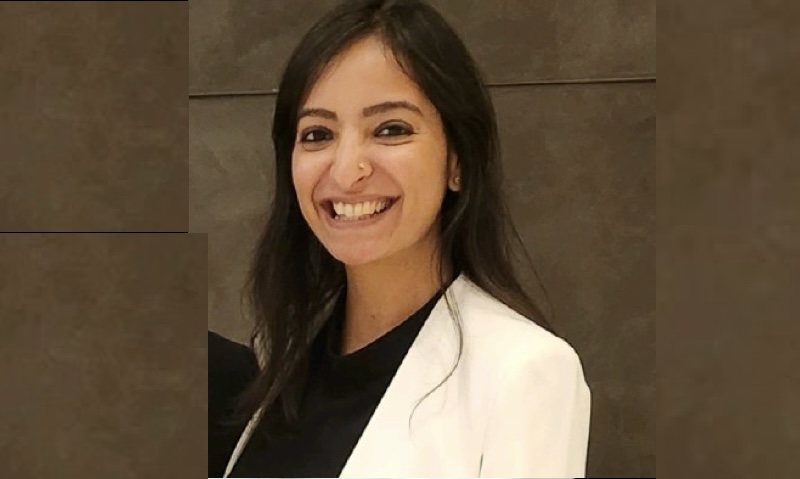
    MUMBAI: It’s been some journey for Komal Kakkar. She began her career in 2008 as a PR executive in the Grasshoppers after completing her  post graduate diploma in advertising and PR, pulic relations and image management from the Sri Aurobindo Institute of Mass Communications. Today she’s perched right on top at multinational tech firm HP India as the head of corporate communications.

    The young professional who familiarised herself  with German by studying it for three years  at the Max Mueller Bhavan, was with Samsung Electronics in corporate communications for more than five years based in Gurgaon. She resigned in January 2024 and took time off to introspect. (Wish we all could have the courage to do that!)

    Prior to Samsung, Komal spent seven years and more at Apollo Munich Health Insurance Co where her knowledge of German would have been handy. She also got herself communication agency exposure by working as a senior management associate at Ipan Hill & Knowlton between 2008 and 2010.

    Komal, who carries her positivity openly,  said on Linkedin: “The year 2024 has been super special. After an enriching sabbatical filled with many adventures, a yoga certification, bucket-list travels, meeting some incredible people on the way, and self-discovery, I’m happy to share that I’ve joined HP as the Head of Communications for India. This time away was transformative—it gave me the space to reflect, rejuvenate, and return with a fresh perspective. I’m thrilled to channel this newfound energy into creating impactful communication strategies for HP, a brand with the vision to create technology that makes life better for everyone, everywhere.”

    All we can say to Komal, is more power to you!