Tag: Sameer Nair

  • Relativity – B4U ties up with Balaji Motion Pictures

    Relativity – B4U ties up with Balaji Motion Pictures

    MUMBAI: Relativity – B4U, a joint venture established earlier this year, announced an association with Balaji Motion Pictures to produce three films, with the first being the Hindi remake of The Best of Me. The cast for the Hindi adaptation of the film is yet to be announced.


    Announcing the agreement, Relativity-B4U CEO Ishan Saksena said, “Balaji has been producing hugely successful films over the last few years. This coupled with their undisputed TV content leadership makes Balaji an automatic choice for us to tie in. This three film co-production, a natural step in our progression provides a platform to bring the best of Relativity’s intellectual property, production skills, and unique monetising strategies to India, and partner with Balaji whose strengths in this area are unsurpassed.”


    Commenting on the new deal, Balaji Telefilms Group CEO Sameer Nair said, “B4U has always been at the helm for delivering Bollywood content in India and internationally. This association with Relativity-B4U allows both our organizations’ synergies to be maximised and allows us to create engaging successful content for Indian audiences. We feel that this co-production deal plays to our mutual strengths and will give Indian audiences uniquely creative filmed content.”


    Adding to the same, Balaji Telefilms joint managing director and creative director Ekta Kapoor revealed, “The co-production tie-up also brings us unprecedented access to Relativity’s catalogue past and future and allows for the films to be re-imagined for India. Relativity boasts of an exciting array of films and a creative collaboration with Relativity is something that excites all of us at Balaji.”


    “The agreement brings great strength to Relativity’s existing catalogue of content, and we believe that this is a unique blueprint that further bridges two great filmmaking industries — Hollywood and Bollywood,” added Relativity CEO Ryan Kavanaugh.


    Relativity – B4U also recently premiered its first distribution venture The Best of Me, at the first South Asian premiere of a Hollywood film in the company of its lead actors Michelle Monaghan and James Marsden, and Director Michael Hoffman.

  • Star’s youth-turn

    Star’s youth-turn

    From Tulsi to Sandhya to Yo Yo Honey Singh, the country’s oldest general entertainment channel (GEC), Star Plus, is definitely keeping pace with the changing tastes of viewers.

    A gamble for News Corp executive chairman Rupert Murdoch, when launched in 1992, has been churning out content, which has created enough and more loyalists. Be it the 2000 revamp, which saw the launch of ‘Kaun Banega Crorepati’ and the ‘K’ series led by ‘Kyunki Saas Bhi Kabhi Bahu Thi’ and many others or the current array of hits like ‘Diya Aur Baati Hum’ and ‘Yeh Rishta Kya Kehlata Hai’.

    So what is the secret ingredient for its success? “It’s the stories we tell,” says Star Plus general manager Gaurav Banerjee, who took charge in 2010 when the channel went through a second revamp.

    Star, over the years, has changed the way GECs told stories and made the characters a household name. Families sat together to watch the story of Tulsi and the Virani parivar. However, as the stories stretched, people’s interest diminished, giving birth to newer channels to proliferate and reasons to the strong team to move on.

    It is at this time that the channel again repositioned itself with ‘Rishta Wahi, Soch Nayi’ in 2010, which saw the birth of new characters and different and interesting stories.  In the last decade or so, viewers have evolved; as more women stepped out of their homes to work, the thinking changed as well. Keeping pace with this, the channel brought in the new “progressive bahus” of television.

    The most popular of them being Sandhya of ‘Diya Aur Baati Hum’, which went on air in 2011 and tells a story of a girl with aspirations married to an illiterate halwai and conservative in-laws. Banerjee believes that the channel has always come up with some of the biggest ideas. “It was ‘Kyunki…’ 15 years ago, today its ‘Diya aur Bati’.”

    Some of other shows launched with the new philosophy of the channel were ‘Pratigya’, ‘Sasural Genda Phool’, which died a natural death, while some like ‘Yeh Rishta Kya Kehlata Hai’ continue the successful run.

    “The times are changing, but even today the role of a family, especially the relationship between a saas and a bahu is an integral part of our society,” says Banerjee, who feels it would be wrong to call the channel, a saas-bahu channel. “In our stories, relationships are important but the characters are stronger.”

    In 2012, with ‘Satyamev Jayate’, the channel once again shook the industry by revamping the Sunday morning slot which no one dared to experiment with, after the success of ‘Mahabharat’ and ‘Ramayan’ on Doordarshan. The weekly show created and hosted by Aamir Khan highlighted social issues prevalent in India and discussed possible solutions.

    Star India CEO Uday Shankar has gone on record to say that he had called up James Murdoch and told him about the risk associated with SMJ because of the investment and he told him ‘we would live.’ The channel had invested Rs 4 crore per episode in season one, the amount unheard of then for a reality show. The series is now in its third season.

    As we move towards the end of 2014, the channel still continues to enjoy its number one position in the TAM TV ratings with a huge margin. In the week 42 of TAM TV ratings, it witnessed a huge hike and clocked 600,523 GVTs while Colors recorded 436,422GVTs.

    A year back, with shows like ‘Veera’, ‘Pyaar Ka Dard Hai Meetha Meetha Pyaara Pyaara’ and more recently, with ‘Yeh Hai Mohabbatein’ and ‘Ek Hassena Thi’, the channel has moved its programming strategy towards youngsters. The same was also donned by the actors and actresses during the 2014 Star Parivar Awards, who wore ‘modern’ outfits while thanking the channel going ‘younger’.   

    And now with the four new shows – ‘India’s Raw Star’, ‘Airlines’, ‘Nisha Aur Uske Cousins’ and ‘Everest’ – the channel is once again changing its programming strategy.

    Is Star Plus going younger?

     “Why shouldn’t we?” comes the prompt response from Banerjee who feels that with consumers’ tastes evolving, the channel which entertains the youngest democracy in the world, needs to change as well.

    The continuous effort to do something new and different has once again made the channel take a step forward to cater to the younger audiences. The now Balaji group CEO Sameer Nair, who is credited for the 2000 revamp of the channel, believes that if Star is moving towards catering the youth, then it is good. “One needs to move with time and Star has always been aiming to give the viewers what they want,” he adds.

    The channel, which has a strong in-house research team and associates with various agencies, is continuously conducting researches across the country to know what the viewers want. The recent studies tell that there is a certain section of youngsters who want to watch different stories, something that won’t put off the elders and can be enjoyed by the whole family.

    The research emphasised on today’s women who want more financial freedom and want a career; though marriage is important but that is not a priority anymore. It also highlighted that GECs weren’t reflecting that desire in their content.

    The channel informs that as per TAM data, 50 per cent of the total television viewership comes from women and only 10 per cent of this comes from the age group of 15 to 24. “We are already higher in this category as 16-17 per cent of our audience comes from within that age group, but we think there are still a number of women who don’t watch enough of Star Plus and we want to cater to them,” says Star India SVP Nikhil Madhok.

    The 10 second ad slot for the weekend properties ‘India’s Raw Star’ is touted at Rs 3 lakh while ‘Airlines’ is anything between Rs 80,000 and 1 lakh. The daily soap ‘Nisha Aur Uske Cousins’ is Rs 50,000 plus.

     “The viewers are giving us direction and as market leaders we have to lead that change,” says Banerjee.

    However, media planners say that though Star isn’t averse to experimenting and state the example of ‘Satyamev Jayate,’ they point out that GECs work on loyalty and Star Plus enjoys a huge following, but somewhere the shift is to tap in the youth segment so that the revenue doesn’t get impacted.

    Planners state that sometimes for a brand, ratings don’t matter but the TG does. Hence, they opt to be associated with channels or shows which are talking to that TG. They give the example of Tata Safari and ‘24’ on Colors.

    Banerjee dispels the argument and firmly says that the channel doesn’t need to change to woo advertisers. “We are not under any pressure, but we wish to change as the country is young.”

    But do planners believe that the change will impact Star’s brand equity? Maxus MD Kartik says, “I don’t think the move to go younger will impact the channel’s image or brand value because the core of the shows is still entertainment. They are not moving away from the brand’s identity.”

    On the other hand, brand consultant Harish Bijoor thinks that while the brand will alienate a set of its older viewers, the big segment to harvest is the young. “Indian demographics today do not necessarily go hand in hand with channel viewer profiles today. The audience is young. If one is to grow, one needs to harvest young viewership. Star Plus should go young in slots. A 50: 50 skew would work well for it.”

    The process of bringing out the best content isn’t simple. After numerous meetings with the best in the business as Banerjee says, pilots are shown to viewers to get their feedback as it is very important, so much so, that sometimes numerous set of viewers watch a particular pilot to tell the right story.

     “Fiction is our greatest strength and we make sure that we get all the elements right apart from the story. The settings, the actors all need to fit the story and it takes time before we put out a show for consumption,” says Banerjee. For instance, the channel worked on the finer details and concept for years on ‘SMJ’ and ‘Mahabharat’.

    Weekend programming head Ashish Golwalkar says that people have grown up watching their serials, but with time one needs to look at the current lot of youngsters. “Today a lot of youngsters think of Star Plus as a ‘mummy’ channel and if we didn’t change now, five years down the line nobody will be watching us,” opines Golwalkar.

    Banerjee along with his team, which consists mostly of 30 years-olds, put in a lot of effort to bring a variety on the channel’s platter. Research is an important part, but the team also depends on its understanding of the consumer as well as learning gained from its previous hits and misses.

    He doesn’t shy away from admitting the shortcomings of the channel. For instance, he agrees to the fact that with no innovation, the channel’s dance reality show, ‘Nach Baliye’, will not be able to grab the eyeballs in the future. Same goes for ‘MasterChef’ where the channel experimented with ‘Masterchef Junior’ and was able to make some headway. Banerjee proudly boasts about the channel’s biggest bet with mythological show, ‘Mahabharat’ which was aired in the 8:30 pm slot giving tough competition to Sab’s ‘Tarak Mehta ka Oolta Chashma’.

    For Madhok, while content on the channel has seen a change, the marketing too will soon have a changed approach. “Our main communication is our promo which gives us enough leeway to widen our approach and position. Also, since the TG (women between the age group of 22-25) which we are focusing on are very active online, hence, that will be our major catchment area,” says Madhok.

    It is very clear that Star Plus  doesn’t want to overlap with its youth channel, Channel V. “We want to cater to young women, not girls, therefore, the content will talk about marriage and relationships but the theme will resonate what is priority for these young women,” adds Madhok. In the past couple of years, the channel has already increased its digital spends from 5 per cent to 20 per cent.

    On social media, the channel lags behind Colors, which has more likes on Facebook and followers on Twitter. The channel has 6,233,082 likes on Facebook while Colors has 7,652,409 likes, Zee has 3,620,047 likes. On Twitter it has 335K followers while Colors has 395K and Zee has 153K followers.

    At the recently concluded MIPCOM 2014, 21st Century Fox co-chief operating officer James Murdoch said, “If we continue to innovate and lead in India, it will prove to be a game changer for us.” And moving ahead with this is Star India which is now gearing to lure the women in business suits.

  • From IPL to BCL, Sony continues its love for cricket

    From IPL to BCL, Sony continues its love for cricket

    MUMBAI: Cricket is nothing less than a religion in India and when mixed with a high-dose of glamour and drama, it serves as the ultimate form of entertainment.
    So, what happens when reality television meets the passion of the nation, cricket?

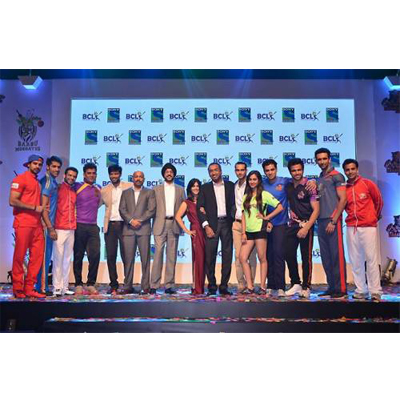
    Giving viewers the combination of both, Sony Entertainment Television (SET) is all set to launch India’s first ever sports reality show – Box Cricket League (BCL).

    However, this is not the first time that Sony is associating itself with cricket. Who can forget the launch of Indian Premier League (IPL), which saw entertainment and cricket getting hitched? However, the host Mandira Bedi’s noodle-strapped sari blouses made more headlines than the pre and post match show.

    “Everyone criticised us and we did not receive good responses for the same. I was there at Sony at that point in time and today after 14 years, we are back at it but with a twist,” says SET SVP and business head Nachiket Pantvaidya.

    For Pantvaidya, the show conceptualised by Marinating Films and produced by Balaji Telefilms, is like coming back full circle. When he heard the concept, he immediately locked it. “Cricket toh sirf bahana hai (cricket is just an excuse), there is a lot more than just cricket,” he says.

    BCL consists of eight teams, comprising of 120 popular television celebrities, who will compete against each other, playing a total of 19 matches of 14 overs each. The teams would be divided into two groups, A and B.

    For Ekta Kapoor, who will make her debut in reality with BCL, sports has alienated itself from women, so with this she wants to get all the bahus and girls get into the game and play with the boys. “I have never touched reality shows. So today I am doing a combination of both. Kudiyon ka zamana hai, cricket toh sirf ek bahana hai,” laughs Kapoor.

    Marinating Films director Sunny Arora aims to deliver a very good product. In the month of April, it had conducted a trial season with more than 100 actors and received a good response.  He believes that cricket is seen for entertainment and played for entertainment.

    “We had organised a trial to understand how the format will work. Men and women playing together, what are the flaws…so now we have come up with a concrete plan. We have just increased the scale,” says Arora.

    He further believes that the major reason why it worked in the trial was because of the presence of female players.

    Matches will commence with a face-off between the two playing teams, where they will perform signature moves on their team anthem. Giving the mundane coin toss a skip, BCL has introduced a ‘filmy toss’ with options like ‘Jai or Veeru’, ‘Basanti or Dhanno’. Upping the glam quotient will be two BCL titlis, Noorin Shah and Vrushika Mehta, who will perform acts during time outs and the ball change.

    Making the game more entertaining, viewers will also get to see behind the scenes action, locker room gossips and some extremely creative awards like Gentleman of the Match and Most Stylish Player of the Match amongst others.

    While the spirit of cricket remains intact, the introduction of new twists in the game is sure to keep the audience entertained. To step up the excitement, during the sixth and tenth overs, the batting captain will challenge the bowling captain to hit a certain number of runs in a single over with a particular bowler.

    If they manage to hit the number of runs they have challenged them for, then they earn double the runs. If not, they will lose the number of runs they challenged the bowling team. The seventh over will also see a ball change procedure where the players can strategise their next game plan.

    Balaji Telefilms group CEO Sameer Nair shares the genesis behind the entire concept of the show. “When Ekta first heard about it was through a friend of her who owns a team and Marinating Films, she wanted to buy a team with the marinating team boys. Then she thought, why to buy a team when we can invest in the league.”

    Balaji Telefilms has a joint venture with Marinating Films and have invested in the company. “Cricket is India’s most popular sport. Daily soaps are most popular form of television entertainment and the marriage of these two promises to be quite electric and exciting,” believes Nair.

    The shoot for the series will start from 20 November and will take place in Filmcity, Reliance Studios.

    So how does one qualify to be a BCL player? “Out of 11, nine have to be actors. How do you qualify as an actor? There is a bible to it. For example, depending on the number of shows he/she has done. And if one is a non-actor, he/she has to be either a director or a producer. The selection is done by the individual team captains and the owners. They should have experience,” answers Arora.

    Apart from the formal announcement, the channel has not started any marketing activities yet. According to SET SVP marketing head Gaurav Seth, eight teams have created their own anthems and he plans to pitch it in a different way. “The series is six weeks away. We have some interesting ideas in our heads and will soon execute them when the right time comes. In this country, you can never be short of celebrities. Fans will come to see the fights, victories, high and low moments.”

    Digital will be a special focus for Seth considering the amount of fan clubs each of the celebs own on the digital platforms. “One star will tweet, others will pick it up. There will be war, fights but at the end it’s all about entertaining viewers,” he says.

    Initially the project was pitched to Sony Six, but Sony realised the power of the concept and thought it will be apt for a GEC channel. “The moment we came to know it would be aired on a GEC channel, we had to change the entire look and feel to ensure that it’s up to the mark,” states Arora.

    The promos of the series will go on-air from end November. Though the date is not finalised yet, it will run for four weeks and be a weekly property.


  • MIPCOM 2014: Best time to invest in India, say Indian media barons

    MIPCOM 2014: Best time to invest in India, say Indian media barons

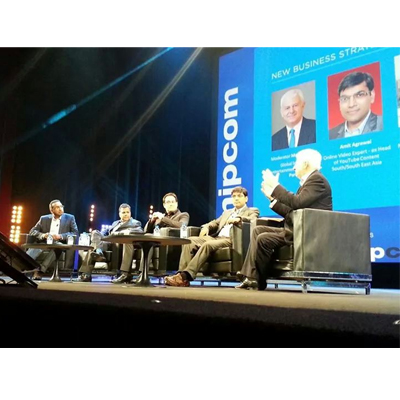
    CANNES: Indian content market is going through an exciting phase, and putting the scenario upfront to the world, through one of the biggest stages at the ongoing MIPCOM 2014 was the India panel which comprised of Colors CEO Raj Nayak, Balaji Telefilms group CEO Sameer Nair, Rajshri Entertainment managing director and CEO Rajjat Barjatya and online video expert and ex-head of YouTube content south/south east Asia Amit Agrawal. The session on ‘New business strategies from India’ was moderated by PwC global leader, entertainment and media Fenez Marcel.


    Setting the stage for some heated discussion was Nayak when he highlighted one of the biggest issues the country faces: lack of broadband. “Lack of connectivity is an issue. If the experience of watching becomes smooth, it will be a game changer,” he said.


    Comparing the online market in India with that of the world, Agrawal said that the Indian market has both traditional medium and online play “and both are very strong,” he informed adding that this meant huge opportunity to tap into.  


    Agrawal went on to say that while India consumes a lot of content online, almost 30-40 per cent of this content is not made in India. “That’s a huge chunk. I am seeing an emergence of micro-communities with technology. This will enable the content producer to tackle the right community. It will happen and very soon, may be in the next 12-18 months,” he stressed.


    There is too much of fragmentation in the country, currently. Mentioning the Telecom Regulatory Authority of India’s regulation about ad-cap for pay TV, Nayak said, “Once this happens, the supply and demand ratio will change. This will also help in the yield going up, because the demand will go up. We have to come at a point where the FTA channels will carry advertising with no limitations, pay channels which will have 10+2 advertising and very premium channels will have no advertising.”


    Barjatya who wears the hat of both traditional movie maker and digital feels that India is at a cusp of digital revolution. “For me the opportunity is to reach the global audience, especially through mobile. Traditional media rules cannot be applied on mobile,” he said.  


    The YouTube journey in India started with traditional media content that was distributed to audience which was moving away from traditional media. “But now, over the last one and a half years, I see so many online channels coming up on comedy, food, music, news, tech bloggers have all come up,” informed Agrawal.  


    With a contradicting viewpoint, Nayak said that YouTube is the biggest competitor to the broadcaster. And that it is due to this, that the broadcaster, since the last month, has taken its hit show Comedy Nights with Kapil off YouTube. “I am a big believer of digital media and I feel it is the future, but I also feel that it will co-exist with television and they will grow parallel.”


    Viacom itself is looking at a lot of short formats. “But the problem is that unless broadband issue is not addressed, monetisation will remain a huge problem. If you look at the money, YouTube does Rs 500-600 crore business from India, where television is a Rs 7000 crore business, so the numbers are small and that will not grow until and unless the bandwidth issues are addressed,” said Nayak.


    Nayak believes that no one in India has so far mastered the art of monetising content on the digital media, social media the way it should be, given its increasing reach and targeting abilities.. 


    “Monetisation will happen with broadband and hopefully this should be resolved with the rollout of 4G,” he added.


    The panel also put forth its wish list for the new government formed under Prime Minister Narendra Modi. According to Nair regulation for content already exists, which is beneficial to the whole industry. Highlighting PM Narendra Modi’s ‘come make in India’ campaign, he said that the government is giving open invitation for people to come to India. “As for Raj’s point that producers in India are not partnering with broadcasters and thus not sharing risks, we are looking at that very seriously and are encouraging everyone else to do it. If there is a risk-reward mechanism, everyone can benefit,” explained Nair.  

    As for Nayak, keeping in mind the dynamic & tech-savvy PM the country currently has, who understands the power of the Digital media, connectivity and broadband will get addressed in a much faster footing.  Given that electricity is still erratic in rural India, people will communicate and consume content through mobile phones. “I would ask him to release spectrum because that’s a big issue that’s coming in the way of growing business. Another thing that I would request  is complete implementation of the digitisation, process which is expected to be over by 2016 . He further added that broadcasters are not getting their fair share of subscription revenue and this can only happen once the digitisation process is complete and all stakeholders start seeing the benefits,” he said.


    Barjatya’s wish list consists of wiring up India and encouraging Indian entrepreneurs to have a global outlook rather than be restricted to Indian audiences alone. “We need to appeal to the audience outside of India,” he said.


    For Agrawal, the government should remove hurdles. “Out of all the YouTube content that we produce, more than 70 per cent of the viewership for programme comes from global audiences. We haven’t done a great job in marketing ourselves and make people aware of the country,” he added.


    Nayak is hoping for a dynamic change in the media industry, with the new PM.   


    The discussion also touched upon the consumer behaviour in the country.  “We see a lot of consumption happening on handheld devices. When we began, 10 per cent of our views were from handheld devices, today it is almost 50-50 and that number is higher in India than in the rest of the world. India’s next billion people will access internet on mobile, and will not know about PCs,” opined Barjatya.


    Agreeing to this, Nayak said that the reason it will happen is because for mobile, one doesn’t need electricity. “We have 160 million homes and 900 million handheld devices right now, which is expected to go up to 1.5 billion handsets. So the explosion is happening. Power will take a lot of time to be addressed, but if you have internet, you can consume content,” he informed.


    Nair classified the audiences and the programmes being made. He said, “The television industry currently is programming for newer audiences who are more into household dramas. Then there are also those who have already lived through all this and are now looking for more. The audience is evolving. There will be more niche channels.”  


    All the panelists felt that this is the best time to invest in India. “In India, people are ready to match dollar to dollar. And we are ready to put the money where our mouth is,” announced Nair.  


    Concluding the session with one advice to entrants in the market, Nair said, “It is important to be patient. We are still at the ground floor, but we can build.”

  • “Reliance’s Big brand is focusing on  the localised content, local IP space:”  Tarun Katial

    “Reliance’s Big brand is focusing on the localised content, local IP space:” Tarun Katial

    He is amongst a select lot of advertising professionals who have pole-vaulted over the fence to the broadcast side – and stayed there. In fact, not many recollect that Tarun Katial began his career at Saatchi & Saatchi as a media trainee. More might remember him from his O&M days when he headed TV media buying for the Mumbai office. The then Star India CEO Peter Mukerjea picked him up to work in programming along with Sameer Nair, and the rest, as they say, is history.  From Star, he moved onto head Sony Entertainment programming, before heeding the call from the Anil Ambani-Amitabh Jhujunwala combine to help take the billionaire businessman’s  entertainment ambitions further under the umbrella of  Reliance Broadcast Network Limited (RBNL). 


    It has been quiet a journey. He heads what is considered as India’s most widely spread private FM radio network – Big FM 92.7 which has a footprint of 45 stations. Katial also handles a clutch of TV channels – Big Magic, Big Magic Bihar and Jharkhand, Big Thrill – the TV production wing Big Productions and the group’s activation arm. 


    Despite arriving late in the broadcast TV game, Katial managed to forge alliances with US major CBS and German media megalith RTL. He launched channels in partnership with them quickly from 2010 onwards with the clear intent of building a strong network. The CBS joint venture unravelled end-2013 while the RTL one got unstuck a couple of months ago. Katial – with a sanguine look in his eye says “things happen, then they don’t and the other way round too. But they are all a part of learning and experiences.”


    A firm believer of differentiation and localisation of content, Katial has been at the helm of one of India’s youngest media houses. It was this approach towards business that got him the ‘NewsCorp Achiever for Asia’ award and later led to him being included among the best in ‘India Today 30 on 30’ list. Katial’s much older today and his hair has greyed in parts, but the man has retained his hankering, his drive for innovation and challenges. He got into a conversation with Indiantelevision.com’s Seema Singh and Meghna Sharma, to talk about his experience, his good moments and not so good ones too, and also about his future…


    Excerpts


    How has the journey been so far? The company has seen a lot of ups and downs, what do you have to say about them?


    It has been an interesting journey. When we launched, all our competitors were at least five to seven years ahead of us, well established brands with not only equity, but also ad-consumer connect and legacy of their media house ownership.


    But, we were neither a media house nor a recognisable brand. To add to that, our parent brand Reliance did not allow us to use its brand name, since that is a part of our branding guidelines. We didn’t have any legacy knowledge in the system either. So it was all done from scratch. 


    The team has almost remained the same, since the time we launched. The executive board of the company is also still intact.  Right from deploying CAPEX to building a brand, an identity to positioning the brand, to winning small victories to larger wars, it has been an interesting journey to say the least. 


    In the last two years, the brand has really come of age, We realised that while we fought the marginal differentiation game, we had to be exponentially different to be able to succeed. 


    So we decided to position our brands to recreate every local market and that’s when we decided to go retro for our radio station in Mumbai and Delhi, regional in Bengaluru, melody in Chennai and largely Bengali with Hindi retro in Kolkata. 


    Today, I am quite proud to say that in most markets that we operate, we are either number one or number two, with a huge gap between us and our competitors. 


    You were a late entrant in the game, have you been able to deliver on the challenges? Which have been the areas that you have succeeded and areas which still remain to be tapped?


    The initial challenges were basic understanding of the business to building a consumer brand to building a differentiated positioning and differentiated offering, then to be able to consolidate and work around it. 


    In the brand’s journey you are sometimes able to take risks and sometimes not, sometimes you are able to expand and sometimes you have to consolidate. And in all of that, I think a new brand is not at the same place as an established brand. 


    Radio lacked measurement and we have worked with the industry to introduce RAM. 70-80 per cent of radio spends, today, are in measured markets and advertisers are able to measure the ROI they get from radio. The coming in of measurement rapidly increased the number of brands that had faith in radio. What it also did was, it helped radio move away from being just a frequency medium to being a rich range medium and classic advertisers like the FMCG category started to rely on radio for their communication needs, which has been very good for the category and very good for us. 


    Again in the television business we were laggards. Every business takes time to find its strategy. We started from the English space and then decided to venture in the local language proprietary content space. What we’ve been able to learn and reconcile with this is that we want to be in the local space like we are in the radio business. 


    Television is a much younger business than radio and I think the success we have seen in the TV space in the past six months has been very good. With our Big Magic Bihar and Jharkhand channel, we are clearly the leaders. Whether it’s Big MemsaabBig Bahuriya or Police Files, we have  great content. 


    Also we are the only ones with local production capabilities in Patna and we have been able to build a new community of technicians, actors and producers there.


    On the national front, while we started with Big Magic in UP, it was in April-May this year, with the launch of Akbar Birbal that we decided to take the channel national. 


    There are obviously challenges and we have a great distance to cover but I think the two month report card has been very healthy and positive. We have been able to launch a whole slew of content like:  Uff Yeh Nadaniyaan with Upasana Singh, Raavi Aur Magic Mobile and Ajab Gajab Ghar Jamai with Himani Shivpuri and Sumit Vats. 


    We are going block by block, building on that channel. While today we have about 2.5 hours of original content, we would probably take it up to 3-3.5 hours by the end of this quarter. 


    We believe that regional content is the way forward. It allows you to connect with the audiences and stay centric to consumer’s needs.  Also when you own the intellectual property, you can take it international, deploy it on digital and on various forms and fashions. So I think that’s really our strategy going forward in the television space.


    Why did you think of starting a production unit in Patna? 


    We started our Patna operations four months back, as we believed that local and regional channels should be run from where they belong and a lot of the Bihar channels tend to run from Delhi or Mumbai. But, according to me, this prevents you from building a local connect or local relevance. So we decided to do shows which are locally relevant. 


    Big Bahuriya is a show which surfaces latent issues between mother-in-laws and daughter-in-laws. It has done very well for us and it has all been shot in Bihar and Jharkhand and in the homes of people. Then, Big Memsaab, a studio based game show for women, is also based out of Patna. We built the studio and shot there, giving opportunity to local contestants, local people to come and take part. Similarly, Police Files is a very gritty, in-your-face crime show, where we work with real footage and real issues and crime scenes in Bihar and Jharkhand. 


    These programmes have been produced by local producers like Abhay Sinha, Amitabh Verma and Kamlesh Guthi Singh.  


    Are you looking at rebranding Big Magic Bihar and Jharkhand?


    Yes. We are looking to rebrand and probably call it Big Magic Ganga.  This should be done by mid August. We have already got the approvals for the same. When we rebrand, we will launch in a fairly big way. 


    Your business model earlier looked very lucrative, with TV, Radio, Production and Activation arm, how do you plan to keep up the whole chain to make it look more lucrative? How do you plan to synergize what is under you? What is your current business model?


    Actually we have strengthened our approach a lot now. We have a strong activation business called ‘Big Rural.’ We probably are the only ones who do intellectual property work in the rural space. We have built some very good brands, like ‘Big Disha’, where we do rural career counseling, partnering with Gillette.


    In fact a number of brands partner with us, through which we do hundreds and thousands of activations across schools and colleges. 


    We have also built a new brand called ‘Mele Ka Big Star’ and ‘Hindustan Ka Big Star’ where we cover large melas across UP, MP, Bihar and Jharkhand. Through this, we do a big talent hunt partnering with successful brands like Horlicks, Hero, Godrej and Emami among others.


    We have built a very big property with on-ground activation called Close Up Antakshari. Also on the production side, we have done a lot of proprietary work. Like the Big Star Entertainment Awards and now the monthly Life OK Now Awards.  We do different kinds of work under Big Productions. 


    So your business model still remains the same?


    Yes it continues to be the same. But one of the differences we brought about in the business model is that instead of focusing on client specific activation, events or productions, we are now doing more branded content activation which has attracted   a lot of clients. Through this, a lot of clients can partner and benefit rather than a single client carrying the cost. We have also built some single client properties. For instance, the Hajmola Chatpata No 1, which has a deep penetration in UP, was a success and we plan to do a follow up this year. In short, we have built some long standing properties rather than just activation.


    Are you creating activations for your television channels as well? When will we see the transformation of Thrill? Also will it continue to being male skewed? Will it be in English? 


    We are in no rush to do more in our television space until we attain a critical mass market for  Big Magic and Big Magic Bihar and Jharkhand. For us, the next big thing will be to Indianise Thrill and add local content on it as it is our second priority in the television space. We are currently in the consolidation space. And we also have the phase III of radio rights on our head. So, I think we need to see how much of bandwidth we have for television.


    Thrill will be rebranded by end of this year and while comedy will be on Magic, Thrill will continue to have action. The content on Thrill will be in Hindi only. The whole point of a buyout from RTL was to start doing local content. We are working with some key producers in the space.


    Are you looking at an English channel?


    We won’t do English for some time now. We believe we want to be in the local IP space. We want to have our own IP.


    Was this the reason that the joint ventures ended?


    Our strategy is to be in the local content, local IP space. We want to be centric to the consumer and move around according to the changing trends and tastes. We want to be able to take the channels to different platforms. But in the English space, you are under the rental model. What we do after the license period gets over? What is your legacy in the space?


    Why did you decide to launch the channel with international partners – CBS and RTL?


    You learn with every category you get into. I think when we got ourselves into the English space, there were fewer partners, less competition, but over the three years the space became fragmented and crazy. 


    What is happening with Big Magic and Big Magic Bihar and Jharkhand and Big Magic International, post the breaking of the JV?


    We now own all the content and that’s the reason we launched Big Magic internationally. We are now available in the US, Australia, Canada and are planning to launch in some countries, this year. UK is one of the targets and the talks are already on. 


    If you see the financial statement of this year, the company has done better as compared to 2013. But the network is still incurring certain losses. How are you looking at improving this – especially on the television side?


    RBNL is in its investment phase on TV and it’s on the return phase on radio and that’s how we are balancing it. You need to have some initial losses for any network to grow. You can’t cut the investment short because there are loses in the business, right?


    I will not define them as loses; they are investments. For any business to grow you need investments and we are happy to make investments in the TV business. We are happy to reap the benefits of the radio business. The radio business is close to Rs 200 crore plus, which is not a small number.


    So, will you be pushing radio more?

    Both are different businesses and have different sets of challenges; and we want to grow in both the businesses. And you have seen what we have done with Big Magic. We have been launching a new show almost every week if not every month and the kind of investment that is going behind content, marketing is quite incredible. Last week, we launched the new season of Uff Yeh Nadaniyaan. We have brought in new faces; we have upgraded the look of the show. So, at every step of the way we are investing in the content of the channel.


    What kind of management reshuffle will we be seeing. Are you getting in  more new people?


    We have brought in more people to strengthen the team. On the sales side, we have created a vertical approach, keeping the customer at the centre of it. So we have done a vertical for single customers, a vertical for government sector customers, a vertical for key accounts, a vertical for corporate accounts and new business developments. So, we have a customer centric approach and we have got sales directors on all these verticals. We have got Gurudutt Jakhmola for the government side, Ajit Singh has been roped in for single accounts, Rajesh Mishra for corporate account side and Vijay Koshy on the key account side.


    So, we have got four vertical heads. On the creative side, we have got Manisha Tripathi as the creative and programming head of radio.


    Are you looking at fresh investments coming in to the company?


    Obviously, we will make investments into our radio business as we go into phase III of licensing; we will definitely make investments in current licenses migrating into 15 years and acquiring new licenses.


    And what about television?


    Television is now at the cusp of breakeven, but we will continue investing in Magic.


    What about the licenses of channels like Love? Will you be giving them away? Can we expect more channels in the future?

    We will keep them. Currently, they are in the hibernation stage.  We will be working with our three channels for now. And as and when opportunities come, we will tap into it. 


    How do you plan to get cash flow in the company? Why did you plan to delist?

    For now, we are a delisted company and so we do not need to worry.


    We didn’t want to live quarter to quarter and the promoter believed that he had great value in the business and so he should go behind it and give it all the investment it requires to give it a long term run. 


    For a business in its early stage it is tough to live in a quarter to quarter manner. I can tell you, I have worked at News Corp in my early days at Star and if we were to live on a quarter to quarter basis, we would have never made the kind of investments we did. 


    Also, we didn’t list because we wanted to. We listed because we have a legacy of Adlabs being listed. Our licenses were in the erstwhile Adlabs which demerged into Reliance Media Works which then became Reliance Broadcast Network. We have actually never done an IPO. 


    According to you, which is the most ad revenue generating channel? 


    Big Magic is actually at a 100 per cent inventory fill and it is doing exceedingly well. But I think the one that has real big potential going forward is our Bihar channel. It’s a media dark region and a lot of advertisers want to penetrate that market. Also, it has one of the fastest GDP growth in India. 


    Are you looking at geo-targeting at any stage?


    We had some options at doing geo-targeting with Big Magic because it’s very big in UP. We keep toying with the idea. With a 50 sales offices in the country for our radio business, it will be an easy task.  But we haven’t really tapped into that yet.


    Is distribution a challenge? Is it getting expensive now?


    It’s not very expensive, it is actually getting cheaper. Digitisation has clearly made distribution democratised. Placement is still expensive but distribution is not. And if you have differentiated content then placement is not a key challenge. 


    In fact, we have had a reduction in our carriage fees dramatically over the years across the network and I can tell you that some of the DTH platforms have been very welcoming for our channels.

    What is your budget for marketing on a yearly basis? Does it keep increasing year on year?


     See, we have priority markets, where we invest heavily. Also, we have great advantage of having cross network between radio and TV. So, what people can’t buy, we can buy very easily. Most networks have to buy on radio networks like us, but for us that’s a very big advantage. So between network media and third party media, I think our budget will be close to 20-25 crore. 


    According to me as the channel gains popularity, its marketing spends reduces. 


    I can tell you, our radio market budget has come down substantially from the years we launched it. It’s a set brand. When we launched the show with Annu Kapoor we did not do any marketing because the content was strong. I think good content markets itself after a point. The word of mouth, the advocacy becomes so strong that you don’t have to knock on any ones door.


    What made you change your whole content from recent Bollywood tracks to retro on Big FM? How big is your research team for both television and radio?


    You have to give yourself some serious delta of differentiation, it can’t be marginal differentiation. And you have to take some risks and risks pay off eventually. 


    We have an intense research team, which comprises music experts and even university graduates who have done a post graduation in music. We won’t take such a risk without understanding the consumer’s likes, dislikes and choices. Even within the retro music we have serious segregation on timeless music and time-bound music. 


    Similarly for television, we work closely with Dragon Fly for a lot of research. 


    There seems to be a sudden rise of in-programme advertising? Do you also use this tool to advertise?


    We do a little bit of it, but more in Bihar and Jharkhand because we have a game show on the channel and also because there is a lot of good opportunity there. But I still believe that you can’t make good content into a teleshopping network.


    I think the consumer is becoming extremely discerning so you need to be smart about the way you do these things. What we did with Clinic All-Clear on one of our shows on Big Magic called Raavi was that we spoke about educating the girl child, while soft branding the product with the message.


    Are you looking at doing more events apart from the current slate? 


    I think they need to make sense from a consumer perspective. You can’t just do them because you want to do them. You have to do them because there’s an insight in them. We currently have a slate of 20-30 events, which I don’t think is little by any standard. 


    Does the network make any content for only digital  consumption?


    We are currently not making content for digital only, but we are re-purposing a lot of content for digital. Like we do short stories of Akbar Birbal, only for digital. We have our own YouTube channel, where we condense interesting episodes and put on that channel. The content is such that it can be watched in about nine minutes. 


    Where do you see the network three years down the line?


    The network will be very consumer centric, adapting to changes in consumer trends, very well differentiated and distinct, whether it’s the TV network or the radio network and building on insights continuously. For us consumer-centricity is the key and that’s what we are working on and that’s why we have done what we have done both in TV and in radio. You can’t win by duplicating anybody.


  • We will look for international, local collaborations and diversifications: Sameer Nair

    We will look for international, local collaborations and diversifications: Sameer Nair

    I had never gone away”, says the man who is credited with bringing KBC and K shows to the Indian television screens. Sameer Nair, after a hiatus of three years, is back at doing what he does best. He has been busy exploring opportunities in online video, e-commerce, film & television production, education, hospitality and of course, helped the newest entrant, AAP, into Indian politics.


    A maverick as many call him goes by the philosophy – communicate clearly, be polite, be persuasive, sweat the detail, seize the moment and create not compete for what is already created.


    As the new group CEO at the country’s biggest production house, Balaji Telefilms, he will work closely with Shobha and Ekta Kapoor to take it to the next level.


    Indiantelevision.com’s Meghna Sharma caught up with him to know about his views on today’s audiences, their taste, Balaji’s success in gripping the viewers’ pulse and its future plans.


    Excerpts…


    You had the genius to select the content which caught the pulse of the viewers. How has that evolved? How do you keep abreast with the change in taste?


    Television is dynamic. When we did ‘KBC’ and ‘Kyunki saas bhi kabhi bahu thi’ which went on air on the same night, quickly followed by ‘Kahani ghar ghar kii’ and ‘Kasauti zindagi kay’, it used to be half an hour weekly programming on three main channels – Star Plus, Zee and Sony. This gave viewers 90 choices to pick from. At Star our big strategy was to channel this to daily and changed the whole schedule, reducing the primetime viewing choice to five. Which others followed and continues to be even done today. It was a new concept then and people liked it. With Imagine, we got mythology into primetime which can be seen today as well.


    In the last 22 years of Indian television, we have had a full generation of television – executive, creatives. When I started of in 1993, we were the pioneers then, and had only the legacy of Doordarshan (DD) to look back at whereas today’s generation has 22 years of television to study. So, in the last 20 years, there has been a lot of process especially in consumer taste because the country has progressed. Today we have 150 million television homes, 800 million mobile phones, internet, disposable income has increased and content has kept in pace with it because of the new talent entering the space. For instance, Colors has had wonderful success, Sab has created a special niche for itself and done remarkably well, production houses are doing well and coming up with shows like ‘24’ and ‘Yudh’.


    Content has evolved and so have the people.


    Channels do a lot of research, but what I feel is that research can only prevent you from doing a mistake. It can tell you what not to do and not what to do. Finally, what has to be done is done with meticulous details, creativity and the way a story is told. For instance, ‘kyunki…’ as a daily show was a good idea strategically, but people remember the story of Tulsi in the big Virani family. It is all about great stories, well told.


    What is your role as group CEO?


    Balaji is in a very good place and we have had a successful run of films as well as shows. I was doing a count and Balaji has 15 of the top 50 shows currently on the Indian television screens. There are a very few listed industries in this space and it is one of them.


    And in the past six months we have been discussing the growth plans and one of the main take outs of those meetings has been that we should scale up the company. So, now Balaji will do more movies, more television, we will look for international as well as local collaborations and look for diversifications.


    I have really come here to work with Shobha and Ekta Kapoor to do that.


    Which verticals are you looking at for collaborations?


    Could be movies, shows, formats or just partnering with an international company on specific projects. If there is a format company looking to set up a shop here in India or wants to do catalogue shows here then that could be an opportunity we would be looking at.


    Between Ekta, Shobha and you, how are the roles divided?


    Ekta is creative and she is great at that. Mrs Kapoor has been the operational backbone of the company, so I will work closely with her. And also with Ekta. The main aim here is to work together and look for growth opportunities.  


    What in your assessment are Balaji’s strengths and weaknesses? And what are its opportunities?


    Balaji has a very good team and they have produced some incredible work. So, if there has to be a weakness then it is to have craft a strategic plan and then execute it. At its current stage, the Indian television industry is at its best and has no weaknesses. But of course, one can always do better and look at different genres, show etc. But, I wouldn’t say that these are weaknesses but are opportunities.


    As for the strengths, they are very strong on creative, production and have the ability to deliver. The talent in Balaji is phenomenal and there is a lot of ambition.  


    What is Balaji’s USP- is it talent, creativity or the ability to know what viewers want?


    The USP is the storytelling. Ekta’s way of telling a story is what sets her apart from the others. The market is crowded and a lot of others are also doing a great job. It is not a monopolistic market. But Balaji is special.


    A lot of famous faces have come from Balaji’s house. How is the talent management arm, Spark, doing?


    I haven’t taken a look at it yet, but will soon do. I want to do some reorganisation with that arm. We at Balaji want to manage the talent in the country and look at growing more talent.


    Lately, we have seen channels experimenting with finite shows. According to you, what is its future in India?


    The market is already segmenting. There is a segment which will continue to watch the dailies and then there is another who will consume mythology and historical shows. But there is and will grow into a bigger section of audience which is interested in finite shows. So, there will be two distinctive audiences – you and your mother.


    Niche is always more valuable. And with digitisation it will benefit the industry and the viewer as one can choose to pay for a channel showcasing only hi-end products. As this group grows, it becomes a business model.


    The market is moving that ways and we are the market leaders.


    Globally, there are firms like Shine, BBC, Fremantle who have spread their wings internationally. Do you think Balaji can be India’s Shine?


    A lot of global companies which have come to India and come with their format catalogue which they are selling in India tend to be in reality and game show space. But we haven’t seen any international firm making any head way in the fiction space. The same thing applies on reverse basis. The west has been more advanced than India when it comes to television. The formats have done well there and since they are universal, they can travel across the globe.


    What Balaji will look to do is to partner with them. The future of this business is creative collaboration rather than destructive competition. We are looking at more people to work for.


    And we have already had a few offers to co-produce international movies into Hindi with a foreign partner. Maybe, later we could do shows as well and who knows set up a collaborated company in the future.


    Earlier there was Balaji and Balaji alone, apart from UTV. But today we have Beyond Dreams, Director’s Kut, Swastik which are producing big ticket shows. Did Balaji let go of opportunities? Or was it the content demand that helped them crop?


    It’s an expanding market and there is a limit to what a production house can do and should do. So, it’s just a dynamic market. There are too many channels and we need more shows so therefore more producers are needed to produce these shows.


    It is a nice competitive space with good creativity energy.


    Balaji did produce regional content for TV, will we see that happening again? What about venturing into regional films?


    I have heard that regional market is going through a bit of turmoil and price points have really crashed there. So, we are looking at the regional market to work with the right partners. So, again the big focus in on collaboration.


    Balaji has a lot of inherent strength and a lot of reverse so we have to see if we can collaborate with creative people there. We have an open door policy and anybody with a great idea can approach us. We are always looking for people to work with whether in television or films or new media.


    As far as films are concerned, what is the strategy?


    We have had a good run this year and the plan is to settle towards eight to 12 movie slates per year. So we will have to work really hard to achieve this because it will have to be across genre and across budgets. We have always done it that way and that’s why we have had films like ‘Ragini MMS 2’, ‘Mein Tera Hero’ and ‘Ek Villian’. So there is a lot of variety and we will be looking at scaling it up.


    What will be Tanuj Garg’s role now?


    The film arm is strong and has churned out fabulous work in the past. And will continue do so. Tanuj will be reporting to me.


    Balaji doesn’t own IP. Is that what has kept its price at the level it is?


    There is too much hype given to Intellectual Property (IP). The value of IP is when it has the ability to monetise the content. Movies have IP because after the theatrical release you can sell the broadcast rights to a channel and then re-syndicate it through DVDs.  In television, the kind of shows that are being made there is not much beyond what is in the first run. The channels are anyway syndicating it aboard.


    The US has so much of IP because of the content available there. For instance, they can have a great run of a show like ‘Big Bang theory’ and then sell it in India because we watch it too. But the reverse doesn’t work for us. For example, we can’t sell a ‘CID’ there for the Americans to watch, but we will watch ‘CSI’. So, IP makes sense when your content can cross boundaries and still be consumed.


    What is on the agenda for the next couple for years?


    We are looking a long term strategy of growing the business. In the next three to five years, we should double or triple in size. That means more shows, films and some good co-productions.


    The big agenda is that we are looking for creative people and companies to partner with and grow in inorganic manner as well.


  • Sameer Nair joins Balaji Telefilms as Group CEO

    Sameer Nair joins Balaji Telefilms as Group CEO

    MUMBAI: He has donned numerous hats. From selling space in Yellow Pages to being a member of a political party, Sameer Nair has had a volatile career.


    The former Star India CEO is now all set to join Ekta Kapoor’s Balaji Telefilms as Group CEO.


    On 15 July, Nair attended the board of directors meet and will take full -charge from today.


    Nair said, “I have enjoyed a wonderful association with the Kapoor family since 2000 following the launch of the hugely successful ‘K-series’ on Star Plus and later with their shows on Imagine. Undoubtedly the team has done a remarkable job of creating one of the most vibrant entities in content generation. The M&E industry is currently at a very dynamic stage and  will  continue  to  present  several  exciting  opportunities  across  all  segments, heralding significant change in times to come. I am delighted to have the opportunity of being a part of an extremely exciting business at one of India’s most pioneering, creative and talented media houses. Given BTL’s several strengths as a business, it is very well poised to capitalise on emerging growth prospects. I look forward to working together with Ekta, Shobhaji and the team, in driving strategic initiatives, furthering the Group’s vision of being regarded as an innovative entertainment powerhouse and enhancing value for all stakeholders.”


    Balaji Telefilms MD Shobha Kapoor added, “We are delighted to have Mr. Nair joining the Balaji family. Sameer brings with him immense and diverse experience in the media and entertainment industry and an acknowledged   record  of  content  innovation,  business  leadership  besides  being  an excellent  resource  unifier. Over  the  last  several  years  we  have  built  an  unparalleled franchise in creation of television content and have also developed  a very strong brand equity within the film production  segment. We are excited that Mr. Nair possesses  the same passion  for entertainment  as us and we look forward to him further reinforcing Balaji’s  inherent  strengths  in  both  segments  and  driving  the  Company’s  growth  & expansion strategies to help us scale greater heights.”


    Nair who was very vocal about his association with Aam Admi Party (AAP) started his TV career in 1994 where he began as a director-producer for Star Movies, Star’s English movie channel. In 2000, his career as well as Star reached higher peaks with Kaun Banega Crorepati which helped take Star Plus from number three position to number one.


    Soon, he was given the charge of the network as CEO. But it was short lived as he quit the company after 13 years of association in 2003.


    After that, he joined NDTV’s new joint venture with Karan Johar’s Dharma Productions as CEO. As part of the JV, he was involved in launching NDTV Imagine, the Hindi GEC in November 2007. However, the channel didn’t do well and was shut in 2012. 


    Since then, Nair has been busy as independent media entrepreneur and been making frequent trips to Delhi to support and contribute in AAP’s communication strategy.

  • Media fraternity upbeat about AAP’s way ahead!

    Media fraternity upbeat about AAP’s way ahead!

    MUMBAI: What was once touted as a game changer for Indian politics has fallen flat on its face. So, is an obituary in order for the Aam Aadmi Party (AAP)?


    The fledgling party founded by activist Arvind Kejriwal shook the nation when in its maiden election last year, it emerged the second largest party, winning 28 of the 70 seats in the Delhi assembly


    Indians from all walks of life hailed the party. Marketing gurus encouraged brands to learn a lesson or two from it. AAP’s USP was that it gave the common man hope that there would be a better tomorrow, which would be created by, of and for the common man.


    AAP caught the country’s imagination to the extent that everyone wanted to be a part of the party and what it stood for. The media fraternity was so taken up that not only did it cover the party’s every move, several journalists left cushy jobs to support the cause.


    Former journalists Shazia Ilmi and Manish Sisodia became founding members of AAP which also attracted the likes of K V Sridhar (Pops), Sameer Nair, Meera Sanyal, Manisha Lath Gupta and Ashutosh to its fold.


    However, all was lost when Kejriwal quit as chief minister of Delhi and jumped into the battle for the 16th Lok Sabha. Neither the Congress nor AAP could make a dent in the popularity of BJP which went on to win with an overwhelming majority.


    Soon after, prominent members of AAP quit the party to the nation it looked like rats leaving a sinking ship but the reasons cited were around differences around leadership and instability.


    It can be noted that on 5 June, Maharashtra leaders of the party Anjali Damania and Preeti Menon who resigned from the party, hours later took a u-turn after they were assured of effective communication within the party.


    The question then that raises eyebrows is AAP uncertain about its away ahead?


    “People joined the party because they wanted to see change. However, with a clear mandate to one party, they are now scattering,” says Scarecrow Communications co-founder Manish Bhat, whose agency even organized an award function named Aam Aadmi Party where it honoured behind the scenes people from the advertising industry on the occasion of its fourth anniversary.


    Nonetheless, many from the media continue to support AAP and feel that the hurried decisions of a few members should not impact the real motive for which the party was created.


    “The party was started for a noble cause – clean politics – and it still stands for it. There might be a little shake up but that is alright. It will give a chance to the party to rediscover itself and come back with a bang,” says Pops, who continues to support the party. “Right now, India doesn’t have a strong opposition and hence, it is very important for AAP to become one. They are the change agents and need to keep that conscience/hunger alive in the common man’s heart.”


    Like Pops, former Axis Bank CMO Manisha Lath Gupta, who quit her job for the party, believes that flux is needed for a party to grow stronger and rediscover itself. “One must not forget that AAP is still the only entity which will and can raise voice against all the ills gripping our society,” she says. “People might say that the party is crumbling, but it is not. After the national executive meeting, I am sure that we will remerge like a phoenix.”


    “It’s a standard revolution procedure,” says former media executive Sameer Nair who had joined the party to support and contribute to its communication strategy. He adds, “Even large companies go through similar situation when there is any change (win or a loss).”


    As much as there are members who left AAP after the Lok Sabha debacle, there are others who refuse to let go of the ideology of the party they supported so passionately.

  • ‘Star to invest in India’s growth market and not be greedy about profits’ : Star India CEO Uday Shankar

    ‘Star to invest in India’s growth market and not be greedy about profits’ : Star India CEO Uday Shankar

    Uday Shankar had to wrestle with a thorny problem as soon as he took over as Star India CEO: How to be more successful than his predecessors Peter Mukerjea and Sameer Nair?

    Grown up as a journalist and in TV news for long, Shankar did not take long to take tough business calls in the television entertainment broadcasting business. He parachuted out of the Balaji Telefilms’ joint venture agreement as the popular long-running ‘K’ soaps were running out of steam and were turning out to be “expensively” priced. He brought in a bunch of young producers to connect with the changing India at a time when new players like Viacom18 (Colors), 9X (Mukerjea’s venture after quitting Star) and NDTV Imagine (headed by Nair) were making their entry.

    Shankar also quickly realised that Star’s creative, marketing and distribution strategies were not in sync to capture the new markets that had come into the C&S homes. He designed Star’s new strategy and laid out a clear road map for the Rupert Murdoch company’s growth in India which at that stage was heavily dependent on the flagship Hindi general entertainment channel (GEC) Star Plus.

    Asianet was acquired to get a footprint in the lucrative South Indian media market and Bengali and Marathi GECs were launched. He next launched the second entertainment channels in Hindi to house them under the ‘OK’ brand.

    Shankar knows well that India is a growth market and has, thus, decided to reinvest in the business aggressively to build a Star network that would grow and thrive in the future as well. “While we will always try to keep a very sharp eye on the profits, we will not be greedy about profit margins,” he says.

    In the third and concluding part of the interview with Indiantelevision.com’s Sibabrata Das, Shankar talks about how Star India is ring-fenced today to stay as a strong leader in the TV entertainment business and is ready to grow in a digitised environment.

    Excerpts:

     
    Q. How challenging was it for somebody who came from a news background to conquer the entertainment broadcast business as CEO of Star India? Or was the transition easier because TV news in India had imbibed entertainment content in its culture?
    Listen, the news that I was part of is very different from the news of today. I launched Aaj Tak which was a financially very healthy company. It did high quality news, it had a large number of viewers and it was profitable. Hence, it could invest in content. Today, the scenario is very different.

    I think too much is made out of this whole thing of news versus entertainment. At the end of the day, the viewer is the same. In a way, news allows you to engage with the consumer in a very dynamic environment and it gives you those insights. Those insights helped me.

    The other thing that helped me is that as a news editor or journalist you get to develop some understandings and insights about the Indian society which in all humility I think the entertainment guys lack completely. Their reference to India is a few films, a few shows and little stories that they pick up in newspapers. Sometimes I see what is portrayed in our films and stories and dramas about India is completely unrealistic. And that is what my advantage was in this aspect. Because I had done so many years of journalism, I understood India very well. My general understanding of this country, both as a journalist and as a student of social sciences, was fairly evolved. I think that helped.

    Q. When you inherited the chair, Star India had slipped into some sort of a management mess. What were the ills that you had to correct?
    No ills. Star was a great company even then and it had a solid leadership. It had an amazing brand; I don’t think there is or there ever will be a media brand in this country that would be as big as Star. The problem is that it was the victim of its own success. There was a sense of complacency that had set in.

    The other thing that had happened is that there was a disconnect that had developed between the channel and its viewers. The cable and satellite (C&S) TV universe had penetrated deeper into the countryside. And our creative, marketing and distribution strategies were not in sync to capture the new markets that had come into the C&S homes. I think that was the biggest challenge which I had to tackle. And that is what we have done slowly – by going regional, by creating stories which are more diversified and realistic. We got content which echoed the new sentiments, the new aspirations and the new women. We brought that into Star Plus by way of ‘Rishta Vohi Soch Nayi’.

    I also think that we changed the talent mix inside the channel and also the mix of the producers outside the channel. We brought in a bunch of young producers who were producing their first shows at that time. They brought in a fresh pair of eyes and a certain amount of freshness of creativity – and I would like to think that they were better connected. So that’s what helped.

    Q. Was there a need to bring about changes in Star Plus in phases? Are we seeing the Aamir Khan show as part of that content evolution?
    I don’t see those as different phases. I see them as a journey of evolution for a company, a channel, an entertainment network and for me as a professional.

    We were doing a certain kind of stories, we were reaching out to a certain kind of audiences and were addressing a certain kind of market. Slowly, we wanted to expand and diversify in all these three areas. First we started doing different kinds of dramas and then a different kind of non-fiction shows which finally evolved into ‘Satyamev Jayate’ (the Aamir Khan show launched in May 2012 and aired on Sunday mornings). However, it would be a mistake to say that ‘Satyame Jayate’ was the first such step that we took. As early as four years ago, we did a show with Kiran Bedi called ‘Aap ki kacheri…Kiran ke saath’ and in 2009 had ‘Sacch ka Samna’. In drama, we launched Kaali – Ek Agnipariksha.

    I go back to the philiosophy that I carry from my journalism background – we must constantly try out new things and must constantly innovate. Because the biggest story of yesterday becomes stale today. And that is something which is deeply ingrained in me.

    Q. When you earlier spoke about sports broadcast, you mentioned about drama becoming a bit of a commodity. What made you say that?
    Anybody who has the money and an idea can go and create a drama – lease the producer, the writer and the studio. But even if you have the money and the idea, you can’t go and create a sporting property because it is locked in IP. You have to have the teams and the sporting board has to back you up. In that sense, the access to drama is commoditised. But that is not the case with sporting content. If you want to create a cricket tournament, you can’t do it unless the BCCI is supporting it. And BCCI won’t go and support any cricket tournament.


    ‘My bosses and I are very clear about one thing: reinvesting in the business far more aggressively than taking out profits because India is a growth market and we are building a network that would grow and thrive in the future as well. This is the most critical phase of building the network. If we don’t continue to invest aggressively and ahead of the curve in a market that is so dynamic and evolving and segmenting, then the market forces might overtake us. While we will always try to keep a very sharp eye on the profits, we will not be greedy about profit margins‘


    Q. Is entertainment content limited by the fact that India is primarily a single TV household country? That is a bit of a concern. There is mature adult explicit content that you can’t do in a single TV household. Even otherwise, you can’t do that in multiple TV households because not everybody in his or her bedroom wants to watch adult content; the content consumption habits are heavily determined by our cultural systems. I am not sure whether Star as a network would want to do such kind of content even in multiple TV households.

    But what is bad is that the government, the regulator and a bunch of self-styled policemen want to act on behalf of the audiences. They act as guardians thinking that the audience is a mass of retarded, dumb, unintelligent people who do not know what is good for them. You go and show them one kiss and it is as if the whole culture of India will collapse. It doesn’t work like that. And these are the people who either have a vested interest and say this because they want to control media or their mindset is so corrupt and regressive that they think that because they have a dirty mind, the whole world has a dirty mind.

    Q. But isn’t the growth of niche content limited by single TV households in India?
    Surely, because niche content means content that is of interest to a very small set of people. It is difficult to have a business model for niche channels in an analogue cable environment where there is bandwidth constraint. A channel on health, education, classical music and serious political drama will not interest a large number of people and youngsters. Older audiences are not generally interested in science fiction; nor are women in crime or thriller-based shows. In a single TV household you will have to do content which appeals to a large common denominator.

    In Star Plus, for instance, we don’t want to put content that won’t deliver reach; it simply doesn’t work for us. But digitisation will change this whole content game. We can then create a channel only for youth or for older men or for teenagers. And audiences having digital cable can choose individual channels; in an analogue system they have to take the whole bunch of channels and pay for it. Why will a family having no youngster in the house want a youth channel? And if there is no old parent living with me, I wouldn’t want a channel meant for old people.

    Q. Star Plus made an effort in creating a Sunday morning band and we have seen other channels follow that. Is it possible to drive in audiences regularly in these time slots?
    I hope so. I do think that on Sundays there is an appetite that we as content providers are not able to satisfy. Sunday content is generally not satisfying except for a movie that gets shown once in a while.

    The quality and quantity of Sunday content is not adequate. Broadcasters should step in to fill that gap with all kinds of programming. What matters is the emotions that your content triggers, the stories that you tell and the connect that you build.

    Q. Haven’t all Hindi entertainment networks evacuated the afternoon band?
    This is kind of sad but reflects our economic compulsions. The advertising market is tough, rates are under pressure, subscription incomes aren’t going up much and the programming costs are up. That is why broadcasters have to do all kinds of things. But it is not good in the long run. There are a large number of people who tune in to watch TV in the afternoons. It is an audience that all of us had built over a period of time. I guess broadcasters have all had to take short sighted and tactical steps.

    I also think that there is another challenge. The creative capacity, particularly in Mumbai, is not developed enough. Or not broad enough to cater to the prime time, afternoon and the weekend needs of such a large number of Hindi entertainment channels. So somewhere the capacity construct is also influencing. You are not getting high quality content. At least that is what our experience has been.
    Q. Hindi GECs are almost entirely depending on prime time for ad revenues. As we are in the midst of an economic slowdown, is this the wrong time to make that shift and cultivate other time bands?
    There are challenges in opening other time bands. But there is never a right time and there is always a right time. The last few months have not been great for advertising. That has pulled back broadcasters from experimenting with the afternoon slots. But I see this as a short term tactical withdrawal.

    Q. Since Star is as you say an amazing brand, why did you create the OK brand for your second channels in the Hindi general entertainment and movie space?
    Though we have a big portfolio, each market in India is segmenting and new competition is coming. We were getting restricted because in Hindi we had only one channel and Star One was not doing well. When we were looking at fixing Star One, we thought why should we limit the company to just one brand. Though Star is an awesome brand property, we decided to create one more brand. That is how the OK brand was born.

    Q. Is Star being identified as premium and the OK brand with a more general appeal?
    I don’t see the positioning of Star Plus or Zee TV or Sony as any different but pretty much similar. If at all, we see Star Plus to be the channel that’s identified more closely with people who are more aspirational and OK with those who are satisfied with life. That is the only distinction we think we can make.

    Q. Is this more in tune with a flanking strategy?
    I don’t believe in flanking strategies at all. It is a very boring and owner-driven mindset. Viewers do not understand anything of that; they want to go to a channel and a programme that they like. Everything competes with everything in this market. It is a very dynamic and fluid market where one remote changes everything. Flanking is perhaps a product conceived by somebody who has been influenced by a military mindset and didn’t understand media much.


    ‘The C&S TV universe had penetrated deeper into the countryside. And our creative, marketing and distribution strategies were not in sync to capture the new markets that had come into the C&S homes. I think that was the biggest challenge which I had to tackle. And that is what we have done slowly – by going regional, by creating stories which are more diversified and realistic‘

     
    Q. Do you see the need of a second channel, particularly in a digital environment which will lead to further audience fragmentation?
    It will always help in segmenting the market. But there is no question of a second GEC. Who knows? The viewer doesn’t. That is why we have decided to keep Life OK totally separate from Star Plus. A large number of viewers may not be even aware that the two channels are owned by the same company.

    In a market where there is Star Plus, Life OK, Zee TV, Colors, Sony, Sab and Sahara, everyone competes with everyone. At an ownership level, you might have two channels. But in the marketplace, the two channels are relevant only when they are the only two channels.

    But yes, second channels help in aggregating audiences. And it is becoming increasingly difficult to address the entire Hindi heartland through one channel. Demographic segmentation is also taking place.

    Q. Was Movies OK conceived because Star had a vast movie library and a new channel gave it more ad inventory to sell?
    India is a very movie crazy market. TV attracts more audiences than cinema theatres for movies. We beefed up Star Gold. We thought we should go deeper into that market and so launched a second movie channel. In any case, we had invested in a big enough movie library.

    Movies OK gives more fizz to the OK brand. And opens up ad inventory.

    Q. Will we see more launches in the OK brand?
    It is always an option. In Hindi entertainment content, we have already got Life OK and Movies OK. Unless there is some clarity on the digitisation front, I am not sure we are going to launch more channels in the near future. We have a huge challenge on the sports front and need to build it after the deal (buyout of Disney’s stake in ESPN Star Sports) finds the necessary regulatory approvals. We also need to consolidate Life OK and Movies OK.

    Q. What led Channel [V] to shed its Bollywood music content to become a youth GEC from 1 July?
    In the ‘90s, Channel [V] and MTV connected to the youth through music offerings. But now music has become a commodity; it is accessible across many devices including FM radio, mobile and online sites. So we needed a different proposition to get to the youth segment. We came up with the idea of capturing their aspirations through regular TV viewing formats and dramas; we thought this way we would integrate more deeply with youth and address them more effectively.

    The other route some music broadcasters have taken is some kind of non-fiction content which reduces youth to being sex-starved and having non-thinking minds. Reality shows like Roadies (MTV) have painted the youth as a group that is sensually-driven. We have not gone through that path. We believe the youth is interested in society, career and education.

    Q. How is Zeel’s Ebitda margins from non sports business (Q1 Fy’13 at 34%) higher than Star’s which market estimates say is around 25-27per cent?
    First of all, I am not commenting on Ebitda margins because Star doesn’t discuss its financials. But my bosses and I are very clear about one thing: reinvesting in the business far more aggressively than taking out profits because India is a growth market and we are building a network that would grow and thrive in the future as well. This is the most critical phase of building the network. If we don’t continue to invest aggressively and ahead of the curve in a market that is so dynamic and evolving and segmenting, then the market forces might overtake us. While we will always try to keep a very sharp eye on the profits, we will not be greedy about profit margins.

    Q. Will digitisation increase content costs with many more channels being launched?
    Yes, but your earnings should also go up. If you have more channels, you will have more inventory to sell and your subscription income should be more if you succeed.

    Q. Will Star launch new channels or enter into new regional markets?
    No, I don’t see any immediate plans. In regional markets, the carriage capacity is even more constrained. Even if digitisation happens with contracts, its impact will not be felt for at least 2-3 years after the implementation.

    We might do small channels here and there. We just launched a movie channel in Kerala (in July) to take our bouquet of Malayalam channels to three – Asianet, Asianet Plus and Asianet Movies. In Tamil Nadu, we have Vijay TV which is a very successful Tamil GEC but is still not the leader. There is an opportunity to make it grow bigger. In Kannada, we have Suvarna which is doing very well now and is the No. 1 channel in prime time. But it is still not the unqualified leader in the Karnataka market. So there are certain unfinished agendas that we have to first complete before we launch something new.

    Q. Sun TV network is seeing some sort of market share erosion due to cable TV distribution being challenged by state-owned Arasu Cable. It is also losing control over movie studios in the state. Will Star be aggressive in Tamil Nadu to capitalise on this opportunity?
    Everybody has been talking about it (market share erosion) but it has not happened yet. And I don’t see that happening in a hurry, if at all. Don’t forget that despite everything, Sun has built a very loyal viewership profile. It also has many channels and is, thus, able to segment the market very well.

    The shift in viewership you are talking about is marginal, not gigantic. There would always be a bit of an opening in that market but it would be a mistake to swing to the other extreme. Sun has some very strong content and some very successful channels. And those are not easy to take away.

    I won’t launch anything where we don’t have clarity on breaking even and making the business profitable. Otherwise, it doesn’t make business sense. And right now there is no business model.

    Q. When Star expanded into regional-language markets why did it look at Bengali and Marathi GECs?
    Though the states of Bengal and Maharashtra form part of the Hindi TV viewing population, they are also distinct linguistic markets with strongly driven local creative communities. While Gujarat and Punjab are also attractive markets, the creative class does not work in the local language. Mumbai is more attractive for them and they find it lucrative churning out Hindi content. We, thus, decided to launch Bengali and Marathi GECs first.

    Q. Why are broadcasters pressing for a new television ratings system under the aegis of BARC?
    Television advertising is cheaply priced today. TAM (the sole TV audience ratings agency in India) does not map the entire C&S universe and only a part of India is measured. We want the ratings coverage to spread out into more areas and socio-economic demographics.

    The ratings system should primarily be for a broadcast market. BARC will reflect this need of the broadcasters and allow them to monetise the eyeballs that they deliver more effectively.

    Also read:

    ‘BCCI rights great opportunity to build Star‘s sports biz‘

    ‘Cross-media regulation has only discouraged clean, legitimate players in DTH & cable‘

  • ‘Once digitalisation happens, let a thousand channels come’ – Sameer Nair

    ‘Once digitalisation happens, let a thousand channels come’ – Sameer Nair

    Concluding our three-part series of interviews looking at the year that was and on into 2008, we turn the spotlight on NDTV Imagine CEO Sameer Nair.  In a candid chat with Indiantelevision.com, the former Star Entertainment India CEO offers his take on the entertainment industry, why he feels the TV industry needs a kick up, the importance of not just ambling along, and the potential that 2008 offers.

    What were the key points of reference which defined 2007? One would be for you personally and also if you could offer a sense of where the industry is in general?
    Well, I left Star TV, in which I was working for about 13 years. But I think 2007 opened on a good note because we did KBC with Shah Rukh Khan and so I thought that was a good swansong of sorts for me. We also got Gajendra Singh from Zee to Star. He was with Zee for I think 16 years and so this was something equally dramatic.

    So those were the last good things to do at Star. On a personal level it was of course moving on and setting up a whole new company, a whole new business and preparing for the launch of a new channel.

    2007 basically marked preparation for 2008?
    Yes! As you can see, it’s been all the pre-production and production. And now we get ready for release. So it’s been a lot of that kind of hard work. It’s been about team building… It’s been about company building. It was about resource building and also financial resource building and putting it all together.
    I think by the time indiantelevision.com puts up this interview we will have over 132 people, which is I think a good collection of people across all disciplines.

    What were the positives that came out of this year?
    One positive of course is there seems to be a lot of interest in all things media, in all things entertainment. So there have obviously been so many more players entering the market, so much more money being put into the market.
    So that’s obviously a good thing, industry per se. I think a lot of people have announced or started new ventures, which shows that there is obviously place for growth and a place for new players to get into.
    There is some level of consolidation, there is some increased activity of international participation in local business. The movie business has gone through the roof.

    But was it a good year for the business?
    2007 was an interesting year because it, in my mind, remains a sort of a question mark. It will get resolved in years to come as to whether it was a good year or not. But right now everything is too close, so I mean this was the year where millions of dollars were pumped into the system. You know prices went through the roof, newer and newer players getting into it, each man with bigger and bigger claims and promises. Nobody talks the normal figures anymore.
    Everything is in a super inflated scenario. It’s like the wire where the string is really stretched. So whether it will be good or bad, it is hard to say now. Currently, everyone is into this valuation zone and everyone seems to be so rich.

    The rollout of digital cable, which was supposed to proceed in a particular manner, did not go the way it ideally should have. Your views on this?
    That is hardly a surprise. There was always this issue about how it would roll out and if it would be mandatory or voluntary. How does it all work? It didn’t really come as a surprise that it didn’t happen in A or B or C manner.

    So effectively nothing of any real note happened?
    No! There was no landmark legislation that occurred, there was no landmark regulation that occurred, there was no landmark activity. I don’t really think that there has been any major change. The world has not undergone a digital revolution, nor a mobile one. On television, some shows are doing better than others. The gap between Star and Zee narrowed, Zee came within a whisker of Star, than it again fell back. Now it is again coming back pretty much as per calculations. But there was nothing outstanding. It was straightforward.

    But for the industry in terms of sports, a lot happened.
    Sports was an interesting thing that happened. That was pretty good if you look at the high priced acquisition of the ICC rights (by ESPN Star for $ 1.1 billion).

    It is not looking so high-priced now because T-20 was not a factor in that purchase and now it’s there as a very high value part of the ICC rights.
    T-20 is the best thing that happened to Indian cricket. It completely re-energised sport and completely reignited interest in it. Now between ICL and IPL, it has really brought the sport back. But the price points, because there is no distribution revenue in this model of note, is not robust at all.

    The lament is that distribution channels are clogged and yet we have all these channels launching? Isn’t that a big contradiction?
    Well distribution and then everything that will happen as a result. Some people look at this business and they say that, ‘Oh so many new players are launching, there is no space.’ On the one hand we talk about how the market is growing, the media sector is growing. The other version is that it is growing but there is no space for new players, which is actually the exact opposite of growth. You know its like saying that the movie industry is growing but let’s any not make any more movies.
    They are completely contradictory terms. So once digitalisation happens, whichever version they choose to refer it by, I’d say let a thousand channels come. Because water finds it own level, and people decide what they want to see, when they want to see, how they want to see and what they want to pay for and it all sorts out in the end.
    But saying let not a thousand channels come, is not progress at all. It does not mark progress for consumers, or for operators. or for anyone as a matter of fact.
    What the TV business needs is one nice kick in the butt, like the telecom business got. This is what will help it really surge forward. So far it has been sort of ambling along.

    Everybody is expecting that Reliance will give that kick. Reliance is launching DTH this year, Bharti is launching.
    This is why 2008 will be a year to write home about. We hope that 2008 will be the year for the industry to really surge forward and make that big leap forward.

    Each year we talk of the big leap forward, but it’s not happened. 2004, 2005, 2006. You know few things occurred here and there, like suddenly in 2006 the cricket purchase was big. But the rest of the industry didn’t keep up. The whole $ 612 million price point (by Nimbus) was based on some assumptions, and those assumptions didn’t really come through.

    The fact is that all of business is predicated over some basic parameters, which is that people will go to movies, people will buy movie tickets. People will pay their cable bills. Advertisers do need to reach to consumers and they will buy advertising. That’s basic, and our problem is that we don’t have this in the TV part of the business. We don’t have this one little basic matter about people will pay their cable bills which will then be passed on. So it leaves a lot of things in the air when you talk about the television business.

    You are talking about pricing, subscription?
    It is already priced. Subscription is priced. But when you try and compare talk time, in the telecom context to TV, that doesn’t really work. Because the input cost on TV for example is not talk, it is real cash. If people play cricket, make movies, shows, that is like a real cost. It is not talk time. So when you say that every home will pay Rs 5 per month for a channel to see movies and serials, at some point the mathematics are not going to add up. So it is just that these things will get sorted out as it goes along. As more players get into it I think that the industry itself will sort it out.

    But there is also the theory that the government will not allow the market to determine costs of TV (and cricket) because other forms of entertainment are becoming too expensive for too many. Multiplexes for example are out of reach for many. So there is only TV. This would mean that tomorrow the IPL will be termed as being of national importance and will become free to view.
    You must note that there is no such thing as a free lunch ever, so somebody has to pay the bill. What’s been happening in the last so many years is that the advertisers have been paying the bill. The advertiser is the ultimate God who is paying for everybody’s lunch.

    Currently there is a combination of private equity money and advertisers who are footing the bill. But eventually, the bill will have to be paid by the consumers, who consume content in whatever manner or the price points will have to come down. So either all the price points return to normalcy by which the market settles and everything will sort, or you will have to pay the bill.
    Anywhere in the world in a mature TV / entertainment business, you have the twin model (advertising / subscription). That’s the way the business works. For us, it’s always been immature, fully lopsided towards the one side. Do you know any other market which boasts of 300-400 channels which are all essentially ad supported because distribution as a model is all over the place.
    You go to any other country where it is supported this way, you will find 5-10-15 channels. So that’s something which has to be sorted. It is not like players have to think that India is unique. And I think this has to happen.

    It is just a functional evaluation. This is what it needs, that leap forward. The input cost is going through the roof, return is coming down, and for the majors it is flattening their margins.
    For others what would the plan be then? So that, I think that has to happen and as they see that as the defining moment. Whether you define a moment or the moment defines you, in any case the industry will have to define the way forward. Whether it is collective or individual, something has to happen.

    That is exactly the contradiction in this. But it needs resolution. Otherwise a lot of these contradictions can co-exist for a long time. Things can go round and round and circle and circle without imploding or exploding.

    Something has to give?
    Over the last 6-8 months, and with the spate of these new announcements, there has been more addition into the TV space. This is obviously going to create an enormous amount of pressure on the current infrastructure. Obviously we are all new, we wish to make a mark for ourselves, so everyone will do things to try and make a good impression. There will be the existing players, who will obviously look to protect their turf.

    But it is at an interesting point because there is pressure on the system. Now this has never happened before, that there have suddenly been so much, forget new channels, so many new platforms that are all coming at the same time. There is this huge interest in the movie business all of a sudden. In the last year and a half all that has happened.

    Screens are opening up…
    Screens are opening up, It’s happening. So, as the pressure increases, obviously people will find newer and newer ways to do things. New minds enter into it, lots of different people, younger people, coming out with even cleverer ideas. It has to go through a change.

    So 2008 has a lot of potential?
    We hope, though these predictions have been made many times in the past and have sorely let you down. But 2008 seems to have a better chance than most years to make a real impact.