Tag: Sameer Manchanda

  • Stockmarket reacts to buzz on FDI raise to 100 per cent in DTH, cable TV firms

    Stockmarket reacts to buzz on FDI raise to 100 per cent in DTH, cable TV firms

    MUMBAI: Is the government going ahead with the Telecom Regulatory Authority of India’s August 2013 recommendation of allowing a hike in foreign direct investment (FDI) in content carriage companies to 100 per cent from the current 74 per cent? And in news channels from 26 per cent to 49 per cent?


    No formal announcement has come as yet, but the buzz is that  the Narendra Modi-led government is indeed looking at TRAI’s recommendations which have been gathering dust on the ministry of information and broadcasting’s shelves at Shastri Bhavan in Delhi.  A while ago finance and MIB minister Arun Jaitley had stated that technology had made FDI limits on news channels redundant.


    Apparently, an inter-ministerial committee is examining that proposal (which was part of TRAI’s consultation paper released in 2013)   along with those relating to hiking the foreign investment limits in cable TV direct-to-home (DTH), internet TV, mobile TV, HITS (headend-in-the sky) and teleports from 74 per cent to 100 per cent.


    But the buzz generated by a Press Trust of India report was enough to lead to  a rise in the share prices of at least two listed content carriage firms  – the Essel group owned Dish TV and the Sameer Manchanda promoted DEN Network on 21 September. DEN, along with the Rajan Raheja promoted Hathway Cable have been enabling themselves to be in  a position to hike the foreign investment limits in their firms  to 74 per cent.


    Dish TV shares closed at Rs 116.45, 6.59 per cent higher than its previous close. To be fair to Dish TV, the share is being tipped by almost every investment advisory firm as a stock to be bought as it has been showing an improvement in its financial performance.


    At an early stage of the day (Monday) Den Network’s share were up by 1.53 per cent priced at Rs 129. The day, however,  ended with  its shares at Rs 126 down by 0.35 per cent compared to the previous close. Other listed MSOs such as  Siticable, Hathway and Ortel Communications, also saw similar downward movement in their stocks after climbing earlier in the day.

  • Den Networks appoints Manish Dawar as Group CFO

    Den Networks appoints Manish Dawar as Group CFO

    MUMBAI: Multi system operator (MSO) Den Networks has appointed Manish Dawar as its group chief financial officer (CFO) as the company steps up its transformation into a diversified B2C enterprise.


    Dawar joins Den from the Vedanta Group where he served as CFO for Konkola Copper Mines since September 2012.


    He has occupied board level positions since 1997 and has extensive experience ranging from start-ups to turnaround environments, listed and private companies, change management, dealing with regulators and corporate governance amongst others areas.


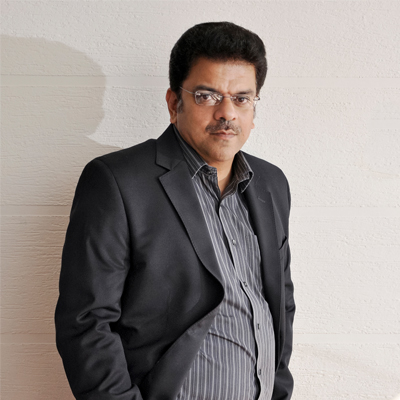
    Den chairman and managing director Sameer Manchanda said, “It is our pleasure to welcome a veteran professional like Manish in our fold. His rich experience with some of the world’s largest consumer goods companies will be invaluable as Den embarks on a trajectory of rapid growth in digital cable, broadband internet and new initiatives and transforms itself into a B2C brand.”


    He is a qualified Chartered Accountant and Company Secretary with over two decades’ experience in various senior level finance and business roles primarily in consumer oriented companies. He has served across geographies covering both India and global markets.


    Dawar has spent over 10 years at Reckitt Benckiser, a diversified multinational consumer goods company operating in the health, hygiene and home products segments, where he was the senior vice president – group controller based out of the company’s corporate headquarters in the UK. Prior to this, he served as the regional finance director for Reckitt’s South Asia business and the CFO and company secretary for its Indian operations.


    Before this, he spent nearly seven years at Reebok where he served as country manager and was responsible for the launch of the Rockport brand in India and South Asia. He also served as the CFO and company secretary for Reebok in India following a stint as regional controller for Reebok’s New Markets region. He started his career at Hindustan Unilever where he spent over five years in various roles.

  • Den Networks & Snapdeal ink 50:50 JV for TV Commerce channel

    Den Networks & Snapdeal ink 50:50 JV for TV Commerce channel

    MUMBAI: After inking a joint-venture with Jasper Infotech, the entity that owns and operates the digital commerce platform – Snapdeal.com, multi system operator (MSO) Den Networks has now launched a ‘TV Commerce’ channel with an aim to create a multi-nodal electronic shopping avenue for customers.


    The channel is currently available for viewers on channel number 132 on Den and will be extended to other cable and DTH networks over the next six months.


    With Den Networks’ reach into about 13 million households in over 200 cities across 13 states in the country, Snapdeal.com can leverage the robust distribution to provide customers easy access to products across home, lifestyle and electronics categories.


    Snapdeal.com co-founder and CEO Kunal Bahl said, “Innovation lies at the heart of Snapdeal.com and with this initiative we are taking yet another step to fulfill our promise of providing accessibility to the best products at best prices to consumers across India. We are delighted to partner with a likeminded brand like Den Networks, which enjoys massive reach and brand loyalty across the entire country and especially in smaller towns of India. India is a country with many heterogeneous segments of consumers, and we believe that by reaching 150 million households with 600 million people that have a TV, we can create another revolution through 7V Commerce.”


    Den Snapdeal TV shop will benefit customers who have limited access to internet services particularly in tier 2 and 3 cities. 


    Den Networks CMD Sameer Manchanda added, “We are extremely thrilled to partner with Snapdeal.com on this game-changing initiative. By leveraging Snapdeal and Den’s nationwide distribution network will now be able to engage with a much larger audience, which is still not exposed to the benefits of online shopping and internet access. Together, we aim to offer the customers a wide assortment of products and provide them with a hassle free buying experience. The response to the pilot has been extremely encouraging and we are sure Den-Snapdeal TV Shop will be well received by our viewers.”


  • Belgian Harm van Veldhoven becomes manager for DEN-owned Delhi Dynamos football club

    Belgian Harm van Veldhoven becomes manager for DEN-owned Delhi Dynamos football club

    NEW DELHI: Delhi Dynamos FC, the national capital’s football team for the Hero MotoCorp Indian Super League, have announced Harm van Veldhoven as its manager.


    Harm started his career as a striker on the football field and his tryst with coaching started in 1999 with FC Lommel, a renowned second division club in Belgium. He took over as manager in 2000, achieving promotion in 2002 by winning the Belgium Second Division Championship. During his tenure, Harm also managed to guide the club to the finals of the Belgian Cup. In 2003, Harm joined FC Brussels, another promising Belgian club, and won promotion for the club as Champion of the Belgian Second Division in his very first year as their manager.


    In 2004, Harm joined Belgian Pro League club Cercle Brugge and served as manager till 2007. Harm then moved to Germinal Beerschot and had another successful couple of seasons in the Pro League.


    He joined the Dutch Eredivisie (top division) in 2008, becoming manager of Roda JC. After helping his club avoid relegation in the 2008-09 season, Harm led Roda to a series of impressive league finishes, including a high of sixth place in 2010-11. After completing his contract term in 2012, he joined the Belgian Pro League Club, KV Mechelen as manager, concluding that engagement in 2013.


    Harm’s coaching style is a great fit for the Delhi Dynamos’ philosophy of “Thok Denge”. Harm prefers the 4-2-3-1 and 4-3-3 formations, enabling his team to produce an exciting brand of fluid, attacking football.


    During the launch of the team, the Dynamos described their mission as building football into a leading sport across Delhi and Northern India. With an alliance with Dutch powerhouse Feyenoord Rotterdam and coupled with Harm’s expert guidance, the Dynamos are well on their way to give Delhi a well-prepared, world-class football team that will do the city proud.


    Sameer Manchanda, a passionate football fan and chairman and managing director of DEN Networks said: “We are very happy to welcome Harm van Veldhoven to the Delhi Dynamos FC. A coach of Harm’s calibre and experience will enable our mission of creating a cohesive team of world-class players; and more importantly, will give each ‘Delhi Dynamo’ an invaluable opportunity to learn new skills and grow under his able leadership. We are very excited with the way this team is shaping up and we hope to deliver the expectations of millions of Delhiites on the football field.”


    Veldhoven said: “I am thrilled and humbled at the same time with this immense responsibility to give India’s capital a formidable football team! Coaching Delhi Dynamos FC is a great opportunity, as I get to work with skilled Indian & international players. I look forward to building an amazing team for Delhi.”


    DEN aims to create a robust football ecosystem in Delhi and Northern Indian. Delhi Dynamos has an alliance with Feyenoord Rotterdam – a leading football club and academy from the Netherlands. According to the CIES Football Observatory,Feyenoord was the World No. 1 in Player Development for this FIFA World Cup 2014.

  • Den Network’s profit run continues in FY-2014; topline rises

    Den Network’s profit run continues in FY-2014; topline rises

    BENGALURU: At a time when most companies involved in carrying television signals from the broadcaster to the consumer via cable have reported losses and are complaining about poor collections, Den Networks Ltd  (Den Networks) has reported profits, albeit slightly lower by 3.6 per cent as compared to last fiscal’s.


    The company’s assets and liabilities show that its trade receivables in FY-2014 has gone up by 20.4 per cent to Rs 391.92 crore (35.1 per cent of Operating Revenue of Op Rev) as compared to the Rs 325.62 crore (35.6 per cent of Op Rev) in FY-2013 as is obvious, in terms of percentage of Operating revenue vis-a-vis the previous year, the percentage of trade receivables has dropped fractionally.


    Den Networks reported a PAT of Rs 75.14 crore (6.7 per cent of Op Rev) for FY-2014, as compared to the PAT of Rs 77.94 crore (8.5 per cent of Op Rev) in FY-2014. In Q4-2014, the company reported a PAT of Rs 15.21 crore (5.04 per cent of Op Rev), lower by 5.4 per cent than the Rs 16.08 crore (5.9 per cent of Op Rev) during the immediate trailing quarter and 41.7 per cent lower than the Rs 26.08 crore (9.61 per cent of Op Rev) in Q4-2014.


    On the topline front, Den Networks has crossed the Rs 1000 crore operating revenue mark in FY-2014. The company reported Op Rev of Rs 1116.69 crore which was 22.2 per cent more than the Rs 914.05 crore last fiscal. Op Rev for Q4-2014 at Rs 301.86 crore was 10 per cent more than the Rs 274.46 crore in Q3-2014 and 11.2 per cent more than the Rs 271.43 crore in the year ago quarter Q3-2013.


    Here’s what the company has to say in its investor update:


    The company’s income from operations in Q4-2014 at Rs 930.43 crore can be broken in to streams –Rs 281.69 crore from its cable business and Rs 648.65 crore from its distribution business. After cost of distribution rights of Rs 633.57 crore, net revenue from the segment along with other income is Rs 17.44 crore, while the net revenue from the cable including other income is Rs 308.23 crore. The cable business has shown a positive result before tax of Rs 11.78 crore, while its distribution business a negative result or loss of Rs 4.6 crore.


    Consolidated Full Year EBITDA for FY-2014 was Rs 367.71 crore, a 52 per cent jump from Rs 242.70 crore in FY-2013. The Company says that it has incurred expenses of Rs 15 crore (approx) towards broadband and DAS Phase III and IV cities in this year, which have been considered in the EBITDA.


    Full Year EBITDA for FY-2014 Rs 357.51 crore, a 54 per cent jump from Rs 231.72 crore in FY-2013 EBITDA margins stood at 32.1 per cent.


    Subscribers and Set Top Box Deployment


    In Q4-2014, Den Networks claims to have deployed 450,000 set top boxes.  It says that it now has digitised approximately 6.1 million homes of its total subscriber base of 13 million homes. The company says that it has an estimated analog base of 7 million homes in its Phase III and IV markets. It confirms that it is well capitalised to meet the deployment requirements of its existing analog subscriber base in these cities. 


    Click here to read the full report

    Click here for investor update

  • DEN Networks appoints Gaurav Tikoo as GM, Brand

    DEN Networks appoints Gaurav Tikoo as GM, Brand

    MUMBAI: DEN Networks has appointed Gaurav Tikoo as general manager, Brand to accelerate its transformation from a B2B business into a leading consumer facing digital cable and broadband company.


    Tikoo joins DEN from HCL Infosystems where he was the head of Global Marketing Mobility Solutions. Prior to HCL, he has worked with Samsung India Electronics as lead, marketing communications for its Home Appliances Division. He has previously been associated with companies like Radico Khaitan, Max New York Life Insurance and LG Electronics.


    Gaurav brings with him over a decade’s experience in the field of strategic brand management and establishing brand identities. He was instrumental in creating and managing HCL’s “ME” tablet brand globally. His work on ME tablets helped HCL win prestigious awards like Marketing Campaign of the Year, Emerging Brand, Best use of Social Media, Brand Excellence at the CMO Asia forum. He has also been conferred with the Star Youth Achiever award by the Global Youth Marketing Forum for his work at HCL.


    Commenting on the appointment DEN Networks chairman and managing director Sameer Manchanda said, “It is my pleasure to welcome Gaurav to the DEN team. DEN is at the cusp of a rapid evolution into a B2C company serving digital cable and high speed broadband to millions of Indians. We are very happy to have Gaurav on board to take charge of DEN’s transformation into a leading digital entertainment brand.”

  • ISL announces partners in its journey to revolutionise Indian football

    ISL announces partners in its journey to revolutionise Indian football

    MUMBAI: IMG Reliance and Star India promoted Indian Super League (ISL), under the aegis of All India Football Federation, on Sunday, 13 April reached a crucial junction on its path to rediscover Indian football, as it identifies and awards eight ‘League Partners’ across the country ahead of the proposed September-November 2014 inaugural season.


    Touted to be an unrivalled footballing tourney, the ISL – that is being planned under the Football Sports Development (FSD) – aims to ignite a revolution in the sport and ultimately enable Indian football to thrive and perform at the highest level on the international stage.


    “Today’s announcement is the culmination of several years of hard work and strategic planning,” said IMG chairman & chief executive and IMG Reliance chairman Michael Dolan in a statement. “We are enormously pleased at the level of interest the creation of the Indian Super League has generated. We believe the League signals the beginning of a new era in the development of football in India and, in the future, will be the source of great pride for the people of India.”


    ISL’s proposal for ‘League Partners’ received an overwhelming response from the business, sports and Hindi film industry, to own a team from the nine proposed cities in the contention. Four of the final eight cities – Delhi, Kochi, Guwahati and Bengaluru – will find itself in the mainstream football map of the country, which is traditionally being dominated by Kolkata, Goa, Pune and Mumbai, through the high-profile professional tournament.


    “Inspiring our nation to excel is a priority and comes naturally to us at Star India. With our expertise in marketing and production of sports content, our task is cut out to etch football in the sports culture of India,” said Star India CEO Uday Shankar. “The nation has been awaiting its second sport for far too long. And we’re delighted to collaborate with esteemed partners in the business and sports world to make that happen!”.


    The winning bids, which boast a good mix of corporates and celebrities, include – the Sun Group for Bengaluru; Sameer Manchanda led Den Network for Delhi; Venugopal Dhoot (Videocon), Dattaraj Salgaocar and Shrinivas V. Dempo for Goa; John Abraham & Shillong Lajong for Guwahati; Sachin Tendulkar & PVP Ventures for Kochi; Sourav Ganguly, Harshavardhan Neotia, Atletico Madrid, Sanjeev Goenka, Utsav Parekh for Kolkata, Bollywood’s Ranbir Kapoor and Bimal Parekh for Mumbai and Salman Khan together with Kapil Wadhawan and Dheeraj Wadhawan of the Wadhawan Group for Pune.


    “It is with great pride that I welcome the eight League Partners to the Indian Super League. We want to unlock the unbound aspirational energy of our youth through grassroots and community development programs,” said Nita M. Ambani. “Together, we will strive to build a vibrant ecosystem that will provide impetus to football in India. As Mentor of the League, I commit myself to development of football as a major sport for the youth of India.


    Ernst & Young, the designated international advisory firm, had the mandate of drawing up and validating the bid process. Each bidder was subject to strict eligibility norms and was required to submit the bids, as prescribed under the ‘Invitation to Bid’ document. Bids were evaluated by the jury panel in the presence of Ernst & Young representatives.


    The ISL represents a transformational progress for Indian football, progress that will be good for players, fans and the League Partners. It’s an opportunity to be part of one of the most exciting new properties in football anywhere in the world and Indian Federation, the AIFF has extended all its help for the success of the League.


    AIFF president Praful Patel said: “No period in India’s long and proud history in football is more exciting than today. This day will go down in memory as a special day for Indian football as eight high profile celebrities & corporates are being introduced into the sport through Indian Super League. With IMG Reliance & Star providing the perfect foundation, the League has become an unstoppable force which would change Indian football.”


    “I hope the grassroots’ obligation of the franchises gives a huge push to the development of the game. Along with the world class infrastructure that is being created for the Under 17 FIFA World Cup, and AIFF’s expression of interest to host 2015 and 2016 FIFA Club World Cup, Indian football is definitely turning a new leaf in its history,” he added.


    AIFF general secretary Kushal Das too is a firm believer of the fact that Indian football needs an innovative approach to amass popularity. “I have always believed Indian football needs an innovative and experimental format like Indian Super League to bring the fans back to the stadiums. Today, with the kind of owners and organisers that we have behind Indian Super League, we have the perfect recipe to a successful professional tournament. I wish the Indian Super League all the best.”


    Here is a closer look at the winning Bidders/Consortiums:


    A new Sun rises in the Garden City

    Bengaluru – Sun Group


    Sun Group is an Indian conglomerate, based in Chennai, India. Sun Group’s Sun TV Network is one of the largest media networks in India. It owns over thirty three television channels, 45 FM Radio Stations, Two Daily News Papers and Five Magazines with a reach of more than 95 million households in India. Sun Direct is one of the largest DTH service provider in the country having more than 9 million subscribers. Sun Pictures is the film division of Sun TV Network. The group is also present in the aviation business with SpiceJet and also owns IPL cricket team Sunrisers Hyderabad.


    Den to lay football Network in Delhi

    Delhi – Sameer Manchanda of Den Networks


    DEN Networks – led by Chairman and Managing Director Sameer Manchanda, is India’s largest cable TV distribution company serving 13 million homes in over 200 cities. Based in Delhi, DEN is a frontrunner of digitisation of Indian cable TV. DEN is also launching India’s fastest high speed broadband service with speeds of 100 Mbps and more. DEN aims to become the default destination for entertainment, information and interactivity for the Indian family.


    Goan sport to get Dempo, Salgaocar & Videocon’s push

    Goa – Salgaocar / Dempo / Videocon


    Dattaraj Salgaocar: His company has diverse interests in Mining, Hospitality, and Shipping. It exports over 4 million tonnes of Iron Ore every year. The company also runs the Goa Marriott and Hotel La Plaz Gardens in Goa.


    Dempo: Dempo Mining Corporation Limited is a prominent mining company from  Goa. Shrinivas V. Dempo is the chairman of Dempo Group. They are also the owners of Dempo Sports Club, popularly known as ‘the whites’ from Goa. The team has been a constant performer in all the national football championship and gained immense popularity in the last four decades of its existence. The team has several accolades and honours in its kitty. They have won the National Football League title in 2004 and 2006 and followed it with two I-League triumphs in 2006–07 and then in 2009–2010.


    Videocon: The group is a US $5 billion global conglomerate with a diversified set of products ranging from handsets, D2H, Electronic Appliance etc. The group has 17 manufacturing sites in India and plants in Mainland China, Poland, Italy and Mexico.


    John joins Lajong for Guwahati

    Guwahati – John Abraham and Shillong Lajong


    John Abraham: John Abraham is an established Bollywood actor, producer and former model. Known for his obsession for football, bikes and fitness, John is an avid follower of football and sports in general. He has bought a stake in Delhi team of Hockey India League.


    Shillong Lajong: Shillong Lajong is an I-league team based in Shillong. It was established in the year 1983. It was promoted to the 1st division of the I-League in the 2009-10 season. They have been associated with prominent brands such as Aircel and Adidas. The team plays its home matches in the Nehru Stadium in Shillong.


    God of cricket comes to ‘God’s own country’

    Kochi – Prasad V. Potluri of PVP Ventures & Sachin Tendulkar


    PVP is one of the largest investors of the country in media and entertainment industry and is listed on the BSE and the NSE. Prasad V Potluri, the known serial entrepreneur in the global outsourcing services space is the Chairman and MD of PVP Ventures. PVP was one of the bidders for Hyderbad team of IPL in 2012.


    Sachin Tendulkar: The batting maestro and a world renowned personality, also known as the God amongst his global fan base, will be associated with the team as its brand ambassador.


    Kolkata looks forward to Dadagiri in football

    Kolkata – Sourav Ganguly, Harshavardhan Neotia, Atletico Madrid, Sanjiv Goenka, Utsav Parekh


    Sourav Ganguly: Affectionately known as ‘Dada’, is a former Indian cricketer and captain of the Indian national team. Currently, a cricket commentator, Ganguly is regarded as one of India’s most successful captains in modern times. He is the 5th highest run scorer in ODIs and was the 3rd person in history to cross the 10,000 run landmark. In 2002, the Wisden Cricketers’ Almanack ranked him the sixth greatest ODI batsman of all time.


    Atlético de Madrid: Spanish club based in Madrid that plays in the La Liga and has been the champions on 9 occasions. It is the third most supported club in Spain. They will be moving to a new stadium in the 2015 season which will have a capacity of 70,000 spectators. It is one of the biggest clubs in the world in terms of associates with more than 65,000 season ticket holders.


    Harshavardhan Neotia: Harshavardhan Neotia of Ambuja Neotia Group is one of the most prominent and respected businessman in India. The corporate houses headquartered in Kolkata has its forte in real estate and recent forays into hospitality, healthcare and education. The group has championed the cause of woman and child healthcare by setting up Bhagiarthi Neotia Woman & Child Care Centre in Kolkata.


    Sanjiv Goenka:  Sanjiv Goenka of RP – Sanjiv Goenka Group from Kolkata is a prominent businessman in India having interest in Power business in the city and national network of modern Retail chains across country.


    Utsav Parekh:  Utsav Parekh has been Non-Executive-Non-Independent Chairman at SMIFS Capital Markets Ltd. since April 1, 2009. Mr. Parekh has about 25 years of in-depth experience in merchant banking and financial services.


    Mumbai Wakes Up to Sid’s passion

    Mumbai – Ranbir Kapoor & Bimal Parekh


    Ranbir Kapoor is one of the leading Indian film actor of the current generation. Through his successful career in Hindi (Bollywood) films, he has become one of the highest-paid actors and one of the most high-profile celebrities in India. He is the recipient of several awards and nominations including five Filmfare Awards. Kapoor is the son of actors Rishi Kapoor and Neetu Singh, and the grandson of actor-director Raj Kapoor. He began his career in Bollywood as an assistant director on Sanjay Leela Bhansali’s 2005 film Black and later turned actor to give many a hit movies year on year. A keen follower of football and an avid fan of FC Barcelona, Ranbir is often seen on the maidans of Mumbai playing football with his co-stars and friends when he is not shooting.


    Bimal Parekh: Bimal Parekh is a renowned Chartered Accountant from Mumbai.


    Pune will play its football Dabang style

    Pune – Salman Khan, Kapil Wadhawan & Dheeraj Wadhawan


    Kapil & Dheeraj Wadhawan: Kapil Wadhawan is the Chairman and Dheeraj Wadhawan is the Vice Chairman of the Rajesh Wadhawan Group, which has diverse business interests including financial services, food retail, hospitality, education and real estate. Sport development has been a major focus area of the Wadhawan family, which believes in taking sport to the grassroots level, thus enabling access for India’s young to good quality sporting activities and infrastructure. Over the years, Wadhawan Group has been associated with sports – especially cricket – either as sponsors or team owners.


    Salman Khan: Salman Khan is an Indian actor, producer, television presenter, and philanthropist. Known as the actor with mass appeal, Salman is the promoter of ‘Being Human Foundations’. He has appeared in the highest grossing film nine separate years during his career, a record that remains unbroken. He has starred in more than 80 Hindi films and thus far and has established himself as a leading actor of Hindi cinema.


    Leveraging the strengths of all its partners, the Indian Super League envisions creating new football powerhouses in this part of the world, which will rise to global prominence as the country and the sport further develops.
  • The LMO-MSO relationship will get clarified within six months: Sameer Manchanda

    The LMO-MSO relationship will get clarified within six months: Sameer Manchanda

    NEW DELHI: Digitisation has given an opportunity for cable to compete with direct-to-home (DTH). There was a time when digital meant DTH and cable was largely analogue. But now, there is competition between digital and digital. While world over, cable is supposed to provide premium products, here in India, DTH was and is considered as a premium product. Digitisation has given cable an opportunity to show its might to DTH, compete with it, and provide customers television without interruption and with broadband internet and Value Added Services (VAS).


    We are in a highly competitive work environment. For smaller players to emerge, they will need scale, pure execution and vision of where they want to see themselves. They should be thinking big and along with that, should have the patience to wait for at least 5-10 years. There will be hiccups and ups and downs, but as long as they manage and maintain the course, they will achieve their goal. Cable has a unique proposition. It has scale, is a mass product, has mass appeal, is bigger than DTH, and every home has been watching cable since 1991. So just believe in the vision.


    Cable is a technology; we just have to leap frog from analogue to a complete different pipe, and that will happen in the next 5-10 years. As we saw in the case of mobile, even cable will go the same way as the world has gone.


    I know that there is a lot of pain, and in the beginning years, we have all faced it and will probably face it for a little longer too. But in the next 10 years, everyone will benefit. And every stakeholder, be it small Multi System Operators (MSOs), Last Mile Owners (LMO) or national MSOs, each one will gain. The industry can only be as vibrant and strong as each of its players. So, one player cannot remain vibrant while the other isn’t. The whole industry has to be vibrant and so, we all have to take a step forward in unifying the cable industry and making it vibrant.


    The LMOs and MSOs have to think that they are partners. Right now, there is a turf war of economics. But it will wear off once they realise that the customer will go wherever he/she wants to. He will go to DTH or the IPTV platform or 4G or any other platform where he/she gets better service. So, the LMOs and MSOs have to understand that they have to be together.


    If you see, the MSOs are ploughing in a lot of investment; they are dealing with broadcasters and are taking risks. They are also the ones who are making the pipe much stronger, so if you look at that, there is a role that the MSO plays and then there is a role that the LMO plays.


    Today, the turf war is on economics. But in six to nine months, each player will understand the strengths and weaknesses of each party. And if they play to the strengths, the customer will get a better product and then he/she will pay much more than what he/she earlier paid. Because if you see that from 70 channels, they will have 300-400 channels, then there will be VAS and much more. So you will see that the LMOs will be making much more than what they are making today.


    The revenue share needs to be sorted and these are things that need discussion. The MSO is also in a tight position. He has to deal with broadcasters and also ensure that the customer management is better than DTH. There are investments that need to be made. So I think that both parties need to understand each other.


    The first effect of digitisation has already been felt and that has happened from the customers’ end. The customer today has moved from some 70 channels to 300 channels and all this with no interference. He/she has been given a box for a reasonable sum and in a few minutes, with no wire and antenna, he has started getting the digital experience. This has been the real effect of digitisation, which has unfortunately gone unnoticed. And this was the reason that 21 million homes, which could have chosen DTH, chose digital cable instead. So the effect of digitisation has been felt, but now because of switch offs, the LMO issue, and under investment by some players, the impact is marred. So there will be good and bad times for cable, but then in a couple of years, it will all be sorted.


    The entire chain of media will become vibrant. The broadcaster, LMO and MSO will gain. Currently, since everybody is looking at getting the most, there are wars, but this will get resolved in six months, it can’t take longer. I want to see the industry getting stronger, more vibrant. Customers should be so happy with cable that they start moving from other players to cable. We all want cable to be strong and the whole chain to be very vibrant.


    I am an optimist. Media has a great future in the next 5-10 years. No one part can say that he will gain while others don’t. All stakeholders will benefit. Even the customers will have the option of close to 1,000 channels. Yes, they will have to pay more for that, but at least, they will have the option to pay for what they want to watch, which was not there earlier. But unfortunately, this will need them to cough up a lot of money. There will be pain, but eventually, every stakeholder will have to think about 5-10 years later.


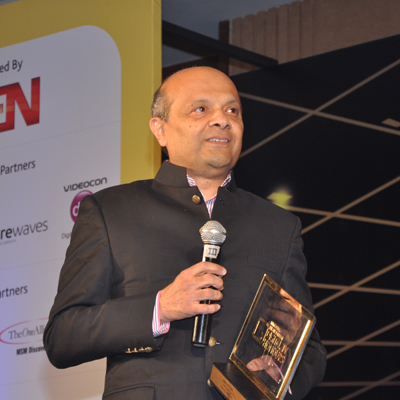
    (The remarks above are a part of the acceptance speech by DEN Networks Chairman & Managing Director Sameer Manchanda during indiantelevision.com’s The First Indian Digital TV Honours held in New Delhi on 28 January 2014)

  • DEN’s Manchanda: Consumers will drive phase III & IV digitisation

    DEN’s Manchanda: Consumers will drive phase III & IV digitisation

    MUMBAI: The government mandate to digitise roughly 130 million Indian cable TV homes has been progressing in stops and starts over the past year. But with phase I and phase II  almost complete and billing starting or expected to start soon, industry is now gearing up for the third and final fourth phases. And India’s cable cowboy and leading MSO Den Networks’ CMD Sameer Manchanda believes that the process is going to be smoother and easier in the smaller towns and hinterland India. 


    “It is the consumer who wants digitisation in phase III and phase IV,” said DEN Networks CMD Sameer Manchanda in an interview to CNBC TV 18 today. “Seeing the success of phase I and phase II, it’s the consumer in these smaller towns and rural India who are pushing for the digitisation.” 


    The ministry of information and broadcasting has declared 31 December 2014 as the sunset date for analogue cable TV. And along with that TRAI has been prodding and pushing the rickety cable TV architecture to upgrade quickly.


    Manchanda told the business channel that the government mandate combined with the consumer push, will result in digitisation being completed nationally in the next 15 months, giving leeway for a three month delay.


    “We are one of the largest players, with a fairly high share of cable TV homes,” said Manchanda during the course of the interview.


    90 million of the 130 million TV homes nationally are delivered TV services via cable, he pointed out adding that  “while 20 million homes have already been digitised in phase I and II, around 70-75 million are left to undergo the process in phase III and IV,” he added. 


    DEN Networks has seeded around 5 million set top boxes – a 25 per cent share of this 20 million digitised universe – and will need to digitise another eight million analogue homes in phase III and phase IV areas.  “Of course we will be expanding and have raised money for the same. So we will be doing much more in the remaining phases,” he said. 


    Though Manchanda acknowledged the competition is coming in from the direct-to-home (DTH) players, he still believes that consumers prefer cable TV over DTH in digitised environment. “In the 42 towns which have so far been digitised, we have seen that 70-72 per cent is cable while 28-30 per cent is DTH, if you leave Chennai out. We do understand there is competition.  But what we have seen in phase I and II – and I believe the same will play out  in phase III and IV –  is that  in a digital universe viewers  are preferring cable TV,” he revealed.


    Cable, according to Manchanda, in the last one year, has added roughly 85 -90 per cent of the homes that got digitised in the 42 towns.


    Addressing the question on the coming in of 4G in India, Manchanda said, “As far as 4G goes, I see cable TV and 4G complementing each other. Digitisation has provided us the bedrock for further change like elsewhere in the world and deliver internet and broadband. So far, India has witnessed speeds like 512 kbps, but here we are talking of speeds of 100 mbps and beyond. And we will be leapfrogging technology like offering ethernet on wire or cable and Docsis 3.0. .We will be launching broadband in March-April. I see a complete revolution coming in with broadband and cable TV companies offering triple play services.”


    With television here to stay and going to HD and 3D and video getting denser, Manchanda believes the need for fixed bandwidth from consumers at home will rise. “Indian cable TV companies are in an advantageous position as they are the only ones having a wire going into homes – apart from MTNL and BSNL. Hence they will be moving in the way cable companies in the US, Korea have,” Manchanda told the channel. 


    Citing Comcast, the largest media and cable company which also offers telecom services as an example, Manchanda said that India is going to be moving in the same direction in the next three to five years. “It would change the way education, video and everything else on the internet is done,” he said.