Tag: Sameer Makani

  • Makani Creatives creates #Don’tStop campaign for Shopper’s Stop to empower women

    Makani Creatives creates #Don’tStop campaign for Shopper’s Stop to empower women

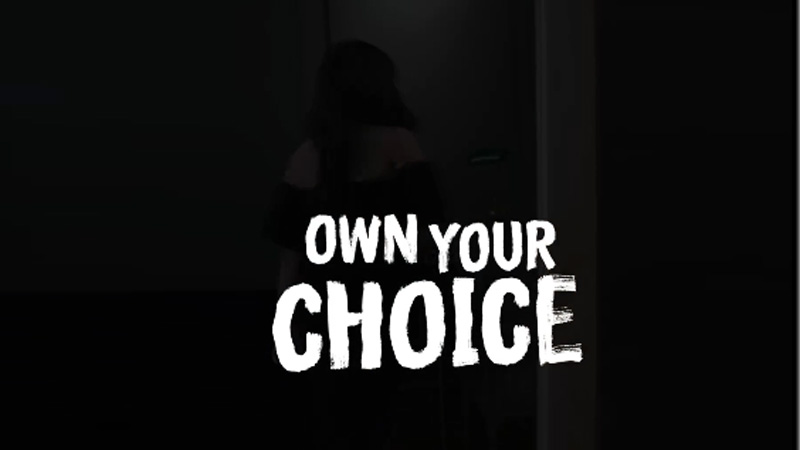
    Mumbai: On the occasion of Women’s Day, Makani Creatives conceptualised a campaign – #Don’tStop for Shopper’s Stop that is aimed at dismantling the societal pressures and biases that women face in the realm of fashion and beauty. Women, often subjected to relentless scrutiny and judgment, find themselves questioning their choices and feeling underconfident due to unrealistic standards set by society.

    The #Don’tStop campaign urges women to embrace their choices fearlessly, encouraging them not to hold back. The video features a girl facing criticism for being deemed ‘Too Flashy,’ ‘Too Bold,’ ‘Too Revealing,’ ‘Too Tight,’ ‘Too Wild,’ and ‘Too Fake,’ mirroring the judgment many women encounter in every walk of their life.

    Taking inspiration from this insight, Shoppers Stop’s campaign challenges the status quo by empowering women to embrace their individuality and live authentically, without apology. In a society that constantly dictates what women should wear, how they should look, and how they should present themselves, #DontStop encourages women to break free from these confines and celebrate their uniqueness.

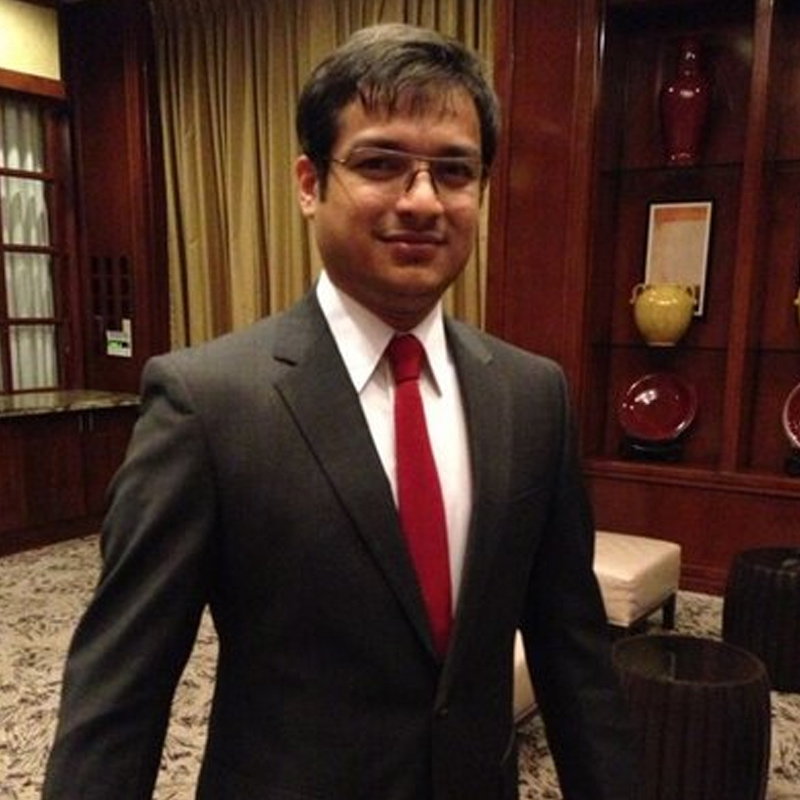
    Commenting on the campaign, Makani Creatives co-founder  Sameer Makani said “As long-standing creative partners of Shoppers Stop, we wanted this topical campaign to authentically reflect the brand’s ethos. Fashion being one of the most powerful forms of self-expression was our inspiration. The campaign serves as an empowering reminder to block out negative comments and make choices based on one’s personal preferences and comfort.”

    Shoppers Stop customer care associate and chief marketing and communication officer Shwetal Basu added “When team Makani presented the idea, we were struck by the power of simplicity in the storytelling and yet the impact it had on every woman in the room. It beautifully resonates that as a brand, we stand proud champions of confidence, determination, and inclusivity, paving the way for every woman to embrace her fashion journey.”

    The campaign film exudes just the right amount of intensity yet speaks to the audiences in the most relatable and honest manner. It is a commitment to embrace women’s individuality and let them live fearlessly without worrying or being judged.

  • Guest Column: ASCI to form new ad regulations to avoid misleading content

    Guest Column: ASCI to form new ad regulations to avoid misleading content

    NEW DELHI: Advertising has evolved into an enormously complex form of communication, with literally thousands of different ways for a business to get a message to the consumer. Today's advertisers have a vast array of choices at their disposal. The internet alone provides many of these, with the advent of branded viral videos, banners, advertorials, sponsored websites, branded chat rooms and so much more. A successful advertising campaign will spread the word about your products and services attract customers and generate sales. Whether you are trying to encourage new customers to buy an existing product or launching a new service, there are many options to choose from.

    The most suitable advertising option for your business will depend on your target audience and what is the most cost effective way to reach as many of them as possible. The advertising option chosen should also reflect the right environment for your product or service. For example, if you know that your target market reads a particular magazine, you should advertise in that particular publication only or if the target market is online, then it’s better to have a firm grip on the online platform to reach the correct target audience.

    Ads can majorly vary into categories and further gets divided into sub- categories:

    1.    Online Advertising – If you see an advertisement via the internet, then it is classified as online advertising. In fact, there are ads on various pages, and most other websites you visit, as they are the primary revenue driver for the internet. There are many digital marketing strategies including placing ads on popular websites and social media sites like LinkedIn, Twitter, Instagram, Snapchat Facebook and on websites through Adword and Adsense. 
     

    • Google Adwords- AdWords from Google allows companies to bid on the placement of an ad on Google's search engine results page. By using keywords or common search terms, searches that are related to the business and their products. It works when a business pays google as per the number of times an ad is clicked on, which is why it's called a cost per click.
       
    • Google AdSense- It allows a company to host ads on their website from Google to generate revenue for the site. For businesses looking to advertise, they can enroll in Adsense and Google, which will then match the ad to various websites with related content or search parameters. As a result, companies can reach larger audiences through Google's placement of advertisements and will help gain website, the required traffic through it. 

    2.    Mobile Advertising- A dominating force in digital advertising is through mobile devices such as cell phones, iPads, kindles, and other portable electronic devices with internet connectivity. Current trends in mobile advertising involve major use of social media. Mobile advertising is similar to online advertising and is increasingly gaining importance as a method of reaching new customers. 

    3.    Print Advertising- Print, a huge driver of sales, it is taking a back seat to the many digital forms of advertising now available to marketers. However, if there is one thing that's certain about advertising, it's that being different is good. Typically, print can be split into three subcategories: 

    • Newspapers/ Magazines
    • Brochures, Leaflets, Flyers, Handouts, and Point-of-Sale Advertising
    • Direct Mail Advertising 

    4.    Broadcast Advertising- A mass-market form of communication including television and radio, broadcast advertising has, been the most dominant way to reach a large number of consumers.

    Challenges faced by the industry

    The industry is progressing and everyone thinks they can be a marketer these days even after having little or no experience at all.It is becoming a very difficult industry for new companies to navigate. The online advertising industry is facing a number of serious challenges right now. One of the major issues being faced is the lack of transparency. Transparency has long been an issue in advertising, largely due to the complex nature of contracts signed between media companies and their clients, as well as the subject of uncertain bonuses or benefits that have come from media producers.

    Advertising Standards Council of India (ASCI) to form new ad regulations to avoid misleading content- In order to curb these challenges, the government is recently working on a code to curb misleading advertisements, which will force companies to substantiate statements made while promoting products. Additionally, since there are no specific regulations for advertisers on OTT platforms for example, products like liquor ads do not have a gateway to advertise themselves on general DTH platforms, but due to no fixed regulation assigned on OTT platforms, brands have now started to advertise themselves on platforms like Netflix, Amazon, Hotstar, AltBalaji, Voot, Zee5 etc. Such an activity from advertisers can be a bane for children under the age of 18 and can badly influence the target audience. There is a need to have a code for the benefit of consumers and also to help identify quickly which fall under misleading category, otherwise there will be a sea of complaints about misleading advertisements. 

    (The author is Makani Creatives co-founder and managing director Sameer Makani. The views are personal and Indiantelevision.com may not subscribe to them.)
     

  • TV ad volumes up; next challenge is lag between inventory & advertisers

    TV ad volumes up; next challenge is lag between inventory & advertisers

    NEW DELHI: Battling through a rough quarter with, television advertising is once again gaining momentum. As per a recent TAM AdEx data, the month of June 2020 witnessed an uptick of 46 per cent in ad volumes as compared to May 2020 and even the advertising duration picked up by 8000 hours as compared to the last month. While this looks like a positive trend indicating a better future for the TV industry, industry insiders feel that the medium has to still battle certain issues to get back to its older glory.

    Grapes Digital COO Shradha Agarwal shares that this increase in ad volumes is also because of the reason that certain slots for the spring-summer category were pre-booked by brands and those took up the ad slots as new programming began on certain genres. 

    “I have one client who had invested around Rs 2 crore for a big-budget campaign on television but before it could go on-air the lockdown happened. Now, as per the advertiser, they could not get their TV campaign cost back but instead got an option to put the campaign on hold, and that can be run later,” she notes. 

    As per mPlan CEO Parag Masteh most of the investments that television is enjoying today is from new investors and certain categories like healthcare and FMCG while big brands have still their marketing budgets slashed below 50 per cent. 

    “The current growth can be attributed to panic buying by certain categories and eventually digital is going to come up as a big challenge for television,” he insists. 

    As per TAM AdEx data, eight out of the top ten categories were from FMCG, including baby foods, vanishing creams, and artificial sweeteners. 

    Makani Creatives MD and co-founder Sameer Makani agrees that digital platforms like OTT will come up as a big challenge to television going ahead, “As brands are shifting their modes of communication from offline to online to broadcast, it may take time for TV ads to follow a smooth road. As digital advertising is cheaper as compared to others, it consumes the maximum share of advertising. 2020 has changed the strategies and approach of every advertiser and marketer and has forced them to increase the frequency of advertising.”

    The Media Ant co-founder Samir Chaudhary doesn’t think that digital will take TV's place anytime soon but as new shows come up, the medium is going to face big issues with the lag in inventories and advertisers eager to invest into television. 

    “As things normalise, other media will start getting their share back, and certainly TV will become stronger. But as ad inventories will go up with new content coming, there is going to be a lag in filling them up as (advertisers’) businesses will take another two to three months time to get back on their feet.” 

    He added that the only solution to this problem is what most channels are doing already, slashing inventory prices and offering discounts to advertisers. 

  • The art of advertising – Things you can learn from ‘Bull’ TV series

    The art of advertising – Things you can learn from ‘Bull’ TV series

    Pictures have always been worth a 1000 words. Thus in an era where words are limited to the number of characters, content limitations and complexity in translation; advertising has become a powerful tool in establishing connect with the consumer. The ultimate goal of advertising is either promotion or awareness; what sounds like a simple task is a difficult challenge many brands face today – creating stickiness for the brand is not easy. Advertising doesn't lay in mere collaborations of words to create content but it lies in simple & bold creativity that is visually rhetoric and can make people think and relate to the brands/products.

    In my 23+ years of storytelling journey, I have come to a conclusion that the only way any brand would be able to establish a connection of any scale with the consumer is when they have stories which provoke emotions. Using a fusion of words and graphics without a story would only state the messaging without any meaningful impact. Advertising is art if mastered and has the potential to create valuable stories. Perhaps one can always refer to an advertising manual for better results but that’s not enough. It’s about looking differently at things that are routine. It’s about bringing alive the creativity from the mundane.

    Very recently I came across a TV series called Bull starring Michael Weatherlywhich largely highlights the results of combining human psychology, human intuition and high-tech data to learn and understand the thinking mechanism of jurors, attorneys, witnesses, and the accused to make them tick. This made me think that advertising can become a seamless tool if the method/techniques used in the show could be implemented in the current advertising environment. Listing down 3 rules that I think could do marvels if implemented right way in the Indian advertising industry.

    Rule #1: Your Consumer is Your Enemy

    It will sound awful but there is a science behind following this rule. Ever considered convincing your enemy to buy your product, the answer most-likely is never. So when you look at the toughest consumer as your target to crack, you need to create a pitch that is tempting enough even for your enemy. If a brand manages to convince the enemy to buy the product, that definitely speaks oodles about the idea’s strength. The secret lies beneath a 1000 failed approaches and 1 successful messaging.

    Rule #2: People Love Things That Are Relatable :

    Quite a few people complain about the media being too cautious and them showing similar content repeatedly. There is a very good reason for this. Bolder content increases the risk which could provide increased rewards or no rewards at all.  People who watch this show should be able to find quite a lot of faces as well as plenty of stories that feel familiar to them. Using a similar approach in advertising; creating advertisement which makes people comfortable making them recall a similar scenario would establish an immediate connect with the brand ensuring higher recall.

    Rule #3: Using Tech to Create Roadmap

    Bull is largely based on a premise where people can predict people with remarkable accuracy by using a combination of data, tech and a few other technologies. This results in a pinpoint roadmap of what will work and what will not work. Considering an approach like this will make brands understand consumers’ POV in a more refined manner which will later help them in creating products that will work with a large set of consumers.

    The communication would have become quite simple if there was Dr Bull in every agency. Dr.Bull would have helped the agencies in creating that out of the obvious idea that would penetrate the minds of the consumer establishing an instant connection. Although the Art of Advertising doesn’t come with the manual, these rules can always make the approach towards consumers better and the overall communication seamless.

    (The author is, co-founder and managing director, Makani Creatives. The views expressed are his own and Indiantelevision.com may not subscribe to them.)

  • Programmatic TV is the future of advertising

    Programmatic TV is the future of advertising

    As we move towards a digitally-driven world at a high pace, it is essential for brands to stay ahead of the curve and discover/develop newer and effective ways to reach the consumers ensuring impact. Now in the ever-evolving digital world, advertising has bypassed the traditional approach. With affordable internet prices across the country, digital advertising has evolved into a global marketplace at large. This new and evolved sector requires many relationships that extend further than the typical publisher/advertiser bond that brands and agencies were familiar with. Although new platforms for advertising have emerged but the value for television advertising is still growing. Television is of paramount importance for brands as they know TV ads work in reaching a larger set of audience who either has limited access to the internet or no access at all. Over the last decade, television has undergone major technological development which has enabled marketers to direct commercial messages in a focused manner on an individual level.

    With the invention of Smart TV’s, traditional ways of TV ad buying are being challenged by the programmatic approach.  Programmatic TV largely refers to the TV inventory that could be bought via a programmatic platform.  As simple as it may sound but it is rather a complex mechanism which has many broad categories with several types to choose from. They consist of video on demand (VOD), digital linear TV, video and terrestrial linear. One can always purchase the programmatic inventory of the TV by either open exchange or via a private market place. Open exchange can be accessed by anyone by using real-time bidding to auction inventory to the highest bidder and private market place, on the other hand, is more direct and based on impressions rather than the traditional guarantees of time and place. This digitization has overall enabled marketers to apply data segment to leverage big screen and create high impact on the audience. Programmatic TV is a one-stop solution for brands as well as advertisers as it largely applies digital advertising’s efficiency model to traditional TV advertising with the automation of buying process with connected devices.

    While programmatic TV as an option has an exceptional potential but it’s still quite new. Hence, programmatic TV is not living up to its true potential given that we’re still in the very early stages. Going by the pace of the adoption, the industry is likely to adopt it in phases. The first phase will induce buyers and sellers to use programmatic tech to transact digital video buys. This phase is actually underway and making notable strides across platforms. As per a report by Google Data, a 4x growth in impressions for videos was visible in 2014 itself. The second phase will ensure the overall development of the programmatic infrastructure, making it easier for buyers and sellers to place ads in streaming and video-on-demand TV content across connected devices efficiently. Both these phases will create pathways for the third and most important phase i.e. Linear TV. Support for Linear TV in programmatic is the most complex phase as it will take some significant work to integrate digital platforms with traditional systems and data vendors across the TV ecosystem. If done right, programmatic TV will help the sector in overcoming several ideological and technical challenges. The sector needs to get programmers and broadcasters along with advertisers to help understand what programmatic TV can do instead of what people think it does. This will then result in brands focusing on the things that really matter such as universal measurement across all advertising platforms for better ROI, the ability to reach viewers across screens, access to inventory devoid of rights issues along with programmatic buying support for set-top boxes and so on.

    As per e-marketers research, programmatic TV would be a multi-billion dollar industry by 2022. Though it accounts for less than 1 per cent of all TV ad spends for now. As brand advertisers, programmers, distributors and ad tech providers work their way through the real-world challenges, programmatic TV will begin to live up to its true potential making it the future of advertising on TV.

    (The author is co-founder and managing director, Makani Creatives. The views expressed are his own and Indiantelevision.com may not subscribe to them.)

  • Panasonic launches OLED TV campaign featuring Ranbir Kapoor

    Panasonic launches OLED TV campaign featuring Ranbir Kapoor

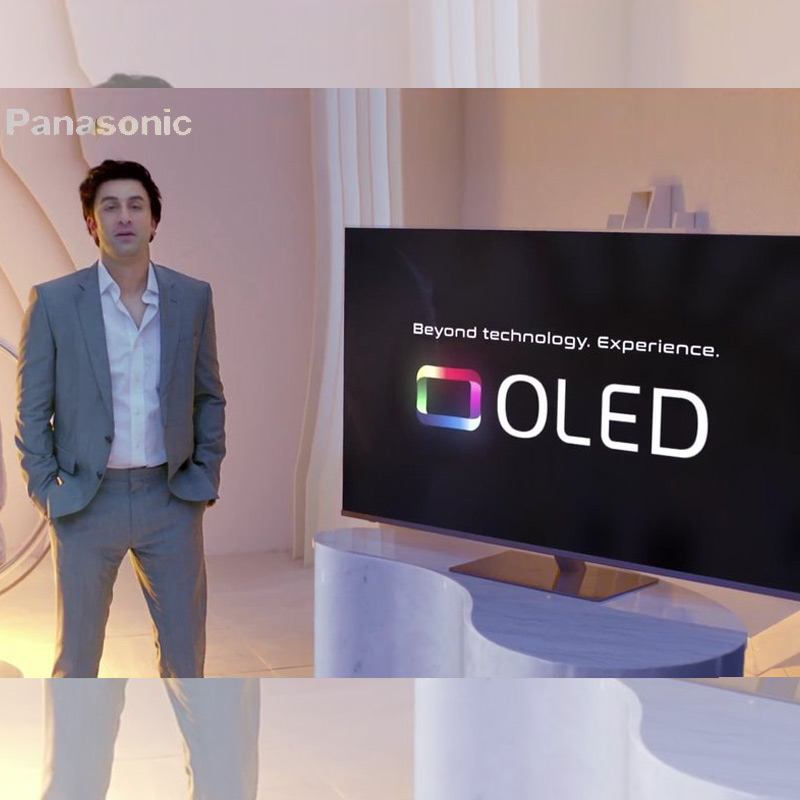
    MUMBAI: Panasonic India has launched a marketing campaign for its recently launched OLED TV.

    The new OLED TVC is themed – Beyond Technology. The 360-degree campaign speaks of Panasonic’s advanced proprietary technology in different aspects – Obedience as it enables you to search content with voice interaction, Compatibility as it allows two-way Bluetooth connection, Simplicity as you can easily swipe and share content from your phone to the TV and vice versa, Truth as it depicts true presentation of colors, and Power as its super bright panel delivers ultra-bright picture.

    The integrated campaign has been conceptualised by Makani Creatives and will be run across television, digital, airport outdoors, in stores and print mediums.

    In the TVC, the OLED has been personified as a human that understands the need of its consumer. Each frame of the 42 second television commercial illustrates the technology aspects of Panasonic such as the hexa chroma drive pro, absolute black filter, ultra fine tuning, swipe and share technology and dynamic blade speaker.

    The TVC is being aired pan-India across television and digital platforms of mix genre and majorly focusing on HD, English news and movies channels and infotainment among others.

    Panasonic India chief marketing officer Sarthak Seth says, “Through the newly launched TV campaign for OLED range involving Ranbir Kapoor, we aim at strengthening our brand promise and further reaching out to our consumers who aspire for a cinematic experience.”

    Makani Creatives MD Sameer Makani adds, “Panasonic is one of the most trusted consumer electronic brands in the world, especially in the television category. It is already established that Panasonic TVs have the best picture quality and with this campaign we wanted to go further than that. The Panasonic OLED has the best viewing experience and is packed with features that are made keeping in the mind the end user. The campaign brings out these features from the point of view of Ranbir Kapoor and in a true sense accentuates the user experience.”

    Embodying the elegance and pursuit of perfection inherent in Japanese design philosophy, the new premium range of OLED TV has a sleek and striking design that makes it a luxurious complement to the interiors of homes. It goes a step further by offering technology that translates into features and benefits that are unbeatable. It aims at giving users the best possible picture quality and colour accuracy, showing movies in the way the filmmakers intended.

    The new OLED line up comes in 55 inch FZ950 series and 65-inch FZ1000 series with starting price of Rs 2,99,000.

  • Makani Creatives bags advertising mandate for Onida’s Smart LED TV

    Makani Creatives bags advertising mandate for Onida’s Smart LED TV

    MUMBAI: Makani Creatives has bagged the advertising mandate for Onida’s Smart LED TVs from Mirc Electronics. The ad campaign for the brand will be unleashed soon.


    “Onida is a strong player in the consumer electronics market. We have always leveraged consumer insights by incorporating it as a technological feature into our products. This has been the mainstay of our success over the years. Our range of Smart LED TVs is in line with the same thought process. We have loaded the television with lots of new age features like Android operating system, built in Wi-Fi, quad core processor, screen mirroring, video calling, etc. just to name a few. One can also download millions of apps. Our key focus now, is to aggressively market the product and in order to meet this objective, we are thrilled to partner with Makani Creatives as our brand agency. Makani Creative shares our vision and developed a communication plan to do justice to the product and we are confident of creating yet another milestone,” said Mirc Electronics vice president sales and marketing N S Satish.


    Makani Creatives MD Sameer Makani added, “We have all grown up watching Onida and it is an iconic brand. When the opportunity to partner with them arose, we were very excited. The challenge was to strike a delicate balance between strong strategy and evocative creative to achieve the desired results. I think we managed to impress them with our thought process as well as the execution which tipped the scales in our favour. Needless to add, Makani is known for its work in the lifestyle category. The first set of work for Onida Smart LED TV will be out shortly and I am sure that this will be one of the first steps towards a mutually successful journey.”

  • JBL appoints Makani Creatives as its ad agency

    JBL appoints Makani Creatives as its ad agency

    MUMBAI: JBL, one of the leading American audio electronics company currently owned by Harman International, has roped in Makani Creatives as its advertising agency. This development comes close after the decision on deployment of major funds to step up marketing activities and ramp up technology.

    JBL has already launched a strong campaign with celebrities Arjun Kapoor and Parineeti Chopra in order to target the youth and engage the users by launching a music video called ‘Just Be Loud’ created by Kookie Gulati from SOBO films.  

    Makani Creatives will now roll out campaigns in sync with the brand thought process – ‘Just Be Loud’. The agency has a repertoire of youth, fashion and retail brands which makes it the natural choice to partner with JBL.

    JBL director Sahil Sani said, “JBL has been a key force in developing independent divisions for audio equipment for consumer home market and professional equipment for studio, installed sounds, tour sound, portable sound (production and DJ) and cinema markets. Over the last few years, we have managed to make our presence felt in most sound and audio sectors.”

    “Our key focus now, is to increase the reach and awareness, and build on our strength as a preferred choice for end-consumers. In order to meet this objective, we are thrilled to partner with Makani Creatives as our brand agency. With them on board, we are now gearing up for the new brand identity – ‘Just Be Loud’ and innovative marketing campaigns in the near future. We chose Makani Creatives for their clear understanding of our brand, proven record for delivering some of the most successful ad campaigns and focus on delivering business results,” he further added.

    Makani Creatives MD Sameer Makani said, ‘‘JBL is a young and dynamic brand which has revolutionised the audio category, that being of head phones, headsets and bluetooth speakers. We were very charged by this proposition and that lead to a fine campaign we presented to JBL. In fact, they were quite impressed and that’s how we bagged their luxury division, Harman Kardon as well. The first set of work for JBL will be out shortly and I am sure that this will be one of the first steps of a successful journey together, we intend to take with this brand.”