Tag: Samar Singh Sheikhawat

  • Luis Garcia & Sunil Chhetri grace Champions League Tour today

    MUMBAI: Football fans in Mumbai rejoiced as they won the honour of hosting the UEFA Champions League Trophy Tour presented by Heineken® in India. Heineken® continued its Champion the Trophy campaign in India by giving local football fans a chance of a lifetime to host and unveil European club football competition’s most coveted prize – the UEFA Champions League Trophy in their city for the first time in the programme’s 11-year history.

    The UEFA Champions League Trophy, known as the Holy Grail of club football, will be unveiled by former UCL winner and Liverpool FC player Luis Garcia in the presence of Indian football superstar Sunil Chhetri at the Mahalaxami racecourse on 10 April, 2017. Post the unveiling, eight lucky fans chosen from a Twitter contest will get a chance of a lifetime to play a match with Luis Garcia and Sunil Chhetri, in a five-a-side football game at the Turf Club. Players will be assigned to team Garcia and team Chhetri, as they will go head-to-head in a clash of legends.

    Mumbaikars could get a chance to be a part of the unveiling and witness the match. For details, log on to @Heineken _IN on Twitter and @Heineken on Facebook.

    United Breweries senior VP (marketing) Samar Singh Sheikhawat said: “For true football fans the iconic UEFA Champions League Trophy is the holy grail of the footballing world. Only the best football players in the world get to hold this symbol of the highest level of accomplishment in the sport. Heineken® is bringing the excitement of one of the most celebrated global sporting prizes for fans in India, through the UEFA Champions League Trophy Tour and creating engaging fan experiences that go beyond the 90 minutes of the match”.

    The UEFA Champions League Trophy Tour presented by Heineken® will make its way across the bustling city of Mumbai, giving fans a chance to witness the glorious trophy. The trophy will make its first pit stop at Shivaji Park, followed by Carter road, moving to BKC (Bandra Kurla Complex). Fans can be part of the Heineken® Trophy Tour experience by participating in a variety of engaging activities at the pit stops, where they stand a chance to win exclusive Heineken® merchandise.

    The tour will end at its final destination at the Taj Lands End, Bandra. This will be followed by the Trophy Tour Party, an evening of glamour and sports which embodies the Heineken® spirit of opening new worlds.

    Mumbai was chosen for the UEFA Champions League Trophy Tour through a Twitter contest by Heineken® across four cities (Delhi, Mumbai, Bangalore, Kolkata). The contest encouraged fans from each city to tweet, vote and compete for their chance to host the trophy. Each city was given a specific hashtag, for example: #ChampionTheTrophyBLR – for Bangalore, #ChampionTheTrophyMUM – for Mumbai, and fans battled it out online with the maximum tweets to win the rights to unveil the trophy in their city. The competition was close, but after days of continuous voting and tweeting, the city of Mumbai emerged victorious.

  • Heineken banks on heritage in new campaign

    Heineken banks on heritage in new campaign

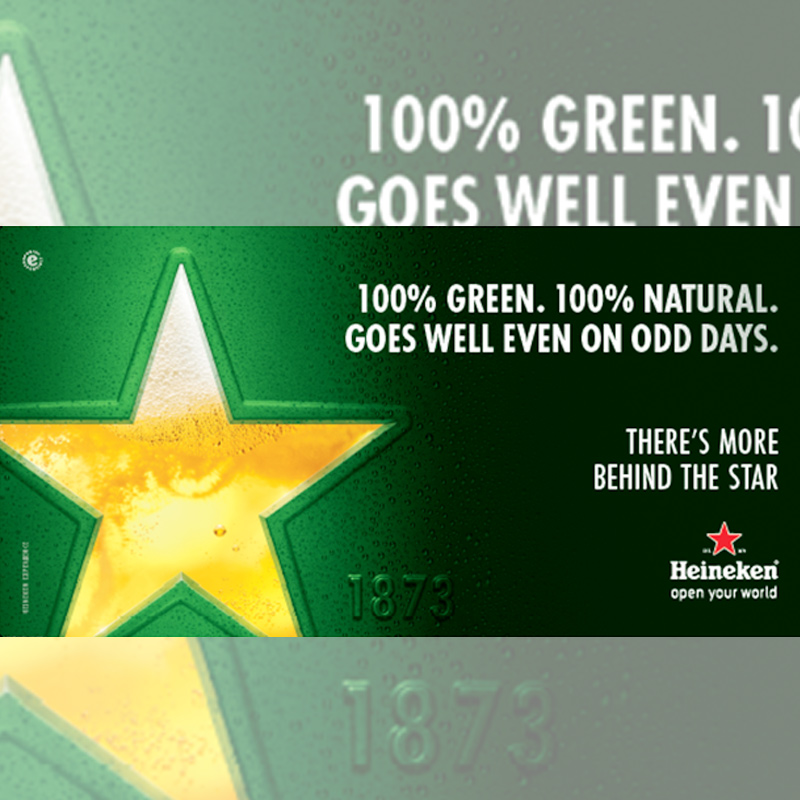
    NEW DELHI: Starting with the metros with the aim of attracting the affluent, Heineken with its campaign ‘There’s more behind the star’ is now planning to move to smaller cities in India. It is inviting consumers to discover the authentic product stories, the foundation of the global brand.

    The brand campaign in India comprised localized outdoor communication which combined Heineken’s credentials and a city’s cultural nuances in a witty manner.

    Aimed at addressing Heineken’s iconic heritage and at the same time telling compelling stories relevant and topical, the campaign spanned Delhi, Mumbai, Bengaluru and Kolkata.

    The global campaign consisted of a series of TV commercials featuring Hollywood star Benicio Del Toro, supporting digital activation and point of sale activities.

    The humorous video ‘See Del Toro’ comparing what is behind its own ‘star’ status, to specific stories behind the legendary Heineken star. The content was created by Publicis Worldwide and filmed in various locations in Barcelona.

    The campaign focuses on the beer itself, the brand’s rich heritage and its unparalleled international footprint.

    In 142 years, Heineken has grown from a small Amsterdam-based company into the world’s most international premium lager. The aim is to show the quality and taste has never wavered.

    United Breweries senior vice president marketing Samar Singh Sheikhawat said; “Consumers increasingly want to know what’s happening behind the scenes. Heineken has a wealth of authentic backstories.”

  • Heineken banks on heritage in new campaign

    Heineken banks on heritage in new campaign

    NEW DELHI: Starting with the metros with the aim of attracting the affluent, Heineken with its campaign ‘There’s more behind the star’ is now planning to move to smaller cities in India. It is inviting consumers to discover the authentic product stories, the foundation of the global brand.

    The brand campaign in India comprised localized outdoor communication which combined Heineken’s credentials and a city’s cultural nuances in a witty manner.

    Aimed at addressing Heineken’s iconic heritage and at the same time telling compelling stories relevant and topical, the campaign spanned Delhi, Mumbai, Bengaluru and Kolkata.

    The global campaign consisted of a series of TV commercials featuring Hollywood star Benicio Del Toro, supporting digital activation and point of sale activities.

    The humorous video ‘See Del Toro’ comparing what is behind its own ‘star’ status, to specific stories behind the legendary Heineken star. The content was created by Publicis Worldwide and filmed in various locations in Barcelona.

    The campaign focuses on the beer itself, the brand’s rich heritage and its unparalleled international footprint.

    In 142 years, Heineken has grown from a small Amsterdam-based company into the world’s most international premium lager. The aim is to show the quality and taste has never wavered.

    United Breweries senior vice president marketing Samar Singh Sheikhawat said; “Consumers increasingly want to know what’s happening behind the scenes. Heineken has a wealth of authentic backstories.”

  • Kingfisher to launch Pitchers app to answer all nightlife queries

    Kingfisher to launch Pitchers app to answer all nightlife queries

    MUMBAI: Acknowledging the power of digital, United Beverage’s flagship alcobev brand Kingfisher is all set to launch an aggregator cum classified app targeting urban nightlife. The beverage giant couldn’t have come up with a better name than ‘Pitchers’, hence giving a recall  to its brand association with TVF’s popular web series ‘Pitchers’ which had Kingfisher as sponsors.

    While addressing a summit at Goafest 2016, United Beverages Limited marketing SVP Samar Singh Sheikhawat announced the app, “Our consumers are constantly on the lookout for fun exciting nightlife destinations, and often that information is not curated and presented to them in a sensible manner. This app will be a one stop shop for them for any night life related queries — it could be about pubs, clubs, a fancy eating joint or places with live gigs.”

    Expected to be available at the Google Play store within the next five days with a soft launch in Bengaluru, Sheikhawat shared that the app would compete with the likes of Zomato and Foodpanda, with focus on nightlife being its key differentiating factor. Sheikhawat revealed that Kingfisher was eyeing Delhi and Mumbai next for the launch (in no particular order).

    “The app will share the entire listing of all the restaurants and pubs, provided that they have a liquor license, unlike Zomato. It will answer frequently asked questions about ‘what is the dress code’, ‘what are the charges as couple, singles and stags, ‘will there be valet parking services or not’, ‘how long will the happy hours be’, ‘What is the music going to be like,’ and if ‘the place has an open smoking zone,” etc.

    Since Pitchers would be a free app, Sheikhawat explained the revenue model, “We don’t need to make money out of this app. We are into the beer business. This is one of the many ways to reach out to our modern age digitally enabled consumer. We will definitely keep an eye out and see how it evolves into something that can be cashed later.”

    Sheikhawat also shared that his company  is open to forming commercial deals with local F&B players, be it SMEs  or five star, who would like to be showcased on the platform. However, his short term goal is to create a buzz around the app’s utility amongst the company’s consumers. The brand would also ensure that the access to the app is age restricted due to the content that will be showcased on it.

    Revealing the marketing and promotion details of  new app Sheikhawat said Kingfisher would be careful, “We want to launch the app, get user feedback,  fix bugs and explore possibilities and then market it to the masses based on our analytics of sometimes’ worth of use. We can create a song and dance around it anytime we want to, but we would rather iron out all issues before talking about Pitchers.”

    With Vijay Mallya making recent headlines for all the wrong reasons, it was inevitable to ask how that affected brand Kingfisher and UBL in general. ”Throughout this time we haven’t seen our shares take a dip. UBL is a completely different entity and a brand on its own. And with Heineken owning 44 per cent stake, we aren’t really worried,” Sheikhawat clarified before signing off.

  • Kingfisher to launch Pitchers app to answer all nightlife queries

    Kingfisher to launch Pitchers app to answer all nightlife queries

    MUMBAI: Acknowledging the power of digital, United Beverage’s flagship alcobev brand Kingfisher is all set to launch an aggregator cum classified app targeting urban nightlife. The beverage giant couldn’t have come up with a better name than ‘Pitchers’, hence giving a recall  to its brand association with TVF’s popular web series ‘Pitchers’ which had Kingfisher as sponsors.

    While addressing a summit at Goafest 2016, United Beverages Limited marketing SVP Samar Singh Sheikhawat announced the app, “Our consumers are constantly on the lookout for fun exciting nightlife destinations, and often that information is not curated and presented to them in a sensible manner. This app will be a one stop shop for them for any night life related queries — it could be about pubs, clubs, a fancy eating joint or places with live gigs.”

    Expected to be available at the Google Play store within the next five days with a soft launch in Bengaluru, Sheikhawat shared that the app would compete with the likes of Zomato and Foodpanda, with focus on nightlife being its key differentiating factor. Sheikhawat revealed that Kingfisher was eyeing Delhi and Mumbai next for the launch (in no particular order).

    “The app will share the entire listing of all the restaurants and pubs, provided that they have a liquor license, unlike Zomato. It will answer frequently asked questions about ‘what is the dress code’, ‘what are the charges as couple, singles and stags, ‘will there be valet parking services or not’, ‘how long will the happy hours be’, ‘What is the music going to be like,’ and if ‘the place has an open smoking zone,” etc.

    Since Pitchers would be a free app, Sheikhawat explained the revenue model, “We don’t need to make money out of this app. We are into the beer business. This is one of the many ways to reach out to our modern age digitally enabled consumer. We will definitely keep an eye out and see how it evolves into something that can be cashed later.”

    Sheikhawat also shared that his company  is open to forming commercial deals with local F&B players, be it SMEs  or five star, who would like to be showcased on the platform. However, his short term goal is to create a buzz around the app’s utility amongst the company’s consumers. The brand would also ensure that the access to the app is age restricted due to the content that will be showcased on it.

    Revealing the marketing and promotion details of  new app Sheikhawat said Kingfisher would be careful, “We want to launch the app, get user feedback,  fix bugs and explore possibilities and then market it to the masses based on our analytics of sometimes’ worth of use. We can create a song and dance around it anytime we want to, but we would rather iron out all issues before talking about Pitchers.”

    With Vijay Mallya making recent headlines for all the wrong reasons, it was inevitable to ask how that affected brand Kingfisher and UBL in general. ”Throughout this time we haven’t seen our shares take a dip. UBL is a completely different entity and a brand on its own. And with Heineken owning 44 per cent stake, we aren’t really worried,” Sheikhawat clarified before signing off.

  • How advertisers have ‘reacted’ to Facebook Reactions

    How advertisers have ‘reacted’ to Facebook Reactions

    MUMBAI: So, the social media giant Facebook has rolled out a whole new range of emoticons for users to ‘react’ with. This has come after the long standing legacy of the ‘like’ button. The new reactions, namely ‘Haha’, ‘Wow’, ‘Love’, ‘Sad, and ‘Angry’, were highly anticipated by the advertising fraternity until  Facebook  revealed that it won’t be letting advertisers use these new reactions as a way to create targeted ads. For now, reactions would only be counted as additional ‘likes’, meaning that an “angry” reaction would be treated the same as a “wow”.

    Though initially put off by Facebook’s decision to keep the new reactions out of their reach, advertisers and digital marketers have found ways around this. What makes these new reactions such a lucrative tool for digital marketers is its immense power to look into consumer insights.

    “There is a lot of learning from it on a broader scale, but since Facebook as of now isn’t revealing the exact numbers of ‘angry’ or ‘wow’, advertisers are having a hard time in making the most of it. But, you can actually can see who has liked it or ‘loved’ it if you hover over the new emoticons. Once you physically count that list, you can put a number of it. Though tedious, but not impossible,” points out Isobar India MD Shamsuddin Jasani Aka Shams.

    Now why would a marketer go through the trouble of physically counting these reactions? What’s in it for her or him?

    “It’s a great tool to understand, learn your consumers for a brand. You can see what tonality and emotions consumers have for content. We can figure out what kind of posts, communication and content that are working with a brand’s TG. Beyond that, the use is still limited and it will take some time before people start using it extensively,” Shams shares, adding that the new offering is all about analytics.

    PnB Metlife digital marketing, ecommerce and digitization head Abhishek Rathi too feels that the new reactions can prove to be a powerful tool for marketers like him. Especially for re-targeting of campaigns. The net adoption of these features is what marketers are closely paying attention to, Rathi says. “Right now we have to wait and watch if people are actually using it or not to make a significant difference. Currently the majority of what we can work with on Facebook are likes and shares. Comments can give you some consumer insight but isn’t a huge help. Similarly we need to wait and see exactly how we can use these features in marketing.”

    “The first thing that I predict is the number of engagements on the posts going up,” Shams observes, “ It’s not always that you like something, you might really like it, love it, or dislike it. Having more to the spectrum to react with also makes people interact with the site more. Earlier people were restricted by only the dislike button, but now the new emoticons are making engagements go up.”

    Given its potential use for brands, media planners especially on the digital front, are contemplating on how to incorporate these reactions under their bouquet of services. Shams feels that reactions have a huge scope when it comes to accentuating data and analytics further.

    “Of course the planners, who need to buy the right kind of inventory for their client will have to take the new reactions into consideration. It is still difficult to correlate who liked it or loved it and accordingly bought it, as the analytics are not in place right now,” shared another well-known media planner who wished to remain anonymous.

    But it is the creatives or the content creators who can make the most of this new feature. Content creators will be able to gauge what reactions their work is getting and where they need to tweak to get the desired result.

    “When we are talking about corporate social responsibility or a social cause, it helps to know how our viewers and consumers are reacting to the campaigns; the emotions behind their likes. It’s the next level of engagement,” says Rathi.

    Brands which are most likely to jump on this bandwagon and try out the new Facebook reactions for their campaigns are the youth oriented brands, brands with brand language that lets them experiment and try new things. Citing an example from his own client base, Shams says, “Myntra’s brand Anouk, which we handle, has a communication that many like while others may also dislike. It is very clear in what it wants to say to its audience. These reactions can be a help to the brand. Brands which are steadier in their brand communication will wait and watch first.”

    Ecommerce and digital start-up companies will be the next to take the new feature seriously for their marketing. “Then you have the likes of Coke and Pepsi who will soon follow,” Rathi adds. The sport leagues can also be big takers for this new feature, Rathi feels. “The IPLs, ISLs, kabaddi leagues and tennis leagues of the world can make a huge advantage from these as it is an association of pride and entertainment. Anything which involves a whole community will try to make the most of this tool,” he adds.

    Another advertiser who wants to stay ahead of the curve is United Beverages Limited. UBL has started to look at how these new reactions can affect its marketing strategy. Not only that, UBL, Marketing SVP Samar Singh Sheikhawat shares that UBL is also keeping the ‘angry’ reaction in mind.

    “Brands need to be more responsible and responsive now. We need to be more on the ball, because unlike earlier, the ‘angry’ button can become the new ‘dislike’. Not that it has never happened before. In the real world, there are consumers who like one product, others love the same and there are few who can even hate it. Earlier that emotion seldom got reflected to the brands, but now the game is changing,” he says.

    With so much excitement among brands in making use of Facebook reactions in marketing, one has to wonder if it’s ethical to use such data at all. “That’s true. We need to be careful how the information is used and it needs to be monitored well. As a marketer I am thrilled about the opportunities this gives us but personally I am not comfortable with my personal data, likes and dislikes being shared with companies who can make use of such data. But if it is an aggregate that you are sharing, it will not be so much of an issue. Suppose 50 per cent of ‘love’ or 20 percent of ‘angry, etc. From a privacy standpoint I don’t think it’s in the interest of customers to share individual data points.”

    Sheikhawat on the other hand has a slightly different perspective. “I don’t see how it can become unethical. The fact of the matter is when you sign up for Facebook. you share your personal data.  When you get a new app or service, you let it access your Facebook data, including your preference. When you make any of your reactions public, you are sharing it with the rest of the world. It is already happening and consumers are aware of it.

    On a positive note, many marketers also observe that NGOs and campaigns for social causes can get a huge help from the added feature. Several marketers are of the view that if the data is readily available to marketers, consumers who are aware will not adopt the feature as much and therefore its effectiveness even from an aggregate standpoint will go down.

  • How advertisers have ‘reacted’ to Facebook Reactions

    How advertisers have ‘reacted’ to Facebook Reactions

    MUMBAI: So, the social media giant Facebook has rolled out a whole new range of emoticons for users to ‘react’ with. This has come after the long standing legacy of the ‘like’ button. The new reactions, namely ‘Haha’, ‘Wow’, ‘Love’, ‘Sad, and ‘Angry’, were highly anticipated by the advertising fraternity until  Facebook  revealed that it won’t be letting advertisers use these new reactions as a way to create targeted ads. For now, reactions would only be counted as additional ‘likes’, meaning that an “angry” reaction would be treated the same as a “wow”.

    Though initially put off by Facebook’s decision to keep the new reactions out of their reach, advertisers and digital marketers have found ways around this. What makes these new reactions such a lucrative tool for digital marketers is its immense power to look into consumer insights.

    “There is a lot of learning from it on a broader scale, but since Facebook as of now isn’t revealing the exact numbers of ‘angry’ or ‘wow’, advertisers are having a hard time in making the most of it. But, you can actually can see who has liked it or ‘loved’ it if you hover over the new emoticons. Once you physically count that list, you can put a number of it. Though tedious, but not impossible,” points out Isobar India MD Shamsuddin Jasani Aka Shams.

    Now why would a marketer go through the trouble of physically counting these reactions? What’s in it for her or him?

    “It’s a great tool to understand, learn your consumers for a brand. You can see what tonality and emotions consumers have for content. We can figure out what kind of posts, communication and content that are working with a brand’s TG. Beyond that, the use is still limited and it will take some time before people start using it extensively,” Shams shares, adding that the new offering is all about analytics.

    PnB Metlife digital marketing, ecommerce and digitization head Abhishek Rathi too feels that the new reactions can prove to be a powerful tool for marketers like him. Especially for re-targeting of campaigns. The net adoption of these features is what marketers are closely paying attention to, Rathi says. “Right now we have to wait and watch if people are actually using it or not to make a significant difference. Currently the majority of what we can work with on Facebook are likes and shares. Comments can give you some consumer insight but isn’t a huge help. Similarly we need to wait and see exactly how we can use these features in marketing.”

    “The first thing that I predict is the number of engagements on the posts going up,” Shams observes, “ It’s not always that you like something, you might really like it, love it, or dislike it. Having more to the spectrum to react with also makes people interact with the site more. Earlier people were restricted by only the dislike button, but now the new emoticons are making engagements go up.”

    Given its potential use for brands, media planners especially on the digital front, are contemplating on how to incorporate these reactions under their bouquet of services. Shams feels that reactions have a huge scope when it comes to accentuating data and analytics further.

    “Of course the planners, who need to buy the right kind of inventory for their client will have to take the new reactions into consideration. It is still difficult to correlate who liked it or loved it and accordingly bought it, as the analytics are not in place right now,” shared another well-known media planner who wished to remain anonymous.

    But it is the creatives or the content creators who can make the most of this new feature. Content creators will be able to gauge what reactions their work is getting and where they need to tweak to get the desired result.

    “When we are talking about corporate social responsibility or a social cause, it helps to know how our viewers and consumers are reacting to the campaigns; the emotions behind their likes. It’s the next level of engagement,” says Rathi.

    Brands which are most likely to jump on this bandwagon and try out the new Facebook reactions for their campaigns are the youth oriented brands, brands with brand language that lets them experiment and try new things. Citing an example from his own client base, Shams says, “Myntra’s brand Anouk, which we handle, has a communication that many like while others may also dislike. It is very clear in what it wants to say to its audience. These reactions can be a help to the brand. Brands which are steadier in their brand communication will wait and watch first.”

    Ecommerce and digital start-up companies will be the next to take the new feature seriously for their marketing. “Then you have the likes of Coke and Pepsi who will soon follow,” Rathi adds. The sport leagues can also be big takers for this new feature, Rathi feels. “The IPLs, ISLs, kabaddi leagues and tennis leagues of the world can make a huge advantage from these as it is an association of pride and entertainment. Anything which involves a whole community will try to make the most of this tool,” he adds.

    Another advertiser who wants to stay ahead of the curve is United Beverages Limited. UBL has started to look at how these new reactions can affect its marketing strategy. Not only that, UBL, Marketing SVP Samar Singh Sheikhawat shares that UBL is also keeping the ‘angry’ reaction in mind.

    “Brands need to be more responsible and responsive now. We need to be more on the ball, because unlike earlier, the ‘angry’ button can become the new ‘dislike’. Not that it has never happened before. In the real world, there are consumers who like one product, others love the same and there are few who can even hate it. Earlier that emotion seldom got reflected to the brands, but now the game is changing,” he says.

    With so much excitement among brands in making use of Facebook reactions in marketing, one has to wonder if it’s ethical to use such data at all. “That’s true. We need to be careful how the information is used and it needs to be monitored well. As a marketer I am thrilled about the opportunities this gives us but personally I am not comfortable with my personal data, likes and dislikes being shared with companies who can make use of such data. But if it is an aggregate that you are sharing, it will not be so much of an issue. Suppose 50 per cent of ‘love’ or 20 percent of ‘angry, etc. From a privacy standpoint I don’t think it’s in the interest of customers to share individual data points.”

    Sheikhawat on the other hand has a slightly different perspective. “I don’t see how it can become unethical. The fact of the matter is when you sign up for Facebook. you share your personal data.  When you get a new app or service, you let it access your Facebook data, including your preference. When you make any of your reactions public, you are sharing it with the rest of the world. It is already happening and consumers are aware of it.

    On a positive note, many marketers also observe that NGOs and campaigns for social causes can get a huge help from the added feature. Several marketers are of the view that if the data is readily available to marketers, consumers who are aware will not adopt the feature as much and therefore its effectiveness even from an aggregate standpoint will go down.