Tag: Sam Pitroda Committee

  • No plan to turn AIR, DD into corporate entities

    No plan to turn AIR, DD into corporate entities

    NEW DELHI: The government is not considering any proposal to make Doordarshan and All India Radio as separate corporate entities, the Parliament was told.

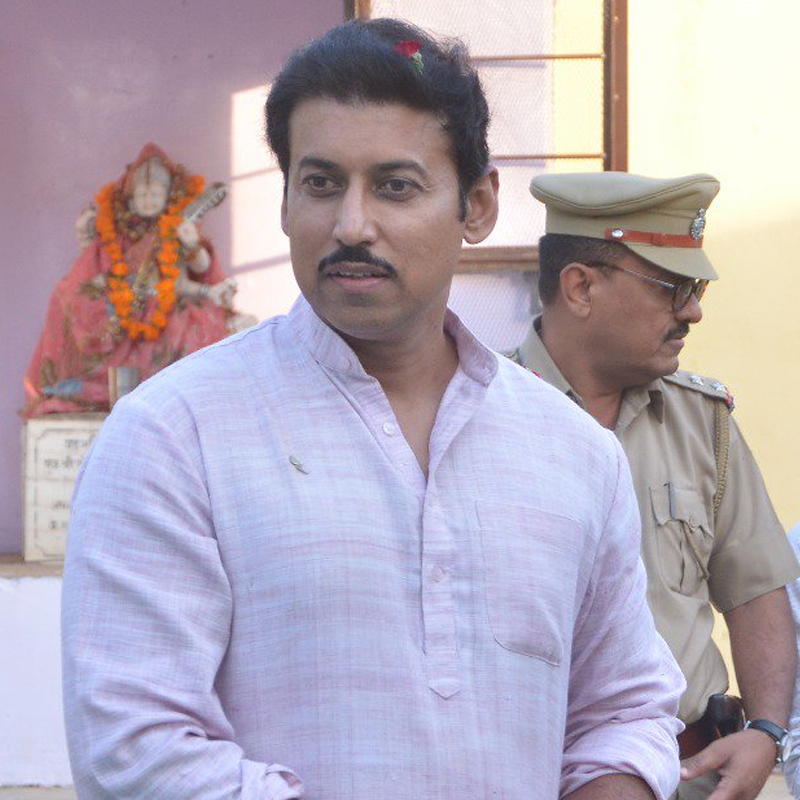
    Minister of State for Information and Broadcasting Rajyavardhan Rathore said that the two organisations are being professionalised in accordance with the recommendations of the Sam Pitroda Committee submitted three years ago.

    He said that a panel of secretaries had been set up to examine the report and suggest other ways to modernise the organisations. But, the panel had not submitted any report so far, Rathore said.

    (Prasar Bharati Board had set up committees earlier to go into the various recommendations of the Sam Pitroda Committee and some action has already been initiated, Ministry sources told indianteleision.com.)

    Prasar Bharati was established as an autonomous corporation on 23 November 1997 under the Prasar Bharati (Broadcasting Corporation of India) Act 1990. The Act provided full functional autonomy to Prasar Bharati. The general superintendence, direction and management of Prasar Bharati is vested in the Prasar Bharati Board which exercises all powers and does all acts and things on behalf of the Corporation, as enshrined in the Act including disciplinary and full supervisory powers over its employees.

    Prasar Bharati being the public broadcaster has been mandated to organize and conduct public broadcasting services with the intent to inform, educate and entertain the public. Since Public Broadcasting is largely non-commercial, the Government continues to financially support Prasar Bharati.

    Also Read:

    Expedite Prasar CEO appointment, govt urged

    Budget ’17: Prasar Bharati grant-in-aid down, film sector’s aid up

    Overhaul and strengthening of DD in full swing

  • Parliamentary Committee to review Prasar Bharati working, wants feedback from govt

    Parliamentary Committee to review Prasar Bharati working, wants feedback from govt

    NEW DELHI: The Parliamentary Standing Committee will review the working of Prasar Bharati ‘in due course’ particularly with regard to human resource and financial problems. The committee has also asked the pubcaster to apprise it of the action taken so far on the Sam Pitroda Committee recommendations.


    The Parliamentary Standing Committee on Information Technology, which also examines issues relating to Information and Broadcasting Ministry (MIB) has noted in its recent report that it is aware that the Government is also undertaking a study following responses received from various stakeholders to the Sam Pitroda Committee report being placed on the website of the Ministry.


    The Committee noted that Prasar Bharati has been suffering from financial problems as well as human resource related issues ‘for the last so many years’.


    The Sam Pitroda Committee had given its report in January 2014, the Standing Committee noted. Pitroda had submitted 26 recommendations in the areas of (i) Governance and Organisation, (ii) Funding, (iii) Human Resources, (iv) Content, (v) technology, (vi) Archiving, (vii) Social Media and (viii) Global Outreach.


    The recommendations address issues of financial and administrative autonomy of Prasar Bharati to ensure that it is approximately positioned to execute its role as a genuine public broadcaster.


    The Standing Committee also took note of the fact that the MIB had asked Prasar Bharati to prepare an action plan for undertaking certain reviews, studies and audits suggested by the Sam Pitroda Committee, which have a critical bearing on future action plan of the Government. 


    The high-level committee under veteran technocrat Sam Pitroda had stressed the need for constituting a Parliamentary Committee as originally envisaged in the Prasar Bharati Act 1990 to ensure that the pubcaster discharges its duties in accordance with the provisions of the Act and Government defined duties.


    It recommended reorganization of the pubcaster Board to make it a professionally managed body and make it more effective in guiding the organisation.


    Noting that Prasar Bharati’s vision must be to become a genuine ‘public broadcaster’ as against a ‘government broadcaster,’ the report said there is need to effect complete transfer of ownership and management of assets and Human Resource to Prasar Bharati ‘to make the organization administratively and financially autonomous of Government.’


    A Regulatory Body has to be set up to ensure public accountability of Prasar Bharati with respect to all content broadcast on its television and radio networks. The Regulatory Body should be a sub-committee of the Prasar Bharati Board.


    Interestingly, the Committee has suggested setting up of Prasar Bharati Connect (PBC) as the third arm of the public service broadcaster, independent of Doordarshan and All India Radio, to expand the social media. PBC should be mandated to manage the various social media initiatives of all the wings of Prasar Bharati. It also wants Prasar Bharati’s social media strategy.


    The Committee was set up in 28 January, 2013 and had decided to set up 11 working groups on different issues and has come out with a report on eight main areas: governance and organization, funding, human resource, content, technology, archiving, social media and global outreach.


    The Committee suggests amending the 1990 Act where necessary so as to impart genuine and effective autonomy to the organization.


    Referring to funding, the report said that there is need to undertake a professional study to develop a funding mechanism for Prasar Bharati that addresses the need for autonomy with financial accountability. Such a funding model should include government funding, internal resource mobilisation and private investment. There is need to monetise all available archival and other assets of Prasar Bharati as soon as possible to enhance funding, and augment funding of social messaging through cross-subsidising such content through entertainment-led programming and by co-opting industry through their corporate social responsibility (CSR) budgets.


    Pitroda had said in reply to a question after submitting his report that the time of licensing TV or radio sets as was being done around five decades earlier could not be revived at it was an old concept.


    Referring to Human Resource, he said the pubcaster should be enabled with the power to frame rules and regulations for its employees without seeking prior approval of the Government.


    The committee said there was need to create an effective recruitment system to attract the best talent and allow the hiring of skilled professionals and encourage and initiate steps for absorption of Government employees as full-time employees of Prasar Bharati, after an appropriate screening process. The ones who remain in Government may be considered for absorption in other departments within the government as is done in other cases.


    Referring to content, Pitroda stressed the need to scale up allocation of funds for content generation to 50 per cent of the total expenditure within a period of five – seven years. The Committee wants a review of all existing channels and content of DD and AIR, based on their relevance, output and viability and phase out those where there is sub-optimal utilisation of resources.


    There should be encouragement of outsourcing of content creation to external producers to attract high quality and diverse programming and creation of distinct brand identities for different TV and radio channels, and define the content strategy for each.


    Referring to Technology, the Committee wants expansion of the satellite and digital cable TV operations to meet the obligation of public service broadcasting. There is need to digitalise the present AM radio system to a new digital radio transmission after due evaluation subject to cost and availability of DRM receivers. In the transition period, FM may be expanded according to demand.


    It stressed the need to selectively digitalize terrestrial TV operations based on commercial viability.


    Any further expansion of and investment in digital terrestrial telecast should be suitably evaluated after field reviews and assessment of developments in the telecom sector, it said.


    Interestingly, the Committee wanted involvement of the private sector to expand the broadcasting market with a view to effectively utilise the infrastructure being built by Prasar Bharati to enable faster growth in the receiver ecosystem.


    On archives, it recommended state-of-the-art digital archives for consolidating and preserving DD and AIR’s content: both existing as well as that being currently generated. There is expansion of scope to make it the National Audio-Visual Archives so as to consolidate and support all other government initiatives.


    The Committee wants dedicated, multi-platform channels created for dissemination of Prasar Bharati’s archival products: both open access and for monetization.


    Referring to Global Outreach, it wanted the creation of a world-class broadcasting service benchmarked with the best in the world using next-generation opportunities, technologies, business models and strategies.

  • Prasar Bharati makes 55 essential appointments for AIR & DD

    Prasar Bharati makes 55 essential appointments for AIR & DD

    NEW DELHI: In what it terms as a victory, Prasar Bharati has managed to appoint around 55 people in one stroke in All India Radio (AIR) and Doordarshan (DD).


    The pubcaster has been permitted such a large number of appointments in one go after 21 years. These appointments, said to be the first batch, have come after the pubcaster struggled for three years to get clearances.


    Prasar Bharati CEO Jawhar Sircar said in a tweet that the pubcaster had more than 2000 units to man and there were over 17,000 vacancies.


    The government had told Parliament last week that 3067 of the 3452 identified as essential category posts in AIR and DD, to be filled through direct recruitment, have already been revived.


    Another 38 middle/senior level programme posts have already been revived through deputations, Minister of State for Information and Broadcasting Rajyavardhan Rathore said.  


    The Minister admitted that there are 16,764 vacancies in AIR and DD as against a sanctioned strength of 46,756.  


    He said the Sam Pitroda Committee had recommended a complete manpower audit of the pubcaster and also draw up a re-deployment scheme. The Ministry had already asked Prasar Bharati to prepare an action plan in this connection, the Minister said.  


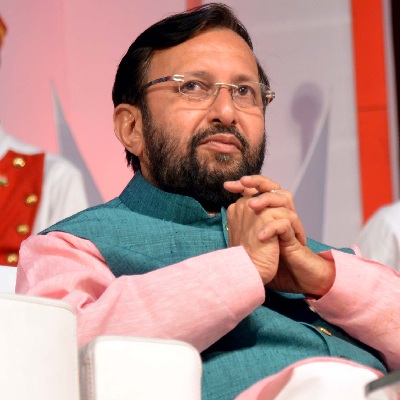
    Earlier in June last year, the then I&B Minister Prakash Javadekar had given his clearance in principle to setting up Recruitment Boards for Prasar Bharati, and Indiantelevision.com had learnt that a total of 1154 technical posts had been cleared by the relevant selection committees.


    These include programme executives, transmission executives, technicians, engineering assistants and duty officers, sources in Prasar Bharati said.


    The pubcaster has not had any senior-level recruitment since it came into being in September 1997, and the sources said that those posts which could not be filled out of these were held up because there is no Prasar Bharati Recruitment Board.


    As of early 2013, there were 1362 vacancies in Group A, 1,584 in Group B, 4863 in Group C and 2272 in group D in All India Radio. In Doordarshan, 724 posts are vacant in Group A, 1140 in Group B, 2871 in Group C, and 1451 in Group D.


    AIR and DD had total staff strength of 33,800 against a total sanctioned strength of 48,022, leaving a gap of 14222 posts.


    The most critically affected areas were the Programme Wing and the News Services Division (AIR)/DD News.


    The Committee for Information Technology in 2012 regretted that Prasar Bharati had failed to live up to the assurance given by then Prasar Bharati CEO that the Recruitment Boards for Prasar Bharati would be set up by 31 March, 2011.


    It is understood that the Union Public Service Commission and SSC had both refused to select for a non-Governmental organization, thus creating a new problem for the Ministry as well as Prasar Bharati.


    The proposal for setting up a Prasar Bharati Recruitment Board was approved by Prasar Bharati Board on 21 July, 2010 and discussed in the Ministry. A final proposal was referred to the Department of Personnel and Training on 15 February, 2011. DOP&T concurred with the proposal in June 2011 and the comments of the Department of Expenditure (DOE) were also received on 28 September 2011.


    The DoE had requested that a separate proposal be formulated for creation of posts for the secretariat of Prasar Bharati Recruitment Board and also requested for drafting of agreement containing terms and conditions of the members of the Board. This had been done and the proposal sent to DoE in February 2012 and then to the Law Ministry.  

  • Gov asks Prasar Bharati to work out action plan for implementing Sam Pitroda Committee report: Javadekar

    Gov asks Prasar Bharati to work out action plan for implementing Sam Pitroda Committee report: Javadekar

    NEW DELHI: Prasar Bharati has been asked to prepare an action plan for undertaking the studies/reviews/audits on recommendations of the Sam Pitroda Committee.


    Information and Broadcasting Minister Prakash Javadekar told Parliament today that the pubcaster had been asked to apprise the Ministry about the outcome reports.


    In his reply, the Minister said that the report included recommendation of a study of independent sources of finances of Prasar Bharati.


    Meanwhile, a senior Prasar Bharati official who did not want to be named said that the Ministry should first clarify whether it has accepted or rejected the Pitroda report.


    The Pitroda Committee set up to review the working of Prasar Bharati had in its report in January this year stressed the need for constituting a Parliamentary Committee, as originally envisaged in the Prasar Bharati Act 1990 to ensure that the pubcaster discharges its duties in accordance with the provisions of the Act and Government defined duties.


    In the report submitted to the then Information and Broadcasting Minister Manish Tewari, it had recommended reorganisation of the pubcaster’s Board to make it a professionally managed body and make it more effective in guiding the organisation.


    Pitroda noted that Prasar Bharati’s vision must be to become a genuine ‘public broadcaster’ as against a ‘government broadcaster’.


    The report said there is need to effectively complete transfer of ownership and management of assets and human resource to Prasar Bharati ‘to make the organisation administratively and financially autonomous of government.’


    A regulatory body has to be set up to ensure public accountability of Prasar Bharati with respect to all content broadcast on its television and radio networks. The regulatory body should be a sub-committee of the Prasar Bharati Board.


    Interestingly, the Committee has suggested setting up of Prasar Bharati Connect (PBC) as the third arm of the public service broadcaster, independent of Doordarshan and All India Radio, to expand the social media. PBC should be mandated to manage the various social media initiatives of all the wings of Prasar Bharati. It also wants a social media strategy of Prasar Bharati.


    The Committee was set up on 28 January last year and had decided to set up 11 working groups on different issues and has now come out with a report on eight main areas: governance and organisation, funding, human resource, content, technology, archiving, social media and global outreach.


    It has said that in addition to the public broadcasting function, there is a distinct requirement for the state to broadcast messages and accomplishments of public interest which can be met by using existing public and private broadcaster infrastructure.


    The Committee suggests amending the 1990 Act was necessary so as to impart genuine and effective autonomy to the organisation.


    Apart from Pitroda who is advisor to the Prime Minister of India on Public Information Infrastructure & Innovation and chairman of the National Innovation Council, the other members include additional secretary and nominated Prasar Bharati Board member J S Mathur. National Innovation Council member Shekhar Kapur, former I&B secretary Asha Swarup, Vikram Kaushik who is a business strategist and brand advisor and part-time member on the Prasar Bharati Board; M P Gupta from the Indian Institute of Technology in Delhi, B K Gairola who is mission director (e-Governance) and Prasar Bharati CEO Jawhar Sircar who was the convener.