Tag: Sam Pitroda

  • Doordarshan turns 56: Time to celebrate or introspect?

    Doordarshan turns 56: Time to celebrate or introspect?

    NEW DELHI: 15 September, 2015 marks 56 years to the day when Indian public broadcaster Doordarshan (DD) was first launched with an experimental telecast starting in Delhi in 1959 with a small transmitter and a make shift studio.


    The regular daily transmission started in 1965 as a part of All India Radio (AIR) and that’s when DD too began a five-minute news bulletin. The television service was extended to Bombay (now Mumbai) and Amritsar in 1972. Up to 1975, only seven Indian cities had a television service and Doordarshan remained the sole provider of television in India. Krishi Darshan was the first program telecast on Doordarshan. It commenced on 26 January, 1967 and is one of the longest running programs on Indian television.


    Television services were separated from radio on 1 April, 1976. Each office of AIR and DD were placed under the management of two separate director generals (DG) in New Delhi.


    Finally, in 1982, DD came into being as a National Broadcaster. National telecasts were introduced in 1982. In the same year, colour TV was introduced in the Indian market with the live telecast of the Independence Day speech by the then Prime Minister Indira Gandhi on 15 August, 1982, followed by the 1982 Asian Games, which were held in Delhi.


    Since then, DD has seen growth in many ways. Today, DD broadcasts in 17 languages including DD Urdu, and has the country’s only free-to-air (FTA) sports channel. DD Bharati has kept alive the decades-old archives of broadcasting in the country, DD India reaches almost the entire world and is watched by the diaspora, and it also recently launched DD Kisan, which is a dedicated channel for farmers. In addition, DD News – barring a few aberrations – remains one of the most dependable news channels in the country.


    More than five decades down the line, while the numbers have changed with greater reach, little else has and the pubcaster is struggling for viewership. Though it is claimed that DD has the largest viewership in the country since it is a terrestrial network, the fact remains that viewers in the metros and the larger cities generally tend to stay away from Doordarshan, which despite the so-called autonomy is perceived a propagandist channel.


    Today, Doordarshan’s terrestrial coverage is estimated to be available to about 92 per cent of population spread over 81 per cent area of the country. There are 1416 TV transmitters of varying power in the country. However, by the government’s own admission, the percentage of rural viewers who are accessing Doordarshan through its terrestrial network is a mere seven – eight per cent of 170 million TV households.


    The areas uncovered by terrestrial transmitters along with rest of the country have been provided with multichannel TV coverage through Doordarshan’s free to air DTH service FreeDish. Pertinent to note here is that despite claims that its capacity would be raised to accommodate over 100 channels, FreeDish today has a total of 56 channels, of which a majority are DD’s own channels.


    As far as the clause for all platforms to mandatorily show DD channels in the prime band is concerned, very few are doing so and in any case viewers do not bother since they feel attracted to the juicer sagas that most channels put out.


    Even though it has been in the eye of constant criticism, DD has still not been able to ensure that private DTH players or even its own FreeDish carries the name of the programme and a basic summary – something which DTH players do for all the major private broadcasters.


    The British Broadcasting Corporation (BBC) – arguably having the most diverse, exciting and long history – keeps examining and re-examining its role as a pubcaster and independently takes its decisions about changes it wishes to make to reach out to more and more viewers in an era of increasing competition from private broadcasters.


    The BBC, which will be marking its centenary in 2022, has come out with a Green Paper, which examines whether it is failing audiences, whether it should be advertisement-funded or take licence fee as it has been doing, and even whether it should be putting on-air certain shows that have drawn the ire of the general public. Not only that, the document has been made public for viewers to react as it would help decide the pubcaster’s future course.


    In comparison, Doordarshan has failed to make any in-depth study into why it has failed to make a dent in the hearts of the viewers despite its largest geographical reach. Its own Audience Research Unit exists only in name, and with a sample of only 900 homes, TAM does not cover DD adequately. Now that BARC India and TAM have formed a JV to form a meter management company, what DD’s representation in that will be, remains to be seen.


    If BBC has issued a Green Paper, there have been endless reports before Doordarshan became part of the pubcaster Prasar Bharati through an act of Parliament of 1990, which was only half-heartedly notified in 1997. And it had taken the country around 20 years to – at least on paper – notify an autonomous body since the first report on such a body came in the form of the BG Verghese Committee report in 1978, the aftermath of the manner in which the electronic media was controlled by then Prime Minister Indira Gandhi during the National Emergency.


    Sadly, there has been just one report after the pubcaster was operationalised: the Sam Pitroda Committee Report.


    Unfortunately, this report came out with nothing new that was not already being done by the pubcaster or had not been said by the Parliamentary Standing Committee in report after report, year after year.


    The pubcaster’s real test would have been to implement the recommendations given by the Sam Pitroda Committee but that is not the case. This is because the biggest stumbling block to the pubcaster moving ahead is the government, which does not leave it free to move on its own and instead believes in the general principal of he who pays the piper plays the tune.


    If there has been any movement within Prasar Bharati – like the recent appointment of a large number of fresh talent to fill the huge number of vacancies – it has been due to the individual action of the different chief executive officers or chairmen of the Board at different times. 


    What Prasar Bharati needs to do is to take a serious look at the Sam Pitroda Committee recommendations to find out why these were not implemented when they were under consideration much before the Committee came on the scene, and also to radically examine the relationship of Prasar Bharati with the Government or the ruling party.


    However, that is easier said than done, since the pubcaster and particularly Doordarshan continues to be a valuable tool for the government in power.
  • Terrestrial TV to be opened for private participation: Javadekar

    Terrestrial TV to be opened for private participation: Javadekar

    MUMBAI: Is the Modi government likely to pry open terrestrial television to private broadcasters?  Terrestrial TV has been the exclusive turf of public broadcaster Prasar Bharati, apart from a short stint where it leased out a programming block to Ozzie broadcaster Kerry Packer around 12-13 years ago.

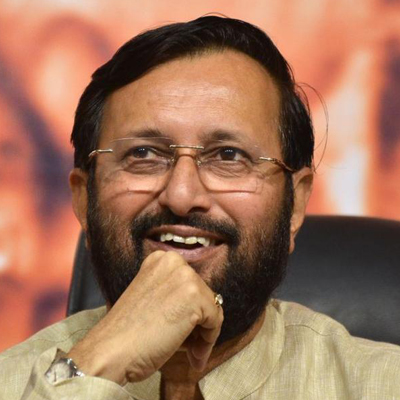
    It is quite likely to, if one goes by the response of Information & Broadcasting Minister Prakash Javadekar to a question in the Parliament on 9 July. PTI quotes him as saying that Doordarshan is digitising its analogue terrestrial network.

    “Consequently the number of digitised channels would go up. DD would thereafter be in a position to invite private free-to-air TV channels for meaningful business plan in this regard,” he added.

    This was one of the options provided by the Sam Pitroda committee earlier this year.  The committee had recommended two options: one to totally move the pubcaster to satellite transmission via DD Direct. And, two, to upgrade its analogue terrestrial network to DVBT2 to meet its need to deliver content meeting both national and regional coverage needs.

    The report had recommended that DD could opt for selected use of DVB-T2/DVB-NGH terrestrial  technology in partnership with private players if commercially feasible in order to enhance the capacity of each transmitter to eight to 10 channels.

    The committee, however, had cautioned that DD would have to transform itself into two separate companies handling content creation and managing infrastructure to allow private participation. Additionally, it had added that DD would have to provide a subsidy to increase the affordability of DVBT2/DVB-NGH receivers as they are not readily available at affordable prices in India.

    Even the Telecom Regulatory Authority of India had in 2005 recommended that terrestrial television should be thrown open to private sector participation as is the case in most countries.

  • Pitroda Committee: Prasar Bharati should be free of govt hold

    Pitroda Committee: Prasar Bharati should be free of govt hold

    NEW DELHI:  A high-level committee under veteran technocrat Sam Pitroda set up to review the working of Prasar Bharati has stressed the need for constituting a Parliamentary Committee, as originally envisaged in the Prasar Bharati Act 1990 to ensure that the pubcaster discharges its duties in accordance with the provisions of the Act and Government defined duties.


    In the report submitted today to the Information and Broadcasting (I&B) Minister Manish Tewari, it has recommended reorganisation of the pubcaster Board to make it a professionally managed body and make it more effective in guiding the organisation.


    Noting that Prasar Bharati’s vision must be to become a genuine ‘public broadcaster’ as against a ‘government broadcaster’, Pitroda told a press meet after submission of the report that he would be meeting both Tewari and I&B Secretary Bimal Julka next week to finalise those steps in the report which can be put into effect immediately.


    The report said there is need to bring in complete transfer of ownership and management of assets and Human Resource to Prasar Bharati ‘to make the organisation administratively and financially autonomous of Government’.


    A Regulatory Body has to be set up to ensure public accountability of Prasar Bharati with respect to all content broadcast on its television and radio networks. The Regulatory Body should be a sub-committee of the Prasar Bharati Board.


    Interestingly, the Committee has suggested setting up of Prasar Bharati Connect (PBC) as the third arm of the public service broadcaster, independent of Doordarshan and All India Radio, to expand the social media. PBC should be mandated to manage the various Social Media initiatives of all the wings of Prasar Bharati. It also wants a Social Media Strategy of Prasar Bharati.


    The Committee was set up on 28 January last year and had decided to put in place eleven working groups on different issues and has come out with a report on eight main areas: governance and organisation, funding, human resource, content, technology, archiving, social media and global outreach.


    It has said that in addition to the public broadcasting function, there is a distinct requirement for the State to broadcast messages and accomplishments of public interest which can be met by using existing Public and Private broadcaster infrastructure.


    The Committee suggests amending the 1990 Act where necessary so as to impart genuine and effective autonomy to the organisation.


    Apart from Pitroda, who is Advisor to the Prime Minister of India on Public Information Infrastructure & Innovation and Chairman of the National Innovation Council, the other members of the committee included additional secretary and nominated Prasar Bharati Board member J S Mathur, National Innovation Council member Shekhar Kapur, former I&B Secretary Asha Swarup, Vikram Kaushik who is a business strategist and brand advisor and part-time member on the Prasar Bharati Board; Prof M P Gupta from the Indian Institute of Technology in Delhi, Dr B K Gairola who is Mission Director (e-Governance), and Prasar Bharati CEO Jawhar Sircar who was the Convenor.


    Pitroda said that about 110 persons gave time to the working groups on various issues. There are 26 main recommendations in the two–volume report.


    Referring to Funding, the report says there is need to undertake a professional study to develop a funding mechanism for Prasar Bharati that addresses the need for autonomy with financial accountability. Such a funding model should include government funding, internal resource mobilisation and private investment. There is need to monetise all available archival and other assets of Prasar Bharati as soon as possible to enhance funding, and augment funding of social messaging through cross-subsidising such content through entertainment-led programming and by co-opting industry through their CSR budgets.


    However, Pitroda said in reply to a question that the time of licensing TV or radio sets as was being done around five decades earlier could not be revived as it was an old concept.


    Referring to Human Resource, he said the pubcaster should be enabled with the power to frame rules and regulations for its employees without seeking prior approval of the Government.


    When it was pointed out that a similar announcement has been made several times since 1997 when the Act was operationalised, Sircar said the pubcaster cannot frame its own rules.


    There was need to undertake a comprehensive manpower audit and HR planning exercise to map workforce requirements for the future in line with Prasar Bharati’s mandate.


    It was necessary to supplement manpower audit with a re-deployment plan that addresses training, re-skilling and promotion of existing manpower through an institutionalised modern appraisal system.


    The committee said there was need to create an effective recruitment system to attract the best talent and allow the hiring of skilled professionals, and encourage and initiate steps for absorption of Government employees as fulltime employees of Prasar Bharati, after an appropriate screening process. The ones who remain in Government may be considered for absorption in other departments within the government as is done in other cases.


    Referring to content, he stressed the need to scale up allocation of funds for content generation to 50 per cent of the total expenditure within a period of 5 to 7 years. The Committee wants a review of all existing channels and content of DD and AIR, based on their relevance, output and viability and phase out those where there is sub-optimal utilisation of resources.


    There should be encouragement of outsourcing of content creation to external producers to attract high quality and diverse programming and creation of distinct brand identities for different TV and Radio channels, and define the content strategy for each.


    Referring to technology, the Committee wants expansion of the satellite and digital cable TV operations to meet the obligation of public service broadcasting. There is need to digitalise the present AM radio system to a new digital radio transmission after due evaluation subject to cost and availability of DRM receivers. In the transition period, FM may be expanded according to demand.


    It stressed the need to selectively digitalise terrestrial TV operations based on commercial viability.


    Any further expansion of and investment in digital terrestrial telecast should be suitably evaluated after field reviews and assessment of developments in the telecom sector, it said.


    Interestingly, the Committee wanted involvement of the private sector to expand the broadcasting market with a view to effectively utilise the infrastructure being built by Prasar Bharati to enable faster growth in the receiver ecosystem.


    On archives, it recommended state-of-the-art digital archives for consolidating and preserving DD and AIR’s content: both existing as well as that being currently generated. There is expansion of scope to make it the National Audio-Visual Archives so as to consolidate and support all other government initiatives.


    The Committee wants the creation of dedicated, multi-platform channels for dissemination of Prasar Bharati’s archival products: for both open access and monetisation.


    Referring to global outreach, it wanted the creation of a world-class broadcasting service benchmarked with the best in the world using next-generation opportunities, technologies, business models and strategies.


    When pointed out that DD India was already working as an international channel, Pitroda said the platform should be designed for new media first and then extended to conventional TV.


    There was need to outline an effective content strategy for Prasar Bharati’s global platforms (TV and Radio) focused on projecting the national view rather than the narrow official viewpoint.


    In a covering note to the Minister, the Committee said: “Today, we have a unique window of opportunity to transform our broadcasting service (both All India Radio and Doordarshan) into a cutting-edge platform capable of delivering its commitment to public service in the best possible manner, while keeping pace with the competitive needs of the 21st Century.  However, as our report suggests, this transformation will require a bold, clear vision, a focus on generational change, and new models and approaches in every aspect of the public service broadcaster’s activities.

  • CNBC TV18 presents 9th edition of India Business Leaders Awards 2013

    CNBC TV18 presents 9th edition of India Business Leaders Awards 2013

    MUMBAI: 2014 is perhaps the most critical year of the decade and the impending elections the most significant since independence. And this is why it becomes essential to put forth leaders who are ready to champion the change agenda, those who are strong enough to rise and lead the nation forwards.

    CNBC TV18 presents India Business Leaders Awards 2013 on January 13th, 2014 at the Regal room, Trident hotel, Nariman point. The singular idea for IBLA this year is to envisage the year 2014 and to honour those poised to champion it.

    The selection of winners across categories will showcase men and women who have the ability the vision the capacity to rise above the current volatility and see the long term goal, they have a global aspirations – to put india on the world map.

    And since the year is as crucial as it is, we want to be able to put forth dialogues and conversations that resonate with the change agenda of the year. This is why the event opens with the jury sharing its vision for 2014 and goes into debates that detail the impact of economics, politics and business.

    IBLA 2013 will be hosted in the present of top notch companies directors like, Deepak Parekh, Bimal Jalan, Arun Maira, Naina Lal Kidwai, AM Naik, KM Birla and Raghav Bahl, Nitin Paranjpe, Zia Mody, Shiv Nadar, Pratap Reddy, Vinod Rai, Satish Reddy, ISRO chairman – K Radhakrishnan, Ashok Ganguly, Soli Sorabjee, N Chandra of TCS, R Balki, Krishnakumar Natrajan, CP Gurnani, MS Unnikrishnan , Anil Jain, Sam Pitroda and Piyush Goyal of BJP, Meera Sanyal and other CEOs

    On this occasion Mr. Anil UniyaL, CEO of CNBC-TV18 and CNBC AWAAZ said, “We are privileged to host  the  9th edition  of  the CNBC-TV18  IBLA  Awards  as  these  awards recognize  leaders  who have out-shined in these  unstable times. CNBC TV18 has constantly endeavored to bring expert analysis to  its  viewers  and  the brilliant  line  up  of jury  is testimonial  to  the credibility  of  these awards. Industry’s best would be recognized and this would be inspirational to upcoming business leaders.

    These awards which will set stage for the various leaders on a global platform and envisage India on the world map.”


  • Twitter Conference on Mahatma shows increasing use of social media by government

    Twitter Conference on Mahatma shows increasing use of social media by government

    NEW DELHI: With increasing dependence on online social media by the government, a Twitter conference to discuss the life and message of Mahatma Gandhi is to be held to mark the 144th Birth Anniversary Celebrations of the Mahatma.

    National Innovation Council chairman and the adviser to the Prime Minister on Public Information Infrastructure to Improve Governance & Public Services Sam Pitroda will lead it from his Twitter handle @pitrodasam.

    The Twitter Conference to be held between 7.00 p.m. and 8.00 p.m. (Indian standard time) tomorrow is open to everyone. The hash tag for the conference is #Gandhi. The Twitter Conference is expected to be joined by Sabarmati Ashram Trustee Kartikeya Sarabhai, other Gandhians and several other people from across the globe.

    Prime Minister Manmohan Singh had recently launched a Gandhi Heritage Portal and it is now available at www.gandhiheritageportal.org. The Portal developed by the Sabarmati Ashram under the aegis of the Culture Ministry hosts Gandhi’s Autobiography in 22 languages. It also has placed the ‘Collected Works of Mahatma Gandhi’ in three languages: English 100 volumes, Hindi 97 volumes and Gujarati 82 volumes. In all, the Portal presents more than five lakh pages, 21 films, 72 audio speeches of Gandhi and over a 1,000 photographs.

  • Mediapersons to get railway ID cum credit cards

    Mediapersons to get railway ID cum credit cards

     NEW DELHI: The press would be able to take advantage of travel on railways through the use of photo identification cum credit cards based on the certification by the Press Information Bureau and other competent State and local authorities.

    Until now, the mediapersons had to acquire coupons from the railways for concessions.

    Presenting the Railway Budget for 2011-12, Rail Minister Mamata Banerjee said on production of this card, the Press Correspondents would be able to get reservation done and also tickets issued from the PRS/UTS counters.  
         
      Facilities would also be provided to get compact accommodation for both the Press Correspondents and their family members who are not availing this concession. In addition, concession of 30 per cent will be increased to 50 per cent for Press Correspondents and permission to travel with spouse at 50 per cent concession will be given for once a year, she said.

    Meanwhile, she announced the setting up of an expert committee headed by Sam Pitroda, the key person behind the growth of telecommunication revolution in the country, to suggest further innovations, to utilise the optic fiber cables network of the railway and take information technology to the door steps in remote areas.

    She said this was being done because there had been little progress after the announcement in the 2001-02 Railway Budget of laying of Optic Fibre Cable network along Railway track for commercial utilisation.