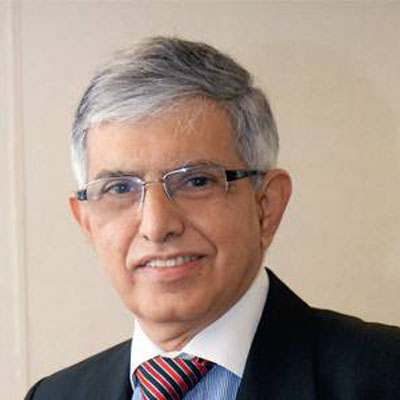
Tag: Sam Balsara

  • “Agencies are not rapidly reinventing to stay relevant to changing advertiser needs”: IAA

    “Agencies are not rapidly reinventing to stay relevant to changing advertiser needs”: IAA

    MUMBAI: The India chapter of the International Advertising Association (IAA) is all set for the big debate.


    To be held on 16 February, the theme for the new season of IAA Debate is: ‘Agencies are not rapidly reinventing themselves to stay relevant to changing advertiser needs.’


    Speaking for the motion (that is agencies are not reinventing themselves) will be Ashish Bhasin (of Dentsu Aegis) and Sameer Satpathy (of Marico). Those presenting the points against the motion (that is agencies are reinventing themselves) are Sam Balsara (of Madison) and Shireesh Joshi (of Godrej).


    The debate will be moderated by CNBC – Storyboard editor Anant Rangaswami.


    IAA India Chapter president and IAA Asia Pacific VP-development Srinivasan K Swamy said, “I am delighted to see some of the leading lights of Indian industry raise the stature of the IAA Debates even higher. The topic chosen has been in the minds of industry professionals and IAA decided to debate this in the open. I am sure many in the industry will be there to witness this.”


    D B Corp chief – marketing & corporate sales officer Pradeep Dwivedi added,  “At Dainik Bhaskar Group, we are delighted to partner with IAA in furthering the spirit of discovery and engagement with-in all the stakeholders in our industry. The Indian economy is on the cusp of a significant growth curve and the innovation in our ideas will determine our success as marketing & advertising thought leaders, and hence the need to have serious introspection on our need to reinvent at a rapid pace. We are hopeful that our earnest attempt at being a harbinger of this change will be received very well.”


    The IAA Debates hosted so far have been in Mumbai, Goa, Delhi, Bengaluru, Hyderabad and Chennai. The Debates have featured senior advertising, media and marketing professionals such as Prasoon Joshi, VikramSakhuja, Lloyd Mathias, Josy Paul, Pratap Bose, Deepika Warrier, Anupriya Acharya, Arun Anant, Arunabh Das Sharma, Partha Sinha, Monica Tata, Vikram Chandra, PunithaArumugam, Mahesh Murthy, Virginia Sharma, Ashok Lalla and ZerinRahman, Sadashiv Nayak, Atul Phadnis, Ronita Mitra, and Amitabh Pande amongst others speaking for and against the motion.

  • New business wins for Madison Bangalore

    New business wins for Madison Bangalore

    MUMBAI: Madison Media Omega, the Bengaluru office of Madison Media Group, has been on an account winning spree, having won key accounts including J G Hosiery, the makers of Amul innerwear, Metro Cash and Carry, Zivame, Ashirwad Pipes and Total Environment.


    All the accounts put together are estimated to spend about Rs 100 crore.


    The other accounts handled by Madison Media in Bangalore are Acer, TVS, Bharti Axa Life Insurance, Levis, Cafe Coffee Day and Enamor. Platinum Media handles ITC Foods through its Crest division.


    Commenting on this development, chief operating officer Dinesh Rathore said, “Over the last one year our endeavour has been to increase our client portfolio by providing sound strategic advice to our clients and being their trusted communication partners in building their brands and business in the country.”


    Madison Media Group had won a host of new businesses in 2014 including Lafarge Cement, Epic channel, Nirav Modi, Senco Gold, Wockhardt Hospitals, Cordlife, Lenskart, DHFL, Viber and the media mandate for BJP for the national elections and for Maharashtra, Haryana, Jammu and Kashmir and the current Delhi election.


    Madison Media Group is India’s foremost media agency handling media planning and buying for blue chip clients including Airtel, Godrej, Mondelez (formerly Cadbury), ITC, Marico, McDonald’s, TVS, Raymond, Piramal Healthcare, Levis, SpiceJet, Domino’s, Bharti AXA, Max Life Insurance, Asian Paints, Pidilite, Tata Salt, Acer, Times Television Network, Indian Oil, Enamor Lingerie, Gowardhan Dairy, HomeShop 18, Café Coffee Day and many others.  The gross billing of Madison Media Group is about Rs 3000 crore.

  • Punit Goenka wins ‘Person of the Year 2014’

    Punit Goenka wins ‘Person of the Year 2014’

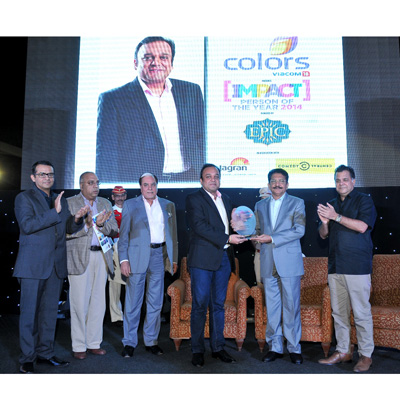
    MUMBAI: Zee Entertainment Enterprises Limited (ZEEL) MD & CEO Punit Goenka was awarded the prestigious IMPACT Person of the Year 2014 on December 05, 2014 at a glittering function held at the ITC Grand Central, Mumbai. The Governor of Maharashtra, Chennamaneni Vidyasagar Rao felicitated Goenka with the award in the presence of Essel Group and ZEEL chairman Dr. Subhash Chandra and exchange4media chairman Group Annurag Batra.


    Goenka won this award for his efforts in bringing about change in television audience measurement in the country, driving profitability in the broadcast sector and steering ZEEL to a steady rise.


    On accepting the award, Goenka said, “It is always a pleasure to get an award which recognizes your achievements, and for making a difference to the industry. But for me, this is a special one, since it also recognizes and applauds the human side and hence titled as ‘IMPACT Person of the Year’.”


    Goenka further added, “I would also like to take this opportunity to thank our Chairman, Dr. Subhash Chandra, for it is his pioneering vision and guidance, which makes us stand tall today ; my wife, Shreyasi, who has been a great support to me ; and of course my entire team at ZEE.”


    The Governor of Maharashtra, Chennamaneni Vidyasagar Rao, in his keynote address, congratulated Goenka, saying, “Goenka has not only risen through the ranks to head ZEE but has expanded its global footprint by offering an amazing variety of content through its channels.”


    The nominees for the 10th edition of the IMPACT Person of the Year were Sam Balsara, Chairman and Managing Director, Madison World, Piyush Pandey, Executive Chairman and Creative Director – South Asia, Ogilvy & Mather India, Prasoon Joshi, Chairman, McCann WorldGroup APAC & CEO, Punit Goenka, MD & CEO, ZEEL, BD Park, President & CEO, Samsung S West Asia and Sachin Bansal & Binny Bansal, CEO & COO, Flipkart. The selection process for IMPACT Person of the Year 2014 was handled by IMRB International. After receiving nominations, the final voting was done by a select few from across the advertisement, media and marketing fraternity. IMPACT’s editorial team then analysed the results to arrive at IMPACT Person of the Year 2014.


  • The Content Hub: Segmented channels predict good future for themselves

    The Content Hub: Segmented channels predict good future for themselves

    MUMBAI: The Indian television industry is undergoing a sea change in terms of the content that is being created, both on television and online, long as well as short format. With an increasing need for dynamic creators and scriptwriters, Indiantelevision.com’s first edition of The Content Hub aims to bring together writers, creators, producers, artistes and broadcast executives to discuss with those involved in the content creation process.


    Opening the session was Indiantelevision.com founder, CEO and editor in chief Anil Wanvari, who spoke about how current Indian shows run for more than 1000 episodes while the audience and time spent on digital is shooting up. “We need to create engaging content by rethinking whether we need a time shift, seasonal shows, social programmes or younger producers,” said Wanvari.


    The first session dealt with the risk taking broadcasters of the industry in which Madison World chairman Sam Balsara spoke to Epic Television Networks CEO Mahesh Samat and Reliance Broadcast Network Tarun Katial.


    Balsara started off the session by asking the two about their attempts to disrupt content in the traditional general entertainment channel (GEC) space. Samat said that over the years, the GECs have seen a very few changes and it is only in the last two or three years, due to some impact of digitisation, there has been a little shift.  He compared the current television industry scenario to the film industry where earlier only one type of movies were produced due to single screens and now due to proliferation of multiplexes there is a variety.


    Balsara said that every GEC has the type of content that Epic is trying to segment into its channel. “I am told that people watch shows, not channels?” he questioned. To this Samat took up the example of the US where in the last 25 years all the channels that have come up are segmented. To this, Katial said that the top three GECs could afford to do general content while channels beyond that have to think differently. “Truly there are only three GECs in India- Star Plus, Zee TV and Colors while Sony is largely crime and similar to that is Life OK. Sab is segmented for comedy and so is Big Magic. A lot of our growth has come from geography segmentation,” said Katial.


    Balsara pointed out that the time where people in India will pay to watch good content is still very distant, so what will be a viable model? Katial said that he doesn’t feel there is space for niche segmented content because the investment needs to be if not more then as much as what a Hindi GEC can put with also a good amount of distribution cost. “Abroad, large GECs are terrestrial and free to air. Here to create content that needs to fill three hours daily can hamper the economics and to reach 50-60 GRPs you have to play the lowest common denominator game. When you segment and get to 15-20 GRPs, no Madison will pay you the ER,” he pointed out.


    Balsara with his years of experience said that ad revenue is limited due to limited viewership because while segmented channels ask for lakhs of rupees, GECs have a CPRP of about Rs 20000 to Rs 25000. “Why would a brand buy something at five times the cost if it is available at one fifth the price?” he questioned.


    The way forward according to Katial is actually the viewership but if original content needs to be created then high investment is needed. “Channels such as FoodFood and Discovery have content with limited cost and limited distribution (restricted to urban areas) but for original content the P&L gets to Rs 300 crore,” said Katial. Answering Balsara’s question of high a-la-carte rates of channels, Samat said that a certain amount of reach and GRPs are needed before the channel can be made affordable.


    “10 years ago people laughed at DTH and look at how things are now. So subscription isn’t far off. If you make the right content with limited episodes, syndication will get you money,” highlighted Samat. He added that current long format shows don’t allow syndication.


    Balsara highlighted the language difference between English and Hindi wherein English papers command high ad revenue while English channels are almost inconsequential. To this Katial said that English papers create influence while English channels sell products. “The English viewer is hooked to other screens but not set for standard TV viewing format,” he stated.


    With several growing mediums, Balsara asked if today content is created with only TV in mind to which Samat said, “We are developing content ‘forever’ that can make money even afterwards. More than screens, we should now look at longevity.”


    In response to Balsara’s question of adapting several international formats Katial said that there is no shame in legally doing so since it has a success track record. “When you put Rs 1 crore or Rs 2 crore behind such shows, every management wants to see it has worked before and so do advertisers,” he said. Samat said that the option of creating or adapting a format lies totally on the economics of the channel.

  • Madison Media Group creates “Wills Rock the Ramp” 360 degree selfie booth

    Madison Media Group creates “Wills Rock the Ramp” 360 degree selfie booth

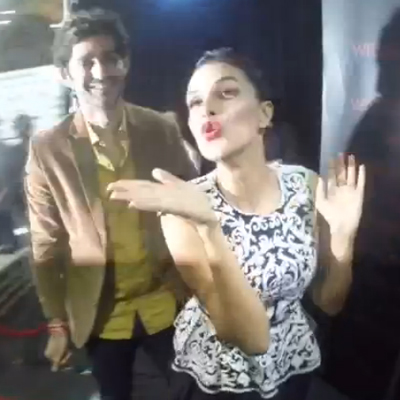
    MUMBAI: Marrying social and on ground engagement, Wills Lifestyle and Madison Media devised the concept of “Wills Rock the Ramp” a 360 degree Vine booth – a twist to the traditional twirl people do to show off what they’re wearing! Instead of doing the twirl yourself, the cameras and modern technology does the twirling and the same could be shared on social networks.

    Users simply had to step into the booth and the revolving camera shoots a 4-6 second video, showing a 360 view of what they’re wearing to the Wills Lifestyle India Fashion Week. These videos are shared on the Wills Lifestyle Vine page and Wills Lifestyle Facebook and Twitter pages.

     The Technology for the “Wills Rock the Ramp” 360 degree Vine Booth was developed and implemented by Tagglabs.
    Mr. Atul Chand, Divisional Chief Executive, ITC Lifestyle Retailing, said“Wills Lifestyle has always been at the forefront of innovation and driven the business of fashion in India with style. Being at the helm of creativity and novelty, we have integrated modern technology with fashion yet again this season, thereby creating 360 degree brand conversations. In this edition, Wills Lifestyle takes another leap with many firsts on the Indian fashion runway by introducing a 360-degree selfie booth.”

    Basabdatta Chowdhuri, CEO Platinum Media, says “Our Endeavour is to provide the best solutions to our clients irrespective of the platform. We want our brands to leverage new platforms and create high level engagements for consumers.”

    Amit Duggal, Director (Digital) Madison, says “The idea was conceptualized keeping in mind that it should be easy to use and instantly sharable. We wanted to capture the moments which were happening during the event and share it with the world and lead to higher engagement for the brand.”

    Madison Media has won several awards in the Digital and Mobile domain with the latest one being The Festival of Media Global Award and Asia Pacific Award for Parachute Advansed Ayurvedic Hair Oil for convincing consumers to become the brand’s sales force leveraging the power of Mobile.   The agency also won a Yahoo Big Idea Chair for its campaign on Airtel, Har ek Friend Zarori Hai.  At the Emvies Awards held last month, Madison Media also won a Gold for Best Innovation in Digital (Video) for Cadbury Bournville–Tape a Tweet.


    Madison Media Group is India’s foremost media agency handling media planning and buying for blue chip clients including Airtel, Godrej, Cadbury/Kraft, ITC, Marico, McDonald’s, Raymond, Piramal Healthcare, TVS, Levis, SpiceJet, Domino’s, BhartiAxa, Max Life Insurance, Asian Paints, Pidilite, Tata Salt, Acer, Lafarge Cement, Crompton Greaves, Times Television Network, Indian Oil, Enamor Lingerie, Gowardhan Dairy, Café Coffee Day and many others.  The gross billing of Madison Media is about Rs. 3000 crores.

  • MG Parameswaran elected AAAI president

    MG Parameswaran elected AAAI president

    MUMBAI: FCB Ulka Advertising advisor MG Parameswaran has been elected as the president of Advertising Agencies Association of India (AAAI) for the year 2014-2015. The announcement was made at its Annual General Body Meeting held on 25 July.

    Publicis Communications CEO south Asia Nakul Chopra has been elected as vice-president of the association.

    Other elected members of the executive committee for the ensuing year are: Nagesh Alai of Interface Communications, Sam Balsara of Madison Communications, Rana Barua of Contract Advertising, Aegis Media India’s Ashish Bhasin, Kunal Lalani of Crayons Advertising, Dentsu Creative Impact’s Rohit Ohri, Pranav Premnarayen of Prem Associates Advertising & Marketing, C V L Srinivas of Group M Media India, Vivek Srivastava of Innocean Worldwide Communication and R K SWAMY BBDO’s Srinivasan K Swamy.

    Immediate past president, Arvind Sharma, will be the ex-officio member of the new AAAI executive committee.

    The AAAI is the official, national organisation of advertising agencies, formed to promote their industry interests so that they continue to make an essential and ever-increasing contribution to the nation.

  • Digitisation has enhanced industry’s transparency levels: Zeel annual report

    Digitisation has enhanced industry’s transparency levels: Zeel annual report

    MUMBAI: In June 2013, Zee Entertainment Enterprises (Zeel) unveiled its new corporate identity ‘Vasudhaiva Kutumbakam’.


    It was inspired by ‘The World is my Family’ philosophy with an all-new positioning which creatively integrated and crafted with the brand logo. The annual report of the media and entertainment conglomerate for 2013-14 incorporates its ‘One Zee, One Anthem’ philosophy.


    The vibrant and stakeholder-friendly annual report gives an insight into the media house highlighting how its reach and viewership share has grown from strength to strength.


    Zee’s evolution as a global media brand is vindicated by its 730+ million viewers across 169 countries. This apart, it also added one more channel, Zindagi, to its list taking the toll to 33 for its domestic channels. Zindagi, launched on 23 June, showcases content from Pakistan and has the tagline ‘Jodey Dilon Ko’. It also launched another brand ‘&’.


    With the strategy to offer specific content to relevant markets, the powerhouse also added two more international channels to its kitty – Zee Bioskop in Indonesia and Zee Nung in Thailand. It is pushing boundaries forward to realise its vision of being a leading global media powerhouse by the year 2020.


    Apart from this, the company also launched Zee Music Company entering into the country’s Rs 960 crore music market.


    The three key value drivers for brand Zee are pioneering, prudent and predictability. And these have helped it contribute 26 per cent of the corporate brand to the enterprise value as of 31 March 2014.


    In the last five years, Zee’s revenues grew at 15.30 per cent CAGR. The consolidated revenue during FY 2014 grew by 20 per cent y-o-y to Rs 46,024 million.


    In a message to shareholders, Zeel chairman Dr Subhash Chandra highlights that even though there is a question mark on India’s domestic growth and there persists a general climate of pessimism, the company’s experience and expertise has helped it grow and overcome roadblocks to unleash their creativity.


    “Digitisation has been instrumental in enhancing the industry’s transparency levels. The phase I and II roll out restructured the industry’s standards. With consumers ready to pay for quality content, complete digitisation will entail multiple benefits, such as industry growth, transparency and increased ARPUs for industry players,” he said in the annual report.


    54 per cent of revenue is generated through advertisements while 63 per cent of the total distribution expense comes from operational cost.


    Zeel MD and CEO Punit Goenka spoke about the future of India’s M&E industry. “Currently valued at Rs 417 billion, it poised to reach Rs 885 billion by 2018 as per the latest KPMG report. Zee will continue to raise the bar in terms of content innovation, operational excellence and global footprint to sustain its industry leadership.”


    With the total strength of more than 2200 people at the company, the annual report shares views of other management teams as well as outsiders like Shahrukh Khan, Sam Balsara, Rishi Jaitly among many others.


    The 32nd annual general meeting of the company will be held on 18 July at 11 am in Nehru Auditorium in Mumbai.


    Annual reports are not just numbers; they are a piece of handiwork through which a company can promote itself, its prospects to its various stakeholders.  AICL Communications is in-charge of making Zeel’s report more interactive rather than just plain vanilla.

  • Advertising agencies keenly await Budget 2014

    Advertising agencies keenly await Budget 2014

    MUMBAI: Thanks to elections, the year started with a bang for the media and entertainment (M&E) industry.

    The political parties didn’t hesitate to spend on the various mediums – print, TV, digital, OOH – to woo the voters. Various studies by media agencies also estimated that advertising by political parties will boost the AdEx by up to +2.5 per cent.

    This apart, the year is estimated to be good for the industry. With ad spends of most FMCG companies on the rise to ride on the back of higher disposable income due to election spending and recent RBI policies leading to a more favourable business environment, the industry is hoping for healthy year even with various issues (digitisation, ad cap, service tax, FDI etc) gripping it.

    Indiantelevision.com spoke to various advertising agencies heads to know what they are expecting from the budget.

    Dentsu Aegis Network chairman & CEO South Asia Ashish Bhasin

    Service tax should be rationalised, the surcharge on it should be removed and also the quantum of it should be reduced a bit. It can be noted that the process and procedure of collecting service tax is cumbersome. What we as an industry want is transparency in this process. I am also keen to watch some FDI in media in the coming days.

    Perfect Relations founding partner Dilip Cherian

    Undoubtedly, there are high expectations from the Budget and it remains to be seen how Finance Minister Arun Jaitley goes about restoring growth while reining in the deficit. We need something that in the next six months will start generating revenue for the long run. A push in the infrastructure sector is vital because that will help growth of the core sectors — steel, cement, construction etc and create jobs. I would like to see Jaitley spell out his plans for this vital sector, which will also have a long lasting impact on the economy. The introduction of the goods and services tax (GST) has been delayed for far too long. Though this is a point of contention between the Centre and the states, I would be happy to see some positive movement on this front.

    FCB Ulka Group chairman Nagesh Alai

    The days of seeking specific tax sops or concessions are really over, more so when over the years a fair amount of tax rationalisation has already happened. How do you expect the government to run the country? However I do expect the government to stick to its promise of withdrawing the one time surcharge of 10 per cent which was imposed for the FY 2013-14, but there has been no notice of that withdrawal yet. Secondly, the authorities should also honour their commitment of timely refunds to assesses rather than putting counter pressures in the months running up to March every year by arbitrary add-backs and demands, which is just a ruse to keep refunds on hold.   In the interest of avoiding short termism and addressing the macro-economic issues effectively so that the fiscal and revenue deficits can be plugged, we should seriously consider having a fixed budget for say three or five years. This will bring about a stability of tax regime and also help all constituents plan better, including the government. The annual budget exercise has perhaps become a lobbying exercise for political and power brokers.  Lastly, agriculture income should be brought into the tax net. It is an anachronism – and is perpetuated for the benefit of the few rich politically powerful people.

    Madison World chairman and MD Sam Balsara

    I don’t think my expectations from the budget are unique or different from what the nation expects. I expect the budget to do more than its bit to grow the economy which is the major need of the hour. Whatever is required to give a shot in the arm to the economy, the budget must do. This year’s budget is going to be specially important because it is the first budget that the BJP will present after its landslide victory and all Indians, as well as global businesses are going to evaluate it and form an impression about the future of India. The Finance Minister is keenly aware of this and being an intelligent and practical man, I am sure he will not miss this opportunity, nor will he try to pull wool over our eyes. Whatever it takes to spearhead growth, he should do, be it GST, divestment, roping in more tax payers especially at the top end or abolishing retrospective tax loss, etc. What is good for the economy is good for the advertising industry.

    Global Advertisers MD Sanjeev Gupta

    After achieving a historic victory in General Elections 2014, we have high expectations from the newly-elected Modi-led government. From an outdoor advertising industry perspective, we believe that our growth is the reflection of development in our country.  Better infrastructure, improved road connectivity, advance transport mediums, enhanced public spaces give us opportunities to connect with end consumer. India is likely to emerge as the world’s largest middle class consumer market with aggregated consumer spends of $ 13 trillion by 2030. With increasing population and their demand, it has become essential for MNCs / SMEs to be visible on different advertising mediums to promote their services / products. Therefore, outdoor advertising industry needs government support to grow in the future. We would like the center government to focus on creating new opportunities for us, allow FDIs, develop transparent policies and reforms, and address tax issues and licensing procedure of public structures. We wish to see changing India, growing India.