Tag: Sam Balsara

  • Do IT talent venture has big plans for the unorganised sector

    Do IT talent venture has big plans for the unorganised sector

    MUMBAI: Two of India’s creative mentors, in a unique collaboration, have launched an integrated multi-disciplinary talent management firm called Do IT Talent Ventures. Darshana Bhalla and Radha Kapoor Khanna’s new talent venture firm aims at broadening the horizon of talent management and development across genres.

    Darshana Bhalla, who was the former CEO of Mates – the entertainment unit of Madison Communication and Radha Kapoor Khanna, the founder and executive director of Do IT Creations – a flagship holding company of The Three Sisters: Institutional Office (TTS:IO) focused on establishing new age creative businesses, formed in Do IT Talent Ventures in April 2018.

    In a span of three months, the brand has already signed a number of personalities across films, TV and sports namely Farhan Akhtar, John Abraham, Lara Dutta, Kajal Aggarwal, Neeraj Pandey Samir Kochhar in entertainment and Vicky Ratnani in culinary. While in sports, the brand has tied up with Virender Sehwag, Mahesh Bhupathi, Geeta Phogat, Ashwini Ponnappa, Robin Singh, Viren Rasquinha and Aparna Popat. 

    With a staff of trained professionals, mentors and promoters, the team possesses a cumulative experience of over 500 deals in the celebrity management business.

    Darshana Bhalla says that the company’s primary vision is collective progress, focussing on talent from various genres of the creative industries and enabling constant optimisation of their time and resources.

    Radha Kapoor mentions that under the holding company Do IT Creations, with a presence in entertainment, sports, media, retail amidst other consumer focused businesses, the group saw an opportunity to establish a presence in the talent ecosystem wherein they had the unique advantage of unlocking synergies by leveraging their portfolio of new age creative ventures.

    Do IT wants to aim at having all creative people under their umbrella including culinary, technicians, artists, writers, TV actors, Bollywood celebrities, musicians, directors and sports mentors. 

    The talent venture will not look at only having celebrity talent. Radha Kapoor says, “Tomorrow we could also have writers, artists and designers. We are looking at it from a 360 degree approach wherein we can start catching these talents at a much younger age. the idea is on how do we find the right talent and create solutions for them.”

    She figured that the DNA of their institution was to invest in entrepreneurs. And while the talent business in India has been primitively handled in sectors, Do IT is aiming at becoming an aggressive venture unlike the rest of them. They believe in having collective success and collaborations where there will be talent across creative industry.

    The two describe it as a challenging business, but are excited about make their mark. “It is challenging to make them understand that it’s not about managing their existing work but also about optimising their talent.”

    For now, the company’s client list only includes popular celebrities and other personalities. “We are not after having quantitative list of clients but want every client that we have on board is well thought of and ask ourselves, ‘if we can add value to them?’ We won’t take anybody on board if we are not sure and we don’t want to mess with anyone’s career,” they say collectively. 

    Doing business with celebrities and influencers isn’t all fun and games. Bhalla says, “The process is just business while the starting process and the outcome is always glamorous. But it is a lot of hard work as managing people has its own issues. There are some cultural disparities and functional disparities but you just deal with it.”

  • Sri Sri Tattva captures commitment of purity in latest campaign

    Sri Sri Tattva captures commitment of purity in latest campaign

    MUMBAI: Health and wellness FMCG brand, Sri Sri Tattva has launched its new brand tagline ‘Shuddhta Ka Naam’ at the country’s most exciting tournament of the year, Indian Premier League (IPL) 2018. 

    The brand reinforced its essence of purity through this campaign and aired three television commercials that captured the organisation’s purity of thought, action and products. The television campaign went on air from 7 April across all its networks.

    Sri Sri Tattva showcased its commitment to maintain the trust built over years by communicating the significance of purity, good health and happiness in one’s life. The TV commercial indicates how everything done with pure thoughts always turns out to be good and ultimately highlights the authenticity and pureness of the brand’s high quality products. 

    Sri Sri Tattva MD Arvind Varchaswi says, “Sri Sri Tattva signifies the essence of purity. We have always strived to come out with responsible products that are of use to society at large and will continue to innovate and develop many more and live up to our communication.”

    The advertisement picturises pleasant moments in one’s life and the choices made with a pure and good intent. It captures a wedding, honeymoon and hunger scenario in its TV commercials.

    Madison World chairman Sam Balsara mentions, “I am delighted to have Sri Sri Tattva as our client. We have created three commercials for their products based on the essence of our understanding of their organisation – purity of thought leading to purity of action and purity of brands.”

    The brand intended to highlight its proposition of pure thoughts and pure ingredients during the first match of IPL 2018 as the tournament would see pure excitement and pure energy from the crowd. IPL is large scale event and enjoys a viewership nationally cutting across gender, age and geography.

    Madison BMB CEO and chief creative officer Raj Nair adds, “Sri Sri Tattva’s goal is very clearly outlined in their vision for the brand: to promote health and wellness to every household. While Sri Sri Tattva comes with a legacy rich in ayurvedic tradition, the brand presents a truly holistic approach to health and wellness which is carried forward to the amazingly diverse product range across food, personal care, lifestyle and home care as well. This led us to the understanding that purity of thought, ingredients and action was a promise that is truly espoused by the brand. Thereby came the tag line ‘Shuddhta Ka Naam’.”

  • Pitch Madison report forecasts 2018 digital adex growth at 25%

    Pitch Madison report forecasts 2018 digital adex growth at 25%

    MUMBAI: According to the findings of the 16th Pitch Madison Advertising Report (PMAR) 2018, the advertising market slowed down to 7.4 per cent (Rs 53,138 crore) in 2017. The report also predicts the advertising growth in 2018 to be around 12.03 per cent thereby adding Rs 6,392 crore to adex to reach a total size of Rs 59,530 crore.

    “We are optimistic about 2018 because you can’t keep the Indian economy down for too long,” said Sam Balsara as he presented the report. He added that the forecast is tempered by the possibility of the government’s reforms that may destabilise the economy in the short term.

    In 2017, the report had predicted growth for 2017 to be around 13.5 per cent; however, the industry could not keep up its pace because of the government’s structural reforms.

    Following the repercussions of demonetisation, 2017 had a bad start. “Adex was slow to recover from the impact of demonetisation and the first quarter of 2017 saw de-growth of 2 per cent and growth of a mere 2 per cent in the second quarter on the back of the IPL. Just when we expected adex to gather steam, the Goods and Services Tax (GST) Bill came into effect in July and the market saw a drop of close to 20 per cent in traditional media over June 2017, and a drop of 5 per cent as compared to July 2016,” the report notes. “Mercifully, the festive period brought cheer to adex, and it grew from August 2017 to December 2017 by 13 per cent.”

    Hindustan Unilever Ltd, Amazon Online India, Procter & Gamble, and Reckitt Benckiser topped the list once again. The newest entrant in the top five for 2017 was Patanjali Ayurved Ltd, which climbed from No 15 to No 5 on the list. Patanjali Ayurved is predicted to have nearly doubled its ad spend from Rs 300-400 crore to Rs 500-600 crore per annum.

    According to the report, in 2017, traditional media grew by only 4 per cent, the slowest in half a decade. Television, which continues to be the largest contributor to adex with 37 per cent share, grew by just 4.3 per cent and reached Rs 19,650 crore; this is the lowest growth television has witnessed in the last five years. TV that is closely followed by print at 35 per cent share had even lower growth of 2.7 per cent to reach Rs 18,640 crore.

    In 2018, television adex is expected to grow 13 per cent to reach Rs 22,205 crore while print adex is expected to grow by 5 per cent in 2018, taking the print market close to Rs 20,000 crore.

    “It is thanks to digital media, which continued its onward march and grew by 27.2 per cent in 2017, that we are able to report an overall adex growth of 7.4 per cent,” the report observed. Digital added nearly Rs 2,000 crore to adex, to reach a size of Rs 9,303 crore in 2017. It now contributes a whopping 17.5 per cent to Indian adex, with video gaining huge ground, along with search, display, native and programmatic advertising.

    Digital advertising is projected to grow by about 25 per cent to cross the Rs 10,000 crore mark and grow to Rs 11,629 crore in 2018. Digital is expected to continue its growth trajectory and growth at a rate of 25 per cent, taking the digital adex up to Rs 11,629 crore in 2018. FMCG, telecom, BFSI and real estate will continue to be growth drivers for digital while e-commerce will remain the backbone of digital adex.

    Emerging from one of the darkest years for advertising so far, the industry is keeping its fingers crossed for 2018. There are some key factors that will drive growth in 2018, the report observes. There are signs of return of consumer spending and benefits of GST will start accruing this year boosting growth. Media, in particular print, will also get a fillip from the eight State Assembly elections scheduled during the year.

    Also read:

    Digital takes centre stage on tepid Valentine’s Day for brands

    Industry applauds Sam Balsara as he turns 67

    Pro Wrestling League rallies on North India viewership


  • Industry applauds Sam Balsara as he turns 67

    Industry applauds Sam Balsara as he turns 67

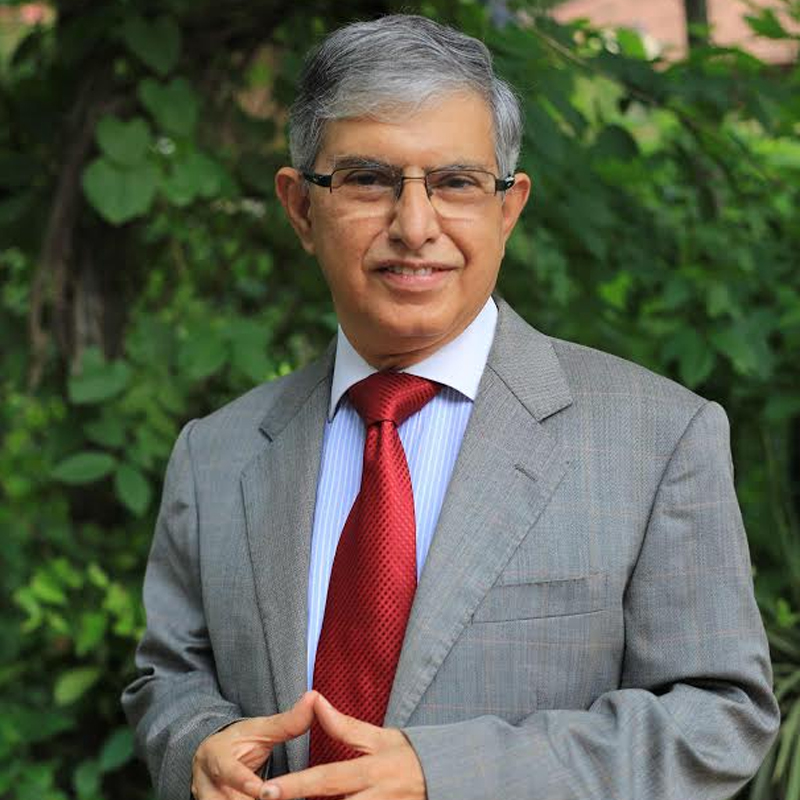
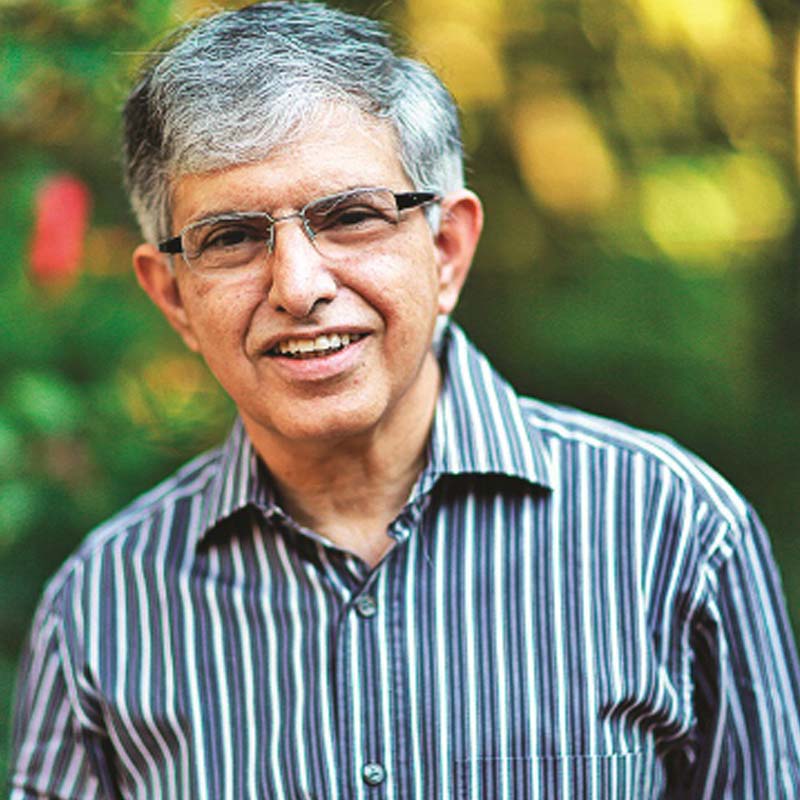
    MUMBAI: He is a man of small stature and has a voice that at times breaks into a squeak. But veteran ad man Sam Balsara–who is celebrating his sixty-seventh birthday today–is one of the giants of Indian advertising whose words have boomed across the industry and made even the most powerful sit up, take note – and follow.

    Born in the small city of Bulsar–now called Valsad–in Gujarat, Blasara clearly was meant for bigger things right from the beginning. He went on to complete his management post graduation from the Jamnalal Bajaj Institute of Management Studies. He began his career working as a marketing executive at Sarabhais and Cadbury. Later he switched to advertising, working with Hindustan Thompson Associates’ second agency Contract Advertising. He then moved on to a fledgling outfit  called Mudra then headed by (the now late) AG Krishnamurthy and  went to lead its Mumbai office for four years.

    But working for someone else didn’t pacify his hunger to make a mark in the world. That’s when he decided to become an entrepreneur and partnered a fledgling agency called Madison which he took over totally later in 1988.

    What started as a small company with only two clients back then, namely Godrej and Nelco, today has 24 business units across 11 specialised functions of advertising, media, business analytics, outdoor, activation, events, PR, retail, entertainment, mobile and sports. The gross billing of Madison World today stands at around Rs 3,700 crore. 

    The chairman & managing director at Madison World, Sam Balsara has seen the industry evolve and go through to various upheavals and transformation and the man still gives novel agencies a run for their money.

    He got his daughter Lara Balsara Vajifdar on board as a management trainee in Madison in 2004 and today she has risen to become the executive director, Madison World, having played a significant role building the  brand over the past decade.

    public://sam2.jpg

    Working with your family has its own perks. But things can get tricky and awkward at times and one has to know how to manage the on-off switch. Sam Balsara does it well. Something that’s vouched for by Lara who emphasizes that her father is a very different person at home.

    “At work he is a lot more formal, objective, focused, but at home, although he does work a fair bit at home too, he is more relaxed. It is a treat to watch him interact and get bullied by his grand children,” says the mother of two.

    Madison World is set to compete 30 years of its business in March this year and people have been talking again about Balsara retiring from his position or selling off the agency. The on and off conversations have been going on for quite a few years on whether Madison World would begin active dialogue with any holding company for a sale or merger this year. And the chatter is pretty much justified as Madison is amongst the rare few Indian owned advertising agencies that is consistently outperforming its opponents that come with global ancestry and backing. But Balsara has always rubbished these rumours as he has no intentions of selling the company any time soon. 

    Lara points out that her father is a great man-manager as he always believes in leading by example. “He commands respect rather than demanding it and gives senior people the freedom to shape and drive their businesses,” she adds. 

    Sam Balara has been rated the most influential person in media and is a recipient of the AAAI (Advertising Agencies Association of India ) Lifetime Achievement Award. He has served as of AAAI president from 2002 to 2004, Advertising Standards Council of India (ASCI) chairman from 2000 to 2001, and has been The Advertising Club president for three terms from 1989 to 1992. 

    Although he isn’t likely to be in the city during the day to celebrate his birthday, the family is set to attend a function later in the evening. 

    Team IndianTelevision.com wishes the ad guru a very happy birthday and health! We list down  some of the key industry leaders’ wishes for Sam  Balsara. 

    Canco Advertising founder & IAA India president  Ramesh Narayan: “Sam and I go back a long way. He has always been a terrific industry man. We have worked together in the AAAI and continue to work together in the IAA. To me, Sam is a person who never says no and is always there to help you. He is a positive influence. May you always remain as young, smiling and helpful as you have always been my friend.”

    Publicis India managing director &  chief creative officer Bobby Pawar: “Hey Sam, you are not just a big part of the industry but you are an industry all by yourself. But can you do the rest of us a favour and just pretend to slow down because you are making the rest of us feel old.”

    Dentsu Aegis Network chairman and CEO South Asia Ashish Bhasin: “Dear Sam, You epitomise energy and drive in our industry. Keep providing us with your valuable guidance and keep growing younger and younger as you always do. Best wishes.”

    Madison Media & OOH Madison World group CEO Vikram Sakhuja:

    “I’ve known him for over 25 years and it has been a wonderful run with him. I’ve known him as a client for 10 years, as a competitor for 14 years and now as a partner for around 2 years. He  still has the same energy at 67 as he did when he was 40. He is one of those guys who is extremely passionate about advertising and media. He is always willing to help and humble to the core. He has a sense of fair play, integrity and is always willing to help the larger cause. He is a great mentor and provides advice that is profound in its simplicity.”

    Sony Pictures Network president of network sales & international business Rohit Gupta:

    “He is an institution in himself for the media industry. He is the most honest and respectable man in the media business and there is nobody who can come close to him. Despite the invasion of big agencies, he stood alone and hats off to him for that.”

    Applause Entertainment CEO Sameer Nair:

    “I have known Sam from the time I got into the industry and he has ever since been a leading light of the media buying and planning business. He has been like a hero to all of us in the industry and has held himself up against all big foreign giant multinational companies. Sam personally is a wonderful person and in my personal experience he has always been extremely kind, considerate and looks out for people. My professional relationship with him has always been smooth even when I was the seller and he was the media buyer. I have always found him as a very reasonable man to deal with.”

    BARC CEO Partho Dasgupta:

    “Sam is a respected voice not only in the advertising world, but the larger media industry as well – and not without reason. He has had a long innings, and I am sure he will continue to be at the crease for many years to come. He is the man who literally created the afternoon soap slot with Shanti on DD. There’s a lot to be gained from his rich experience and accumulated insights – and we all know that he speaks his mind freely without pulling any punches. I wish him many more years of success.”

    Viacom18 COO Raj Nayak: 

    Sam Balsara is a legend in his own right. Small in height and big in stature. I have known Sam for more than two decades and his biggest strength is his ability to combine humility with hardcore business. He is a charmer and can disarm you with his smile. He has a human side to his hard-nosed business approach and goes out of his way to help everyone. He is someone you can reach out to both personally and professionally. Sam is a hands on boss and comes prepared for industry meetings with facts and figures at his fingertips. He has been on almost all industry bodies and his contribution to the advertising and media business is unparalleled. He is someone I immensely admire and respect. Today on his 67th birthday I wish him. Lots more success, good health, happiness and a very long life. Cheers Sam, I am waiting for the birthday cake! 

    And from us at indiantelevision.com we’d like to end with the words of Ingrid Bergman in the 1942 film Casablanca: “Play it Sam. Play it for old time’s sake.”

    Also Read :

    ‘I encourage all my people to think like entrepreneurs.’ – Sam Balsara

    “I hope to convince BJP to connect with electorate throughout the year”: Sam Balsara

    ‘Name and shame delinquent channels’

  • GroupM acquires controlling interest in MediaCom India

    GroupM acquires controlling interest in MediaCom India

    MUMBAI: WPP’s GroupM, the world’s leading global media investment group, yesterday announced it will be acquiring a majority stake in MediaCom India, a joint venture between GroupM India and Sam Balsara, the principal shareholder of the Madison Media group. While MediaCom India will continue operating as an independent brand, the agency will have the advantage of access to GroupM’s global infrastructure.

    This acquisition continues WPP’s strategy of investing in fast growth markets, new media and digital.

    “The majority acquisition of MediaCom in India represents a significant evolution in one of the world’s fastest growing economies. As India becomes a very attractive business hub for global clients, we are confident our talented team in India will deliver exemplary growth and results for all stakeholders,” MediaCom Worldwide CEO Stephen Allan.

    Speaking on the acquisition, GroupM South Asia CEO CVL Srinivas said, “MediaCom India has won several prestigious clients, developed a strong digital presence and has delivered award-winning campaigns for clients. As a network, we have taken giant strides globally and in India towards a more Data and Tech-led core to our business. MediaCom India can harness our world-class media infrastructure to provide more value to its clients and people.”

    Founded in 2007, MediaCom India became a joint venture in 2008. Over the last eight years, MediaCom India has established itself as one of the top 5 media agencies in the market in terms of market share (source: RECMA ratings 2015). In 2016, WARC ranked MediaCom India’s Mumbai office as one of the top 10 media agencies in the world based on performance in effectiveness and strategy impact for its clients.

    The Content + Connection agency, MediaCom India, delivers not just individual channel efficiencies but also connected communications system effectiveness by developing and optimising all content –as the fuel that drives high-performing systems. Furthermore, the India team has adapted the ‘People First’ philosophy very well from its global parent, resulting in the lowest attrition rate in the media industry. The agency has consistently won all major awards, both global and local including M&M, Spikes Asia, FOM Asia as well as The Global Awards, EMVIEs, ABBYs, etc.

  • GroupM acquires controlling interest in MediaCom India

    GroupM acquires controlling interest in MediaCom India

    MUMBAI: WPP’s GroupM, the world’s leading global media investment group, yesterday announced it will be acquiring a majority stake in MediaCom India, a joint venture between GroupM India and Sam Balsara, the principal shareholder of the Madison Media group. While MediaCom India will continue operating as an independent brand, the agency will have the advantage of access to GroupM’s global infrastructure.

    This acquisition continues WPP’s strategy of investing in fast growth markets, new media and digital.

    “The majority acquisition of MediaCom in India represents a significant evolution in one of the world’s fastest growing economies. As India becomes a very attractive business hub for global clients, we are confident our talented team in India will deliver exemplary growth and results for all stakeholders,” MediaCom Worldwide CEO Stephen Allan.

    Speaking on the acquisition, GroupM South Asia CEO CVL Srinivas said, “MediaCom India has won several prestigious clients, developed a strong digital presence and has delivered award-winning campaigns for clients. As a network, we have taken giant strides globally and in India towards a more Data and Tech-led core to our business. MediaCom India can harness our world-class media infrastructure to provide more value to its clients and people.”

    Founded in 2007, MediaCom India became a joint venture in 2008. Over the last eight years, MediaCom India has established itself as one of the top 5 media agencies in the market in terms of market share (source: RECMA ratings 2015). In 2016, WARC ranked MediaCom India’s Mumbai office as one of the top 10 media agencies in the world based on performance in effectiveness and strategy impact for its clients.

    The Content + Connection agency, MediaCom India, delivers not just individual channel efficiencies but also connected communications system effectiveness by developing and optimising all content –as the fuel that drives high-performing systems. Furthermore, the India team has adapted the ‘People First’ philosophy very well from its global parent, resulting in the lowest attrition rate in the media industry. The agency has consistently won all major awards, both global and local including M&M, Spikes Asia, FOM Asia as well as The Global Awards, EMVIEs, ABBYs, etc.

  • CII Sports Summit: The role of corporate India

    CII Sports Summit: The role of corporate India

    MUMBAI: Profit is not a bad word which the sports ecosystem has awakened to and realised, seemed to be the essence of the discussion at the inaugural ‘Corporatization of Sports’ session at the CII summit on the business of sports and entertainment held in Mumbai on 21 September. The session sought to discuss how Indian sport could evolve and produce champions with the involvement of corporate India.

    The need for looking at the commercial aspect of sports, scope for public-private partnership in promotion, possibility of the government incentivising investments, supporting sports for the sake of business and branding, games packaging and cultivating viewership and media coverage were some of the ideas thrown up at the summit to which almost all the experts agreed.

    KPMG partner Jaideep Ghosh, GroupM business head – entertainment, sports and live events Vineet Karnik, IMG Reliance COO Ashu Jindal, PMG chairman Sam Balsara, YES Bank president and country head, media & entertainmemt, luxury & sports,Karan Ahluwalia and MICA professor Sanjeev Tripathi, were the panelists. Harsha Bhogle, commentator and journalist, moderated the session.

    Bhogle introduced the experts and sought some opinions on the subject. “It is indeed encouraging to see that lately sports was being promoted from the school and college level,” Jindal said. Ghosh said that consumption of sporting events in India has been on the rise, which mainly included online consumption. He underlined the importance and growth of digital media and social media rights for such events.

    Pointing at the international sporting leagues, Ghosh quoted an example of how La-Liga had tweaked its sports timing so as to suit the Indian viewership timings. He noted the positive trend of a worthwhile increase of 20-30% in female viewership of sporting events in India.

    Profit-making training academies and sports good manufacturing were other areas that get a boost with the promotion of sports, Ghosh remarked.

    Whether the Indian government will support sports, Bhogle sought to know from the panelists. Tripathi, quoting a government web site, said that the establishment’s self-declared role was creating infrastructure and capacity-building. “One needs to love sports to promote it,” quipped Bhogle referring to the government versus corporate role.

    Tripathi suggested the concept of public-private partnership in promoting sports. “If tollways can follow the PPP model, I don’t see any reason why sports can’t,” he seemed curious. Giving the example of a private company managing the commercial exploitation of swimming pools at Kendriya Vidyalayas after school hours, he said Sports Authority of India stadia could also be exploited along similar lines.

    “Almost 340-350 days in a year, the SAI stadia are unused,” he quipped. In metros, Bhogle said, because of the traffic snarls and other issues, people barely manage to reach the stadia. There is no time to play or practice. “Medals will hopefully come from small towns – where there is space and time,” Bhogle opined.

    Jindal agreed that the government builds infrastructure and corporates invest. Reliance Foundation, he said, was supporting sporting events in around 2000 schools in the country. “IMG sponsored two sportspersons to train at a US academy and one of them today is playing for the prestigious NBA,” Jindal said.

    Bhogle said it was very significant to reach the grassroots level to cultivate sporting talent. “Let under-16 boys and girls play their game at various levels – talent and technique will follow suit,” he felt.

    “There is no database of grassroots-level sporting events being played in the country,” Karnik remarked. There is no national-level academy for training budding talent, he said. Corporates, Karnik stated, were engaging in sports. Like broadcasters and distributors, etc. make money, he said, it was crucial that Indian companies sought RoIs (returns on investments). “But, are they looking at the long-term (say, five years) perspective? May be, no,” he felt.

    In almost 30 years, Balsara said, the business of sports (advertsing,etc.) in India has grown around 50 times which was far less than growth in other sectors/sub-sectors.

    Balsara said there was a need to see sports as a business. “And, in business, there are profits – however distant that may be.” Be a ‘lambi race ka ghoda’, he said. Balsara believed that corporates need to have more and better risk appetite to be in the business of sports promotion.

    Corporates, of course, support events for the sake of building their brands, said Ahluwalia. Given the demographics in India, advertising was done for more visibility. For the sake of going the whole hog into sports promotion, Ahluwalia said, the complete supply chain would need to be looked at – from scouting for talent to sports good manufacturing etc. to CSR

    We also need to support games other than cricket, Bhogle said. Tripathi agreed, and informed that he found 20 football academies in Ahmedabad but none for cricket.“The different leagues being played in India are creating dreams,” Bhogle said. There was a need for heroes.There were fewer heroes because federations used to dwarf them in the wake of retaining their own supremacy, Bhogle said.

    Balsara agreed on heroes and winners. The whole nation is watching sports. Winners at any level – state level or national level – are a good bet. “Only then, people and corporates would go after them,” he said.

    India needs a revolution in all sporting activities. “The revolution that the former world champion Grandmaster Vishwanathan Anand could bring about in chess, could not be replicated in the case of Mary Kom,” Bhogle lamented. “You need the power of media to establish and popularise a sport,” Balsara said. A strong medium like TV was very significant for sports promotion, he said.

    Bhogle agreed – TV creates heroes. “The digital medium in India, which does not need the help of airtime or printing, is also growing very well,” Bhogle said. Jindal nodded, saying, “All the school matches supported by IMG were published on the social media and uploaded on Youtube”. The influence of social media, especially the opinions and reactions, was very powerful, he said. Jindal said the social media helps in taking sports to the next level.

    Bhogle sought to analyse the success of ‘pro-kabaddi’ in India. “Apart from some tweaks to the game’s rules, did it succeed because there was no burden of legacy,” he asked. “The packaging was very good, although there were no top-level, known players,” Ghosh answered. “Each game, which helped release the regional pent-up demand, is short and held the viewers’ interest for 45-50 minutes,” he said. Half-jokingly, he said he found some DJ kind of effect at the ‘pro-kabaddi’ matches.

    “Kabaddi is a kind of revolution brought about with multimedia help.Players who were making Rs 2-5 lakh are now making 50-70 lakh,”Ahluwalia said. Regional brands and products are associating with the game. Sarpanchs etc. have become trainers, mentors and coaches.

    “Leading kabaddi players are earning more than the average IPL players,” Bhogle remarked. He said, as in the US, he could foresee regions in India playing against each other.

    Whether mega corporations can help sports and/or fund stadiums, Bhogle asked. To this, Karnik said that Hero, Pepsi and Vodafone (which supported 10 seasons of a game) were the examples of that phenomenon. “Casual relationships with sports doesn’t work,” Balsara agreed. Relationships over some years reaped a good harvest, he said.

    “Pepsi, for example, does not support only a few episodes of a TV serial,” Balsara said. Consistency of sponsorship in sports is critical, he said.

    However, with limited spending and maximum leverage, RoI is also possible. Balsara gave the example of Kent RO which sponsors non-live after-hours of games. On the other hand, he said, IPL sponsors Vivo was leveraging far less than it could have had. Everybody agreed.

    “Eventually, with low RoI, they may end up being unsatisfied,” said. Bhogle said some companies were quietly supporting potential winners so that they could leverage them when they triumph.

    The business of sports in India was merely worth $2 billion, whereas, in the developed countries, it was pegged at around $ 50-60 billion, Ahluwalia said. So, are we bullish on the business of sports in India, Bhogle asked. Almost all panelists answered in the affirmative, with Jindal adding, “India is growing at 7%, earnings are increasing and so is sports.”

    Bhogle concluded by saying that (sporting) opportunities well-packaged get investments. Begging bowls get pennies.

  • CII Sports Summit: The role of corporate India

    CII Sports Summit: The role of corporate India

    MUMBAI: Profit is not a bad word which the sports ecosystem has awakened to and realised, seemed to be the essence of the discussion at the inaugural ‘Corporatization of Sports’ session at the CII summit on the business of sports and entertainment held in Mumbai on 21 September. The session sought to discuss how Indian sport could evolve and produce champions with the involvement of corporate India.

    The need for looking at the commercial aspect of sports, scope for public-private partnership in promotion, possibility of the government incentivising investments, supporting sports for the sake of business and branding, games packaging and cultivating viewership and media coverage were some of the ideas thrown up at the summit to which almost all the experts agreed.

    KPMG partner Jaideep Ghosh, GroupM business head – entertainment, sports and live events Vineet Karnik, IMG Reliance COO Ashu Jindal, PMG chairman Sam Balsara, YES Bank president and country head, media & entertainmemt, luxury & sports,Karan Ahluwalia and MICA professor Sanjeev Tripathi, were the panelists. Harsha Bhogle, commentator and journalist, moderated the session.

    Bhogle introduced the experts and sought some opinions on the subject. “It is indeed encouraging to see that lately sports was being promoted from the school and college level,” Jindal said. Ghosh said that consumption of sporting events in India has been on the rise, which mainly included online consumption. He underlined the importance and growth of digital media and social media rights for such events.

    Pointing at the international sporting leagues, Ghosh quoted an example of how La-Liga had tweaked its sports timing so as to suit the Indian viewership timings. He noted the positive trend of a worthwhile increase of 20-30% in female viewership of sporting events in India.

    Profit-making training academies and sports good manufacturing were other areas that get a boost with the promotion of sports, Ghosh remarked.

    Whether the Indian government will support sports, Bhogle sought to know from the panelists. Tripathi, quoting a government web site, said that the establishment’s self-declared role was creating infrastructure and capacity-building. “One needs to love sports to promote it,” quipped Bhogle referring to the government versus corporate role.

    Tripathi suggested the concept of public-private partnership in promoting sports. “If tollways can follow the PPP model, I don’t see any reason why sports can’t,” he seemed curious. Giving the example of a private company managing the commercial exploitation of swimming pools at Kendriya Vidyalayas after school hours, he said Sports Authority of India stadia could also be exploited along similar lines.

    “Almost 340-350 days in a year, the SAI stadia are unused,” he quipped. In metros, Bhogle said, because of the traffic snarls and other issues, people barely manage to reach the stadia. There is no time to play or practice. “Medals will hopefully come from small towns – where there is space and time,” Bhogle opined.

    Jindal agreed that the government builds infrastructure and corporates invest. Reliance Foundation, he said, was supporting sporting events in around 2000 schools in the country. “IMG sponsored two sportspersons to train at a US academy and one of them today is playing for the prestigious NBA,” Jindal said.

    Bhogle said it was very significant to reach the grassroots level to cultivate sporting talent. “Let under-16 boys and girls play their game at various levels – talent and technique will follow suit,” he felt.

    “There is no database of grassroots-level sporting events being played in the country,” Karnik remarked. There is no national-level academy for training budding talent, he said. Corporates, Karnik stated, were engaging in sports. Like broadcasters and distributors, etc. make money, he said, it was crucial that Indian companies sought RoIs (returns on investments). “But, are they looking at the long-term (say, five years) perspective? May be, no,” he felt.

    In almost 30 years, Balsara said, the business of sports (advertsing,etc.) in India has grown around 50 times which was far less than growth in other sectors/sub-sectors.

    Balsara said there was a need to see sports as a business. “And, in business, there are profits – however distant that may be.” Be a ‘lambi race ka ghoda’, he said. Balsara believed that corporates need to have more and better risk appetite to be in the business of sports promotion.

    Corporates, of course, support events for the sake of building their brands, said Ahluwalia. Given the demographics in India, advertising was done for more visibility. For the sake of going the whole hog into sports promotion, Ahluwalia said, the complete supply chain would need to be looked at – from scouting for talent to sports good manufacturing etc. to CSR

    We also need to support games other than cricket, Bhogle said. Tripathi agreed, and informed that he found 20 football academies in Ahmedabad but none for cricket.“The different leagues being played in India are creating dreams,” Bhogle said. There was a need for heroes.There were fewer heroes because federations used to dwarf them in the wake of retaining their own supremacy, Bhogle said.

    Balsara agreed on heroes and winners. The whole nation is watching sports. Winners at any level – state level or national level – are a good bet. “Only then, people and corporates would go after them,” he said.

    India needs a revolution in all sporting activities. “The revolution that the former world champion Grandmaster Vishwanathan Anand could bring about in chess, could not be replicated in the case of Mary Kom,” Bhogle lamented. “You need the power of media to establish and popularise a sport,” Balsara said. A strong medium like TV was very significant for sports promotion, he said.

    Bhogle agreed – TV creates heroes. “The digital medium in India, which does not need the help of airtime or printing, is also growing very well,” Bhogle said. Jindal nodded, saying, “All the school matches supported by IMG were published on the social media and uploaded on Youtube”. The influence of social media, especially the opinions and reactions, was very powerful, he said. Jindal said the social media helps in taking sports to the next level.

    Bhogle sought to analyse the success of ‘pro-kabaddi’ in India. “Apart from some tweaks to the game’s rules, did it succeed because there was no burden of legacy,” he asked. “The packaging was very good, although there were no top-level, known players,” Ghosh answered. “Each game, which helped release the regional pent-up demand, is short and held the viewers’ interest for 45-50 minutes,” he said. Half-jokingly, he said he found some DJ kind of effect at the ‘pro-kabaddi’ matches.

    “Kabaddi is a kind of revolution brought about with multimedia help.Players who were making Rs 2-5 lakh are now making 50-70 lakh,”Ahluwalia said. Regional brands and products are associating with the game. Sarpanchs etc. have become trainers, mentors and coaches.

    “Leading kabaddi players are earning more than the average IPL players,” Bhogle remarked. He said, as in the US, he could foresee regions in India playing against each other.

    Whether mega corporations can help sports and/or fund stadiums, Bhogle asked. To this, Karnik said that Hero, Pepsi and Vodafone (which supported 10 seasons of a game) were the examples of that phenomenon. “Casual relationships with sports doesn’t work,” Balsara agreed. Relationships over some years reaped a good harvest, he said.

    “Pepsi, for example, does not support only a few episodes of a TV serial,” Balsara said. Consistency of sponsorship in sports is critical, he said.

    However, with limited spending and maximum leverage, RoI is also possible. Balsara gave the example of Kent RO which sponsors non-live after-hours of games. On the other hand, he said, IPL sponsors Vivo was leveraging far less than it could have had. Everybody agreed.

    “Eventually, with low RoI, they may end up being unsatisfied,” said. Bhogle said some companies were quietly supporting potential winners so that they could leverage them when they triumph.

    The business of sports in India was merely worth $2 billion, whereas, in the developed countries, it was pegged at around $ 50-60 billion, Ahluwalia said. So, are we bullish on the business of sports in India, Bhogle asked. Almost all panelists answered in the affirmative, with Jindal adding, “India is growing at 7%, earnings are increasing and so is sports.”

    Bhogle concluded by saying that (sporting) opportunities well-packaged get investments. Begging bowls get pennies.