Tag: Sairam Ranganathan

  • WPP Media’s ‘beyond price tags’ redefines India’s e-commerce game

    WPP Media’s ‘beyond price tags’ redefines India’s e-commerce game

    MUMBAI: Forget discounts and flash sales. India’s next e-commerce boom is getting a luxury makeover. WPP Media India has unveiled ‘Beyond Price Tags: The Power of Premiumization’ in India’s e-commerce boom, a new playbook that argues the future of online shopping is not just digital, but decisively premium.

    Launched in Mumbai, the report sheds light on how Indian consumers are moving beyond price wars and seeking something more lasting: experiences, personalisation, and ethics over mere affordability. The message is clear: value is being redefined.

    Drawing from insights by leading platforms, brands, and experts, the playbook highlights that premium demand is now democratised. Thanks to credit solutions, efficient delivery networks, and the rise of social and quick commerce, premium choices are no longer limited to metro buyers, they’re reaching the heart of Bharat.

    Among its key findings, the report identifies five defining shifts: the democratisation of premium demand; consumers’ appetite for elevated experiences; platform-driven brand reinvention; a cross-category tilt towards feature-rich, design-led products; and the evolution of mass brands into “masstige” offerings.

    To help brands turn insight into action, WPP Media introduces four strategic frameworks: Flash, Vista, Prime, and Rise, each designed to guide discoverability, curation, customer experience, and loyalty building in the digital era.

    “At WPP Media, we are constantly at the forefront of shaping the future of commerce,” said WPP Media South Asia COO Ashwin Padmanabhan. “The premiumization trend in Indian e-commerce is more than just a shift in price points, it reflects evolving consumer aspirations and the growing desire for quality, experience, and status.”

    Echoing this, WPP Media India head of commerce Sairam Ranganathan added, “Premiumization marks a pivotal shift where rising aspirations, global exposure, and digital empowerment are redefining how consumers engage with brands. This playbook is not just a guide but a catalyst for growth.”


  • MIS 2024: The power of personalisation: Strategies for creating a seamless customer experience

    MIS 2024: The power of personalisation: Strategies for creating a seamless customer experience

    Mumbai: The Media Investment Summit 2024 which is being held on 4 April at Novotel, Mumbai is a dynamic platform that aims to bring together minds from the brand, media, advertising, digital & TV fraternity to explore the ever-evolving landscape of content, Adtech, Martech, metaverse and Web 3.0, the evolution of traditional media planning and buying, data and privacy infringement and ROI on advertising.

    The day-long affair is to make sure to tantalise the thoughts of those looking for answers to myriad topics under the branding, advertising, TV, digital media planning, and buying roof.

    The session can provide valuable insights into the strategies, challenges, and future trends associated with creating a seamless customer experience through personalized marketing.

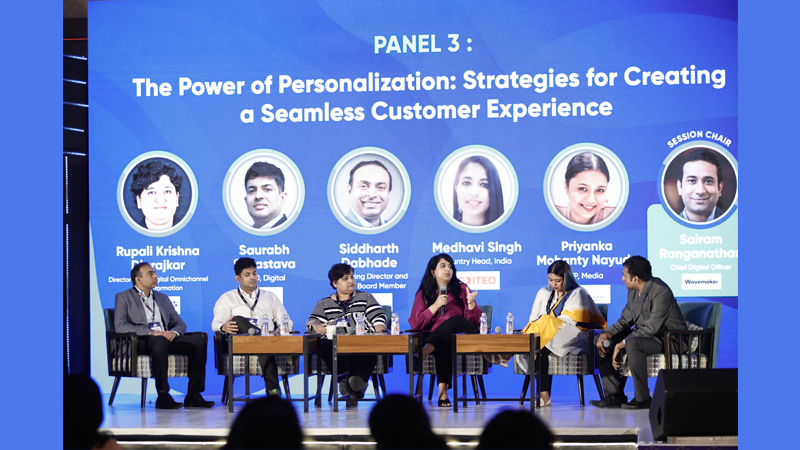
    The session of the event was chaired by Wavemaker India chief digital officer Sairam Ranganathan and consists of panellists including – Dr Reddy’s Laboratories India director head digital omnichannel & transformation Rupali Krishna Digrajkar, Shemaroo Entertainment COO, digital Saurabh Srivastava, MiQ MD and global board member Siddharth Dabhade, Criteo country head, India Medhavi Singh, Interactive Avenues VP, media, Priyanka Mohanty Nayudu.

    Here are the quotes from various industry experts on the power of personalisation: Strategies for creating a seamless customer experience:

    MiQ MD and global board member Siddharth Dabhade

    I think the evolution we’re witnessing involves a convergence of media and data, with companies worldwide, including those in India, consolidating functions like data science, marketing, and business priorities. Those who’ve successfully integrated these elements have outperformed because marketing can’t solely focus on one aspect; it must combine media and data. Many companies possess vast data, but it often remains fragmented. Thus, the challenge lies in consolidating this data to establish a unified consumer view. Additionally, families are accumulating more first-party data, which is crucial. Moreover, macro trends significantly influence consumer behaviour and brand perceptions. The ongoing challenge is integrating all these elements effectively. For instance, in a recent case study, we targeted consumers interested in inverter solutions while considering the macro trend of power outages driving inverter sales. It’s about merging data from various sources, deriving actionable insights, and ensuring data privacy. Another case study involves an auto player, where we analyzed dealership sales and inventory levels in real time to optimize marketing campaigns accordingly. personalisation should benefit both consumers and advertisers, enhancing relevance and efficiency.

    Shemaroo Entertainment COO, digital Saurabh Srivastava,

    One business I represent that’s highly relevant to this topic is Shemaroo, which operates a direct-to-consumer OTT business. Effective personalisation is crucial for us as it enhances consumer engagement and drives loyalty, ultimately impacting our business model, especially considering the high cost of acquiring consumers. When content is personalized based on data analysis, it sharpens our proposition and improves user engagement. For instance, our collaboration with Amazon Personalize has led to a significant shift in how users consume short-form video content, demonstrating the power of data-driven recommendations. This collaboration has become a noteworthy case study, indicating potential for further expansion beyond short-form content. Loyalty is paramount for every brand, as retaining consumers is key to maximizing lifetime value. Additionally, the OTT market in India is poised to double, creating opportunities for both global and local players. However, achieving this growth requires significant efforts in storytelling, data utilization, technology, and personalisation to meet the diverse needs of consumers. Ultimately, the collective integration of these elements will contribute to the expansion of the market, albeit with considerable effort.

    Dr Reddy’s Laboratories India director head of digital omnichannel & transformation Rupali Krishna Digrajkar

    We’re currently in the data-driven era where across various industries like pharma, media, entertainment, and telecom, customers demand both convenience and quality interactions with brands. This emphasis on convenience and expectation highlights the importance of personalisation. At Dr. Reddy’s, we engage with two main segments: B2B/B2B2C customers, such as doctors who then convey information to patients, and the over-the-counter (OTC) segment for direct consumer products. personalisation relies heavily on understanding data and deriving insights from it. Defining customer personas and understanding their needs, triggers, and barriers are essential for delivering targeted experiences to micro-segments. In our case, since we interact with diverse sets of doctors within specialities, influencing their perceptions about our products is key to driving prescriptions. This requires continuous relationship-building and content-based marketing to engage doctors effectively. While the theory is clear, executing personalisation at scale is complex and requires expertise in various elements such as data analytics and customer data management. Dr. Reddy’s is actively involved in orchestrating numerous initiatives due to the breadth of our business, which includes 74 brands. Personalisation efforts extend to content production, which must be customized and distributed modularly across different formats and geographies. Visualization plays a critical role in data-driven decision-making, and defining use cases and selecting the right toolbox are crucial aspects of implementing personalisation effectively.

    Criteo country head, India Medhavi Singh

    In today’s landscape, personalisation isn’t just about attracting more customers and boosting conversion rates. It’s also about fostering long-term customer relationships and maximizing lifetime value. Some may think personalisation is about individualising every interaction, but it’s crucial to understand that true personalisation occurs at scale. This necessitates investing in the right technologies to enable widespread personalisation efforts across various verticals. For instance, consider streaming platforms that recommend content based on users’ viewing history; this is made possible by their vast user bases. Similarly, at our company, leveraging our extensive data—over 720 million videos and 5 billion products—enables us to achieve personalisation at scale. Across the user journey, from acquisition to engagement, personalisation plays a pivotal role. For example, in collaboration with Clinique, we targeted audiences with high purchasing power, tailoring our approach to appeal to premium and luxury segments. Likewise, in the gaming vertical, we personalize ads to encourage user conversion. Personalisation extends to minute details, such as tailoring ad formats based on user preferences—be it single-window or scroll-based views. Moreover, real-time adaptation is crucial; algorithms must dynamically adjust based on user behaviour shifts, ensuring a personalized experience at every touchpoint. Therefore, creating personalised experiences at scale is paramount in today’s context.

    Interactive Avenues VP, media, Priyanka Mohanty Nayudu

    From initially attracting consumers to actively engaging with them and ultimately retaining their loyalty, personalisation plays a pivotal role throughout the entire journey. Take Spotify, for example, one of our brands during its launch in India. Globally recognised for its personalized approach, Spotify’s DNA is infused with personalisation. Therefore, our launch strategy had to emphasize personalisation from the outset, incorporating the “person, place, moment” framework along with extensive data analysis to understand our target audience’s preferences. This journey encompasses capturing audiences through media campaigns, acquiring them, engaging them with content recommendations tailored to their tastes, and retaining them by continually adapting to their usage patterns. Remarkably, leveraging personalisation has led to a significant increase in streams—up to 30 to 40 per cent more compared to regular usage. This underscores the critical role personalisation plays throughout the consumer journey.

  • Wavemaker India elevates Sairam Ranganathan to chief digital officer

    Wavemaker India elevates Sairam Ranganathan to chief digital officer

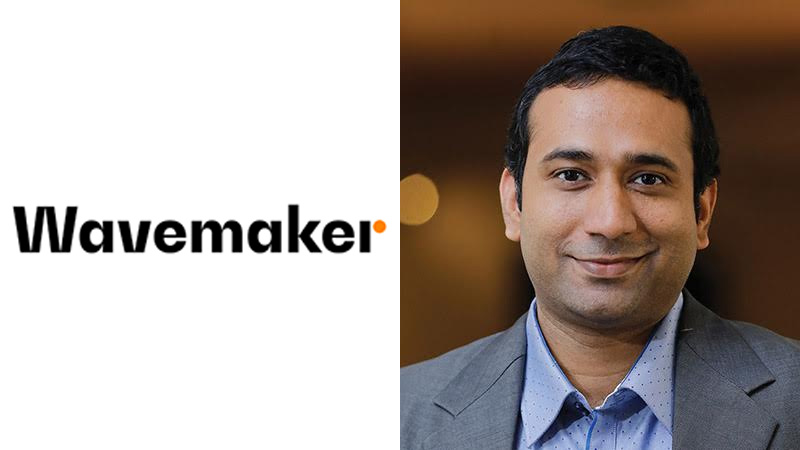
    Mumbai: Wavemaker India, the most awarded agency of GroupM, today announced the appointment of Sairam Ranganathan as Chief Digital Officer. In his new role, Sairam or Sai as he is fondly called, will strengthen digital capabilities and lead the newly formed team Wavemaker NorthStar. In his new role, Sai will continue to report to Vishal Jacob (chief transformation officer at Wavemaker India).

    As the head of Wavemaker NorthStar, Sai will work with clients to drive business outcomes. Team Wavemaker NorthStar will bring in the right experts across platforms, commerce, analytics & tech to orchestrate data-led solutions that yield business results. In addition, he will also be responsible for accelerating growth in digital services, integrating and aligning digital initiatives across business units for clients.  

    Sai has been an integral part of GroupM India since 2004. He has worked across multiple categories which include Telecom, FMCG, Consumer durables, Ecommerce, Retail, Lifestyle, Jewellery, Tourism, Technology, BFSI, Media & Entertainment. In the last few years, Sai has played a national role working with multiple teams to build and strengthen digital capabilities for Wavemaker.

    Commenting on Sai’s elevation, Ajay Gupte, CEO  of South Asia said, “At Wavemaker we are constantly evolving and adapting to help our clients grow by enabling better business solutions, build robust data-led experiences and positively provoke growth for them and for us. Sai brings in wealth of expertise and knowledge to deliver innovative customer initiatives across business domains, with a perfect balance of people management skills. I am confident that Sai is best placed to drive the digital-first agenda for us and our partners”.  

    “At Wavemaker our emphasis has always been to push the boundaries on our capabilities and provide our clients with an unmatched advantage through our services. In his new role, Sai will consolidate and grow capabilities on digital media and lead a team called Wavemaker NorthStar that will help clients deliver business outcomes through data-driven solutions. Given Sai’s passion, resilience, and commitment there could be no better person to lead this team and take our solutions to the next level”, expressed Wavemaker India’s chief transformation officer Vishal Jacob.  

    A big Star Wars fan, Sai has also co-authored two books on digital marketing in India – The Curious Digital Marketer and The Curious Digital Marketer 2.0.

    Talking about his new role, Sairam Ranganathan shared, “My journey at GroupM has been incredibly thrilling and enriching. In these last 20 years, I have grown significantly in my professional as well as personal life. I am grateful to Wavemaker for this exciting opportunity and I look forward to leading Wavemaker NorthStar as I start a new chapter in my growth journey to make Wavemaker an even more desirable partner for our clients.”

  • Planning & buying in India’s digital video landscape: A primer

    Planning & buying in India’s digital video landscape: A primer

    MUMBAI: Even as ‘digital marketing’, ‘digital ad spends’, ‘mobile advertising’ and ‘online videos’ become part of the colloquial Indian advertising lingo, planning and buying digital media is a world removed from the television-driven number-crunching that account managers at the leading media agencies were so far used to.

    While multiple data points have made the business more technical, at the same time, it’s ironically way more dependent on specialists, who often go by the fabled ‘instincts’ formula to filter out the information overload.

    Lack of standard metrics of measurement often requires one to look at the media mix as a whole integrated entity and try different permutations and combinations to get the desired reach, efficiency or brand outcome. Working in silos is no longer an option. There is a reason why the profile of the digital media planner (in some cases she is called the video planner) is emerging as one of the most coveted jobs in M&E industry across the globe.

    As the industry undergoes a digital cataclysm in the various forms of video content online, there is a need to simplify it for the layman so that he or she at least gets a basic insight into  the ways of planning and buying digital media. So here’s the primer:

    From efficiency to effectiveness:

    public://digital plan 2.jpg

    More often than not brands, which are slowly adapting to digital marketing, go with the quick, and ‘cost-effective’ plans’, to minimize their risks, using digital media as an add-on to their larger television strategy.  The challenge current digital planners are unanimously facing is to convince these clients to move from efficiency-centric planning to ‘effective’ plans that will bring them a brand outcome.

    To start with, digital planning can be approached from two angles — one is based on efficiency, and the other is based on effectiveness that depends on the end goal.

    Digital planning keeping ‘efficiency’ in mind comes when a brand wants to reach a certain desired target audience quickly and cost effectively. It allows incremental reach or incremental GRPs.

    “Let’s say your TV planning gives you 70 percent reach. You can plan so that your digital strategy can add five more points to that; that planning has been done keeping efficiency in mind,” Maxus India Digital- west general manager Sairam Ranganathan gives an example.

    On the flip-side, effectiveness-based digital plan directly impacts a brand’s awareness, consumer’s purchase intent, etc. “While the first gives you a media output the latter gives you a band outcome,” Ranganathan adds.

    But the transition isn’t far off.

    “Though it finally comes down to what the objective of the campaign is, we planners can no longer afford to see it(digital plan) as a sidekick to traditional media,  but review it as they may very well overlook an existing audience if it is a right fit,” shares Havas Media Group, India and South Asia CEO Anita Nayyar.

    Further, it is seen on multiple occasions, that when TV and digital are intertwined – that’s when a planner hits the sweet spot of the campaign.

    Measurement through different agency lenses:

    public://digi 2.jpg

    Fundamentally planning and buying media on digital platforms follows the same core principles of establishing the media objective, setting the strategy, implementation, evaluation and follow-up.

    It starts with understanding the consumer and how he or she uses the various digital tools at their disposal. Based on which the creative format is singled out and possible targeting options are explored to bring the communication and the consumer together.

    It requires slicing and dicing of data gathered through several propriety tools that are at the planner’s disposal.  Thus measurement, like every other media, plays a key role in a digital media plan as well. This is where digital planning deviates from its traditional counterpart; especially when ‘videos’ is the buzz word.

    “When it comes to digital videos, there is no single source data available to us planners,” says  Ranganathan. “Comscore does share some data of measuring digital reach but it only calculates desktop viewership, and doesn’t include mobile, when most OTT players see higher play time on smartphones and other devices.”

    “Since there are no uniform measurement metrics across the industry, and multi-fold data points to consider while planning, each major agency has its own set of propriety tools that helps it slice and the dice data,” shares  Ranganathan.

    From a number perspective, planners have the figures that the various publishers such as Facebook, Twitter, Youtube, and the OTT players share, which is then coupled with the planners’ own insight based on data gathered overtime.

    “Planners at Havas typically benchmark video properties using a mix of tools and empirical data that  they have accumulated over the years. These are then superimposed on current market trends to derive estimates of performance vis-à-vis cost thus arriving at optimal plans.

    Today, increasingly we are planning and implementing an audiovisual plan rather than a TV plan, especially in case of TVC asset marketing. Here, traditional metrics of TV buying also play a major role – as Havas Media uses proprietary tools like ‘Smart Planner’, combining metrics of a TV plan and the metrics of online video (OLV),” explains Anita Nayyar.

    Similarly Maxus India has communication planning tool called Resolve that is available to its clients, while Dentsu Aegis Network, which is the parent company of Isobar India uses in-house propreity tool Consumer Connection System (CCS) for its clients.

    Apart from this, Facebook Insights, comScore, Google Analytics, Google Trends, TGI survey data from Kantar Media are some of the other universally available tools that the planners look into.

    To each is its own: OTT ad rates

    public://ott.jpg

    Just like measurement is up to each planner’s own interpretation, when it comes to solely digital videos, the buying metrics set by each player differs as well.

    “Different OTT players have different models or may even have a mix of different rates as per buy type – for example – YouTube offers videos at either CPCV (Cost Per Completed View) which are executed on a bidding model or pre-rolls which are sold on CPM. Video rates also depend upon the kind of content/ duration/ targeting for the video – these factors have a huge impact on pricing. It’s not a case of one-size fits all – every plan/property has a different rate (as it could be served via a bid model). Price ranges of typical video ads can range from Rs 2 to Rs 5 ± 25% for a CPCV,” shares Nayyar.

    While Facebook offers videos on CPV (Cost Per View) or CPE (Cost Per Engagement), players like Vdopia, etc. offer videos at CPCV or CPM (Cost Per Thousand Impressions) or Fixed Buy (roadblock units, etc.).

    Since ‘prime time’ doesn’t exist as a concept in the world of digital videos, premium rates are dependent how ‘hot’ the IP is and how sharp targeting the brands can do through it.

    “In digital the rate increases with more targeting parameters. Hypothetically speaking, if a brand wants to reach a TG of 15 + with no cap on the upper limit, for per thousand such people,  may earn the player Rs 100. But if a brand wants to reach out to an audience between the age of 15 to 20 years of age who reside in Mumbai city only, the sharper targeting reduces the audience inventory, and therefore increases the price. Simple demand supply ratio if you look at it,” explains Ranganathan.

    Currently, most OTT players sell their ad inventories in packages to sponsors; they don’t sell individual ad spots. “Once the packages are sold for a fixed amount of sponsorship amount that guarantees a certain inventory of views, shares, etc; the remnant inventory (if any) can be made into packages of 10 to 20 spots and sold to advertisers,” points out Isobar India vice president Gopa Kumar.

    Having a head start over the rest of players, Hotstar clearly commands premium rates among all the OTT players at the moment, although the ad rates are subjected to different packages to different brands.

    “While everyone else is catching up to it, since Star India has invested so much into its OTT player, it clearly is the industry leader and therefore commands premium rates,” shared a well known digital planner under promise of anonymity.

    “During IPL season 9, Hotstar charged Rs 5 crore for associate sponsorship, which went up to Rs 8 to Rs 12 crore for their title sponsorship,” guesstimated the planner, adding that the rates are almost catching up with television sponsorship rates.

    Buying spots on Youtube and Facebook is a different ball game altogether that mustn’t be compared to the other OTT players in the market. The social media giants allow a biddable form of spot sale and one can buy the spots in real time as well. “This pure demand supply game somewhat democratizes the process for advertisers and gives them the flexibility to  work with a  limited budget or go bullish on a lucrative ad spot that would yield it good reach. While CPM based sales are available on YouTube to clients buying bulk in a package, most of Facebook video inventory is sold through auctions,” shares Kumar.

    Until all the players meet at a level playing field in terms of reach and content, and a uniform measurement standard is introduced in the OTT world,  is it unfair for brands to comply with prices set by individual players based on their internal measurement?

    “It isn’t unfair as brands have a choice to not advertise on OTT if they don’t buy the figures provided by the publishers/ players. Digital isn’t limited to OTT; it has 20 to 30 different touch points through which consumers can be reached. In fact OTTs are only a section of it,” Ranganathan adds.

    Do advertisers really understand digital videos?

    Advertising on TV has a history checkered with benchmarks that the brands have witnessed. The challenge with digital media is that these signposts are yet to be set. Therefore to expect clients to completely get the nuances of digital planning is unfair.

    To put matters into perspective, out of Rs 100 spent on advertising in India, only Rs 10 to Rs 14 (keeping several leading industry reports in mind ) is going in digital ad spends, which includes its multiple avenues such as SEO marketing and display ads. Digital video is a small part of the latter. Thus, brands may not be too vested in the medium yet.

    Having said that planners admit that in the last couple of years, brands have shown more confidence in digital video ads. They no longer ask ‘why digital’ but ‘what in digital.’ Videos are a better part of this ‘what.’

    And that is indeed good news for the digital players wanting brands to buy in to their sales inventories.

  • Planning & buying in India’s digital video landscape: A primer

    Planning & buying in India’s digital video landscape: A primer

    MUMBAI: Even as ‘digital marketing’, ‘digital ad spends’, ‘mobile advertising’ and ‘online videos’ become part of the colloquial Indian advertising lingo, planning and buying digital media is a world removed from the television-driven number-crunching that account managers at the leading media agencies were so far used to.

    While multiple data points have made the business more technical, at the same time, it’s ironically way more dependent on specialists, who often go by the fabled ‘instincts’ formula to filter out the information overload.

    Lack of standard metrics of measurement often requires one to look at the media mix as a whole integrated entity and try different permutations and combinations to get the desired reach, efficiency or brand outcome. Working in silos is no longer an option. There is a reason why the profile of the digital media planner (in some cases she is called the video planner) is emerging as one of the most coveted jobs in M&E industry across the globe.

    As the industry undergoes a digital cataclysm in the various forms of video content online, there is a need to simplify it for the layman so that he or she at least gets a basic insight into  the ways of planning and buying digital media. So here’s the primer:

    From efficiency to effectiveness:

    public://digital plan 2.jpg

    More often than not brands, which are slowly adapting to digital marketing, go with the quick, and ‘cost-effective’ plans’, to minimize their risks, using digital media as an add-on to their larger television strategy.  The challenge current digital planners are unanimously facing is to convince these clients to move from efficiency-centric planning to ‘effective’ plans that will bring them a brand outcome.

    To start with, digital planning can be approached from two angles — one is based on efficiency, and the other is based on effectiveness that depends on the end goal.

    Digital planning keeping ‘efficiency’ in mind comes when a brand wants to reach a certain desired target audience quickly and cost effectively. It allows incremental reach or incremental GRPs.

    “Let’s say your TV planning gives you 70 percent reach. You can plan so that your digital strategy can add five more points to that; that planning has been done keeping efficiency in mind,” Maxus India Digital- west general manager Sairam Ranganathan gives an example.

    On the flip-side, effectiveness-based digital plan directly impacts a brand’s awareness, consumer’s purchase intent, etc. “While the first gives you a media output the latter gives you a band outcome,” Ranganathan adds.

    But the transition isn’t far off.

    “Though it finally comes down to what the objective of the campaign is, we planners can no longer afford to see it(digital plan) as a sidekick to traditional media,  but review it as they may very well overlook an existing audience if it is a right fit,” shares Havas Media Group, India and South Asia CEO Anita Nayyar.

    Further, it is seen on multiple occasions, that when TV and digital are intertwined – that’s when a planner hits the sweet spot of the campaign.

    Measurement through different agency lenses:

    public://digi 2.jpg

    Fundamentally planning and buying media on digital platforms follows the same core principles of establishing the media objective, setting the strategy, implementation, evaluation and follow-up.

    It starts with understanding the consumer and how he or she uses the various digital tools at their disposal. Based on which the creative format is singled out and possible targeting options are explored to bring the communication and the consumer together.

    It requires slicing and dicing of data gathered through several propriety tools that are at the planner’s disposal.  Thus measurement, like every other media, plays a key role in a digital media plan as well. This is where digital planning deviates from its traditional counterpart; especially when ‘videos’ is the buzz word.

    “When it comes to digital videos, there is no single source data available to us planners,” says  Ranganathan. “Comscore does share some data of measuring digital reach but it only calculates desktop viewership, and doesn’t include mobile, when most OTT players see higher play time on smartphones and other devices.”

    “Since there are no uniform measurement metrics across the industry, and multi-fold data points to consider while planning, each major agency has its own set of propriety tools that helps it slice and the dice data,” shares  Ranganathan.

    From a number perspective, planners have the figures that the various publishers such as Facebook, Twitter, Youtube, and the OTT players share, which is then coupled with the planners’ own insight based on data gathered overtime.

    “Planners at Havas typically benchmark video properties using a mix of tools and empirical data that  they have accumulated over the years. These are then superimposed on current market trends to derive estimates of performance vis-à-vis cost thus arriving at optimal plans.

    Today, increasingly we are planning and implementing an audiovisual plan rather than a TV plan, especially in case of TVC asset marketing. Here, traditional metrics of TV buying also play a major role – as Havas Media uses proprietary tools like ‘Smart Planner’, combining metrics of a TV plan and the metrics of online video (OLV),” explains Anita Nayyar.

    Similarly Maxus India has communication planning tool called Resolve that is available to its clients, while Dentsu Aegis Network, which is the parent company of Isobar India uses in-house propreity tool Consumer Connection System (CCS) for its clients.

    Apart from this, Facebook Insights, comScore, Google Analytics, Google Trends, TGI survey data from Kantar Media are some of the other universally available tools that the planners look into.

    To each is its own: OTT ad rates

    public://ott.jpg

    Just like measurement is up to each planner’s own interpretation, when it comes to solely digital videos, the buying metrics set by each player differs as well.

    “Different OTT players have different models or may even have a mix of different rates as per buy type – for example – YouTube offers videos at either CPCV (Cost Per Completed View) which are executed on a bidding model or pre-rolls which are sold on CPM. Video rates also depend upon the kind of content/ duration/ targeting for the video – these factors have a huge impact on pricing. It’s not a case of one-size fits all – every plan/property has a different rate (as it could be served via a bid model). Price ranges of typical video ads can range from Rs 2 to Rs 5 ± 25% for a CPCV,” shares Nayyar.

    While Facebook offers videos on CPV (Cost Per View) or CPE (Cost Per Engagement), players like Vdopia, etc. offer videos at CPCV or CPM (Cost Per Thousand Impressions) or Fixed Buy (roadblock units, etc.).

    Since ‘prime time’ doesn’t exist as a concept in the world of digital videos, premium rates are dependent how ‘hot’ the IP is and how sharp targeting the brands can do through it.

    “In digital the rate increases with more targeting parameters. Hypothetically speaking, if a brand wants to reach a TG of 15 + with no cap on the upper limit, for per thousand such people,  may earn the player Rs 100. But if a brand wants to reach out to an audience between the age of 15 to 20 years of age who reside in Mumbai city only, the sharper targeting reduces the audience inventory, and therefore increases the price. Simple demand supply ratio if you look at it,” explains Ranganathan.

    Currently, most OTT players sell their ad inventories in packages to sponsors; they don’t sell individual ad spots. “Once the packages are sold for a fixed amount of sponsorship amount that guarantees a certain inventory of views, shares, etc; the remnant inventory (if any) can be made into packages of 10 to 20 spots and sold to advertisers,” points out Isobar India vice president Gopa Kumar.

    Having a head start over the rest of players, Hotstar clearly commands premium rates among all the OTT players at the moment, although the ad rates are subjected to different packages to different brands.

    “While everyone else is catching up to it, since Star India has invested so much into its OTT player, it clearly is the industry leader and therefore commands premium rates,” shared a well known digital planner under promise of anonymity.

    “During IPL season 9, Hotstar charged Rs 5 crore for associate sponsorship, which went up to Rs 8 to Rs 12 crore for their title sponsorship,” guesstimated the planner, adding that the rates are almost catching up with television sponsorship rates.

    Buying spots on Youtube and Facebook is a different ball game altogether that mustn’t be compared to the other OTT players in the market. The social media giants allow a biddable form of spot sale and one can buy the spots in real time as well. “This pure demand supply game somewhat democratizes the process for advertisers and gives them the flexibility to  work with a  limited budget or go bullish on a lucrative ad spot that would yield it good reach. While CPM based sales are available on YouTube to clients buying bulk in a package, most of Facebook video inventory is sold through auctions,” shares Kumar.

    Until all the players meet at a level playing field in terms of reach and content, and a uniform measurement standard is introduced in the OTT world,  is it unfair for brands to comply with prices set by individual players based on their internal measurement?

    “It isn’t unfair as brands have a choice to not advertise on OTT if they don’t buy the figures provided by the publishers/ players. Digital isn’t limited to OTT; it has 20 to 30 different touch points through which consumers can be reached. In fact OTTs are only a section of it,” Ranganathan adds.

    Do advertisers really understand digital videos?

    Advertising on TV has a history checkered with benchmarks that the brands have witnessed. The challenge with digital media is that these signposts are yet to be set. Therefore to expect clients to completely get the nuances of digital planning is unfair.

    To put matters into perspective, out of Rs 100 spent on advertising in India, only Rs 10 to Rs 14 (keeping several leading industry reports in mind ) is going in digital ad spends, which includes its multiple avenues such as SEO marketing and display ads. Digital video is a small part of the latter. Thus, brands may not be too vested in the medium yet.

    Having said that planners admit that in the last couple of years, brands have shown more confidence in digital video ads. They no longer ask ‘why digital’ but ‘what in digital.’ Videos are a better part of this ‘what.’

    And that is indeed good news for the digital players wanting brands to buy in to their sales inventories.

  • Maxus strengthens its top management

    Maxus strengthens its top management

    MUMBAI: Continuing its focus on product excellence and the need for continuous investments in people development, Maxus has elevated some of its key people and strengthened the top management.


    Maxus West head Anand Chakravarthy who joined last year has been promoted to managing partner. He will continue to be based at Mumbai, leading the West team and expansion plans.


    Maxus South Asia digital head Unny Radhakrishnan has been promoted as chief digital officer. In his new role, he will be additionally responsible for developing new practices and investments and new offerings from Maxus Metalworks (the creative R&D lab of Maxus).


    Maxus digital strategy head Vishal Jacob has been promoted as national director – digital.

    In his new role, he will take over from Radhakrishnan and be responsible for the digital services of Maxus across offices.


    Maxus West digital head Sairam Ranganathan has been promoted as general manager. Additionally, he will be also responsible for the digital media product and digital training needs.


    Maxus Delhi client leader Mimi Deb who joined three years ago has been elevated to general manager. She will lead several large new businesses like Shopclues and several other blue chip clients which the agency won recently.