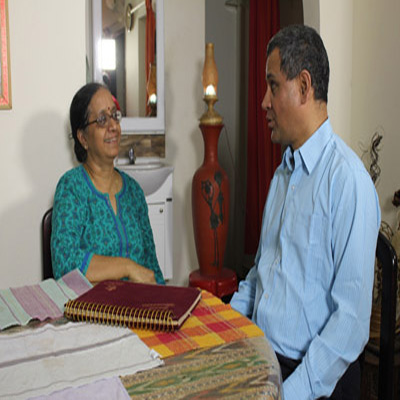
Mumbai: Filmmaker and theater artist Sai Paranjpye has donated her collection of original handwritten drafts and screenplays to Ashoka University’s Archives of Contemporary India. This collection includes drafts and screenplays from her notable films, such as Sparsh (1980), Chashme Buddoor (1982), Katha (1983), Disha (1992), Papeeha (1993), and Saaz (1997). The director’s papers will be accessible to researchers and scholars studying her work and its influence on Indian cinema.
Additionally, the collection features her books like Aal Bel, Sakkhe Sezari, Manjhe Khel Mandu De, and Jaswandi, as well as children’s plays including Nana Phadnavis, Jaducha Shankh, Haravalelya Khellyanche Rajya, Shepticha Shap, and Patte Nagrit. Paranjpye is the first filmmaker to donate her personal collection to the archives, which already includes papers from various researchers, scholars, and professors.
Her papers offer insights into her development as a director and screenwriter, tracing the evolution of her ideas and serving as a valuable resource for those studying film history and the evolution of Indian cinema.
Ashoka University vice-chancellor Prof Somak Raychaudhury said, “It is a great honour to have Sai Paranjpye’s collection as part of our Archives of Contemporary India. Her work represents a pivotal chapter in Indian cinema, and having access to her personal papers will allow future generations of scholars to study and appreciate her profound impact on storytelling and cinema.”
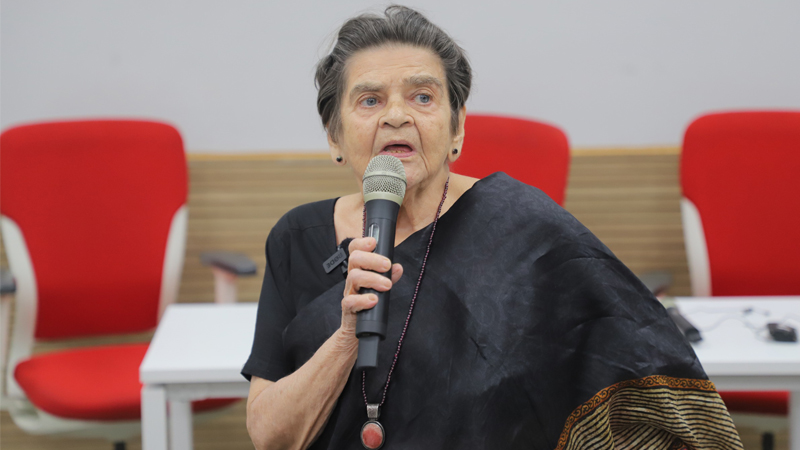
To celebrate the addition to the archives, Ashoka University hosted an event on 17 October 2024, bringing together students, faculty, and cinema enthusiasts to honor Sai Paranjpye’s contributions to Indian filmmaking. The event included an interactive session with Paranjpye, where she shared her journey, creative inspirations, and insights into her career. The discussion provided a glimpse into her storytelling techniques and views on the evolution of Indian cinema.
The event featured a screening of Ābhāḷālā Gavasni (The Sky is the Limit), a Marathi film with English subtitles, based on a play/film envisioned by Paranjpye for the 80th birthday of astrophysicist Prof. Jayant Vishnu Narlikar in 2018. The celebration concluded with a screening of Disha (The Immigrants, 1990), one of Paranjpye’s award-winning films that examines the challenges faced by rural migrants adapting to urban life. The film’s narrative and themes resonated with attendees, underscoring Paranjpye’s focus on social issues in her works.
Paranjpye added, “When Ashoka University’s Archives of Contemporary India requested the manuscripts, I looked at it as an opportunity. What greater honor than to be represented in this prestigious university’s archives, to have one’s work so beautifully cataloged? It’s an unimaginable opportunity for me—truly my honor. To be cataloged alongside icons like Girish Karnad, Dilip Padgaonkar, and Suresh Kohli is a privilege beyond words. It’s wonderful to join that list.”
As the first major woman filmmaker of contemporary India, Sai Paranjpye is recognized for her contributions to cinema and theatre, particularly with films like Chashme Buddoor (1981) and Sparsh (1980). Her work combines humor, social insight, and empathy, addressing complex themes across various genres. Throughout her career, Paranjpye has received numerous accolades, including four National Film Awards and two Filmfare Awards. In 2006, she was honored with the Padma Bhushan by the Government of India for her contributions to Indian cinema.
Paranjpye said, “My advice to students would be to study the life around them and watch good films, both from India and abroad, as it provides a valuable learning experience.”
Sai Paranjpye’s collection, now part of the Archives of Contemporary India, includes original drafts of both released and unreleased works, providing a comprehensive view of her creative evolution. The collection will serve as a valuable resource for researchers, scholars, and film history enthusiasts, offering a learning platform for aspiring filmmakers to master essential filmmaking skills, including direction, screenplay, and storyboarding.