Tag: Sahitya Akademi

  • Essel chairman pays tribute to India’s  official language on ‘Hindi Diwas’

    Essel chairman pays tribute to India’s official language on ‘Hindi Diwas’

    NEW DELHI: On the occasion of Hindi Diwas on Wednesday, Member of Parliament, Rajya Sabha and Chairman, Essel Group, Subhash Chandra engaged in a thought-provoking discussion with eminent Hindi Poet and renowned scholar, Ashok Chakradhar on the ‘Present Status of Hindi: Challenges and Solutions’ at the Sahitya Akademi in New Delhi.

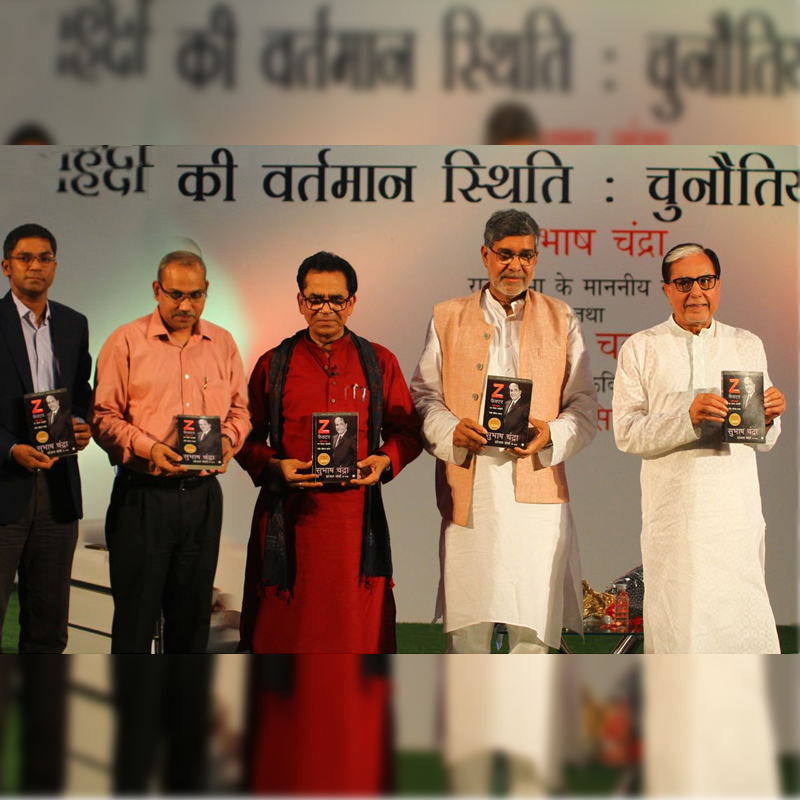
    The Hindi edition of Chandra’s autobiography ‘The Z Factor – My Journey as the Wrong Man at the Right Time’ was launched by the Nobel Peace Prize recipient and Chief Guest, Kailash Satyarthi.

    Chandra said, “English cannot replace Hindi as the language of communication in this country. In India, the language of the common man is Hindi and will continue to remain so. Over the years, by adopting words from various languages, the Hindi language has become rich and is growing on its own strength. Today, Hindi is spoken and understood all over the globe.”

    “If our higher education system is imparted in Hindi or the mother tongue, we can create more experts in every field. For example, in Ludhiana, there are uneducated but skilled workers, who, if they were given education, would do even better,” Chandra added.

    Chakradhar said, “It is not correct to say that we are serving the Hindi language, rather we should be saying that we are working for the Hindi language. Hindi has reached its highest levels and in coming years, it will continue to grow even further. To keep the purity of this beautiful language, scholars from the literature community should be mindful of not misusing Hindi words or using English words deliberately”.

    Satyarthi said, “The mother tongue of a person is the most respected and no other language can take it away. Hindi and English are separate languages which are not competing with each other. However, to leave one’s own mother tongue and speak disrespectfully about it, is a shameful act. We should be open to learning all languages but should not criticise our own mother tongue. I remember when I went to receive the Nobel Prize, I purposely spoke in Hindi.”

    From the book:

    It was 14 December 1991 when Ashok Kurien of Ambience ad agency and I reached Star TV’s office in Hong Kong. There were ten to twelve senior and junior executives in the room. Richard Li, head of Star TV, was not there. So we waited awhile. It was like waiting for the king to come in and give his blessings.

    Richard walked in suddenly and sat opposite me. ‘OK, Indian channel…
    Hindi channel. Where is the money in India?’ Richard was very dismissive. ‘I am not interested in a joint venture.’

    So I addressed him directly. ‘Mr Li, if you are not interested in the joint venture, can you consider leasing the [satellite] transponder to us?’ ‘There is no transponder available for less than $5 million per year,’ Richard said. It was a haughty statement to put me off.

    ‘That is fine. I will pay $5 million!’ It was a spur-of-the-moment decision. I did not realize the implication of what I had said…

  • Essel chairman pays tribute to India’s  official language on ‘Hindi Diwas’

    Essel chairman pays tribute to India’s official language on ‘Hindi Diwas’

    NEW DELHI: On the occasion of Hindi Diwas on Wednesday, Member of Parliament, Rajya Sabha and Chairman, Essel Group, Subhash Chandra engaged in a thought-provoking discussion with eminent Hindi Poet and renowned scholar, Ashok Chakradhar on the ‘Present Status of Hindi: Challenges and Solutions’ at the Sahitya Akademi in New Delhi.

    The Hindi edition of Chandra’s autobiography ‘The Z Factor – My Journey as the Wrong Man at the Right Time’ was launched by the Nobel Peace Prize recipient and Chief Guest, Kailash Satyarthi.

    Chandra said, “English cannot replace Hindi as the language of communication in this country. In India, the language of the common man is Hindi and will continue to remain so. Over the years, by adopting words from various languages, the Hindi language has become rich and is growing on its own strength. Today, Hindi is spoken and understood all over the globe.”

    “If our higher education system is imparted in Hindi or the mother tongue, we can create more experts in every field. For example, in Ludhiana, there are uneducated but skilled workers, who, if they were given education, would do even better,” Chandra added.

    Chakradhar said, “It is not correct to say that we are serving the Hindi language, rather we should be saying that we are working for the Hindi language. Hindi has reached its highest levels and in coming years, it will continue to grow even further. To keep the purity of this beautiful language, scholars from the literature community should be mindful of not misusing Hindi words or using English words deliberately”.

    Satyarthi said, “The mother tongue of a person is the most respected and no other language can take it away. Hindi and English are separate languages which are not competing with each other. However, to leave one’s own mother tongue and speak disrespectfully about it, is a shameful act. We should be open to learning all languages but should not criticise our own mother tongue. I remember when I went to receive the Nobel Prize, I purposely spoke in Hindi.”

    From the book:

    It was 14 December 1991 when Ashok Kurien of Ambience ad agency and I reached Star TV’s office in Hong Kong. There were ten to twelve senior and junior executives in the room. Richard Li, head of Star TV, was not there. So we waited awhile. It was like waiting for the king to come in and give his blessings.

    Richard walked in suddenly and sat opposite me. ‘OK, Indian channel…
    Hindi channel. Where is the money in India?’ Richard was very dismissive. ‘I am not interested in a joint venture.’

    So I addressed him directly. ‘Mr Li, if you are not interested in the joint venture, can you consider leasing the [satellite] transponder to us?’ ‘There is no transponder available for less than $5 million per year,’ Richard said. It was a haughty statement to put me off.

    ‘That is fine. I will pay $5 million!’ It was a spur-of-the-moment decision. I did not realize the implication of what I had said…

  • Film Festivals to form part of Festival of India in South Africa

    Film Festivals to form part of Festival of India in South Africa

    NEW DELHI: A festival of films put together by the Directorate of Film Festivals of the Information and Broadcasting Ministry will form part of the Festival of India to be held in different parts of South Africa between 18 July and 31 August this year.


    Culture secretary Ravindra Singh launched the logo, posters and webpage for the Festival of India in South Africa. 

    To mark the occasion of 20 years of end of apartheid regime and the 20th anniversary of the establishment of diplomatic relations between India and South Africa subsequent to the formation of the democratic government in South Africa, the Culture Ministry has organised the festival in collaboration with the External Affairs Ministry and the Embassy of India in Pretoria. 

    The Festival of India is a gesture of friendship between India and South Africa, an exchange of culture and ideas; it revisits history and historical alliances between these two great countries. It is a celebration between the people of South Africa and India. An Indian delegation led by MOS(IC) for Ministry of Culture is proposed to visit South Africa for Festival of India in South Africa beginning from July 18 2014. 

    The Festival of India in South Africa covers a wide-range of events showcasing Indian performing arts, photo cricket exhibition, interactive Gandhi-Mandela exhibition, literary festival, food festival and film festival. Ministry of Culture Institutions namely Sangeet Natak Akedemi, Kathak Kendra, National Archive of India, Sahitya Akademi and National Council of Science Museums would be participating in the Festival’s events.  

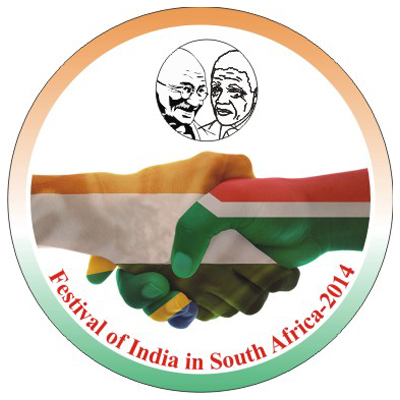
    The colourful logo designed for the Festival consists of a handshake – a symbol of trust and friendship that seals a bond between two people, two communities and two nations. The hands are coated in the colours of their respective country. The logo has faces of Nelson Mandela and Mahatma Gandhi side by side in a circle. The logo is washed in the colours of India and converts it into one single integrated unit that symbolizes inclusiveness and collective force of all. 

    The Festival of India in South Africa will be celebrated in eight cities covering Johannesburg, Pretoria, Cape Town and Durban.

  • New addition to DD family soon by the name Bharati

    New addition to DD family soon by the name Bharati

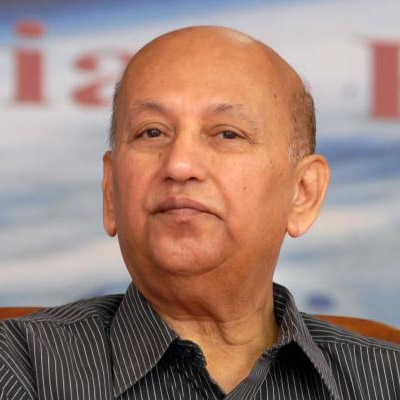
     Prof UR Rao’s first announcement after taking charge as chairman of pubcaster Prasar Bharati’s board recently was to declare that two non-performing channels of national broadcaster Doordarshan would be shut down some time soon. Well before that a new edutainment channel with a commitment to public service broadcasting to cater to the needs of children, health, music, dance and fine arts is being launched. DD Bharati is scheduled to go on air from Republic Day, 26 January, 2002.


    DD Bharati will be a 24-hour channel available on PAS-10 on transponder no C-19 and C-23, both in analog and digital mode.


    The channel will feature four hours of health programmes from 6 am, followed by six hours of children’s programmes from 2 pm. The channel will also have four hours of programmes on music, dance, fine arts from 8 pm.


    Doordarshan has broken up DD Bharati’s programming into three segments. The morning segment will focus on meditation, yoga, and alternative systems of medicine, discussions with experts, documentary features on health related issues, and health news. It may also incorporate a one-hour segment of live phone-ins on health issues daily, officials say.


    The second segment, which will focus on children aged between four and 18 years, will telecast cartoon films, wild life films, children’s serials, counseling and sports, talent hunts, ‘antakshari’ programmes and magic shows. A unique feature would be a news bulletin ‘by children for children’. Now didn’t we hear the same one from southern animation major Pentamedia at the launch of its kids’ channel Splash?


    The third segment will feature music, dance, fine arts, Indian classic music, countdown shows, event based programmes and travel shows. Folk, devotional and tribal music will also feature in this segment.


    Purportedly a showcase of Indian culture, DD Bharati will focus on presenting the best of the country’s literature through telefilms and serials. There will be documentaries on Gyanpeeth and Sahitya Akademi award winners too.


    Prasar Bharati has now invited private producers to make programmes under the sponsored category for DD Bharati’s prime time (8 to 10.30 pm) as well as the non-prime time slots.


    The deadline for submitting programme proposals to DD is 5 pm on 9 November.