Tag: Sahil Chopra

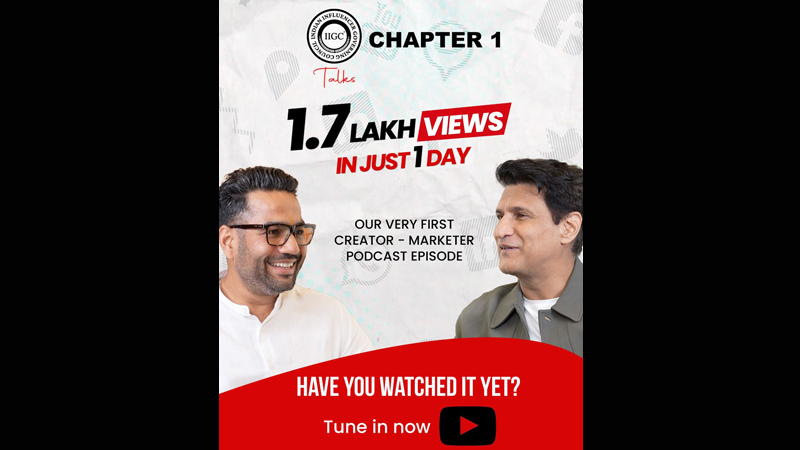
  • IIGC turns up the volume with ‘IIGC Talks’ podcast debut

    IIGC turns up the volume with ‘IIGC Talks’ podcast debut

    MUMBAI: The Indian Influencer Governing Council (IIGC) has officially entered the chat, with the launch of “IIGC Talks,” its brand-new podcast studio designed to host open, unfiltered conversations about India’s fast-evolving creator economy.

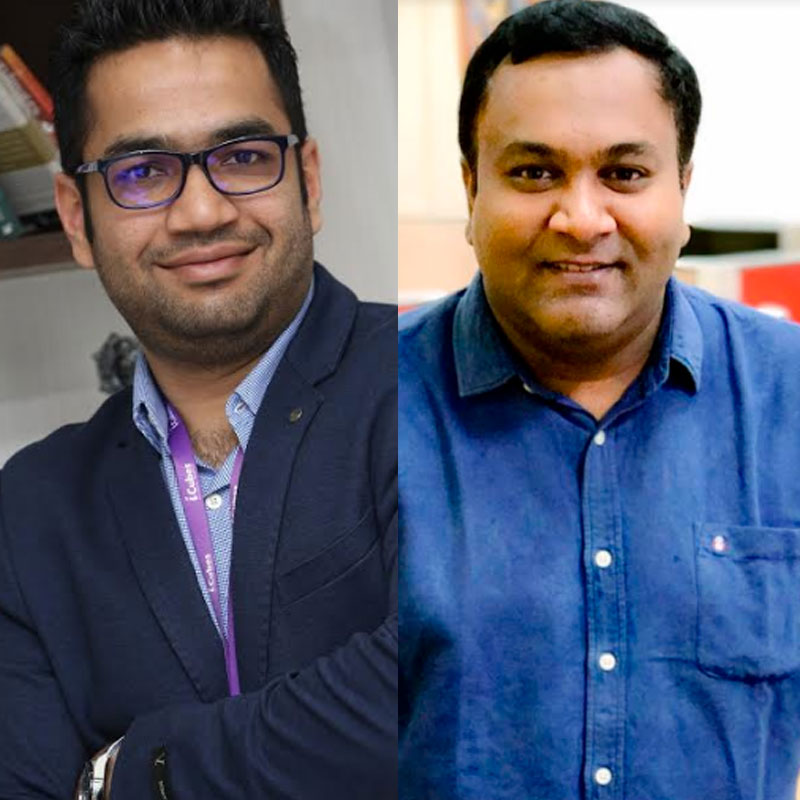
    The series kicked off with a bang, featuring India’s gadget guru, Rajiv Makhni, in a candid conversation with Sahil Chopra, chairman of IIGC. In the debut episode, Makhni dives into what it really means to be authentic in a world where likes, views and brand deals often collide. Within a day of its release, the episode racked up over 1.5 lakh views on Youtube.

    “In a time when everyone has a voice, the real challenge is knowing which ones to trust,” said Makhni. “If a collaboration forces you to compromise your honesty, the collaboration has already failed. Audiences are sharper than we think, authenticity travels further than any campaign spend.”

    The episode doesn’t shy away from the tough questions either, tackling topics like whether brand partnerships can coexist with unbiased reviews and if the rise of ‘defluence’ signals a new era of selective influence.

    According to Sahil Chopra, “IIGC Talks isn’t about promotion or praise, but about clarity. The creator ecosystem is maturing, and it deserves real dialogue, not just spotlight moments. Rajiv has set the perfect tone: sharp, honest and rooted in experience.”

    The discussion marks a shift in India’s digital landscape, where impact now trumps follower count, and authenticity replaces clickbait. With initiatives like IIGC Protect and The Code of Standards for Brands, the council continues to champion governance, transparency, and creator well-being.

    With “IIGC Talks,” the council turns conversation into action, and brings the mic to those redefining influence in real time.

  • Icubeswire Films takes a short cut with new 15 second ad studio

    Icubeswire Films takes a short cut with new 15 second ad studio

    MUMBAI: Blink and you’ll miss it or maybe that’s the point. Icubeswire Films, part of the Icubeswire Martech group, has launched Stop Shots, a new creative studio dedicated to crafting ad films that last just 10–15 seconds but aim to leave a lasting impact.

    In an era where Instagram Reels, Youtube Shorts, and shrinking attention spans dominate consumption patterns, the studio is betting big on the power of brevity. Stop Shots will harness data intelligence and consumer trend analysis to create mini cinematic spots that are not just visually arresting but also culturally rooted. The aim: deliver emotionally resonant, hyper-localised stories that spark recall and engagement in seconds.

    The demand is already there. According to Icubeswire, over a dozen brands have begun experimenting with the short-format model, citing stronger resonance than traditional one-minute commercials. “Today’s consumer navigates to what’s short and crisp, and attention spans have fallen drastically,” said  Icubeswire co-founder & CEO Sahil Chopra at the launch. From regional slang to cultural quirks, the studio sees a 10-second hyper-local ad connecting more deeply than longer TV spots. In a noisy, fragmented content landscape, Stop Shots is hoping to prove that less really can be more.

  • Icubeswire lands Central Park digital mandate in style

    Icubeswire lands Central Park digital mandate in style

    MUMBAI: When luxury meets logic, clicks follow. In a significant account win, digital marketing agency Icubeswire has been named the digital transformation partner for Central Park, a marquee name in ultra-luxury real estate. The decision follows a keenly contested multi-agency pitch, sealing Icubeswire’s growing reputation as the go-to for high-stakes digital mandates.

    The partnership gives Icubeswire the keys to Central Park’s entire digital kingdom spanning everything from social media and search to web experience, performance marketing, media planning, creative strategy, and online reputation management. And in the world of luxury real estate, the stakes aren’t just high, they’re sky-rise.

    “Central Park stands for elevated living, and we’re excited to be chosen as their digital transformation partner,” said Icubeswire founder & CEO Sahil Chopra. “It’s a brilliant opportunity to fuse our digital innovation with their luxury ethos to build immersive, future-ready experiences.”

    On the other side of the table, Central Park was clear about what it wanted. “We needed a partner who gets luxury branding in a digital-first world,” said Central Park president of sales, marketing & CRM Ankush Kaul. “Icubeswire brought a vision that matched ours and the execution to back it up.”

    With this collaboration, Central Park aims to enhance the digital storytelling around its ‘concept living’ offerings in the NCR region, transforming the way affluent audiences engage with real estate. For Icubeswire, this win is another jewel in a fast-filling crown and proof that luxury doesn’t just need polish, it needs pixels.

  • India’s influencer watchdog drops the rulebook – brands, beware

    India’s influencer watchdog drops the rulebook – brands, beware

    MUMBAI — The Indian Influencer Governing Council (IIGC) has rolled out a new playbook — and it’s no fluff piece. Dubbed the Code of Standards for Brands, this shiny new framework lays down the law for ethical, transparent, and drama-free brand partnerships in India’s booming influencer economy.

    The code takes aim at some of the industry’s worst-kept secrets: undisclosed paid plugs, shady affiliate links, and influencer posts that read like they were written by bots – or worse, lawyers. It urges creators to keep it real, while brands are now expected to play by the book, especially in high-stakes sectors like health and finance where scientific claims must be backed by certified proof.

    And in a first-of-its-kind move, the code tackles AI trickery head-on. Brands must now disclose if a virtual influencer is doing the talking — and deepfakes? Absolutely not. Also on the radar: data privacy. The code echoes India’s tightening grip on consumer data, aligning with the Consumer Protection Act and other watchdogs.

    To fix the Wild West of handshake deals, the IIGC is also offering brands and influencers a new rulebook for contracts — with templates, best practices, and a clear path to avoid ghosting each other after the collaboration.

    Backing this all up is the newly launched IIGC Taskforce — the council’s crisis Swat team. It monitors online chatter, sniffs out sentiment shifts, and steps in when things go south. Think online therapy meets legal triage — with a hotline to vetted lawyers for messier disputes.

    Commenting on the launch, IIGC chairman Sahil Chopra said, “Brand-influencer partnerships are incredibly powerful, but also vulnerable to reputational risks. Today, almost 95 per cent of brand-influencer work happens without a formal contract, leading to unnecessary disputes and breakdowns of trust. The Code of Standards for Brands makes the ecosystem more accountable and sustainable. With the addition of the IIGC Taskforce, we are giving the industry a much-needed safety net to operate with greater transparency and fairness.”

    Crafted in consultation with brands, agencies, creators and legal eagles, this move cements IIGC’s role as the referee in India’s fast-moving influence game — and puts brands on notice: the rules have changed.

  • Icubeswire launches hyperlocal influencer feature to map India’s 19,000 pin codes

    Icubeswire launches hyperlocal influencer feature to map India’s 19,000 pin codes

    MUMBAI: If the future of marketing is personal, Icubeswire just took it hyperlocal. The Global Martech firm has unveiled a first-of-its-kind pin code–level targeting feature on its influencer marketing platform, opening up precision mapping across 19,000 Indian zip codes.

    The launch marks a major leap in influencer engagement, enabling brands to locate and partner with digital creators based on granular geography—from Mumbai’s buzzing streets to Tamil Nadu’s quiet towns. Armed with over one million influencers mapped across the country, Icubeswire aims to redefine how brands speak to India’s cultural and regional diversity.

    Co-founder & CEO Sahil Chopra said, “Just like Unilever’s CEO Fernando Fernandez highlighted, there is now a strong push to collaborate with influencers across all of India’s 19,000 zip codes. That level of precision demands tools that are not only intelligent but deeply local. And that’s exactly what our team here at Icubeswire is delivering.”

    The company’s consumer insights back the move—65 per cent of Indians prefer influencers who speak their language. With regional creators rising and demand for cultural authenticity growing, Icubeswire’s tool offers a strategic edge in content localisation.

    This tech update not only empowers brands to go hyper-personal with campaigns, it also amplifies the visibility and monetisation potential for micro and nano influencers—those who know their communities best.

    The platform already offers campaign tracking, analytics, and influencer management. The new localisation layer adds teeth to its ecosystem, letting marketers build community-driven narratives rather than one-size-fits-all posts.

    As India’s influencer economy continues to swell, this feature could shift the narrative from mass appeal to micro-impact—one pin code at a time.

  • Sahil Chopra promoted as associate VP at Viacom18 Media

    Sahil Chopra promoted as associate VP at Viacom18 Media

    Mumbai: Sahil Chopra has been promoted as associate VP at Viacom18 Media Pvt. Ltd. He announced the news via Linkdin post stating, “I’m happy to share that I’m starting a new position as Associate Vice President at Viacom18 Media Private Limited!”

    Previously, he was associated with JioCinema as senior director – Brand & Sports Marketing, where he was the creative strategy lead for sports portfolio – TATA IPL, BCCI domestic series, Olympics, WPL etc.

    Chopra is a marketing specialist with 11+ years of experience in content marketing across Media platforms. Skilled in creating value for businesses via brands. Trained in Digital Marketing and Social media marketing from the Indian School of business (ISB), Hyderabad and PGDM in Brand Management from MICA.

  • GUEST COLUMN: Is AI a threat to digital marketing industry in terms of employment?

    GUEST COLUMN: Is AI a threat to digital marketing industry in terms of employment?

    Mumbai: Artificial Intelligence (AI) has been one of the celebrated buzzwords of all time across various industries. It has been answering a lot of questions and taking humankind to new places, quite literally, with customer service like chatbots and autopilot driving machines.

    With people adopting the digital way of living, brands aggressively engage with digital technologies and innovation to propel their marketing efforts. AI is disrupting nearly every digital experience and has altered the way consumers interact with services.

    The deployability of AI-led technologies and the difference it has brought in achieving customer satisfaction is now posing a serious threat to digital marketers. With AI’s agility, it is normal for marketers to be a little insecure. However, the day when AI takes over digital marketing jobs is still years away. On the contrary, automation creates more opportunities than it is killing, with vacancies for AI coders and AI software handlers.

    Seven in 10 marketers claim to have a comprehensive AI strategy. Undoubtedly, organisations have found various machine learning applications that can benefit marketing endeavours.

    Customer service chatbots are one of the everyday uses of AI. It allows brands and businesses to offer 24/7 service to their customers and address basic queries. AI gives advertisers an edge by offering a tailormade digital advertising experience. and allows advertisers to acquire factual information for customer profiling such as age, gender, geographies and behaviours. This data further will enable marketers to create effective ads.

    AI technologies such as Augmented and Virtual Reality are also stealing the limelight by the way they are revamping the online shopping experience.

    Marketing professionals are also aligning Artificial Intelligence towards marketing content creation. With stacks of data accumulated by AI, marketers can easily decide on the content that will drive engagement. AI has been efficient in predictive analysis, allowing marketers to identify potential customers and strategies that will yield better results.

    Despite the significant advancement witnessed by AI, there are still some aspects that consistently need human intervention and expertise.

    Creative quotient: No matter how advanced, machines are still lagging in keeping pace with the human brain. Creative problem solving, music creation, painting landscapes, photo and video editing remain a few aspects where AI fails to perform. On the other hand, AI has been bringing a revolution in cutting down repetitive tasks such as creating customer profiles, sending personalised messages and scheduling.

    Decision-making: AI is adept at assisting humans but can’t have the final say. It requires a considerate amount of critical thinking and analysis to govern any marketing action. AI is crucial for acquiring data but cannot strategise or develop a plan on its own.

    The human touch: AI has proven effective at answering all the questions hurled at it by customers, but AI cannot build customer relationships due to the lack of emotional connection. The responses provided by AI-powered chatbots are restricted to their programming, whereas humans share similar experiences with other people, which forms a sense of relatability and understanding.

    AI is dependent on humans: AI is a technology developed by humans and cannot function independently. Therefore, it is dependent on humans to be programmed and be successful at performing a task. In addition, AI machines need to be upgraded as per the market’s changing landscape, which again requires human expertise.

    AI may still not be powerful enough to take up creative jobs, but it definitely eliminates a lot of human intervention from monotonous and routine jobs. As a result, businesses have been quick to deploy automation to boost productivity and mitigate the costs of resources.

    (About Author – Sahil Chopra is iCubesWire founder and CEO)

  • iCubesWire strengthens sales leadership team with key appointments

    iCubesWire strengthens sales leadership team with key appointments

    F

    NEW DELHI : iCubesWire,  a leading digital marketing company in India offering 360-degree  integrated marketing solutions, recently appointed Priyanka Iyer as group head – south at its Bengaluru office, and Abhronil Roy as group head – east at the Kolkata office.     

    Iyer, backed with a professional experience of over eleven years in mainstream and digital media Sales, has a flair for introducing lucrative sales structures into business models to enhance business acquisition. Roy, having dedicated over sixteen years to media sales & brand solutions, has shown extraordinary prowess at identifying growth potential and setting up revenue-driven strategies across organisations. 

    iCubesWire CEO and founder Sahil Chopra says, “With Priyanka taking the lead for business development across South India, we aim at enhancing our overall growth and keeping up key customer relationships. It’s good to have Abhronil on-board, to get us an opportunity for increasing our business capacity and venture across new markets in the East region. There couldn’t have been a better start to 2020 than by welcoming two seasoned professionals, each one, adept at their work. We are delighted to have them as part of the iCubesWire family and look forward to scaling new heights.”

    Iyer will be at the forefront for iCubeswire in the South region, driving regional markets for business development and delivering branding solutions. Her core responsibilities will be to amplify sales operations, initiate and execute strategic plans, and escalate revenue generation. Before joining iCubeswire, she was leading the entire South market as the Territory sales Head at Zee Entertainment Media Ltd., and has also been associated with organizations such as YOptima and TeraReach. 

    Iyer says, “I’m extremely excited to head the business for iCubesWire in the South region and to work with a dedicated and dynamic team. I’m certain my association will be instrumental in strengthening the bonds with the clients in the region and together, we will aim at sustaining the numbers and continue building on along with expanding into new markets.”

    Roy will be on the front lines for iCubeswire in the East region, curating strategies across media platforms along with providing integrated solutions for brands. His key responsibility areas will be to cultivate business opportunities, and venture into new markets aligned with revenue generation. Prior to joining iCubeswire, he was responsible for managing revenue generation for all B2B Exhibitions & Digital Sales PAN India at UBM India Pvt Ltd and has also served terms with organisations such as ABP LIVE – Digital  – ( ABP News Network Pvt. Ltd.) and India.com – Zee Digital. 

    Roy says, “iCubesWire has been an established brand in digital for over 10 years, and I feel privileged to be at the helm of steering the brand into the East market. It’ll be an exciting experience to build and implement sales strategies to take on new markets and further capture an increased revenue count."

    Follow Tellychakkar for the consumer facing news & entertainment

  • Programmatic advertising and political campaigns: The Mahagathbandhan for general elections 2019

    Programmatic advertising and political campaigns: The Mahagathbandhan for general elections 2019

    MUMBAI: Programmatic advertising is revolutionising the advertising industry. Programmatic ad spends accounted for a whopping 90 per cent of total spends by Fortune 500 brands worldwide in 2017 and has evidently taken centre stage of the digital advertising industry today. The ecosystem is on a steady rise in India as well and a number of brands are leveraging the reach it provides them within the consumer heartland based on efficient integration of their products via automated processes using codes and algorithms.

    With the general elections just a few months away, the political parties are also using this trend to attract the voters to their vote banks. Indiantelevision.com interacted with a few industry insiders to understand what programmatic advertising means to the political parties and what impact it may or may not have on the upcoming polls.

    Why programmatic?

    “Through the use of its unique targeting capabilities and advanced data crunching techniques, programmatic advertising is the perfect solution for politicians to reach the right voters. Voters can be targeted as per different criteria like – gender, age, location, party affiliation, political ideals, financial status, ownership, business, education and so on. Programmatic advertising facilitates crafting a data-driven campaign strategy. This helps to reach only those voters that have a possibility to vote in favour. This helps to reduce inefficiencies and bloated campaign budgets,” says Vertoz founder and CEO Ashish Shah

    He further adds, “Geo-targeting can be used to reach out to the voters of a particular region with a highly relevant and effective message. Dynamic Creative Optimisation (DCO) can enable adjusting the campaign creatives on the go in real-time, dynamically changing the copy as per their interests and affinities or for retargeting them.”

    iCubesWire founder and CEO Sahil Chopra gives the example of the previous general elections in India where current Prime Minister Narendra Modi made exceptional use of Twitter and other digital mediums to connect with his supporters. He said, “During the previous Lok Sabha elections in 2014, the digital medium was touted as an efficient and effective way by most of the political parties of India. In fact, when the election results were out, Mr. Modi didn’t declare his victory over the television, or even before his supporters. He chose to tweet about it. This message became one of the most retweeted messages in India, receiving more than 70,000 retweets. Such is the potential power of digital.”

    Similar thoughts are reflected by Ashish Shah as he notes, “Reaching out to the voters on digital platforms assumes supreme importance and has become a major aspect of political campaigns. Trump’s victory in the 2016 US presidential election was largely attributed to its digital campaigns. Closer home, digital media played a significant role in BJP’s landslide victory in the 2014 Lok Sabha elections.”

    He further adds, “With rising technological advancements, Indians are spending more and more time on digital media surfing the internet. As of 2018, India had about 500 million internet users, as per a report by the Internet and Mobile Association of India (IAMAI) and Kantar IMRB. The number of urban users accessing the internet daily stands at 295 million, while in rural areas the number stands at 186 million. Further, with affordable handset prices and low-cost data penetration, they are spending more and more time on mobile. Thus, reaching out to these voters on digital platforms assumes supreme importance and has become a major aspect of the political campaigns.”

    Highlighting the core benefits of incorporating a programmatic approach to political advertising, Logicserve Digital co-founder and CEO Prasad Shejale notes, “Since programmatic advertising offers hardcore and precise consumer behavioural insights, even politicians have realised the distinctive importance of this and have started implementing the same for their election strategy to target voters based on the analysis done. Political parties target and plan their election campaigns by specifically addressing their issues and pain points analysed through this form of advertising, and increase awareness and influence potential voters. This automates the bidding process and delivers ads to match their voters’ criteria.”

    What role can programmatic play in the upcoming Lok Sabha polls?

    The biggest democracy of the world, India is all set for its Prime Ministerial polls, which are scheduled to happen in April-May. All the political parties will be putting their best feet forward in alluring the voters to their camps.

    According to the contribution report that BJP filed with the election commission post the 2014 polls, the BJP spent Rs 714.28 crore on election campaigning, the major chunk of which went on to media promotions. Digital accounted for a massive chunk of this expenditure and certainly the results reflected the power of effective poll advertising. This year, the expenditures are only expected to grow and with its manifold benefits, programmatic will surely play an important role in the process.

    Speaking about what could be the trend in the upcoming elections, Chopra contends, “It is certain that the digital medium will be used again in a big way during this election period. Industry estimates suggest that there will be a rise of 15-18 per cent of spends in 2019 during elections and cricket period; wherein programmatic will also be a beneficiary amongst other mediums. Precise targeting, wider reach options, and transparency will be one of the reasons advertisers will embrace programmatic as one of the mediums to create awareness and reach out to people.”

    While it definitely is a powerful tool to woo the voters, the trend of programmatic might have some repercussions in maintaining the sanctity of the voting process in a democracy. Fake ads, delusional narratives, and targeted approach might potentially impact the election results. While the industry doesn’t comment much on the greater impact, it contends for the need for transparency and cautiousness while executing such campaigns.

    Shejale says, “Well, it’s difficult to make an exact statement about this. I wouldn't be able to comment on whether programmatic will play a decisive role since multiple factors contribute to the decision when it comes to political campaigns. But yes, programmatic can help enhance the efficiency and efficacy of the campaigns. It's the responsibility of advertisers and agencies to have responsible marketing in mind since the consumers, over time, read through if there is any wrongdoing.”

    Shah continues the same trail of thought as he states, “One needs to be cautious of issues concerning brand-safety and wrong ad placements. If one is not careful, this can wreak havoc on the campaign. Also, problems like transparency and ad frauds have to be considered. These can leech off the campaign budgets and have a detrimental effect on all the efforts. Campaign managers should ensure that they partner with a programmatic platform which has the right mechanisms to protect the campaigns form such problems. It is advisable to on-board a platform that has brand safety, ad fraud detection, and ad fraud protection mechanisms and provides a good level of transparency.”

    “Many parts of our country especially the tier 2 and 3 cities are experiencing digital transformation. Thanks to low data rates and widespread availability, more and more people from smaller parts of our country are getting acquainted with the vast plethora of possibilities of the digital realm. A recent study by Google stated that the consumption of YouTube on mobile devices has increased by almost 400 per cent and 60 per cent of the total watch time is outside the top 6 metropolitan cities. 70 per cent of internet users from these cities are bypassing desktop and are using mobile for accessing the internet. Any strategy which is made in mind keeping a mobile-first approach will definitely be beneficial for the brands (political parties). Like any other medium within the digital portfolio, programmatic needs to be used in a constructive way,” mentions Chopra.

    While political parties and agencies are advised to be watchful in their conduct while creating political ads, platforms like Google and Facebook are taking their own steps to ensure that the election process remains fair. Ashish Shah shares, “Facebook – the social media giant – has taken notice of it and has recently announced a special offline verification policy for the 2019 General Elections. Google also said that it will introduce an India-specific Political Advertising Transparency Report and a searchable Political Ads Library to provide information like who is purchasing election ads on its platforms and the amount of money being spent.”

    Thus, while programmatic is going to be one effective and sought-after tool in poll promotions, the parties, as well as the advertisers will have to be sensitive about what they put online. At the end of it, the voters are smart and can read through the campaigns that might be malicious or false.