Tag: Saffola

  • Saffola launches AI campaign urging consumers to have a ‘Heart to Heart Talk’

    Saffola launches AI campaign urging consumers to have a ‘Heart to Heart Talk’

    MUMBAI: Saffola, the health-focused FMCG brand from Marico Limited, has launched an AI-powered campaign this World Heart Day to help consumers gauge the true age of their hearts.

    Titled ‘Heart to Heart Talk,’ the initiative encourages people to pause, reflect, and engage in a personal conversation with themselves about lifestyle habits that affect heart health. By scanning a QR code, uploading a selfie, and answering a few simple questions on Whatsapp, users receive a personalised AI-generated video revealing the gap between their real age and indicative heart age.

    According to the Indian Council of Medical Research- India Diabetes (ICMR-INDIAB), one in four Indians has high cholesterol, one in ten is diabetic, and one in three is hypertensive. Even active, young adults may unknowingly put their hearts at risk through daily stress and unhealthy choices.

    Marico Limited, CEO – India core business, Ashish Goupal said, “Saffola has always aimed to inspire consumers to take charge of their heart health. ‘Heart to Heart Talk’ is a moment of truth, helping people reflect on how small lifestyle habits can impact well-being and empower them to take meaningful steps towards a healthier tomorrow.”

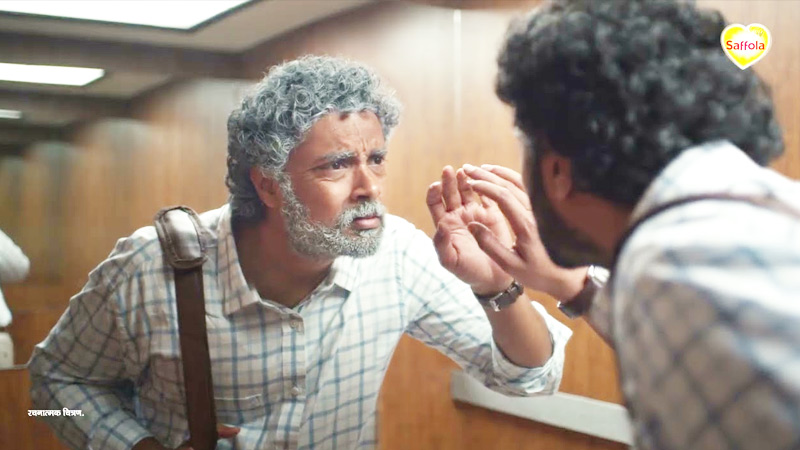
    Conceptualised by team WPP, the campaign includes a digital film depicting a young man caught in unhealthy routines, from breakfast pakodas to late-night junk food. At each step, he is confronted by the reflection of his older self, demonstrating the long-term effects of poor habits. The film highlights ‘Saffola Total Heart Pro’, enriched with Oryzanol to help reduce cholesterol, and shows it being used in everyday cooking to promote healthier choices.

    With this initiative, Saffola continues its long-standing mission to promote wholesome living and make heart health awareness both personal and engaging.


  • How Maitri’s South-first strategy is shaking up Indian advertising

    How Maitri’s South-first strategy is shaking up Indian advertising

    MUMBAI: Nearly three decades ago, in the laid-back lanes of Kochi, three ex-Mudra execs took a punt on building an ad agency rooted in the South—but with national ambitions. Fast forward to 2025, and Maitri isn’t just holding its ground—it’s quietly becoming one of the most disruptive indie agencies in Indian advertising.

    With offices now spanning South India, the Maldives and Seychelles, Maitri has turned its bootstrapped beginnings into a ₹75-crore creative juggernaut. Its client list reads like an FMCG-Culture-Tech dream team: Netflix, Krafton, Wipro, Saffola, Disney+ Hotstar, and longtime loyals like Muthoot Finance and Mathrubhumi.

    So what’s their killer app? Not AI. Not jargon. But cultural intimacy.
    While the big Delhi-Mumbai shops took a north-to-south approach, Maitri did the opposite—leaning into its home-turf understanding of southern India. It didn’t just talk local; it thought local.

    As managing director Raju Menon puts it, “Nothing can beat consistency. When you deliver creatives to the clients that they love, year after year, you build a relationship. And that relationship builds the brand.”

    That philosophy has brought Maitri not just loyalty, but serious hardware.

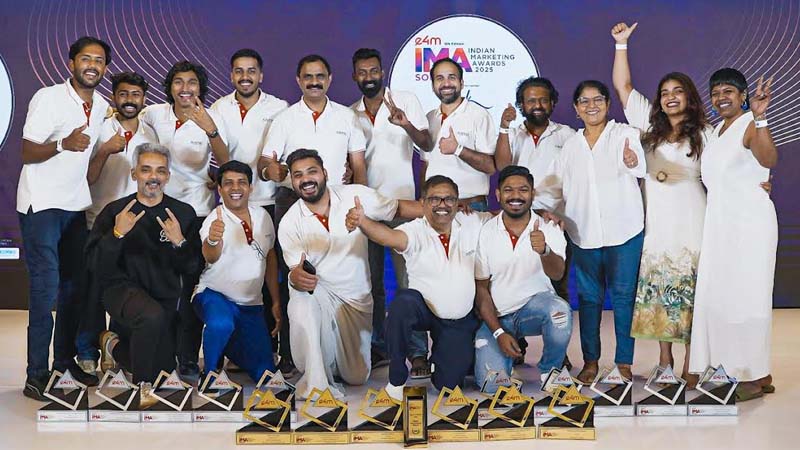
    In 2025 alone, the agency walked away with 17 metals at the Indian Marketing Awards South—a haul that included 5 Golds, 8 Silvers and 4 Bronzes for campaigns that blended heart, humour and serious social impact.

    Some of the show-stoppers?

    ●    “How BGMI made a scam ad to expose scam ads” – a digital, social, and influencer-led takedown of online fraud (3 Silvers, 1 Bronze)

    ●    “The suicide note that saved 50+ lives” – a haunting but hopeful campaign for Muktaa Charitable Foundation (1 Gold, 2 Silvers)

    ●    “Let your life shine” for Muthoot Finance – proving finance can feel (1 Gold)

    ●    “Kappa Cultr 2025” – a cultural blast that nabbed a Gold for omnichannel mastery

    Also in their trophy cabinet: campaigns for Asianet, myG, Brahmins, and Mathrubhumi’s International Festival of Letters. Each piece a masterclass in blending storytelling, strategy, and South Indian soul.

    And Maitri’s not just creatively consistent. Their secret sauce is also in the staffing. Employee churn is shockingly low in an industry notorious for its exits. Most of the agency’s top talent—many of whom cut their teeth at global agencies—have chosen to come home, literally and creatively.

    The result? A shop that has the polish of a multinational and the pulse of a neighbourhood storyteller.

    With four consecutive Agency of the Year titles under its belt, Maitri’s next chapter looks like one hell of a ride. Quietly confident, fiercely local, and globally savvy, they’ve proven that a deep understanding of people beats flashy pitches—and that sometimes, the most powerful ads come not from the centre, but from the edge. Or in this case, Kochi.

  • Lather rinse profit as Marico cleans up with Rs 1658 crore in FY25

    Lather rinse profit as Marico cleans up with Rs 1658 crore in FY25

    MUMBAI: When it comes to FMCG bigwigs, Marico isn’t just oiling the wheels, it’s flying on full throttle. Marico has closed FY25 with a consolidated net profit of Rs 1,658 crore, marking a 10 per cent rise over last year’s Rs 1,502 crore. The standalone numbers weren’t far behind either, with net profit at Rs 1,541 crore, reflecting a hefty 43 per cent jump from Rs 1,078 crore in FY24.

    Revenue from operations touched Rs 10,831 crore, up from Rs 9,653 crore a year earlier, while other income surged to Rs 208 crore from Rs 142 crore. That’s a total income of Rs 11,039 crore, served up with a generous side of operational efficiency.

    The Board, clearly in a generous mood, has recommended a final dividend of Rs 7 per share, bringing the total payout for the year to Rs 10.5 per equity share, including the interim Rs 3.5 disbursed in January.

    A major ingredient in this profitable recipe? Cost control. Despite global macro headwinds and raw material volatility, Marico kept total annual expenses at Rs 8,923 crore, managing margins smartly. Advertisement and promotion spends stood at Rs 1,128 crore, a modest increase from Rs 952 crore last year, showing the brand is still playing to win.

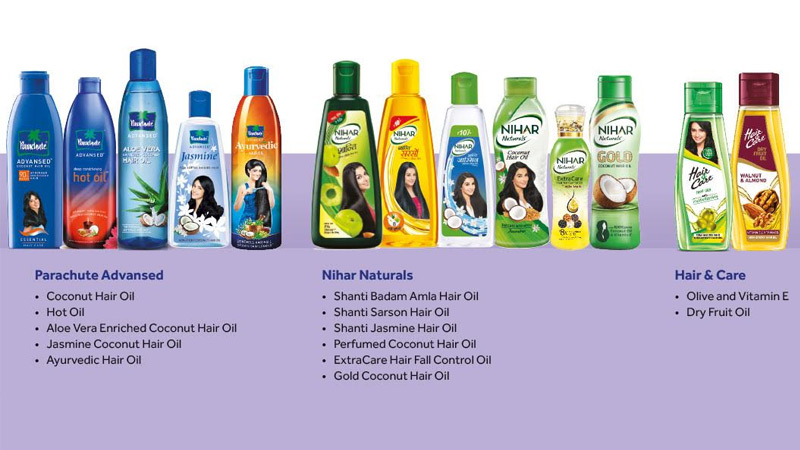
    Its international business, now contributing about 25 per cent to overall revenue, continues to ride strong tailwinds from Asia and Africa. On the domestic front, flagship brands like Parachute and Saffola, along with digital-first acquisitions like Just Herbs and Plix, helped widen the consumer base and deepen wallet share.

    The company also saw major movement on the investment and acquisition front completing the buyout of Apcos Naturals and increasing its stake in Satiya Nutraceuticals (Plix) to 51.38 per cent, transforming it into a majority-owned unit. Marico closed the year with Rs 321 crore in cash and equivalents, up from Rs 228 crore.

    Meanwhile, FMCG patriarch Harsh Mariwala, who turns 75 next year, will continue as a Non-Executive Director, with the board approving his continuation under SEBI’s age-related norms. Also onboard for the long haul is Dr K.R. Chandratre, appointed Secretarial Auditor for the next five years.

    With strong financials, smart acquisitions and a dividend that’s clearly keeping shareholders happy, Marico seems to have struck the perfect balance between tradition and transformation. In a market often running on fumes, this coconut oil kingpin is proving it’s still very much in its prime.

  • Publicis and Havas in adland tug-of-war for Madison?

    Publicis and Havas in adland tug-of-war for Madison?

    MUMBAI: Publicis Groupe and Havas Network are in separate talks to snap up a majority stake in Madison World, India’s last large independent advertising group, if media reports are to be believed. 

    Founder Sam Balsara, who set up the agency in 1988, is looking for a deal that strengthens Madison’s future and aligns it with a global network.

    “Madison has always been open to a tie-up, but the terms must be right,” said chairman & managing director Balsara. He declined to reveal the valuation the agency is seeking. Publicis and Havas, meanwhile, stay tight-lipped.

    With an estimated Rs 5,000 crore in gross billings in fiscal 2024, Madison makes its money charging 15–20 per cent in fees. Its roster boasts over 500 clients across media, digital and outdoor, including Asian Paints, Saffola and Blue Star. But not all news is good—Madison recently lost the Godrej Consumer Products account.

    This isn’t the agency’s first dance with global suitors. A decade ago, talks with WPP and Dentsu over a 75 per cent stake sale fizzled out over valuation gaps. Now, with Omnicom snapping up Interpublic Group (IPG) to create an ad behemoth, other networks are scrambling to shore up their portfolios.

    Publicis, which leapfrogged WPP last year to become the world’s largest ad group, counts PepsiCo, Diageo and Skoda among its big clients in India. Havas, with brands such as Reckitt, Tata Motors and Swiggy, runs 25 agencies in India across creative, media and health.

    Madison isn’t new to parting ways with its ventures. In October 2022, the Balsara family fully exited MediaCom, a joint venture with WPP, selling its remaining 26 per cent stake.

    Now, the question is: will Madison go global, or will it like in the past stay fiercely independent and just let suitors court it?

  • Marico expands its breakfast portfolio with Saffola Muesli

    Marico expands its breakfast portfolio with Saffola Muesli

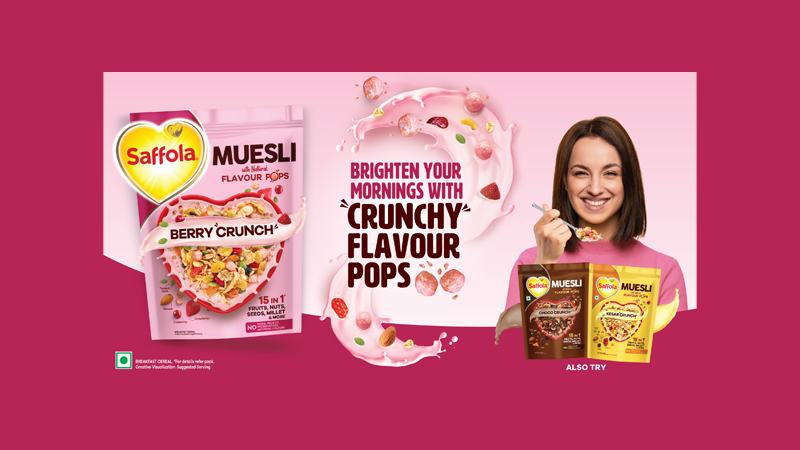
    Mumbai: Marico, one of India’s leading FMCG companies has announced the launch of Saffola Muesli with Flavour Pops, aiming to leverage the brand’s equity in the adult breakfast segment.

    Over the years, Saffola has emerged as one of the leading players with a wide breakfast range, having become #India’s No. 1 Brand in Oats and launching extensions to categories like Peanut Butter, Honey etc. Saffola has continuously innovated to meet the evolving needs of consumers to make convenient nutrition ‘exciting’. Building on its legacy and commitment, the brand peps up the category with crunchy muesli, in three new delicious and flavourful options – Kesar Crunch, Berry Crunch and Choco Crunch.

    Saffola launched their range of Muesli, keeping in mind the popular flavours associated with milk, – whether it’s the rich and aromatic kesar, the fruity goodness of berries, or the indulgent and dainty chocolate. These variants are crafted to make breakfast an enjoyable and satisfying experience with a burst of flavour and crunch delivered through the inclusion of a unique flavour pops format. Made with a natural mix of multigrain and millet, the flavour pops make Saffola Muesli irresistibly crunchy till the last bite. Moreover, each flavour is designed to satisfy the palate combined with a blend of 15-in-1 fruits, nuts, seeds, millet & more, that make it a powerhouse of nutrition.

    Speaking about the launch of the new products, Marico Ltd.  India & foods business chief operating officer Vaibhav Bhanchawat said, “Our foray into the Muesli Category marks a significant milestone in line with our brand proposition of offering consumers “better for you” products with a “taste first” approach. While there is a growing need of products that deliver convenient nutrition, we also understand that consumers equally want their breakfast to be exciting and uplifting as it sets the tone for the rest of the day. We identified the opportunity to bring excitement and familiarity to a new-age category like Muesli, much like the success we have seen in making oats exciting through Saffola Masala Oats. The idea was to deliver consumer delight through our unique flavour pops format that gives a burst of flavour and an irresistibly crunchy experience. We believe these popular flavours launched under Saffola Muesli with Crunch Flavour Pops will help consumers “brighten up their mornings to take on the day.”

  • Kareena Kapoor Khan urges ‘Roz Ke Healthy Steps’ for World Heart Day

    Kareena Kapoor Khan urges ‘Roz Ke Healthy Steps’ for World Heart Day

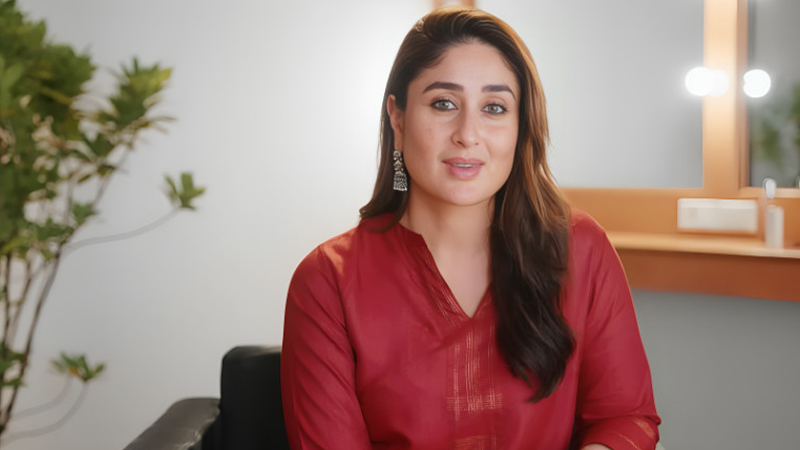
    Mumbai: This World Heart Day (29 September 2023) Saffola, the legacy brand synonymous with healthy living and heart health, joins hands with Kareena Kapoor Khan to urge India to prioritise their health by taking #RozKaHealthyStep.

    The Saffola 40 Under 40 campaign, a movement aimed at addressing the pressing issue of 60 ki bimaryiaan 40 mein by inspiring India to embrace healthier living, has already inspired over 25000 individuals to take the Saffola Lifestyle Score and choose a healthier lifestyle over the past eight weeks. To spread this message far and wide Saffola partnered with 40 young achievers and influencers, under 40 years of age, from diverse backgrounds who urged young India to take #RozKaHealthyStep towards a healthier lifestyle.

    As World Heart Day approaches, Saffola aims to make this movement even larger and who better than Kareena Kapoor Khan, a living example of someone who has seen immense success in her career along with being an advocate for living a healthy lifestyle, to inspire millions more to join this health movement. The brand has released a video featuring Kareena Kapoor Khan, where she shares a powerful message with India about prioritizing their health.

    Kareena Kapoor Khan in her inimitable style emphasises how neglecting one’s health could lead to missing out on key opportunities to enjoy moments of joy that make up life. For instance, not being present to receive an award, missing out on your child’s school performance or being unable to accompany your parents on their special anniversary trip, all leading you to depend on others to stand in for you during life’s important occasions, all because your health is not supporting you. She goes on to emphasise that in the face of ’60 Ki Bimaariyaan 40 mein’, referring to the rising trend of lifestyle diseases among young Indians, people are missing out on special moments of happiness.

    Marico Ltd Somasree Bose Awasthi, Chief Marketing Officer, said, “The rising prevalence of lifestyle diseases among young Indians is a cause for concern, diseases that once happened at the age of 60 are now happening as early as 40. Hence, this World Heart Day, we want to remind everyone to take care of their health by eating right because if we truly want to enjoy moments of joy with our loved ones, we need to be healthy to be able to do so. We are proud to have partnered with Kareena Kapoor Khan, who is admired by millions, to encourage more and more people to take Roz Ke Healthy Steps and prevent 60 ki bimaariyaan in 40. As a health-centric brand, Saffola has always been committed to raising awareness about healthier living. With the Saffola 40 Under 40 initiative, our goal is to instil lasting habits that can enhance the lives of our consumers.”

    The campaign comes at a time when a lack of focus on health has led to a significant rise in lifestyle diseases like obesity, heart disease, and diabetes impacting young Indians. Conditions and health issues that were once commonly associated with individuals in their 60s are now affecting Indians much earlier, at the age of 40 and under.

    Start by checking your Saffola Lifestyle Score and Join the Movement today!

    Timesofindia

  • Marico Q4: Net profit surges 14.1% driven by volume growth

    Marico Q4: Net profit surges 14.1% driven by volume growth

    NEW DELHI: Consumer goods major Marico has reported a 14.1 per cent year-on-year growth in consolidated profit at Rs 227 crore for the quarter ended 31 March 2021, driven by volume-led strong revenue growth.

    Revenue from operations shot up 34.5 per cent to Rs 2,012 crore compared to the year-ago quarter, backed by robust volume growth of 25 per cent in the domestic business and constant currency growth of 23 percent in the international business, the Saffola oil maker said in its BSE filing.

    The foods portfolio grew 134 per cent in value terms in the quarter and crossed Rs 300 crore in turnover in FY21. “The base oats franchise grew by 84 per cent in value terms, backed by increased penetration and market share gains,” noted the FMCG player.

    Parachute Rigids grew 29 percent in volumes, albeit on a low base, undeterred by price hikes and pullback of consumer offers to counter a part of the input cost push.

    “Value-added hair oils grew 22 per cent in volumes with all of the key brands clocking double-digit growth. Saffola edible oils extended stellar run with 17 per cent volume growth despite a particularly strong base, on the back of investment in new markets and increasing household penetration,” the company added.

    At the operating level, EBITDA (earnings before interest, tax, depreciation and amortisation) grew by 13.1 percent year-on-year to Rs 319 crore but margin contracted 300 bps year-on-year to 15.9 per cent in Q4.

    Advertising and sales promotion grew by 35 per cent as the company invested aggressively mainly in core franchises and food innovations while continuing to drive spending rationalisation and channelising investment towards growing franchises.

    In the international business, “Bangladesh clocked 20 per cent constant currency growth. South East Asia also reverted to positive territory with 13 per cent constant currency growth. MENA and South Africa also gained on a low base,” said Marico.

  • Innovation and pioneering helped Marico grow: Harsh Mariwala

    Innovation and pioneering helped Marico grow: Harsh Mariwala

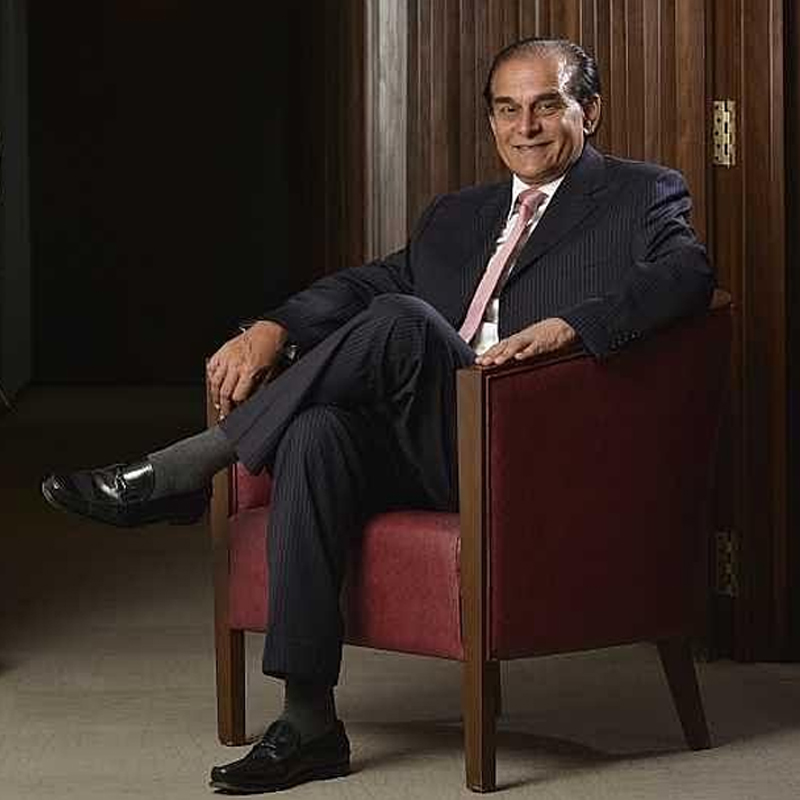
    MUMBAI: Harsh Mariwala transformed his family's trading business in spices and edible oils into Rs 7,300-crore FMCG giant Marico, led by flagship brands such as Saffola and Parachute which sell in 25 countries. The company recently launched Saffola FITTIFY, a range of healthy soups and shakes. Mariwala's other businesses include Kaya, a chain of skin care clinics.

    The company also scouts for young Indian entrepreneurs and facilitates the start-up ecosystem through the mentoring platform Ascent Foundation.

    Mariwala is someone who walks the talk and lives by example – a catalyst of positive change, said Raj Nayak during a tete-a-tete with the affable Marico founder.

    “We started in phases, earlier the name of the company was Bombay Oil Industries. It's an edible oil business where we were selling coconut oil, refined oils to trade as well as some industries. That business was not doing too well, lots of businesses depend on how well you cover your raw material or how the raw material prices behaved, so it was very erratic in terms of margin and performance,” shared Mariwala.

    So he thought of converting the oils business from unbranded to branded in order to make it more profitable and sustainable, a bold move which paid off. And that’s how it all started. He started travelling to internal markets, appointed distributors, talent managers, advertising agencies in the interiors of Maharashtra and Gujarat. The consumer product is highly de-licensed, which helped Mariwala to gain profit. Apart from licensing, one clear no for him was entering the high-tech business.

    Mariwala mentioned that while his iconic Parachute brand was a success, it was mainly selling in 50 litre tins. Initially, the retailers would buy it and sell it in bottles which were later purchased by consumers. Back then, the market of packed coconut oil was much smaller than what it is today. Later, the idea struck him to create a packaged product which was sold in various parts of Maharashtra. Mariwala’s initial foray was to scale up the existing business across India.

    Another well-known brand, Saffola was neglected for a very long period of time, he revealed. After starting the business, his focus was to identify further opportunities. He added, “I wanted to be in the number one position, to be a market leader, as it helps you to get more margin. We grew by innovating in the coconut oil market, during that time the whole market worked on tin containers, then we converted it to plastic. It was not an easy journey; it was a tough conversion. However, it ensured that our growth rate jumped up multiple times. We applied the same innovation in Bangladesh, and now we are the leading coconut player in the Bangladesh market.”

    Another key innovation was the lice-killing hair product Mediker, a must-have in Indian households with young kids.

    “We acquired Mediker from Proctor & Gamble and introduced it in oil format, the sales just doubled. So, innovation and pioneering helped us to grow,” the business tycoon remarked.

    Relating an interesting anecdote behind how the Revive detergent was launched in the early ‘90s and creating a market for a product where none existed, Mariwala said, “We came up with our product Revive out of a personal necessity. I liked crisp clothes, that is how we made Revive which helps to starch clothes without any hassles.”

    According to him, for any product, there must be a consumer need which is big enough to build a brand. Moreover, to become a market leader, advertising is very important and once a certain mass is created, one can go back to devising effective cost structures and improving margins.

    Everybody still wonders, from where the name Parachute emerged. Mariwala jokingly said that is the question that the nation wants to know. He shared that Bombay Oil Industries was formed in 1947, shortly after the second World War when a lot of Indians got to know about parachutes – and that’s how Mariwala’s uncle thought of creating a brand by this name, which is now a huge success.

    On the subject of world wars, Mariwala opined that there is an ongoing war for talent, and one has to treat hiring like marketing. “When there is a shortage of good talent, you have to market yourself first,” he quipped. “That means you have to identify what is unique about you, you arrive at what we call employee value proposition, which is unique in the job market. In our case, unlike big MNC corporations where decisions are taken in closed headquarters, we empower our employees.”

    Spoken like an entrepreneur who knows how to make a difference.


  • Marico reports double-digit volume growth in Q3 FY21

    Marico reports double-digit volume growth in Q3 FY21

    NEW DELHI: FMCG major Marico has posted strong performance with double-digit volume growth in its India business in Q3 2021. In an investor update on BSE, the company has shared an update on the overall summary of its operating performance and demand trends witnessed in the quarter ended 31 December 2020.

    The quarter was characterised by a faster than expected recovery in consumer sentiment in India, aided by the festival season and a declining Covid2019 graph. The company registered strong performance across its portfolio with general trade continuing to grow healthily and rural markets staying ahead of urban. In the new age channels, while e-commerce continued its stellar run, modern trade fared better in Q3 after a soft first half. CSD continued to decline, albeit improving sequentially.

    Revenue growth was in tandem with volume growth. Parachute Coconut Oil delivered ahead of its medium-term aspiration. Saffola Edible Oils continued its growth momentum, delivering double-digit volume growth. Value added hair oils also exhibited strength with a broad based sharp recovery across sub-segments leading to overall double-digit growth for the category. The foods portfolio continued to witness exponential growth in line with the near-term aspiration, backed by strong performance in both the base foods and the new product launches. There was a steady revival in discretionary categories with the premium personal care portfolios witnessing improving trends sequentially, however, still posting a modest decline on a year-on-year basis.

    The quarter was also characterised by inflationary pressure in key raw materials necessitating cutting back of some promotions and taking effective price increases across both Parachute and Saffola edible oil portfolios. The company expects to deliver a healthy profit growth on the back of various cost optimisation initiatives and judicious A&P spends.

    International business had a resilient quarter with high-single digit constant currency growth, led by double-digit constant currency growth in Bangladesh and recovery in few other markets.

    Marico maintains an optimistic outlook for the rest of the year provided the Covid2019 and the economic situation continues to improve. The company remains steadfast in its medium-term aspiration of delivering sustainable and profitable volume led growth, building on strong brand equity across core franchisees and progressively driving and scaling up new engines of growth.

    In Q2 2021, the company increased its advertising spends, taking it back to its pre-Covid2019 levels. While its food segment, Saffola, and Parachute performed well, the brand also launched several new products during this time. 

  • Honeygate: A sweet tale turns bitter for brands

    Honeygate: A sweet tale turns bitter for brands

    KOLKATA: Honey is one of the most loved home remedies or immunity booster in Indian households. With the onset of Covid2019, the sweet miracle has attracted more Indian consumers, even global buyers. But a plot-twist has changed the narrative, as top brands in the category are allegedly adulterating the product with the addition of sugar syrup.

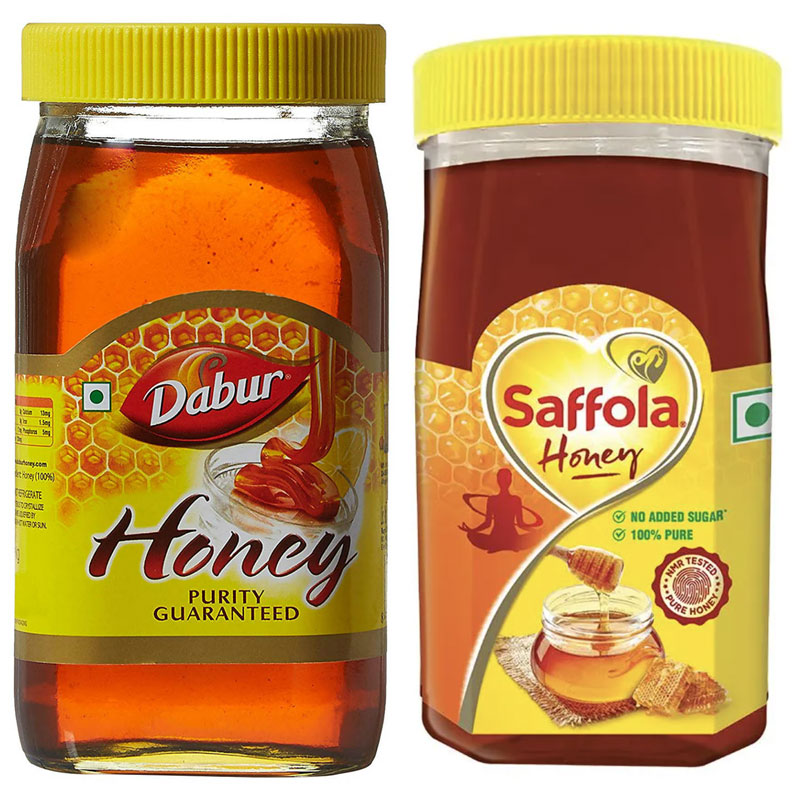
    An investigation by the Centre for Science and Environment (CSE) has found that leading brands sell honey which doesn’t meet purity standards. Dabur, Patanjali, Apis Himalaya, Baidyanath, Zandu failed to clear the Nuclear Magnetic Resonance Spectroscopy (NMR) test. What’s more concerning is the fact that the business of adulteration has evolved to hoodwink stipulated Indian tests.

    “The honey category stands stirred and shaken. Sugar syrup is sure an adulterant. The next time a consumer reaches out for a jar of honey, there is going to be suspicion around. And rightly so. The brand equity of the category is stirred,” Harish Bijoor Consults Inc. brand guru and founder Harish Bijoor said.

    Will brand reputation and business suffer?

    As the brand reputation of honey is based on health benefits, the controversy is not going to bode well for manufacturers. Brand consultant Shubho Sengupta stated that the category is very close to Indian families, unlike new age brands. Certainly, the consumers will be disappointed, thereby impacting the brand equity. Consumers might look at it as “tampering with Indian tradition,” remarked Sengupta adding that there are many emotions at play. However, it is hard to make out what would be the impact on sales.

    Business strategist Lloyd Mathias echoed the sentiment, and noted that the addition of sugar syrup is damning, because consumers buy honey for its health benefits and some of the prominent brands like Dabur, Jandu, Patanjali being on the list is disheartening.

    “Honey, as an overarching category, promises purity. If that purity comes under question, then it is a huge blow on the brands that are failing the test. Today, a lot of consumers must be thinking about what they are buying. It impacts large brands very badly. Last time when something like this happened, brands like Pepsi, Maggie had a tough time coming back,” pointed out Naresh Gupta, co-founder & chief strategy officer at Bang In The Middle. He added that food is a very high involvement category and consumers will not be quiet if they found anything wrong with what they consume.

    Will this cause a long-term impact?

    However, Alchemist Brand Solutions founder and managing partner Samit Sinha differed slightly. He went on to explain that many of these brands have a wide portfolio and honey is not their flagship product and not even the biggest contributor to their revenues. Moreover, the brands in the rejected list are very large, established, and riding on strong momentum. Hence, they have the ability to ride out the storm.

    Moreover, a lot of developments happen but they are restricted to the intellectual community, and it is not certain if this one will actually reach the target consumer – the middle-class Indian housewives, he noted.

    “Our expectations on substantiating claims and superior products have been historically far-fetched and the attitude on the ground has been more like 'adjust karlenge'.  Also, the impact on the category will be short-term as the consumer mindset is like 'aisa toh sab karte hain' (everyone does this), so it is a possibility that people will get over it,” Sinha added.

    Mathias, too, held the view that while the report may cause a bit of a hub-bub now, public memory is short-lived. But if these brands don’t go and correct themselves, they will continue to lose in terms of consumers’ faith.

    “The only good thing is the brands will hopefully address the issue and will make sure they are not adulterating natural honey,” he said. Sinha’s also optimistic that one good thing that will emerge from the incident is that the brands will no longer sell fabricated products but superior products.

    However, after a huge face loss, the brands have started defending themselves. According to Gupta, these companies cannot debunk the claim just by releasing an ad saying “I am pure,” because the whole report has been covered widely across media. They will have to put their money where their mouth is to win back the consumers’ trust.

    While the experts agree that CSE is a reputed organisation which has carried similar movements in the past, Sengupta mentioned that consumers will, unfortunately, believe the brands’ claims because brands like Dabur will spend huge to kind of own the narrative. Very few consumers will care about an NGO report unless the competitors promote it.

    Will it help the brands that passed the test?

    You can count on one hand the number of brands that passed the quality test, among them being – Marico’s Saffola Honey, Markfed Sohna and Nature's Nectar. These products will jump in to maximise the impact, acknowledged Sengupta. Mathias concurred, adding that it is a positive endorsement for those brands. “Those two-three brands will be preferred hugely and they might come up with campaigns. That will bring a systematic change in the category. It’s a category dominated by heritage players for a very long period but suddenly the category will change,” Gupta commented.

    Saffola lost no time in tooting its horn and advertising the fact that it “has launched the best quality honey in its purest form” in India.

    “Every batch of Saffola Honey is tested using NMR (Nuclear Magnetic Resonance) technology, which is one of the most advanced tests in the world, in the best in class laboratories to ensure that it is 100 per cent pure, free from added sugars and free from any form of adulteration. Saffola Honey is produced at a USFDA registered plant with state-of-the-art technology ensuring robust quality checks and controls. Saffola Honey is also compliant with each of the quality parameters mandated by FSSAI,” a Marico spokesperson said.

    Right now, the biggest brands producing honey are like the magician whose best trick has been suddenly exposed for what it is – a sleight of hand. It will be interesting to see how the magic syrup makes its comeback.