Tag: safety

  • Domino’s faces FSSAI heat as viral video raises question mark on its hygiene standards

    Domino’s faces FSSAI heat as viral video raises question mark on its hygiene standards

    Mumbai: Days after a Twitter user posted a video allegedly showing poor hygienic practises followed at a Domino’s outlet in Bengaluru, the Food Safety and Standards Authority of India (FSSAI) has swung into action. The authorities on Wednesday issued a spot memo to food business operators seeking an explanation regarding “unhygienic food handling practices” at the pizza outlet reported in the complaint.

    An improvement notice was also issued based on “inspection observations” which are to be complied with within 15 days, reported news agency ANI. Further necessary action will be taken against the multinational pizza restaurant chain by the designated officer (state licensing), Bangalore Urban District, as per the provisions under the FSS Act upon receipt of the explanation, said ANI in a tweet. 


    :


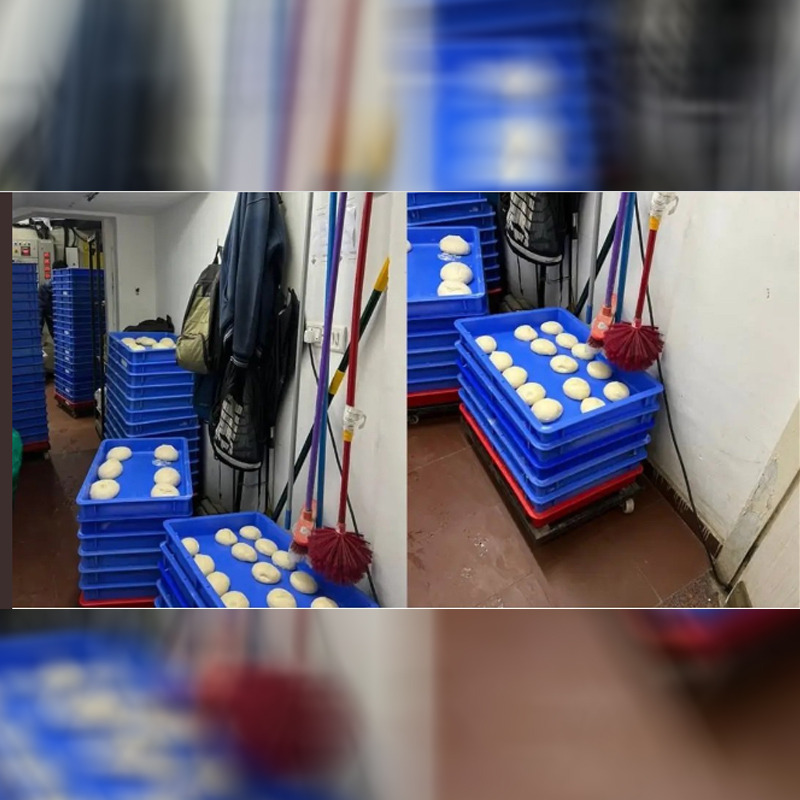
    The FSSAI crackdown comes on the back of a complaint raised by a Twitter user against alleged unhygienic practises being followed at the pizza brand’s outlet. The user had posted a picture last month, allegedly of a Domino’s outlet in Bengaluru, showing a mop and a toilet brush hanging in close proximity above the pizza dough.

    The user who identifies himself as an IT graduate wrote: This is how @dominos_india serves us fresh Pizza! Very disgusted. Location: Bangalore.

    He also tagged the FSSAI, the ministry of Health, the Karnataka health minister, and the union health minister.


    The Twitter user named Sahil Karnany followed it up with a video on 14 August, captioning the tweet, “Here is the video of the scene.”

    The tweet soon became viral, with several other netizens responding to it, some of them sharing their own bad experiences with the pizza brand.

    Soon after, the FSSAI took notice of the tweet. Responding to Karnany’s tweet on Tuesday, the official Twitter handle of the agency wrote, “FSSAI has taken note of the incident. The response of the FBO has been sought and appropriate action shall be taken in the matter as per the regulatory provisions under the FSS Act, 2006.”


    Meanwhile, Domino’s India has issued an official statement saying the brand adheres to “world-class protocols for ensuring the highest standards of hygiene and food safety.”

    “An incident involving one of our stores was recently brought to our notice. We want to assert that this is an isolated incident, and we have taken the strictest action against the restaurant in question. Please be informed that we have zero tolerance for violations of our high safety standards,” the pizza restaurant chain further stated.

  • redBus campaign encourages people to carry on with #journeyfordreams

    redBus campaign encourages people to carry on with #journeyfordreams

    NEW DELHI: redBus announces the launch of a digital-led campaign #journeyfordreams that inspires people to persevere in their endeavours by undertaking their journeys with fortitude while redBus ensures the safety of their travel. The campaign is aimed at restoring optimism for bus travel as the nation traverses its path to normalcy.

    The nationwide lockdown has not only brought lives but also dreams and aspirations for the future to a grinding halt. As a brand that’s all about enabling journeys and connections, redBus seeks to reassure bus travellers that they can still move forward towards fulfilling their dreams during these tough times, as redBus strives to ensure their safety during the journey with its Safety+ programme.

    redBus had launched ‘Safety+’, which is a unique certification for bus operators who follow all the necessary safety and sanitization protocols. All operators and buses with a Safety+ tag next to their listing on the redBus app or desktop platform, have implemented strict measures outlined by redBus, to ensure the safety of the passengers.

    As part of the campaign, the company has launched an ad film that relies on the emotions associated with safety of near and dear ones, especially while undertaking inter-city bus travel during these times, in order to highlight the proposition. The ad-film is set to be promoted extensively on digital and social media, including, YouTube, Facebook and Instagram, apart from e-mailers and other push notifications.

    Unlike the earlier campaigns of the brand that largely utilized humour as a means to attract and drive the message, such as the ones with MS Dhoni, this campaign relies on emotions to connect at a deeper level.

    redBus vice president brand, and head of marketing Pallavi Chopra said, “As an enabler of journeys, it has been our constant endeavour to help travellers reach their destinations in the safest and easiest way possible, especially in the present circumstances. The COVID-19 pandemic has not only disrupted the business of establishments, but also the dreams and aspirations of millions of individuals out there, who are longing to travel in pursuit of their goals. We thus envisaged a subject or scenario that resonated with households across the country in order to shape the campaign. The result is a very strong and emotional narrative around one of those important journeys in life, projected through the love and concern between a father and daughter, to drive home the message of #journeyfordreams.”

    McCann Worldgroup EVP south Dileep Ashoka said, “We have been in partnership with redBus for the last few years. Being in the businesses of facilitating life’s journeys, and being the custodian of the online bus ticketing category, we felt the imperative to comfort customers by making travel safe in these uncertain times. The story narrative seeks to demonstrate this in a manner that drives brand affinity.”

    Creative Credits:

    Agency: McCann Worldgroup – Bengaluru

    Creative Director: Sambit Mohanty

    Production House: Another Idea

    Director: Puneet Prakash

    DOP: Pratik Deora

  • OYO survey reveals ‘safety’ as determining factor for women travellers

    New Delhi: OYO, India’s largest hotel network, recently conducted a survey among its women customers to unearth trends on how Indian women like to travel. The data is based on research conducted among 400 women in the age group 18-60+ across different locations in India, including Delhi, Maharashtra, Karnataka, Rajasthan, Odisha, Telangana and Madhya Pradesh.

    The survey threw up some interesting findings:

    ● 37% respondents reported travelling only for leisure, while 53% travelled for both work and leisure.

    ● Women appear to be more conscientious workers, or at least those with less disposable time on their hands as only 51% reported clubbing a work trip with personal break, while 23% claimed they had never considered it

    ● 27% respondents said they preferred travelling solo – of this, 36% said they enjoyed it but 33% said they had to opt for it because it was “difficult matching schedules with friends or companions”

    ● Friends (57%) rank higher than Family (51%) as “preferred travel companions” for women, but partners reign supreme at 62%

    ● Personal research via internet and magazines ranks higher (78%) than recommendations from friends & family (51%) while choosing a travel destination. Social media came third (32%) and movies trailed the last (12%) when it came to sparking travel inspiration. Kuch Kuch Nahee Hota?

    ● “Safety” ranked as the #1 factor followed by “cost of trip” when it came to selecting a travel destination

    ● Contrary to expectations, 69% women opted for budget hotels over five-star hotels (18%) while 6% preferred to stay in a hostel while travelling

    ● 10% respondents had never stayed with friends or family while travelling, but all had “often” or “sometimes” stayed at a budget hotel!

    ● While 10% women totally shot down the idea of impulsive trips, accommodation (52%) was the biggest concern followed by expense (29%) due to booking at short-notice

    ● Budget hotels (35%) topped the choice of accommodation for women travelling solo, followed by staying with friends or family (25%)

    Commenting on the findings, Abhinav Sinha, COO – OYO said, “Technology has brought about paradigm shifts in the way we live and work. Nowhere is this more evident than travel. From buying tickets to booking hotels and renting home-stays – the balance of power and choice has shifted to the customer. Businesses that keep a pulse on their customers to identify their expressed and evolving needs are able serve them better. Women are a significant set of travellers – undertaking travel for both personal and business reasons. Not surprisingly, 80% women reported that they take charge of their travel plans, often in consultation with friends or family. 52% reported that they liked taking impulsive trips – but interestingly more than half listed accommodation as their biggest concern. As service-providers it is important that we equip ourselves to serve the needs and expectations of this growing cohort.”

    OYO is the pioneer of affordable, predictable accommodation in the Indian hospitality sector. It offers several consumer friendly touch-points such as the OYO App which enables guests to control every aspect of their experience – from booking hotel and cabs, to ordering food – all from their smartphone. Recently, the company introduced OYO Captains, a unique concierge service to ensure smooth travelling and on-stay experience. OYO currently operates over 70,000 rooms in 200 cities in India and Malaysia.

  • Sony Pictures Networks India ups safety bar on TV sets

    Sony Pictures Networks India ups safety bar on TV sets

    MUMBAI: TV production in India has been a bit of a bummer over the past few years: hazardous material constructed sets, loosely put together electrical connections, below par sanitation, and shoddy facilities have been the hallmarks of shooting floors. Safety measures for TV actors and crews have been sub-par. Accidents have sometimes got out of hand, and there have been several incidents over the years where crew have been injured or lost their lives. Sony Pictures Networks India (SPN) is changing that at least on one front: having ambulances and clinics on all sets where TV shows or films are being shot.

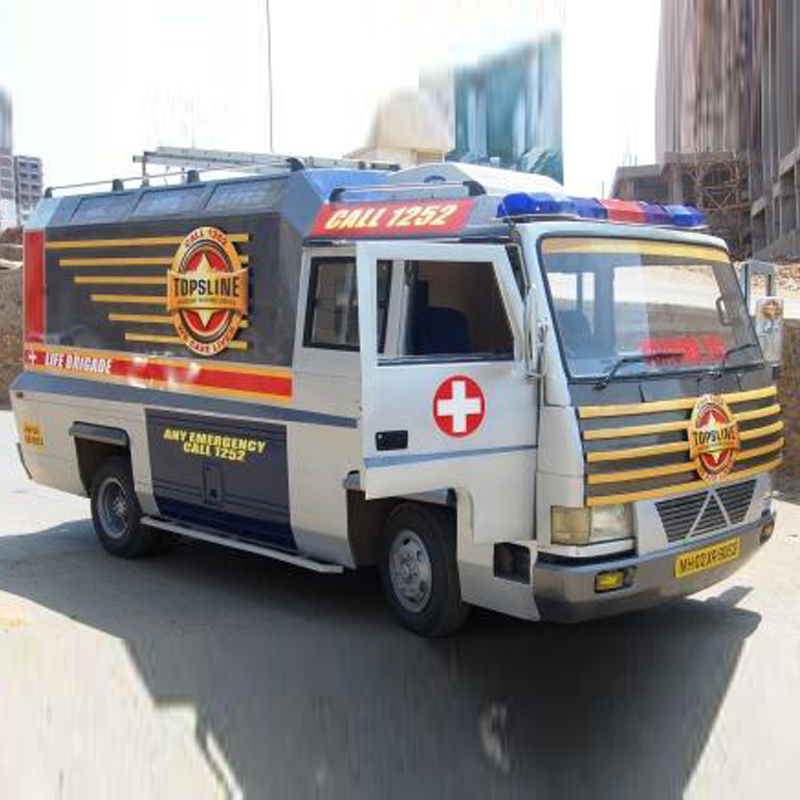
    Apparently, the company has hired one of India’s top emergency response services TopsLine to deploy 11 mobile clinics and ambulances at the sites of 16 shows where shooting is under way in Mumbai and its periphery. Why is SPN India suddenly getting a shot of corporate social responsibility?

    Well, it’s part of its efforts to raise the bar and provide protection to those who work on the front lines to churn out the content that brings it ratings and revenues. A while ago SPN India officials had conversations with these folks on how they felt on the sets, and the reaction was pretty eye-opening. Most respondents said that, apart from wages, what they wanted was better hygiene and ablution facilities, apart from safety. That prompted the network to spring into action, taking the first of many more steps it intends to take in this direction.

    The mobile medical vans are likely to cover around 1600 people at a stretch if one were to assume 90-100 people working on an average at each of its different sets at a time.

    While TV industry professionals have lauded SPN India’s initiative, a lot more needs to be done says Hats Off Productions co-founder and the Indian Film & TV Producers Council TV division head JD Majethia. However, there are challenges, he admits.

    “The nature of business is so different — the shooting sites are temporary structures; it’s difficult to make arrangements. Sites keep shifting, and sometimes the sets are on wheels,” says Majethia.

    There is the lack of basic hygiene amongst the crew at times who chew tobacco, spit betel nut juice (pan) on the sets, which tends to dirty the area. Of course actors have their vanity vans, which keeps them ring fenced from the mess. But the crew has to bear with it all the same.

    A problem that is faced by many a producer and production supervisors is providing proper lunch tables on locations. “On large shooting floors, if there are 100 people at work and everybody needs to be accommodated during lunch, it becomes difficult to manage, say 10 tables, in an hour’s time,” explains Majethia. Then, potable water, for example, is one of the issues that needs careful planning.

    At times there is the mosquito menace at the shooting locations. And when the Dengue fever scare has been running rampant, this is indeed concerning. “In such situations, we often take the help of pest control services and also provide safety creams such as Odomos to all the actors and workers,” Majethia said.

    Majethia once again lauded SPN India’s ambulance drive and added that the industry is constantly working with the various trade craft bodies to improve the lot of those on the sets. “And things can only get better from here,” he said.

  • Sony Pictures Networks India ups safety bar on TV sets

    Sony Pictures Networks India ups safety bar on TV sets

    MUMBAI: TV production in India has been a bit of a bummer over the past few years: hazardous material constructed sets, loosely put together electrical connections, below par sanitation, and shoddy facilities have been the hallmarks of shooting floors. Safety measures for TV actors and crews have been sub-par. Accidents have sometimes got out of hand, and there have been several incidents over the years where crew have been injured or lost their lives. Sony Pictures Networks India (SPN) is changing that at least on one front: having ambulances and clinics on all sets where TV shows or films are being shot.

    Apparently, the company has hired one of India’s top emergency response services TopsLine to deploy 11 mobile clinics and ambulances at the sites of 16 shows where shooting is under way in Mumbai and its periphery. Why is SPN India suddenly getting a shot of corporate social responsibility?

    Well, it’s part of its efforts to raise the bar and provide protection to those who work on the front lines to churn out the content that brings it ratings and revenues. A while ago SPN India officials had conversations with these folks on how they felt on the sets, and the reaction was pretty eye-opening. Most respondents said that, apart from wages, what they wanted was better hygiene and ablution facilities, apart from safety. That prompted the network to spring into action, taking the first of many more steps it intends to take in this direction.

    The mobile medical vans are likely to cover around 1600 people at a stretch if one were to assume 90-100 people working on an average at each of its different sets at a time.

    While TV industry professionals have lauded SPN India’s initiative, a lot more needs to be done says Hats Off Productions co-founder and the Indian Film & TV Producers Council TV division head JD Majethia. However, there are challenges, he admits.

    “The nature of business is so different — the shooting sites are temporary structures; it’s difficult to make arrangements. Sites keep shifting, and sometimes the sets are on wheels,” says Majethia.

    There is the lack of basic hygiene amongst the crew at times who chew tobacco, spit betel nut juice (pan) on the sets, which tends to dirty the area. Of course actors have their vanity vans, which keeps them ring fenced from the mess. But the crew has to bear with it all the same.

    A problem that is faced by many a producer and production supervisors is providing proper lunch tables on locations. “On large shooting floors, if there are 100 people at work and everybody needs to be accommodated during lunch, it becomes difficult to manage, say 10 tables, in an hour’s time,” explains Majethia. Then, potable water, for example, is one of the issues that needs careful planning.

    At times there is the mosquito menace at the shooting locations. And when the Dengue fever scare has been running rampant, this is indeed concerning. “In such situations, we often take the help of pest control services and also provide safety creams such as Odomos to all the actors and workers,” Majethia said.

    Majethia once again lauded SPN India’s ambulance drive and added that the industry is constantly working with the various trade craft bodies to improve the lot of those on the sets. “And things can only get better from here,” he said.

  • Michelin tyres enters India playing the ‘safety’ card

    Michelin tyres enters India playing the ‘safety’ card

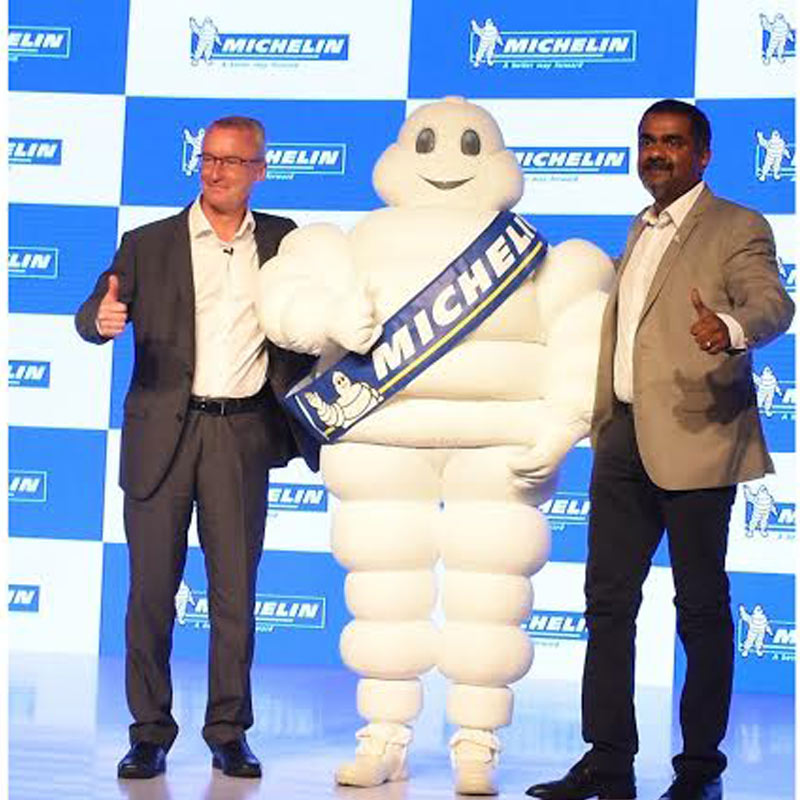
    MUMBAI: Michelin – the international tyre technology leader today announced the launch of its first television commercial in the country. Themed ‘Safely Ahead’ this pan India campaign with the iconic Michelin man will make its debut on Indian television channels soon.

    The campaign, which has been produced for Television as well as for digital advertising, will highlight Michelin’s ability to provide safer mobility for motorcyclists and scooter riders thanks to its technological knowhow and its 125-year history of delivering landmark innovations.

    The campaign was conceptualized by Publicis India. In Efecto, the French 3D animated film specialist executed the animation.

    The campaign centers around three elements that Indian riders negotiate daily while using their motorcycles and scooters:

    • Bad roads: dictate the fitment of robust tyres.

    • Wet roads: require good grip.

    • Braking: stopping ability to minimise braking distances.

    During the unveiling of the campaign in Mumbai India, president of Michelin 2 wheel tyre division Gary Guthrie said: “We recognize that the young generation of India today, are always mobile and desire better and safer performance from their bikes. Our Michelin Man, ’Safely Ahead’ campaign illustrates how our two wheel tyres designed specifically for Indian riders, comes with unbeatable all-round safety, road-holding, braking and overall riding pleasure that they expect from Michelin.” He further added, “One of our strategic two wheel growth objective in India is to strengthen our position in one of the fastest growing markets in the world. The ‘Safely Ahead’ campaign is an effort towards achieving this key objective.”

    The TV advertisements will be seen on major national cable networks in India that would include general entertainment, movies and sports channels. It will also be aired on major regional channels across the country.

  • Michelin tyres enters India playing the ‘safety’ card

    Michelin tyres enters India playing the ‘safety’ card

    MUMBAI: Michelin – the international tyre technology leader today announced the launch of its first television commercial in the country. Themed ‘Safely Ahead’ this pan India campaign with the iconic Michelin man will make its debut on Indian television channels soon.

    The campaign, which has been produced for Television as well as for digital advertising, will highlight Michelin’s ability to provide safer mobility for motorcyclists and scooter riders thanks to its technological knowhow and its 125-year history of delivering landmark innovations.

    The campaign was conceptualized by Publicis India. In Efecto, the French 3D animated film specialist executed the animation.

    The campaign centers around three elements that Indian riders negotiate daily while using their motorcycles and scooters:

    • Bad roads: dictate the fitment of robust tyres.

    • Wet roads: require good grip.

    • Braking: stopping ability to minimise braking distances.

    During the unveiling of the campaign in Mumbai India, president of Michelin 2 wheel tyre division Gary Guthrie said: “We recognize that the young generation of India today, are always mobile and desire better and safer performance from their bikes. Our Michelin Man, ’Safely Ahead’ campaign illustrates how our two wheel tyres designed specifically for Indian riders, comes with unbeatable all-round safety, road-holding, braking and overall riding pleasure that they expect from Michelin.” He further added, “One of our strategic two wheel growth objective in India is to strengthen our position in one of the fastest growing markets in the world. The ‘Safely Ahead’ campaign is an effort towards achieving this key objective.”

    The TV advertisements will be seen on major national cable networks in India that would include general entertainment, movies and sports channels. It will also be aired on major regional channels across the country.

  • ‘Blow The Whistle’ for road safety campaign

    ‘Blow The Whistle’ for road safety campaign

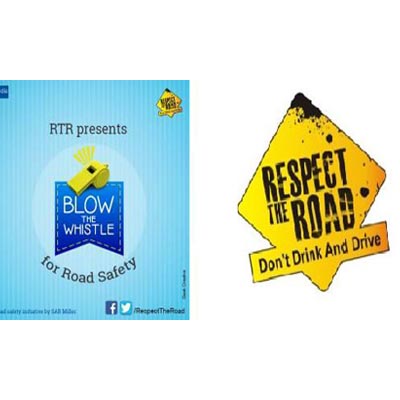
    MUMBAI: SABMiller India’s ‘Respect the Road’- Don’t drink and drive campaign, launched ‘Blow The Whistle’ initiative on digital media to promote the message of responsible drinking and overall road safety.

    As a part of this initiative, people would be given whistles to blow against all kinds of road and traffic offenders e.g. signal jumpers, rash drivers, people indulging in drinking and driving etc.

    Respect the Road is India’s biggest Don’t drink and drive campaign on digital platform. Going beyond highlight the perils of drunk driving, the Facebook page of the campaign will now also highlight dangerous and risky road behavior leading to road accidents and fatalities.

    SABMiller India VP sustainability and communications Meenakshi Sharma said: “Promoting responsible drinking is one of the core sustainable priorities for SABMiller worldwide.  Through ‘Respect the Road’- Don’t drink and drive campaign, we promote responsible drinking encouraging people to use alternatives to drinking and driving such as calling a cab, hiring a chauffeur or designating a buddy to drive. Blow The Whistle initiative is an extension of our campaign and goes a step further to involve people giving them the responsibility to take action and spread the word about road safety. We are confident that people will step out of their comfort zones and blow the whistle against road offenders.”

    The page will showcase whistle creatives and images of people blowing whistles at traffic offenders. The objective is to involve people and encourage them to participate in this campaign to address the issue of road safety. People can post pictures of road offenders, share their experiences and testimonials of blowing whistles at offenders and send in pictures and videos of what/who would they blow the whistle against. The campaign would also urge people to help the victims in a road mishap and respond when they hear a whistle on the street.

    Geek Creative CEO Mayank Agarwal said: “Blow The Whistle was conceptualized as an initiative to involve people on ground and encourage them to take up the issue of road safety. Through social media, we will engage with people through pictorial representations, participation through quizzes, contests and encourage people to use a whistle against traffic and road offenders. Our strategy involves a 360 degree integration of the top digital platforms to connect with our audience and spread awareness about road safety.”

    The campaign will be taken on ground during the festive season this year where people can come and share their thoughts on making the roads safer. Whistles will be distributed to people for them to blow it against the road offenders and rule breakers. Other engaging activities like quizzes, street plays will be organised to create awareness about the campaign and the issue of road safety.

    The campaign has staged interactive street plays on responsible drinking, tied up with radio station urging listeners to pledge for responsible drinking and associated with cab services to spread the message of responsible drinking and road safety.

    The Facebook page of the campaign (https://www.facebook.com/respecttheroad) is highly interactive with more than 30,000 followers. Recently a safety shayari contest was organised where twitteratis tweeted Road Safety slogans in form of Shayari along with the hashtag # Blow the Whistle. Within hours both Blow the Whistle and Safety Shayari hashtags # were trending all over India and the campaign reached to over one lakh people.

    SABMiller India’s ‘Respect the Road’- Don’t drink and drive campaign has partnered with Home Safe, Delhi NCR’s first chauffeur service, popular radio taxi providers Mega Cabs and radio station Radio City 91.1 FM.

  • Ipsos study claims three in ten Indian drivers are on the phone while driving


    MUMBAI: About three in ten (29 per cent) Indians who drive indicate they text, email, or use social media while they are driving (even when they’re at a stop sign or a red light) compared to 22 per cent globally according a new poll conducted by Ipsos OTX – the global innovation center for Ipsos, the world’s third largest market and opinion research firm.


    However, a majority of Indian driving respondents (71 per cent) say they do not do this. The findings reflect a new poll of 14,160 drivers conducted by Ipsos globally, the number of respondents from India was 851 drivers.


    Commenting on the findings, Ipsos in India head marketing communications Biswarup Banerjee said, “Motor vehicle accidents are the leading cause of accidental death in India, and using a phone while driving significantly increases the risk of accidents. Trying to do two visual tasks at once hurt performance in both tasks significantly, sadly many people have this overconfidence in how well they can multitask which may prove fatal.”


    he countries with the highest proportions of drivers indicating they have texted, emailed or used social media while driving are from: Saudi Arabia (43 per cent), South Africa (41 per cent), South Korea (33 per cent), India (29 per cent), China (27 per cent), United States (27 per cent), Brazil (25 per cent) and Russia (25 per cent). This group of distracted drivers is followed by Indonesia (24 per cent), Sweden (24 per cent), Mexico (23 per cent), Argentina (21 per cent), Australia (20 per cent), Germany (20 per cent), Canada (19 per cent) and Italy (19 per cent), rounding out the middle of the pack. The lower group includes: Japan (18 per cent), France (17 per cent), Poland (17 per cent), Turkey (17 per cent), Belgium (15 per cent), Spain (14 per cent), Hungary (9 per cent) and Great Britain (8 per cent).


    As for demographics of Indians, age is among the most important variable in determining a driver’s likelihood to message behind the wheel in India as those under the age of 35 years (34 per cent) are most likely to say “yes” they engage in the behavior, compared with those 35-49 years (25 per cent) and those 50-64 years (14 per cent). However, Indian male drivers (31 per cent) are more likely to use their smart phone while driving compared to 26 percent female.


    Communicating digitally while in the car appears to be highly related to a person’s work life as those who are employed (32 per cent) are more likely than those unemployed (17 per cent) to say “yes”. Seniority is even more of an indicator as those who own a business (48 per cent) are among the most likely to say they do it (22 per cent among non-business owners), as are those who say they have a senior decision making role in their place of employment (38 per cent vs. 18 per cent non). Similarly, income (31 per cent high, 30 per cent medium, 25 per cent low) and education (29 per cent high, 26 per cent medium, 48 per cent low) are also indicators of greater likelihood to drive and message.