Tag: Sachin Tendulkar

  • Resuscitating Prasar Bharati

    Resuscitating Prasar Bharati

    The non-coverage of the last historic test match of Sachin Tendulkar by Doordarshan entailed numerous explanations by the Information and Broadcasting Ministry. Prasar Bharati – on its part – painfully chose not to telecast the mega event because of an unsupportive legal provision that financially favours the content right holders telecasting such sports events.

    Every household watched the match of  Bharat Ratna Sachin Tendulkar with nostalgia and gratitude since the most respected cricketer decided to draw the curtains on his cricketing career representing the nation and relished the visual treat  gratefully acknowledging  “Sachin the Legend” in great measure.

    The Sports Broadcasting (mandatory sharing with Prasar Bharati) Act, 2007 mandates all right holders telecasting or broadcasting through radio to share the signals without any advertisements to enable Prasar Bharati to re-transmit on its terrestrial and direct to home network. 

    During the ICC Championship Trophy, ESPN (Now Star Sports 4) as content right holder had offered to share the live signals along with commercials embedded by ICC already.  Prasar Bharati insisted on a clean feed and chose to telecast the event without any commercials that resulted in average of DD National TVTs  soaring to an all time high – higher than other telecasting channels – for all the five matches proving that people in India preferred matches without intervening commercials.

    The Honourable High Court of Delhi decided the issue in favour of the Public Broadcaster. After a series of discussions, marketing inputs and considering the dynamic changes in technology, Prasar Bharati decided to alter the proposed amendment by withdrawing the issue of revenue sharing substituted by a very minor alteration in the Act for the mode of transmission and platform which would enable Prasar Bharati to telecast the sporting events of national importance on the dedicated free-to-air channel of Doordarshan, DD Sports, where the opportunity costs were minimal. Amendments proposed to the Sports Broadcasting Act, 2007 basically focused on the revenue sharing with the rights holders from existing ratio of 75-25 to 40-60 in favour of Prasar Bharati. 

    A recent experiment showed how independence in Prasar Bharati can make an impact. A truly independent team with young professionals in DD News prime time has rattled the industry with ratings showing an upswing.

    Ever since the Sports Act, 2007 was notified, Doordarshan has been telecasting sports events of national importance on its DD National terrestrial channel and free-to-air DTH network in compliance of the Act.  In all, 43 events have been telecast under the Act till November, 2013.

    In 18 events, Doordarshan suffered a total loss where even the amount quoted by the revenue management company, that is, the highest bidder out of Prasar Bharati and the content right holder was not enough to meet the opportunity cost (monetary value of advertisement revenue on normal programme) and in 25 events Doordarshan suffered a loss where even the opportunity cost was not realised.

    Doordarshan had no choice but to undertake these telecasts as it is mandated to comply with the Act.  The 25 per cent revenue share to which Prasar Bharati is entitled has been way below its financial obligations resulting in outright losses. It is time to stop lacerating incursions by commercial interests and to amend the mandatory sharing of Sports Broadcasting Signals with Prasar Bharati Act to avoid any further financial bleeding by the pubcaster. 

    Since 1997, DD  has been demanding literal autonomy enshrined in the Act of Parliament and has been juggling its financial management with a depleting workforce superannuating in thousands every year without a Recruitment Board in place for inexplicable reasons. It is programmed inaction that cost Prasar Bharati heavily with the  Member (Finance) with only one officer sanctioned to assist him in his Secretariat, managing the annual business of Rs 5,000 crore. The Personnel wing too has a crippled structure to handle the workforce of 48,000 sanctioned employees and continues struggling with inherited legacies along with land, buildings, technical infrastructure, ponderous liabilities and unsolved complex HR issues to manage.

    Self sustainability and financial freedom are issues that warrant immediate solution. Vast tracts of land held but not optimally utilised due to technological advancements in broadcasting  resulting in obsolescence of Relay Centres is an immediate viable option for unlocking of land for value otherwise they may end up being exposed to encroachments by land sharks. 

    The large number of government servants on deemed deputation to Prasar Bharati is a legacy that warrants serious restructuring to match modern day broadcast needs. While it has surplus of trained engineering manpower in its terrestrial infrastructure, and skilled manpower to manage content  its news related function is grossly inadequate. The much awaited Sam Pitroda Committee report is expected to offer ample opportunity for government solutions. 

    There is a bright light in the horizon with a positive I&B Ministry leading from the front, correcting inherited infirmities and guiding legal and personnel issues to operationalise practical proposals and resuscitate Prasar Bharati to a genuine and vibrant public broadcaster.
     

    As far as autonomy goes, all major successful public broadcasters in the world have functional and operational autonomy. The BBC model continues to be the best. The  Supreme Court of India while delivering judgement in the case of Cricket Association of Bengal in 1995 brought out the need for total autonomy for ensuring plurality of use, opinion and also to ensure a fair and balanced presentation of news and public issues, the broadcast media should be placed under the control of the public, i.e. in the hands of a Statutory Corporation or Corporations, as the case may be. 

    While dealing with the issues of airwaves, the apex court noted: “Government control, which in effect means the control of the political party or parties in power for the time being.  Such control is bound to colour and in some cases, may even distort the news, views and opinions expressed through the media.  It is not conducive to free expression of the contending viewpoint and opinion which is essential for the growth of a healthy democracy.”


    It further added: “The right to use the airwaves and the content of the programme, therefore, needs regulation for balancing it as well as to present monopoly of information and news relayed, which is a potential danger flowing from the concentration of the right to broadcast/telecast in the hands either of a central agency or of few private affluent broadcasters. That is why the need to have a central agency representative of all sections of the society free from control of the government is essential.”

    On the other hand, broadcasting system control managed by states is found to be inconsistent with the basics of full democracy all over the world.  S. Jaipal Reddy during the XIII Lok Sabha debate Session II Winter Session stated: “I do not think that our democracy is so backward to need the Ministry of Information and Broadcasting.  In fact, in no advanced country in the world do we have a Ministry for Information and Broadcasting.” 

    For a vibrant Prasar Bharati nevertheless, there is a need for the government to provide financial and personnel stability and ensure that attained ad hocism will be replaced. There is a bright light in the horizon with a positive I&B Ministry leading from the front, correcting inherited infirmities and guiding legal and personnel issues to operationalise practical proposals and resuscitate Prasar Bharati to a genuine and vibrant public broadcaster.

  • Abhi-Aish to celebrate Happy Anniversary

    Abhi-Aish to celebrate Happy Anniversary

    Ad maker Prahlad Kakkar, best known for his work on the famous Pepsi TV commercial with Amitabh Bachchan and Sachin Tendulkar is planning to dip his hands into Bollywood filmmaking.


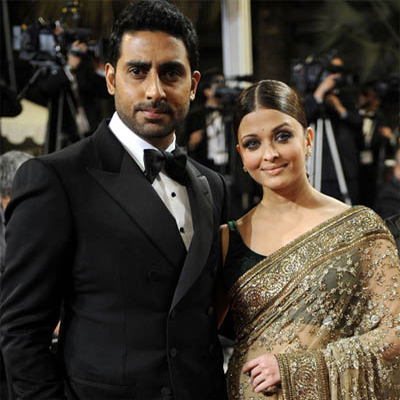
    His upcoming flick will see the comeback of the gorgeous diva Aishwarya Bachchan. The film tentatively titled Happy Anniversary will be produced by Gaurang Doshi and will explore the anatomy of marriage.


    Ash’s hubby Abhishek Bachchan will be playing the male lead and the two will be seen sharing the screen space after a span of five years since their last film Guru in 2007.


    Happy Anniversary will be shot in Africa and is slated for a release in January 2014.

  • Astill’s study of India through cricket binoculars

    The book came out last month; but our review has found space on indiantelevision.com only in September. Readers, who have not yet got their hands on the book, would be wise to do so. I am a cricket fanatic and thoroughly enjoyed reading this fast paced close peek of the evolution of modern India. And would advice you to do the same if you love the game of the red cherry – or white one – if one looks at what‘s in use in modern day cricket.

    James Astill

    James Astill, the Economist‘s correspondent in India between 2007 and 2010, watched the rise of IPL. With cricket‘s biggest shebang as the back ground, he has gone on to narrate a wider story of modern India.  Much of this story is known. Yet while Astill relies on previously published material, what makes his book exceptional is his first-hand reporting.

    The ‘tamasha’ of Astill’s title is a Hindi word meaning entertainment or show. As he tells the story, it was inevitable over time that the Indian public would forsake the extended dramas and longueurs of Test cricket for the shorter, more colourful and energetic forms of the game. This process began with India’s completely unexpected victory at the 1983 World Cup under the leadership of Kapil Dev, and has now reached its ultimate incarnation in the cat and mouse game also termed as the Twenty20 format and controversy’s favourite child the Indian Premier League.

    Astill is a keen follower of the game and says “the story of Indian cricket is not only about cohesion and success, but is deeply pathetic.” He has very objectively and figuratively described the poor state of infrastructure in the country; a place where millions of children aspire to wear the Indian jersey someday. But the harsh truth is they are unlikely to even get a chance to play an organised version of the game, with a good bat and leather ball. One of the most touching stories is of the railway clerk in Rajkot who, using a concrete pitch and tattered nets, has coached several first-class cricketers, including his son – now a leading light of India‘s Test team.

    Politics in democratic India, Astill observes, is “feudal, corrupt and vindictive”, and the administration of cricket is no more than an aspect of politics. Money was everything in the establishment of the IPL, the cricket itself almost incidental. More than $700 million was paid for the first franchises. The Indian captain, Mahendra Singh Dhoni, is reckoned to earn $21 million a year from the game. Foreign mercenaries such as Kevin Pietersen and Shane Warne were bid for like prize bulls at a livestock market. At some matches the players’ salaries were flashed up on the scoreboard alongside their batting averages; going on to emphasis the fact that the sport has been portrayed in a completely different light.

    Astill seems to have talked to everyone who is anyone involved in this deeply unattractive business – including Lalit Modi, the now-disgraced founder of the IPL, whose capacity for intrigue was exceeded only by his genius for making enemies. Almost equally disconcerting is the formidable Sharad Pawar, who combines the job of India’s agriculture minister with controlling the Indian Cricket Board and being president of the International Cricket Council.

    In comparison with the corporate (read: administrators) and the Bollywood stars who keenly follow the action from the boundary’s edge, the players seem considerably more likeable. Astill tracks down the inspirational Warne, former captain of the Rajasthan Royals. Warne speaks up expressively on behalf of Twenty20, before innocently sabotaging his case by admitting that “for me it’s always about Test cricket”.

    The striking thing about most of those in charge of the IPL is their lack of real passion for cricket itself. They are in it to seek exposure, to sell advertising, to exercise power. Almost none of the money filters down to fund coaching or grass-roots facilities. As for the games themselves, Astill’s judgment is that most lack tension and the real edge of competition.

    Astill relentlessly highlights all this and comes to the sad conclusion that India may end up killing the great traditions of cricket. And yet Astill finds that in the streets and on patches of waste ground in the slums and villages of India, (during his stint in the Indian-subcontinent) the game is furiously alive, uniting millions in the simple desire to hurl a ball fast or spin it with conniving intent, and to hit it far. “This is where Indian cricket resides,” Astill writes eloquently, “far from the elite, the corrupt politicians and turkey-cocking film stars who have laid claim to it.” And therein lies the hope that this most beautiful of games will survive.

  • Champions League Twenty20 2013: A Preview

    Champions League Twenty20 2013: A Preview

    MUMBAI: The coming weeks are going to be a treat for cricket lovers as they have many reasons to cheer. Sachin Tendulkar and Rahul Dravid will be playing their last internationl T20 matches. Chennai Super Kings, Mumbai Indians, Rajasthan Royals and Sunrisers Hyderabad will be competing against giants from the countries of Australia, South Africa, West Indies, Pakistan, New Zealand and Sri Lanka.

    The Rajasthan Royals and Mumbai Indians will fight for the top two spots in Group A to qualify for the semis, whereas Chennai Super Kings and Sunrisers Hyderabad will compete in Group B.

    Six on air sponsors have already been signed – Karbonn Mobile and Tata Docomo have come on board as co-presenting sponsors while Airtel Broadband, Pernod Ricard, Bharat Business Channel (Videocon D2H),  Panasonic and Toshiba India have been roped in as associate sponsors.

    On ground sponsors include – Karbonn Mobiles, Panasonic, Britannia, Panasonic TV and Jaypee cements. This is the second year in a row that Karbonn Mobile has associated itself with CLT20. Previous sponsors include Nokia and Bharti Airtel.

    The total prize money is the same as the previous year as $6 million out of which the winning team will receive $2.5 million. ESPN Star Sports bought the global broadcast rights for CLT20 in 2008 at a whopping $900 million for the next ten years.

    A musical anthem Ragad Ragad has been created as part of the marketing campaign for this edition which is currently running on electronic and digital media. Prasoon Joshi has written the lyrics for it and the track performed by Mika Singh, who will also be performing at the opening ceremony on 21 September in Jaipur.

    CLT20 will also have bilingual commentary in both English and Hindi. Star Sports and Star Cricket HD will be in English while Star Cricket will have it in Hindi. Additionally, this year the first and the final matches will be telecast on Star Gold as well with Hindi commentary.  “We have also invested heavily on building strong Karbonn Smart CLT20 centric programming in the run-up to the league,” says ESPN Software India COO Vijay Rajput.

    Commentators who will be giving viewers an ear-gasmic experience include Harsha Bhogle,  Sanjay Manjrekar, Wasim Akram, Simon Doull, Alan Wilkins, Ravi Shastri, Sunil Gavaskar, Ian Bishop, Pommie Mbangwa, Laxman Sivaramakrishnan, Kapil Dev, Sanjay Bangar, Ayaz Memon, Deep Dasgupta, Murali Karthik, Aakash Chopra and Arun Lal.

    The action has already begun on ESPN Star Sports channels but the real deal is yet to begin.

  • Mumbai Indians launches magazine

    MUMBAI: Indian Premier League (IPL) franchise Mumbai Indians has launched its magazine with Sachin Tendulkar on the cover.

    The magazine offers a close look at Mumbai Indians players, strategy and statistics of the team. It also gives readers the chance to win prizes.

    The magazine offers sections like the cover page story Combat Time, Big Talks, The Other Side Of Win, Young Gun and Backroom Hero. The annual magazine is published by 8848 Sports.

  • Adidas signs-up Mahela Jayawardene as brand ambassador

    MUMBAI: Sri Lankan cricketer Mahela Jayawardene, who is also the captain of Indian Premier League (IPL) team Delhi Daredevils, is all set to sport the three stripes as German sportswear giant Adidas has signed him up as brand ambassador.

    To kick start this partnership, he will be part of Adidas’ latest digital and retail campaign for the IPL- ‘Loose the heat, keep the fire‘- a campaign based on the apparel technology from Adidas, ClimaCool+.

    He joins Adidas’ athlete portfolio, including the likes of the Master Blaster- Sachin Tendulkar, Suresh Raina and international cricketers such as Keiron Pollard, Dwayne Bravo and Lasith Malinga.

    He said, “I am excited and raring to step on the field in the three stripes. adidas supports some the greatest athletes in the world today and have continued to develop revolutionary products to help cricketers like me outperform. The ClimaCool+ technology in the new Delhi Daredevils team jersey certainly brings the cool, the minute you put it on, and I am all in to face the heat this season.”

    Adidas India brand director Tushar Goculdas said, “Mahela is one of the greatest cricketers of the current era- a natural leader, a fantastic batsman and an outstanding fielder. He has had a tremendous impact on the game, making Sri Lanka a dominant force in world cricket. We are excited to support him with our incredible sportswear innovations and believe this partnership will empower him further to deliver match winning performances.”

  • Aviva pads up with Sachin

    MUMBAI: Insurance provider Aviva has extended its campaign with brand ambassador cricketer Sachin Tendulkar to the social media realm.

    Aviva’s brand strategy, based on the father-child relationship, highlights the importance of a father’s role as a protector in his child’s life, whether financial, physical or emotional. With an objective to help young fathers realise the importance of financial planning for their children’s secure future, Aviva India unveiled its social media strategy based on creating and feeding engaging content in the social media channels.

    The core of the contention focuses on protection drawing analogies from cricket; the next levels will cover content on financial literacy, products and parenting for young fathers. This will be supported by a robust digital advertising campaign to promote content to our target audience – young parents in the age-group of 28-44 years.

    Through the new campaign called ‘Padding up with Sachin’ and ‘Sachin Off Guard’, Aviva aims to further strengthen its association with fatherhood and protection. These are a series of webisodes on cricket tutorials and interviews on importance of protection by Tendulkar. For the first time ever, netizens will have access to tutorials on cricketing by the Little Master himself.

    With 73 per cent of audience on social networking sites consuming video/ entertainment on the site, Aviva sees an increase of three fold in its engagement scores in its social media channels like Facebook, Twitter and Youtube leading to higher awareness on Aviva’s offerings. Aviva is shortly releasing its ‘Product Center’ and a series of engaging product related videos on Facebook to further enhance the same.

    Aviva India director marketing and bancassurance Rishi Piparaiya said, “Our vision on social media is to build a community of financially aware young parents and to achieve this, we see a significant role for both entertaining content for parents as well as infotainment around financial planning and Aviva’s products as key pillars. In the ‘Padding up with Sachin’ series, each webisode starts with Sachin reminding the viewers about the importance of protection.”

    Aviva’s Brand Ambassador, Sachin Tendulkar said, “Cricket is my passion and I am delighted to partner with Aviva to launch the ‘Padding up with Sachin‘ tutorials. These webisodes which showcase my successful moves on the pitch, will give fathers a chance to view and coach their children. The links to these videos will also be available on my Facebook page as well and I invite all to view and share the same”.

    Adding further, Rishi Piparaiya, Director Marketing and Bancassurance, Aviva India, said, “In an age where the internet is about content consumption and engagement, pure play product messaging only disrupts the consumer’s natural web behaviour. This is where we believe that we have bucked the trend by using content creation, rather than content disruption, as an approach. Testimony to this is the fact that we have crossed 1 lakh likes on our Facebook page in a short span and achieved a high engagement score on Twitter.”

  • Valuemart Retail ropes in Tendulkar as brand ambassador

    MUMBAI: Bangalore-based B2C and Retail Solutions firm Valuemart Retail (India) has signed a three-year deal with Sachin Tendulkar to be its brand ambassador.

    This is Tendulkar’s first brand endorsement this year. He was last signed by BMW in October 2012.

    In the time where his colleagues like Mahendra Singh Dhoni and Virat Kohli are getting a number of endorsements, will Tendulkar’s brand value lessen?

    According to Kwan COO Indranil Das Blah, Tendulkar has reached a stage where no one else has yet. “Sachin is in an interesting phase of his life. People are talking about him — whether he is playing or not, retiring or not. He will always continue to attract people. Even after retirement, he will continue to get endorsements because that will be the only place on screen where he would be seen. As far as one is getting him at a good cost, I can’t think of any reason why the brands should stop signing him.”

    Tendulkar will promote a range of commemorative products conceptualised by Valuemart Retail, involving the use of his images, photos and logo.

    Valuemart Retail founder director C K Vasudevan said, “We are extremely honoured to have Sachin as our brand ambassador for the new initiative planned by the company. Sachin is a global sports icon and personifies the highest standards of excellence and integrity. We believe that we share the same values as Sachin and commit ourselves to deliver the same standards of quality and excellence in our new product initiative.”

    Tendulkar said, “I met with Vasudevan and his team sometime back and was impressed by the new initiatives that they are working on. I am happy to be a part of Valuemart’s plans and wish him and his team all success”.

  • Saina enters big league with Rs 400 mn endorsement contract

    MUMBAI: Saina Nehwal has added another feather to her cap. After becoming the first Indian badminton player to break into the Rs 10 million endorsement bracket, the badminton sensation has inked a multi-million rupee deal with Delhi-based sports management company Rhiti Sports, which also manages the lucrative endorsement contract of Indian cricket captain MS Dhoni.

    As part of the three-year endorsement contract valued at Rs 400 million, Rhiti Sports will now manage Saina‘s endorsements and brand associations, corporate profile, patents and digital rights, images and all other commercial rights exclusively.

    The deal will catapult the world number 4 ranked badminton player into the big league of celebrity endorsement market dominated by the likes of Dhoni, Sachin Tendulkar, Amitabh Bachchan, Shah Rukh Khan, Salman Khan and Kareena Kapoor.

    Deccan Chargers Sporting Ventures (DCSV), the sports vertical of crisis-ridden Deccan Chronicle Holdings Limited (DCHL), was the incumbent agency managing Nehwal‘s sponsorship. DCSV had in 2009 signed a three-year contract with Saina which ended on 1 September.

    According to Indian Express, the deal will make Saina the highest earning badminton player in the world ahead of top badminton players like Lin Dan and Lee Chong Wei who earn Rs 128 million and Rs 87 million respectively.

    “I am very happy to be associated with Rhiti Sports and look forward to starting a working relationship with them. With Rhiti‘s background and credibility, they know how to balance things and that is a big plus point,” said Saina.

    “The strides Rhiti has taken in the Sports industry in recent times made it an easy choice for me. I would like to also thank, Mr Vinod Dhawan, Vice President Badminton Association of India, who played a key role in helping form this association,” she added.

    Currently, Saina has nine endorsements in her kitty which includes Airtel, Yonex, Fortune oil, Indian Overseas Bank, Whisper, Emami Fast Relief, Herbalife, Jaypee Cements and Top Ramen noodles.

    Rhiti Sports President & MD Arun Pandey said: “We are delighted to have Saina on board, who has brought great pride to the nation with her exploits. We are proud to be associated with someone who is not only a youth icon for women in the country but has also done a lot for Badminton as a sport.

    “She has placed India on the World Map for Badminton and changed the outlook of people in India towards the sport. We will use all our knowledge and expertise, and make this partnership a very fruitful one indeed,” he added.

    Rhiti Sports had in 2010 signed a Rs 2.1 billion three year endorsement contract with Indian cricket team captain MS Dhoni which took him ahead of batting maestro Sachin Tendulkar, who had signed Rs 1.8 billion deal with Iconix, which has since then become a part of World Sport Group.

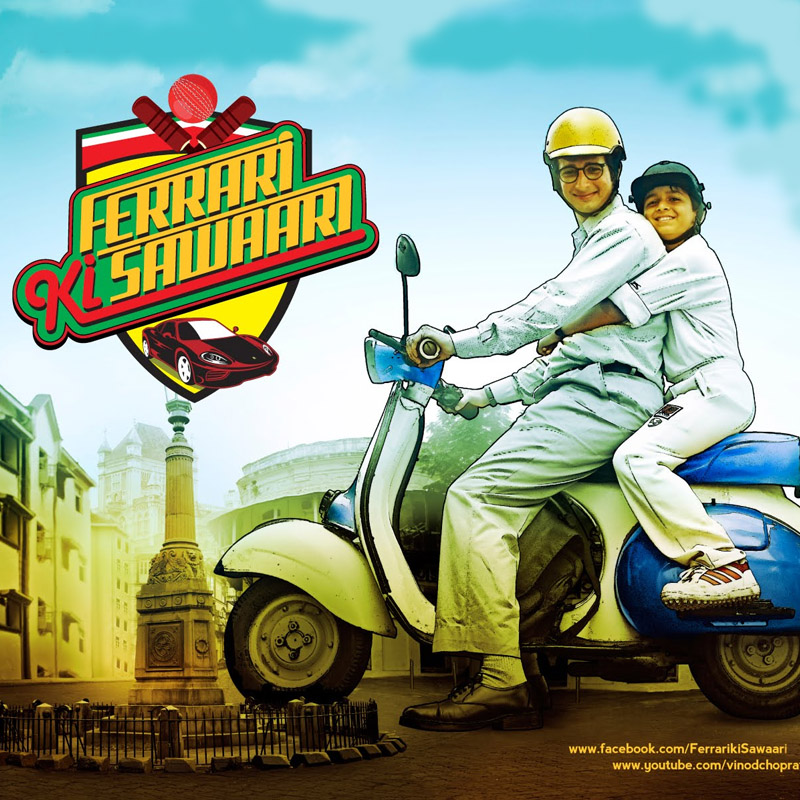
  • Ferrari Ki Sawaari is a rocky ride

    Ferrari Ki Sawaari is a rocky ride

    MUMBAI: When it comes to a sports film in India, the theme has to be ‘against all odds‘ and ‘the triumph of the underdog‘; people are always with the underdog. But Ferrari Ki Sawaari lingers somewhere between a children‘s film and a charade.


    Producer: Vidhu Vinod Chopra.
    Director: Rajesh Mapuskar.
    Cast: Sharman Joshi, Boman Irani, Ritwik Sahore, Deepak Shirke, Satyadeep Mishra, Seema Bhargava,
    Aakash Dhabade, Nilesh Divekar, Vijay Nikam, Paresh Rawal, Vidya Balan (Friendly appearance).

    It is about a young lad, Ritwik Sahore, who has the potential to become the next superstar of cricket, his determined father, Sharman Joshi, who is willing to invest his last rupee to encourage his son, and the grandfather, Boman Irani, who hates anything cricket. There is no angle provided for a female actor in the story.

    Sharman Joshi, as he proudly introduces himself, is the head clerk at the RTO in Mumbai. He is so honest he finds a cop to pay the fine when he has to break a signal and nobody has seen him do it. He often helps the traffic police clear traffic jams. His son, Ritwik Sahore, loves cricket and also shows great potential to make it big someday. Sharman spares no efforts to get what his son needs in pursuit of cricket. That is, when he watches his son checking a bat out at a sport shop and putting it back after seeing its price tag, Sharman puts together the money from all his hiding places, including breaking the piggy bank. The bat cost Rs 2800 and he manages to buy it but then comes an impossible demand. Ritwik has been chosen for a coaching camp at Lords and the fees amount to Rs 150,000.

    Boman Irani is no help as he has a past related to cricket which is not very pleasant and, as such, he does not let his son Sharman take up the game and also discourages his grandson from it. Boman Irani, it turns out, was a Mumbai Ranji level player along with Paresh Rawal. Both had merits to make it in the Indian team but there was place only for one of them. On the day of selection, Rawal plays dirty and smashes Irani‘s specs. Unable to spot a bouncer, Irani loses his sight in one eye. Since then, he has been sulking, spending his days on the sofa in front of a TV and munching peanuts. (Somehow, he has managed to marry and produce a child in Sharman in the meantime.)

    Just when Sharman is mulling over the problem of raising Rs 150,000, in walks Seema Bhargava, an as- loud-as-they-come Punjabi wedding planner. One of her clients is a municipal corporator who wants his son‘s baraat to ride in a Ferrari instead of the traditional horse. The car he wants to ride in is one piece in Mumbai and is owned by Sachin Tendulkar. If Sharman manages to borrow Tendulkar‘s Ferrari using Boman Irani‘s contacts, there is Rs 150,000 in it for him. Sharman reaches Tendulkar‘s apartment and from behind the door he is handed the car keys. It seems he has been mistaken for the car wash guy and handed the key. Tendulkar has a number of cars but it looks like Ferrari is the only he cares to wash!

    Sharman drives the car away to make his Rs 150,000 but leaves two very worried men behind, Tendulkar‘s domestic help, Aakash Dabhade, and the building watchman, Deepak Shirke. The duo has a few hours to trace the Ferrari before its owner arrives from his trip. As the two go around looking for the car on Shirke‘s moped they account for some funny moments in the mishmash that follows.

    Meanwhile, Sharman Joshi has managed to make Boman Irani come to terms with the fact that Ritwik is extremely gifted. He bowls to Ritwik and sees his talent for himself. He now joins the efforts to see his grandson through to his Lords trip. The money is lost and then found again, the corporator‘s son wants to get even with his father for always showing him a gun, and so on: such things carry on in an attempt to make Ferrari Ki Sawaari funny with little success. Eventually, the film drags. Ideally the duration should have been 90 to 100 minutes instead of the 139-minute running time it now has.

    Ferrari Ki Sawaari is a one track story about a father and son and the latter‘s ambition. Side tracks don‘t make up for the sagging script. There is no female lead in the film; Sharman is a widower tending to his son as well as father. There is no scope for romance or music that may stay with a viewer. Direction is not up the mark with too many loose ends; one can‘t make things brighter by lighting up an entire Parsi colony for Christmas if the spark is missing in the content.

    Editing is shoddy. Sharman Joshi comes up with a sincere performance though his role offers little variations. Boman Irani, made up to look a frustrated loser, is his usual self but without any funny lines. Ritwik Sahore is the best of the lot, natural all through. Satyadeep Mishra as the coach is good. Seema Bhargava as the loud Punjabi is rank bad. Aakash Dabhade and Deepak Shirke are very good. Vijay Nikam and Nilesh Divekar are good but with sectional appeal as they play typical rogue family. Paresh Rawal in a cameo is okay. Vidya Balan‘s item number lacks in both, visual as well as audio appeal.

    Ferrari Ki Sawaari is a funny film that fails to entertain; it is neither a fully children‘s film nor family fare. It faces a tough time at the box office.