Tag: sachin khedekar

  • SonyLIV launches PlayAlong in Hindi, Marathi, Telugu formats

    SonyLIV launches PlayAlong in Hindi, Marathi, Telugu formats

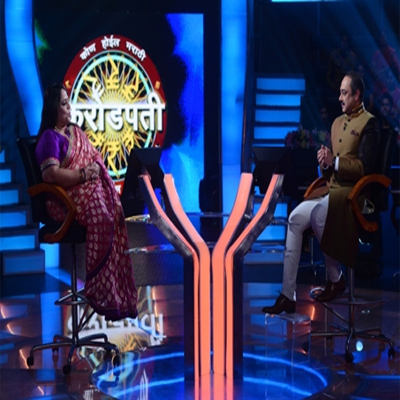
    Mumbai: SonyLIV has launched its second screen initiative – ‘PlayAlong’ in Hindi, Marathi, and Telugu formats for the new seasons of “Kaun Banega Crorepati” (KBC), “Kon Honaar Crorepati” (KHC) and “Evaru Meelo Koteeswarulu” (EMK) airing on Sony Entertainment Television, Sony Marathi and, Gemini TV respectively.

    PlayAlong gives viewers the opportunity to win prizes worth lakhs by answering questions fielded by Amitabh Bachchan, Sachin Khedekar, and NTR in their respective shows. Users need to download and register on SonyLIV to participate in PlayAlong, said the platform in a statement.

    “Capturing a diverse set of audience KBC, KHC and EMK have been the most preferred gaming reality shows,” said Sony Pictures Networks India, business operations – digital business, Amogh Dusad. “Not only do the viewers get a chance to be on the hot seat, but they also stand to win a multitude of cash gratifications every day including a chance to become lakhpati.”

  • ‘Ghayal Once Again:’ Much mellowed

    ‘Ghayal Once Again:’ Much mellowed

    Ghayal Once Again can be termed as a true sequel as the film connects with Sunny Deol starrer Ghayalreleased in 1990. In that era, a suppressed common man’s outburst against a mighty criminal (Amrish Puri inGhayal) who has the politicians and the system at his command was palatable.

    Sunny is back after serving 14 years in prison. He gets flashbacks of past which Soha Ali Khan, a doctor keeps in control with instant medication. Sunny has now turned a vigilante, runs a newspaper called Satyakam, which publishes real news sans sensationalism. He has a loyal team around him, which shares his spirit and purpose. Sunny is now a much admired person with a great following among youth.

    Om Puri is now a retired cop who has become an RTI activist. Puri has come across some material, which can virtually destroy the tycoon, Narendra Jha, who accumulates wealth through illegal means. Jha has the local home minister and, through him, the entire police force in his pocket. Puri is called for a meeting where an argument ensues and Jha’s drug addict and violent son, Abhilash Kumar, shoots down Puri. This is made to look like a road accident. 

    Unknown to Jha and company the whole shooting incident has been shot on a cell phone of a bunch of students out to take pictures and videos of some rare birds. But, the guardians of the kids know how powerful Jha is and handover the video to him.

    However, one of the girls from this group of four, thought it prudent to make a copy of the video, which they plan to handover to Sunny. But, it seems Jha has the entire city under video surveillance as well as the phones taped of anybody who can harm him. As Sunny and the students decide to meet up, Jha lets loose his foreign mercenaries, no less, on the kids. There is a long chase through the city roads in cars and later through a shopping mall. All beamed live in Jha’s room. But, Sunny reaches in time and saves kid. 

    A lot follows, the students are now kidnapped and kept under vigil at Jha’s fortress like mansion surrounded by Jha’s own army as well as the entire police force of the city. Now it is for Sunny to get them out. And, as Sunny is wont to do, he becomes a one man army, as usual, preferring hand to hand fight against multiple guns.

    The problem with Ghayal Once Again is that it follows the same theme that worked in 1990 when a lot of anti-establish feelings prevailed. Also, Sunny was the leading action hero around as his contemporaries, Anil Kapoor and Jackie Shroff, did varied roles. Now, just about everybody does action films thanks to technology. The story is old-fashioned about one powerful man calling shots in a major metropolis like Mumbai; it does not convince anymore. 

    From the moment film begins till the chase sequence the film holds only to become predictable thereafter. The action scenes become repetitive. Cinematography by veteran Ravi Yadav is competent. Editing wise, the film needed some sharp trimming. Music, having no scope, does not quite work. Performance wise, the Sunny – Soha pair is odd despite their love being silent. Sunny is his usual self doing Ghayal again while Soha has little scope. While the students all do well, Ramesh Deo, Manoj Joshi, Tisca Chopra, and Sachin Khedekar are okay. The villain duo, Jha and Abhilash, is effective. 

    Ghayal Once Again hasn’t had an encouraging opening. It caters to single screen masses mainly of which not many are left.

    Producer: Dharmendra
    Director: Sunny Deol
    Cast: Sunny Deol, Soha Ali Khan, Om Puri, narednra Jha, Manoj Joshi, Tisca Chopra, Sachin Khedekar, Nadira Babbar, Abhilash Kumar

    ‘Sanam Teri Kasam:’ Of unseen villain

    An early cancer as a part of a love story was Dil Ek Mandir, a Meena Kumari, Rajendra Kumar, Rajkumar film. There it was a love triangle. However, the Hollywood hit, Love Story (1970), based on Erich Segal’s novel of the same name, set a trend for star-crossed romances where one of the protagonists is afflicted by cancer. Immediately thereafter in 1971, there followed a film with cancer as the main theme in Hrishikesh Mukherjee’sAnand, though this was not a love story or a triangle. Love Story finally inspired Rajshri’s musical hit, Ankhiyon Ke Jharokhon Se in 1978.

    Hrishikesh Mukherjee’s other foray in this theme, Mili, failed despite a memorable musical score and the reigning stars of the day, Amitabh Bachchan and Jaya Bachchan, in the cast. There may have been a few more films on the theme but none made a mark. 

    In Sanam Teri Kasam, Harshwardhan Rane inherits a flat from one Julie aunty in a building society occupied by creatures from era gone by. No explanation is offered for the deceased aunt’s largesse. Rane is projected as some sort of a stud for he has a new woman in his bed each night and they are Page 3 girls. How, why? 

    Rane is like a 1950s romantic hero. He is never seen making a living. All he does is guzzle alcohol, chase romance and is busy suppressing his past tragedies. He has spent eight years in jail for being accused of a murder at the age of 14. Cinematic liberty allows you to consign a 14 year old to eight years in prison. 

    Luckily for him, there lives a Tamil-Brahmin family in his society, the head of which also lives in 1950 or probably before that. The family has two daughters of which the older one, Mawra Hocane (Mawra Hussain originally) looks like what we call a geek today. She is bespectacled, with a figure like a walking stick, and her father adds to the unpalatable look by rubbing incense stick ash on her forehead. She works as a librarian. 

    To cut a story short, Mawra’s younger sister can’t marry till Mawra does, but there are no takers for her. She promises her sister that she will clear her way and visits Rane at 4 am in the morning to seek his help to get her a makeover from one of his girls who figures as a top rated makeover artist. What follows is a scandal. Mawra is branded for being in a debauch’s house at an unearthly hour. She is disowned by her family! 

    Rane now becomes her caretaker.

    The rest of the film is like a silent movie since none of the characters say what they want to say but say everything else. It is hackneyed to say the list. Mawra is supposed to be a very intelligent girl, well read, but can’t read Rane’s feelings for her. Rane has been with numerous girls but can’t express his love for Hocane. He even works on getting her married to an IIT-IIM guy because that was what her family wanted! 

    Finally, when they realize they are in love, cancer plays the villain. Mawra has limited time to live. Hence, in what has become traditional now, Rane marries her before she dies.

    The script of the film is like a remix thing as is done with music albums. It borrows from a number of films from the past. This is not limited to just the script; direction also follows the beaten path, hugely clichéd. For this film with newcomers with little of known supporting cast, its 155 minute run is not justified and, what is more, makes it feel like never-ending. Dialogue is mundane except on two occasions. With limited locations, the cinematography is average. The one positive with the film is the musical score by Himesh Reshammiya if it can help at all. Editing is non-existent. 

    While Mawra is a perpetual wronged crybaby in the film, Rane refuses to either cry or laugh; he prefers to carry one single expression throughout. Rest in the cast are incidental.

    Sanam Teri Kasam is an insipid movie with scant appeal.

    Producer: Deepak Mukut
    Directors: Radhika Rao, Vinay Sapru
    Cast: Harshvardhan Rane, Mawra Hocane, Murli Sharma, Vijay Raaz, Sudesh Berry

  • ‘Ghayal Once Again:’ Much mellowed

    ‘Ghayal Once Again:’ Much mellowed

    Ghayal Once Again can be termed as a true sequel as the film connects with Sunny Deol starrer Ghayalreleased in 1990. In that era, a suppressed common man’s outburst against a mighty criminal (Amrish Puri inGhayal) who has the politicians and the system at his command was palatable.

    Sunny is back after serving 14 years in prison. He gets flashbacks of past which Soha Ali Khan, a doctor keeps in control with instant medication. Sunny has now turned a vigilante, runs a newspaper called Satyakam, which publishes real news sans sensationalism. He has a loyal team around him, which shares his spirit and purpose. Sunny is now a much admired person with a great following among youth.

    Om Puri is now a retired cop who has become an RTI activist. Puri has come across some material, which can virtually destroy the tycoon, Narendra Jha, who accumulates wealth through illegal means. Jha has the local home minister and, through him, the entire police force in his pocket. Puri is called for a meeting where an argument ensues and Jha’s drug addict and violent son, Abhilash Kumar, shoots down Puri. This is made to look like a road accident. 

    Unknown to Jha and company the whole shooting incident has been shot on a cell phone of a bunch of students out to take pictures and videos of some rare birds. But, the guardians of the kids know how powerful Jha is and handover the video to him.

    However, one of the girls from this group of four, thought it prudent to make a copy of the video, which they plan to handover to Sunny. But, it seems Jha has the entire city under video surveillance as well as the phones taped of anybody who can harm him. As Sunny and the students decide to meet up, Jha lets loose his foreign mercenaries, no less, on the kids. There is a long chase through the city roads in cars and later through a shopping mall. All beamed live in Jha’s room. But, Sunny reaches in time and saves kid. 

    A lot follows, the students are now kidnapped and kept under vigil at Jha’s fortress like mansion surrounded by Jha’s own army as well as the entire police force of the city. Now it is for Sunny to get them out. And, as Sunny is wont to do, he becomes a one man army, as usual, preferring hand to hand fight against multiple guns.

    The problem with Ghayal Once Again is that it follows the same theme that worked in 1990 when a lot of anti-establish feelings prevailed. Also, Sunny was the leading action hero around as his contemporaries, Anil Kapoor and Jackie Shroff, did varied roles. Now, just about everybody does action films thanks to technology. The story is old-fashioned about one powerful man calling shots in a major metropolis like Mumbai; it does not convince anymore. 

    From the moment film begins till the chase sequence the film holds only to become predictable thereafter. The action scenes become repetitive. Cinematography by veteran Ravi Yadav is competent. Editing wise, the film needed some sharp trimming. Music, having no scope, does not quite work. Performance wise, the Sunny – Soha pair is odd despite their love being silent. Sunny is his usual self doing Ghayal again while Soha has little scope. While the students all do well, Ramesh Deo, Manoj Joshi, Tisca Chopra, and Sachin Khedekar are okay. The villain duo, Jha and Abhilash, is effective. 

    Ghayal Once Again hasn’t had an encouraging opening. It caters to single screen masses mainly of which not many are left.

    Producer: Dharmendra
    Director: Sunny Deol
    Cast: Sunny Deol, Soha Ali Khan, Om Puri, narednra Jha, Manoj Joshi, Tisca Chopra, Sachin Khedekar, Nadira Babbar, Abhilash Kumar

    ‘Sanam Teri Kasam:’ Of unseen villain

    An early cancer as a part of a love story was Dil Ek Mandir, a Meena Kumari, Rajendra Kumar, Rajkumar film. There it was a love triangle. However, the Hollywood hit, Love Story (1970), based on Erich Segal’s novel of the same name, set a trend for star-crossed romances where one of the protagonists is afflicted by cancer. Immediately thereafter in 1971, there followed a film with cancer as the main theme in Hrishikesh Mukherjee’sAnand, though this was not a love story or a triangle. Love Story finally inspired Rajshri’s musical hit, Ankhiyon Ke Jharokhon Se in 1978.

    Hrishikesh Mukherjee’s other foray in this theme, Mili, failed despite a memorable musical score and the reigning stars of the day, Amitabh Bachchan and Jaya Bachchan, in the cast. There may have been a few more films on the theme but none made a mark. 

    In Sanam Teri Kasam, Harshwardhan Rane inherits a flat from one Julie aunty in a building society occupied by creatures from era gone by. No explanation is offered for the deceased aunt’s largesse. Rane is projected as some sort of a stud for he has a new woman in his bed each night and they are Page 3 girls. How, why? 

    Rane is like a 1950s romantic hero. He is never seen making a living. All he does is guzzle alcohol, chase romance and is busy suppressing his past tragedies. He has spent eight years in jail for being accused of a murder at the age of 14. Cinematic liberty allows you to consign a 14 year old to eight years in prison. 

    Luckily for him, there lives a Tamil-Brahmin family in his society, the head of which also lives in 1950 or probably before that. The family has two daughters of which the older one, Mawra Hocane (Mawra Hussain originally) looks like what we call a geek today. She is bespectacled, with a figure like a walking stick, and her father adds to the unpalatable look by rubbing incense stick ash on her forehead. She works as a librarian. 

    To cut a story short, Mawra’s younger sister can’t marry till Mawra does, but there are no takers for her. She promises her sister that she will clear her way and visits Rane at 4 am in the morning to seek his help to get her a makeover from one of his girls who figures as a top rated makeover artist. What follows is a scandal. Mawra is branded for being in a debauch’s house at an unearthly hour. She is disowned by her family! 

    Rane now becomes her caretaker.

    The rest of the film is like a silent movie since none of the characters say what they want to say but say everything else. It is hackneyed to say the list. Mawra is supposed to be a very intelligent girl, well read, but can’t read Rane’s feelings for her. Rane has been with numerous girls but can’t express his love for Hocane. He even works on getting her married to an IIT-IIM guy because that was what her family wanted! 

    Finally, when they realize they are in love, cancer plays the villain. Mawra has limited time to live. Hence, in what has become traditional now, Rane marries her before she dies.

    The script of the film is like a remix thing as is done with music albums. It borrows from a number of films from the past. This is not limited to just the script; direction also follows the beaten path, hugely clichéd. For this film with newcomers with little of known supporting cast, its 155 minute run is not justified and, what is more, makes it feel like never-ending. Dialogue is mundane except on two occasions. With limited locations, the cinematography is average. The one positive with the film is the musical score by Himesh Reshammiya if it can help at all. Editing is non-existent. 

    While Mawra is a perpetual wronged crybaby in the film, Rane refuses to either cry or laugh; he prefers to carry one single expression throughout. Rest in the cast are incidental.

    Sanam Teri Kasam is an insipid movie with scant appeal.

    Producer: Deepak Mukut
    Directors: Radhika Rao, Vinay Sapru
    Cast: Harshvardhan Rane, Mawra Hocane, Murli Sharma, Vijay Raaz, Sudesh Berry

  • Tap your feet with the Marathi dance drama – ‘Aayna ka Bayna’

    Tap your feet with the Marathi dance drama – ‘Aayna ka Bayna’

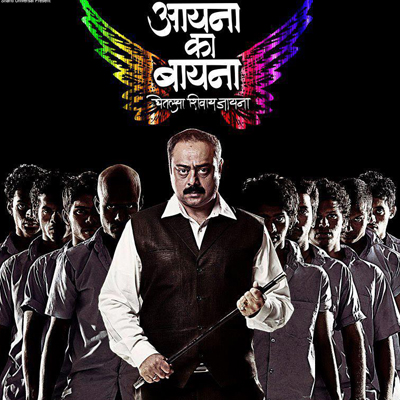
    MUMBAI:  Max, the premium Hindi movies and special events channel brings to you the World Television premiere of the Marathi dubbed musical entertainer ‘Aayna ka Bayna‘ on Saturday 29 November at 8 pm.


    Directed by Samit Kakkad and with actor Sachin Khedekar in a lead role, the movie revolves around the transformational power of dance for 9 adolescents stuck in a remand home.


    Commenting on showcasing a Marathi movie dubbed in Hindi, Udayan Pradeep Shukla, Vice President & Head – Programming at MAX & MAX2, “Marathi cinema has evolved over the years.  With a huge demand for regional cinema, we thought it fitting to showcase a film that is topical and one that audiences can easily relate to.  ‘Aayna ka Bayna’ is one critically acclaimed film which has received global recognition whilst appealing to Indian audiences. It sure is a visual treat and we hope that it resonates with our viewers.

  • ETV Marathi’s Crorepati eyes double bonanza in Season II

    MUMBAI: Viacom 18 took its first bold step in the regional space after acquiring a clutch of ETV channels by introducing one of India’s biggest and boldest non-fiction shows on its Marathi channel. Thus, Kaun Banega Crorepati became Kon Hoeel Marathi Crorepati on ETV Marathi. Now back for a second run, just four months after the last season ended, the channel is looking at increasing its cash inflow as well as eyeballs from the flagship show.


    The second season will see Sachin Khedekar back as host but facing not one, but two contestants as the theme this year is about couples or jodis. The prize money has also been doubled to Rs 2 crore. “The dynamic of two people changes a lot of things. These two people may be anyone in a family,” says BIG Synergy MD Siddhartha Basu.


    A huge marketing campaign had rolled out on TV and radio about four weeks ago emphasising on the number ‘two’ that is the theme. 


    The print campaign will strike on 13 January, the day the show launches. A digital app is expected to roll out soon after the launch of the show that will try to engage the younger audiences through social media. With the response it received from season 1, this time the channel has gone overboard on its marketing, spending nearly about Rs 4 to Rs 5 crore.


    Airing on Monday and Tuesday from 9:00 pm to 10:30 pm, it will replace two shows on these two days, which will now air four times a week. The current season is expected to run for three months with 36 episodes in all. According to sources, the cost of production is approximately Rs 8-10 crore for season two.


    The studio set up was created in Film City in December and six episodes have been shot so far with average shoot hours daily totting up to 12 hours.


    Last season, KHMC garnered about 3 TRPs and this time the channel is looking at starting off at that and doubling it amongst Marathi speaking audiences.  “It is worthy to say that nonfiction shows don’t really get such high ratings in languages,” says Viacom 18 EVP and business head Anuj Poddar. Last year KHMC doubled the channel’s overall ratings.


    Conversations are on with a slew of advertisers and sponsors, with Lever brand Clinic plus already coming on board as the presenting sponsor and the target is to reach about five to six advertisers, this time. The average per 10 second rate for commercials has been pegged at Rs 70,000 that is about 60 to 70 per cent higher than last year.


    Although only Marathi speaking people are allowed to participate in the show, it has seen a 50 per cent increase in the participants claims the channel.


    “The show is a very generous one. Our average pay out per episode is about Rs 6.5 lakh,” says Basu. “With growing viewership not just broadcasters but also advertisers and sponsors are also putting their money into such formats. A broadcaster takes it as a game changer and it is a huge investment for him as well.”


    The targets it has set for itself are high but will the channel be able to live up to its own as well as the people’s expectations? We will soon find out as it launches this Monday.

  • Endemol India partners with Fox Star Studios on a movie

    Endemol India partners with Fox Star Studios on a movie

    MUMBAI: Endemol India has collaborated with Fox Star Studios for an emotional thriller, Traffic. This marks the foray of Endemol into the Hindi film industry and will be produced under the banner “Eyedentity Motion Pictures” – the film arm of Endemol India.


    Traffic, the Hindi adaptation of the critically acclaimed Malayalam blockbuster will release on 7 March, 2014. Based on a true life incident the film marks the coming together of an ensemble cast of Manoj Bajpai and Jimmy Shergill in the lead roles along with Bengali superstar Prosenjit, Parambrata (of Kaahani fame), Divya Dutta, Kitu Gidwani and Sachin Khedekar playing pivotal roles. The film will also see the debut of talented young actor Amol Parasher and Vishal Singh in critical roles.


    Endemol India MD and CEO Deepak Dhar said, “With Traffic, Endemol enters the Hindi film sphere and we are fortunate to have partnered with Fox Star Studios for such an incredible script that involves a diverse mix of characters caught in an unlikely situation. Brought to life by a brilliant screenplay that pits together all the characters in a race against time, the incredible casting is bound to keep the audiences hooked till the end.”


    Directed by national award winning film maker Rajesh Pillai, who also directed the original in Malayalam, the movie showcases a high voltage drama and a battle against time when stakes run high and life is in danger. What sets Traffic apart from other films is the fact that as an emotional thriller, it will also introduce the audiences to an altogether new genre of entertainment.


    Traffic has been adapted in Hindi by Suresh Nair with music by Mithoon.


    Fox Star Studios CEO Vijay Singh added, “We are excited to have partnered with Endemol India as they debut in the Indian film industry. Traffic comes with tremendous credentials – National award winning director plus commercial & critical success in Malayalam – it promises to be an emotionally thrilling experience! At Fox Star Studios, our endeavour has been to support path breaking entertaining cinema. We believe in the story of Traffic and that it must be told to a wide audience. Audiences today are seeking new and distinctive content and we continue to strive to deliver films that capture the imagination. The film is the first up on our slate for 2014 that will feature mega productions, massy entertainers and clutter breaking films.”

  • Bittoo Boss lacks in content and imagination

    Bittoo Boss lacks in content and imagination

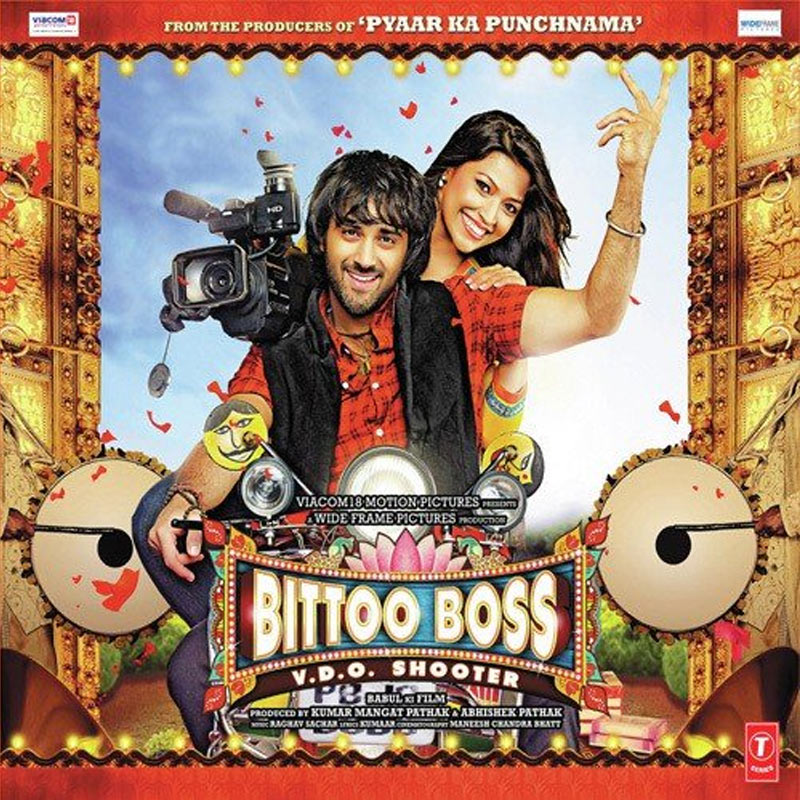
    MUMBAI: Bittoo Boss is an attempt at making one of those cute movies that work once in a while. It is about an innocent and hard working but confident boy and a rich, with-it girl.

    Pulkit Samrat is a videographer covering weddings. He has made a reputation for having a special knack for capturing the spirit and happiness around wedding events. So much so that muhurat would be overlooked if he was late to arrive at the venue.


    Producers: Kumar Mangat Pathak, Abhishek Pathak.
    Director: Supavitra Babul.
    Pulkit Samrat, Amita Pathak.

    But Pulkit Samrat is a hero right out of 1960s films, a simpleton and clean of heart. At one such wedding he sees Amita Pathak and is besotted by her.

    Soon, he is chasing her instead of chasing work. But the taming of the shrew is not easy; she will have none of his charming ways until, finally, she sees a video shot by him and as a result reciprocates his love! Coming from a rich, high society family, however, she wants him to do something more worthy and attain monetary success. With intent to help him out, she uses her own clout at a local TV channel to get him work but only manages to get him humiliated.

    Samrat, now determined to make it big, agrees to shoot porn films of honeymoon couples on the sly but the good soul that he is, he ends up doing something good for his targeted victims. Like in old fashioned films, in a couple of short sequences at the end, not only does the hero paint those who Amita Pathak called high society black but he also ends up with a lucrative contract and a fat cheque from Mohan Kapoor, whose daughter‘s honour he had protected.

    Bittoo Boss is a low budget film but that does not justify its low in content and imagination story and treatment. Using a lot of local Punjabi flavour and accent, its standard of narration is cheap.

    The idea of comedy in the film is half a dozen girls vying with each other to tell the hero, ‘meri kab lega!‘ Musically ‘Kaun kenda ..‘ is a hummable number. Photography is passable. Editing is slack. Dialogue is routine. In performance, Pukit Samrat is impressive this being his first film. Amita Pathak is not heroine material. Rest are okay.

    Bittoo Boss is not the cute movie it thinks it is and will find it tough to sustain come day two after release.

     
    Chhodo Kal Ki Baatein has limited appeal


    Producers: Balasaheb Bhapkar, Shashank Bhapkar.
    Director: Pramod Joshi.
    Stars: Anupam Kher, Sachin Khedeekar, Mrinalini Kulkarni, Atul Parchure, Anajan Shrivastav, Suresh Menon, Vijay Parkar, Rajesh Vivek.

    Chhodo Kal Ki Baatein is a film on a contemporary businessman‘s life whose quest for success is never ending. So much so that he has no sense of priorities and neglects his family, his neighbours, and all social contact. There comes a time when his family revolts and he is left to fight the ghosts of his past acts.

    The film is based on the Hollywood film Groundhog Day.

    Sachin Khedekar is an IT professional who, having seen success, has got addicted to it and keeps on setting higher targets for him with every new success. For him the success is measured only in terms of the billions he can make. In the process, he has ignored his wife and a teenage daughter completely. His neighbours and their activities hardly exist for him except as a nuisance with their laughter club and cricket playing kids.

    Giving priority to his business meet over his daughter‘s arangetram is the last straw as his wife and daughter walk out on him leaving him alone for the weekend; Sachin Khedekar starts the weekend with his friend, Atul Parchure, visiting bars but come night, he finds himself in a trap where every morning he wakes up to see the same newspaper and same sequence of events repeating while he is anxious to see Monday when he will sign a new Rs 1 billion deal. As his ordeal continues, Khedekar sets out to find a solution and meets Anupam Kher. With Anupam Kher, Khedekar learns to find happiness in life through various small things that he overlooked all the time.

    The story is more personal and hence of limited appeal. Direction as well as the ambience is more Marathi-oriented since the film has also been made in Marathi. Performance wise, Sachin Khedekar is good while Anupam Kher excels.

  • Anupam Kher’s Marathi film debut to release on 12 April

    Anupam Kher’s Marathi film debut to release on 12 April

    MUMBAI: Anupam Kher makes his debut in Marathi films with director Pramod Joshi’s Kashala Udyachi Baat. The film has also been made in Hindi titled Chhodo Kal Ki Batein.

    Kher essays the role of a bind man in the film that shows the journey of an IT professional from his workaholic stage where he always craves for more, to a stage where he is satisfied and content and living the present.

    During this journey he comes across a charismatic blind man who makes him understand the importance of living life wholeheartedly. The film is a feel good cinema suiting all ages.

    Talking of his role, the 56-year-old Kher said: “When you play the role of a physically disabled or differently-abled person, you discover how brilliantly people who are differently-abled live their lives.”

    Written and directed by Pramod Joshi, the film stars Sachin Khedekar and Mrinal Kulkarni in the lead.

    The film is slated for release on 12 April.

  • A dated plot of honest cop vs corrupt politicians

    A dated plot of honest cop vs corrupt politicians


    Producer: Reliance Entertainment
    Director: Rohit Shetty
    Cast: Ajay Devgn, Prakash Raj, Kajal Aggarwal, Sachin Khedekar, Govind Namdeo, Ashok Saraf, Anant Jog, Murli Sharma, Sonali Kulkarni.


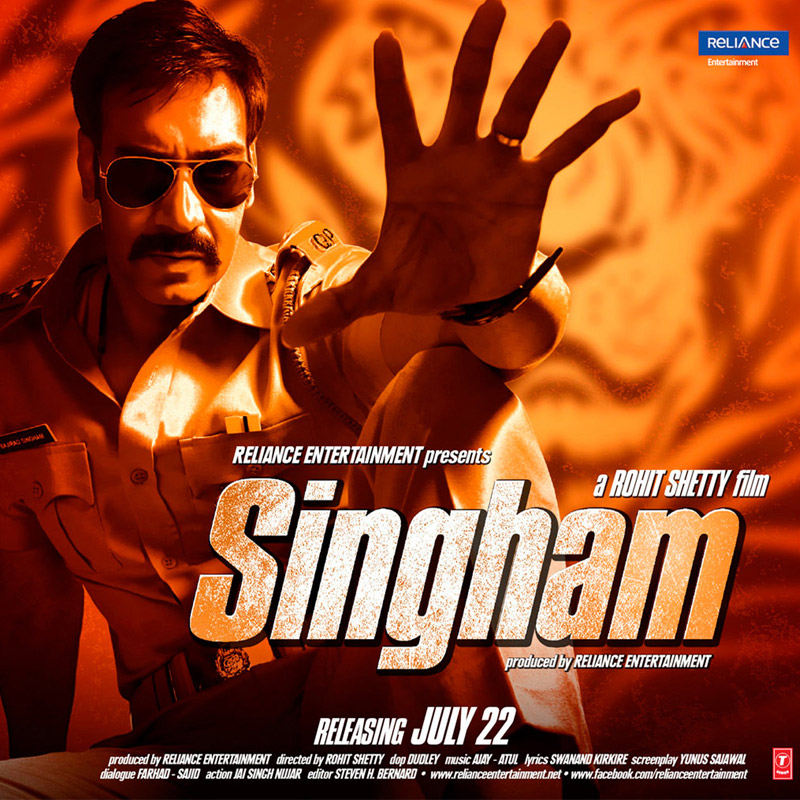
    MUMBAI: Singham is the remake of Reliance Entertainment‘s own Tamil film of the same name. While in Tamil the title translates as Lion, here it means nothing in particular but retained as surname for Ajay Devgn‘s screen name, Bajirao Singham. That is fine but why does a whole village including the protagonist, Ajay Devgn‘s father in the film, address him by his surname?


    The theme seems to be: Anything goes. South remakes usually seem to work very well at the box office holding appeal for both, the multiplex as well as the single screen audience, as has been seen by the universal acceptance and success of Ghajini, Wanted, Ready, etc.


    Singham follows the old fashioned honest cop vs. corrupt politicians theme and the name coined for this genre is ‘retro film‘.


    So there is this honest to core police officer, Ajay Devgn, who is posted in his native town called Shivgad on the edge of Goa state who settles all local disputes amicably rather than with the use of law. He has earned the love and respect of all and soon that of a girl also. He has had time to just prance around woods and imagine a romantic song when it is time to be a real man; He crosses paths with the scoundrel of scoundrels, killer, kidnapper, wannabe politician, the all powerful Prakash Raj.


    Ajay Devgn draws first blood, humiliating and cutting Prakash Raj down to size after calling him to his police station. The latter decides to shift the war to his turf and, thankfully, the film shifts to more watchable locales of Goa. The battles of one-upmanship are fought in true loud and gory style of South Indian films where villains never travel in a single car, they have a cavalcade of a dozen cars of the same model and colour; you could not have missed it if you have seen even a single South film.


    Ajay Devgn‘s action scenes are backed by the title chant of ‘Singham……Singham…‘ as he resorts to various kinds of somersaults and dives and as the cars go bouncing around in the air like tennis balls in the guise of stunts.


    The problem with Singham is, for its 2 hours and 24 minutes, all it has to offer is raw action and stunts which can get tiring after some time. There is little in the name of distractions. The film lacks romance, emotions, comedy and music. The claptrap dialogue which should go with this kind of action film are few and far in between.


    Director Rohit Shetty, having chosen a South film to remake, has stuck to the South look rather than polish it up in his own style. Also, the Marathi background was unnecessary! His action design is becoming very identifiable and looks similar to his earlier films.


    The film is basically an Ajay Devgn physique and action showcase vehicle and that is how having started his career as an action hero in Phool Aur Kaante, Ajay has only improved several notches in both, physique as well as action.


    Prakash Raj is getting more and more repetitive and his same turning comic at the end shatters the villain‘s image created through the film. Kajal Aggarwal, the leading lady, has but few scenes in a film that could very well have done without her. Among others, Sachin Khedekar, Govind Namdeo, Ashok Saraf, Anant Jog and Murli Sharma give good support.


    Singham has had a better opening response at single screens and Hindi belt circuits while not making a much needed impact at metro multiplexes. Considering that multiplexes contribute a sizeable chunk to a film‘s box office takings, so much the worse for this film.