Tag: Sab Group

  • SAB Group partners with DistroTV to expand global footprint

    SAB Group partners with DistroTV to expand global footprint

    Mumbai: Media and entertainment company Sri Adhikari Brothers (SAB) Group has partnered with California-based media technology company DistroScale to expand its footprint across the globe. DistroTV is an independent free ad-supported streaming television (FAST) platform and is available internationally.

    The group’s music and youth channel Mastiii, Bhojpuri channel Dabangg and Marathi music channel Maiboli will reach audiences in the UK, Europe, and the USA via DistroTV, said the media company in a statement on Monday.

    The channels will be part of DistroTV’s channel bundle called DistroTV Desi which offers more than 15 Southeast Asian channels for free. It offers viewers a variety of diverse content focusing on news, entertainment, and lifestyle geared towards the Southeast Asian (India, Pakistan, Bangladesh, Sri Lanka) population abroad, it added.

    “We are very happy to enter into this partnership which will enable us to reach foreign audiences and our Indian diaspora settled abroad. Our aim is to not only promote our network channels but also our country through the content we air globally,” said SAB Group business head Kailashnath Adhikari.

    “We are always looking to grow and diversify our channel content to meet the needs of our rapidly expanding audience,” said DistroScale chief executive officer Navdeep Saini. “This partnership with SAB Group is allowing us to do just that and we could not be more thrilled to have them join our 150+ growing channel line-up.”

    “Our growing audiences in the US, Canada, and the UK can now watch and enjoy the latest and retro Bollywood musical hits on Mastiii TV, available as a free live 24×7 channel on DistroTV on the web or any device,” stated DistroScale vice president of business development and content acquisition Rajesh Nair. 

  • “India is not yet developed to venture into TV pay model”: Sri Adhikari Brothers’ Markand Adhikari

    “India is not yet developed to venture into TV pay model”: Sri Adhikari Brothers’ Markand Adhikari

    15 September 1959 saw a small transmitter and a makeshift studio in a corner of Delhi give birth to terrestrial television. Decades later in 1990, India saw the arrival of private television channels. When saas-bahu dramas ruled, SAB TV is credited for putting a smile on the face of the Indian audience with the launch of India’s first and only comedy channel. After acquiring relevant experience in the fields of advertising, marketing and media publicity, Markand Adhikari, along with his late brother Gautam Adhikari, started Sri Adhikari Brothers (SAB) Group – in 1985 as a partnership firm. Later, it went on to become the first publicly-listed television production company in India when it was listed on the BSE in 1995.

    The company initially created regional language programs in Marathi and Gujarati and then moved on to producing Hindi programs on the Doordarshan. With the advent of satellite channels in India, SAB started producing serials for Zee TV. The group had numerous channels like SAB TV (now owned by Sony Networks), Mi Marathi & Mastii. The group made regional channels for rural parts of India like Dabangg, Dhamaal and Dillagi. The duo further forayed into films.

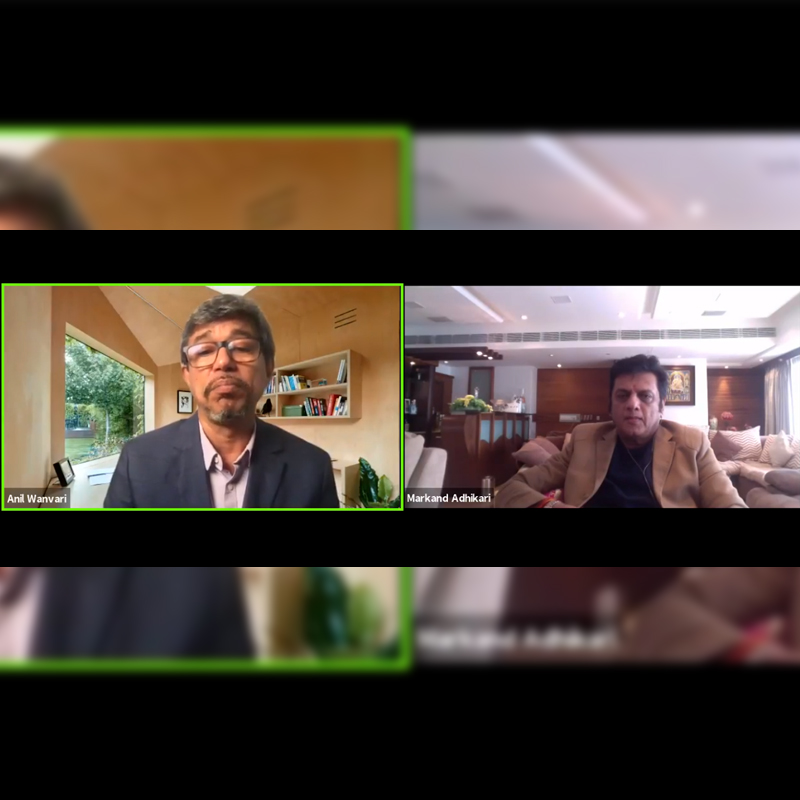
    Sri Adhikari Brothers co-founder Markand Adhikari, in an insightful fireside chat with indiantelevision.com founder, CEO and editor in chief Anil Wanvari, got candid about his journey, plan going forward, advertising and subscription model in television and more.

    Edited Excerpts:

    You have been a part of television industry for 40 decades; can you tell us more about your journey?

    When Doordarshan started in India, it only used to telecast an infotainment show called Krishi Darshan. When I was just a teenager, I met then information and broadcasting minister Vasant Sathe to discuss the chances of bringing commercial shows in India just like the west. At that time, he only asked me to look outside the window and asked me what do you see, I said I could see green trees and a colourful world. He explained to me about vision to bring colour television in India which was heavily criticised back then. Somehow, he accepted my proposal to create a show with Shashi Sharma. It started the era of sponsorship programs on television. We did sponsorship programs on Doordarshan for quite a few years then we ventured into regional space with LPTS (Low Power Transmission). We connected to the regional centres of Mumbai and Ahmedabad. Bandini became the first serial for Bombay Doordarshan. We carried a lot of shows for Doordarshan from the mid 80s to 1991.

    My late brother Gautam Adhikari’s name was registered in Limca book of world records for directing the maximum number of shows. I made Commander with Essel Group chairman Dr Subhash Chandra and I learned a lot from him. With the help of Jeetendra Kapoor (veteran Bollywood actor), I met Ketan Somaiya, a Nairobi-based entrepreneur who used to run an Asia channel in London with Amitabh Bachchan. We created a show called Waqt for him for $11,000 per episode and at that time import and export were free. The show had 52 episodes but due to some non-payment issues, the show was stalled at 26 episodes. After this, I again switched back to Doordarshan because Zee never used to give rights to the shows. DD Metro was recently launched where I did popular shows like Shriman Shrimati and All The Best. At that time, it was Rs 1,20,000 for 10-second spots on DD Metro. Doordarshan wanted us to make an afternoon soap within 15 days. I spoke to TV Asia about my 52 episodes out of which I was only paid for 26 episodes. I imported the pending episodes on half of the rate. Starting with 52 episodes I made Waqt Ki Raftaar which eventually had 600 episodes.

    What happened after you listed your company in 1995?

    Due to the Harshad Mehta Scam, the entire stock market suffered until 1998. Finally, in 1999 the economy was witnessing a boom then I realised it is the perfect time to start our own channel. The main challenge was we were always in production. Broadcasting was altogether a new experience. Our financial adviser only gave the plan of Rs 115 crore for the channel but to launch a channel it was too less. Then with the limited amount at my disposal, I started SAB TV in 2000. Again, due to Ketan Parikh’s scam, the economy was in shambles still we managed to run the channel for five years. We were a trend-setter by bringing a niche comedy channel. Sony Networks took over SAB in 2005, which till date is my biggest regret. However, I am happy that SAB is a big brand. After SAB TV we started two news channels Janmat and Mi Marathi which later I sold at a good price.

    What do you think about the future of television?

    Television in India is not going to die so soon, it will at least stay for another ten years. In the typical Indian household, it is still a culture to watch TV together. Most of the people are not aware of the multi-set concept or firesticks. However, one of the benefits with digital channels is that it is moving whereas television is static. Television is appointment viewing, on the other hand, digital is infinite. But digital requires a lot of capital investment. One cannot enter the digital market with a three-year plan.

    Are you looking at OTT content production?

    Our next-generation has already ventured to digital space with a series called Dheet Patangey that was uploaded on Disney+ Hotstar. It is directed by Gautam Adhikari’s son Ravi. My son Kailashnath and Ravi already have close to five shows which are almost done.

    Television is heavily dependent on advertisers; do you think subscription-based models will be a viable option in the long run?

    As far as television is concerned, I think in India most of the channels will be dependent on ad revenue. Also, I believe India is not yet developed to sustain on a pay model. There are broadcasters, MSO, semi-MSOs and then cable operators who collect money from individual households. So it has a lot of loopholes and layers in between which needs to be identified. There is a lack of transparency. At the same time advertising models will not work on digital platforms because audiences are now used to watching OTT content ad-free.

    What are your thoughts on IPL which is expected to happen during Diwali? Also, will it benefit all the channels or only sports channels?

    I believe it is good news; it is creating a moment with the advertising world and advertisers. IPL or any other cricket forms were running in the same manner as it was before Covid2019. Advertising spends were created keeping all the channels in mind; it was just not for sports channels. I don’t think so IPL will impact the revenue of any other channel.

    According to media planners, 30 per cent of advertising spends are kept for IPL, so do you think it will impact other channels?

    It is not a new scenario. In fact, it is a testing time for other channels, where we will get to see how they perform when IPL arrives.

  • SAB realigns Dhanda’s position as TV Vision CEO

    SAB realigns Dhanda’s position as TV Vision CEO

    MUMBAI: Sri Adhikari Brothers (SAB group) has realigned the position of Manav Dhanda as the CEO of company’s broadcasting business arm — TV Vision Ltd. 

    The development came after the recent board meeting of SAB group held on the 22 August, 2017 where it was noted, realignment of office of Dhanda as the CEO w.e.f from 31 August 2017, from Sri Adhikari Brothers Television Network Limited (SABTN) to its core business arm TV Vision Ltd.

    Dhanda, since his appointment, has managed to create and grow an umbrella brand SAB group and has actively been overseeing its subsidiaries and its businesses in the capacity as the company’s CEO. 

    In the larger interest of its stakeholders, he has now been entrusted with a greater responsibility to build and strengthen the core business — TV Vision.

    In addition to the above development, the board also appointed him as the additional non-executive director of SAB events and Governance Now Media Ltd, under the umbrella brand of SAB group.

    Simultaneously, Rakesh G. Jain has been appointed as the additional (Independent) director of SABTN.

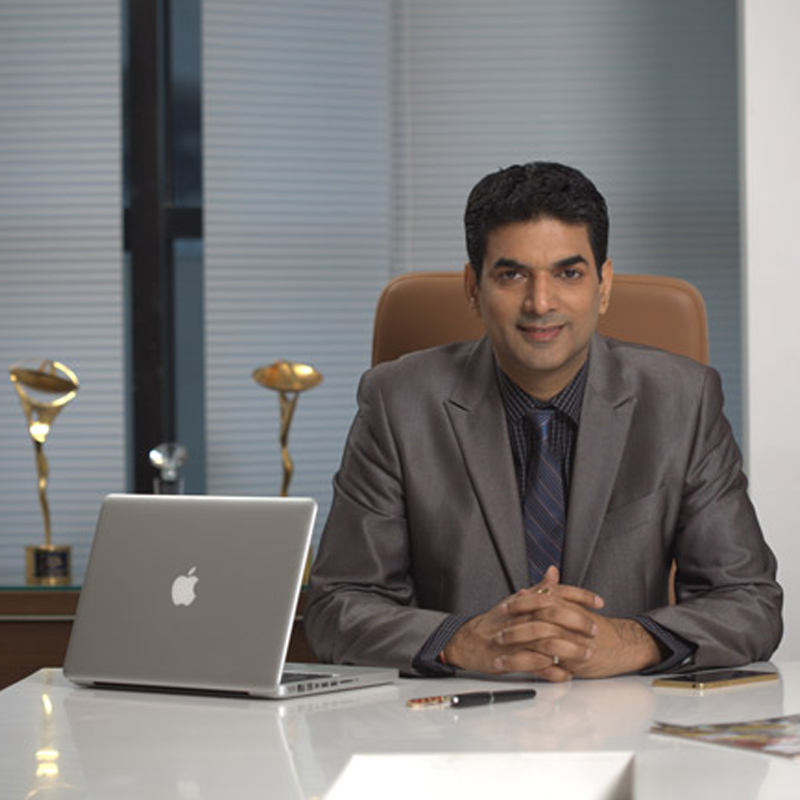
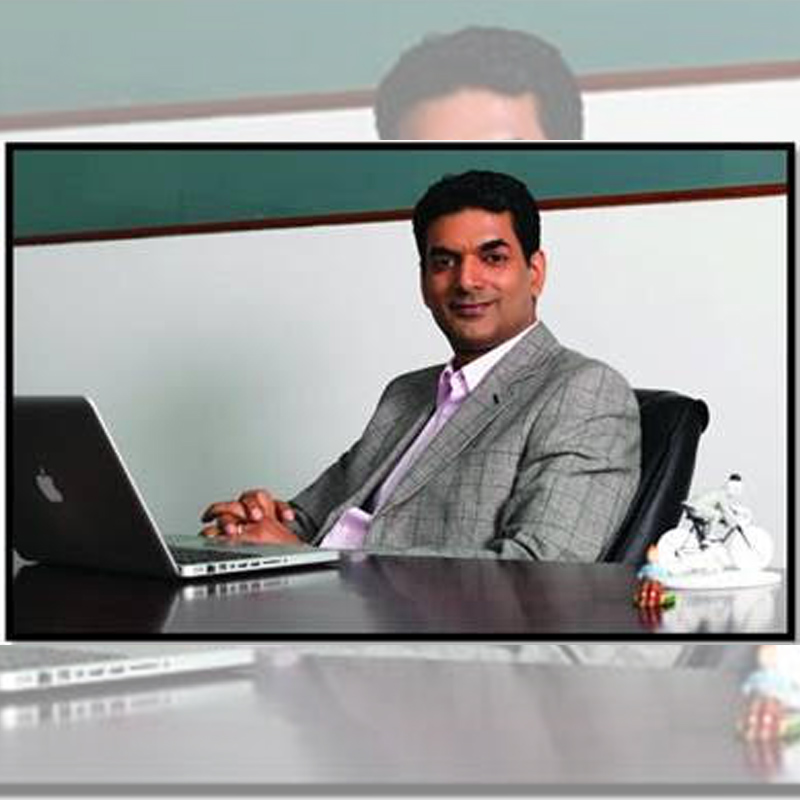
    SAB group vice chairman and managing director Markand Adhikari stated, “Manav has helped create a brand SAB group and contributed enormously to its growth. With our vision to expand and strengthen our broadcasting arm, we would want him to lead the broadcast business of the group i.e. TV Vision. This move has been attributed to formalise processes.”

    Also Read:

    Large Networks lead regional channels, programme ratings in weeks 1 to 8 of 2017

    SAB’s Happii-Fi to target multiple genres, gets 3m views online

  • Mastiii claims to give better cost vs RoI for advertisers

    MUMBAI: Mastiii has emerged as the topper in BARC week 24 and 25. Now, it is taking forth to advertisers its viewership strength claimed to be 238 million with Mastiii super prime time.’ This move claims to bring a more Cost vs ROI-conscious approach for advertisers.

    SABgroup CEO Manav Dhanda revealed, “97% of the Mastiii super prime time audience is also viewing Hindi GEC.” He claimed that their prime time was better than several prime time shows of some Hindi GECs.

    “The music genre reaches out to over 406 million viewers on an average monthly basis of which Mastiii commands 59 per cent share in the 2+ segment making it an important part of advertisers’ brand marketing portfolio,” he said.

    “Audience loyalty makes Mastiii slot of 8:30am to 10:30am a great opportunity for targeted advertising, along with their other high-reach mix of TV channels,” Dhanda added.

  • SAB’s Happii-Fi to target multiple genres, gets 3m views online

    SAB’s Happii-Fi to target multiple genres, gets 3m views online

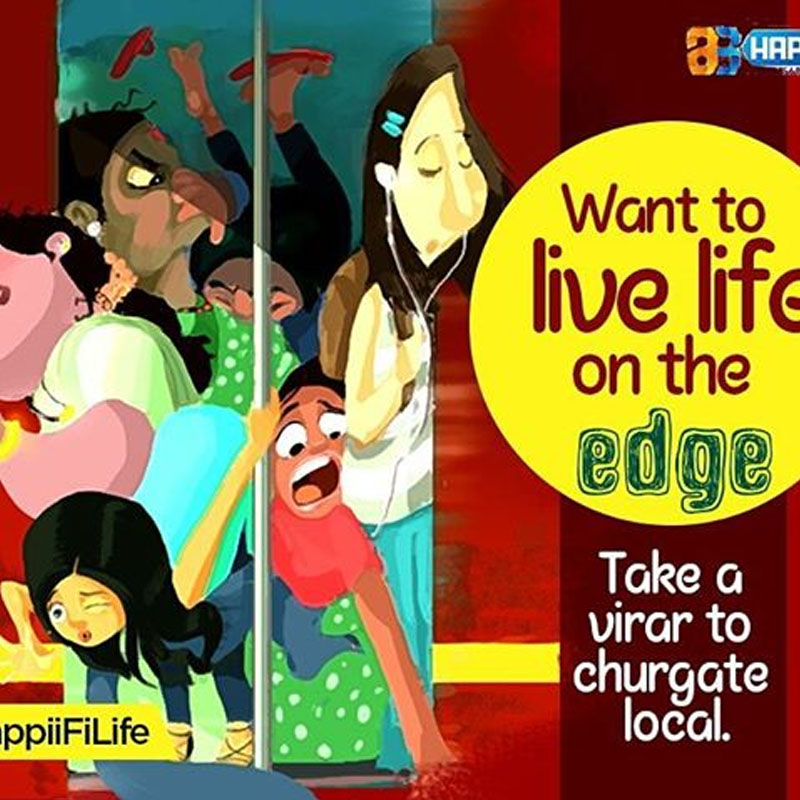
    MUMBAI: SAB Group’s digital initiative Happii-Fi has set the pace to become a front-runner in the original digital content game. With the digital audience in India growing rapidly SAB Group plans to aggressively expand Happii-Fi by coming up with comedy content in multiple genres like talk shows, web series, music, informative shows and more. The channel will also be releasing humorous music videos touching upon youth trends.

    The channel went live with four new enticing content pieces with a mix of digital videos starting 23 January 2017 and has achieved a whopping 3 million plus views and over 1 lakh organic subscribers in less than two weeks of the release of the first web episode.

    “Many Broadcasters are usually tempted to pump in money to get the targeted views and subscriptions, but we are glad that the content created by our in house team could grab the audience’s attention and organically grow the subscriptions to over one lakh with over three million views in less than two weeks. Since the beginning the objective of Happii-Fi has been not only to entertain but give the youth of the country a mix of content that they have not seen in India before & with this the, new and the future content promises to keep the entertainment quotient up and running high, helping Happii-Fi breakthrough the current digital clutter creating a market for itself in the digital world. We would also like to thank our partner “One Digital” an MCN for optimizing the channel and helping Happii-Fi carve its identity,” said SAB Group group CEO Manav Dhanda.

    The channel has started a new trend in the digital content space with its light hearted mix of content which is beyond the obvious web series and web episodes catering to a variety of audiences across demographics. Having come up with concepts like Bro-Court- a take on the life of engineering college students and their issues that are solved by Bro played by the YouTube sensation Bhuvan Bam, Janhit Mein Jaari – a show that talks about global current affairs giving it a humorous touch, Rat Race – an animated series revolving around rat friends working in a call center called rat race teleservices and Peepal Ka Pedh Party – an alternate take on the UP state elections lead played by Bhojpuri superstar Dinesh Lal Yadav whose fate takes an unusual twist when he is selected as the face of the new party ‘Peepal Ka Pedh Party’ floated by a corrupt, out of power minister.

    Happii-Fi has more such innovative concepts in the pipeline.

  • #BanoDheet to inspire youngsters to make a better India

    #BanoDheet to inspire youngsters to make a better India

    MUMBAI: Music and Youth channel Mastiii has launched an awareness initiative by the name of Karo Theek #BanoDheet as part of its resolve to bring about a positive change in society this New Year.

    The campaign was flagged off on 26 December 2016 and focuses on making the youth ‘Dheet’ to not just bring about a change in themselves, but also in around everyone around them, thus targeting the entire nation.

    The campaign was conceptualized and produced internally by the young team of SAB group. It will be spread through four TVCs telecasted on all the channels of the network, including Mastiii, Dabangg, Dhamaal Gujarat, Maiboli & Dillagi. The campaign is expected to have a reach of about 173 million viewers in India.

    As #BanoDheet wants to build awareness and instill the thought of being stubborn to achieve a larger goal of pushing the youth to make a better India, it has taken into consideration four key pressing issues out of a bouquet of concerns in the country: Eve Teasing, Corruption, Littering and Drinking & Driving.

    Each concern is portrayed through impactful and thought provoking TVCs which instill the thought that one should not be passive anymore but should be stubborn and bold to do or make others do the right thing when the time calls for it.

    The campaign tries to evoke the passion within the youth of India to do what is right and also take ownership in the light of building a young and powerful nation. To amplify this objective and thoughts of the campaign, support was garnered from various media partners — RED FM 93.5 as Radio Partner, DNA & Dainik Savera as Print Partners, Minimax Ads Pvt. Ltd. and Coral Media as Outdoor Partner, Vyoma Technologies Pvt. Ltd. as Digital Screen Partner and Spykar as Apparel Partner.

    SAB group CEO Manav Dhanda said: “Through #BanoDheet initiative we stand to rekindle the inner spirit of the youth to build a better nation and a new India in 2017 by becoming Dheet/Stubborn to do the right thing always. The TVCs produced by Katalyst Creates a division of SAB group; attempt to bring about a ‘behavioural and attitudinal change’ in society as an extension to our PM’s vision of a conscientious nation. We highly appreciate the media partners who have associated with us in our efforts to achieve our objective with our campaign.”

  • #BanoDheet to inspire youngsters to make a better India

    #BanoDheet to inspire youngsters to make a better India

    MUMBAI: Music and Youth channel Mastiii has launched an awareness initiative by the name of Karo Theek #BanoDheet as part of its resolve to bring about a positive change in society this New Year.

    The campaign was flagged off on 26 December 2016 and focuses on making the youth ‘Dheet’ to not just bring about a change in themselves, but also in around everyone around them, thus targeting the entire nation.

    The campaign was conceptualized and produced internally by the young team of SAB group. It will be spread through four TVCs telecasted on all the channels of the network, including Mastiii, Dabangg, Dhamaal Gujarat, Maiboli & Dillagi. The campaign is expected to have a reach of about 173 million viewers in India.

    As #BanoDheet wants to build awareness and instill the thought of being stubborn to achieve a larger goal of pushing the youth to make a better India, it has taken into consideration four key pressing issues out of a bouquet of concerns in the country: Eve Teasing, Corruption, Littering and Drinking & Driving.

    Each concern is portrayed through impactful and thought provoking TVCs which instill the thought that one should not be passive anymore but should be stubborn and bold to do or make others do the right thing when the time calls for it.

    The campaign tries to evoke the passion within the youth of India to do what is right and also take ownership in the light of building a young and powerful nation. To amplify this objective and thoughts of the campaign, support was garnered from various media partners — RED FM 93.5 as Radio Partner, DNA & Dainik Savera as Print Partners, Minimax Ads Pvt. Ltd. and Coral Media as Outdoor Partner, Vyoma Technologies Pvt. Ltd. as Digital Screen Partner and Spykar as Apparel Partner.

    SAB group CEO Manav Dhanda said: “Through #BanoDheet initiative we stand to rekindle the inner spirit of the youth to build a better nation and a new India in 2017 by becoming Dheet/Stubborn to do the right thing always. The TVCs produced by Katalyst Creates a division of SAB group; attempt to bring about a ‘behavioural and attitudinal change’ in society as an extension to our PM’s vision of a conscientious nation. We highly appreciate the media partners who have associated with us in our efforts to achieve our objective with our campaign.”

  • IDOS 2016: The DD FreeDish alternative for TV channels & advertisers

    IDOS 2016: The DD FreeDish alternative for TV channels & advertisers

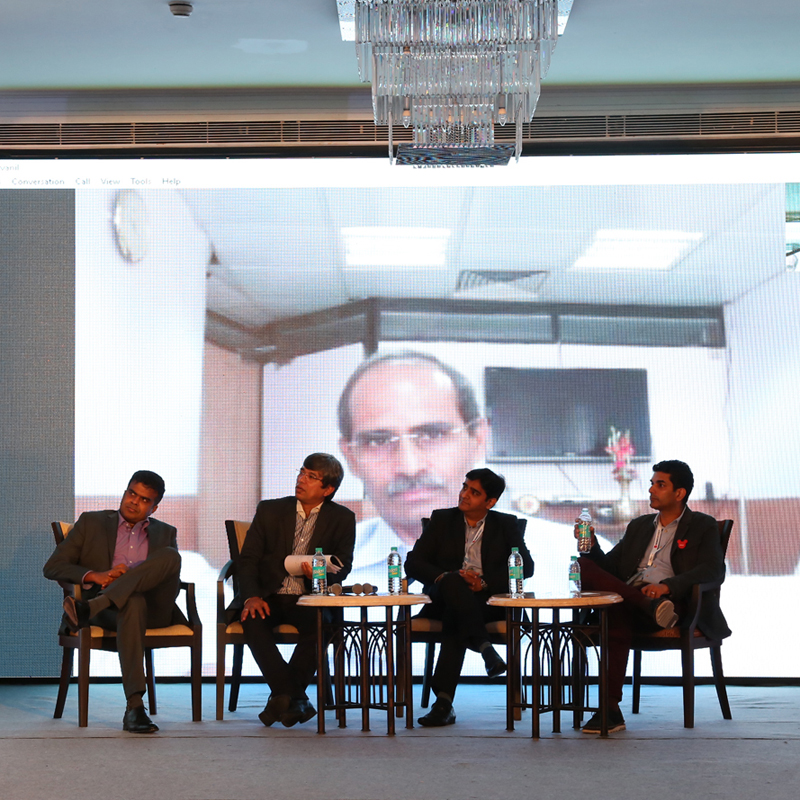
    GOA: Has the pubcaster DD’s free to air platform FreeDish emerged as a viable proposition for advertisers? What are its expansion plans, going forward? These were some of the questions posed by the Indiantelevision.com founder, CEO & Editor in chief Anil Wanvari at IDOS 2016 in Goa during the session on FTA channels to SAB Group CEO Manav Dhanda, B4U broadcasting division COO and CFO Sandeep Gupta, Starcom India group CEO Mallikarjun ‘Malli’ Das, and DD’s FreeDish deputy director-general (engineering) AK Jha.

    Jha started out by saying that the DTH platform has 55 private tenants including those from the majors – Sony Pictures Television Networks, Star India, and Zee TV – as well as from smaller broadcast networks such as B4U and the SAB group. “We want more such customers to come on our platform,” he expressed. He, however, confessed that getting an exact count of the number of subscribers was difficult as FreeDish was only a platform and the STBs were distributed by recognized vendors. “But, by extrapolating TRAI DTH data, conversations with STB manufactures and chipset suppliers, our estimates are that it could be anywhere between 20 million and 40 million. We would safely put it at about 25 million,” said Jha.

    Gupta and Dhanda explained why the two networks have taken the FTA route on the DTH platform.

    “As a broadcaster, we wanted to be on every platform. Since our focus was to be present everywhere, we got on to it very early when there were very few tenants. Although we were pay channels, we were FTA on DD FreeDish. B4U Movies was the Star Plus of DD direct is what MSOs told us. Only after BARC data rolled out did we come to know that rural has got so much of weightage. Otherwise, FreeDish was only one of the means of getting ourselves available everywhere,” said Gupta.

    Added Dhanda: “We wanted to build the maximum reach. We have five channels. We are also on cable, DTH and other platforms. It was not triggered by the advent of BARC data which suggests you need to be there. There is a cost for entry. Distribution and content are major costs for broadcasters. As a broadcaster, we want ROI. Syndicated content channels like us have not managed to build a compelling pay TV channel proposition. Hence, it is safe to go to FTA.”

    But, is it good to go FTA on DD FreeDish? Since the only revenue stream is from advertising, is the platform attracting advertiser interest?

    “FTA has just come into focus as BARC gave a new set of lenses. Earlier, TAM used to measure LC1 but media planners did not take it seriously as they were urban focused. Now with the 6,000 metres under BARC’s rural sample, it has taken on a different hue,” said Malli. “There are three segments advertisers look at from an audience segmentation – HD – 9 million-10 million homes; the fat middle with all the pay channels. And, there is the rural which is FTA. For brands, which are purely rural, it makes sense to go FTA. Distribute the spends over 30-40 weeks on an FTA media outlet, rather than finish it over eight to nine weeks on the more expensive pay channels. Some money is going into FTA from existing TV channel spends, some is coming from local cable, wall paintings and OOH.”

    But, are media buyers buying air time on channels on FreeDish purely for the rural audiences or for urban and rural audiences as defined by BARC? “When media planners are buying for rural, it makes sense,” he said. “When they look at rural+urban, they start looking at old currencies, and things don’t move. There’s still some confusion. Once these old data currencies are exhausted, and some new benchmarks are set for rural, the ad dollars will start flowing in aggressively. HD channels have only nine to 10 million subscribers, yet planners are putting the advertiser’s money into them. Whereas FTA has a larger reach, but the currency dynamics need to be taken care of.”

    Is there a ROI coming in for advertisers? “It’s a little too early. The plane has to yet land,” opined Malli. ”Retailers, distributors and sales people say, take Star Plus. The rural sample is 6,000 metres. We have to triangulate what the trade says with the BARC data, as they will want the spectacular as they will want the ads to be in the biggest properties. Currently, we have put the money for our clients on FTA. We have to get a larger body of evidence.”

    Jha said that DD FreeDish is augmenting its capacity by 24 channels and gearing up for this by moving to MPEG4 STBs, which are going to be made available to subscribers soon. “Currently, we are empanelling the STB manufacturers for MPEG4 boxes,” he explained. “Within four months, the STBs will roll out. Post that, the existing subscribers will be able to receive the 80 channels, whereas the new subscribers with MPEG 4 boxes will get 104 channels after the auctions conclude and tenants got on board.”

    Malli expressed that this was good news, it was not something that the advertising community would put its money immediately on .”At least, we know what we are investing in with the MPEG-2 boxes now,” he said. “We will have to see how many MPEG4 STBs roll out, how they are accepted before we put our might behind them.”

    Jha responded to this by saying that, in the new regime of MPEG4, DD FreeDish will be able to tell the advertiser community, exactly how many subscribers there were because the conditional access was being built in to the STBs. “Over time, we hope the entire universe of FreeDish will migrate to the new boxes,” he said.

    Jha is bullish about the prospects of free TV. “Customers in rural areas cannot afford the high sticker prices of Rs 3,000-7,000 per year that commercial DTH players are charging consumers,” he said. “Customers need to pay just Rs 2,000-Rs 3,000 for the STBs once to be able to receive a bouquet of good channels free. Hence, we are quite confident of DD FreeDish and the alternative we offer to Indian TV viewers.”

  • IDOS 2016: The DD FreeDish alternative for TV channels & advertisers

    IDOS 2016: The DD FreeDish alternative for TV channels & advertisers

    GOA: Has the pubcaster DD’s free to air platform FreeDish emerged as a viable proposition for advertisers? What are its expansion plans, going forward? These were some of the questions posed by the Indiantelevision.com founder, CEO & Editor in chief Anil Wanvari at IDOS 2016 in Goa during the session on FTA channels to SAB Group CEO Manav Dhanda, B4U broadcasting division COO and CFO Sandeep Gupta, Starcom India group CEO Mallikarjun ‘Malli’ Das, and DD’s FreeDish deputy director-general (engineering) AK Jha.

    Jha started out by saying that the DTH platform has 55 private tenants including those from the majors – Sony Pictures Television Networks, Star India, and Zee TV – as well as from smaller broadcast networks such as B4U and the SAB group. “We want more such customers to come on our platform,” he expressed. He, however, confessed that getting an exact count of the number of subscribers was difficult as FreeDish was only a platform and the STBs were distributed by recognized vendors. “But, by extrapolating TRAI DTH data, conversations with STB manufactures and chipset suppliers, our estimates are that it could be anywhere between 20 million and 40 million. We would safely put it at about 25 million,” said Jha.

    Gupta and Dhanda explained why the two networks have taken the FTA route on the DTH platform.

    “As a broadcaster, we wanted to be on every platform. Since our focus was to be present everywhere, we got on to it very early when there were very few tenants. Although we were pay channels, we were FTA on DD FreeDish. B4U Movies was the Star Plus of DD direct is what MSOs told us. Only after BARC data rolled out did we come to know that rural has got so much of weightage. Otherwise, FreeDish was only one of the means of getting ourselves available everywhere,” said Gupta.

    Added Dhanda: “We wanted to build the maximum reach. We have five channels. We are also on cable, DTH and other platforms. It was not triggered by the advent of BARC data which suggests you need to be there. There is a cost for entry. Distribution and content are major costs for broadcasters. As a broadcaster, we want ROI. Syndicated content channels like us have not managed to build a compelling pay TV channel proposition. Hence, it is safe to go to FTA.”

    But, is it good to go FTA on DD FreeDish? Since the only revenue stream is from advertising, is the platform attracting advertiser interest?

    “FTA has just come into focus as BARC gave a new set of lenses. Earlier, TAM used to measure LC1 but media planners did not take it seriously as they were urban focused. Now with the 6,000 metres under BARC’s rural sample, it has taken on a different hue,” said Malli. “There are three segments advertisers look at from an audience segmentation – HD – 9 million-10 million homes; the fat middle with all the pay channels. And, there is the rural which is FTA. For brands, which are purely rural, it makes sense to go FTA. Distribute the spends over 30-40 weeks on an FTA media outlet, rather than finish it over eight to nine weeks on the more expensive pay channels. Some money is going into FTA from existing TV channel spends, some is coming from local cable, wall paintings and OOH.”

    But, are media buyers buying air time on channels on FreeDish purely for the rural audiences or for urban and rural audiences as defined by BARC? “When media planners are buying for rural, it makes sense,” he said. “When they look at rural+urban, they start looking at old currencies, and things don’t move. There’s still some confusion. Once these old data currencies are exhausted, and some new benchmarks are set for rural, the ad dollars will start flowing in aggressively. HD channels have only nine to 10 million subscribers, yet planners are putting the advertiser’s money into them. Whereas FTA has a larger reach, but the currency dynamics need to be taken care of.”

    Is there a ROI coming in for advertisers? “It’s a little too early. The plane has to yet land,” opined Malli. ”Retailers, distributors and sales people say, take Star Plus. The rural sample is 6,000 metres. We have to triangulate what the trade says with the BARC data, as they will want the spectacular as they will want the ads to be in the biggest properties. Currently, we have put the money for our clients on FTA. We have to get a larger body of evidence.”

    Jha said that DD FreeDish is augmenting its capacity by 24 channels and gearing up for this by moving to MPEG4 STBs, which are going to be made available to subscribers soon. “Currently, we are empanelling the STB manufacturers for MPEG4 boxes,” he explained. “Within four months, the STBs will roll out. Post that, the existing subscribers will be able to receive the 80 channels, whereas the new subscribers with MPEG 4 boxes will get 104 channels after the auctions conclude and tenants got on board.”

    Malli expressed that this was good news, it was not something that the advertising community would put its money immediately on .”At least, we know what we are investing in with the MPEG-2 boxes now,” he said. “We will have to see how many MPEG4 STBs roll out, how they are accepted before we put our might behind them.”

    Jha responded to this by saying that, in the new regime of MPEG4, DD FreeDish will be able to tell the advertiser community, exactly how many subscribers there were because the conditional access was being built in to the STBs. “Over time, we hope the entire universe of FreeDish will migrate to the new boxes,” he said.

    Jha is bullish about the prospects of free TV. “Customers in rural areas cannot afford the high sticker prices of Rs 3,000-7,000 per year that commercial DTH players are charging consumers,” he said. “Customers need to pay just Rs 2,000-Rs 3,000 for the STBs once to be able to receive a bouquet of good channels free. Hence, we are quite confident of DD FreeDish and the alternative we offer to Indian TV viewers.”

  • NexGTv ties- up with SAB Group on regional content

    NexGTv ties- up with SAB Group on regional content

    MUMBAI: In a major move, nexGTv has announced its partnership with SAB Group. As a part of the alliance, nexGTv has acquired the worldwide digital rights to broadcast the group’s most sought-after regional channels such as Masti, Dabang, Dhamaal, Maiboli and Dillagi for its users across the globe.

    Started by brothers Gautam Adhikari and Markand Adhikari in 1985, SAB Group has gone on to establish its brand proposition as a pioneer in the field of Indian Media, pushing through various stages of growth over the last 25 years from a production house to a broadcaster. SAB Group has successfully identified the gap in the regional market and has emerged as a leader in the space by delivering highly relevant localized content.

    Speaking on the announcement, nexGTv COO Abhesh Verma said, “Since its inception, nexGTv has endeavoured to deliver the most tailored entertainment solutions to the rich and diverse consumer base it enjoys across the country. The partnership with SAB will allow us to curate and deliver popular regional entertainment solutions on-the-go to our viewers. We are confident that the latest addition will enhance our regional offering and add greater value to the mobile viewing experience of our users by providing them with seamless access to locally relevant video-based entertainment content.”

    NexGTv’s latest association will no doubt delight the country’s digital viewership, who will now be able to view their preferred regional entertainment content at their convenience anytime, anywhere. All the channels from SAB Group are a part of the paid category at nexGTv, and can be accessed either through www.nexGTv.com or through the nexGTv mobile app for Android and iOS.