Tag: Saawariya

  • Service above rule: Life OK’s Maharaja Ranjit Singh starts from 20 Mar

    MUMBAI: It’s a historical appeal. Life OK, in association with Contiloe Pictures, is all set to bring the story of the king who was like none other – a king – who was a true leader and a visionary, a man of intelligence and not just brute strength, Sher-a-Punjab: Maharaja Ranjit Singh.

    The show will be aired at 8.30pm time slot from Monday to Friday.

    Produced by Contiloe Pictures, the show is starting from 20 March. The show is about the founder of the Sikh empire, who is mostly known as the last Indian to hold the famed Koh-i-noor diamond and for gold-plating the Golden Temple.

    The show follows the journey of the exemplary king who placed service above rule, and unity above power. It sets out to discover all the facets of the man whose philosophies endeared him to his countrymen, and whose political acumen struck fear in the heart of his enemies – the British and Afghans.

    The makers of the show got Omung Kumar onboard to design the sets, the name behind the movies such as Black, Saawariya and Yuvvraj. The costumes of the lead actors have been designed by the famous Bollywood costume designers — Manoshi Nath and Rushi Sharma. Bollywood stunt director Allan Amin was brought in to direct the war sequences in the show.

    Doing justice to the complex setting of the show was not an easy task for the production house. Contiloe Pictures CEO Abhimanyu Singh said, “We are very happy to announce the launch of our next historical venture, ‘Sher-E-Punjab Maharaja Ranjit Singh’ in collaboration with Life OK. This show promises to be the biggest historical from our stable. We have worked for over a year and a half on the show and a unit of 500 hundred people are working day and night to translate our vision into reality. We are also working with state-of-the-art VFX supervisors and stylists to give a freshness to this epic saga”.

  • Zohra Sehgal – the artiste with an infectious smile, is no more

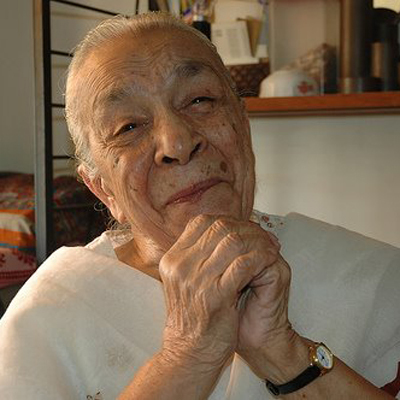
    Zohra Sehgal – the artiste with an infectious smile, is no more

    NEW DELHI: Veteran actress Zohra Sehgal – who was known for her charming smile and keen sense of timing – passed away in the capital on 10 July at 4:00 pm.


    Zohra, who had turned 102 on 27 April this year, felt uneasiness after dinner on 9 July night and was rushed to Max Hospital in south Delhi. Her family confirmed that she had a cardiac arrest in the afternoon.  


    She is survived by her son Pavan and her daughter (eminent danseuse Kiran Sehgal), and four grandchildren.


    Born in 1912, she started her career as a dancer in choreographer Uday Shankar’s troupe. From 1935 to 1943, she was a leading dancer with the troupe and performed across the world including the United States and Japan.


    As an actress, Zohra appeared in varied roles that showed her range as an artiste. She had last appeared in the 2007 film ‘Saawariya’. 


    She has appeared in just over 50 films and television series starting with K A Abbas’ debut film Dharti ke Lal in 1946.


    Some of her better remembered films are Bhaji on the Beach (1992), The Mystic Masseur (2001), Bend It Like Beckham (2002), Dil Se (1998) and Cheeni Kum (2007); Hum Dil De Chuke sanam (1999), Veer Zara (2004),  and the TV series, The Jewel in the Crown (1984), Tandoori Nights (1985–87), Amma and Family (1996).


    At the age of 90, she got the lead character around whom the story revolved in 2002 film Chalo Ishq Ladaaye, where she had stunt sequences, emotional scenes, etc. Considered the doyenne of Indian theatre, she acted with Indian People’s Theatre Association and Prithviraj Kapoor’s Prithvi Theatre for 14 years.


    Zohra received the Padma Shri in 1998, Padma Vibhushan (2010), the Kalidas Samman in 2001, and in 2004, the Sangeet Natak Akademi’s highest award, the Sangeet Natak Akademi Fellowship for lifetime achievement.


    Born as Sahibzadi Zohra Begum Mumtaz-ullah Khan into a traditional Muslim family in Saharanpur in Uttar Pradesh, to Mumtazullah Khan and Natiqua Begum, belonging to Rampur, Uttar Pradesh, she was the third of seven. She was a tomboy fond of climbing trees and playing games. Zohra lost vision in her left eye as she contracted glaucoma at the age of one year. She was referred to a hospital in Birmingham where she was treated.


    She lost her mother while still young. According to her mother’s wishes, she and her sister were sent to Queen Mary College in Lahore (then part of undivided India). Her maternal uncle Sahebzada Saeeduzzafar Khan who was based in Edinburgh arranged for her to apprentice under a British actor. In Europe, her aunt Dicta took her to try in the Mary Wigman’s ballet school in Dresden, Germany, but she had not ever danced. She got admission and became the first Indian to study at the institution. She stayed in Dresden for the next three years studying modern dance, while living in the house of Countess Liebenstein. She happened to watch the Shiv-Parvati ballet by Uday Shankar who was touring Europe and this marked a turning point. He promised her a job on return to India.


    But even before she came back, she received a telegram from Uday Shankar asking her to accompany on a tour to Japan. On 8 August 1935, she joined his troupe and danced across Japan, Egypt, Europe and the US, as a leading lady, along with French dancer Simkie. When Uday Shankar moved back to India in 1940, she became a teacher at the Uday Shankar India Cultural Centre at Almora.


    It was here that she met her future husband Kameshwar Sehgal, a young scientist, painter and dancer from Indore, eight years her junior. They married on 14 August 1942 and had two children, Kiran and Pavan. For a while the couple worked in Uday’s dance institute at Almora. Both became accomplished dancers and choreographers. Kameshwar composed a noted ballet for human puppets and choreographed the ballet Lotus Dance. When it shut down later, they migrated to Lahore and set up their own Zohresh Dance Institute.


    Because of the growing communal tension preceding the Partition of India, they returned to Mumbai where her sister Uzra was already working with Prithvi Theatres. She joined Prithvi Theatre in 1945 as an actress with a monthly salary of Rs 400, and toured every city across India with the group for the next 14 years.


    She also joined IPTA and acted in several plays, and made her film debut in IPTA’s first film production, directed by Khwaja Ahmad Abbas, Dharti Ke Lal in 1946; she followed it up with another IPTA-supported film, Chetan Anand’s Neecha Nagar which became India’s first film to go to Cannes and won the Palme d’Or at the Cannes Film Festival.


    She also did the choreography for several Hindi films, including Guru Dutt’s Baazi (1951) and the dream sequence song in Raj Kapoor’s film Awaara.Kameshwar, on the other hand, became art director in Hindi films and later tried his hand at film direction.


    After her husband’s death in 1959, Zohra first moved to Delhi and became director of the newly founded Natya Academy. She then moved to London on a drama scholarship in 1962.Her first role for British television was in a BBC adaptation of a Kipling story, The Rescue of Pluffles, in 1964. She also anchored 26 episodes of BBC TV series, Padosi (Neighbours; 1976–77).


    In London, Zohra got her first break in the films and was signed by Merchant Ivory Productions. She appeared in The Courtesans of Bombay directed by James Ivory in 1982. This paved way for an important role as Lady Chatterjee in the television adaptation The Jewel in the Crown (ITV, 1984). She then acted in several other films and TV series before returning to India.


    She returned to India in the mid-1990s and lived for a few months in Burdwan. At that time she acted in several films, plays and TV series since. She first performed poetry at a memorial to Uday Shankar organised by his brother, Ravi Shankar in 1983, and soon took it in big way; she started getting invited to perform poetry at various occasions. She even traveled to Pakistan to recite verses for “An Evening with Zohra”. Her impromptu performances of Punjabi and Urdu became a norm. After stage performances she was often requested by the audience to recite Hafeez Jullundhri’s famous nazm, Abhi To Main Jawan Hoon.


    In 1993, a critically acclaimed play, Ek Thi Nani, was staged in Lahore for the first time, featuring Zohra and her sister Uzra Butt now staying in Pakistan. The English version, A Granny for All Seasons, was held at UCLA in 2001. In 2008, at the United Nations Population Fund (UNPF)-Laadli Media Awards in New Delhi, she was named Laadli of the century.


    In 2014, she became the longest-living actor to have appeared on Doctor Who, as well as the first centenarian associated with the show. The second is Olaf Pooley, who celebrated his 100th birthday on 13 March 2014. 

  • Kamasutra 3D in the contention list for Oscars 2014 in three categories

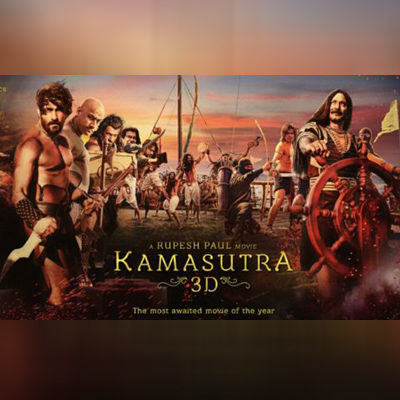
    Kamasutra 3D in the contention list for Oscars 2014 in three categories

    New Delhi: Rupesh Paul’s Kamasutra 3D figures in the contention list of the 86th Academy Awards, with selection in the three categories – Best Motion Picture, Original Score and Original Song with five songs.


    It is the only movie from India contending in the music category lists. The results were announced on yesterday by the Academy of Motion Pictures Arts and Sciences on its official website.


    Kamasutra 3D has been slated for a 23 May 2014 release after its premiere.


    Presented by Dr George John (GJ Entertainments) and produced under the house of Rupesh Paul Productions (RPPL), in co-production and project design by Sohan Roy, Kamasutra 3D is the only movie with five songs after The Great Gatsby to be selected in the Original Song category. The songs include – Aygiri Nandini, Saawariya, I Felt, Of Soil and Har Har Mahadeva – composed by Chennai based music directors, Sachin and Sreejith while its lyrics are penned by Rupesh Paul and Pratyush Prakash.


    Also scripted and penned by Rupesh Paul, the movie is set in the backdrop of the real historical milieu portraying the journey of a soulful love embodied with betrayal and war. It weaves the transformative changes in body, mind and soul by the forbidden world of sexual love and sensuality.


    Recently, with the release of its work-in-progress trailer, Kamasutra 3D critically came out to be more of a Hollywood war based epic movie than a classic erotica, it hyped to be with the sensuous Sherlyn Chopra, initially.


    Director Rupesh Paul, however, confirmed that he would not disappoint his viewers expecting the movie to be a classic erotica.


    Speaking on the Oscar entry, he stated, “Probably now we have an answer for all of them who claimed the movie to be a soft porn. Hopefully, they know that soft porns are not eligible for the Academy Award nominations”. He would his movie to be considered a musical than epic or erotica as Kamasutra 3D is influenced with its melody over the drama.


    After creating the best of pre sale records at the Cannes Film Festival 2013 and the American Film Market 2013 with its sale in most of the territories, Kamasutra 3D is all hopeful to make it in the final nominations of the categories in the 86th Academy Awards to be announced on 16 January, 2014 in the Academy’s Samuel Goldwyn Theater.

  • Radio industry in 2007 – an overview

    Radio industry in 2007 – an overview

    over the past two years the radio industry has moved beyond AIR with private FM stations lapping up the airwaves. The three policy initiatives from the Government — migration to a revenue-sharing regime, allowing foreign direct investment upto 20 per cent and opening up the sector to 91 more cities by issuing 338 licenses’ to private players — have aided this growth tremendously. FM Phase II saw as many as 245 more stations bagging licenses’, most of which went up this year. Phase II has provided a fresh lease of life to the radio industry and has really taken the medium to the next level. Things only look better from here, given the way this has helped new stations to come in, the existing and serious players to organise more and convert radio into a revenue making option.

    Year 2007 for the radio industry was the year of expansion. The radio industry is growing immensely and also doing very well, the number of people listening to radio each day has also increased, hence acknowledging this as the local medium of communication. The recent RAM results that were out recently proved how well the industry is doing. Spends on radio have definitely gone up and radio today, is the most cost-effective medium. Radio is becoming an important part of the advertisers advertising mix. The future will see more advertisers coming on board…

    RAM (radio audience measurement)
    Radio listenership measurement is a critical aspect to the industry, the emphasis being on ‘timely’ measurement and not just dated results that come in over three to six months. The radio category needs to grow to where it deserves and with the RAM coming in, it is a move in the right direction. What is measured is what is bought and RAM has worked extremely well for the radio industry.

    BIG 92.7 FM in 2007
    The year 2007 has been excellent for BIG 92.7 FM; the stations for phase II were rolled out, as we stand as a 42 station strong network today, spread across the length and the breadth of the country. The fastest rollout of stations among all players and making us the biggest radio network in the country. As per figures released BIG 92.7 FM is the No. 1 choice of listeners in Bangalore across all parameters – including reach, share and TARP. In Mumbai, it is the highest reached station, while in Delhi; it is the No. 2 station among 12-34 year old, SEC ABC listeners. BIG 92.7 FM will see expansion of our network in 2008; more stations will be added to our network as Govt. opens up more licenses.

    The numbers are looking very good especially given that BIG 92.7 FM is just about a year old. It reaffirms our positioning and content strategy which has helped the brand stand out in the cluttered environment. With competition heating up among brands, ‘differentiation’ is the key and we have managed to stand out with our ‘listener focused’ positioning of Life Banao as well as our distinct music.

    Next on BIG’s radar –
    ” The goal is to increase the size of radio’s share of the advertising pie from 3 per centto 7 per cent over the next three years.
    ” Consolidate post our launches and ensure sustained leadership in all our stations
    ” Digital integration with radio – more emphasis on our web portal, podcasting, internet driven interactivity etc

    Key landmarks / events:
    Year 2007 has been an eventful year for BIG 92.7 FM, and has certainly lived upto to its brand line of ‘Suno Sunao, Life Banao’.

    A combination of large national properties and hyperlocal content helped us grow rapidly in a sort span of time. BIG 92.7 FM has always believed in innovation in content and marketing. We launched a unique challenge & contest done for the first time ever on radio in association with Hyundai i10 called ‘Chipak Ke Jeeto’ which is the biggest endurance test to be held across key metros wherein the person who touches the car for the longest time walks away with a brand new Hyundai i10 car! The ‘Sabse BIG Diwali’ campaign with ICICI bank credit cards was launched with much fanfare- offered discounts from 9.27 per cent to 92.7 per cent on various products. Tied up various NGOs’ across the country and hosted the ‘Sabse BIG Diwali’ party with the senior citizens.

    The year 2007 also saw BIG 92.7 FM radio partnering for some of the biggest banner movies and TV shows like Ta Ra Rum Pum, Jhoom Baraabar Jhoom, Cash, Saawariya, Nach Baliye 3, Sa Re Ga Ma Pa, Jhoom India, while also entering into a strategic partnership with the Indian Television academy for the ‘ITA 7th Annual Indian Television Academy Awards’. BIG 92.7 FM also roped in the iconic Raju Shrivastav and escalated the humor quotient of the station – BIG RJ Raju Shrivastav provided listeners their daily dose of Raju Shrivastav jokes every morning on the breakfast show across the country.

    We pioneered the coverage of sporting events on radio with the award winning coverage of the PHL, ICC tournament and the T-20 World Cup. For the first time ever, BIG FM brought on radio, eminent personalities like Harsha Bhogle and Shekhar Suman, Kris Srikkanth and Mandira Bedi, which created a new and exciting experience for listeners across the country.

    Speculations for the year 2008
    The Indian radio sector is poised to become a Rs 1,200-crore industry by 2010, according to a study conducted by the Federation of Indian Chambers of Commerce & Industry and PricewaterhouseCoopers.

    With the majority of licenses in Phase II going operational by the end of this year, 2008 is going to be a very good year for Radio; the industry will experience dramatic expansion in its listener base leading to significant growth in business. 2008 will be the Tipping Point for the radio industry.

    We hope that news and current affairs will be opened for private radio broadcasters. In the event this does happen, this will lead to a new wave of growth for radio in 2008.

    For BIG 92.7 FM, listeners are going to be witnessing far more exciting and interesting radio activity. Our initiatives will focus on creating more relevant and innovative content for our listeners, tapping into new trends and insights we observe among the youth.

    So stay tuned and Suno Sunao, Life Banao!