Tag: SAARC

  • Cisco expands reach in Indian digital homes

    Cisco expands reach in Indian digital homes

    KOLKATA: US technology major, Cisco has expanded its reach to more than 40 million digital homes across India with its video guard conditional access (CA) and digital rights management (DRM) solutions.


    Using the industry estimated average of five people per household, Cisco is now enabling a rich and advanced TV experience for more than 200 million viewers in India, an important milestone that  reinforces the company’s leadership at a time when the pay-TV industry is on the cusp of a major transformation, view the analysts.


    Cisco’s CA and DRM technology ensures critical protection of premium content with a zero piracy track record. A strong team of engineers working at the research and development center in Bangalore is dedicated to the technology needs of leading satellite and cable service providers in India and worldwide.


    Cisco is a pay-TV technology partner for more than 150 pay-TV operators as well as media and entertainment companies worldwide, including leading direct-to-home and cable operator customers in India, such as Airtel Digital TV, Asianet, DEN, GTPL, Hathway and Tata Sky.


    “In the changing landscape of pay-TV services in India, this milestone highlights our continued growth with several leading MSOs in the country,” said Cisco Service Provider Video Software Solutions vice president sales Asia Pacific Sue Taylor.


    Cisco India and SAARC president Dinesh Malkani said, “Achieving the milestone of 40 million homes in India reinforces our commitment to the government’s mandate to digitise the cable industry and also speaks of our ability to provide best in class solutions and technology. We work closely with our customers to enable them to provide an unparalleled experience to their subscribers as well as help monetise their investments.”
  • PM swearing in ceremony gets global reach through television and social media

    PM swearing in ceremony gets global reach through television and social media

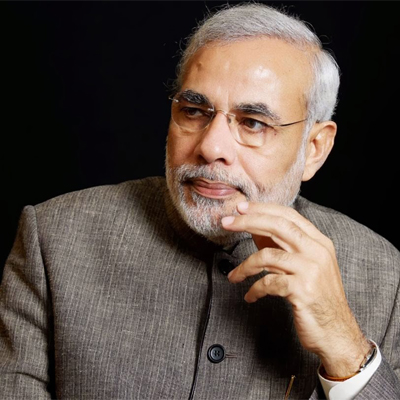
    NEW DELHI: In a dignified function rarely seen, Indian television channels today globally beamed live the swearing in of Narendra Modi as the fifteenth Prime Minister of the country, along with his team of 44 Ministers and Ministers of State.


    Around 4,000 people including all the leaders of the SAARC countries and Mauritius were present in the front courtyard of Rashtrapati Bhavan where President Pranab Mukherjee swore in the Prime Minister and his team.


    Apart from the stars of Bollywood who have made it to the portals of Parliament House, others who were present included Anupam Kher, Dharmendra, Salman Khan with father Salim Khan, Bappie Lahiri, Suresh Oberoi and Vivek Oberoi.


    The winning stars seen at the ceremony included Vinod Khanna, Manoj Tiwari, Smriti Irani and Hema Malini.


    While all television channels were allowed to come to Rashtrapati Bhavan and were stationed at the back of the entire assembly, only Doordarshan was permitted to beam the oath taking ceremony from close quarters.  


    As a result, most channels beamed the ceremony by taking the feed from Doordarshan, though many had their own commentators and experts who spoke about the various persons as they were sworn in.


    While channels like Times Now preferred to show the commentary by Doordarshan’s Sanjeev Upadhyaya and Gaura Lal Dhawan before and after the swearing in, several other channels like NDTV 24×7 showed the visuals from DD but had its own experts speaking about each person as he/she came up to take the oath.


    DD, which had the live coverage on its national channel and DD News, also made arrangements for simultaneous translation into sign language for the hearing impaired. The live telecast was also beamed live on DD’s website and its channel on YouTube, President Pranab Mukherjee’s site presidentofindia.nic.in and on the Prime Minister’s website pmindia.nic.in.


    The telecast commenced around 40 minutes before the ceremony commenced, showing the arrival of various VIPs and leaders of different parties,  including Sonia Gandhi and Rahul Gandhi. 


    The last time that ceremonies of this nature – though smaller magnitude – were held in the front courtyard of Rashtrapati Bhavan was in 1990 and 1998 when Chandrashekhar and Atal Behari Vajpayee were sworn in as Prime Ministers.


    However, this was the first  time since 1991 (when Rajiv Gandhi was cremated) that all the SAARC leaders were seen together in India.


    Modi, who has been tweeting throughout the campaign and even after being elected, used the opportunity to send out a message to the people and the media through the Prime Minister’s website, pmindia.nic.in.


    Referring to the social media and the internet, he said: “I envision this website as a very important medium of direct communication between us. I am a firm believer in the power of technology and social media to communicate with people across the world. I hope this platform creates opportunities to listen, learn and share one’s views. 

    “Through this website you will also get all the latest information about my speeches, schedules, foreign visits and lot more. I will also keep informing you about innovative initiatives undertaken by the Government of India.” 


    A section has been inserted on the website to greet the Prime Minister or send him a message.


  • Business digitisation is yet to start in phases I and II: Cisco

    Business digitisation is yet to start in phases I and II: Cisco

    KOLKATA: The phases I and II of cable TV digitisation may have been complete technically but a lot needs to be done as far as the back end is concerned, that is the business digitization is yet to start, thinks Cisco India & SAARC regional manager and service provider Sandeep Arora.


    Arora thinks that with digitisation in municipal and rural areas also being in demand in phases III and IV across the country, the headend market is redefining itself in India. Fulfilling that would be Cisco, which is planning several innovations to enhance the consumer experience.


    “Business and technical digitisation go hand in hand. Revenues for MSOs (multi-system operator) have started flowing in. Profitability and consumer experience are expected to go up in coming days,” remarked Arora while talking to indiantelevision.com.


    According to Arora, phases I and II of digitisation of cable TV were implemented in the right frame of mind. “The players adhered to the MIB rules and the phases were well coordinated,” he said.


    The US based tech giant set up the hosted headend facility which could be leased by MSOs and local cable operators (LCOs). This will help the company garner revenues from the small LCOs and MSOs that cannot earmark huge investments for installing headends. “We initiated this in phases I and II and its deployment will substantially reduce the capital expenditure of the MSOs and the LCOs,” said Arora.


    Interestingly, Cisco garnered a market share of 53-55 per cent in the first two phases where more than 25 million cable TV homes were digitised. “In the next two phases, there is a requirement of 75 million homes to be digitised and if not more we will aim to maintain the same market share of around 55 per cent,” he added.


    Some of the clients of Cisco include Hathway, Den, KCBPL-GTPL among others.


    Cisco is eager to offer cable TV operators broadband services by upgrading their existing networks. “Broadband is a key priority for us now and it will drive growth,” he said.


    The company is offering a technology that will enable cable TV players to start two-way communications required for Internet services.

  • Sony Music Entertainment to represent Warner Music Group in India and SAARC countries

    Sony Music Entertainment to represent Warner Music Group in India and SAARC countries

    MUMBAI: Sony Music Entertainment India and Warner Music Group have announced a strategic licence deal for Sony Music to represent Warner Music’s legendary recording artists’ releases and labels in India, Sri Lanka and the other SAARC countries.


    It was only a few months ago, in July 2013, that Warner acquired Parlophone Label Group. The combined catalogue is amongst the largest globally and encompasses a roster of some of the world’s most celebrated and popular artists and recordings.


    Sony Music Chairman and CEO Australia & New Zealand and President, Asia Denis Handlin said in a release: “We are delighted to represent Warner’s music catalogue for the Indian and SAARC market. This is one of the fastest growing and exciting music markets in the world and India in particular has huge digital market opportunities. We have great plans to ensure that Warner Music’s remarkable catalogue reaches out to the vast array of existing and emerging music fans in that region.”


    Sony Music president India and Middle East, Shridhar Subramaniam said: “We are very excited with this opportunity and are committed to aggressively push the Warner catalogue and new releases.  Through the combined strength of the two companies’ music, we are well positioned to grow the increasing demand for International music in India.”


    The Warner Music catalogue includes some of the world legends from the music industry, and contemporary greats like Eric Clapton, The Eagles, Green Day,  Pink Floyd, The Doors, Madonna, Coldplay, Led Zeppelin, Linkin Park, Red Hot Chili Peppers, Nickelback, Kylie Minogue, Michael Bublé and Bruno Mars among many others.

  • IMG Media hires former ESPN Star senior exec

    IMG Media hires former ESPN Star senior exec

    MUMBAI: From broadcasting to selling sports programming and event properties – that’s the path Former ESPN Star Sports business development & corporate communication (south Asia) director Rathindra Basu has taken. Recently, he hopped on IMG Media, which is amongst the world’s largest indpendent producers and distributors of sports programming, as vice-president and head of sales in the Indian sub-continent.


    In his role at IMG Media he will be looking after sports media content distribution and sales for the SAARC countries; covering all forms of media rights – including TV, audio, fixed media, in-flight and closed circuit, broadband and mobile. His responsibilities include developing key relationships with major sports broadcasters and other TV networks including the public broadcaster.


    Speaking to indiantelevision.com Basu says: “In my new role I will be looking at expanding our reach across the Indian subcontinent and reaching out to as many broadcasters for distribution and sales deals.”


    Basu will report to IMG Media Sr VP and head of sales Asia Pacific Chris Guinness, based in the London office and IMG Media Sr VP and head of sales Asia Pacific Leena Singarajah, based in Selangor, Malaysia.

    He will continue to be based out of New Delhi.


    IMG produces more than 21,000 hours of television and more than 30,000 hours of radio programming annually. It provides a seamless solution for both rights holders and broadcasters worldwide. Be it live or studio, in stadium or on the course, across the US or throughout South Africa, it claims to be a stop solution to handle all production needs.


    With over 200 clients and events, including Wimbledon, the Australian Open, the ATP Masters Series, the R&A (governing body and organiser of The Open Championship), International Rugby Board (IRB), MotoGP, the National Football League (NFL) and the International Volleyball Federation (FIVB). IMG operates from over 30 offices worldwide and has daily exchanges with over 4,000 key media contacts. It also maintains the world’s largest sports archive with more than 250,000 hours of footage.

  • Video’s the way forward for Cisco

    Video’s the way forward for Cisco


    MUMBAI: With the ever increasing demand for video services, Cisco is among a clutch of companies that views video as the next big thing.

    Cisco TV coupled with Cisco STBs, caters to over 300 million homes globally and over 30 million households in India. The Cisco Videoscape Unity platform fulfils the demand for video on multiple screens, empowering service providers and media companies to create and connect new synchronised, personalised and intuitive multi-screen experiences at great speeds.
    Video is the next big thing for us: we see the way video will be personalised, consumed and delivered to be very dynamic believes Arora

    Says Cisco India & SAARC service provider – regional sales manager Sandeep Arora: “For Cisco, network is the platform for business enablement. Video is the next big thing for us: we see the way video will be personalised, consumed and delivered to be very dynamic.”

    “There are multiple ways by which we are driving digitisation in India and helping our partners in what we call as a glass to glass strategy, so if you see our technology platforms, we serve from the IRDs – which is a picture coming from the lens of the camera to the glass of the TV screen,” adds Arora.

    Cisco Videoscape Unity brings expertise in building comprehensive carrier-class cloud products and a flair for designing award-winning user experiences that implement each provider’s unique brand and vision. Cisco then engineers this vision into a coherent and deployable multi-screen product.

    “So while we are enabling technology platforms, we are also enabling business platforms, and since it’s a very capex (capital expenditure) driven industry, we are also using our financial arm – Cisco Capital – to drive that high capex worth of business going forward. So in the end, we are just focusing on providing the right value for the end consumer by using the Cisco technology and to be a part of the immersive experience,” says Arora.

    Six to seven years ago, Cisco acquired Scientific Atlanta – its largest acquisition till date – and over the years, it has been acquiring multiple companies to enhance its network capabilities and platform technologies. “So be it content aggregation, content creation or content distribution, all of this need to come together and we need to drive this experience,” says Arora.
    About digitisation, Arora says there have been many anxious moments during phase I and phase II. “There is a technical digitisation that has happened – with the seeding of STBs in homes – but the business digitisation is still evolving – where the revenue is pumped in – and what we are looking at is it kicking in and that’s where the business model starts functioning,” he explains.

    A behavioural change is also taking place, according to him, which is necessary for the success of both technical and business digitisation. “So with phase III and IV of digitisation approaching soon, we are moving to the bottom of the pyramid, and each phase will have its unique set of requirements and challenges, the fragmentation will also increase as digitisation penetrates further. The audience being addressed is very different, so we need to keep thinking how to redefine ourselves as we move forward,” he points out.
    While others may aspire to offer either quick and powerful cloud-based services or customer-specific experiences, Cisco Videoscape Unity is unique in that it offers both.

  • Video’s the way forward for Cisco

    Video’s the way forward for Cisco

    MUMBAI: With the ever increasing demand for video services, Cisco is among a clutch of companies that views video as the next big thing.

    Cisco TV coupled with Cisco STBs, caters to over 300 million homes globally and over 30 million households in India. The Cisco Videoscape Unity platform fulfils the demand for video on multiple screens, empowering service providers and media companies to create and connect new synchronised, personalised and intuitive multi-screen experiences at great speeds.

    Video is the next big thing for us: we see the way video will be personalised, consumed and delivered to be very dynamic believes Arora

    Says Cisco India & SAARC service provider – regional sales manager Sandeep Arora: “For Cisco, network is the platform for business enablement. Video is the next big thing for us: we see the way video will be personalised, consumed and delivered to be very dynamic.”

    “There are multiple ways by which we are driving digitisation in India and helping our partners in what we call as a glass to glass strategy, so if you see our technology platforms, we serve from the IRDs – which is a picture coming from the lens of the camera to the glass of the TV screen,” adds Arora.

    Cisco Videoscape Unity brings expertise in building comprehensive carrier-class cloud products and a flair for designing award-winning user experiences that implement each provider’s unique brand and vision. Cisco then engineers this vision into a coherent and deployable multi-screen product.

    “So while we are enabling technology platforms, we are also enabling business platforms, and since it’s a very capex (capital expenditure) driven industry, we are also using our financial arm – Cisco Capital – to drive that high capex worth of business going forward. So in the end, we are just focusing on providing the right value for the end consumer by using the Cisco technology and to be a part of the immersive experience,” says Arora.

    Six to seven years ago, Cisco acquired Scientific Atlanta – its largest acquisition till date – and over the years, it has been acquiring multiple companies to enhance its network capabilities and platform technologies. “So be it content aggregation, content creation or content distribution, all of this need to come together and we need to drive this experience,” says Arora.
    About digitisation, Arora says there have been many anxious moments during phase I and phase II. “There is a technical digitisation that has happened – with the seeding of STBs in homes – but the business digitisation is still evolving – where the revenue is pumped in – and what we are looking at is it kicking in and that’s where the business model starts functioning,” he explains.

    A behavioural change is also taking place, according to him, which is necessary for the success of both technical and business digitisation. “So with phase III and IV of digitisation approaching soon, we are moving to the bottom of the pyramid, and each phase will have its unique set of requirements and challenges, the fragmentation will also increase as digitisation penetrates further. The audience being addressed is very different, so we need to keep thinking how to redefine ourselves as we move forward,” he points out.

    While others may aspire to offer either quick and powerful cloud-based services or customer-specific experiences, Cisco Videoscape Unity is unique in that it offers both.

  • Godrej launches the all new Godrej Expert Advanced

    MUMBAI: Hair colour brand Godrej Expert has released a new television commercial (TVC ) for its gel based powder hair colour Godrej Expert Advanced. The commercial has been conceptualised by Creativeland Asia.

    The new TVC features television actor Ram Kapoor and Vidya Malavde of the Chak de India! fame playing a middle aged couple. Malavde gifts Kapoor a Godrej Expert Advanced for his birthday. He is shown to be in constant worry of his ever increasing grey hair which makes him feel old. The TVC shows how his wife convinces him to try the brand out resulting in Kapoor feeling younger and happier.

    The Kapoor and Malavde TVC will be shown in the North, West, and East markets while for the South the same advertisement features Arjun Sarja and Devayani.

    Godrej chief operating officer, sales and marketing & SAARC Sunil Kataria said, “A lot of first time users of hair colours exhibit an extremely apparent state of inertia caused by lack of awareness or just by the fear of colouring ones hair. This issue has been brilliantly addressed through the TVC, where a reasonably concerned husband gets convinced by his wife to try colouring his hair. It is an extremely relatable TVC, showcasing a relationship between couples and how one influences the other to use Godrej Expert Advanced.”

    With this new television commercial, the brand intends to make itself the relevant product in the eyes of the first-timers. while remaining compelling for the current users and competition users.

  • Universal Music appoints Vinit Thakkar as head of digital

    Universal Music appoints Vinit Thakkar as head of digital

    MUMBAI: Universal Music has appointed Vinit Thakkar as the new head of digital for its business in India.

    Thakkar‘s role as Digital Head of Universal Music will entail consolidating and growing Universal’s Digital business in India and SAARC.

    Prior to joining Universal, Thakkar was with Sony Music as Sr. General Manager handling the P&L responsibility across Digital, Licensing & Publishing businesses.

    Universal Music India and SAARC MD Devraj Sanyal said, “The digital business for UMGI is one of the most critical parts of the music business and I am very pleased to welcome Vinit to the team. Vinit brings with him an exceptionally great & relevant background to the table with his years at Sony, Citi & Titan. I have no doubt in my mind that Vinit will take Universal Music and all its allied future businesses to the next level.”

    Thakkar has also worked with companies like Titan and Citibank in sales & marketing functions.

    Thakkar said, “At such a pivotal time for music, where the digital landscape is undergoing a sea change, it’s more important than ever to fully exploit the many opportunities that new digital services and products provide in reaching audiences around the world. I look forward to this new challenge and I am extremely confident of building a robust digital business at Universal Music."

  • South Asian Film Festival to be held from 25 to 28 Oct

    South Asian Film Festival to be held from 25 to 28 Oct

    MUMBAI: This year‘s South Asian Film Festival will be held in Goa from 25 to 28 October, with the films in the seventh edition of the festival having a blend of different genres.

    Films that would be featured in the festival will include classic films, short films, documentary, mainstream popular films. A Marathi film premiere would also be held, according to South Asia Foundation secretary general Rahul Barua.

    More than 40 films from SAARC countries will be screened that will include films like Singham, Rajneeti and Ye Saali Zindagi.

    Films from South East Asia include Torkham from Afghnaistan, Amaar Bondhu Rashed from Bangladesh, Seday from Bhutan, Insaaf from Maldives, Diyalee from Nepal, A Garden in Shigar and All That Jazz from Pakistan, Nildiya Yahana from Sri Lanka.

    Regional Indian films like 1:30 am and Ekaa will also be screened at the four-day festival.

    The festival is also celebrating “100 glorious years of Indian Cinema”.

    Randhir Kapoor and director Prakash Jha are expected to be among the prominent film personalities who will attend the festival.