
Tag: Saakshi Tanwar

  • Sony looking to hook women with 2 divergent shows

    Sony looking to hook women with 2 divergent shows

    MUMBAI: Ask anyone in Indian television land, and you will be told that it is only the woman viewer who can unlock the door to the TRP treasure trove. Following that logic, Sony Entertainment Television’s programming strategy is clear-cut! Strengthen women loyalty and build the viewership base by offering shows that progress beyond mere stereotypes.

    Towards that end SET India business head Sunil Lulla announced today the launch of two new shows which promise to do just that. One, a soap titled Devi with heavy dollops of religiosity thrown in and the other, a comedy with elements of fantasy called Meri Biwi Wonderful. The latter show is the Indian version of the popular sitcom Bewitched from Columbia Tristar International Television.

    SET’s NEW SLOGAN ‘AB AAYEGA MAZZAA’
    Said Lulla: “In late July SET unveiled a slew of programme initiatives under the banner “Hot N Fresh”. Now our new programmes are being promoted by the slogan “Ab Aayega Mazzaa” (now the fun will start). This is to tell the viewer that the channel is the place not just for the serious viewer but also where you can have a lot of fun. With K3H we introduced interactivity and with Kya Hadsaa Kya Haqueeqat we looked to strengthen our weekend programming line-up. One of the shows that we are launching – Devi – is a step in that direction. We are looking to strengthen our weekend franchise which also includes thrillers like Achanak. To usher in the new season we have brought in a golden yellow colour look to the background.”

    ‘KKUSUM’ TO AIR 4 DAYS A WEEK
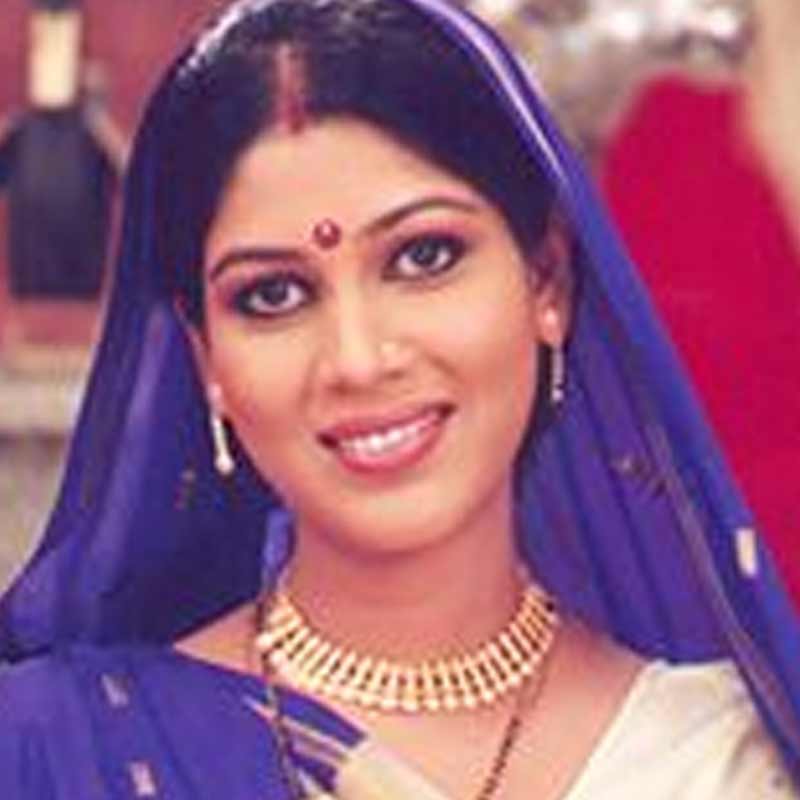
    Devi will air every Friday at 9 pm from 20 September and revolves around Gayatri played by Saakshi Tanwar of Kahaani Ghar Ghar Ki fame. An astrologer predicts that this vulnerable woman orphaned at an early age will die at the hands of her husband played by Mohnish Behl who also hosts Bachke Rehnaa on the channel. Lulla said: “Devi is a woman-centric story dealing with oppression, relationships and human faith in divinity.” The launch of Devi will also mark the conversion of Sony’s top soap Kkusum into a from five episodes per week to four a week. Kkusum currently airs Mondays through to Fridays at 9 pm.

    ‘DEVI’ 1st TV SHOW OF AJAY DEVGAN’S PRODUCTION HOUSE
    The show marks the first foray of Devgan Software and Television Footprints Production into the realm of television production. Film star promoter Ajay Devgan said: “In India everyone be he/she educated or uneducated, believes in some kind of supernatural power. We pray to many gods and goddesses and I thought that this was an interesting theme to explore in a modern and contemporary setting. What is unique about the show is that it shows the conflict between faith and destiny. Will Gayatri’s faith in Goddess Durga prevent what fate has in store for her is the question that will intrigue audiences.”

    Also present was Head of Creative SET Saurabh M Vanzara. He said: “With Devi Sony is looking to mix the popular genres of the soap and the mythological. We want to demystify the concept of God by bringing it to a more down to earth level so that it doesn’t merely exist in a vacuum. Mohnish Behl is very effective in conveying a man who in the beginning is seen in a negative light. He is struggling to come to terms with himself and the rapidly changing circumstances. Although good must eventually prevail the audience is constantly unsure of the direction that he is coming from and I admire the commitment he has given to the role. Our future programmes will include a healthy mix of weeklies and dailies. With a daily one tends to focus more on the character. With a weekly one concentrates on the story to give the audience a broader perspective. We will focus on the woman through shows, which go beyond her role as a housewife and as a family member. We will look at her role as an individual and place in modern day society.”

    The director of Devi is Anant Mahadevan whose resume includes The Sword of Tipu Sultan, Chingari. He said: “Veterans like us have seen the direction in which television has progressed from 1984 till now. I remember the days when we could take three days to shoot one episode. Now we have just one day. I would say that Devi is love in the time of cholera, a weekly in the time of dailies. The frequency of dailies became too hot for some of us to handle. That is why I took a break from television for a year. However, with Devi we have been able to improve the quality of programming by taking the television out of the drawing room and into the outdoors.”

    SITCOM ‘MERI BIWI WONDERFUL’ INDIAN VERSION OF ‘BEWITCHED’
    The second show that SET announced mixes comedy with elements of fantasy. Meri Biwi Wonderful is also a weekly starting on 19 September at 8 pm and will air every Thursday. It is the Indian version of the popular sitcom Bewitched. Three years ago a Mexican version of the show came out.

    The story deals with Raj who falls for Angela not knowing that she has magical powers. He takes a promise from her that she will stop practicing magic completely. Needless to say she finds the temptation of using magic to settle awkward situations irresistible. Speaking on the initiative Lulla said: “A light hearted comedy Meri Biwi Wonderful aims at tugging the heartstrings of people across all age groups. With this show we have added a new dimension towards our goal of providing wholesome family entertainment to viewers.”

    The producer is Asit Modi who formed Neela Telefillms. He said: “It is a situational comedy in which elements of love and affection have been highlighted. Most sitcoms are limited to dialogue or stand up routines. This show has elements of happiness and sadness. The trick for us is to find the magic in between.”

    Also present was actress Tanaaz Currim. She said, “My last serial was Kal Bhi tho Milenge. Laughter has been missing on the television for a year. To be a wife who spreads happiness to all those who surround her is a refreshing change from the current scenario. Too often one sees women depressed, deprived, crying. We have done our best to stick with the original format. Of course the jokes have been tailored to suit Indian tastes.” .
  • ‘I look for a range of emotions in a script’

    ‘I look for a range of emotions in a script’

    As an ideal bahu (daughter-in-law) and caring member of a joint family that most “traditional” Indian women can easily relate to, actress Saakshi Tanwar, who plays Parvati in Star Plus’ hit soap Kahaani Ghar Ghar Ki, has received an overwhelming response from the public at large. Though she has acted in several other serials, it is with this role that she has come under the spotlight (literally) with huge hoardings featuring her as one of the main pivots of the daily soap put up in the country’s metros.

    A former computer software consultant, Saakshi graduated from Delhi. After graduation, Saakshi was preparing for entrance tests to the administrative services and mass communications when a close friend suggested that she audition for national broadcaster Doordarshan’s film songs-based programmeAlbela Sur Mela. She got selected and that marked her first entry into Indian television. Meanwhile, her “traditional” career graph had come to a standstill when she failed to clear either of the tests. Looking back, she has no regrets. “If I don’t get through any exam in the first attempt then it is not meant for me,” says Saakshi.

    Acting wasn’t exactly a new experience for this Delhi lass, who during college was secretary and president of the dramatic society and had her fair share of the stage. However, facing the camera was a new experience. The experience of anchoring the show encouraged her to pursue acting.

    Smitten by the acting bug and the money that come along with it, she initially picked out serials that didn’t require much commitment. In the meantime, she, along with her friends joined a computer course. For a long time Saakshi juggled computer classes and acting. She was seen in Ehsaas, Dastoor, X-Zone,Bhanwar, among many other serials, before getting her first big break playing the central role in Rajdhani.

    And then came the offer from Balaji Telefilms for Kahani Ghar Ghar Ki. Nothing’s been the same since for her.

    Indiantelevision.com’s correspondent Harsha Khot recently met the face behind the pallu (veil)-drawn traditional Indian bahu Parvati that millions of television ghars (homes) have a daily appointment with.

    Excerpts from the interview:

    How did you bag the role of Parvati?
    I was shooting for a pilot of the serial now called Karam, a Balaji production. It was a side role to the main lead bhabhi (sister-in-law) and after getting dressed to prepare for the coming scene, Ekta Kapoor (Balaji’s creative head) walked in and instantly said in a peculiar manner: “Oh this is Parvati.” I had no clue what that meant but later on she told me about Parvati and the rest is history.

    What was your reaction when you got the offer?
    I was extremely apprehensive about taking the role. In part, because when I was shooting for another pilot for Balaji nothing seemed to be working out. I had even begun to think that workwise, relations between Balaji and me were simply jinxed. Besides, taking up the role meant staying back in Mumbai which was rather difficult as I had already made commitments for the shoot of Rajdhaniwhich meant I would have to be in Delhi.

    It’s quite strange, but at the time I preferred to play the small role of bhabi inKaram rather than the central one in Kahani Ghar Ghar Ki (KGGK). Then again, originally the character of Parvati was supposed to be in her mid-thirties and her child between 13-15 years old and I was unsure if I would be able to play that. Eventually I did refuse the role, but by then it was too short a notice, shooting dates had already been scheduled so it was too late to back out.

    So how did you settle the issue?
    Ekta had told me that the character of Parvati would create a wave in television once it went on air. She said: “Saakshi you don’t know what you are refusing.” But even then I refused it. I did not want to walk out on the commitment forRajdhani and neither did I want to get into this age bracket and I conveyed these inhibitions to Ekta. The character’s age was brought down to the late 20’s and even her child’s age to somewhere between 7 and 8. And the dates schedule was reorganised keeping aside dates for Rajdhani. But after sometime Rajdhaniwent off air on Star Plus only to be replaced by KGGK. So maybe it was meant to be the way things went.

    In fact when the character of Parvati got me the best actress award (Maharashtra Kala Niketan’s 5th annual Bollywood Award 2000) I think back to the conversations over the character I had with Ekta especially when she predicted that the role of Parvati was going to be popular. Now if I find it difficult to imagine how I could have ever even considered refusing the role.

    What goes into enacting a character? How easy or difficult is it to act?
    It’s just the idea of living the character for some time. You have to stop being yourself and you have to be the character. I’ve realised that playing Parvati is comparitively easy. But in another serial Yeh Jeevan Hai, I am doing a character of a girl called Nafisa who is a hardcore feminist. She is a single woman and doesn’t want to get into marriage. She is quite different from Parvati or me. During shoots often what happens is Saakshi takes over “Nafisa”. For instance if the script requires the character to apologise I would say it the way I would normally do and then the director immediately points this out and tells me stop being Saakshi. “You are Nafisa,” he says.” This character is very arrogant. if she has to apologise, she does it in a certain style – say a hand running swiftly running through her hair – saying sorry with no trace of contrition and in a confident tone.”

    It’s very tough for me to play her role because I am very unlike Nafisa. She wouldn’t mind having a child out of wedlock. That is not me. I am very conservative so it is very difficult. But there are little ways of portraying an image. Playing Parvati is still easier. For what I am in real life is very close to Parvati, in matters of behaviour, mannerisms. Except for her thinking of course.

    What is the main conflict that you have in your mind when you play Parvati?
    How can anybody be “so good, so sacrificing” even when somebody else keeps stepping all over her. I did not believe that such people exist. But during a visit to my native place at Rajasthan I came across my own relative who was very close to the Parvati on screen and that made me get more attached to the role.

    You were more inclined towards a corporate career until the acting bug bit you, which indicates contemporary thinking quite unlike the Parvati who takes everything lying down, especially in a scene where Parvati is shown being slapped by Pallavi (her sister-in-law). So don’t you face conflicting thoughts?
    While shooting that shot I felt very awkward, but that is the way character is sketched. But there is a reason behind that. In the serial the essence of showing Parvati not retaliating to the slap is that the next time when the circumstances are apt she slaps Pallavi for her nastiness in the presence of other family members.

    What according to you made the character so popular for the viewers?
    I often wonder how it went on to be so popular but have never been able to really figure it out. It could be that Indians are very emotional. Crying makes them happy. It could also be self-pity. That they sacrifice a lot for the good of the family and yet they get the worst deal in return. It could even be the other way round. Maybe women identify themselves with the way Parvati cares for the family, sacrificing her desires without any regrets if it helps the family.
     

    What do you feel about the character?
    Somehow, I strongly feel that many viewers get carried away with the idea that what she is doing is good, and in the best interests of the family. Which may be right in a way, but that is only from one side. What isn’t realised in this process is that what could be good for the family could be so maybe at the expense of somebody’s own happiness. But in most cases, women feel that they are doing good.

    What she did to Pallavi by getting her married to Kamal (younger brother of of the person Pallavi was originally supposed to marry but who ran off just before the wedding) wasn’t a good decision. Mainly because Pallavi did not wish to get married to Kamal, and this instigates her to exact revenge on Parvati.

    How do you work on the character?
    I take a lot of help from my director. I need a lot of feedback, a lot of guidance. I have been very lucky to have worked with Tigmanshu Dhulia (director ofRajdhani) and Imtiaz Ali (also a director) who take a lot of interest in the characterisation. They will even tell you what is going on in the character’s mind. So it becomes much easier. If you know what is going in the character’s mind while saying the lines then you obviously are thinking like that and it obviously comes out like that. I go for these details.

    Are you director’s actor or actors’ actor?
    I am a director’s actress. Given a script I can convey the character but it would be limited to a certain perspective. When the director expresses what the character really is like and how it could be brought out better then that helps enhance my performance.
    Saakshi Tanwar & in tele serial ‘Kahaani Ghar Ghar Ki’

    Does that mean you keep going back to the director for expressing every nuance of the character you are trying to portray?
    Many times you can’t even think of another way of enacting a particular scene or shot. If you are on your own then after sketching it out in your mind you tend to do what you perceive the character is like. But if someone comes forth and tells you this is how it could be then you realise yes this is more like her and it comes though better than before. The things that have to conveyed are now being done in a better manner and it’s so realistic. So somewhere I feel that left on my own I’ll miss out certain details.

    Each time I see myself on screen I feel the shot could have been done the other way. But if that thought crosses your mind while acting only then it makes sense, not after the shot is over. Of course you can incorporate that in later performances. If at the time of acting someone can tell you what is expected of the character then it makes a lot of difference. And that is what has happened inYeh Jeevan and Rajdhani.

    Did you ever have to work on your voice?
    In Dastoor, which was a Muslim love story, my voice was childish and shrill and the character needed a range in voice that would come through as she ages from 20 to 40 years.

    It was a role of a Muslim girl whose father gets her married off to another man instead of a close relative with whom she is in love. The role spans over 20 years beginning from Sher Bano’s (the character she plays) youthful years to the time she stands up against her family.

    To prevent history from repeating, she sides with her daughter to marry the person that she (her daughter) desires to be with. As the character begins aging, in order to match the voice with her age, it had to be more rough. I would sit with the harmonium and work on the voice, stretch and make it flow along with the musical note.

    Which character that you’ve portrayed is your favourite?
    The one I did in Bhanwar. The role was of a social worker fighting for a 16-year-old rape victim. It’s my favourite because it was all about performance. No make up, no special effects to cover up. It was all about hard work in the form of more refined, presentable acting.

    What do you look for in a script?
    Range of emotions to portray, how comfortable will I be playing the role. I ponder over whether I will be able to portray the character in a convincing way.

    What does acting mean to you?
    Acting to me is portraying the character with 100 per cent conviction. Whether it is true or false, your should act in a way such that your audience shouldn’t even for a second feel that you are acting. It should be very convincing. Like so many times while reading the KGGK script I feel that no, no this doesn’t happen.

    I would be so unconvinced with the thinking of the character that at times, I would change the dialogues to suit the conflict going on in my mind about the way Parvati thought. But then the director would explain why things are the way they are.