Tag: Sa Re Ga Ma Pa

  • Hindi content consumers in south India are hard to please, says Pixel Pictures CEO

    Pixel Pictures, based in Bangalore, is a media production house in the Kannada entertainment industry. Founded by Prashanti Malisetti and Sanjeev Kumar, Pixel claims to hold the distinction of being the first Indian production house to successfully adapt international reality shows to regional television, in a short period.

    The company, launched in 2013, prides itself on its distinctive approach to television production. Its experience in production of varied types of television programs and televised events ensured the success of Pixel’s shows such as Sa Re Ga Ma Pa Li’l Champs, Dancing Star and Super Minute. Pixel is also responsible for the television debut of Kannada film stars such as Crazy Star Ravichandran and Golden Star Ganesh, which was well-received.

    In an interaction with Tarachand Wanvari, Prashanti speaks about her company, the way ahead and shares inputs about the regional television industry. Excerpts:

    (1)What prompted you to leave a banker’s job and start Pixel Pictures? Could you run us through Pixel’s history? What drives you and what drives the company?

    Banking kept me motivated, it was hard for me to quit a full time, secure job, and follow my passion. I aided other entrepreneurs manage their portfolio, I saw their scope of diversity in management and did not want to just push myself into one quadrant of money management.

    The decision was hard, to leave banking and migrate into an industry without backing. Pixel was started with passion and instinct in two equal parts. After volunteering and learning the facets of production through several events in Bangalore, I landed my first break with Saregamapa, I could understand and worked hands-on to conceptualize it to suit the regional audience. Later came Dancing star, and Super minute which was a hit amongst the viewers.

    To provide quality content and promote clean entertainment drives me, the team that I built push that vision across, and is the driving force of growth of the company.

    (2)Could you tell us a little more about Pixel? How is it funded? What sort of a team do you have in place?

    At Pixel we are diverse and cover from shows to events to gaming content. We have a strong team that works continuously to provide quality entertainment. Since television is a medium which caters to a wider audience, my team and I strive hard to provide them with shows that are different, exposing them to other verticals of variety reality shows.

    Regional television producers are trained to work within a budget and having the money management experience ensures our delivery over and over again. Continuous movement and momentum have kept us within ourselves for funding, we are expanding to other platforms and shall be open to funding in the future.

    I have always claimed that production is highly non glamorous, we work long hours and come on the bottom of the chain in terms of recognition. My team is diverse, and talented; we work with creative and technical staff. Each show has a separate team dedicated to it and goes through with its evolution in parallel, this allows multiplicity and timelined growth of the company.   

    (3)How different are you from other production houses? What are the major differentiators?

    Every production house is unique, each driven by its own vision. Pixel has always strived hard to provide the audience with quality content they would relate to. We began our journey with structured content of international shows and nativising it to the regional audiences of Karnataka. We learned along the way importance of styling and creative capture of audience is equally important for the success of a show. We have done multiple seasons of game and talent shows, the challenge is to capture the audience within 6 minutes of commencement of the show. The games or dance routines do not prolong for more than 180 seconds. Sometimes the same game is played over three or four time, each time should be designed and captured that the audience remain gripped. Pixel has differentiated itself here and have to our credit the reality shows like Saregamapa, Dancing star, super minute and Minute to win it in Malayalam which are hit amongst the viewers.

    (4)Who would you consider as your idol/s? Why?

    I have huge respect for Ekta Kapoor and Radika Sarathkumar; they stuck behind their vision and continued to push them unceasingly, regardless of the tags of being successful or otherwise. They both were visionary for their times. Kapoor took the television industry by a storm and revolutionized the content making women the forefront audience. At a time when the mentality was to make male-friendly content for the 9 pm slot, she brought in her shows and made women watch content and be heard too.

    Sarathkumar was the first mainstream actress to begin her journey into the small screen and translate the strength of her movie career to the small screen. I also love the way the team at Colors Kannada works, their constant urge to create innovative content for their viewer not only inspires me but also pushes us to do a little more than before for each of our projects.

    (5)What more non-fiction or reality shows do you want to do?

    There are a number of ideas we keep working and do pilots for, the biggest challenge is to keep the viewer hooked over multiple episodes and maintain consistency. All reality shows engage with similar concept of holding time related challenges of some kind, we want to capitalise the same and do something different than the one we have done before. For the non-fiction space we recently did ‘Shantham Papam’ which was a recreation of the crime that took place in the region. It’s common knowledge that crime exists around us and we take our regularity for granted. This show was about highlighting that crime targets the “us” commoners and we need to be weary and cautious. The show helped us focus on different linears and reach to a wider audience.

    (6)You have done reality shows in Kannada and Malayalam. What’s next?

    Its very important for a production house to stabilize themselves in each of the markets, having made a mark in Kannada Non-Fiction space, we want to establish ourselves as a wholesome content provider, hence our focus this year is to venture into the fiction segment and deliver quality content. Having done One show in Malayalam, we want to conceptualize and produce meaningful content for the Malayalam market.

    (6.1)How different are viewers in the south regional markets from the Hindi-speaking markets?

    The two markets cannot be compared; the sheer amount of choice that ‘Hindi’ market commands and enjoys is completely on another realm. That having said, the south viewers are also avid watchers of Hindi content and are very hard to please in terms of content. The urban audience who watches both picks the better of the two and stick to it or turns into a critic too easily. The tier two city audiences enjoy the nativized version and relate to the regional content more with their favorite stars entertaining them and showing their different personal side.

    (6.2)How different is the live audience in the case of South Indian reality shows?

    The live audience give the show its life, their reactions are genuine and realistic. They are the first judges of the content that’s been recorded.

    (7)Do shows need to be localised? How and to what extent?

    The shows have been nativised for the local audiences. From an international gaming format to the Indian audiences we engage in a lot of conversation and bring a personal touch to each participant. Each show has had its own set of changes, for example the dance shows had a good combination of Indian and western dancing forms. The Indian audience is extremely diverse and each episode needs to have multiple holding points to keep their attention and come back for more.

    (8)What kind of fiction shows are you doing and what are the kind of shows that you would like to do? For who?

    Recently, we have set foray into fiction/non-reality shows and our first soap opera in this category is a story about an Ayurvedic healer, and her struggle to restore the lost art of Ayurveda. The show focuses on her journey – her belief in Ayurveda, her exploration of unbridled volley of emotions, dark and dramatic starks of life. This show will definitely resonate with the people of different genre, as this is something people of all ages would relate to.

    (9)How many episodes have been planned, how many have been canned so far?

    The show is under production.

    (10) The costs for producing an episode in and for regional markets are just a fraction of the costs or producing for the HSM market? Could you elaborate on this? How do you manage to stay profitable?

    The HSM is a larger and wide market and that includes a lot of viewers and takes approximately 40% share, which means the advertisers reach more people.

    We, at Pixel, are working continuously, irrespective of the magnitude of the project and this constant work is what motivates us, and has helped us to stay in a profitable business.

    (11)How do plan your shoots? What happens when the schedule goes off-track?

    Meticulous planning is needed for a successful shoot. We are usually equipped, and have a backup plan for unforeseen events that makes sure we do not miss on schedules. After all, we are programmed to be on our feet, and the team is tuned for lateral thinking. The team comprises of different people and all these individuals think differently, which helps us to plan and execute efficiently, without any setbacks.

    (12)How do you approach a client with a project? What kind of research is done to prepare a project?

    Approaching a client is a mammoth task as there is strong competition. A lot of research is involved based on the liking of people, demography, the food – market is feeding on, but at times, there is fear of failure too. At Pixel, our mission is to bring out shows that excites the audience, and bring in a different experience which would retain in the memories of audience for a longer time, and the credit duly goes to my team. Each individual is talented and come up with their own ideas, which gives us a plethora of approaches.

    (13)What plans do you have for Pixel Pictures? Considering that you have a background as a banker, any plans for bringing in outside funds? Could you share these plans with us?

    Any sensible business owner would agree, irrespective of being a banker or not, an infusion of external funds during expansion is very crucial as personal funds do not satiate beyond a point. The challenge is in finding the right partner who would understand the business, passion and growth. Until now, we have worked within a budget and have successfully delivered projects, and the continuous momentum has helped us keep the fund circulation within ourselves. As we expand, into other platforms we would be open to external funding.

    (14)You are planning on doing some shows for the north regional markets. Could you speak about these?

    Well, being in this industry, I would love to do shows for other markets too. To reach out to people of different demography, a lot of research has to be done to cater the needs of different audience. Once, we figure out what excites the audience of other regional markets, we would conceptualize the shows to suit their requirements.

    (15)Localised distant clones of shows such as Survivors have been made and have had a successful run in the Kannada market for a few seasons. What are your thoughts on this?

    For any show to be successful, the approval of audience is needed. We as a production house try hard to cater to the needs of the audience by making the shows more interesting, and something that appeals to the audience. Entertainment is our USP, and we would love to provide the audience, the shows they would love to watch and relate to.

  • Flipkart’s new campaign by Lowe Lintas Bangalore stresses on assurances of satisfaction

    Flipkart’s new campaign by Lowe Lintas Bangalore stresses on assurances of satisfaction

    MUMBAI: With the number of e-commerce platforms growing at a phenomenal pace, it is become necessary to think of unique ways to catch the consumer through either eye-catching television commercials or through purse-catching offers.

    Flipkart which is one of the earliest platforms in India has taken a new communication route promising consumers of the platform being not just convenient, but assured as well, to enhance its position. The new campaign, which has been conceptualized by Lowe Lintas Bangalore, has been weaved around the core thought that “Shopping with Flipkart is not just convenient, but assured as well.”

    The campaign attempts to address that segment which uses online shopping but have a certain fears that cross their minds. Some fears that people have are around “the fear of unknown” like fake products, and cumbersome returns process. The campaign attempts to reappraise people’s perception about Flipkart’s Service Promise and reassure the core target group on the benefits of online shopping.

    Commenting on the objective, Flipkart marketing VP Shoumyan Biswa said, “With over 50 million users, Flipkart is the largest ecommerce player in the country. We are seeing great traction with our consumers on the back of pioneering selection, service and pricing. While the start has been great, we feel the journey has only just begun especially when the majority of the country is yet to experience online shopping. In such a scenario, we believe that as market leaders it is our responsibility to develop the market and help onboard the next few million.”

    He added that Flipkart had initiated an extensive activity across multiple cities and different target segments of potential shoppers some months earlier. While there were some nuances in terms of the reservations towards shopping online, the overarching challenges could be distilled down to two key points –Reassurance that the consumers will get original products and the Ability to return products with ease if needed
    .
    Flipkart Matlab Bilkul Pakka is the new slogan and Biswa said, “Given the strategic importance of this project, our approach for this campaign was to design, plan and execute a complete 360 degree campaign leading with spots on TV, Integration and Sponsorships on key properties across genres like ICC T20 World Cup on Star Sports, Sa Re Ga Ma Pa on Zee TV amongst other key regional, youth and niche genre sponsorships.”

    Over the next few weeks this will get amplified by a strong social, digital and outdoor plan reaching out to national metro as well as regional markets.

    The campaign comprises a series of two films that focus on the assurance provided by Flipkart that the products sold on its platform are of genuine quality. In the first film titled ‘Easy Exchange & Returns’, a non-user of online shopping – who is also a boss – is asking his employee to buy a gift from a local retail store. But the employee suggests Flipkart. Not wanting to compromise on the choice and quality, the boss seems apprehensive of taking the online route. But upon further conviction by the employee on the assurance on quality and easy return policy, he decides to buy from Flipkart. He is completely satisfied as he gets to return the product without any questions asked.

    In the second film titled ‘100% Original Products’, a doctor is shown complimenting his patient on his choice of shoes. The patient leads him to the Flipkart App that has a range of shoes he can chose from. As he is apprehensive that he may not receive a genuine product, the patient promises him that the product is indeed genuine and is something that is vouched by Flipkart as well. In fact he could even return the product if he does not like it. Now convinced, the doctor goes ahead and shops from Flipkart and ends up being totally satisfied.

    Sharing his views on the creative thought process, Lowe Lintas CCO Arun Iyer said, “We wanted to get an entertaining creative expression which has the core cultural insight of our consumers ingrained in it. With our campaign “Flipkart matlab bilkul pakka”, we have been able to answer the most primary and oft repeated service related question, “Pakka na?” This campaign has been crafted with an attempt to connect to our consumers through instances which depict doubts which a lot of our prospective consumers have before shopping online. Hopefully through this campaign, we would have answered their questions and relieved them off their doubts regarding online shopping. Hopefully people enjoy it as much as we enjoyed working on this project.”

    Adding his views, Lowe Lintas Bangalore ECD Rajesh Ramaswamy said, “In today’s times of crazy clutter, we wanted to take an approach where we are sharp and to the point. The challenge was to still make it entertaining. So, this treatment of back and forth, set to a soundtrack of a TT match, really stood out, and added to the humour in the end. And yes, we also got characters we have always loved but never see in ads like Amol Palekar and Rajesh Sharma. It is always inspiring to work with Abhinay Deo, and we believe we have something really clutter breaking and enjoyable.”

    The treatment for the campaign is derived from a ping pong game, as the conversation follows that pattern of communication where each character ‘serves’ a response. The music too has been used in the pauses and silent moments of the film to ensure that the desired message is pronounced. It has been shot by Ramesh Deo Productions and will play on prominent offline and online mediums as part of its outreach plans.

  • Flipkart’s new campaign by Lowe Lintas Bangalore stresses on assurances of satisfaction

    Flipkart’s new campaign by Lowe Lintas Bangalore stresses on assurances of satisfaction

    MUMBAI: With the number of e-commerce platforms growing at a phenomenal pace, it is become necessary to think of unique ways to catch the consumer through either eye-catching television commercials or through purse-catching offers.

    Flipkart which is one of the earliest platforms in India has taken a new communication route promising consumers of the platform being not just convenient, but assured as well, to enhance its position. The new campaign, which has been conceptualized by Lowe Lintas Bangalore, has been weaved around the core thought that “Shopping with Flipkart is not just convenient, but assured as well.”

    The campaign attempts to address that segment which uses online shopping but have a certain fears that cross their minds. Some fears that people have are around “the fear of unknown” like fake products, and cumbersome returns process. The campaign attempts to reappraise people’s perception about Flipkart’s Service Promise and reassure the core target group on the benefits of online shopping.

    Commenting on the objective, Flipkart marketing VP Shoumyan Biswa said, “With over 50 million users, Flipkart is the largest ecommerce player in the country. We are seeing great traction with our consumers on the back of pioneering selection, service and pricing. While the start has been great, we feel the journey has only just begun especially when the majority of the country is yet to experience online shopping. In such a scenario, we believe that as market leaders it is our responsibility to develop the market and help onboard the next few million.”

    He added that Flipkart had initiated an extensive activity across multiple cities and different target segments of potential shoppers some months earlier. While there were some nuances in terms of the reservations towards shopping online, the overarching challenges could be distilled down to two key points –Reassurance that the consumers will get original products and the Ability to return products with ease if needed
    .
    Flipkart Matlab Bilkul Pakka is the new slogan and Biswa said, “Given the strategic importance of this project, our approach for this campaign was to design, plan and execute a complete 360 degree campaign leading with spots on TV, Integration and Sponsorships on key properties across genres like ICC T20 World Cup on Star Sports, Sa Re Ga Ma Pa on Zee TV amongst other key regional, youth and niche genre sponsorships.”

    Over the next few weeks this will get amplified by a strong social, digital and outdoor plan reaching out to national metro as well as regional markets.

    The campaign comprises a series of two films that focus on the assurance provided by Flipkart that the products sold on its platform are of genuine quality. In the first film titled ‘Easy Exchange & Returns’, a non-user of online shopping – who is also a boss – is asking his employee to buy a gift from a local retail store. But the employee suggests Flipkart. Not wanting to compromise on the choice and quality, the boss seems apprehensive of taking the online route. But upon further conviction by the employee on the assurance on quality and easy return policy, he decides to buy from Flipkart. He is completely satisfied as he gets to return the product without any questions asked.

    In the second film titled ‘100% Original Products’, a doctor is shown complimenting his patient on his choice of shoes. The patient leads him to the Flipkart App that has a range of shoes he can chose from. As he is apprehensive that he may not receive a genuine product, the patient promises him that the product is indeed genuine and is something that is vouched by Flipkart as well. In fact he could even return the product if he does not like it. Now convinced, the doctor goes ahead and shops from Flipkart and ends up being totally satisfied.

    Sharing his views on the creative thought process, Lowe Lintas CCO Arun Iyer said, “We wanted to get an entertaining creative expression which has the core cultural insight of our consumers ingrained in it. With our campaign “Flipkart matlab bilkul pakka”, we have been able to answer the most primary and oft repeated service related question, “Pakka na?” This campaign has been crafted with an attempt to connect to our consumers through instances which depict doubts which a lot of our prospective consumers have before shopping online. Hopefully through this campaign, we would have answered their questions and relieved them off their doubts regarding online shopping. Hopefully people enjoy it as much as we enjoyed working on this project.”

    Adding his views, Lowe Lintas Bangalore ECD Rajesh Ramaswamy said, “In today’s times of crazy clutter, we wanted to take an approach where we are sharp and to the point. The challenge was to still make it entertaining. So, this treatment of back and forth, set to a soundtrack of a TT match, really stood out, and added to the humour in the end. And yes, we also got characters we have always loved but never see in ads like Amol Palekar and Rajesh Sharma. It is always inspiring to work with Abhinay Deo, and we believe we have something really clutter breaking and enjoyable.”

    The treatment for the campaign is derived from a ping pong game, as the conversation follows that pattern of communication where each character ‘serves’ a response. The music too has been used in the pauses and silent moments of the film to ensure that the desired message is pronounced. It has been shot by Ramesh Deo Productions and will play on prominent offline and online mediums as part of its outreach plans.

  • Zee TV’s India’s Best Dramebaaz bids adieu; Kapil Sharma hosts the grand finale

    Zee TV’s India’s Best Dramebaaz bids adieu; Kapil Sharma hosts the grand finale

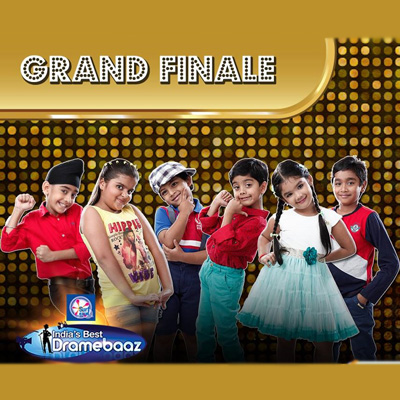
    MUMBAI: Comedian Kapil Sharma brought to close season two of India’s Best Drameebaz (IBD) on Sunday, March 6 by hosting its grand finale. Produced by Frames Productions, season two completed its 26 episode journey. On 12 December 2015 Zee TV had once again brought back the second season of this home grown laughter dose which had children in the age group of 5 to13 years. . 

    Zee Enterprises Entertainment Ltd (ZEEL)’s flagship channel Zee TV has always provided platforms that have contributed talented performers to the entertainment industry. Being a pioneer in making its own home grown reality shows, Zee has always given some of the best entertaining reality shows. After producing a series of talent reality shows like Sa Re Ga Ma Pa, Dance India Dance, Dance India Dance Li’l champs, India’s Best Cinestar Ki Khoj, the channel had launched India’s Best Dramebaaz (IBD) in 2013.  

    Zee TV roped in a number of brands for the season 2 of IBD. These included Surf Excel as the title sponsor and Patanjali Atta Noodles as co-powered by sponsor. Besides, the channel also had other brands including Britannia Tiger Crunch, Yamaha Fascino, Epson, Vistaprint.in and Dabur Chawanprash as associate sponsors. 

    A source informed indiantelevision.com that the production cost for the show was Rs 70-80 lakh per episode, and the ad rate for a 10 second slot was Rs 1.5 lakh.

    Zee marketed IDB season 2 aggressively. The campaign posed a distinctive challenge because it had kids at the forefront and hence would have been perceived as a kids show and would not appeal to the other audiences.

    To specifically counter the unique challenge that IBD faced, a unique strategy was devised. All communication on IBD was contextual via customized communication for TGs and specific markets which was carried across all media vehicles including TV, radio and cinema.

    Special promos resonating with various genres of TV audiences were created and run across different mediums including cinema, music, news and kids channels. Clutter-breaking and entertaining radio spots were specifically created for each market highlighting issues. A special print innovation was carried across key publications.

    On the digital front, various innovations were a part of this campaign. Zee TV tied up with Facebook and conducted a Facebook bus activity wherein fun content was generated with the judges and participants and populated across social media.

    As the show approached the finale week, Zee TV tied up with Twitter to provide a unique social media experience to its fans. The Twitter Challenger App was a unique initiative that brought forth the fun side of its participants through various challenges. The judges, anchors and the top 6 finalists created pictures and videos that were funny, topical and fresh. The same were populated across social media during the finale week.

    The efforts put in by Zee TV to market the show seem to have paid off handsomely. In week 6 of Broadcast Audience Research Council (BARC), IBD emerged as the number one non-fiction show in Hindi GEC space with 8148 TVTs while in week 7 the show continued to be the number one non-fiction show with 7057 Impressions’ 000. In week 8 IBD remained at the top with an increase in viewership from 7057 to 7382 Impressions ‘000. 

    Frames Production’s Ranjit Thakur said, “India’s Best Dramebaaz has really won the heart of Indian audiences. The kids were fabulous and fantastic, also all the three judges Sonali Bendre, Vivek Oberoi and Sajid Khan, we all are like a big family now. Also working with Zee after a couple of years was amazing. I am happy that we have delivered this beautiful show.”


  • Zee TV’s India’s Best Dramebaaz bids adieu; Kapil Sharma hosts the grand finale

    Zee TV’s India’s Best Dramebaaz bids adieu; Kapil Sharma hosts the grand finale

    MUMBAI: Comedian Kapil Sharma brought to close season two of India’s Best Drameebaz (IBD) on Sunday, March 6 by hosting its grand finale. Produced by Frames Productions, season two completed its 26 episode journey. On 12 December 2015 Zee TV had once again brought back the second season of this home grown laughter dose which had children in the age group of 5 to13 years. . 

    Zee Enterprises Entertainment Ltd (ZEEL)’s flagship channel Zee TV has always provided platforms that have contributed talented performers to the entertainment industry. Being a pioneer in making its own home grown reality shows, Zee has always given some of the best entertaining reality shows. After producing a series of talent reality shows like Sa Re Ga Ma Pa, Dance India Dance, Dance India Dance Li’l champs, India’s Best Cinestar Ki Khoj, the channel had launched India’s Best Dramebaaz (IBD) in 2013.  

    Zee TV roped in a number of brands for the season 2 of IBD. These included Surf Excel as the title sponsor and Patanjali Atta Noodles as co-powered by sponsor. Besides, the channel also had other brands including Britannia Tiger Crunch, Yamaha Fascino, Epson, Vistaprint.in and Dabur Chawanprash as associate sponsors. 

    A source informed indiantelevision.com that the production cost for the show was Rs 70-80 lakh per episode, and the ad rate for a 10 second slot was Rs 1.5 lakh.

    Zee marketed IDB season 2 aggressively. The campaign posed a distinctive challenge because it had kids at the forefront and hence would have been perceived as a kids show and would not appeal to the other audiences.

    To specifically counter the unique challenge that IBD faced, a unique strategy was devised. All communication on IBD was contextual via customized communication for TGs and specific markets which was carried across all media vehicles including TV, radio and cinema.

    Special promos resonating with various genres of TV audiences were created and run across different mediums including cinema, music, news and kids channels. Clutter-breaking and entertaining radio spots were specifically created for each market highlighting issues. A special print innovation was carried across key publications.

    On the digital front, various innovations were a part of this campaign. Zee TV tied up with Facebook and conducted a Facebook bus activity wherein fun content was generated with the judges and participants and populated across social media.

    As the show approached the finale week, Zee TV tied up with Twitter to provide a unique social media experience to its fans. The Twitter Challenger App was a unique initiative that brought forth the fun side of its participants through various challenges. The judges, anchors and the top 6 finalists created pictures and videos that were funny, topical and fresh. The same were populated across social media during the finale week.

    The efforts put in by Zee TV to market the show seem to have paid off handsomely. In week 6 of Broadcast Audience Research Council (BARC), IBD emerged as the number one non-fiction show in Hindi GEC space with 8148 TVTs while in week 7 the show continued to be the number one non-fiction show with 7057 Impressions’ 000. In week 8 IBD remained at the top with an increase in viewership from 7057 to 7382 Impressions ‘000. 

    Frames Production’s Ranjit Thakur said, “India’s Best Dramebaaz has really won the heart of Indian audiences. The kids were fabulous and fantastic, also all the three judges Sonali Bendre, Vivek Oberoi and Sajid Khan, we all are like a big family now. Also working with Zee after a couple of years was amazing. I am happy that we have delivered this beautiful show.”


  • Zee Kannada spruces up weekends with new seasons of two non-fiction shows

    Zee Kannada spruces up weekends with new seasons of two non-fiction shows

    MUMBAI: Come 26 December, Zee Kannada is all set to bring back two of its popular weekend non-fiction shows namely Sa Re Ga Ma Pa season 11 and Weekend with Ramesh season 2. 


    Sa Re Ga Ma Pa Season 11 saw approximately 8500 people between the age group 18-80 taking part in the auditions, out of which 30 best singers were selected from Udupi, Shivamogga, Gadag, Mysore, Yadgir, Bellary, Bangalore and various other places of Karnataka.


    Mentoring and channelising this talent will be the judges namely singer Vijay Prakash, composer Arjun Janya and Rajesh Krishnan. To add glamour and fun, Anushree will continue as the host of this season too. 


    In Weekend with Ramesh Season -2, actor – director Ramesh Arvind will take the centre stage and will narrate real life stories of reel life stars. The show will unravel what happens behind the scenes as well as showcase celebs and their lives. Arvind will take the audience on an inside journey with the celebrities through all walks of their lives.


    While Sa Re Ga Ma Pa will be aired at 7.30 pm, Weekend with Ramesh will be aired at 9 pm on Saturday and Sunday.

  • Zee Bangla to launch new season of ‘Sa Re Ga Ma Pa’

    Zee Bangla to launch new season of ‘Sa Re Ga Ma Pa’

    MUMBAI: Zee Bangla is all set to launch a new season of the musical show Sa Re Ga Ma Pa.


    The format of the show will be different this time. Three distinct genre of music will be showcased namely classical/semi-classical; folk and light music. Variety of music forms like Jhumur and Kirtan, etc will also be highlighted through the participants, giving the audience flavours of different musical genre and style in a new avatar.


    This season, there is no age bar, thus, providing a wider window for all aspiring musical talents. This season, the panel of judges includes Monali Thakur, Shantanu Moitra and Shubha Mudgal.


    Musical icons like Asha Bhonsle, Sonu Nigam, Kumar Sanu amongst others have graced the show in the past.


    Sa Re Ga Ma Pa will launch on 8 June and will be aired from Monday to Wednesday at 10 pm.

  • “We don’t want to be the first but be the best”: Pradeep Hejmadi

    “We don’t want to be the first but be the best”: Pradeep Hejmadi

    With multi-dimensional understanding of the media business, he has spearheaded and successfully launched innovative and first-in-class profit-bearing initiatives in the Indian media marketplace.


    Having more than 18 years of well-rounded experience in the Indian media industry spanning media sales, media planning and buying, consumer research, business planning and product development, former TAM Media Research senior vice-president and  now Zee TV business head Pradeep Hejmadi,  is in the happy space.


    Hejmadi has filled up the position which was vacant since 2010 and believes he has a long way to go. With the channel’s fiction offerings doing pretty well as per TAM TV ratings, according to Hejmadi it is time for the channel to strengthen its weekend band with new shows and target younger profile.


    In a conversation with indiantelevision.com’s Disha Shah, Hejmadi talks about the challenges that he had to face when he came on-board, the channel’s biggest upcoming property – ‘Aryan’ and how it will live up to the channel’s expectations. 


    Excerpts:


    It’s been five months since you took charge as the business head of Zee TV.  How has the experience been so far?


    It was like getting onto a running horse or a speeding vehicle. For me, it was more about gathering the right amount of momentum to get on-board and steer it in the right direction. The initial challenge was to get a sense of the pace like what track are we on and what track we need to be in and what is the destination and fix those things. Then it was just to get on-board and work with the team to add to the spirit and the momentum.


    Have you brought any changes in terms of content and marketing?


    Nothing at all… (laughs).. Honestly talent has been there. It has all the ingredients. Zee has had a legacy of being a pioneer in creating new formats and being acknowledged by viewers as a powerful brand in the fiction space.


    There were just a few small things that needed to be aligned. Firstly, it was getting our priorities in order which we did as a team. It was about sitting down and saying “What are the things that we are doing right now and what are the serious things that we need to take on the front and which are the things that we need to start on a development front.” So it was really about setting our priorities right and then getting a process and a way of functioning to harness the best that was already there.


    So we have a very good creative team; an effective marketing team and a powerful PR and digital team working here. We just had to bring all these pieces together and get them to fire in proper synchronization.


    And obviously, every time you hit a bump on the road, there can be a bit of alignment requirements as well. This is the other piece that is required but it is no rocket science. Life is no different, irrespective of what work you do because principles are the same. I came here to help several millions of consumers. At TAM, I had a responsibility in delivering in a particular manner and here I have the responsibility of delivering in a slightly different manner.


    Which band works wonders for the channel? Weekday or weekend programming?


    The beauty about facts is that you don’t have to think about them, you need to note them down. When I joined Zee, Jodha Akbar was on top and that was one show which was standing for us on top. Most of the other shows delivered medium range ratings and on the non-fiction end we had Dance India Dance (DID) which was winding up.


    It was in an interesting phase that I came on-board. We prioritised and looked at what are the things that are really going to give us reflection points in our shows and the teams took the backend to it. They put the energy back into it. There was a need for some alignment, because so much happens at the same time. One has to understand that the buzzing lights on the road are not the street markers. Those are pass inkers. So if you start thinking that they are the ones you have follow then you lose your direction.


    So we needed to separate the cat eyes on the road from the blinking headlights of the other vehicles to remain in the race and that is what we did as a team. We made that difference between those blinking cat eyes versus the shinning lights of some vehicles. With that focus, by god’s grace and the opportunity that audience provides you to get your act together, we are where we are and intend to be.


    ‘DID’ has delivered good ratings during weekends, do you think ‘Aryan’ will live up to the expectations?


    Sometimes media business is like a circus. There will be both clowns and animals and so when you a buy a ticket, you just don’t buy it for the clown. The same thing happens when you sit in front of the television screens. It must have a mix of multiple things.


    So we should not compare a horse stick with a clown act.  In the same way, there is no comparison between DID and Aryan. What we are trying to do with Aryan and other shows like Neeli Chatri Wale and the 9 pm non-fiction band is to create variety so that the whole family can sit together and watch. Not for even a moment, are we wanting Aryan to compete with a DID. They both are very different.


    DID is a platform to identify and give to the industry a fresh pole of choreographers. These are the guys who have raw talent in them but are not actors. Aryan on the other hand is meant to appeal to a family, be inclusive of the family but bring in the audience through a slightly younger profile because that is the kind of profile that starts watching television on a weekend. It is a story that will inspire people to believe in themselves. Our intent is to create a nice family blog where you go back to general entertainment days where you can actually sit with your family and watch television.


    We don’t want passing of remotes to happen. That’s our intent of weekend programming. Weekend is an environment we are going to create for families to sit and watch television together.


    In the future as well, we will create different kinds of properties to give audiences a variety to enjoy. Weekend programming is by sheer nature very varied; while some do celebrity-based dance shows, we do non-celebrity based shows.


    As for Aryan, it took us almost eight months to be where we are now and the challenge continues as it is a trilogy. Maharakshak is the brand and Aryan is the first of its trilogy followed by two other superheroes.


    Will we see a return of Sa Re Ga Ma Pa? And is the channel working on new formats?


    Yes. Sa Re Ga Ma Pa will soon hit the television screens. Work is on. Once we reach the stage where we are confident of the talent and the format we will announce it officially. As of now, we are working on multiple projects and those will go on air first.


    Talking about new formats, one should not forget that every format demands newness. DID and Sa Re Ga Ma Pa are power brands for us, so we don’t have to go looking for something new. We need to make sure that we do justice to the standard that it has lived up to.


    I think sometimes audiences are comfortable in what they are familiar with but they would like to see something better and if we are able to provide that with little alterations then that too becomes new for them.


    Is an increase in number of hours of original programming in fiction on agenda?


    Yes, but gradually. The audience has limited time so we have to make sure that we become their preferred choice.


    We are clear that we will create new properties and put out more hours but we have to make sure that every hour is worth its value in gold for the audience because every time we put a new show we are expecting the audience to shift its time. We are not in a mad rush to just keep on expanding slots because we are answerable to millions of viewers who come to us every week.


    Once we are at that point where we feel that it is time to go on to the next one, we will. We are in no hurry to score on somebody else’s score sheet. Our focus areas are very clear in terms of what we want to do. We don’t want to be the first but be the best.


    Zee being the pioneer, are you planning to revive the afternoon slot anytime soon?


    Given the way the industry is balanced between a hybrid revenue model of advertising and subscription, it is not that if I go to open an afternoon slot and get audience’s affection, it will translate into subscription revenues for me. It has to be advertising revenue and then over a period of time subscription revenue will start coming in. And advertisers somewhere think a 2 rating point in the afternoon is worth less than a 2 rating point in traditional primetime. So as long as that mindset is there, it does not work for me from an economic model point of view.


    For makers to make a show and put it in the afternoon costs as much as to make a show what advertisers love to call, prime time. If I can deliver 6 per cent reach and 2.5 rating in afternoon, as a content provider I don’t see what is wrong in it. But somewhere the yield on that has always been a matter of concern and therefore over a period of time, if you see that what Zee pioneered and others followed, has now died because economically the model crashed.


    With digitisation dates being postponed, how do you see it impacting the channel?


    Digitisation is a far bigger phenomenon than a short-term milestone. We have to learn to do well no matter how the environment changes. I don’t see how it will impact the channel in the immediate run. However, it will help us on the distribution level to ensure better revenues and possibly reduce the carriage costs etc. But at the same time, we should not forget that audiences need that time to be able to cough up money, last miles to go and put up the boxes and it needs to be done in a more organised and systematic manner.


    From Zee’s perspective, whatever be the environment, playing out of a set-top box or an analogue cable or DTH service provider, we need to be as relevant and as important for the audience to come and watch us. Those are just means of getting there. We would like digitisation to happen sooner, but also done in a systematic manner so that it makes sense for the whole value chain.

  • Zee Marathi: Sustaining values, evolving expressions

    Zee Marathi: Sustaining values, evolving expressions

    MUMBAI: One of the strongest channels in the Zee Entertainment stable, Zee Marathi, has been a leader of the genre for quite some time. Nearly 15 years in the genre, it has seen itself transform from Alpha Marathi to Zee Marathi.

    With high TAM ratings to back it, the channel has sustained its values over time through the kind of story telling that it does to viewers. While now, the channel has turned its focus to get younger audiences hooked to its shows, it faces several challenges.

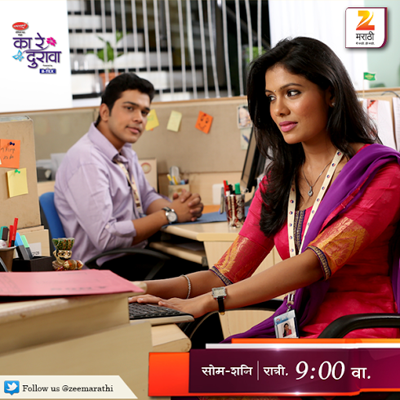
    Zee Marathi business head Deepak Rajadhyaksha says that over the years the Marathi general entertainment channel (GEC) has managed to keep its values intact as time progressed. Two new shows launched by the channel are proof of the same. Ka Re Durava is a story about a married couple in an office who have to pretend to be unmarried for some reasons while Honar Sun Mi Ya Gharachi is about a woman from a nuclear family who gets married into a joint family with six mother-in-laws and how she deals with them.

    “We are a youth inclusive show. Our survey in Maharashtra led us to understand what today’s youth is interested in, how is his lifestyle, thought process and TV consumption, which we incorporate in our shows. The youth of today will be our main target tomorrow,” says Rajadhyaksha. He goes on to add, “Ka re Durava has a young married modern couple. If a similar story was there in the previous generation shows, the same understanding and support system would have been missing.”

    The in-house research showed some important findings for the channel- the youth had the ability to take risks, extremely smart and not stuck in complexities of relationships and are very social media savvy. These findings were similar for both urban and rural areas.

    Another show Julun Yeti Reshamgathi shows the lead woman leaving her boyfriend and getting married to a man chosen by her parents. When she tells her husband about him, he asks her if she wants to go back to him, but she stays on and slowly falls in love with him. While the family comes to know of it and starts doubting her, she has her husband’s support. “We deal with issues in a non-dramatic way but such is the pattern of storytelling that we follow,” says Rajadhyaksha.

    Regional channels usually end up taking shows from Hindi and showing it to its viewers. But Zee Marathi says that in its case, it’s the reverse. Honar Sun Mi Ya Gharachi has been adapted for Zee Kannada with a request to also adapt Eka Lagnachi Dusri Goshta. Zee Telugu has also asked to adapt some shows from the Marathi GEC while the network’s flagship channel Zee Marathi has also pitched in for Honar Sun Mi.

    Budget restrictions disallow them from experimenting too much with non-fiction but it does as much as it can. The recently launched Jai Malhar is the first mythological show in the genre costing nearly Rs 10 crore for the series. Home Minister and Sa Re Ga Ma Pa are famous in-house properties with the former in its eleventh year, since the channel does not believe in remaking international formats.

    While most Hindi GECs still work on the endless show format, Zee Marathi has kept the 9pm slot as a finite story band. Rajadhyaksha says that its viewers are now acquainted to this slot and are smart enough to understand the time period of shows. A month before the show ends, viewers are informed, either indirectly or directly, about it.

    However, even though TAM considers a Maharashtra population of 4.72 crore viewers, it still has to penetrate 25 per cent of the state. Digitisation has helped it reach metros well, but they along with LC1 markets still remain a challenge. “The borders are the toughest market for us to crack, near Madhya Pradesh and Karnataka. Hindi is widely spoken here and it’s difficult to pull Hindi viewers to Marathi because Hindi shows are grander than ours. But slowly and gradually we will be in a position to capture them too,” says Rajadhyaksha.

    Digitisation and implementation of the 12 minute ad cap has allowed them to increase ad rates by around 20 to 25 per cent overall and around 35 per cent for primetime. Subscription rates have increased by 13 per cent since last financial year.

    Currently about 15 per cent of its viewers are youth. For the tech savvy generation, all its shows are available online with two people employed for the digital medium. At the same time, out of India markets such as the UK, South East Asia, UAE, Mauritius, Australia and the US are prominent pockets.

  • Sa Re Ga Ma Pa to make a comeback as DID takes a sojourn

    Sa Re Ga Ma Pa to make a comeback as DID takes a sojourn

    MUMBAI: Are you an avid Dance India Dance fan? Well, then get ready to wait as the most rated non-fiction property of Zee TV will come back with a new season after a good one year.

    The show which has caught on to the audience’s heart with jaw dropping performances for more than seven years, has decided to take a break and come back next year with an all new, refreshing and exciting new season.

    Confirms the maker himself, Essel Vision Productions producer Nitin Keni, “With back-to-back launches, there is too much of DID happening.”  From introducing the Indian audiences to dance forms like locking and popping, hip hop moves to ‘slo-mo’ style, to making dance popular among all age-groups, DID has done it all. And through the DID sub-franchisees (DID LiL Masters, DID Super Moms and DID Doubles), the channel has ensured that all the age groups have been explored to the optimum.


    “Whether it’s Cinestars ki Khoj or otherwise, DID needs to be given rest,” adds Keni. Replacing the dance reality programme is Zee’s talent hunt show – Cinestars ki Khoj. Come 28 June and the channel is all set to revive its popular format every weekend at 9 pm. The mega auditions is slated to start from 20 June at RK Studios.

    “Zee TV has always stood for celebrating the talent of India’s common man. In 1995, the channel created the Mecca of singing talent in the country with Sa Re Ga Ma Pa and introduced the entertainment fraternity to some of its leading singers. The year 2009 saw a landmark in the history of Indian television when we launched Dance India Dance, giving hope to a million dance enthusiasts across the country. The show not only emerged as one of reality television’s biggest successes but opened up several new career avenues in dance for its participants,” says Zee TV programming head Namit Sharma.

    So while the currently running DID will be replaced by Cine Stars ki Khoj, post that the channel and the makers (Essel Vision) are planning to get back Sa Re Ga Ma Pa on-board. 

    Reveals Keni, “We are thinking of Sa Re Ga Ma Pa again, although it has not done really well in the past few seasons, considering people no longer are classically oriented, but we are thinking about it now.”


    A media planner believes that though it is a good decision to take a break from Dance India Dance, but considering the show’s popularity, the viewers might take some time to digest. “Undoubtedly, it has been a wonderful journey for the channel with DID. The show not only helped them in getting good numbers but also a large number of advertiser’s, season after season. Getting Sa Re Ga Ma Pa on-board is a good move, but the challenge for the channel is to make it competitive, bigger and better than the previous seasons.”