Tag: S.N. Sharma.

  • ‘Broadcasters could consider different pricing for rural-urban subscribers’

    ‘Broadcasters could consider different pricing for rural-urban subscribers’

    When DEN Networks promoter Sameer Manchanda set up the national MSO in 2007, one of the key professionals on his team, which was led by CEO Anuj Gandhi, was the cable TV veteran S.N. Sharma. The trio quickly ramped up the company and took it to national level status.  Gandhi then moved on in 2010 to join Network18. And, Sharma who was the president (operations), was promoted as the CEO a year or so later.

    He continued with the company, expanding it nationally, and seeing it through the first two phases of digitization before departing in 2015 to get on board India’s biggest and most funded  startup  — the Mukesh Ambani-backed Reliance Jio.  A former McKinsey professional Pradeep Parameswaran was roped in to lead the company in his place.

    Sharma, meanwhile, at Jio, worked on planning and building the team for company’s foray into cable TV along with another cable TV veteran K. Jayaraman.

    Then, in July 2016, Sharma made a sudden about-turn and decided to return to DEN Networks, a move that raised the eyebrows of many but cheered many in the trade. For he is known for his relationships and his deep understanding of how cable TV should be run in the Indian context.

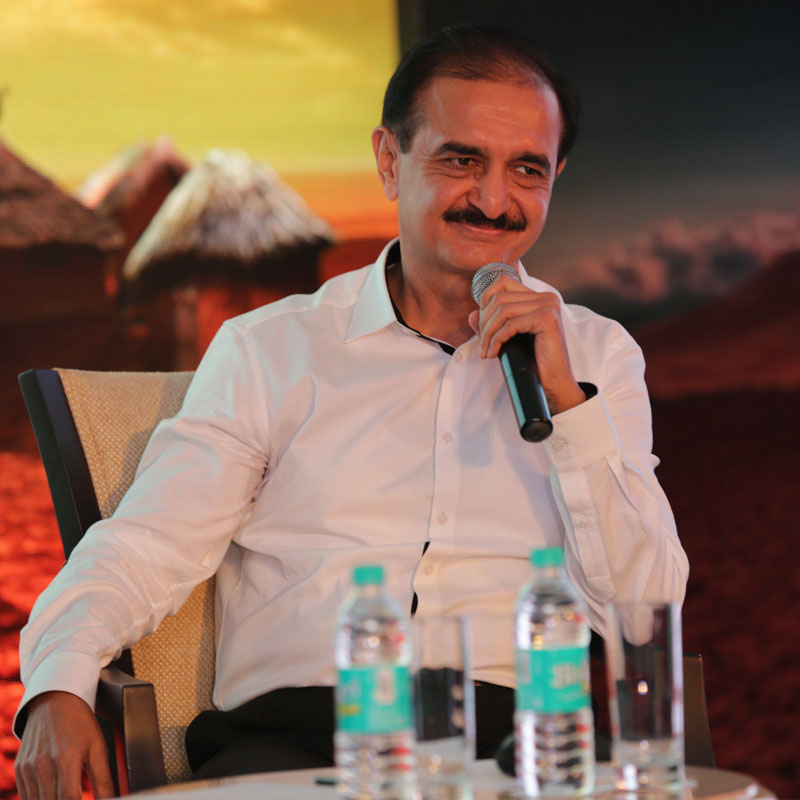
    Sharma was one of the key notes at indiantelevision.com’s Eleventh India Digital Operators Summit 2016 which concluded over the weekend at the Leela Hotel in south Goa. He had a one-on-one conversation with Indiantelevision.com Founder, CEO  & Editor in chief Anil Wanvari. Read on to get some insights into what is going on at DEN and with Sharma. Excerpts from the conversation:

    Why did you leave DEN in the first case, join Reliance and then why did you choose to come back?

    Having been into the cable industry for over 20 plus years, I thought, let me do something else. And, that’s why I moved to Reliance. Basically, I wanted to roll out fibre to the home (FTTH) over there. It would have been a great experience and learning (I thought). And it was, indeed. I learnt a lot in the short span of one and a half year. It was a wonderful learning that I brought in to my personality.

    But then, there was a call from my previous employer DEN, my friend Sameer.  I am one of the co-founders of DEN Network. And, I requested my employers at Reliance if I could leave. And they were kind enough to let me go back. It was more of an emotional decision than a professional one. All my learnings that I have had  at Reliance, I am
    sure, will help me learn to drive DEN in a better manner,in a positive direction in time to come.

    What are the challenges you are facing?

    The challenge as we all know is primarily monetization.  We started seeding boxes in 2010, now it is 2016. DAS came in 2012. And “hote hote” (by and by) it became 2013. Phase I and II happened quickly.

    There is a lag in monetization. Of course, we all can understand and you will appreciate that an industry which evolved since 1990, almost 30 year old industry, it  takes time for things to change. And, we took tiny, baby steps to monetize it.  But now, the time has come the boxes seeded in 2010 have almost lived their life and new technology is coming in. So my prime task is to see to it that we augment the process of monetization.

    The other challenge that I face immediately which I am working very aggressively on is to reduce the cost. We all know that Phase III digitization got into  a confused state, with boxes having got seeded, and the courts intervening.  Analogue signal has also been taken away from many of us. The MIB says 93 per cent  of digitization has happened. So the monetization process also has to start. But, in the bargain, we have already incurred some expenditure.  And unless I start recovering my revenue, the journey will be difficult.

    This time, in a short span of one and a half month, I addressed my cable TV partners, my business partners and my associates in a very transparent manner. We had a discussion – a whole day discussion wherein I shared with them my experiences with the telco. I shared with them the upcoming technology. I told them there is a change. The technology is not going to spare them.  We all used to think that last mile …last mile. But, my subscriber is not bound by last mile. My biggest threat today is the handset that I carry. The viewing habits are changing. Technology is bringing other alternatives. For the same viewer  who used to be watching their services. It is high time they realized it and accepted this change. And, they all agreed. I was surprised. It was a very open, frank and to-the-point discussion. I told them if we are willing to change, if we are willing to adopt, life will be there for us, otherwise the journey is going to be difficult. Everybody is cooperating. We hope to see a very good upside as far as collections are concerned.

    Third is making the LCOs, our partners realize the pains we are going through.  And, make them see the technology.

    And fourth is we have started conducting sessions with cable TV operator to sensitise them with the consumers. Like the regulator also said: Don’t force things on the consumer. He is in no mood. So the approach has to be friendlier than earlier. We have to change the face of our representative visiting the home of the subscriber. The
    presentation of our package has got lost.  We brought in a digital set-top box, we invested in that. But, we forgot in the process that we had not changed our face to the consumer. The cable TV operators accepted that we need to bring in a lot of ethics and discipline in that part.  You will see our representatives wearing uniforms. Uniform could be ours or the LCO’s.  It has to be in a presentable form. Today, if you are visited by a courier boy, the way he  is approaching is different.

    I am sure the cable TV operators will comply.

    Where are you reducing costs?

    Our priority early on was to penetrate the market, you increase your reach and when you penetrate certain areas, those can be reached through fibre or through links from telcos. After some time, you realize that you have spent an X amount in reaching an area and you have seeded 50 boxes. It does not make sense to you. So, you need to make a quick decision. You retract, you save money on that. Or you go to another MSO who is reaching the same area  and he has done it using a different pipe. And, he has 50,000 subscribers. So, I would tell him, why don’t we share the pipe. That process (of sharing)  has already started.  Then, we have started sharing the infrastructure also in another manner, in terms of content. If a competitor has a pipe serving more subscribers in the same area than I have less or vice-versa, I am open to sharing the pipe with the competitor. This is helping reduce costs. We have started sharing local content with cable operators. The cable operator has local content with him. So, instead of spending separately on the same content, we have started sharing that content too. Then, there are usual steps — reduction of manpower, to hire on a temporary basis, and cutting down the day-to-day expenses.

    Where are you getting your maximum margins?

    You see we have largely been a phase III player.  We have seeded 5.5 million in phase III, and 3-4 million are to go in phase IV. Of the 13 million subscribers, we have seeded 9-9.5 million. My upside will come from revenues of phase III boxes, which were yielding Rs 10-20. We have already crossed a milestone of Rs 40- 45 revenues, By December-end, it will touch  Rs 75 plus — that is a 45 per cent growth. Phase I is likely to give us 15-20 per cent.

    Who is going to get you this money – LCOs or the customer?

    You see the mood is set.  In the exercise, baby steps were taken to augment phase I revenues. It took us four years.  Phase III customer is also aware.  All studies and research show us is that the  buyingcapacity is there,  paying capacity is there too. HD is another example.  Around 70 per cent of TVs are HDTVs going into to Phase III
    areas. As it is for me to perform and deliver, I need my costs to be under control.  On the whole, we have also become very cost-conscious. We want our pie of the revenue.

    The cable sector has been bashed red and blue and cable TV bottomlines are stained with red ink? When will it turn around?

    You will see by Q3 end there should be an upside.

    You are very strong up north. Are you strengthening that or are you expanding into newer territories?

    As of now, my focus is to strengthen where we are. I have 13 million subscribers, I am happy to be limited where we are. As we start seeding boxes, it might go to 15 million as we deliver. I want to have a positive bottomline. I want a fair share of revenue. I want to move towards an era where sharing of revenues has be settled. As of now, there is always a dilemma, am I to stand by the TRAI that cable operators should get 35 per cent of revenue. The fact of the matter is that today we are receiving 35 per cent, and he is getting 65 per cent.

    I am very much focused that let’s first  set it right. It will take time and over few months. But, I see that over the next 12 months, this will move towards 50:50. And then, as we move forward, and add more values in the system, I am sure the operator will also get to earn  more through us if he wants to stay with us and be part of the journey.  If he says, he does not want to do broadband with, that’s his choice. If that arises, then we might go direct or we have leave that with him. I am very focused that instead of spreading thinly, focus where you, monetize it well. Settle a good business model. A good business case.  Business will follow.

    LCOs’ insecurity is less than earlier. Your comments.

    You can’t help it. Even MSOs. Nobody is secure. Times are changing. We have to adapt. You can’t ignore the technolgy. If I don’t change, just because my fellow LCO has not, and even I don’t, that’s a folly. Today, in  a matter of time, we started broadband. We have tested a broadband formula. We have close to 125,00 subscribers. We did this with a focused mind in Delhi and Kanpur. To test how the technology behaved, how the arithmetic works here. Now we find that, with 15-17 per cent of penetration, the project is breaking even. Now, anything added into it, is your upside.  The LCOs who are willing to work with us are very happy as they march around with us. And also, there is a learnin that the normal consumer is consuming 40 GB of internet at a speed of 10 mbps at a price of Rs 800. Broadband consumption is rising fast, 5 GB has gone to 10, and 20 GB has gone to 40 GB. Putting in everything into perspective, the cost is Rs 10 per GB.  Next year, I am sure it will be 100GB. And the speed will touch 50 MBPs. In such a scenario, if  I don’t move, somebody else will move.

    You must be happy Goldman Sachs invested but it was a discount to its earlier price, actually a deep discount What’s the way forward on the investment?

    It’s a subjective analysis . But, you should say that this proves that there is strength in the business model of DEN.

    On broadband there will be an increased investment going in. And besides broadband, we are incorporating OTT and value added services.

    So what’s the way forward on the pay TV market, with 31 December coming up?

    We are looking at it wholly. The boxes are going at a good speed. We are not really pushing. My focus is on getting Phase I, II III right. Once that business model is set in place, everything will also.  It is a matter of time, the  pull should come from the consumer, from the LCO. If he is willing to work with me. In the earlier case, in Phase I and II, we were subsiding the boxes. Today, it is a pure business case. This my product. You want to do business with me, please do.

    How can broadcasters assist the process of digitization till the tariff order comes out?

    There was a time when broadcasters used to have dual pricing policy. For rural, it was lower, and for urban, higher.  Now, that we have invested and are investing, all of a sudden  they have foregone  that policy of theirs, which they were following in analogue, and still they are following in some places even today. The moment we seed STBs in phase III, they start charging digital rates. I would urge broadcasters too relook at this.

  • Den Networks confirms S N Sharma appointment as CEO

    Den Networks confirms S N Sharma appointment as CEO

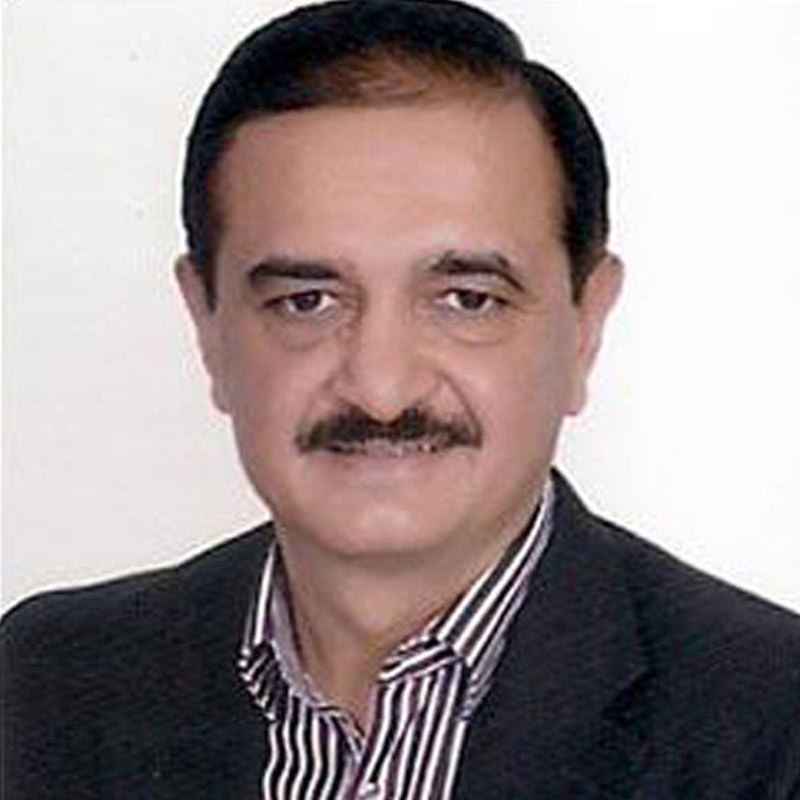
    MUMBAI: A few days ago Indiantelevision.com reported that S N Sharma would be re-joining Den Networks after departing from it a year and a half or so ago. The report was based on sources and it was unconfirmed. Today Den Networks informed the Bombay Stock Exchange (BSE) that Sharma will indeed be re-joining the national cable TV MSO Den as its chief executive officer (CEO) with immediate effect. Erstwhile CEO Pradeep Parameswaran will continue to work with the company as an advisor to the company.

    A cable TV industry veteran Sharma has over 30 years of experience of which over 25 years have been in media. He holds a Bachelor’s degree in Electronics and Communications and a Master’s degree in Business Administration.

    DEN Networks chairman & managing director Sameer Manchanda said that he was happy to welcome Sharma back to the DEN family. Said he: “We are confident of Sharma’s unparalleled experience in the cable TV Industry and under his able leadership DEN will scale greater heights in time to come. DEN’s cable TV partners and associates on the ground are all geared up to work in perfect coordination to adopt new systems and technologies for better monetisation of investments.”

  • Den Networks confirms S N Sharma appointment as CEO

    Den Networks confirms S N Sharma appointment as CEO

    MUMBAI: A few days ago Indiantelevision.com reported that S N Sharma would be re-joining Den Networks after departing from it a year and a half or so ago. The report was based on sources and it was unconfirmed. Today Den Networks informed the Bombay Stock Exchange (BSE) that Sharma will indeed be re-joining the national cable TV MSO Den as its chief executive officer (CEO) with immediate effect. Erstwhile CEO Pradeep Parameswaran will continue to work with the company as an advisor to the company.

    A cable TV industry veteran Sharma has over 30 years of experience of which over 25 years have been in media. He holds a Bachelor’s degree in Electronics and Communications and a Master’s degree in Business Administration.

    DEN Networks chairman & managing director Sameer Manchanda said that he was happy to welcome Sharma back to the DEN family. Said he: “We are confident of Sharma’s unparalleled experience in the cable TV Industry and under his able leadership DEN will scale greater heights in time to come. DEN’s cable TV partners and associates on the ground are all geared up to work in perfect coordination to adopt new systems and technologies for better monetisation of investments.”

  • DEN Networks introduces 22 HD channels in Kochi

    DEN Networks introduces 22 HD channels in Kochi

    MUMBAI: DEN Networks is looking at serving its Kochi subscribers better. The multi system operator (MSO) has announced the launch of its HD package comprising 22 channels for its existing subscribers in Kochi. With this launch, DEN has become the only cable TV distribution company in Kerala to offer highest number of HD channels.


    The HD package would include channels like, Star Plus, Zee TV, Zee Cinema, Star Gold, Star World, Life OK, NGC, NGC Wild, NGC Music, HBO Hits, HBO Defined, Star Movies, Movies Now, Romedy Now, Zee Studio, Star Sports HD1 and Star Sports HD2. 


    Commenting on the development, DEN Networks CEO S.N. Sharma said, “At DEN Networks, we have always believed in consistent improvement – both in terms of customer service and our offerings. Our ability to keep our customers in pace with the times has led to us being among the fastest growing players in Cable TV distribution in Kerala. Our new HD Package is yet another step towards bringing a richer, high definition TV viewing experience for our customers in Kochi.”


    “Kerala has more than 1.2 million subscribers and most of them are early adapters when it comes to latest technology. At DEN Networks, our ability to sense the evolving demand and offer our customers customised solutions have helped us to garner increasing market share,” added Sharma


    “In the next few months, while we will increase our presence across all 14 districts of Kerala; we will also introduce this HD Package in other towns like Trivandrum, Kottayam, Kannur, Mallapuram, Pallakad etc,” he concluded.


    DEN Network’s Cable TV services are available in 10 of the 14 districts in Kerala, namely Eranakulam (Kochi), Allapuzha, Kottayam, Trivandrum, Thrissur, Mallapuram, Pallakad, Kozhikode (Calicut), Kannur and Kasargode.


    The MSO offers 200 SD channels and 22 HD channels in Kochi as of now, all the other places offering is 140 channels, which will be upgraded to 200 and 22 HD channels in the coming months. Also company will soon be introducing packages to subscribers in Kerala, that will offer the choice of deciding what bundle of channels to view and pay for. Kerala has a total market size of six million cable homes, out of which, DEN is having more than 20 per cent market share as of now and fast growing.

  • MSO Alliance launches ad campaign on monthly billing

    MSO Alliance launches ad campaign on monthly billing

    MUMBAI: Soon consumers will find bills coming to them for using cable TV service. And the message will be reaching them loud and clear through a print campaign that was launched today in the New Delhi edition of The Times of India and Navbharat Times. The print campaign which aims at educating consumers of monthly billing reads: “Attention Digital Cable TV subscribers- Now pay as per your selected channel pack. Get a cable TV bill from your MSO every month starting December 2013.”

    The campaign is an initiative of the multi-system operator (MSO) Alliance that comprises national players: DEN Networks, Hathway Cable & Datacom, Siti Digital Cable Television and InCableNet. The MSO Alliance also has announced that the subscribers who have got a set top box (STB), submitted the ‘Know-Your-Client’ details and channel package selection, will get a bill for their cable TV service every month. The first bill will be generated for the month of November. The new facility has been introduced in keeping with the Telecom Regulatory Authority of India’s (TRAI) regulation on starting gross billing from December.    

    “This move is important as it will ensure that there are no additional or random charges levied on the subscribers. Our viewers will thus pay only for what they watch and they must insist on a bill from their local cable operator or MSO at the time of monthly payment,” said MSO Alliance secretary and DEN Networks CEO S.N Sharma. 

    As per the TRAI regulations, subscribers will get 15 days from the date of the bill to make their payment. In case the subscriber fails to make the payment after the expiry of the due date of payment, the MSO or the affiliate LCO has the right to charge interest on the outstanding amount.

    The Union Government and the TRAI had rolled out a four-phased plan for digitisation of cable TV across India early last year. Phases I & II of this process covering Delhi, Mumbai, Kolkata and 38 other major cities have already been completed. According to the Ministry of Information and Broadcasting, over 26 million STBs were installed in these cities, over 70 per cent of which were by digital cable companies.

  • DEN Networks appoints Yugal Kishore Sharma as president, Broadband

    MUMBAI: Broadband and value added services are expected to be manna for india‘s rapidly digitising cable TV sector. And showing its intent to stash away some of the god sent food from heaven is Delhi-Headquartered MSO DEN Networks. It today announced the appointment of telecom vet Yugal Kishore Sharma as president, broadband to spearhead its foray into broadband internet services. Yugal will be reporting directly to DEN CEO S.N. Sharma.

    Yugal joins DEN from Tikona Digital Networks, a wireless broadband company with a 4G licence where he was the COO. Prior to Tikona, he has worked with Polycom Inc. as regional director – India and southeast Asia. He has previously been associated with leading Indian and global firms like TATA Telecom, SIEMENS India, LG Electronics and PARSEC Technologies.
     

    Yugal brings with him his vast experience in the field of Consumer Technology. He has handled product businesses like Mobile Phones, VoIP CPEs, Wi-Fi, DECT, Bluetooth, Video endpoints and enterprise solutions such as Unified Communications (UC), Video-Collaboration (VC) & Tele-Presence.


    Commenting on the appointment, DEN Networks chairman and MD Sameer Manchanda said, “We are delighted to welcome Yugal to the DEN team. Following the unprecedented success of digitisation with addressability, the focus for our industry now expands to providing true high speed broadband services and bundled double and triple play offerings to consumers. High bandwidth wired broadband is the next game changer for India and has the potential to revolutionise both media and communications industries in the country.”


    Yugal brings with him his vast experience in the field of Consumer Technology

    DEN Networks CEO S.N. Sharma said, “It is our pleasure to have a seasoned broadband professional like Yugal at the helm of the broadband vertical. DEN has been gearing up for its broadband foray over the last few months. We have already carried out proof of concept tests on DOCSIS 3.0 platforms and achieved speeds of 100 Mbps in controlled conditions which is far higher than what most broadband platforms are able to offer today. We now plan to take broadband across our digital subscriber base and offer consumers an unbeatable high speed data experience.”


    DEN’s expertise in cable television coupled with its strong nationwide presence in an estimated 13 million homes and with five million digital cable subscribers provides it a strong platform to rapidly grow its broadband services. With the vision of offering double and triple play services to its subscribers, DEN has been investing heavily over the last few years to build a large fibre optic backbone through a combination of owned and leased fibre. Moreover, the existing cable going into the consumer home for digital cable TV is versatile enough to also provide high speed broadband giving the Company massive operating leverage for quick of deployment of its internet service.

  • Q1-2014: Den Networks continues to rake in the moolah albeit with some hiccups

    Q1-2014: Den Networks continues to rake in the moolah albeit with some hiccups

    BENGALURU: Indian cable TV distribution company Den Networks Limited (Den Networks) seems to be on a roll. Its cable business PBT in Q1-2014 was Rs 32.77 crore despite a 22 per cent rise in depreciation and finance costs as against Rs 36.81 crore in Q4-2013.


    Den Networks cable business PBT in Q1-2014 was Rs 32.77 crore as compared to Rs 18.40 crore in Q1-2013, up 78 per cent y-o-y. The company’s PAT (before mark to market forex losses, exceptional one-time and ESOP expense) for Q1-2014 was Rs 19.22 crore versus Rs 17.04 crore in Q1-2013, a 13 per cent rise as compared to Q4-2013. After these adjustments, Den Networks cable business PAT stood at Rs 9.22 crore.


    Den Networks cable business EBITDA for Q1-2014 was Rs 85.84 crore as against. Rs 43.82 crore in Q1-2013, a 96 per cent y-o-y jump, and was seven per cent more than the Rs 80.33 crore in Q4-2013.


    The company’s consolidated EBITDA for Q1-2014 was Rs 87.68 crore, almost double (up by 95 per cent) the Rs 45.06 crore in Q1-2013, but only 3.22 per cent more than the Rs 84.94 crore in Q4-2013.


    Let us look at Den Networks other figures for Q1-2014


    Den Networks’ consolidated revenue for Q1-2014 was Rs 275.42 crore as compared to the Rs 200.60 crore in Q1-2013, up by 37 per cent y-o-y, but was slightly lower (by 1.04 per cent) than the Rs 278.31 crore for Q4-2013.


    The cable distribution company’s consolidated PBT for Q1-2014 was Rs 34.49 crore while consolidated PAT for the quarter stood at Rs 10.15 crore which included the impact of mark-to-market forex losses of Rs 10 crore and higher depreciation and finance costs compared to Q4-2013.


    Den Networks cable business revenue for Q1- 2014 was Rs 262.85 crore as compared to the Rs 264.93 crore in Q4-2013. Revenues in Q4-2013 included Rs 15.10 crore on account of a one-time sale of Set Top Boxes (STBs). Excluding the impact of this sale, Den Networks cable business revenues grew by 5.2 per cent q-o-q (as compared to Q4-2013).


    Den Networks’ consolidated expenditure for Q1-2014 at Rs 187.74 crore was up 20.9 per cent as compared to the Rs 155.54 crore in Q1-2013, but was 2.9 per cent lower than the Rs 193.37 crore for Q4-2013.


    Consolidated operation, administrative and other costs for Q1-2014 at Rs 160.70 crore were up 20.4 per cent as compared to the Rs 133.52 crore in Q1-2013 but 2.4 per cent lower than the Rs 164.68 crore in Q4-2013.


    Den Networks consolidated Personnel cost for Q1-2014 at Rs 27.04 crore was 28 per cent more than the Rs 22.02 crore for Q1-2013, but 5.75 per cent lower than the Rs 28.69 crore in Q4-2013. Consolidated depreciation for Q1-2014 at Rs 33.22 crore was more than double (more by 113.5 per cent) as compared to the Rs 15.56 crore in Q1-2013 and 21.8 percent higher than the Rs 27.27 crore in Q4-2013.


    Consolidated interest and other financial charges of Rs 19.97 crore were more than double the Rs 9.97 crore for Q1-2013 and 22.1 per cent more than the Rs 16.36 crore in Q4-2013.


    Den Networks CEO S N Sharma said, “With the successful implementation of digitisation in Phase II cities, India is now firmly in the digital era. The overall response from consumers is extremely positive as they can now clearly perceive the benefits of digital and the superior experience associated with it. The major focus areas now are the completion of package selection by subscribers, collection of KYC data and the start of retail consumer billing, which are being spurred on by MSOs with a strong regulatory backing. These steps will truly complete our industry’s transformation into a B2C model. We are also drawing up plans for digitising our analog base in Phase III and IV cities while gearing up for our broadband foray.”


    Den Networks recently launched two digital cable channels – DEN Movies and DEN Classic, available to Den Network subscribers in selected areas. The company says that it sees the local cable channel segment become a potential growth area along with the spread of digitisation.

  • MSOs to crack the whip on LCOs on customer forms issue

    MSOs to crack the whip on LCOs on customer forms issue

    MUMBAI: India‘s multisystem operators (MSOs) got a dressing down yesterday from TRAI boss Rahul Khullar about the lack of KYC or CRF forms giving details about their subscribers. Khullar ordered them to get their acts together, giving a deadline of 30 June 2013 for the forms to come in, failing which they would be prosecuted.

    With the proverbial Damoclean sword hanging over their heads, they have decided to fall in line.

    Says DEN Networks CEO S.N. Sharma: “We are all working together, to follow the directions given by TRAI. We are already in the process of collecting customer data and are positive that we will be able to meet the 30 June deadline.”

    According to sources, the four MSOs got together post the TRAI meeting and have agreed to act in coordination with each other. The idea is to switch off all the set top boxes for which the MSOs don‘t have the customer details. The switch-off will be done area wise and hopefully this will force local cable operators to share the forms with MSOs. The latter have also agreed to not allow cable TV operators to switch MSOs or play one MSO against the other.

    “Subscribers are bound to suffer during this exercise as they may have given the details to their operator but would have not been forwarded to the MSO. They should contact the MSOs directly to ensure that their details are registered or they can face a switch off,” emphasises InCablenet MD Ravi Mansukhani.