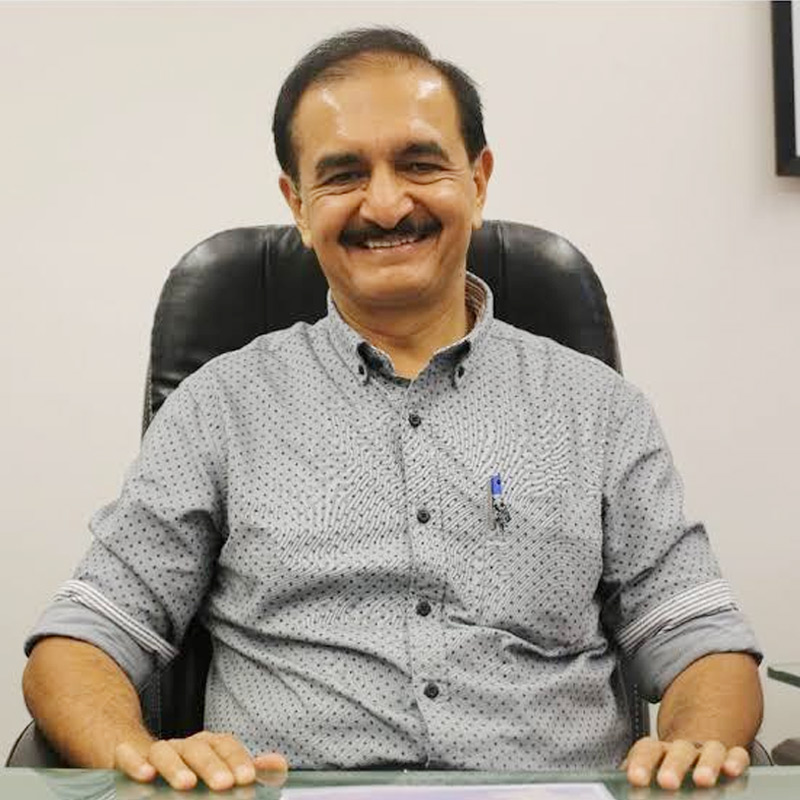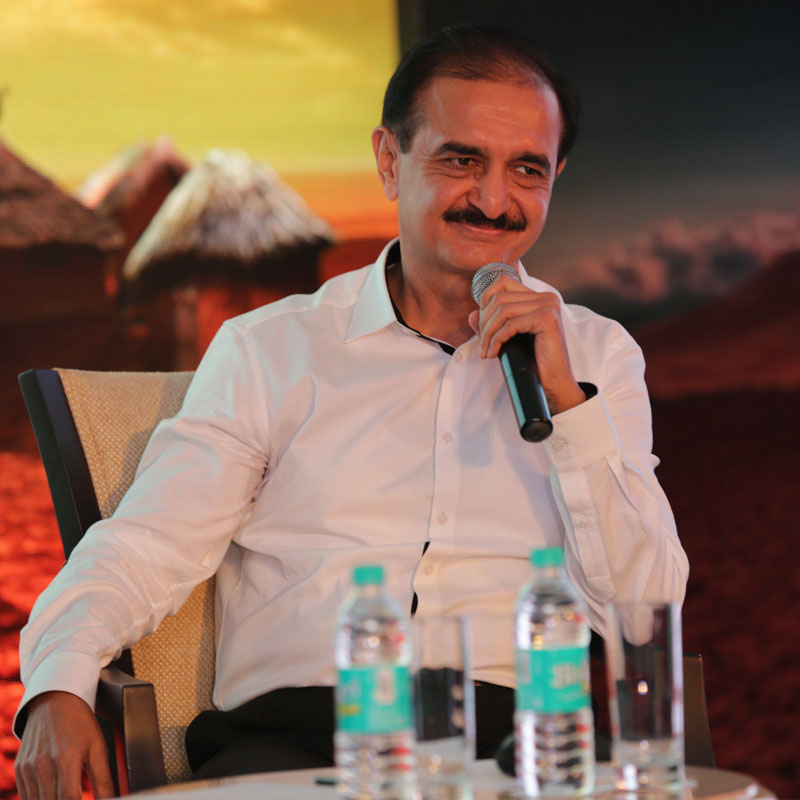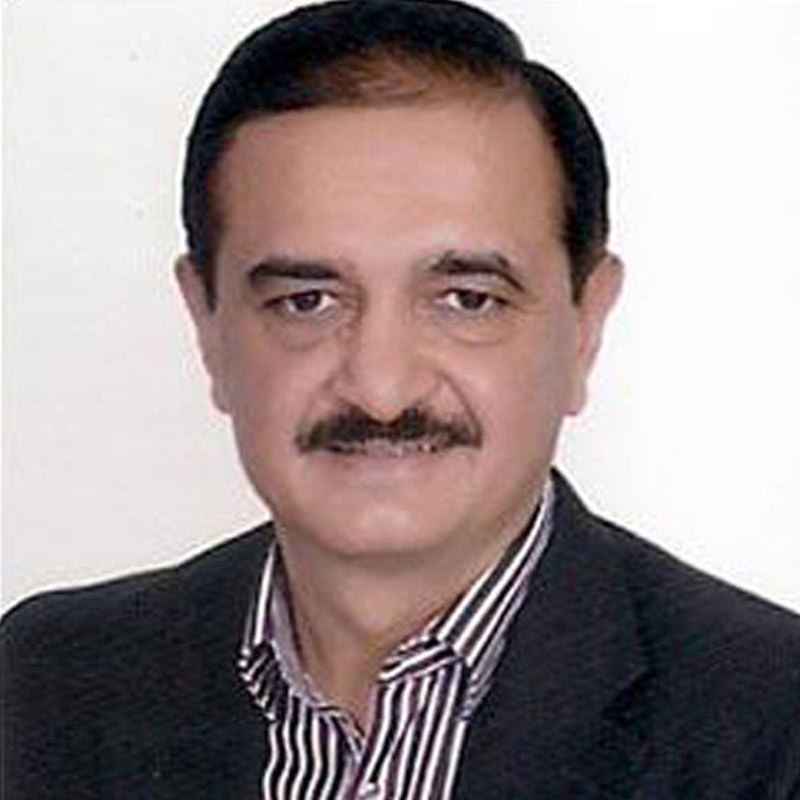
Tag: S.N. Sharma.

  • AIDCF elects new leadership: GTPL’s Anirudhsinh Jadeja takes the helm

    AIDCF elects new leadership: GTPL’s Anirudhsinh Jadeja takes the helm

    MUMBAI: The All India Digital Cable Federation (AIDCF), the apex lobby for digital cable operators in India, has named a new leadership team — with GTPL Hathway boss Anirudhsinh Jadeja stepping in as president, replacing outgoing DEN Networks chief executive S.N. Sharma.

    Joining Jadeja at the top are Sankaranarayana, vice chairman of Asianet Satellite Communications, as vice president, and Sanjay Goyal, group CFO at Fastway Transmissions, as treasurer.

    The outgoing Sharma said it was a “privilege” to lead the federation during a transformative phase. “I’m proud of the strides we’ve made in voicing the sector’s concerns with clarity and conviction,” he noted, while wishing the new team “continued success.”

    AIDCF secretary general Manoj Chhangani echoed the sentiment, calling Jadeja and his colleagues a “dynamic and experienced team” poised to strengthen the Federation’s role as the industry’s collective voice.

    A first-generation entrepreneur, Jadeja has over three decades of experience and is credited with building India’s largest multi-system operator. Sankaranarayana, an IIT-IIM alumnus, has steered Asianet since 2006, bringing a blend of engineering prowess and business strategy to the table. Goyal, meanwhile, has worn multiple hats across Jio, Siti Networks and Vishal Retail, and is known for his sharp financial acumen and transformation playbook.

    With this new lineup, AIDCF appears ready to recalibrate its priorities and reassert its relevance in an increasingly streaming-dominated media landscape.

  • Den Networks CEO SN Sharma takes over from Hathway’s Rajan Gupta as AIDCF president

    Den Networks CEO SN Sharma takes over from Hathway’s Rajan Gupta as AIDCF president

    New Delhi: All India Digital Cable Federation (AIDCF), the apex body of digital cable television players, announces the appointment of Mr. S N Sharma (CEO – Den Networks Limited) as the new President of the Federation with effect from 1st  April 2019 post expiration of term of Mr. Rajan Gupta – current President.

    Mr. Gupta commented that, “I am delighted to handover the presidency to Mr. Sharma.  It had been an event filled last couple of years at AIDCF, where we successfully migrated into the digital regime and ensured that New Tariff Regime becomes a reality, thereby empowering the consumers. I would like to thank all the members of AIDCF, without whose support this journey would not have been possible” Commenting on his appointment as the new AIDCF President, Mr. S.N. SHARMA said, “It is an honour for me to take the baton of leading AIDCF from Mr. Gupta and carrying it forward in the direction of realizing ‘The dream of Digital India’. All the esteemed members and I will continue to work as a team to resolve the issues and enhance the overall growth of Cable Television. Our priority will be making the new Tariff Regime hassle free so that that there is no inconvenience to the consumers. We will encourage and value the constructive suggestions and feedbacks.

  • Den reports lower numbers for third quarter

    Den reports lower numbers for third quarter

    BENGALURU: Indian cable distribution network and broadband internet services (broadband) provider Den Networks Ltd reported 6 per cent drop in consolidated operating revenue numbers for the quarter ended 31 December 2018 (Q3 2019, quarter or period under review) as compared to the corresponding year ago quarter (y-o-y, Q3 2018).

    Den Network’s operating profit (EBITDA) declined 39 per cent y-o-y during the period under review to Rs 48.10 crore (15.6 percent of operating revenue) from Rs 78.83 crore (24 per cent of operating revenue) in Q3 2018.

    Den reported a net loss of Rs 31.21 crore in Q3 2019 as compared to a profit after tax of Rs 1.73 crore in Q3 2018.The company reported total comprehensive loss (TCL) of Rs 31.06 crore as compared to total comprehensive income of Rs 1.31 crore in Q3 2018.

    Segment numbers

    Den has two segments – cable distribution networks (Cable) and broadband. Both segments reported lower y-o-y revenues and operating loss for the quarter under review.

    Cable segment revenue reduced 6.1 per cent y-o-y in Q3 2019 to Rs 291.59 crore from Rs 310.50 crore in Q3 2018. Den reported that the segment had an operating loss of Rs 8.95 crore as compared to an operating profit of Rs 25.20 crore in Q3 2018.

    Den Networks reported 5.1 per cent y-o-y decline in operating revenue for its broadband segment in Q3 2019 at Rs 16.82 crore as compared to Rs 17.72 crore in Q2 2018. The segment’s operating loss reduced to Rs 6.60 crore in Q3 2019 from an operating loss of Rs 7.29 crore.

    Let us look at the numbers reported by Den Networks for Q1 2019

    Den Networks consolidated revenue from operations in Q3 2019 was Rs 308.41 crore, 6 per cent lower than the Rs 328.22 crore in Q3 2018. Consolidated total revenue including consolidated other income declined 6.4 per cent y-o-y in Q3 2019 to Rs 313.32 crore from Rs 334.92 crore in Q3 2018.

    Consolidated total expenditure for the quarter under review increased 3.9 per cent y-o-y in Q3 2019 to Rs 337.84 crore (109.5 percent of operating revenue) from Rs 325.20 crore (99.1 per cent of operating revenue) in the corresponding quarter of the previous year.

    Consolidated content cost increased 10.5 per cent y-o-y in Q3 2019 to Rs 148.65 crore (48.2 per cent of operating revenue) as compared to Rs 134.56 crore (41 per cent of operating revenue) in Q3 2018. Consolidated placement fees reduced 9.3 per cent y-o-y in Q3 2019 to Rs 9.99 crore (3.2 per cent of operating revenue) from Rs 12.48 crore (3.4 per cent of operating revenue) in Q3 2018.

    Den Networks consolidated employee benefits expense during the period under review declined 7.5 per cent y-o-y to Rs 23.80 crore (7.7 per cent of operating revenue) from Rs 25.73 crore (7.8 per cent of operating revenue) in Q3 2018. Consolidated other expenses in Q3 2019 increased 1.6 per cent y-o-y to Rs 77.87 crore (25.2 per cent of operating revenue) in Q3 2019 from Rs 76.62 crore (23.3 per cent of operating revenue) in the corresponding quarter of the previous year.

    Company speak

    Den CEO SN Sharma said, “Cable subscription ARPU is consistent with respect to the previous quarter which stood at Rs 96 per box (including tax).

    "TRAI tariff order implementation, a potential gamechanger in the cable industry, is underway wherein we have taken host of initiatives and strengthened our internal processes including IT systems. In order to migrate to the new tariff order, consumer has various options to exercise his choice of channels through our consumer / LCO mobile applications and web portal.

    "Extensive LCO/distributor awareness programme are under progress wherein the partners are explained in clear terms the benefits they would get in the overall value chain. Prepaid system for cable subscription partners, the most preferred billingoption under the new tariff order, has been successfully rolled out during the quarter in select markets.”  

    Strategic investments in Den by Reliance Industries

    On 17 October 2018, the Mukesh Ambani led Reliance Industries Ltd reported to the bourses that it has decided to make strategic investments thought a primary investment of Rs 2,045 crore through a preferential issue under SEBI regulations and secondary purchase of Rs 245 crore from the existing promoters for a 66 percent stake in Den. Reliance also said that it would make a primary investment of Rs 2,940 crore through a preferential issue under SEBI regulations for a 51.3 per cent stake in Hathway Cable and Datacom Ltd (Hathway) of the Rajan Raheja group.

  • Den reports improved numbers for Q2 over Q1

    Den reports improved numbers for Q2 over Q1

    BENGALURU: The Sameer Manchanda-led Indian cable distribution network and broadband internet services (broadband) provider Den Networks Ltd reported 5.3 percent drop in consolidated operating revenue numbers for the quarter ended 30 September 2018 (Q2 2019, quarter or period under review) as compared to the corresponding year ago quarter (y-o-y, Q2 2018). Though revenue based on a quarter on quarter (q-o-q) basis and some other numbers were lower, the company’s operating profit or EBITDA in Q2 2019 was better than Q1 2019. The company said in Q1 2019 that it had tried to cut down costs, and it has managed to do that, but its consolidated content costs during the quarter under review increased by almost Rs 16 crore y-o-y, at but the same time have declined by almost Rs 2 crore q-o-q.
    Den Network’s operating profit (EBITDA) declined 37.9 percent y-o-y during the period under review to Rs 50.63 crore (16.1 percent of operating revenue) from Rs 81.55 crore (26 percent of operating revenue) but increased 9.9 percent q-o-q from Rs 57.84 crore (18 percent of operating revenue) as mentioned above.

    The company’s losses – after taxes (net loss) as well as total comprehensive loss (TCL) have increased y-o-y as well as q-o-q in the period under review. The company reported a net loss of Rs 28.54 crore during Q2 2019 and a loss of Rs 27.98 crore for Q1 2019 as compared to a net profit (PAT) of Rs 1.11 crore in Q2 2018. Den reported TCL of Rs 28.34 crore for Q2 2019, TCL of Rs 27.75 crore in Q1 2019 as compared to total comprehensive income of Rs 1.31 crore in Q2 2018.

    Segment numbers

    Den has two segments – cable distribution networks (Cable) and broadband. Both segments reported lower y-o-y revenues, but in the case of broadband, Den reported a slight q-o-q increase in revenue for Q2 2019.

    Cable segment revenue reduced 4.6 percent y-o-y in Q2 2019 to Rs 293.86 crore from Rs 307.99 crore in Q2 2018 and reduced 1.6 percent q-o-q from Rs 298.59 crore in Q1 2019. Den reported that the segment had an operating loss of Rs 5.82 crore as compared to an operating profit of Rs 27.75 crore in Q2 2018 but the loss in the quarter under review was lower than the operating loss Rs 8.26 crore in Q1 2019.

    Den Networks reported 16.6 percent y-o-y decline in operating revenue for its broadband segment in Q2 2019 at Rs 16.51 crore as compared to Rs 19.80 crore in Q2 2018 but 5.9 percent more than the operating revenue of Rs 15.59 crore in Q1 2019. The segment’s operating loss reduced slightly to Rs 6.16 crore in Q2 2019 from an operating loss of Rs 8 crore in Q1 2019 and an operating loss of Rs 8.93 crore in Q2 2018.

    Let us look at the numbers reported by Den Networks for Q1 2019

    Den Networks' consolidated revenue from operations in Q2 2019 was Rs 310.37 crore, Rs 314.18 crore in Q1 2019 and Rs 327.79 crore in Q2 2018. Consolidated total revenue including consolidated other income declined 5.9 percent y-o-y and 2.5 percent q-o-q in Q2 2019 at Rs 315.05 crore from Rs 334.90 crore in Q2 2018 and from Rs 322.98 crore in Q1 2019.

    Consolidated total expenditure for the quarter under review increased 11.9 percent y-o-y in Q2 2019 to Rs 336.78 crore (107.3 percent of operating revenue) from Rs 326.12 crore (103.8 percent of operating revenue) in the corresponding quarter of the previous year but declined 1.3 percent q-o-q from Rs 347.07 crore (110.59 percent of operating revenue).

    As mentioned above, the company has seen a y-o-y rise in content cost in actual value as well as in terms of percentage of operating revenue. Consolidated content cost increased 11.9 percent y-o-y in Q2 2019 to Rs 148.23 crore (47.2 percent of operating revenue) as compared to Rs 132.47 crore (42.2 percent of operating revenue) in Q2 2018 but declined 1.3 percent q-o-q from Rs 150.12 crore (47.8 percent of operating revenue). Consolidated placement fees increased 3 percent y-o-y in Q2 2019 to Rs 11.02 crore (3.5 percent of operating revenue) from Rs 10.70 crore (3.4 percent of operating revenue) and increased 9.7 percent q-o-q from Rs 10.05 crore (3.2 percent of operating revenue).

    Den Networks' consolidated employee benefits expense during the period under review declined 13.7 percent y-o-y to Rs 23.64 crore (7.5 percent of operating revenue) from Rs 27.38 crore (8.7 percent of operating revenue) in Q2 2018 but increased 0.8 percent q-o-q from Rs 23.45 crore (7.5 percent of operating revenue). Consolidated other expenses in Q2 2019 increased 1.3 percent y-o-y to Rs 76.65 crore (24.4 percent of operating revenue) in Q1 2019 from Rs 75.69 crore (24.1 percent of operating revenue) in the corresponding quarter of the previous year but reduced 8.9 percent q-o-q from Rs 84.16 crore (26.8 percent of operating revenue).

    Strategic investments in Den by Reliance Industries Ltd

    On 17 October 2018, the Mukesh Ambani-led Reliance Industries reported to the bourses that it has decided to make strategic investments thought a primary investment of Rs 2,045 crore through a preferential issue under SEBI regulations and secondary purchase of Rs 245 crore from the existing promoters for a 66 percent stake in Den. Reliance also said that it would make a primary investment of Rs 2,940 crore through a preferential issue under SEBI regulations for a 51.3 percent stake in Hathway Cable and Datacom Ltd (Hathway) of the Rajan Raheja group.

  • Den improves Q1-18 numbers, betters ARPB, net loss down

    BENGALURU / NEW DELHI: Indian multi-system operator (MSO) Den Network Limited (DEN) reported 38 per cent year-over-year increase in cable revenue at Rs 1,540 million for the quarter ended 30 June 2017 (Q1-18, current quarter) as compared to Rs 1,110 million for the corresponding quarter of the previous fiscal (Q1-17).

    Cable business reported post activation operating profit (EBIDTA) of Rs 850 million and pre-activation operating profit of Rs 490 million for the current quarter. Corresponding IND-AS EBIDTA numbers for the year ago quarter were Rs 500 million and Rs 150 million respectively. (Some numbers in this report have been rounded off).

    The company reported an overall higher y-o-y Average Revenue Per Box (ARPB) at Rs 74 in the current quarter as compared to Rs 52 in the corresponding year ago quarter. ARPB across all the four DAS phases was up, with DAS IV ARPB more than tripling to Rs 38 in the current quarter as compared to Rs 12 in Q1-17. DAS phase III ARPB increased to Rs 59 in Q1-18 as compared to Rs 36, DAS II ARPB increased from Rs 73 in Q-17 to Rs 91 in Q1-18, while DAS IV ARPB increased to Rs 110 in Q1-18 from Rs 101 in Q1-17

    Quarter-over-quarter APRB however was slightly lower. For the quarter ended 31 March 2017 (Q4-17) DEN had reported ARPB of Rs 76, with ARPB of Rs 117, Rs 85, Rs 62 and Rs 46 for DAS phases I, II, III and IV respectivley. Only DAS Phase II ARPB has increased in Q1-18 as compared to the immediate trailing quarter.

    Den Networks CEO SN Sharma said, “Den turned another quarter of impressive results by registering a stupendous performance on cable business. We remain focused on consumer needs and continue to take technology initiatives that will help our consumers make their lives convenient and connected. On the basis of IGAAP numbers, Den has broken even at the PNT level and the cable business has turned positive at the PAT level. We continue to add subscribers to our broadband business. The average data consumption for broadband business has already crossed 75 GB per month. We are very hopeful to continue this performance and are eagerly awaiting the the final verdict on the new TRAI tarriff order from the industry standpoint.”

    Overall, Den has reported y-o-y growth across all its revenue streams – whether considereed on the basis of cable business, broadband business, other income, or considered on the basis of subscription income, placement revenue and other income.

    The company says that it has deployed about 0.3 million boxes in the first quarter of fiscal 2018 in DAS phase III and IV areas and claims a digital subscriber base of about 10.7 million as on 30 June 2017.

    Broadband business revenue in the current quarter increased to Rs 211.9 million from Rs 177.9 million. Broadband business EBIDTA reduced to a loss of Rs 82.6 million versus a loss of Rs 142.6 million in the corresponding quarter of the previous year.

    Overall, Den Networks total income increased 15.75 per cent in Q1-18 to Rs 3,224.2 million from Rs 2,785.5 million in the corresponding quarter of the previous fiscal. Overall consolidated EBIDTA increased 31.2 per cent y-o-y in Q-16 to Rs 694 million as compared to Rs 52.9 million. The company narrowed consolidated net loss to Rs 101.1 million for the quarter led by a good performance from the cable segment.

    In the immediate trailing quarter, the company had said that it had focused largely on cash collections during the year which had brought down the net debt of the company to Rs. 1810 million as at March 31, 2017, thereby deleveraging its balance sheet. The net debt of the company has been further reduced to Rs 1340 million as on 30 June 2017.

    Let us look at the other numbers reported by Den Network

    Den’s total expenses in Q1-18 increased 5.2 per cent y-o-y to Rs 3,305.1 million from Rs 3,142.3 million in Q1-17. Content Costs in Q1-18 increased 16.3 per cent y-o-y Rs 1,307.7 million from Rs 1,124.7 million. Placement fees costs in Q1-18 reduced 5.8 per cent y-o-y to Rs 101.3 million from Rs 107.5 million in Q1-17.

    Employee Benefits Expense in Q1-18 increased 25.5 per cent to Rs 317.4 million from Rs 253 million in the corresponding quarter of the previous year. Other Expenses in the first quarter of fiscal 2018 increased 4.2 per cent to Rs 803.8 million from Rs 771.2 million in Q1-17.

  • Den Networks cable operations revenue up; broadband revenue doubles

    BENGALURU: Indian multi system operator (MSO) Den Network reported 21.8 percent increase in operating revenue for its Cable distribution (cable) business  for the year ended 31 March 2017 (FY-17) at Rs 1,075.54 crore as compared to Rs 883.24 crore in the previous year (FY-16). The company’s broadband internet revenue in FY-17 more than doubled to Rs 81.80 crore from Rs 39.80 crore in FY-16.

    The company claims in its earnings release that Cable business EBIDTA increased to Rs 144 crore in FY-17 from Rs 18 crore in the previous year. The company’s EBIDTA in FY-17 doubled to Rs 254 crore from Rs 127 crore in FY-16. Broadband business EBIDTA reduced to a loss of Rs 10 crore versus a loss of Rs 66 crore in the previous year. Pre-activation EBIDTA in FY-17 grew to Rs 135 crore as compared to a loss of Rs 107 crore in FY-16.

    Overall, Den Networks revenue increased 19.1 percent in fiscal 2017 to Rs 1198.26 crore from Rs 1,005.87 crore in the previous fiscal. Cable subscription revenue grew 33 percent to Rs 646 crore in FY-17 from Rs 487 crore in FY-16. Den Networks reported a lower net loss of Rs 189.57 crore in FY-17 as compared to a loss of Rs 431.30 crore in the previous year.

    The company says that it has focused largely on cash collections during the year which has brought down the net debt of the company to Rs. 181 crores as at March 31, 2017, thereby deleveraging its balance sheet.

    Den Networks CEO SN Sharma said, “The cable subscription revenues grew by 33 percent in the current financial year and contributed to the financial turnaround for the company. The EBITDA for DAS I has grown from 23 percent to 30 percent and the EBITDA for DAS II has grown from 11 percent to 18 percent this year. The company continues to focus on core businesses, while preparing for HD Box deployment, cost optimization and technology up gradation to enhance consumer experience and improve operational efficiency.”

    Let us look at the other numbers reported by Den Network

    Den’s total expenses in FY-17 reduced 1.8 percent to Rs 1,321.19 crore from Rs 1,344.83 crore in FY-16. Content Costs in FY-17 was almost flat at Rs 473.28 crore as compared to Rs 473.22 crore in the previous year. Placement fees costs in FY-17 reduced 6.2 percent to Rs 50.20 crore from Rs 53.50 crore in FY-16.

    Employee Benefits Expense in FY-17 was also almost flat (increased 0.3 percent) to Rs 123.37 crore from Rs 123.01 crore in the previous year. Other Expenses in fiscal 2017 declined 19.1 percent to Rs 331.68 crore from Rs 409.91 crore in fiscal 2016.

  • DEN Networks ties up with Visiware, launches premium gaming service

    MUMBAI: DEN Networks, one of the largest cable TV service providers in India, has launched Playin’TV, a premium interactive gaming service that will usher in rich gaming experience for its subscribers.

    The company has partnered with France-based Visiware International, the world leader in interactive games for television to offer these services. This is Visiware International’s first association with a CATV company in India.

    – Partners with France-based Visiware International to launch Playin’TV

    – Offers Playin’TV to subscribers for free until 31 May

    Type of Games on Playin’TV

    – Arcade / Adventure – Carrot Mania or Zombie Market

    – Brain teasers – Incan-Tatris or Match 3 type of games;

    – Board and Cards – Solitaire Club

    – Sports – Bowling or Cricket and much moreThe company has partnered with France-based Visiware International, the world leader in interactive games for television to offer these services. This is Visiware International’s first association with a CATV company in India.

    Commenting on the launch of Playin’TV, DEN Networks CEO S.N. Sharma said, “We are excited to partner with Visiware International and launch Playin’ TV on our cable TV and broadband networks. Playin’ TV is an internationally-renowned interactive gaming channel and we always strive to provide world class entertainment to our customers.

    He further added, “The launch coincides with the arrival of Indian summers, a time when most people prefer indoor entertainment. Playin’ TV’s comprehensive suite of games ranging from board and card games to adventure and sports will provide the ideal indoor recreation to DEN subscribers across all ages.  With DEN Networks’ 13 million plus subscriber base spread across 400+ cities, Visiware International is set to gain a massive entry into the Indian market while our subscribers will enjoy premium games of international repute.”

    The company is offering these games to its cable TV subscribers for free until 31st May. Post that, it will provide membership subscription at a promotional price of Rs 35 per month till September 2017.  The launch of Playin’TV on DEN Boomband, the company’s broadband service is to follow soon.  

    Exclusive to DEN Cable subscribers, Playin’TV is accessible 24/7 on Channel No. 444. Subscribers need no other accessories other than their set top box and remote control to start playing on the TV. Some of the popular genres of games that will be available to Playin’TV subscribers include Adventure, Board & Cards, Brain Teasers, and Sports. DEN will offer 6 games at the launch in May, with 1 new game added every month until September 2017. Post that, the games will be refreshed each month with favorite games staying on air for longer duration.

    Visiware International COO Frederic Fellague said, “Visiware International being one of the pioneers and market leader is proud to partner with one of India’s largest cable distribution companies. We believe that gaming is one of the key to increase ARPU on cable. Partnering with DEN Networks will allow us to demonstrate in the future our capability to develop new forms of gaming interactions with the evolution of the set top box market.”

  • TRAI tariff order: MSOs welcome its direction

    TRAI tariff order: MSOs welcome its direction

    NEW DELHI: At least two multisystem operators (MSOs) have welcomed the broad drift of the Telecom Regulatory Authority of India’s  (TRAI’s) Telecommunication (Broadcasting and Cable Services) (Eighth) (Addressable Systems) Tariff Order, 2016. The draft, released on Monday, seeks to bring in transparency to an otherwise disorganized sector.

    Indiantelevision.com spoke to a bunch of executives from broadcasting, cable TV,  and even the TRAI advisor on the proposed regulation. Most said it was too early to comment as they had not got the time to study it.

    S N Sharma, who surprised many earlier this year by returning to the national multi-system operator (MSO) DEN Networks as its  chief executive, said “It is a good draft; we welcome it. It brings a lot of transparency and ease, especially in the life of the consumer. We, as an MSO, look for a fair share of revenue, and hope to get the same.” He said he still had to study the draft in full, and would give further comments later.

    public://sn-sharma_0.jpg
    S.N.Sharma CEO,DEN Networks Limited

    Regional MSO Ortel Communications President & CEO  Bhibhu Prasad Rath, welcoming the draft, said “We believe that this draft regulation, if implemented, will bring in path-breaking changes to the industry structure with a lot of transparency and non-discrimination.”

    Rath added: “Currently, there is widespread discrimination in the content deals done by some broadcasters with various DPOs (distribution platform operators). The prices of the same channels or bouquet of channels vary widely from one DPO to another across the country. The new proposed regulation intends to bring in uniformity in the cost structure so that a level-playing field will be created while we all compete in the same market.”

    Rath also noted that the other major issue that the regulations attempts to address is the unbundling of channels. “Currently, many broadcasters offer around 80-90% discount / incentives on a bouquet deal as compared to the sum of a la carte prices of the respective channels. This, in my view, is unreasonable and intended to discourage a la carte subscription. The proposed regulation, by capping the bouquet discount at a maximum of 15%, will be a big relief to consumers who want to subscribe to channels on a la carte basis and will encourage DPOs to pass on to the benefit to consumers.”

    “Overall, this regulation, in addition to bringing in non-discriminatory and transparent practices in the industry, will go a long way in implementing digitization in its true spirit where “choice” is in the hands of the consumers,” he concluded.

    “I think it is a fabulous piece of proposed regulation,” says HITS consultant Castle Media director Vynsley Fernandes. “I think the TRAI has really outdone itself. I can only see the industry opening up and growing from hereon.”

    However, National Cable and Telecommunications head and founder of Home Cable Network of Delhi, Vikki Choudhry was the dissenting voice. Said he:  “This draft order is still not a cost-based tariff fixation, TRAI was supposed to conduct an exercise according to the Supreme Court and TDSAT orders. This draft tariff is completely anti-consumer. When the present tariff (rates) were coming down by 70 per cent, the regulator has further provisioned an increase of about 45-55 per cent for the Pay TV broadcasters.”

    (In May this year, TDSAT had said it thought TRAI “will be well advised to have a fresh look at the various tariff orders in a holistic manner and come out with a comprehensive tariff order in supersession of all the earlier tariff orders.”) Sunil Gupta, advisor to TRAI, responding to this allegation said: “We have protected the interests of the consumer: why should he pay even one extra rupee for a channel he does not want to watch? This draft brings the power of choice to the consumer’s hands. He can choose to have a lower cable TV bill or higher.”

    Gupta further added that the new category of  premium channels will allow broadcasters to offer specialized channels at higher MRPs – even Rs 100 – if the consumer wants them at this price, thus overall increasing the ARPUs of all those in the value chain.

    Gupta also said that the interconnection paper for local cable operators and multi-system operators would come out soon. The entire industry value chain should read this and understand we have protected everyone’s interests – the cable TV operators, MSOs, broadcasters, customers. The  ARPUs of the entire industry would go up in the coming months, he said.

    Also read:

    Tariff Hike Case: SC rejects appeal challenging TDSAT order; asks TRAI to out new tariff


  • TRAI tariff order: MSOs welcome its direction

    TRAI tariff order: MSOs welcome its direction

    NEW DELHI: At least two multisystem operators (MSOs) have welcomed the broad drift of the Telecom Regulatory Authority of India’s  (TRAI’s) Telecommunication (Broadcasting and Cable Services) (Eighth) (Addressable Systems) Tariff Order, 2016. The draft, released on Monday, seeks to bring in transparency to an otherwise disorganized sector.

    Indiantelevision.com spoke to a bunch of executives from broadcasting, cable TV,  and even the TRAI advisor on the proposed regulation. Most said it was too early to comment as they had not got the time to study it.

    S N Sharma, who surprised many earlier this year by returning to the national multi-system operator (MSO) DEN Networks as its  chief executive, said “It is a good draft; we welcome it. It brings a lot of transparency and ease, especially in the life of the consumer. We, as an MSO, look for a fair share of revenue, and hope to get the same.” He said he still had to study the draft in full, and would give further comments later.

    public://sn-sharma_0.jpg
    S.N.Sharma CEO,DEN Networks Limited

    Regional MSO Ortel Communications President & CEO  Bhibhu Prasad Rath, welcoming the draft, said “We believe that this draft regulation, if implemented, will bring in path-breaking changes to the industry structure with a lot of transparency and non-discrimination.”

    Rath added: “Currently, there is widespread discrimination in the content deals done by some broadcasters with various DPOs (distribution platform operators). The prices of the same channels or bouquet of channels vary widely from one DPO to another across the country. The new proposed regulation intends to bring in uniformity in the cost structure so that a level-playing field will be created while we all compete in the same market.”

    Rath also noted that the other major issue that the regulations attempts to address is the unbundling of channels. “Currently, many broadcasters offer around 80-90% discount / incentives on a bouquet deal as compared to the sum of a la carte prices of the respective channels. This, in my view, is unreasonable and intended to discourage a la carte subscription. The proposed regulation, by capping the bouquet discount at a maximum of 15%, will be a big relief to consumers who want to subscribe to channels on a la carte basis and will encourage DPOs to pass on to the benefit to consumers.”

    “Overall, this regulation, in addition to bringing in non-discriminatory and transparent practices in the industry, will go a long way in implementing digitization in its true spirit where “choice” is in the hands of the consumers,” he concluded.

    “I think it is a fabulous piece of proposed regulation,” says HITS consultant Castle Media director Vynsley Fernandes. “I think the TRAI has really outdone itself. I can only see the industry opening up and growing from hereon.”

    However, National Cable and Telecommunications head and founder of Home Cable Network of Delhi, Vikki Choudhry was the dissenting voice. Said he:  “This draft order is still not a cost-based tariff fixation, TRAI was supposed to conduct an exercise according to the Supreme Court and TDSAT orders. This draft tariff is completely anti-consumer. When the present tariff (rates) were coming down by 70 per cent, the regulator has further provisioned an increase of about 45-55 per cent for the Pay TV broadcasters.”

    (In May this year, TDSAT had said it thought TRAI “will be well advised to have a fresh look at the various tariff orders in a holistic manner and come out with a comprehensive tariff order in supersession of all the earlier tariff orders.”) Sunil Gupta, advisor to TRAI, responding to this allegation said: “We have protected the interests of the consumer: why should he pay even one extra rupee for a channel he does not want to watch? This draft brings the power of choice to the consumer’s hands. He can choose to have a lower cable TV bill or higher.”

    Gupta further added that the new category of  premium channels will allow broadcasters to offer specialized channels at higher MRPs – even Rs 100 – if the consumer wants them at this price, thus overall increasing the ARPUs of all those in the value chain.

    Gupta also said that the interconnection paper for local cable operators and multi-system operators would come out soon. The entire industry value chain should read this and understand we have protected everyone’s interests – the cable TV operators, MSOs, broadcasters, customers. The  ARPUs of the entire industry would go up in the coming months, he said.

    Also read:

    Tariff Hike Case: SC rejects appeal challenging TDSAT order; asks TRAI to out new tariff


  • ‘Broadcasters could consider different pricing for rural-urban subscribers’

    ‘Broadcasters could consider different pricing for rural-urban subscribers’

    When DEN Networks promoter Sameer Manchanda set up the national MSO in 2007, one of the key professionals on his team, which was led by CEO Anuj Gandhi, was the cable TV veteran S.N. Sharma. The trio quickly ramped up the company and took it to national level status.  Gandhi then moved on in 2010 to join Network18. And, Sharma who was the president (operations), was promoted as the CEO a year or so later.

    He continued with the company, expanding it nationally, and seeing it through the first two phases of digitization before departing in 2015 to get on board India’s biggest and most funded  startup  — the Mukesh Ambani-backed Reliance Jio.  A former McKinsey professional Pradeep Parameswaran was roped in to lead the company in his place.

    Sharma, meanwhile, at Jio, worked on planning and building the team for company’s foray into cable TV along with another cable TV veteran K. Jayaraman.

    Then, in July 2016, Sharma made a sudden about-turn and decided to return to DEN Networks, a move that raised the eyebrows of many but cheered many in the trade. For he is known for his relationships and his deep understanding of how cable TV should be run in the Indian context.

    Sharma was one of the key notes at indiantelevision.com’s Eleventh India Digital Operators Summit 2016 which concluded over the weekend at the Leela Hotel in south Goa. He had a one-on-one conversation with Indiantelevision.com Founder, CEO  & Editor in chief Anil Wanvari. Read on to get some insights into what is going on at DEN and with Sharma. Excerpts from the conversation:

    Why did you leave DEN in the first case, join Reliance and then why did you choose to come back?

    Having been into the cable industry for over 20 plus years, I thought, let me do something else. And, that’s why I moved to Reliance. Basically, I wanted to roll out fibre to the home (FTTH) over there. It would have been a great experience and learning (I thought). And it was, indeed. I learnt a lot in the short span of one and a half year. It was a wonderful learning that I brought in to my personality.

    But then, there was a call from my previous employer DEN, my friend Sameer.  I am one of the co-founders of DEN Network. And, I requested my employers at Reliance if I could leave. And they were kind enough to let me go back. It was more of an emotional decision than a professional one. All my learnings that I have had  at Reliance, I am
    sure, will help me learn to drive DEN in a better manner,in a positive direction in time to come.

    What are the challenges you are facing?

    The challenge as we all know is primarily monetization.  We started seeding boxes in 2010, now it is 2016. DAS came in 2012. And “hote hote” (by and by) it became 2013. Phase I and II happened quickly.

    There is a lag in monetization. Of course, we all can understand and you will appreciate that an industry which evolved since 1990, almost 30 year old industry, it  takes time for things to change. And, we took tiny, baby steps to monetize it.  But now, the time has come the boxes seeded in 2010 have almost lived their life and new technology is coming in. So my prime task is to see to it that we augment the process of monetization.

    The other challenge that I face immediately which I am working very aggressively on is to reduce the cost. We all know that Phase III digitization got into  a confused state, with boxes having got seeded, and the courts intervening.  Analogue signal has also been taken away from many of us. The MIB says 93 per cent  of digitization has happened. So the monetization process also has to start. But, in the bargain, we have already incurred some expenditure.  And unless I start recovering my revenue, the journey will be difficult.

    This time, in a short span of one and a half month, I addressed my cable TV partners, my business partners and my associates in a very transparent manner. We had a discussion – a whole day discussion wherein I shared with them my experiences with the telco. I shared with them the upcoming technology. I told them there is a change. The technology is not going to spare them.  We all used to think that last mile …last mile. But, my subscriber is not bound by last mile. My biggest threat today is the handset that I carry. The viewing habits are changing. Technology is bringing other alternatives. For the same viewer  who used to be watching their services. It is high time they realized it and accepted this change. And, they all agreed. I was surprised. It was a very open, frank and to-the-point discussion. I told them if we are willing to change, if we are willing to adopt, life will be there for us, otherwise the journey is going to be difficult. Everybody is cooperating. We hope to see a very good upside as far as collections are concerned.

    Third is making the LCOs, our partners realize the pains we are going through.  And, make them see the technology.

    And fourth is we have started conducting sessions with cable TV operator to sensitise them with the consumers. Like the regulator also said: Don’t force things on the consumer. He is in no mood. So the approach has to be friendlier than earlier. We have to change the face of our representative visiting the home of the subscriber. The
    presentation of our package has got lost.  We brought in a digital set-top box, we invested in that. But, we forgot in the process that we had not changed our face to the consumer. The cable TV operators accepted that we need to bring in a lot of ethics and discipline in that part.  You will see our representatives wearing uniforms. Uniform could be ours or the LCO’s.  It has to be in a presentable form. Today, if you are visited by a courier boy, the way he  is approaching is different.

    I am sure the cable TV operators will comply.

    Where are you reducing costs?

    Our priority early on was to penetrate the market, you increase your reach and when you penetrate certain areas, those can be reached through fibre or through links from telcos. After some time, you realize that you have spent an X amount in reaching an area and you have seeded 50 boxes. It does not make sense to you. So, you need to make a quick decision. You retract, you save money on that. Or you go to another MSO who is reaching the same area  and he has done it using a different pipe. And, he has 50,000 subscribers. So, I would tell him, why don’t we share the pipe. That process (of sharing)  has already started.  Then, we have started sharing the infrastructure also in another manner, in terms of content. If a competitor has a pipe serving more subscribers in the same area than I have less or vice-versa, I am open to sharing the pipe with the competitor. This is helping reduce costs. We have started sharing local content with cable operators. The cable operator has local content with him. So, instead of spending separately on the same content, we have started sharing that content too. Then, there are usual steps — reduction of manpower, to hire on a temporary basis, and cutting down the day-to-day expenses.

    Where are you getting your maximum margins?

    You see we have largely been a phase III player.  We have seeded 5.5 million in phase III, and 3-4 million are to go in phase IV. Of the 13 million subscribers, we have seeded 9-9.5 million. My upside will come from revenues of phase III boxes, which were yielding Rs 10-20. We have already crossed a milestone of Rs 40- 45 revenues, By December-end, it will touch  Rs 75 plus — that is a 45 per cent growth. Phase I is likely to give us 15-20 per cent.

    Who is going to get you this money – LCOs or the customer?

    You see the mood is set.  In the exercise, baby steps were taken to augment phase I revenues. It took us four years.  Phase III customer is also aware.  All studies and research show us is that the  buyingcapacity is there,  paying capacity is there too. HD is another example.  Around 70 per cent of TVs are HDTVs going into to Phase III
    areas. As it is for me to perform and deliver, I need my costs to be under control.  On the whole, we have also become very cost-conscious. We want our pie of the revenue.

    The cable sector has been bashed red and blue and cable TV bottomlines are stained with red ink? When will it turn around?

    You will see by Q3 end there should be an upside.

    You are very strong up north. Are you strengthening that or are you expanding into newer territories?

    As of now, my focus is to strengthen where we are. I have 13 million subscribers, I am happy to be limited where we are. As we start seeding boxes, it might go to 15 million as we deliver. I want to have a positive bottomline. I want a fair share of revenue. I want to move towards an era where sharing of revenues has be settled. As of now, there is always a dilemma, am I to stand by the TRAI that cable operators should get 35 per cent of revenue. The fact of the matter is that today we are receiving 35 per cent, and he is getting 65 per cent.

    I am very much focused that let’s first  set it right. It will take time and over few months. But, I see that over the next 12 months, this will move towards 50:50. And then, as we move forward, and add more values in the system, I am sure the operator will also get to earn  more through us if he wants to stay with us and be part of the journey.  If he says, he does not want to do broadband with, that’s his choice. If that arises, then we might go direct or we have leave that with him. I am very focused that instead of spreading thinly, focus where you, monetize it well. Settle a good business model. A good business case.  Business will follow.

    LCOs’ insecurity is less than earlier. Your comments.

    You can’t help it. Even MSOs. Nobody is secure. Times are changing. We have to adapt. You can’t ignore the technolgy. If I don’t change, just because my fellow LCO has not, and even I don’t, that’s a folly. Today, in  a matter of time, we started broadband. We have tested a broadband formula. We have close to 125,00 subscribers. We did this with a focused mind in Delhi and Kanpur. To test how the technology behaved, how the arithmetic works here. Now we find that, with 15-17 per cent of penetration, the project is breaking even. Now, anything added into it, is your upside.  The LCOs who are willing to work with us are very happy as they march around with us. And also, there is a learnin that the normal consumer is consuming 40 GB of internet at a speed of 10 mbps at a price of Rs 800. Broadband consumption is rising fast, 5 GB has gone to 10, and 20 GB has gone to 40 GB. Putting in everything into perspective, the cost is Rs 10 per GB.  Next year, I am sure it will be 100GB. And the speed will touch 50 MBPs. In such a scenario, if  I don’t move, somebody else will move.

    You must be happy Goldman Sachs invested but it was a discount to its earlier price, actually a deep discount What’s the way forward on the investment?

    It’s a subjective analysis . But, you should say that this proves that there is strength in the business model of DEN.

    On broadband there will be an increased investment going in. And besides broadband, we are incorporating OTT and value added services.

    So what’s the way forward on the pay TV market, with 31 December coming up?

    We are looking at it wholly. The boxes are going at a good speed. We are not really pushing. My focus is on getting Phase I, II III right. Once that business model is set in place, everything will also.  It is a matter of time, the  pull should come from the consumer, from the LCO. If he is willing to work with me. In the earlier case, in Phase I and II, we were subsiding the boxes. Today, it is a pure business case. This my product. You want to do business with me, please do.

    How can broadcasters assist the process of digitization till the tariff order comes out?

    There was a time when broadcasters used to have dual pricing policy. For rural, it was lower, and for urban, higher.  Now, that we have invested and are investing, all of a sudden  they have foregone  that policy of theirs, which they were following in analogue, and still they are following in some places even today. The moment we seed STBs in phase III, they start charging digital rates. I would urge broadcasters too relook at this.