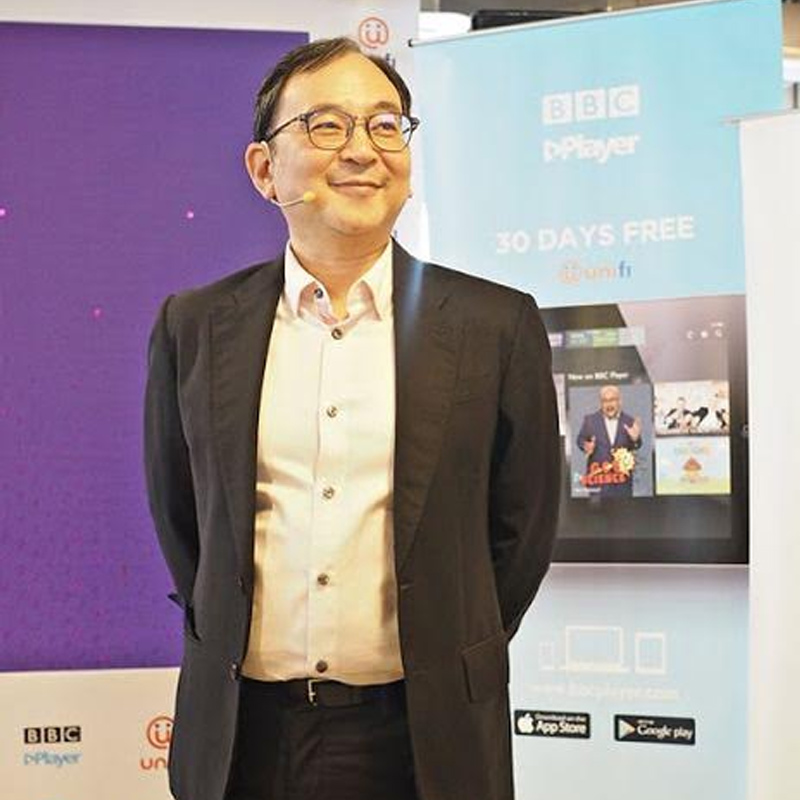
Tag: Ryan Shiotani

  • “With digitisation, CBeebies can manage on subscription model & stay ad-free”: BBC Studios’ Ryan Shiotani

    “With digitisation, CBeebies can manage on subscription model & stay ad-free”: BBC Studios’ Ryan Shiotani

    MUMBAI: Earlier this month, BBC Studios, a global content company, announced the re-launch of its popular children’s channel, CBeebies, in India after a long hiatus of eight years. For the uninitiated, the channel had discontinued its operations in November 2012. CBeebies aims at helping preschoolers learn while they are playing. The programme schedule in India consists of entertaining and interactive series and offers a mix of new and landmark, high-quality, UK-produced programmes to educate and entertain BBC's youngest audiences.

    Riding on the back of globally-known content as well as a better distribution platform in the country through digitisation, the channel hopes to attract eyeballs this time. In a special interaction with indiantelevision.com, BBC Studios south and southeast Asia SVP and GM Ryan Shiotani speaks at length about the channel's content strategy, marketing plan and much more.

    Edited Excerpts:

    With so much digital content at everyone’s disposal, is it wise to launch a TV channel for a niche audience?

    Our approach with CBeebies is both digital and linear medium. As a brand, we are looking at safe, fun and educational content. No doubt preschoolers or audiences, in general, are consuming more content on digital and in fact, more content is made for digital platforms. However, in India, TV is still a very important medium and it is a great way to reach audiences all across the country. As of now, CBeebies is available on 33million+ homes. We feel it is important to be on television as well as on digital.

    You are going ad-free with the channel. How are you planning to monetise it?

    In the time of lockdown, we are happy to provide a safe, ad-free, educational entertainment channel for preschoolers on pay TV. We also know that parents, in particular, are busier than ever and the lockdown has impacted everybody’s life. As far as monetisation is concerned our channel is based on a subscription model. For us being ad-free is important for Cbeebies brand, we believe that now it is possible to manage on a subscription-based model.

    We have a very strong distribution team in the form of BBC Global News. They are distributing Cbeebies to the linear channel across India. I think the subscription model is viable now as compared to three years ago where digitisation has still not happened and everybody was working on the carriage fee model. The TRAI rate for CBeebies channel is Rs 4 for the BBC bundle and Rs 5 for CBeebies a la carte.

    You are launching at a sensitive time. Do you think you will manage to get enough eyeballs?

    I think one of the major challenges at the moment is in terms of marketing. Normally with children’s brands, we look at on-ground events, on-ground activations and live shows in malls which is currently not possible. Our plan on marketing is to do promotions through social media and reach the possible target audience. Apart from that press is something which is very important, we are looking at conducting interviews with parenting publications.

    You have shows like Teletubbies in your kitty already, which drive a huge nostalgic value that is also the trend these days. Do you think these will manage to get you an audience?

    Our programming on CBeebies is a mix of both classic and new content. The classic shows like Hey Duggee, Go Jetters, Sarah and Duck, Thomas & Friends and Teletubbies are loved and remembered by parents. I do think that these well-known brands and characters will help parents and their pre-schoolers into the channel. Parents are generally active to search content places for their pre-schoolers. Definitely there will be new content but we are looking more into classic contents so that the parents can also relive their memories with their pre-schoolers.

    Apart from that, classic content does have a value that we have especially witnessed during the times of Covid2019. In these unprecedented times viewers do enjoy something that is familiar and comforting. In India, mythological shows are trending because of the nostalgia factor. On linear channels, parents and preschoolers can discover new shows and characters.

    Apart from that, what is your content strategy? Are you planning to create new shows or acquire rights from other studios?

    Cbeebies is the number one children's channel in the UK. It is the most-watched channel for kids under the age of five or six. It means there is going to be a constant supply of quality content for preschoolers and it is developed with keeping a child’s development in mind.

    We are fortunate that we have a strong content pipeline for preschoolers coming from UK Cbeebies channel and with that strong pipeline from the UK we scheduled a channel to be able to deliver the positioning through learning.  So, there will be a mix of content on the channel that may deliver basic information about science. We also have an adventurous series called Go Jetter, that teaches basic concepts of Geography and famous landmarks for e.g., one episode will talk about the Great Barrier Reef and the other could be about Taj Mahal.

    Language is another area of focus where there is a show named Yakka Dee in which there is an animated character called Dee teaches new words in every episode. The content itself covers a wide range of documented and historical series. In addition to the variety of genres that are covered, what is important to us is that we have a mix of animation and live-action. Kids do enjoy animation but they also like seeing adults on screen.

    Have you planned to get onboard Indian writers/producers?

    At the moment we have a show that teaches us about animals, landmarks, food of India but we don’t have a series produced by Indian writers. It is something that we will be looking at in the future but not now. We do want to look at how we can work with Indian producers to create content that reflects India and also travels around the world. I think in today's time children are open to different cultures and stories around the world. We do know that in India there is a huge animation and production sector.

  • BBC Studios Asia Pacific appoints Cheryl Png, Stanley Fernandes to head South Asia distribution

    BBC Studios Asia Pacific appoints Cheryl Png, Stanley Fernandes to head South Asia distribution

    MUMBAI: There are some top-level changes at BBC Studios' APAC team. Cheryl Png has been promoted to VP, Distribution, South East Asia and Stanley Fernandes has been promoted to VP, Distribution, South Asia. 

    This will see both Png and Fernandes working across Affiliate Sales, Digital Sales, and Content Sales, in a more integrated and geographically-focused approach to our distribution business in these territories. Previously Png headed up the Affiliate Sales business for the South East Asia region, while her counterpart Fernandes led Content Sales for South and South East Asia.  They will also oversee new revenue opportunities for the distribution business, in a more holistic offering to the client.

    BBC Studios South & South East Asia SVP & GM Ryan Shiotani said: “I’m delighted to be able to promote Cheryl and Stanley, who are first-class commercial leaders, with a passion and knowledge for BBC Studios content.  This new approach also puts the focus on our valued clients, offering them an integrated content distribution service in the hands of their local experts.”

    In addition, Sweta Sriram has been promoted to Manager, Content and Brands for the South Asia region, working to Fernandes.

  • FICCI Frames 2017: Birth of other mediums cannot kill traditional TV

    MUMBAI: The fast changing scenario and the content ecosystem have gone through a significant change over the years and are keeping all the production houses and the broadcasters on their toes.

    The ‘Grammar of the new TV content’ on the second day of FICCI FRAMES 2017 was discussed as experts from the industry sharing vital pointers in regards to the future of the television content and how this is expected to evolve with many changes coming its way, on a regular basis.

    Moderated by Star India president and content studio head Gaurav Banerjee, the session saw Balaji Telefilms creative director and joint managing director Ekta Kapoor, Keshet International Asia head Gary Pundey, Trailer Park senior producer Robin Humbert, BBC Worldwide Asia Content VP Ryan Shiotani, Discovery Networks International South Asia head and GM Karan Bajaj, and GoNews founder and editor-in-chief Pankaj Pachauri expressing their views..

    Answering a question on TV content, Shiotani said: “As a business we focus on high quality content across the genres. We focus primarily on three areas, one is the distribution of the content around the world, running of branded BBC channels and the third thing is the production around the world. For us, it is very clear to focus on high quality storytelling and production value. The emotional connection with the audiences is something we will continue to do in India and other markets around the world.”

    Sharing her experience, the czarina of the Indian TV ecosystem Ekta Kapoor said: “Television is India’s biggest, most prominent and aggressive medium of entertainment. Women’s Day was celebrated by television. But technology cannot marginalize such a large medium and such a large voice. It challenges, actually give birth to fresher and more interesting content.”

    Bajaj added: “In countries like the US, the UK and all developed broadcast markets, the smart TV penetration has shot through the roof. From 10 to 12 per cent smart TV penetration has reached 50 to 60 per cent in the last six months.”

    Voicing a different viewpoint, Pachauri said: “We are talking about essentially television and digital. We have not touched yet how to change the grammar of the content. India and Bharat are going to come together because of digitization. As far as digital content and its grammar is concerned, we have to change are attitude towards television and no one is trying to change that. We started India’s first digital news television on phone because there are more phones in India then television. Within five years, TV as as we know it would just die. We need new grammar for this new television.”

    Taking the cue, Banerjee claimed that radio was supposed to die in the 1950s, the film industry was over in the 70s, and Doordarshan was expected to be over in the 80s. “We keep foretelling these deaths but the reality is, it is not going to happen. Even in America where a lot of these changes have happened, TV is still incredibly big. The big advantage television has is its reach. Even people watching on digital will watch on television as well.”

    But Pachauri said in India, from 2011 to 2016, the total reach of news television has gone down by 15 per cent according to Nielsen data. “I am not saying that the news will die, or serials or TV will die. There is a new player in the market and we have all to align with that,” he added.

    Talking about the content Balaji produced, Kapoor said: “A lot of questions are raised by India and answered by Bharat. Unfortunately we have to be aware of the problems. If there wouldn’t be any identification to these stories, they won’t be told.”

    She said, “There are three mediums which actually cater to the same people in three different ways. We all have the family phase, the outside world phase, and the individual phase (‘us’ phase). TV is the family phase where the whole family watches the same content. Film is the communal viewing, a screen with 300 people viewing, and digital is content that you want to consume alone. Clearly, for me it is the stories that matter and I cannot say this through other two mediums.”

    Bajaj added: “Discovery is going through intense localization drive, and in the last ten years we have produced 5 to 10 hours of local content, and this year in September we will be moving to 300 hours local content. The learning for us is also this- that it is not the numbers of local hours but that the storytelling in India is different. We are used to very larger than life and entertaining stories so for 200 to 300 hours of local content, we have to shift from the documentary maker to the storytellers and its an interesting journey for us.”