Tag: Russia

  • Madhur Bhandarkar attends the Indian Film Week in Russia

    Madhur Bhandarkar attends the Indian Film Week in Russia

    MUMBAI: Filmmaker Madhur Bhandarkar, who has quite a few awards and critical acclaims in his kitty including a National Award for his film Fashion, recently got another appreciation.


    The filmmaker, who visited Russia to attended The Indian Film Week In Russia from 25 November to 3 December, 2013 organised by the Indian Embassy, Moscow in association with the Jawaharlal Nehru Cultural Center, Moscow, was felicitated by the Indian Ambassador of Russia, Ajai Malhotra in Moscow for his contribution to Indian Cinema.


    Besides, two of Bhandarkar’s films, Heroine and Page 3 were also screened during the week.

  • Madhur Bhandarkar attends the Indian Film Week in Russia

    Madhur Bhandarkar attends the Indian Film Week in Russia

    MUMBAI: Filmmaker Madhur Bhandarkar, who has quite a few awards and critical acclaims in his kitty including a National Award for his film Fashion, recently got another appreciation.

    The filmmaker, who visited Russia to attended “The Indian Film Week In Russia” from 25 November to 3 December, 2013” organised by the Indian Embassy, Moscow in association with the Jawaharlal Nehru Cultural Center, Moscow, was felicitated by the Indian Ambassador of Russia, Ajai Malhotra in Moscow for his contribution to Indian Cinema. Besides, two of Bhandarkar’s films, Heroine and Page 3 were also screened during the week.

  • India fourth in phishing attacks

    India fourth in phishing attacks

    NEW DELHI: India has ranked fourth in phishing attacks in the third quarter of 2013, said RSA, a division of EMC.

    India received three per cent of the total attack volume, said  RSA  in a statement.
    Other countries targeted by phishing attacks were US (53 per cent), Germany (17 per cent), UK (eight per cent) and South Africa (three per cent). In top countries by attacked brands’ India ranked third with seven per cent of the total phishing volume worldwide. The US with 27 per cent and UK with 12 per cent topped the chart.

    RSA identified 46,119 phishing attacks in September globally with a rise in 36 per cent increase as compared to the month of August (33, 861). Phishing attacks in the month of September also mark the highest number of attacks in this quarter while July 2013 saw 45,232 numbers of attacks. Top countries to host these phishing attacks include US (42 per cent), Canada (nine per cent), Germany (five per cent) and UK (four per cent).

    The total amount of losses incurred in third Quarter of 2013 was $1.66 billion. 

    Brands in the US, UK, India, and Australia were targeted by almost 50 per cent of phishing attacks in Q3 2013.

    US remained the top country on the chart, targeted with 53 per cent of the total phishing volume in Q3 2013.

    US incurred a loss of over $882 million followed by Germany with $294 million and UK with $133 million.

    Meanwhile, cyber attack is likely to cost the average home user $418 in multimedia files, but a lot of this loss could be prevented if users purchase digital content after checking that the content is secure.

    Kaspersky Lab in a statement that users can lose files in a number of different ways: losing a device, having a device stolen, or falling victim to malicious users.

    According to the B2B International survey, 27 per cent of respondents encountered a cyber attack in the last one year. At the same time, over 60 per cent of users who were victims of malware that either damaged or destroyed data admitted that they had not been able to fully restore their files. During the same period, approximately 14 per cent of users dealt with the loss, theft or crash of their device.

    Respondents in the 16-24 age group would face an average loss of $670, while those in the 25-34 group would incur an average loss of $455; users aged 45 and older would lose an average of $227.

    Residents of China and Russia were likely to incur the highest average losses at $816 and $807 per user, respectively. This figure is considerably lower in Europe ($378) and North America ($342).

    In order to protect digital assets, users not only need to back up their data on a regular basis – they also need to secure their personal devices against malicious attacks designed to steal or extort data. Smartphones and tablets should also have additional tools to help locate a lost device or to mitigate the potential damages of device theft.

  • Pay TV growth spurred by BRIC nations, says ABI Research

    Pay TV growth spurred by BRIC nations, says ABI Research

    MUMBAI: India is just a year into the process of digitisation, and, in another year, it is quite likely all of the nation’s 100-odd million cable TV homes will be having a set top box (STB) perched on top of their TV sets. The rapid spread of the STB and pay TV is ensuring that India increasingly pops up in research reports on pay TV as a major contributor of growth. Other countries which are also helping spike pay TV growth are Brazil, Russia and China.


    Take a dekko at the latest report released by international research firm ABI Research. It states that the pay TV subscriber base across the world surpassed 886.5 million at the end of Q3 2013, a six per cent YoY increase and generated $ 62.6 billion service revenue. Maintaining its Q2 2013 status, BRIC (Brazil Russia India China) nations were a major contributor and will continue to be in the future years, ABI has stated.


    The research predicts that by 2018, global pay TV subscribers will shoot to more than 1 billion out of which BRIC countries will be responsible for 68 per cent of total net additional subscribers.


    “Emerging markets are key drivers of global growth in pay-TV subscribers as developed markets are experiencing flat growth rates,” said ABI Research VP and practice director Jake Saunders.


    The US Pay TV market grew at less than one per cent as compared to Q3 2012, due to increasing cord cutting by cable TV subscribers who are switching over to cheaper OTT services such as Netflix and Hulu. According to the report, approximately 1.7 million subscribers were lost from cable TV last year in North America. However, revenues increased due to high ARPUs (Average Revenue per User) driven by increasing HD and advanced DVR (Digital Video Recorder) subscribers.


    European countries also showed marginal growth with less than two per cent increase than Q3 last year. Service providers in Spain lost over seven per cent of their pay TV subscribers and Italy over two per cent as compared to a year ago due to the weak economic environment. However, markets such as the UK, France and Germany along with other Western Europe countries saw IPTV subscribers increase by 1.9 million from Q3 2012 to Q3 2013.


    According to a 2012 report by the Singapore-based Media Partners Asia (MPA) overall pay TV subscribers in India were expected to cross 170 million in five years. Much like the US, India is also set to see revenue increase due to HD TV sets. India has one of the lowest ARPUs in the world at approximately Rs 140 ($ 2.2) but the industry is optimistic that it will grow to Rs 550 ($ 8.73) once digitisation is complete.

  • uCoz, the leading free website builder from Europe, launches in India

    uCoz, the leading free website builder from Europe, launches in India

    MUMBAI: uCoz, the leading free website builder in Europe, announces the launch of a new localization. Starting with November 2013, the renowned system for creating free websites is available for Indian users under a local domain uCoz.in. This gives the opportunity for the local Internet users to create modern and fully customizable websites, using a .ucoz.in free subdomain name, provided by uCoz.

    “We strive to give our best response to the rapid growth of the internet usage in the emerging markets, and a significant part of these demands are coming from India. Besides, by providing a strong solution in the field of free website creation we want to be the number one choice for individuals and companies who want to sell products online, using our competitive e-commerce solution.” said Evgeny Kurt, uCoz’s CEO.

    At the moment the platform is available in 16 languages and has about 1.2 million active websites. Currently standing in Alexa’s Top 250 websites on the Internet, uCoz wants to achieve with this strategy for the Indian market the same success it attained in Eastern Europe, in countries such as Russia, Ukraine or Romania.

    “We understand that we can make our services more convenient and closer to the users by providing versions in different languages and, therefore, building strong local communities. This will have a positive impact on the quantity and quality of sites, created by the Indian users. It will be a great change for them, as well as for the small and medium enterprises, which can have now their own self manageable website, developed with professional quality.” said Kurt.

    uCoz can be used to create different types of web projects such as blogs, forums, fan sites, company websites and online stores. Company plans to soon launch in Hindi as an operating language, it is already offering its services in English. Launched in 2005, uCoz’s Content Management System (CMS) became popular due to its simplicity and functionality for users just entering the world of website development. With over eight years of operation, the platform is now considered the starting point for a whole generation of webmasters and web developers.
    Internet users interested in website building can learn more details about the platform, by joining the system tour.

  • Mindscapes One Ideas signs a joint venture agreement with DEFI

    Mindscapes One Ideas signs a joint venture agreement with DEFI

    MUMBAI: Mindscapes One Ideas has roped in DEFI group and have signed an exclusive agency JV agreement with equal share holding pattern and launching DEFI groups’ services in India as DEFI-Mindscapes.


    The statement issued said, “We would like to change the OOH skyline of India and bring in the international standards spectacular OOH signs in India and encourage more of corporate brand building than just product campaign , we will also be adding glitz to the product campaign through OOH with international communication and visual technologies. We will launching our first project in Mumbai and then slowly move to the other cities of India.”


    DEFI also pioneered in city architectural planning for OOH standardisation which helps the local municipal corporation to increase its advertising revenue without making the city look clutter and ugly and maintain the esthetic value.


    The company will be working hand on hand with all existing OOH media owners of each city along with the city planners and city councils and try to bring the city skyline to the international standards.


    “We also have the most advanced and the biggest corporate signage factory of our own under our sister concern DBS in Beijing and will initially produce all our signs over there and import it for installation but within an year we plan to open our 2nd state of the art factory in India which will mainly cater to our clients in India, Russia, Sri Lanka, Middle East, part of east Europe and African continent,” the statement continued.

  • CareerBuilder Releases Striking Differences in Typical Workdays Around the World

    CareerBuilder Releases Striking Differences in Typical Workdays Around the World

    MUMBAI :  A new global study from CareerBuilder shows that a typical day in the office is not so typical across the globe: When you look at the average workday in the 10 largest economies around the world, you begin to see how alike workers can be—and also where they differ the most. The global survey, conducted online by Harris Interactive© from May 9 to June 5, 2013, included more than 5,000 hiring managers and human resource professionals in countries with the largest gross domestic product.

    INFOGRAPHIC:http://cb.com/1gnMhxK

    Driving vs. Public Transportation

    While the 10 countries surveyed have the largest economies on the planet, they also have some of the largest populations, but instead of taking public transportation or using other ways of getting to work, the majority of workers indicate they drive themselves to work every day,
    •    U.S. 82%
    •    Brazil: 74%
    •    China: 69%
    •    Germany: 63%
    •    France: 62%
    •    Italy: 60%
    •    Russia: 60%
    •    U.K.: 58%
    •    India: 52%
    •    Japan: 44%

    Suit and tie optional

    Of the 10 surveyed countries, India is the only place you’ll see the majority of workers in business formal attire (50 percent), such as suits. In every other surveyed country, business casual (e.g., slacks, button-down shirts, sweaters) is the standard dress code as below
    •    U.S. 64%
    •    Brazil: 57%
    •    Italy 51%
    •    UK: 51%
    •    Russia: 50%
    •    China: 49%
    •    France: 45%
    •    Germany: 45%
    •    Japan: 42%
    •    India: 36%

    Communication preference

    Although everyone might seem to be glued to their smartphones, tablets and laptops these days, face-to-face conversations still rule the workplace. In all 10 surveyed countries, in-person communication beat electronic messages such as emails, texts and instant messages by large margins, with phone conversations being the least used.

    •    U.S.: 
    o    Face-to-face: 59%
    o    Digital: 30%
    o    Phone: 10%
    •    UK:
    o    Face-to-face: 68%
    o    Digital: 20%
    o    Phone: 11%
    •    France:
    o    Face-to-face: 79%
    o    Digital: 15%
    o    Phone: 6%
    •    Germany:
    o    Face-to-face: 73%
    o    Digital: 15%
    o    Phone: 13%
    •    Italy:
    o    Face-to-face: 66%
    o    Digital: 23%
    o    Phone: 11%
    •    Russia:
    o    Face-to-face: 80%
    o    Digital: 10%
    o    Phone: 9%
    •    India:
    o    Face-to-face: 60%
    o    Digital: 23%
    o    Phone: 17%
    •    China:
    o    Face-to-face: 81%
    o    Digital: 16%
    o    Phone: 2%
    •    Japan:
    o    Face-to-face: 42%
    o    Digital: 32%
    o    Phone: 27%
    •    Brazil:
    o    Face-to-face: 45%
    o    Digital: 32%
    o    Phone: 23%

    Socializing with coworkers

    Socializing with coworkers outside of office hours can be a good way to learn about your colleagues or relax after a hard day at work. Yet, not everyone is eager to participate. Workers in China and India are more than twice as likely to attend social events than workers in Germany and the U.S.When asked do you socialize with coworkers, the following said yes,
    •    China: 98%
    •    India: 93%
    •    Brazil: 76%
    •    Russia: 68%
    •    Japan: 66%
    •    France: 64%
    •    UK: 55%
    •    Italy: 53%
    •    US: 41% 
    •    Germany: 38%

    Hours spent at work each week

    The number of hours workers spend at work is pretty consistent around the world, but while Chinese workers spend slightly less time at work each week, they report (29 percent) bringing work home with them at least once a week, higher than the other countries.
    How many hours do you work each week?
    •    31-40: U.K. (47%), China (46%)
    •    41-50: Japan (48%), U.S. (47%), India (46%), Germany (44%), Brazil (43%), Italy (42%), Russia (40%), France (37%)


    How often are youbringing work home?
    •    US: 
    o    1 Day a week: 18%
    o    Never: 26%
    •    UK:
    o    1 Day a week: 17%
    o    Never: 30%
    •    France:
    o    1 Day a week: 19%
    o    Never: 32%
    •    Germany:
    o    1 Day a week: 19%
    o    Never: 39%
    •    Italy:
    o    1 Day a week: 25%
    o    Never: 43%
    •    Russia:
    o    1 Day a week: 25%
    o    Never: 39%
    •    India:
    o    1 Day a week: 26%
    o    Never: 29%
    •    China:
    o    1 Day a week: 29%
    o    Never: 30%
    •    Japan:
    o    1 Day a week: 18%
    o    Never: 59%
    •    Brazil:
    o    1 Day a week: 22%
    o    Never: 30%

    Taking vacation

    When asked how many days they took off from vacation, workers had strikingly different answers depending on where they live. Italian workers took off the fewest days, with the nearly two-thirds majority taking 7 days or fewer (64%). Forty-six percent of Japanese workers took more than 35 days off, more than workers in any other countries.
    •    0-7 days:
    o    Italy: 64%
    o    UK: 29%
    o    Brazil: 20%
    •    8-14 days:
    o    India: 34%
    o    U.S.: 27%
    •    15-21 days:
    o    China: 28%
    •    22-28 days:
    o    Russia: 35%
    o    France: 25%
    •    29-35 days:
    o    Germany: 30%
    •    35+ days: 
    o    Japan: 46%

    Survey Methodology

    This survey was conducted online within the U.S., Brazil, China, France, Germany, India, Italy, Japan, Russia and the U.K. by Harris Interactive©on behalf of CareerBuilder among400 to 2,279 hiring managers and human resource professionals (employed full-time, not self-employed, government and non-government) in each country between May 9 and June 5, 2013 (percentages for some questions are based on a subset, based on their responses to certain questions). With pure probability samples ranging from 400 to 2,279, one could say with a 95 percent probability that the overall results have a sampling error between +/- 4.9 and +/-2.05 percentage points. Sampling error for data from sub-samples is higher and varies.

  • At Zee, we dont believe in growth without profitability

    At Zee, we dont believe in growth without profitability

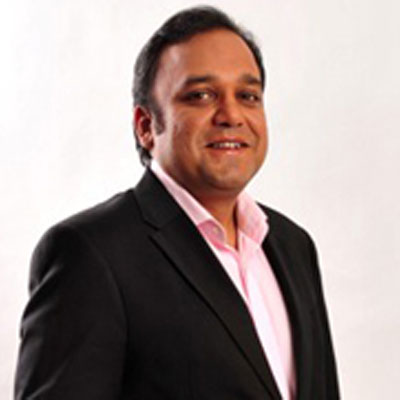
    Mipcom is the biggest event for all those in the broadcast industry. But this years Mipcom was even more special. For the first time in the history of Mipcom, an Indian addressed the gathering as a key note speaker. Present today was Zeel MD and CEO Puneet Goenka, who elaborated on Zee, the changing Indian broadcast industry and the role of digitisation and the growth of new media.

    Digitisation is one big opportunity that everyone is looking at. It will also impact the advertising market positively. If you look at the advertising market; the growth in the past five years has been roughly nine per cent and television has been growing at 15 to 16 per cent. The advertising industry will see a great boost whether it is captured on traditional media or new media.

    Zee Entertainment Television was started in 1992 with just two hours of programming scheduled at that point of time; today we have 34 channels in India, 29 on a global basis.
    Our journey outside India started in 1995 so the international business is now 18 years old, but truly, the international business started only a few years back. In the first 15 years, we concentrated on the Indian diaspora.

    In the international market, to start with, we picked up the Middle East, Russia and Malaysia, where our content is re-purposed and re-formatted to suit the local audience. Our goal is to reach one billion audiences by 2020, thereby taking Zee to the top ten channels. These markets have a lot of connection with India, especially on the Bollywood side.

    Opportunities ahead of digitisation in India

    In the traditional analogue market, there was huge piracy, approximately 70 per cent. So a broadcaster like Zee did not get its fair share of valuation. This will change with digitisation.

    The second opportunity is that India is still the cheapest content market. The ARPUs that the consumers pay is $ 3 per month for almost 200 channels. I feel this number will go up to $ 10-12 with digitisation. So the opportunity is two-fold.

    Digitisation is one big opportunity that everyone is looking at. It will also impact the advertising market positively. If you look at the advertising market; the growth in the past five years has been roughly nine per cent and television has been growing at 15 to 16 per cent. The advertising industry will see a great boost whether it is captured on traditional media or new media.

    Another development taking shape in India is the new measuring body called Broadcast Audience Research Council (BARC). The advertisers, broadcasters and agencies have come together to form this measurement system. Currently, the sample size in India is less than 10,000 homes, which in the next five years will go up to 100,000 sample households. This again will prove beneficial for advertisers who can find the right consumers.

    The profit mantra…

    Revenue growth is first and profitability comes in later. But at Zee, we have always followed the mantra that growth without profitability is not good. So according to us, any investment on a sustained basis that does not give a 20-25 per cent return on the capital invested is a bad investment. So when the Indian broadcast industry operates at an average of seven to eight per cent, Zee operates at a healthy 25 per cent plus.

    Viewer segmentation…

    Going forward, both digitisation and the need of advertisers will lead to further segmentation. Also, fragmentation is the order of the day. We are continually developing more content and more products to further segment the audience and grow and reach the billion mark.

    As long as there are consumers at the end of it; yes, we will move to the second screen. In India, the concept of second screen is at an early stage. It is largely the same content that is being reformatted. For example a show which is 40 minutes on traditional media, is shortened to 15 minutes for the small screen or second screen. There have been some investments specifically for this content, largely to get the youth. But, this is still at an early stage. 

    Content creation…

    We have a strong internal team working towards ideation and content creation for shows. India is traditionally known for importing formats, Zee was the first one to develop local formats in India. A lot of credit goes to the in-house team, but the credit also goes to the execution department, because investing in formats is not easy, it is expensive and the returns come in only after three or four years. So we have to continuously innovate in terms of our content and formats. The taste changes and so we have to adapt to the changing needs.

    Criteria for choosing international partners…

    The first thing we see is if my partner shares the same passion and vision. The world today is moving towards more co-operation than competition. We are actually collaborating with our competitors to see how we can mutually create content. So we have partnered with our key competitors in India. So as long as the industry grows, a company like Zee will grow.

    Indian talent pool…

    India has a dearth of talent in this industry and this is because there are no specialised schools to train people. We at Zee recruit fresh talent every year and put them through rigorous training through institutes that we have partnered with. We have created an environment where people are given the right to decide and build a culture of entrepreneurship. And therefore they take ownership which leads to positive results. I have been talking to schools as well to see if a programme can be created to develop this pool.

    Attrition rate in the Indian broadcast industry…

    Being a traded organisation, we can give equity stock options to people and that has worked for us. Currently, almost three per cent of the company is owned by the people and this combined with the environment that we create helps us keep the attrition rate as low as possible. In India, people are still moving within the Indian broadcast industry. We are not really seeing too many attritions happening from Indian companies to international markets, but the day isnt far.

    Moving towards second screen…

    As long as there are consumers at the end of it; yes, we will move to the second screen. In India, the concept of second screen is at an early stage. It is largely the same content that is being reformatted. For example a show which is 40 minutes on traditional media, is shortened to 15 minutes for the small screen or second screen. There have been some investments specifically for this content, largely to get the youth. But, this is still at an early stage. As a content creator, we will catch up soon. We were the first in the country to launch a Video on Demand service on mobile called Ditto TV, under a subscription model. Today we have 200,000 subscribers for it. I think the biggest hindrance is lack of a good broadband service. As the infrastructure improves, in the next three to five years, we will grow in this segment as well.

  • Buyers treated to Koffee with Karan

    Buyers treated to Koffee with Karan

    CANNES: Barely has Mipcom 2013 taken off and Star India seems to have sprung a huge surprise on buyers gathered at Cannes.

    It’s Koffee with Karan, being served hot and fresh at the world’s largest content fest before it returns to screens back home.

    That’s not all. The network is equipped with a host of other series and thousands of films from its library, and is particularly betting big on the epic saga – Mahabharat – which is already on air on Star Plus since 16 September.

    Star India’s ammo includes the thriller series Savdhan India and Humne Li Hai…Shapath from sister channel Life OK’s portfolio as well as Arjun which is currently being telecast on the network.

    Star India vice president Ashutosh Mordekar exults: “While we are looking at selling the Mahabharat format to countries which look at it as mythology, there is also a huge chunk of countries which think of it as a costume drama coming from India and are interested.”

    So Star India also plans to position Mahabharat, a la Korean costume dramas that are very popular with global audiences.

    “We are looking at tapping central and eastern Europe, Russia and the CIS region. We are hoping for a good Mipcom this year,” says Mordekar.

    Having succeeded in selling Life OK’s Devo Ke Dev… Mahadev to Mauritius and Eastern Europe, the network is looking at expanding the market base of the hit series.

    Nach Baliye, India’s Dancing Super Star and Channel V’s teenage crime series Gumrah are among the other show formats the network is looking to license this year. Star India will also hunt for new formats for Life OK as well as its new channel Star World Premier HD.

    About the propensity for Video on Demand (VoD), Mordekar says: “In India too, there is a huge shift from linear TV to non-linear and to VOD and we are also looking at creating content to occupy that space. We are coming up with branches to fulfill the VOD need of our viewers.”

    So while it’s early days at Mipcom, indiantelevision.com will keep a watch out for deals cracked in markets the channel plans to tap.

  • Mindscapes One Ideas signs a joint venture agreement with DEFI

    Mindscapes One Ideas signs a joint venture agreement with DEFI

    MUMBAI: Mindscapes One Ideas has roped in DEFI group and have signed an exclusive agency JV agreement with equal share holding pattern and launching DEFI groups’ services in India as DEFI-Mindscapes.

    The statement issued said, “We would like to change the OOH skyline of India and bring in the international standards spectacular OOH signs in India and encourage more of corporate brand building than just product campaign , we will also be adding glitz to the product campaign through OOH with international communication and visual technologies. We will launching our first project in Mumbai and then slowly move to the other cities of India.”

    DEFI also pioneered in city architectural planning for OOH standardisation which helps the local municipal corporation to increase its advertising revenue without making the city look clutter and ugly and maintain the esthetic value.

    The company will be working hand on hand with all existing OOH media owners of each city along with the city planners and city councils and try to bring the city skyline to the international standards.

    “We also have the most advanced and the biggest corporate signage factory of our own under our sister concern DBS in Beijing and will initially produce all our signs over there and import it for installation but within an year we plan to open our 2nd state of the art factory in India which will mainly cater to our clients in India, Russia, Sri Lanka, Middle East, part of east Europe and African continent,” the statement continued.