Tag: Rushabh Gandhi

  • What is Third-Party Car Insurance Cover & How it Works?

    What is Third-Party Car Insurance Cover & How it Works?

    If you own a car or are planning to get one, you cannot take it on the roads without obtaining valid insurance for the same. Though there are two types of car insurance, third-party insurance is considered the most basic insurance that no vehicle owner can do without. If you’re ever caught driving an uninsured car, you will be heavily penalized by the authorities.
     
    Third-party insurance for car is comparatively affordable compared to other car insurance, but it also offers limited coverage. If you’re contemplating getting third-party car insurance from a well-known insurance provider but want to gather necessary information before making any purchase, this article is here to guide you. 

    Also Read – New to Insurance? Keep these 5 Things in Mind While Purchasing life Insurance  

    Third-Party Car Insurance: Things to Know

    The Indian Motor Vehicle Act mandates car owners to get at least third-party insurance for their registered vehicle if they don’t want to go ahead with comprehensive insurance. Third-party insurance primarily covers the vehicle owner against losses/damages caused to a third party during an accident. Like other insurance policies in the market, even third-party insurance for car has specific inclusions and exclusions that you should be aware of.

    Inclusions in a Third-Party Car Insurance

    Irrespective of your driving skills, driving on chaotic Indian roads can sometimes be challenging. And with so much crowd and traffic around, chances of unfortunate events, like road accidents, increase manifold. In such a situation, if you end up hurting/damaging a third party or his property, you will be liable to pay the damage cost to the other individual. It is during such cases when third-party insurance comes to the rescue. They cover car owners for:

    Also Read – Government Should Address The Long Pending Insurance Bill Sanjay Tripathy

    1. Personal Damages to Third-Party

    If a person gets hurt during an accident because of your car, you will have to bear his medical and other associated expenses. If you have taken third-party insurance, you can claim the financials involved from your insurance provider, and they’ll take care of the rest.     

    2. Property Damages to Third-Party

    Similar to personal damages, you are also required to pay the property damage cost to the third party. Whether you accidentally hit another vehicle or a street lamp post, you will be liable to pay for the damages caused because of your car. Luckily, it is also covered in third-party insurance, so policyholders don’t have to bear the brunt of such unexpected out-of-pocket expenses.  

    ● Exclusions in Third-Party Car Insurance

    While third-party car insurance covers the vehicle owner for personal and property damages caused to a third party, it doesn’t cover the damage caused to the policyholder. But this negative can be turned into a positive by adding a personal accident cover to your basic third-party car insurance. You will have to pay for personal accident cover separately, but the extra payment will be worth it, as it will bring along peace of mind.    

    Also Read – Insurance A Push Product in India Says Indiafirst Lifes Rushabh Gandhi

    ● Difference Between Comprehensive and Third-Party Car Insurance

    The fundamental difference between comprehensive and third-party insurance lies in coverage. While the third-party insurance protects the car owner from a property and third-party damage caused by his vehicle, the comprehensive insurance covers policyholders for both third-party and own damages. You should purchase comprehensive car insurance if you want maximum coverage. The insurance premium varies proportionately to the inclusions/coverage a policy offers, so don’t worry if you have to pay more for comprehensive insurance.  

    But before you purchase any insurance for your vehicle, always remember that no claim will be entertained if the policyholder was found driving in a drunken state or the driver had no valid driving license. Also, if a minor was found driving the car at the time of the accident, no claim will be fulfilled. So always be responsible while driving to avoid any unpleasant surprises during claim settlement.

    How does Third-Party Car Insurance Work?

    If a person meets an accident after taking third-party car insurance, the policyholder can raise a claim for the damage caused to a third party or his property. For claim settlement, the policyholder should inform the insurance company about the accident within the stipulated time as mentioned in the policy document and also furnish an FIR so the insurance company can take things forward. A surveyor will then be sent from the insurance provider’s end to assess the monetary damage caused and verify the same before sharing a detailed report with the insurance company. Based on the final report, the claim amount will be processed.

    You can either call the representative you’ve been in touch with from the insurance provider’s side or simply email them on their official email id with the necessary details. Having a good insurance company by your side is important if you want faster claim settlement and excellent customer support. So take your time and do the due diligence before purchasing third-party insurance from any insurance provider.   

    Taking third-party car insurance from a trustworthy insurance provider will enable you to drive legally on the Indian roads without any worry of traffic penalties or fines and save you from unexpected and unavoidable out-of-pocket expenses in case of a road accident. With so many benefits on the table, you shouldn’t think twice before getting your vehicle insured.  

    Also ReadCovid-19 Uplifts Health insurance Sector, But Premium Segment Sees Decline 
     

  • SonyLIV creates film with IndiaFirst life insurance

    SonyLIV creates film with IndiaFirst life insurance

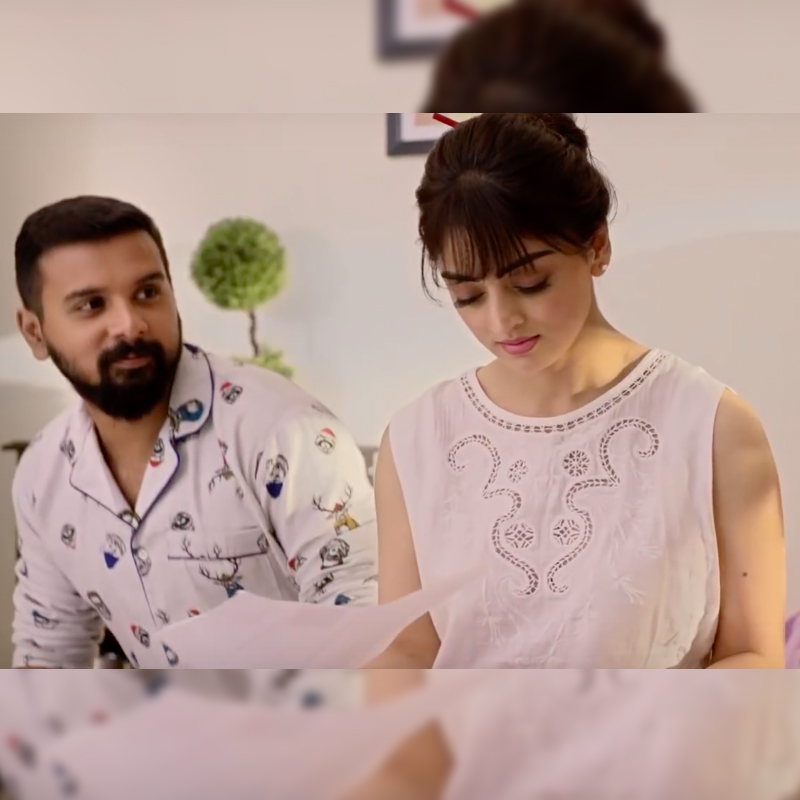
    MUMBAI: SonyLIV, the premium OTT platform of Sony Pictures Networks India (SPN) has crafted a new short film for IndiaFirst Life Insurance. The promotional film titled ‘Tera Mera Pyaar Amar’ is a humorous take on life after death and how the protagonist, who is now a ghost, has made sure he protects his family’s future in his absence.

    The story is about, Amar, who has his life as well as death planned. It is an amusing take on how, if one has prepared for all the certainties of life (and death) then it becomes easier for their loved ones to deal with their death. Through a compelling storyline and relatable characters, the film drives home the insurance company’s core message that life can be full of certainties if we plan, in advance.

    The 11.5 minutes long film stars Namit Das and Sandeepa Dhar in the lead roles, supported by Kabir Sadanand and Kunal Kumar.

    Sony Pictures Networks (SPN) EVP and head of digital business Uday Sodhi says, “At SonyLIV we strive to tell compelling stories that mirror society’s trends. We are very happy to partner with IndiaFirst Life Insurance and help them take their brand message to the masses. We are humbled that brands believe in us and we will continue to create content which will resonate with the new age digital consumer.”

    IndiaFirst Life Insurance director of sales and marketing Rushabh Gandhi adds, “The exponential growth of digital media has changed the way our audience consumes content. Earlier the shelf life of short films was limited to tele-films and film festivals but now smartphones and apps have revolutionised our lives, giving us access to a plethora of content on-the-go. Players like SonyLIV create path-breaking content that helps reach a wider target audience and we are delighted to be associated with this interesting short film – Tera Mera Pyar Amar. This association is close to our heart as the storyline is in-line with IndiaFirst Life brand messaging”

  • Insurance a push product in India, says IndiaFirst Life’s Rushabh Gandhi

    Insurance a push product in India, says IndiaFirst Life’s Rushabh Gandhi

    MUMBAI: Life insurance ads with depressing thoughts about the future and forcing you to invest to avoid gloomy situations like an accident, health failure, etc aren’t the most alluring to consumers. Indeed, just a fraction of the country ends up taking the plan and quite a few of them stop paying the premium in the first three years itself.

    But this outlook is exactly what the country’s youngest life insurance player wants to change in its latest advertisement. IndiaFirst Life Insurance launched a one-of-its-kind advertising campaign last week titled – Because Life is Full of Certainties. Launched in 2010 by the then President of India, Pranab Mukherjee, IndiaFirst Life Insurance is present in over 1000 cities across India. It is a joint venture between Bank of Baroda with 44 per cent stake, Andhra Bank with 30 per cent stake and UK’s leading risk, wealth and investment brand Legal & General group with 26 per cent stake in it.

    Created and conceptualised by Ogilvy & Mather, the campaign seeks to appeal to customers’ own reasoning by advocating prudence in planning for events or life goals that have a greater likelihood of happening such as getting married, having children, fulfilling responsibilities towards them and retiring. This is a step away from the generally promoted outlook to insurance that hinges on a person’s fear of the unknown. IndiaFirst Life Insurance director of sales and marketing Rushabh Gandhi mentions that the company wanted to differentiate itself from the existing norms of advertising and didn’t want too much of emotional jargon or overdose.

    public://inside_2.jpg

    Although Gandhi did not disclose the allocated budget for the said campaign, he revealed that this is the biggest brand campaign IndiaFirst has undertaken in the last three to four years. The campaign will run till the end of this financial year (31 March 2018) and if things go as planned, it will be pushed to the next financial year as well.

    The company will shell out 55 per cent of the total advertising budget on the out of home medium followed by regional print (15 per cent), radio (15 per cent), social and digital (15 per cent). With most of the business coming from Bank of Baroda and Andhra Bank, the firm will be setting up hoardings around the banks’ regional and zonal offices.

    The insurance player wants to steer away from television for the campaign and will not be investing at all on the medium. Gandhi says, “We thought: why to spend big bucks on TV when you can get the same result in terms of eyeballs with lower spends.” The company is also not looking at investing in in-cinema advertising where insurance and financial products form a bulk of the promotions.

    The insurance industry of India consists of 57 insurance companies of which 24 are in the life insurance business and 33 are non-life insurers. The number of lives covered under health insurance policies during 2015-16 was 36 crore which is approximately 30 per cent of India’s total population. While Gandhi does admit that insurance in India is not where it should have been, he is optimistic about its growth in the years to come. It requires a mind change, positive publicity and awareness for it to bloom. He says that insurance is currently a push product and not a pull one in India. “Insurance in India is growing at a fast pace although it had its blips sometime back. There is good headroom for players but we need to address the issue jointly as an industry,” he adds. The company reported a net profit of Rs 35 crore in 2016-17 and is aiming for a net profit of over Rs 50 crore in the current financial year.

    The future looks promising for the life insurance industry with several changes in the regulatory framework which will lead to further changes in the way the industry conducts its business and engages with its customers. With a growing middle class, young insurable population and increasing awareness of the need for protection and retirement planning, the industry is set to see some good times ahead and as Gandhi believes, “Life is not a series of accidents to happen as most of the things in life are certain, so might as well get a cover for them.”

    ALSO READ:

    BFSI’s changing communication in the digital era   

    Religare aims to change the youth mindset to health insurance

    Aditya Birla launches health insurance campaign

  • IndiaFirst urges you to insure against the certainties

    IndiaFirst urges you to insure against the certainties

    MUMBAI: IndiaFirst Life Insurance, a joint venture between Bank of Baroda, Andhra Bank and Legal and General, UK has launched a one-of-its-kind advertising campaign titled – Because life is full of certainties.

    The campaign is a proposition that seeks to appeal to customers’ own reasoning by advocating prudence in planning for events or life goals that have a greater likelihood of happening such as getting married, having children, fulfilling responsibilities towards them, and retiring. This is a step away from the generally promoted outlook to insurance that hinges on a person’s fear of the unknown.

    To spread awareness on the unique premise of providing adequately for certainties, IndiaFirst Life has rolled out the “Because Life is Full of Certainties” campaign pan-India, across mediums including billboards, hoardings, OOH, digital, radio, and internet marketing.

    IndiaFirst Life Insurance director of sales and marketing Rushabh Gandhi says, “It was imperative for us to get our brand positioning aligned to our Customers First philosophy. From here stemmed the idea of our campaign, a proposition born out of the understanding that life isn’t full of accidents waiting to happen. In fact, it is full of certainties. So instead of worrying about things that most likely won’t happen, why not prepare for those that certainly will.”

    Ogilvy & Mather executive vice president Prakash Nair adds, “One of the biggest barriers to insurance in India is the superman syndrome – the ‘I don’t need it’ attitude. Nothing will happen to me attitude. And the best way to convince these folks is straight talk – no jargon and no emotional overdose! The best way to get them to sit up and take a second look at us would be to tell them what will happen versus what could, maybe, happen.”