Tag: Rural Marketing

  • Eggfirst revolutionising rural marketing with cultural insights

    Eggfirst revolutionising rural marketing with cultural insights

    Mumbai: Eggfirst Advertising and Digital Advertising is a pioneering force in the marketing realm, specialising in Rural Ad campaigns that combine mainstream advertising and digital strategies. With an in-depth grasp of rural dynamics, Eggfirst excels in tailoring campaigns to resonate with rural consumers, employing cultural sensitivity and empathy. Leveraging innovative ideas and robust data analytics, Eggfirst bridges the urban-rural gap through technology, fostering growth and prosperity. Notably, they host events like the ‘Chalo Rural Conclave’ and ‘Chalo Rural Awards’ to connect, recognize, and empower rural India.

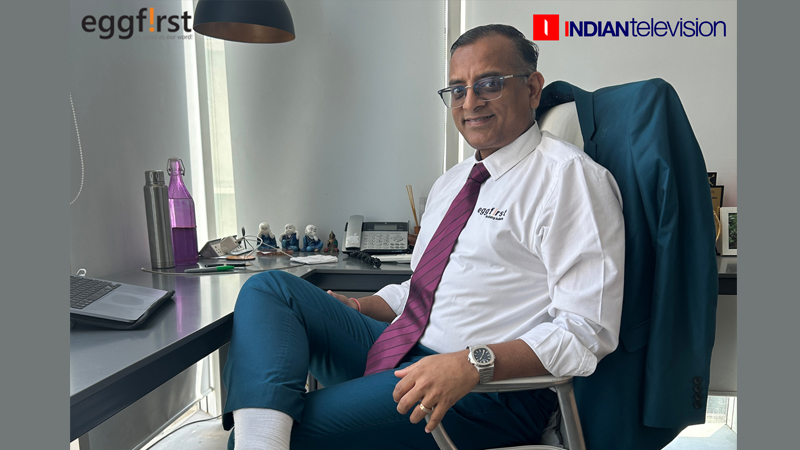
    Indiantelevision.com caught up with Eggfirst Advertising and Digital Advertising founder & MD Ravikant Banka, where he shares more information regarding rural marketing.

    Edited excerpts

    On Eggfirst Advertising establishing itself as a trailblazer in marketing and communications

    Eggfirst advertising has carved a niche as a rural marketing trailblazer by effectively connecting with rural audiences. Leveraging deep cultural insights, it tailors campaigns that resonate with local sensibilities. By embracing innovative strategies like experiential activations and localised content, Eggfirst bridges the urban-rural divide. Its track record of successful campaigns in challenging rural terrains underscores its prowess in delivering impactful messages and fostering brand engagement within rural communities.

    On  driving force behind Eggfirst’s success in launching products and services in rural markets

    Eggfirst’s success in rural market launches stems from a fusion of strategic understanding and a localised approach. The agency comprehends the unique dynamics of rural communities, allowing them to tailor offerings that align with local aspirations and preferences. By tapping into the emotional and cultural fabric of these markets, Eggfirst crafts compelling narratives that resonate deeply. Their adeptness at leveraging both traditional and digital channels ensures wide reach. This, coupled with their commitment to fostering trust through consistent engagement, empowers Eggfirst to seamlessly introduce products and services, forging lasting connections and yielding remarkable results in the dynamic landscape of rural marketing.

    On Eggfirst Advertising utilising technology and innovation to bridge the gap between urban and rural markets

    Eggfirst advertising employs technology and innovation to bridge the urban-rural gap by strategically integrating digital tools and localised insights. Through mobile outreach, social media campaigns, and interactive content, they reach remote audiences effectively. Leveraging data analytics, Eggfirst tailors messages to resonate with rural sentiments. This seamless fusion of technology and cultural understanding enhances brand visibility and engagement in rural markets, fostering a connection that transcends geographical boundaries.

    On Eggfirst Advertising approach the task of crafting effective communication strategies tailored for rural consumers

    Eggfirst advertising adopts a multifaceted approach when crafting effective communication strategies for rural audiences. They begin by conducting in-depth research to grasp local values, customs, and aspirations. This insight informs the creation of relatable content and narratives that resonate deeply. Eggfirst’s strategy involves employing vernacular languages, culturally relevant visuals, and relatable scenarios to establish an authentic connection. Utilizing a mix of traditional media, community events, and digital platforms, they ensure wide-reaching engagement. This holistic approach, rooted in cultural empathy and strategic versatility, enables Eggfirst to deliver communication strategies that genuinely connect, captivate, and drive meaningful impact in rural settings

    On strategies does Eggfirst Advertising employ to tap into the potential of rural markets successfully

    Eggfirst Advertising taps into rural market potential through a blend of strategic localization and innovative engagement. They deploy thorough market research to grasp local nuances and preferences, enabling them to tailor offerings and messages effectively. Leveraging traditional media, community outreach, and digital platforms, they create a seamless blend of communication channels that resonate with rural audiences. Eggfirst also embraces experiential activations, allowing firsthand interactions with products and services. This amalgamation of cultural understanding, strategic targeting, and experiential approach enables them to tap into the vast potential of rural markets, driving engagement and fostering lasting brand connections.

    On the key understanding Eggfirst possess about rural markets, and why is it crucial for effective marketing

    Eggfirst possesses a deep understanding of rural markets’ cultural intricacies, values, and aspirations. This knowledge is crucial for effective marketing as it enables them to create resonant messages and offerings. By tailoring campaigns that align with local sentiments, Eggfirst establishes a genuine connection, building trust and credibility. This understanding ensures that marketing efforts aren’t perceived as intrusive or irrelevant but rather as relevant solutions, fostering lasting brand loyalty within rural communities.

    On Eggfirst ensuring its communication strategies are both effective and relatable to rural consumers

    Eggfirst ensures effective and relatable communication strategies for rural consumers by delving into thorough research to comprehend local values, behaviours, and preferences. They craft messages using vernacular languages, culturally relevant visuals, and relatable scenarios. By weaving authentic narratives that align with rural life, Eggfirst establishes an emotional connection. Regular feedback and engagement with rural communities enable them to refine their strategies continuously. This commitment to cultural empathy and ongoing refinement ensures that their communication resonates, effectively conveying brand messages and fostering meaningful relationships with rural consumers.

    On making Eggfirst’s approach to rural advertising unique and innovative compared to traditional methods

    Eggfirst’s approach to rural advertising stands out due to its fusion of cultural insights and modern techniques. Unlike traditional methods, which might overlook local nuances, Eggfirst combines traditional media and experiential activations with digital platforms, ensuring comprehensive reach. By embracing localized content, they create relatable messages that resonate deeply. This innovative blend of cultural empathy, technology, and strategic versatility enables Eggfirst to connect authentically with rural audiences, forging a unique path in the world of rural advertising.

    On Eggfirst leveraging  technology and digital platforms to bridge the gap between urban and rural markets

    Eggfirst leverages technology and digital platforms adeptly to bridge the urban-rural gap. They harness the power of mobile connectivity to reach remote areas, ensuring a wider audience reach. By tailoring content to vernacular languages and local sensibilities, they create relatable narratives that resonate. Interactive social media campaigns, webinars, and virtual experiences engage rural audiences, breaking down geographical barriers. Eggfirst also employs data analytics to refine strategies, ensuring relevance. This seamless blend of technology and cultural understanding enables them to establish a virtual bridge, effectively connecting urban and rural markets, fostering engagement, and propelling brand messaging that transcends physical boundaries.

  • Need for condom brands to target the rural audience

    Need for condom brands to target the rural audience

    MUMBAI: Sex is perhaps the most rampant taboo in India. Despite the economic and technological advancements, sexual discourse in the country is yet to witness a significant evolution. From sex education in school to conversations at home, the country in a sense continues to avoid addressing the elephant in the room. The cultural conditioning, especially in a country as large and diverse as ours, tends to have major implications on industry and market economics. Marketers and advertisers tend to feel handicapped when operating around no-go-zones. That's the space India's condom companies find themselves in.

    In India, Condoms advertising continues to be a tug of war between advertisers and the regulatory authorities. Companies create an advertisement, spend millions on marketing, only to find out that ASCI and MIB have slapped them with charges to withdraw or modify the ad. There is no running away from the fact that Indians have a conservative approach to sex. And When condom brands try to titillate and opt for sleazy advertising, they compound the problem.

    This rather 'controversial' category has always had its challenges and limitations when it comes to product marketing. The ‘Sanskaari’ Indians don't want to see condom ads on television, hoardings or radio. Maybe, that’s the reason we tend to notice fewer condom brands around us. 

    While the situation is still better in urban and metro cities, one wonders what the scenario is like in rural pockets of the nation where topics like condom and sex are considered 'impure' and 'grubby'. 

    The overall condom penetration in India is only six per cent. According to several studies and surveys, the Indian condom market is projected to reach $180 million by 2022. This is on account of rising consumer awareness about HIV, STI and other sexually transmitted diseases. The booming e-commerce business, rising young population and an increase in the average marriageable age are other contributing factors that have played a role in effecting this change.

    The market is primarily dominated by Manforce with a 32 per cent share, followed by Moods at 12 per cent, Skore at 10 per cent, Kamasutra at eight per cent, Kohinoor at eight per cent and Durex at around three per cent along with local brands. 

    The National Family Health Survey in its 2015-16 survey revealed that the knowledge of contraceptive methods is almost 100 per cent in India and 99 per cent of married women and men aged between 15-49 know of at least one such method. Sounds like a good number, right? However, the condom penetration (usage) in India is extremely low, with the urban sector clocking around six per cent and the rural a mere four per cent.

    GRAPH.jpg

    The rural market is still small in India and contributes to about 27 per cent of the 1073 crore condom market in India as per a Nielsen report. But the good news is, it has grown by 16 per cent in terms of value in 2017. Usage of condom in smaller pockets has increased in the last five years due to modernisation, digital penetration and availability of low cost smartphones and data.

    The segment is still unorganised with major private players taking the lead in developed regions. They spend millions on advertising and marketing themselves in the eyes of modern consumers. Case in point: Manforce signed pornstar-tuned-Bollywood actor Sunny Leone, Durex snapped up Bollywood actor Ranveer Singh after he admitted that he was ‘addicted to sex’, SKORE condoms went international and signed cricketers Chris Gayle and Dwayne Bravo. The result? These brands are now at the top of brand recall in the eyes of consumers.

    But the rural scene is majorly dominated by local players. Retailers often take advantage of the consumer discomfort and display brands that allow them good margins, which in most cases are local companies.

    At such a point, it is crucial for national brands to create brand visibility for the audience that isn't really big on television or digital. In order to increase the penetration in smaller segments of India, JK Ansell has launched low value products under the portfolio of KamaSutra brand. Interestingly, Kamasutra currently does not advertise or market its product in rural regions, as 95 per cent its sale comes from the developed cities.

    Brands such as Durex, KamaSutra, Moods and SKORE prefer staying away from rural marketing and undertaking any awareness campaigns. But maybe its time they look into these markets as the next phase of growth is bound to stem from tier two and three towns.

    c20204cb-952a-4b9a-94c7-3eaaf22b798f.jpg

    Most condom brands look at targeting the younger generation in rural areas aged between 20-24 in the hinterland, where condom usage is greater. JK Ansell GM for marketing Ajay Rawal said, “Condom consumption is generally in the age group of 18-30 years. Beyond this, owing to sterilisation and IUD post marriage, the condom usage generally dips. So, the younger generation is where the future lies and hence we want to effectively tap into this segment.”

    Durex's pack of three condoms costs around Rs 55 whereas Skore, Manforce and KamaSutra are priced at Rs 25. Among local brands, Cobra condoms are sold at Rs 14, KIK at Rs 15 and Invigra's pack of 4 at Rs 30. 

    All said and done, distribution and social awareness still remains a challenge in the rural segment for major players as it is still serviced by low price condoms and free condoms (NIRODH) distributed by the Government of India. 

    Sales through modern trade outlets and the digital media are further driving the off take in the category, giving consumers more time during the transactions.The good news is that the rural consumers have taken a step towards accepting quality products rather than settling down with basic low value cheap condoms. 

    But that's not enough. The need of the hour, for condom companies and India as a country, remains the challenge of permeating social awareness down to the last mile.

    Also Read :

    I&B tightens up on condom ads on TV

    Time for condom brands to review their storytelling

    'Sanskari' India wants condom ads off primetime

    MIB recants, says only explicit condom ads banned during the day

  • Vritti most admired rural marketing agency: ACEF 2016

    Vritti most admired rural marketing agency: ACEF 2016

    MUMBAI: Great work is always recognized and appreciated in the competitive marketplace When an organisation gets recognition for good work in the presence of business partners and competitors the feeling just adds up.

    ACEF Program is organized by a team of professionals from India, UAE and Sri Lanka. Recently, the prestigous ACEF Forum & Awards were announced for “Marketing Capabilities, CSR Activities, Rural Initatives for the year 2016.

    Team Vritti bagged the gold for the “Most Admired Agency for Rural Marketing” and also bagged a rich haul of six other awards including three golds and three silvers; in the prestigious ACEF Awards 2016. Winning seven awards is a distinct achievement in ACEF Awards that takes Vritti iMedia to new heights. Four gold trophies have been won in different categories which underlined the all-round expertise of the company.

    Vritti iMedia bagged the ‘gold trophy’ for being the “most admired agency for rural marketing”.

    Vritti iMedia CEO Veerendra Jamade said, “We always tried to think out of the box. Whether it is the amazing idea of using the religious occasions like Nashik Kumbh Mela and Ujjain Sinhastha; or it is the integrated program of Fatak se Furr in Pandharpur; our ideas are distinguish-ably different. I think it is the secret of our success so far.”

  • Vritti most admired rural marketing agency: ACEF 2016

    Vritti most admired rural marketing agency: ACEF 2016

    MUMBAI: Great work is always recognized and appreciated in the competitive marketplace When an organisation gets recognition for good work in the presence of business partners and competitors the feeling just adds up.

    ACEF Program is organized by a team of professionals from India, UAE and Sri Lanka. Recently, the prestigous ACEF Forum & Awards were announced for “Marketing Capabilities, CSR Activities, Rural Initatives for the year 2016.

    Team Vritti bagged the gold for the “Most Admired Agency for Rural Marketing” and also bagged a rich haul of six other awards including three golds and three silvers; in the prestigious ACEF Awards 2016. Winning seven awards is a distinct achievement in ACEF Awards that takes Vritti iMedia to new heights. Four gold trophies have been won in different categories which underlined the all-round expertise of the company.

    Vritti iMedia bagged the ‘gold trophy’ for being the “most admired agency for rural marketing”.

    Vritti iMedia CEO Veerendra Jamade said, “We always tried to think out of the box. Whether it is the amazing idea of using the religious occasions like Nashik Kumbh Mela and Ujjain Sinhastha; or it is the integrated program of Fatak se Furr in Pandharpur; our ideas are distinguish-ably different. I think it is the secret of our success so far.”

  • Carat Fresh integrated to become psLIVE

    Carat Fresh integrated to become psLIVE

    MUMBAI: To be the first in the region, Dentsu Aegis Network’s experiential marketing agency, psLive, which was recently launched in APAC, will be rolled out in India.


    Carat Fresh Integrated, which has built itself to a strong 95 experiential professionals, across eight offices, over the last five years, will transform to psLIVE in India, giving it a great platform to build upon.


    Dentsu Aegis Network South Asia chairman & CEO Ashish Bhasin will take on the additional role of chairman APAC, Posterscope and psLIVE – Asia Pacific.


    In India psLIVE will be focusing on experiential marketing, PR, rural marketing, branded entertainment, sports marketing, creative and consultancy as the key areas of operation in the initial phase. psLIVE India will be the first truly global experiential marketing agency, offering the entire gamut of services, which is built for the digital age.


    Commenting on the development, Bhasin said “We are very happy to transform Carat Fresh Integrated to psLIVE because this puts us in a unique place of having a strong ground based operation, backed by all the global knowledge and tools. All aspects of experiential marketing, particularly activation and rural, are becoming extremely important in India. Having a world class operation like psLIVE as part our offering, will give the Dentsu Aegis Network clients a unique opportunity to tap these areas, through a professional set-up.”


    psLIVE India will commence its operations with 95 employees, in eight offices. These offices are located in Mumbai, Delhi, Bangalore, Chennai, Ahmedabad, Kolkata, Chandigarh and Guwahati.  psLIVE has a ground network of over 3500 people. It is expected that by end 2015 the ground network will touch 10,000 and over 1,00,000 villages would have been covered by then.


    R Ravi Shankar will head psLIVE India while Sidharth Ghosh, vice president, Keshav Chandorkar, rural markets national head and Ajay Rao, vice president, will form the core management team of psLIVE.

  • Impact Communications madehat-trick at RMAI Flame Awards

    Impact Communications madehat-trick at RMAI Flame Awards

    MUMBAI: At the fifth Edition of The Rural Marketing Association of India Flame Awards 2013,the association acknowledged the finest campaigns in Rural marketing, branding, innovation and CSR  Campaigns in rural India in the past year.

    The RMAI Flame Awards recognizes the work of corporates & agencies successful in rural marketing every year. This year, the event was attended by 300 participants from Corporate, Media, Consultancy and Agencies. 209 entries were received and 63 won awards across 25 categories. India’s most reputed and eminent personalitiesconstituted the awards jury. These included S Sivakumar – Chief Executive (ABD) ITC Ltd, GeetuVerma, Executive Director, Unilever, Harish Bijoor, Brand – Strategy Specialist & CEO, Harish Bijoor Consults Inc. and George Angelo, Executive Director (Sales), Dabur India Ltd,Sidharth Singh Executive VP GSK &N Subramanian EVP TAFE. With over 200entries to compete with, Impact Communications won 13 awards across categories including 5 Gold, 3 Silver and 5 Bronze awards.

    This year RMAI celebrated10 years of this platform andacknowledged the best works of the past decade, under special categories of “Long Term campaign of the decade”, “Social Development campaign of the decade” and “Brand association with a traditional congregation platform, of the decade”,Impact Communications found its place in all three categories. Bagging Gold and Bronze with “PehelaEkGhanta” a campaign for pregnant women and neo natal care in the categories of “Long Term campaign of the decade” and “Social Development campaign of the decade” respectively for PATH India. Impact also grabbed Silver for “Brand association with a traditional congregation platform, of the decade” with “LuiDahhan-Sonepur Mela” a proprietary event for Reckitt Benkiser.

    Impact Communications won Gold & Silver in the following categories across domains of consumer/ B2B/ CHANNEL MARKETING/ OOH:

    •    On-ground promotion of the year for Brand Awareness: “Ceat – Monsoon Smart Campaign”.  Was activating the Target group by triggering the urgency during monsoons & addressing the procrastinating nature of the customers. The intelligent messages delivery & intercepting them at different relevant touch points & connecting them to convergence point through technology made it comprehensive awareness campaign tailored to deliver for the brand.

    •    Small Budget campaign of year “Chick Thickness Queen” won gold on its cost competitive approach to drive the core proposition of thick hair promise with thickness meter a tool made of art paper measuring thickness of hair. Creating a moment of truth & recognition for Target group in the school.

    •    Channel Marketing / Retailer Incentive of the year: “Meri Guarantee, Mazbuti Guarantee”-JK Lakshmi Cements. A brand endeavor of presenting the dealerships with personalized customized branding of outlets and message of recognising them as local ambassadors was an out of box integration of main line communication targeting the dealers for motivational purpose.

    •    OOH Campaign of the year: “Horlicks -Maha Kumbh”. In sync with brand positioning “BadhayeDoodh Ki Shakti” a spiritual message “ Kumbh Snaan Bhakti Ka, Ek cup Horlicks Shakti Ka” was integrated and casted on clutter breaking above the eye stand out mediums, eateries and ride brandings was recognized as intelligent messaging in  the largest congregative platform like Kumbh Mela.

    •    Direct Marketing campaign of the year: “Ceat-Bike Tagging”. Reducing thepath to purchase through innovative use of technology, Target group were identified by tagging bikes at parking lots. These tags linked the customers back to the dealers reducingdependence on intermediaries.

    Commenting on the win, Sanjay Kaul CEO Impact communications said,“We are really pleased that our work has been recognized across categories.RMAI awards definitely energize our teams to plan & implement differentiated & path breaking marketing initiatives for our clients. ”.


  • R V Rajan’s Handbook: A guide to rural marketing

    R V Rajan’s Handbook: A guide to rural marketing

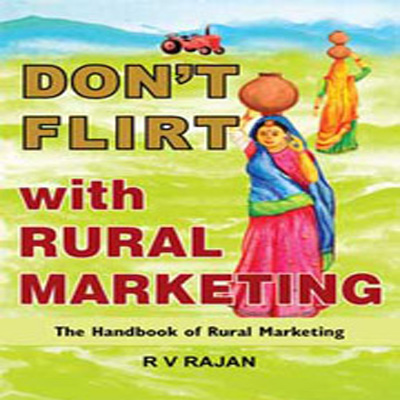
    MUMBAI: From being a Bombay boy to rural marketer specialist, RV Rajan has many stories to tell. The 72-year-old founder and former chairman of Anugrah Madison Advertising has written a new book – Don’t Flirt with Rural Marketing – or like he says “it’s my experience”.

    With around 40 years in the industry, the veteran says the research which went into writing the handbook is nothing but his experiences in the field. According to him, the income and aspirations of lower middle class and middle class is increasing, so no one can afford to ignore rural marketing. “It is from here that a lot of aspirations come from. And with brands offering almost 50 per cent of their products to this category, it is very important to focus on rural marketing,” he states.

    The TG for the book is marketers, MBA students as well as anyone who wants to know about the subject stresses R V Ranjan

    The chapters outlining the fourteen step approach include topics like Commitment from the top management, Choosing the right product, Understanding the mindset of the rural consumers, getting a dedicated task force, Developing focused communication strategy, Performance evaluation etc. The highlight of the book is the elaborate chapter on Below the Line Activities (BTL) which account for 80 per cent of the rural marketing efforts. In this chapter the author provides a detailed practical guide for any kind of road shows. “I have written the book in a very chatty and informal way so that it doesn’t read like a lecture. I want people to feel the experiences I went through,” he says while stating that the correct TG for the book is marketers, MBA students as well as anyone who wants to know about the subject.

    Another added feature is that many of the chapters are supported with appendices giving very useful contact details of individuals and institutions that provide support services to anyone interested in making a foray into rural marketing.

    When asked which are the companies which have paid attention to the field, he replies “HUL and ITC have been doing it for years now. But in the current scenario, the company which has created dominance in the rural market through its campaigns and initiatives is LG.”

    The book has a foreword by ITC executive director Kurush Grant who describes the book as the first usable manual for marketers. “Most serious marketing companies should make the book compulsory reading for all their marketing and rural sales teams”.

    According to the president of Rural Marketing Association of India and father of rural marketing Pradeep Kashyap, “The book is a must have for anyone involved in Rural Marketing because it has practical insights on Rural marketing which are invaluable for companies and agencies.”

    Rajan goes on to say that although rural marketing share has increased over the years and states like Punjab, Haryana among many others have gown fantastically one still needs to focus on it.

    The Rs 395 book which took around two years to write is published by Productivity & Quality Publishing (Chennai). The 130 page book is accompanied by a DVD containing video clips of some successful case studies of Anugrah Madison.