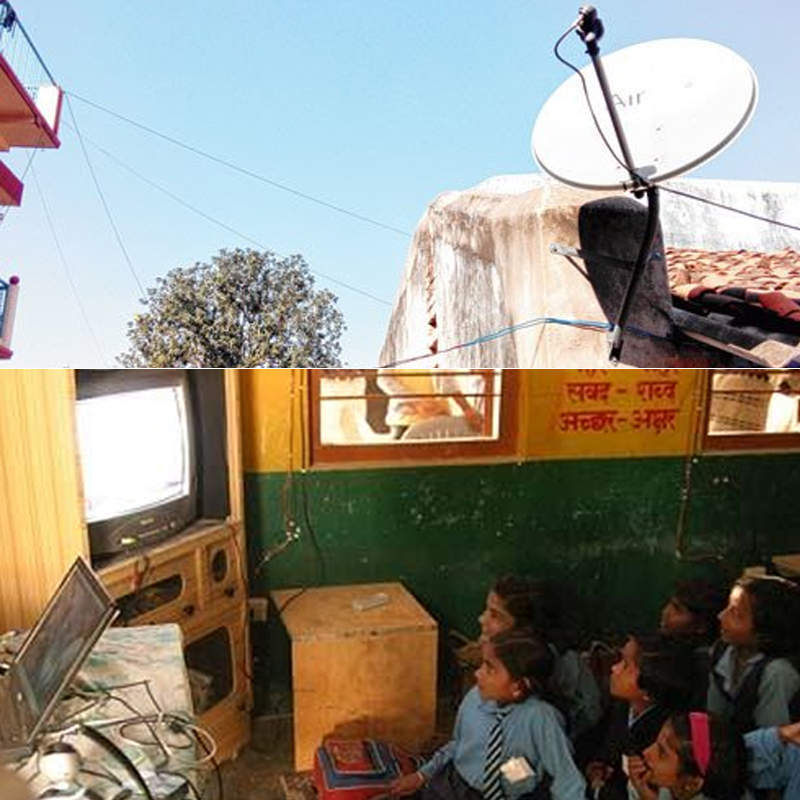
Tag: Rural India

  • Rural India props up PKL 5 viewership with 75 per cent contribution

    Rural India props up PKL 5 viewership with 75 per cent contribution

    MUMBAI: It was five years ago that kabbadi went from being a game played in playgrounds to captivating the largely cricket-crazy sports audience in India. The fifth season of Vivo Pro Kabaddi League (PKL), India’s most watched non-cricketing property, garnered 1.6 billion impressions for the live telecast according to Broadcast Audience Research Council of India (BARC).

    PKL pocketed 3.3 billion gross impressions which is calculated at 30 minutes interval as per the data given by the broadcaster. There is some duplication involved in the gross impressions since the same person could have viewed the programme on two occasions.

    Surprisingly, 75 per cent of the total viewership came from rural areas and 43 per cent of viewers were female. Star Sports First, the free to air channel, attracted 31 per cent of the total viewers as compared to its pay counterpart, Star Sports 2, which contributed to just 10 per cent. Indeed, the first week of the tournament itself led to Star Sports First leading the genre with 148,506 impressions.

     The season saw its opening in Hyderabad and finale in Chennai with 12 cities in between. The finale witnessed an 83 per cent rise over the previous year, garnering 25.4 million impressions. The fourth season finale got 13.9 million impressions.

    The 140 games in the fifth season grabbed 1.6 billion impressions vis-à-vis 561.1 million impressions during the 60 games last year. The average impressions per game in season 5 were 11 million as compared to season 4’s 9 million, a 22 per cent increase.

    The league also attracted new fans, including kids (2-14 years) and teenagers (15-21 years) with 19 per cent and 21 per cent share in the total number of viewers, respectively. Tamil Nadu was one of the most successful new markets with the league being televised on Star Sports 1 Tamil. PKL was also broadcast in Kannada on Star Suvarna Plus and Star Maa Movies in Telugu, apart from English and Hindi.

    This makes a strong case for advertisers to hop on board a property in which they had very little confidence in its inaugural season. The latest season saw a string of sponsors and partners for individual teams and several brands joined the bandwagon as the matches progressed. Sponsors included TVS Motors, Bajaj Electricals, and Gillette Mach3 Turbo.

    Star India EVP and head ad sales Anil Jayaraj had earlier revealed that the sponsorship revenue for this year was 320 per cent higher this year. The sponsors make approximately 15 times the return on their investment.

    Star India managing director Sanjay Gupta says that the current season’s aim was to push the boundaries. “India has truly embraced kabaddi. With an expanded league, there were 12 teams competing in more than 130 matches, spread across 13 weeks. That the love for kabaddi is cutting across geographies and demographics is self-evident. It is very heartening to see this response from millions of fans across the country, which has emphatically re-established kabaddi’s position as the most watched non-cricketing sport synonymous with the Vivo Pro Kabaddi League.”


  • Rural India gets e-commerce & TV ready via optic fibre network

    Rural India gets e-commerce & TV ready via optic fibre network

    NEW DELHI: The BharatNet project, which aims to deploy high-speed optical fibre cables across rural areas of the country, has now reached 83,000 gram panchayats, according to Department of Telecommunications Secretary Aruna Sundararajan.

    Speaking at ‘i-Bharat 2017’ on the theme ICT Elucidations for Unserved and Unsolved, organised by FICCI in association with the Ministry of Electronics and Information Technology, Sundararajan said that by December this year the first phase of BharatNet will be complete. This would provide 100,000 gram panchayats with broadband connectivity by laying underground optic fibre cable lines.

    The DoT is aggressively monitoring the prestigious BharatNet initiative that aims to provide Internet connectivity to 2,50,000 gram panchayats or village blocks by March 2019.

    The entire project, when complete, is expected to give a fillip to e-commerce services, including e-governance, education and television services to far flung areas of the country.

    The DoT Secretary said fibre-isation was a national imperative and the government, industry and chambers of commerce needed to work in coalition to achieve the objective of doubling the telecom footprint in the country by 2020.

    Quoting from internet guru Mary Meeker’s 2017 report released in May this year, she said there are over 355 million monthly active internet users in India, while nearly 109 million smartphones were shipped in 2016. Nearly 46 per cent of internet users in India consume content in local languages. In the first quarter of 2017, 27 million smartphones were shipped. Most Indians used the internet on their mobile phones (80 per cent usage was on mobile as compared to the global average of 50 per cent). The most used browser in India was UC Browser, followed by Chrome and Opera. WhatsApp, Facebook Messenger, Shareit, Truecaller and Facebook are the most used apps in India.

    She said these figures threw up challenges in the policy domain, particularly in terms of security; data privacy and protection, data regulation and data monetisation.

    Hewlett-Packard Enterprise MD Som Satsangi said that with the impending large-scale migration of people from the rural areas to the proposed smart cities, the challenge before the industry would be to meet their rising expectations and services on demand. The industry must be ready to provide low-cost, affordable solutions to the aspirational people at the bottom of the pyramid.

    Indian Express Group executive director Anant Goenka said India would soon overtake China as the consumer base for telecom and IT and therefore, if the objective was to shape digital India, there was a need to look beyond the current trends. The Aadhaar database must be leveraged while tackling privacy issues.

    FICCI ICT & Digital Economy Committee Chairman Virat Bhatia said following the government initiatives, the internet landscape of India is about to experience a tectonic-shift. The next millions of users that will come on the internet by 2020 will utilise ICT as a socio-economic tool of development. To fulfil the dream of ‘New India’, “we all have to work towards good governance and streamlining the marginalised section of the society and transforming India into an empowered and inclusive knowledge-based society,” he said.

    FICCI secretary general Sanjaya Baru emphasised the need to have pre-policy consultations between the government and industry rather than resort to post-policy alterations which leads to needless confusion. FICCI, he said, would initiate closed-door consultations for industry so that its representatives can have a free and frank discussion with policy makers in the government.

  • Television reigns in rural India despite 79 pc OTT scope

    Television reigns in rural India despite 79 pc OTT scope

    MUMBAI: Television remains the dominant medium as far as the news, entertainment and advertising need in rural India is concerned although 79 per cent consumers (signifying crucial scope for OTT platforms) own a mobile, including those living in towns/villages inhabited by as low as 2,000-3000.

    Market research firm Kantar IMRB has found that only 22 per cent of rural consumers who were surveyed read a magazine or a newspaper in the four weeks preceding the survey. And, only four per cent surveyed said they listened to the radio, Mint reported.

    The penetration of mobile phones is the highest in southern and northern India at 80 per cent while it was 75 per cent in the west and  78 per cent in the east.

    In its report ‘Star 2017,’ the firm said that it found that 59 per cent of all rural consumers polled watched television in the previous week before they were queried for the survey. The report showed scant use of personal computer or laptop in rural India.

    These conclusions are in sync with BARC India data. As reported by Indiantelevision.com, according to BARC figures released in February 2017, the all-India TV universe has increased to 183 million from the earlier collated figure of 154 million with the growth in rural audience showing a quantum jump signifying that upswing is coming from non-urban areas.

    The data highlights that while the total urban TV universe stood at 84,414 (in ‘000) in 2017, the comparative rural figure is 98,639 (in ‘000), signifying that the rural segment has grown at a faster rate, which opens up whole new marketing options for broadcasters and advertisers. The comparative old figures as per BARC estimates in 2015 were 77544,000 (urban) vs. 75967,000 (rural).

    This data showed that, while the urban-rural audience mix was almost equal earlier, the rural segment has outpaced the urban as per latest figures in rate of growth. The data reiterates that since it started surveying the rural audience, a whole new world has opened up for subscribers of the data, which, incidentally, also include government organisations apart from the traditional TV channels and advertising agencies.

    ALSO READ :

    PKL rural telecast exceptionally propels Star Sports First to top

    IPL net realisation up, digital ad revenue grew astronomically as compared to TV

    Total TV universe up to 183 mn, rate of rural growth higher than urban: BARC survey


  • Advertisers target rural north & south zone on serials & film-based content: BARC

    Advertisers target rural north & south zone on serials & film-based content: BARC

    MUMBAI: None realised the importance of rural market until BARC India started monitoring viewing habits in the countryside. After the TV audience measurement system gave its ratings, the industry woke up to the potential of this market.

    A recent newsletter released by BARC India emphasises on the viewing habits of the viewers on different fronts.

    From one front,  this research explores the advertisers and marketers targeting north and south zone on serials and film-based content to reach their respective audience.

    On an overall level for rural India, serial-based programmes secure the highest share, followed by film-based programmes. This pattern is consistent across zones with the exception of south India. Viewership for serials is driven majorly by the north zone while film-based programmes have maximum viewership in the south zone, which does not come as a surprise.

    public://barc6_0.jpg

    Most of the programme themes are driven by south zone. The only exception is music which is driven almost entirely by the north zone. For broadcasters in the serials and music genre, north rural market is the key.

    For advertisers and marketers targeting north and south zone, serials and film-based content will be the ‘Holy Grail’ to reach their audience respectively as over 30 per cent of the viewership is attributed to each of these content types across zones.

    For marketers targeting west or east zone, frequency-based plans yield results easily. On the other hand, for those targeting north, reach-based plans may be more achievable.

    On an overall level, the south zone registers the highest reach and ATS ( Average Time Spent) among the four zones in rural market. Looking at the west zone, ATS is the second highest after south zone. However, it has relatively lower reach. This shows that audience in the western rural market has lower reach but they spend a high amount of time consuming television content. Conversely, the north zone has the lowest ATS but has a comparatively better reach. One can infer that audience in the north zone does not stick to television viewing for as long as those in other zones.

    The rural viewership pattern

    Urban and rural India follow distinctly different viewing patterns across the day. Rural India starts its day much earlier than urban India around 5am, and continues to have higher viewership until 9am.

    Post 9am, urban India’s viewership catches up and has higher viewership than the rural India throughout the afternoon and evening. Both, urban and rural India see a marginal peak during 2-230pm. However, rural India sees an early spike for prime time as compared to urban India. The highest viewership in rural India is generated during the time-band 830-9pm followed by the time-band 8-830pm.

    Viewership starts declining around 1030pm hinting at an early wrap-up for the day for the rural audience.

    If one compares all the four zones in the rural market, it seems like the viewership is driven by southern rural market followed by the west zone. The lowest viewership in rural market can be observed in the north zone which has the lowest average rating percentage for the entire day.

    public://barc10_0.jpg

    public://barc9_0.jpg

    If one looks at the zone-wise viewership, both weekdays and weekends are driven by the south zone followed by west zone. Overall viewership for weekends is marginally higher than weekdays for rural India. At the zone level, this increase for weekend viewership is the maximum for the west zone and the least for the east zone.

    public://barc8_0.jpg

    public://barc7.jpg

    Viewership differs during prime time

    Millennials in rural India could be the next big target for broadcasters and advertisers to hold on to.

    Viewership in India during prime time is equally divided among both the genders. However, if compared by the four zones, north and west zone have a higher percentage of male viewers (51 per cent  and 52 per cent, respectively) and Millennials (age-group 15-30) form the largest percentage of audience in rural India. The pattern is the same among all the four zones with the exception of south where Gen X (age group 31-50) forms the largest percentage of the audience.

    NCCS C (New Consumer Classification System) has the highest share of viewership among all zones in rural India. While the west zone and the east zone display a composition similar to rural India, the north zone and south zone have some variations. The north zone has a substantially higher composition of NCCS A & NCCS B, while the contribution of NCCS C is lower than the rural India average. Conversely, in the south zone, the contribution of NCCS A is low.

    public://barc5_0.jpg

    Surprisingly, film-based programmes, which have the maximum reach during prime time, have one of the lowest stickiness across rural India for all the four zones. Game/talk/quiz and lifestyle-based programmes can hold the audience for long as they have a healthy ratio for reach to fidelity. In rural India, stickiness for serial-based programs is the highest across programme themes.

    Surprisingly, it is driven mostly by south zone, which had the lowest reach among all zones for this content. Interestingly, if one compares this to the audience composition analysed above, north zone and west zone, which have a higher percentage of male audience, also see higher stickiness for sports programmes. Lifestyle-based content in terms of stickiness has much better ratio of reach to fidelity across zones.

    public://barc4_0.jpg

    public://barc3_0.jpg

    Ad sector popularity

    The top ad sectors by viewership during prime time in rural India are personal care/hygiene, food & beverages, hair care and services etc.

    Personal care/hygiene and hair care sector have a higher share in the north zone. This can also be seen while comparing all the zones for the ‘personal healthcare’ category, where again the north zone takes the lead.

    On the other hand, the south zone is more inclined towards categories such as food and beverages, auto, durables and personal accessories.

    public://barc2_1.jpg

    Switching pattern for GEC & movie genre

    Since most of the TV viewership is generated by GEC and the movie genre, it would be interesting to understand the switching pattern of rural India on a day-part level.

    public://barc1_1.jpg

    As observed in the paragraphs above, throughout the day, most of the switching to or from a channel genre happens due to audience switching the TV on or not. However, it declines during the later time-bands. The only exception is 6pm to 12 midnight where switching between movies and GEC is higher than viewers switching TV on during that time-band (with movies as reference). On comparing switching from movies to GEC genre, switching percentage remains almost comparable throughout the day.

    On the other hand, switching from GEC to movies declines during later time-bands. On an overall level, switching from GEC to movies is seen more often that the switching from movies to GEC.

  • Advertisers target rural north & south zone on serials & film-based content: BARC

    Advertisers target rural north & south zone on serials & film-based content: BARC

    MUMBAI: None realised the importance of rural market until BARC India started monitoring viewing habits in the countryside. After the TV audience measurement system gave its ratings, the industry woke up to the potential of this market.

    A recent newsletter released by BARC India emphasises on the viewing habits of the viewers on different fronts.

    From one front,  this research explores the advertisers and marketers targeting north and south zone on serials and film-based content to reach their respective audience.

    On an overall level for rural India, serial-based programmes secure the highest share, followed by film-based programmes. This pattern is consistent across zones with the exception of south India. Viewership for serials is driven majorly by the north zone while film-based programmes have maximum viewership in the south zone, which does not come as a surprise.

    public://barc6_0.jpg

    Most of the programme themes are driven by south zone. The only exception is music which is driven almost entirely by the north zone. For broadcasters in the serials and music genre, north rural market is the key.

    For advertisers and marketers targeting north and south zone, serials and film-based content will be the ‘Holy Grail’ to reach their audience respectively as over 30 per cent of the viewership is attributed to each of these content types across zones.

    For marketers targeting west or east zone, frequency-based plans yield results easily. On the other hand, for those targeting north, reach-based plans may be more achievable.

    On an overall level, the south zone registers the highest reach and ATS ( Average Time Spent) among the four zones in rural market. Looking at the west zone, ATS is the second highest after south zone. However, it has relatively lower reach. This shows that audience in the western rural market has lower reach but they spend a high amount of time consuming television content. Conversely, the north zone has the lowest ATS but has a comparatively better reach. One can infer that audience in the north zone does not stick to television viewing for as long as those in other zones.

    The rural viewership pattern

    Urban and rural India follow distinctly different viewing patterns across the day. Rural India starts its day much earlier than urban India around 5am, and continues to have higher viewership until 9am.

    Post 9am, urban India’s viewership catches up and has higher viewership than the rural India throughout the afternoon and evening. Both, urban and rural India see a marginal peak during 2-230pm. However, rural India sees an early spike for prime time as compared to urban India. The highest viewership in rural India is generated during the time-band 830-9pm followed by the time-band 8-830pm.

    Viewership starts declining around 1030pm hinting at an early wrap-up for the day for the rural audience.

    If one compares all the four zones in the rural market, it seems like the viewership is driven by southern rural market followed by the west zone. The lowest viewership in rural market can be observed in the north zone which has the lowest average rating percentage for the entire day.

    public://barc10_0.jpg

    public://barc9_0.jpg

    If one looks at the zone-wise viewership, both weekdays and weekends are driven by the south zone followed by west zone. Overall viewership for weekends is marginally higher than weekdays for rural India. At the zone level, this increase for weekend viewership is the maximum for the west zone and the least for the east zone.

    public://barc8_0.jpg

    public://barc7.jpg

    Viewership differs during prime time

    Millennials in rural India could be the next big target for broadcasters and advertisers to hold on to.

    Viewership in India during prime time is equally divided among both the genders. However, if compared by the four zones, north and west zone have a higher percentage of male viewers (51 per cent  and 52 per cent, respectively) and Millennials (age-group 15-30) form the largest percentage of audience in rural India. The pattern is the same among all the four zones with the exception of south where Gen X (age group 31-50) forms the largest percentage of the audience.

    NCCS C (New Consumer Classification System) has the highest share of viewership among all zones in rural India. While the west zone and the east zone display a composition similar to rural India, the north zone and south zone have some variations. The north zone has a substantially higher composition of NCCS A & NCCS B, while the contribution of NCCS C is lower than the rural India average. Conversely, in the south zone, the contribution of NCCS A is low.

    public://barc5_0.jpg

    Surprisingly, film-based programmes, which have the maximum reach during prime time, have one of the lowest stickiness across rural India for all the four zones. Game/talk/quiz and lifestyle-based programmes can hold the audience for long as they have a healthy ratio for reach to fidelity. In rural India, stickiness for serial-based programs is the highest across programme themes.

    Surprisingly, it is driven mostly by south zone, which had the lowest reach among all zones for this content. Interestingly, if one compares this to the audience composition analysed above, north zone and west zone, which have a higher percentage of male audience, also see higher stickiness for sports programmes. Lifestyle-based content in terms of stickiness has much better ratio of reach to fidelity across zones.

    public://barc4_0.jpg

    public://barc3_0.jpg

    Ad sector popularity

    The top ad sectors by viewership during prime time in rural India are personal care/hygiene, food & beverages, hair care and services etc.

    Personal care/hygiene and hair care sector have a higher share in the north zone. This can also be seen while comparing all the zones for the ‘personal healthcare’ category, where again the north zone takes the lead.

    On the other hand, the south zone is more inclined towards categories such as food and beverages, auto, durables and personal accessories.

    public://barc2_1.jpg

    Switching pattern for GEC & movie genre

    Since most of the TV viewership is generated by GEC and the movie genre, it would be interesting to understand the switching pattern of rural India on a day-part level.

    public://barc1_1.jpg

    As observed in the paragraphs above, throughout the day, most of the switching to or from a channel genre happens due to audience switching the TV on or not. However, it declines during the later time-bands. The only exception is 6pm to 12 midnight where switching between movies and GEC is higher than viewers switching TV on during that time-band (with movies as reference). On comparing switching from movies to GEC genre, switching percentage remains almost comparable throughout the day.

    On the other hand, switching from GEC to movies declines during later time-bands. On an overall level, switching from GEC to movies is seen more often that the switching from movies to GEC.
  • NABARD to showcase films on rural India at Mumbai International Film Festival

    NABARD to showcase films on rural India at Mumbai International Film Festival

    MUMBAI: The National Bank for Agricultural and Rural Development (NABARD) has been invited for the first time to participate in 14th Mumbai International Film Festival (MIFF) 2016.


    MIFF in association with NABARD will showcase unique and innovative documentaries titled ‘Documenting Rural India’s Real Heroes’ at MIFF 2016.


    With the theme of ‘celebrating development documentaries,’ this year, MIFF 2016 has identified over 100 such development documentaries. In MIFF, developmental films on ‘Rural India’ made by design and communications students, will be showcased as a category. 


    NABARD has joined hands with MIFF 2016 to initiate this category of films, which will exhibit the facets of developments in Rural India.


    The files of Rural India will be captured and reflected by students of film making at institutes such as Xavier Institute of Communications, Mumbai, Whistling Woods International, Mumbai and Srishti School of Art, Design and Technology, Mumbai. These students have captured various developmental projects, which NABARD has undertaken in many villages in India those have changed the lives of rural populace and empowered them in many senses. Either through watershed development for better farming or a super market to produce and sell local agriculture produce, etc., these are the ‘life changing’ stories connecting Rural India’ with an ‘Urban India.’


    The films will be showcased on 30 January, 2016 between 9.30 am – 11.15 am at the Films Division in Mumbai.

  • NABARD to showcase films on rural India at Mumbai International Film Festival

    NABARD to showcase films on rural India at Mumbai International Film Festival

    MUMBAI: The National Bank for Agricultural and Rural Development (NABARD) has been invited for the first time to participate in 14th Mumbai International Film Festival (MIFF) 2016.


    MIFF in association with NABARD will showcase unique and innovative documentaries titled ‘Documenting Rural India’s Real Heroes’ at MIFF 2016.


    With the theme of ‘celebrating development documentaries,’ this year, MIFF 2016 has identified over 100 such development documentaries. In MIFF, developmental films on ‘Rural India’ made by design and communications students, will be showcased as a category. 


    NABARD has joined hands with MIFF 2016 to initiate this category of films, which will exhibit the facets of developments in Rural India.


    The files of Rural India will be captured and reflected by students of film making at institutes such as Xavier Institute of Communications, Mumbai, Whistling Woods International, Mumbai and Srishti School of Art, Design and Technology, Mumbai. These students have captured various developmental projects, which NABARD has undertaken in many villages in India those have changed the lives of rural populace and empowered them in many senses. Either through watershed development for better farming or a super market to produce and sell local agriculture produce, etc., these are the ‘life changing’ stories connecting Rural India’ with an ‘Urban India.’


    The films will be showcased on 30 January, 2016 between 9.30 am – 11.15 am at the Films Division in Mumbai.

  • Rural India to dominate next set of internet users

    Rural India to dominate next set of internet users

    MUMBAI: India, with over 300 million internet users, is the second largest mobile market of the world, only after China. But, 300 million out of 1.2 billion population, surely leaves a lot of room for improvement. Urban India dominates 33 per cent of India’s total population, which means the next set of internet users will majorly come from the rural part, where people mostly communicate in their regional language.

    The recently launched ‘Internet Saathi’ initiative by Google India in association with Tata Trusts and Intel promises to bridge the language gap. Speaking to Indiantelevision.com Google south east Asia and India VP and managing director Rajan Anandan said, “Google will introduce more and more regional languages with more technical upgradations. Also, the voice search feature will be strengthened to make the use of internet easier for the rural part of the country.”

    As per analysis, in the first six months of 2015, India is estimated to have added 52 million internet users of which 50 per cent (26 million) have come from rural India. For the first time India is going to witness equal growth rate.

    But the discrimination of internet is not only limited to rural and urban, but very much evident in male and female also. A large part of rural India considers internet as a tool for male counterpart. Only 12 per cent women from rural India uses internet and it is highly important to change this mindset, do away with the fear and make women from rural India active part of internet explosion.

    “We are working with various partners to help spread awareness about the benefits of being online amongst women. While we have now started the ‘Internet Saathi’ initiative, in association with Tata Trusts and Intel, earlier we had launched a new film to inspire young digital natives to bring their mothers online. There are a large number of educated women in India with internet access in their households, but they still do not use it. We are targeting them with our initiative,” informed Google country marketing director India Sandeep Menon.

    India now has over 100 million online shoppers, 200 million plus wireless internet users, 140 million smartphones, over 85 million 3G users out of which 9.3 million were added in past three months. But when Prime Minister Narendra Modi speaks about ‘Digital India’, he dreams of 1.2 billion people benefiting from digital. But to achieve that, the rural-urban, male-female barrier needs to be tarnished as soon as possible with various initiatives.

    When it comes to frequency of internet usage, reports signify that a good 61 per cent of users are daily users. About 18 per cent access internet several times a day, 10 per cent users at least use it once a day and 33 per cent access it on all seven days of the week.

    If we take the example of mobile phones, the multiplications happened only once the device was made affordable in the rural and sub urban part of the country. India is a mass country with aspiration in every eyes and internet, if used adequately, can be a tool to achieve dreams in rural part where hi-tech education is yet to reach.

    Also, e-commerce can grow at a double speed if rural India starts shopping online. While infrastructure and pricing of wireless data puts India on the back foot, Initiatives like ‘Digital India’ and ‘Internet Saathi’ enthralls optimism. It remains to be seen how Modi, Google, Tata, Ambani, Mittal strategises to take internet to rural India.  

  • BARC India to install 30% of total barometers in rural India

    BARC India to install 30% of total barometers in rural India

    MUMBAI: The Broadcast Audience Research Council India (BARC India) is ensuring that it accurately captures ‘what India watches’ and hence is putting in resources to cover not just urban, but rural India as well. In keeping with this, the research body is installing approximately 30 per cent of its ‘barometers’ (people meters) in rural India.


    But how will BARC India ensure credible ratings, considering the constant power cuts in rural India? Answers BARC India CEO Partho Dasgupta, “Our meters have an inherent capability to store data for up to two months, so in case there are power cuts, we are secure.” The research body is also planning to have 10 per cent buffer homes which will enable them to reduce data vagaries due to any such factor.   
     

    “It is obviously difficult to reach across the rural parts of India, however, it has been a mandate for BARC India to capture ‘what India watches’ and hence it is important to cover that part of India as well,” adds Dasgupta. 


    BARC India, is currently busy with its roadshows, where the body is meeting with broadcasters, advertisers, media agencies and consultants, clarifying their doubts and questions. “We are delighted with the positive feedback we have received. People are receptive to change to a system which they believe will be much more robust and reliable,” says Dasgupta.  
     

    The purpose of the roadshows being held in Delhi, Bengaluru, Chennai and Mumbai is to share with the larger group of stakeholders, BARC India’s current progress, thoughts on sample design and reporting structure. “These sessions enable us to understand the needs of our end customers more closely which will ensure us to fast track the last mile,” he informs.
     

    The roadshows saw discussions looming around the status of the project to-date, initial thoughts on reporting and broad sample designs being presented to the stakeholders.


    BARC India is currently testing meters across various parts of India in the most rugged conditions. So by when will the data be rolled out? “The data is being captured for our internal analysis and this will not be published,” he informs. 
     

    Talking about the feedback from the stakeholders, Dasgupta says, “We have got a very positive response. The proof of this lies in the fact that almost Rs 100 crore has been invested additionally by the broadcasters in installing embedders and related systems. They would not have done it if they didn’t believe in the technology selected.”

    BARC India is developing its system on a future ready technology “which is two generations ahead than what is being used currently,” he informs.
     

    The body has closed deals with 26 vendor partners across 12 processes involved in the broadcast measurement system, who will contribute to the different moving parts of the system. Giving an update on the current status of the measurement body, Dasgupta informs that most of the bigger networks and channels have ordered their watermark embedders and most of them are installed or being installed. The playout monitoring systems are being tested. The sampling design is almost complete. “We are taking feedback from the stakeholders through a series of roadshows that we are doing,” he says.  

    He further adds, “You will appreciate that this will be the largest such audience measurement system globally with cutting edge technology. This requires serious technology and process handshakes all over and then testing. All this is currently underway.”

    The audience measurement body which underwent a logo change recently has been subscribed by 250 channels already. “The numbers are going up every week and there has been a smooth progress on installations as well,” adds Dasgupta.


    BARC India will provide data to Doordarshan as well.

  • Rural is bigger than Urban India: Kashyap

    Rural is bigger than Urban India: Kashyap

    MUMBAI: Rural India is now bigger than urban India, triggered by growth in the hinterland and rise in smaller towns.

    “Indian rural economy is a $1 trillion economy. Hence no company can now afford to ignore rural India. Whole rural India is moving from poverty to prosperity. In times to come, there will be a huge upsurge of demand in rural India in durables, consumer electronics etc. In past two years, the urban growth has been by 10 per cent while that of rural has been by 30 per cent. Rural GDP now equals urban GDP,” Mart founder and CEO Kashyap said, while speaking at Mindshare Brand Equity Compass here today.

    Marketers are waiting to tap into this expanding market, particularly those dealing with consumer durables.

    “Small towns are deeply linked to rural areas. Rural India is transforming from agricultural economy to non-farming economy, from non-farming economy to services economy. Service is 65 per cent of India’s GDP,” said Kashyap.

    Government schemes have been the growth drivers for rural India. “In the last 3-4 years, the government‘s spend on the various schemes has increased by 460 per cent. There is a special focus on education,” Kashyap added.

    Consults CEO Haish Bijoor believes rural is the new buzz word. “You can’t ignore them no matter where you are and what you do. Rural market embraces every category today. There is a gradual, clear, perceptible shift of power from Urban to rural. Rural is no smaller. It is bigger than urban today. Rural market is completely dispersed. Marketers have to develop the understanding of customers. There has been a pomposity surrounding our marketing lives. Bigger cities are more homogenous than smaller towns.”

    Youth is another main reason for rural India’s growth. “They have been going to nearby towns for higher education. It’s they who bring urban aspirations to life and are users of products that are used by urban India,” Kashyap averred.

    Service, rather than brand, loyalty is the new reality. Said Bijoor, “Most emerging markets are peopled by the young. 22.7 per cent of rural children go to private school while 50 per cent of urban children go to private. Rural India comprises of more than 75 per cent of the people of the country so this shows how many people are getting education from private school in rural India. But at the same time young are difficult to understand.”

    Marketers need to understand the local eco-system and develop appropriate product. They should develop solution through a community co-creation process.

    Bijoor said that there are three types of consumers in rural India: one who buys everything for self; second are those who buy 70 per cent for self and re-sell 30 per cent in villages; and the third set of people are the ones who sell 100 per cent.

    “The last two are the future of rural reach, distribution and penetration,” Bijoor concluded.