Tag: Rural India

  • Kantar study: CTV revolution gains ground as 23 per cent  Indians ditch linear TV

    Kantar study: CTV revolution gains ground as 23 per cent Indians ditch linear TV

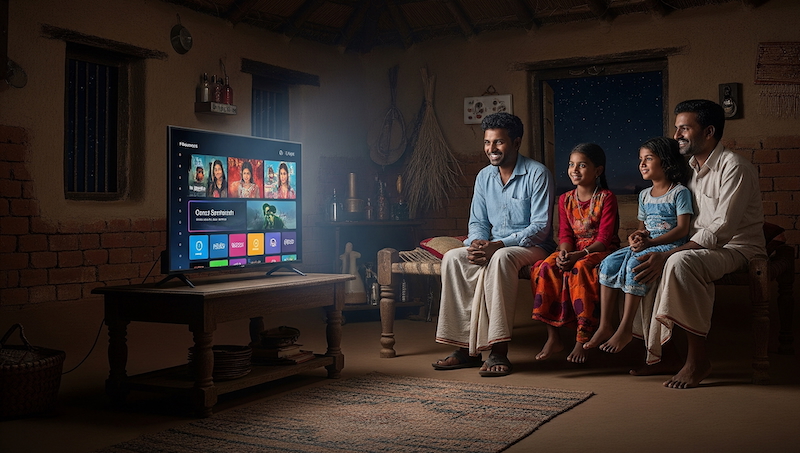
    MUMBAI: India’s media landscape is turning the page, and the headline is clear: Connected TV (CTV) is booming, and one in four Indians is now digital-only. That’s the key takeaway from Kantar’s Media Compass 2025, which maps the country’s evolving media consumption habits across linear TV, print, and digital.

    With a whopping 87,000-strong sample and quarterly tracking, Kantar’s new offering aims to replace outdated guesswork with data-driven firepower. And the early signs are disruptive: 35 million Indians have jumped on the CTV bandwagon, and 23 per cent of the population now accesses the internet without watching a second of linear TV.

    While linear TV still claims 58 per cent monthly reach, the shifts are seismic. CTV, once a metro darling, is now reaching deep into rural India. And digital-only audiences are mushrooming among young, male, and lower-income demographics—dispelling old myths and throwing up new marketing equations.

    Media preferences split starkly by age: 55 per cent of Indians aged 15–34 favour OTT and social platforms, while 44 per cent of those above 45 remain loyal to the TV set. Notably, 75 per cent of digital-only and linear TV viewers reside in rural areas, demolishing the notion of urban dominance.

    CTV remains a premium medium, with its incremental growth concentrated in NCCS A households, while digital is democratising access in lower-income groups.

     Kantar director – specialist businesses, insights division (south Asia) Puneet Avasthi said: “In today’s fragmented and fast-evolving media landscape, brands are under pressure to make every media rupee count. Yet, most decisions are still being made using outdated or incomplete data, leading to suboptimal media planning and missed connections with consumers. Media Compass 2025 aims to correct this and equip advertisers with timely, in-depth insights across platforms- enabling smarter media planning, stronger audience engagement and sharper targeting for maximum impact.”

    The message to marketers? India’s media map is redrawn. The compass has shifted. Time to follow the data.

  • Rural India tightens purse strings, but swipes right on digital

    Rural India tightens purse strings, but swipes right on digital

    MUMBAI: Rural India, it seems, is having a bit of a digital dance while keeping a tight grip on its wallet. GroupM and Kantar’s Rural Barometer Report 2025 reveals a nation grappling with the ‘pinch-penny’ reality of rising expenses, yet diving headfirst into the digital deep end.

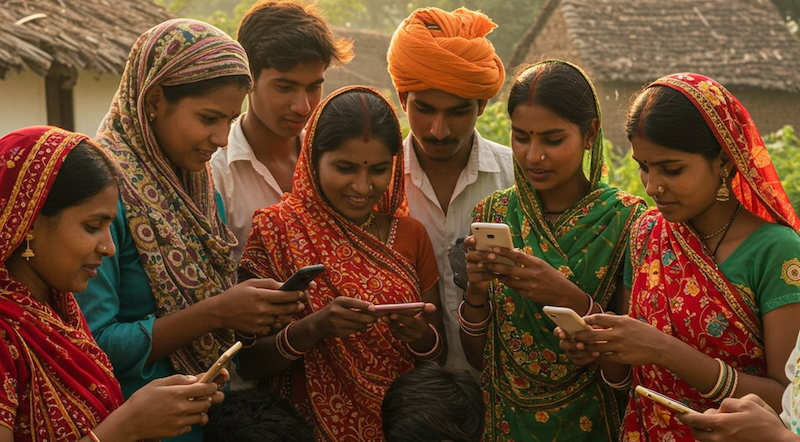
    Forget the quaint image of the village square; rural India is now scrolling, streaming, and swiping with gusto. Seven in ten rural consumers are now online, a whopping 28 per cent jump since 2022. Social media, video content, and instant messaging? They’re the new village gossip, especially among the young and the loaded. But hold your horses, television and newspapers still hold sway with the older crowd, proving that old habits die hard.

    Financial anxieties are playing a havoc with household budgets. Three out of four rural Indians are fretting about their finances. Younger, flashier spenders are cutting back on the big toys—durables and vehicles—while the older, thriftier lot are keeping things steady. Personal loans are on the up, suggesting a ‘bit of a pickle’ as folks juggle their cash. But, there’s a glimmer of sunshine; job security optimism is bouncing back..

    The government’s PM Garib Kalyan Yojana, especially the free rations, is a ‘real life-saver’, proving that a bit of state-sponsored generosity goes a long way.

    GroupM India managing director -OOH solutions Ajay Mehta said: “The Rural Barometer Report is a strategic compass for brands navigating this dynamic landscape. As media habits evolve and digital adoption deepens even in the heartlands, it’s clear that a dual-channel strategy blending the scale of traditional with the precision of digital is essential. At GroupM, we see this as an opportunity for marketers to go beyond surface-level reach and build meaningful, hyper-local engagement. This report not only helps decode rural mindsets but also empowers businesses to craft smarter, more inclusive growth strategies for Bharat’s next chapter.”

    Kantar director- specialist businesses, insights division Puneet Avasthi  added, “As rural India  becomes more connected and conscious, brands must rethink how they engage with this  audience. The new rural consumer demands relevance, value, and authenticity. Marketers must  move beyond a one-size-fits-all approach to adopt hyper-local, digitally powered strategies,  while still leveraging the trust and familiarity of traditional media.”

    Brands must ditch the ‘one-size-fits-all’ claptrap. Rural India wants it real, relevant, and authentic. Go hyper-local, go digital, but don’t forget the old favourites.”

    In essence, rural India is a ‘right proper’ mix of caution and connectivity, a ‘digital dynamo’ with a keen eye on the price tag. Brands, take note: it’s time to get your digital act together, whilst still paying homage to the traditional.

  • Asian Paints launches ‘Pragati Ke Rang’ with YouTube creators

    Asian Paints launches ‘Pragati Ke Rang’ with YouTube creators

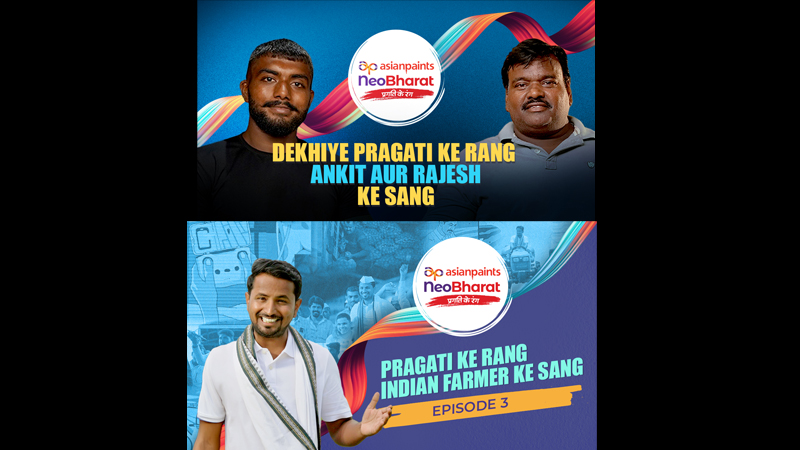
    Mumbai: Asian Paints has unveiled ‘Pragati Ke Rang’, an inspiring content series that captures the essence of progress in rural India, aligning with the mission of NeoBharat latex paint. This series features transformative stories of YouTube creators and individuals from small towns, showcasing how they’ve contributed to India’s progress while using NeoBharat Paint to brighten community spaces.

    The series spotlights three YouTube creators who have made a real impact in their communities. Fitness creator Ankit Baiyanpuria, a National Creators Award winner from Sonipat, revitalises a local akhada with NeoBharat Paints, infusing vibrant murals that represent the dreams of young wrestlers. The second episode features Rajesh Rawani, a truck driver from Jamtara, who transforms a popular dhaba on NH-33 into a vibrant symbol of comfort and progress for truck drivers. Lastly, the third episode showcases Santosh Jadhav, known as Indian Farmer, revolutionising agriculture in Sangli by introducing modern farming practices and celebrating tech-savvy farmers through murals at the local Agricultural Produce Market Committee.

    Asian Paints MD and CEO, Amit Syngle commented on the series, saying, “At Asian Paints, we are dedicated to fostering growth and progress across India. Our value-offering, Asian Paints NeoBharat has been an ode to the millions of Indians who are in pursuit of a better life. With NeoBharat we expanded our footprint wider & democratised the category further. Our new content series, ‘Asian Paints Pragati Ke Rang,’ highlights the inspiring journeys of individuals from small towns who are shaping their futures & adding to the progress of India. This vision closely aligns with NeoBharat, our Latex Paint designed to offer an affordable solution for creating beautiful homes & spaces. Through these compelling stories, we hope to spark aspirations by bringing alive these inspiring stories of India. Our goal is to turn every space into a symbol of progress, empowering people and communities throughout the country.”

    The series, created in collaboration with Monk Entertainment and Next Narrative, reflects a collective commitment to uplifting rural India. Monk Entertainment CEO and co-founder, Viraj Sheth shared his enthusiasm, “We are thrilled to partner with Asian Paints on such a meaningful project. ‘Pragati Ke Rang’ is not just a show but a movement that reflects our shared commitment to creating content that drives real change. By collaborating with creators like Ankit Baiyanpuria and R Rajesh who resonate deeply with rural audiences, we’re able to bring forward stories that inspire and uplift while also showcasing the superior quality of Asian Paints NeoBharat.”

    Adding to this, Next Narrative’s founder, Mohit Jagtiani said, “YouTube serves as a vast and inclusive platform where creators can connect with their audiences in a genuine and impactful way. This rural content IP transcends traditional advertising; it’s about creating a show for Asian Paints from the ground up while simultaneously transforming community spaces in rural India. We are honoured to be part of this journey, contributing to meaningful progress, and fostering authentic connections.”

    This 3-part series not only celebrates NeoBharat latex paint’s superior quality but also reinforces the impact of colour in transforming spaces, lives, and communities. As it unfolds, ‘Pragati Ke Rang’ aims to inspire rural audiences and paint a brighter future for all.

  • Rural India sees a three-fold growth in the usage of e-commerce apps: Report

    Rural India sees a three-fold growth in the usage of e-commerce apps: Report

    Mumbai: Rural India is on the periphery of an e-commerce revolution. There has been a massive increase in the number of users of e-commerce apps in the last six to eight months, according to the latest edition of the Rural Barometer Report. The rural population is now looking at digital as a medium that provides economically valuable information/services with digital consumption shifting beyond basic services such as entertainment and social media, the report stated.

    Insights and consulting company Kantar, along with GroupM’s rural and experiential marketing unit- Dialogue Factory has unveiled the third edition of its bi-annual report. It explores concerns about the post-pandemic impact on consumer behaviour and purchase patterns across rural India.

    According to the report, digital financial inclusion continues to see a growing footprint, and payment apps especially have created a fertile ground for the advancement of e-commerce in rural hinterlands.

    More vocational information is being consumed via the internet, though entertainment and social media remain the dominant factors of internet usage, said the report. There is an emerging constituency of technology-enabled farmers, who are using digital apps to track their crops. The Rural Barometer Report indicates that five per cent of farmers were using crop monitoring apps and this digital adoption for crop monitoring is the strongest in the states of Karnataka, Punjab, Haryana, and Gujarat.

    Some of the other key highlights of this latest version of the Rural Barometer Report are:

    FMCG witnessing the resurgence of indulgence and vanity categories: The pandemic had profoundly changed FMCG spending in rural India. Through the lockdown and the first half of 2021, consumers continued to prioritise health and hygiene categories under uncertain financial circumstances. As a result, indulgence and vanity categories remained subdued until the first half of 2021. The report shows a rebalancing of the FMCG spends. Food categories such as biscuits and chocolates, snacking, etc, and personal care and beauty categories bounced back and show positive momentum for growth.

    On the flipside, health and nutrition, along with job security remain a concern. The findings show that the nutrition and health of one in five children are of concern. Due to continued patriarchal notions, the girl child is not being provided a sufficient protein-based diet.

    In terms of sentiments regarding job security, lower social classes (NCCS CDE) and rural youth (18-24-year-olds) have been the most affected, as per the report.

    “The pandemic has changed ways of living for rural India,” said Dialogue Factory head of experiential marketing- APAC Dalveer Singh. “We see our rural citizens more vigilant about their consumption patterns. As per the Rural Covid Barometer Report 2021, rural India is more confident in recovery and adopting new technology and putting it to the right use. There are existing concerns like nutrition and health of children in rural areas but thanks to government intervention, rural purchasing power has improved.”

    “Close to a fifth of rural India is concerned about the health parameters of their children. We’ve also witnessed rebalancing in FMCG spending. With technology penetrating further and rural consumers evolving in this digital and e-commerce led era, we see a brighter tomorrow in rural regions,” Singh further said.

  • Mzaalo partners with Jio to deliver digital entertainment to rural India

    Mzaalo partners with Jio to deliver digital entertainment to rural India

    Mumbai: Gamified video and entertainment ecosystem Mazaalo has announced its strategic partnership with Jio. Through this partnership, Mzaalo’s content catalogue and rewards ecosystem will be available on Jio’s low-cost phones and will be freely accessible for millions of rural Indians most of whom are first-time internet users.

    Mzaalo app will be native in the JioStore for all JioPhones powered by KaiOS. 150 million+ low-cost Jio phone users will have access to the app’s library of 12,000+ content pieces including Bollywood films, regional cinema, original series, and music videos. They will also have an opportunity to earn rewards across 600+ brand partners, said the statement.

    “As internet penetration grows deeper across India, there is a growing demand for quality online video streaming content,” said Mzaalo COO Vikram Tanna. “The collaboration with Jio enables us to expand our digital footprint and democratise digital entertainment for the Indian hinterland.”

    The Indian hinterland – the remote parts of the country comprise about 65 per cent of India’s population, nearly 900 million people. While mobile services have reached this population, it is not as widespread as it is in urban cities. This partnership between Mzaalo and Jio will provide a new opportunity for those who do not have access to the mobile phone economy.

    In addition to this partnership, Mzaalo has also been chosen to join the Jio Developers Build for Bharat Growth Pad Program. As a member, Mzaalo and its community will receive special program benefits like first market access program, year-round technical support from Jio, an exclusive community of leaders for mentorship within Jio’s rich leadership ecosystem, JioAds credits, tools and services, training on Jio Developer Tools, and more.

  • Online is second most consumed media after TV in rural India: Report

    Online is second most consumed media after TV in rural India: Report

    Mumbai: There has been an internet revolution in rural India, with online being the most consumed media after television, according to a joint report released by media agency GroupM and insights and consulting firm Kantar on Wednesday.

    With respect to online content consumption, music/audio leads the pack at 69 per cent followed by news at 49 per cent and gaming at 33 per cent. Usage of video/OTT apps is driven by YouTube at 87 per cent (most in Rajasthan, AP/ Telangana, TN, and Bihar), followed by Disney+ Hotstar at 30 per cent (highest usage in UP, TN, Gujarat, Kerala), the report said.

    WhatsApp and Facebook are the most used social media/ messenger platforms at 87 per cent (most in Rajasthan, AP / Telangana, Karnataka) and 66 per cent (most in Odisha, UP, Gujarat and West Bengal) usage respectively, according to the second edition of the Rural COVID Barometer report. 

    The report explores rural India’s concern about the impact of the second wave and how it alters consumer behaviour and purchase patterns. The research was conducted with Kantar’s data and insights network and Dialogue Factory’s rural marketing intelligence in eighteen Indian states, across rural adults (18+ years in age) with representation across gender, NCCS, and age groups.

    Phone Pe is the most used digital payments app with 19 per cent of rural consumers having used these services in the last 6 months, says the report. Usage of Phone Pe is driven by Karnataka at 46 per cent followed by Rajasthan at 38 per cent.

    Growth in the consumer durables and automotive (two-wheeler) sectors is likely to slow down in the next six months. However, the smartphone category is expected to see fast growth in the near future.

    The construction sector is also expected to see a bounce-back with consumers expected to spend on building a house/undertake smaller construction work in the next six months.

    As a result of the pandemic, rural consumption and shopping patterns have witnessed a major shift. With respect to retail channels, 56 per cent of consumers prefer local village shops for purchasing groceries, and 49 per cent for personal hygiene, and 45 per cent for cleaning products. Even big-ticket items like consumer electronics and durables are preferred to be bought at these local shops at 50 per cent and 46 per cent respectively. 

    Rural consumers are saving 25 per cent of their income, the report stated. Southern India (except for Tamil Nadu) is saving more in comparison to other parts of the country. As expected, expenses are higher on personal care, hygiene and cleaning products while spends on indulgence and beauty products have been deprioritised.

    “The pandemic has evolved the rural consumer’s decision-making process. They are watching their spending and prioritising their buying patterns by the need of the hour,” said GroupM Dialogue Factory, head of experiential marketing – APAC, Dalveer Singh. “There is a positive acceptance of the vaccination and the upper- and middle-class rural Indians are being more proactive in financial planning to deal with covid constraints, which make these markets a significant place to introduce investment and savings products. There is a deep sense of uplift on the subject of India’s economic future.”

    While rural India is concerned about the COVID situation in the second wave, most are also positive about economic recovery once the situation normalises. Nearly three in four rural households have received some form of assistance via government schemes, thus providing the much-needed financial cushion to consumers, the report stated.

    “With a highly concerned rural consumer, rural India is planning finances better and inclined towards a savings mindset,” stated Kantar Insights Division, senior executive director, Puneet Avasthi. “We are witnessing a significant rise in digital payments as an important mode of transaction. With the change in consumption priorities in favor of health and hygiene products, FMCG marketers should leverage this trend for planning their innovation pipeline.”

  • Azaad TV aspires to be the most credible platform for rural India: Bharat Kumar Ranga

    Azaad TV aspires to be the most credible platform for rural India: Bharat Kumar Ranga

    New Delhi: Even as the fast-growing network of Over the Top (OTT) platforms take the media industry by storm, television continues to hold its position as the preferred screen choice for a majority of Indians. And, a vast section of this audience lives in rural India. In fact, the ownership of TV sets in rural India has outpaced growth in urban pockets, shows the latest data from the Broadcast Audience Research Council (BARC).

    With this, has come a paradigm shift, where consumers have once again taken the centre stage in determining how traditional broadcasters decide their content offerings. While there may be a plethora of content for urban viewers, there aren’t still enough choices for the rural audience. It is this vast market that Mumbai-based Beginnen Media is keen to tap into, with its new Hindi GEC- Azaad TV. The channel with its philosophy – ‘People First, Rural First’ hit the airwaves in May and caters exclusively to people in rural India. It’s currently available on DD Free Dish and select DPOs.

    In an exclusive interaction with Indiantelevision.com, Beginnen Media, managing director Bharat Kumar Ranga talks about his vision for the new channel, its financial model, content offerings, and introduces for the first time, the newly formed team that helped build the brand.

    Edited excerpts:

    On the decision to focus on rural India

    At Beginnen Media, we wanted to relook at the media and entertainment sector with a fresh perspective. We believe that the real transition is not from broadcasting to individual casting or TV to digital, but from being from creative/content-centric to being consumer-centric. We found a great opportunity in the rural segment. While the urban segment has been over-serviced by TV and digital platforms, consumers in rural India are still under-serviced with content that was originally created for urban viewers. They weren’t really considered primary consumers. So, we thought that there was an opportunity for us to see them as primary consumers and create stories exclusively for them.

    On how the target audience was identified

    We put most of our energies into identifying our target audience. We saw that rural people have a certain mindset, and we decided to focus on that. No matter which place they migrate to, they will carry that mindset with them. Though our content will cater to the Hindi-speaking audience, it will also try to reach out to Hindi-understanding markets like parts of Gujarat, West Bengal, Punjab, Maharashtra, where people may not speak Hindi, but they do understand the language. We want to design our content in such a way that people from across states relate to it. We have also hired specialist agencies that work on consumer products, like the Delhi-based agency- Futurebrands, which is led by Santosh Desai to provide us with data and insights.

    On the decision to go Free-to-air (FTA) and growth opportunities in the rural market

    In terms of distribution, the TV consumption in rural India is largely through DD Free Dish, and you cannot be on DD Free Dish if you are a Pay channel. So, we chose FTA so that we could reach out to that audience. Since we are the first rural GEC, we thought it makes much more sense to reach out to people quickly, and start building on that connection.

    Generally, people tend to confuse Free-to-air (FTA) with rural. While it is fair to say that most people who consume FTA channels are in rural India, and that is the market that we are entering into. But a significant part of the rural audience is also watching pay platforms, other than on DD Free Dish. So, we are venturing into a new category, where we are competing with not just the FTA channels, but also the Pay channels in the rural segment. FTA channels are also available in more households than Pay TV. It’s just that the FTA market has not unlocked its full potential yet. The over-supply of acquired content on these channels does not seem to be working anymore. The audience understands that the channels are recycling content, and they want something new, so that is why we hope that our rural model might work.

    On the content offerings and original shows

    Our original shows got delayed because of the pandemic. But since we had to start the channel distribution, we went ahead with the soft launch. We started building a connection with the audience. Now, our new shows are also under production and we hope that we will be able to sustain and keep the process running in case there’s a third wave too.

    In terms of content, we have put in a huge amount of energy to determine what our rural audience will like to watch. On the face of it, our content might not look different, but the larger differentiation is in the point of view of the people, that we will try to reflect in the shows. Currently, stories on pay platforms are set up in rural areas, but they are told to an urban audience. We wish to tell stories that reflect their point of view irrespective of where they are based.

    On the financial model and opportunities for advertisers

    As a rural entertainment channel, we need to have all kinds of revenue- subscription-based, advertising-based, as well as digital revenue. In terms of advertising revenue, we are looking at some sort of premium around the environment that we are giving to our advertisers- ‘digital virtues in a TV business’.  Firstly, we are providing a focussed target audience. For instance, if a campaign runs on any FTA channel, the advertiser may not know if it’s reaching the urban or rural audience. But, in the case of Azaad, the focus is entirely on people with a rural mindset. Secondly, the programming environment. If an advertisement is put on YouTube, it’s difficult to identify the content/genre that the consumer is watching. However, we will offer brand safety in terms of content that aligns well with the values of the brand. Advertisers will be interested in an entertainment platform that is consumer-focussed. We already have some regular advertisers like HUL on board. But the main exercise will begin once we launch original shows.

    On the distribution plans for the channel

    Simple to our plan, we have looked at all the MSOs. We began with DD Free Dish, where the channel is currently being aired. Then we identified some 50 individual distribution cable operators in rural areas. We are also in talks with 15 more such operators who are working in the outskirts of these areas. They may be lesser-known but attractive to us. We are also in touch with some top DTH and MSOs, but our priority is rural India and we will stick to that.

    Rural is a super mass category. We want to create a little space for ourselves, and we understand that it will take some time for us to create a relationship with the audience. We want to become the most credible platform for rural audiences.

    On the team that leads Beginnen Media

    Director – project & operations: Mohan Gopinath 

    A media and broadcast veteran, Gopinath carries nearly 25 years of work experience. He worked with Zee Entertainment Enterprises Ltd (ZEEL) for 18 years, turned entrepreneur, and co-created Bhu Entertainment in 2015. He also helped Viacom launch its first movie channel, Rishtey Cineplex.

    Chief marketing officer – Rachin Khanijo

    Khanijo carries over 17 years of extensive MarComm experience, during which he has worked at Eros Now as vice president, marketing, and COLORS as associate director – marketing. He has also worked as marketing head at &TV and brand director – Filmfare, Femina, and GoodHomes. At Beginnen Media, he handles marketing, corporate communications, on-air promotions, research & distribution.

    General manager, product: Doris Dey

    Dey spearheads Business Development, Programming & Content Strategy, Product Innovation, Content Creation, and Curation. In a career spanning 18 years, she has worked as a writer, creative director, and even Independent Producer (OTT). In her previous stint at Essel Group, she envisaged and launched &TV.’

    Chief revenue officer, Johnson Jain

    Jain carries over two decades of experience in the Media & Entertainment industry and specialises in advertising revenue. He has worked with leading media conglomerates including ZEEL, Sony Network (SET India) & 9x Group. He has played a key role in relaunching Zing in 2016.

    Chief financial officer, Dinesh Bhutra

    An associate member of the Institute of Chartered Accountants of India, Bhutra has more than a decade of experience in various sectors like Airlines, Telecom, Entertainment, Education, Finance, Media, Data Centre and Refinery including Jet Airways, Reliance Jio, Essel Corporate, MT Educare Ltd, ISSL.  At Beginnen Media, Bhutra also heads Commercial, Administration & Human Resources as its chief finance officer.

  • Hyundai Motor’s healing touch for 16 Indian villages

    Hyundai Motor’s healing touch for 16 Indian villages

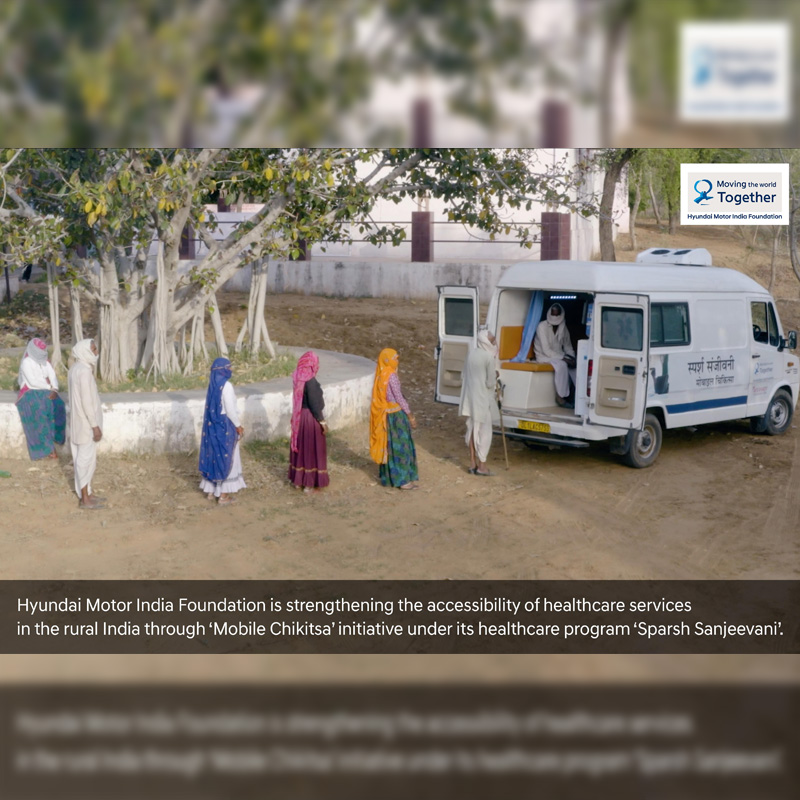
    Mumbai: Hyundai Motor India Foundation, the philanthropic arm of Hyundai Motor India Ltd on Saturday released a film on its social outreach initiative Sparsh Sanjeevani. The film captures the journey of its Mobile Medical Van as it travels through rural India to augment the accessibility of healthcare services for people in these regions.   

    “At Hyundai, we believe in driving meaningful change for society through every initiative. The film has suitably chronicled the journey of driving a greater accessibility to quality medical support and healthcare services. We have received a very moving response and hope to continue these efforts as we try to bring greater health and wellbeing to people of rural India,” said Hyundai Motor India Ltd. MD & CEO S S Kim. 

    Despite an extremely challenging environment, the film was shot in Laxmangarh Block of Alwar district in Rajasthan. All characters are local residents of the village and were happy to be part of this film, the company said. A lifesaving Indian medicinal plant popularly known as Sanjeevani is the protagonist of the film. Talking about its legacy of saving lives, the film goes on to chronicle its journey as a Mobile Medical Unit (Sparsh Sanjeevani) that reaches out to the hinterlands and relentlessly serves people and communities at large.

    The medical unit of ‘Mobile Chikitsa’ is managed by Hyundai Motor India Foundation (HMIF) and its partner NGO Wockhardt to cater two villages per day, targeting 25,000 people, with an initial goal of reaching 16 villages.  A qualified MBBS doctor on board is providing free consultation and medicines through the attached pharmacy and the van is equipped with testing facilities for spot diagnostic tests covering blood sugar, BP, Malaria, Dengue etc. Patients are provided with a health card to record their case history and individuals diagnosed with serious ailments will be referred to the nearest government or private hospital. 

  • Zee5 partners with Sahaj to go deeper into rural India

    Zee5 partners with Sahaj to go deeper into rural India

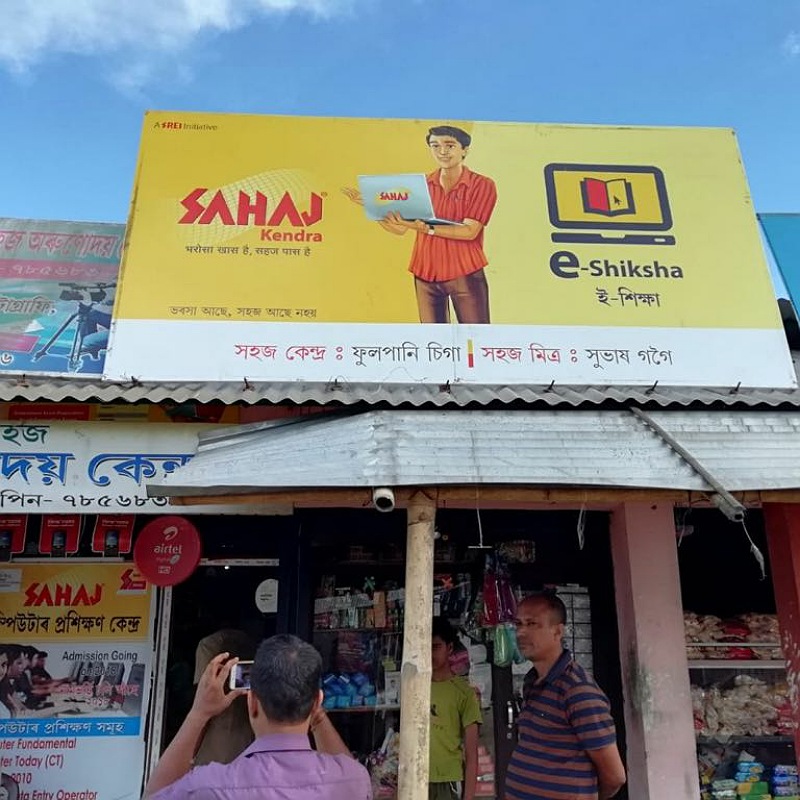
    KOLKATA: With the aim of strengthening its focus on Bharat, OTT platform Zee5 has struck a strategic partnership with Sahaj Rural Development Foundation to bring financial and digital inclusion to rural India.

    Through this first-of-a-kind association, Zee5 becomes the first OTT player to cater to the country’s underserved rural market at scale, through the retail network established by Sahaj. Zee5 will design a special ‘Chhota’ pack for Sahaj customers offering 10 per cent discount on its premium subscription, thereby leveraging the massive untapped opportunity of over 300 million rural internet subscribers in the country.

     Zee5 will now get access to more than 76,000 gram panchayats, and over 96,000 tier-3 and tier-4 rural locations in 24 states and union territories. With a robust portfolio of purposeful, compelling, diverse, and multi-lingual content in over 12 Indian languages, Zee5 continues to take eventful strides in enticing the masses to subscribe to the platform and consume entertainment anytime, anywhere, and in the language of their choice.

    Zee5 India chief business officer Manish Kalra said the move comes at crucial time, when rural India is on the cusp of driving a robust wave of digitisation in the next 12 months.

    “We want to fuel this change by democratising access to diverse content across genres and languages. Our partnership with Sahaj is one such step towards strengthening our connection with the entertainment-loving audience from Bharat, providing them with an unlimited and instant access to our premium content library, thereby unlocking unparalleled scale and reach across 24 states and union territories of India,” he added.

    On its part, Sahaj has been breaking boundaries to accelerate digital transformation in rural India ‘Bharat’ for more than 12 years and has access to 500 million+ rural customers through its wide network of over 100,000 retail outlets, 'Sahaj Mitr', said CEO Amit Kumar Singh.

    “The limited awareness about digital transactions beyond urban centers has restricted the popularity of OTT content in rural India. The partnership between Sahaj and Zee5 will bridge this urban-rural digital divide and offer rural customers an opportunity to enjoy premium OTT content just like their urban counterparts. With this partnership, Sahaj further strengthens its focus on staying at the forefront of identifying consumer trends in the rural market,” he explained.

    Since its inception, Zee5 has successfully struck a chord with many Indians within the country. As of December 2020, the platform recorded 65.9 million MAUs and 5.4 million DAUs. Zee5’s repertoire of content includes Indian and global movies, catch-up content, and live TV, shows, news, music, live events, and much more. With a rich library of over 120+ originals, Zee5 offers content in 12 Indian languages and in the last three years, it has had 85+ regional launches: 55+ web series, 5 short films, and 25+ movies in Tamil, Telugu, Marathi, Kannada, and Bengali, across genres. Additionally, the platform offers content in – Hindi, English, Punjabi, Bhojpuri, Gujarati, and Odia.

  • Rural India propels India’s digital revolution: Kantar’s ICUBE report

    Rural India propels India’s digital revolution: Kantar’s ICUBE report

    MUMBAI: Kantar, the world’s leading data, insights and consulting company, released its ICUBET 2019 report on digital adoption and usage trends in India. The annual tracking study; considered to be the currency for digital adoption in the country, gauges the changing digital ecosystem in India, measuring Internet usage by demographic, activity and device segments. 

    Key findings:

    ·    Estimated at 574 million, the number of monthly active Internet users has registered an annual growth of 24 per cent indicating an overall penetration of 41 per cent.

    ·    The report projects 11 per cent growth for 2020; estimates 639 million monthly active Internet users 

    Active Internet User
    Estimated Growth Rate 
     11 per cent

    ·2019

    ·574 Million

    ·2020 (estimated)

    ·639 Million

    ·    All monthly active Internet users use a mobile phone as one of the devices to access the Internet

    Entertainment moves online

    As per the ICUBETM 2019 report, about 84 per cent users access the Internet for entertainment purposes. 2019 witnessed a surge in OTT, both audio and video, probably driven by original contents and cricket (both IPL and Cricket world cup streamed on OTT Platforms). Convenience of content availability across devices and on the go low cost Internet service resulted in a significant growth in the entertainment consumption in the last year. This is expected to continue in 2020 too, especially in view of the lockdown.

    More children on the Internet than ever before

    At 38 per cent, school going children segment in the age group of 15 years or below has shown a promising growth on the internet usage. Access to information and education, social media, gaming and entertainment, especially, Sports, are driving the adoption.

    Content availability drives the surge in daily usage

    Content is the king and is driving the surge in daily internet usage. ICUBETM 2019 reports a growth of more than 60 per cent in the daily Internet users in the last one year; almost 9 out of 10 active internet users were accessing the internet daily owing to entertainment and communication needs.

    Rural masses continue to propel India’s digital revolution

    India’s digital revolution continues to be propelled by the rural masses — Rural India registered a 45 per cent growth in the monthly active internet users in 2019. It is now estimated that there are 264 million internet users in rural India, and this is expected to reach 304 million in 2020. Local language and video are the underlying factors for the internet boom in rural. The rural population has finally crossed the point of a chasm by embracing the Internet in a big way, resulting in a 2.5X growth in penetration in the last 4 years.  

    Looking ahead:

    ·    Children and housewives will be the new Internet adopters in the next year or two. Most of these users already have Internet at home, and it will be more about breaking the mindset barriers to access the web. With the availability of curated content for these groups, the adoption will be considerably faster amongst these segments.

    ·    Video, Voice and Vernacular (3 Vs) will be significant usage factors for the Internet users. These will drive higher engagement and frequency of usage, thereby, helping the users mature in their Internet journey.

    ·    IOT and Smart Devices will make the internet as much a household phenomenon as it is an individual phenomenon. 

    Puneet Avasthi, senior director, Insights Division, Kantar, said: “The latest edition of Kantar ICUBE 2019 report shows that the digital base in India has achieved a strong growth with the addition of over 112 million users last year. The new decade is expected to witness the next wave of Digital India aided by the recent COVID-19 pandemic that has catalysed the speed at which the already connected consumer is getting further connected with devices, payments, e-medicine, etc. Kantar’s ICUBETM 2019 report gives a front-line view of the digital adoption and its growth drivers, thereby providing marketers the key insights necessary for formulating their marketing and communication strategies.”

    “The lockdown and social distancing have pushed users experiment with various digital solutions, some of them by desire while others due to compulsion. The comfort of accessing services and availing their benefits from the comfort of home in the times of social distancing will continue to push users to adopt and use multiple Internet services. Given this, the year 2020 is likely to see a tectonic shift in both Internet adoption and frequency of usage. OTT, Hyperlocal services, Social media and communication and Online Payments will be some key elements that will drive the impact,” said Biswapriya Bhattacharjee, Vice President, Insights Division, Kantar.

    (Internet User is defined as anyone who has accessed the internet in the past one month)

    ICUBE is an annual syndicated study of Kantar to measure the reach and frequency of Internet usership in India. Launched in 1998, the study is in its 22nd year. ICUBE 2019 covered about 75,000 respondents across 390 cities and urban locations and about 1300+ villages. The study represents all states and Union Territories of India barring Lakshadweep. The data collection for the study was conducted between May to August 2019.