Tag: Rupert Murdoch

  • Kim Williams quits News Corp

    Kim Williams quits News Corp

    MUMBAI: Kim Williams has resigned as chief executive of Rupert Murdoch’s News Corp Australia, just 20 months after he took on the top post.


    He will be succeeded by Julian Clarke, who has a strong publishing background and was most recently chairman of The Herald and Weekly Times.


    Murdoch said in a statement that he was thankful for Williams’ services to News Corp, as well as his loyalty and friendship to the company.


    “Kim has been a steady and courageous leader at a time when our businesses have faced unprecedented pressure and economic challenges,” he said. “I want to thank him for his unwavering commitment, and the blood, sweat and tears he has put into News Corp Australia.”


    Williams was appointed chief executive in December 2011, after 10 years as chief executive of Australia’s dominant pay TV operator Foxtel, which is half owned by News Corp Australia.


    News Corp chief executive of, Robert Thomson, said Williams, a 20-year veteran at News Corp, felt that “now is the right moment to leave the company”.


    “Kim leaves a remarkable, sustaining legacy at these companies and on modern media in Australia,” Thomson said.


    Rupert Murdoch’s News Corp recently broke up into two parts – a publishing firm and a film and television unit. The entertainment firm is called 21st Century Fox while the publishing company retained the name News Corp.


    The split was expected to increase scrutiny on the newspapers under the publishing business, as the media industry battles a decline in print advertising and the rise of internet readership.

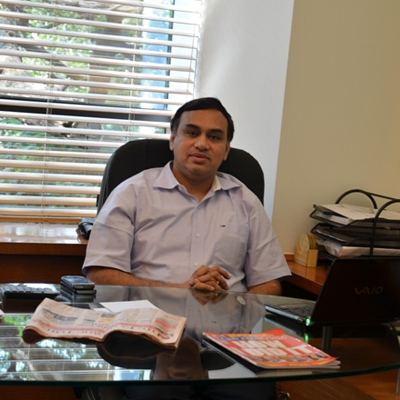
  • “ABP News has become even stronger after Star” :MCCS CEO ASHOK VENKATRAMANI

    “ABP News has become even stronger after Star” :MCCS CEO ASHOK VENKATRAMANI

    For long Indian media was agog with the news that the Rupert Murdoch-owned Star India was going to part ways with its long time Star News joint venture partner the Anandabazar Patrika (ABP) group. And when it finally did happen the split made headlines. Several questions popped up in the minds of media observers: Would losing the Star brand tag lead to an erosion of audiences? Would the little known Kolkata-based ABP group be able to sustain a national TV broadcast news operations on its own? The ABP group, led by the Sarkar brothers – Arup and Aveek babu (as they are known) – did not let the naysayers get to them. They dug their heels in and mandated CEO Ashok Venkatramani to do whatsoever was needed to keep the news channel operations going.

    Venkatramani – a former Lever India maanger – chose to maintain the status quo, keeping the branding and packaging the same; only changing the channel’s sobriquet from Star News to ABP News. In hindsight, that decision seemed to be a wise one as ABP News has retained its prime place amongst Hindi news channels even a year after the name change, and it is seen to be as strong a player as it was perceived to be under the avatar of Star News.

    Venkatramani spoke to indiantelevision.com’s Vishaka Chakrapani, recalling the challenges he and his team faced while doing the makeover and how they overcame them to create a new name that smoothly replaced the old one. Not just physically, but also in the minds of its TV viewers.

    Excerpts:

    What was the biggest challenge you faced when you became aware that the Star association was going away and you would have to go it alone as ABP News?

    The biggest challenge for us was that for a news channel everything is deposited in the channel’s credibility encapsulated in the brand name. So the brand name of our erstwhile brand was Star so the word Star was very actively there in our brand name and it carried all that it stood for. With Star going away, our biggest challenge was: how do we make sure our entire equity and credibility is transferred from the old brand name to new brand name. Along with the fact that the name will go, there was the risk of losing not just the credibility, but also the business, because everything was linked to our brand name.

    Who all would you credit the handling of the whole rebranding of Star to ABP process to?

    I think credit goes to the entire team in the company. It also goes to our partners who helped us in this, namely, Lowe Lintas that worked on the creative, Mindshare, that worked on media plan, and all our vendors, customers, partners, consumers. They helped us manage this transition by supporting us through this tough phase. So we got unequivocal support from all.

    What do you say ABP has achieved that Star could not manage to get?

    These are very big brands and we can’t compare ‘A’ brand with ‘B’ brand because by definition each stands for something unique. Each has been loved by consumers and viewers for something special. Just like Star, ABP is also loved. However, I think what has happened is that if you see the last year we’ve become stronger than before and a lot of it goes to the effort people have put to make ABP stand alone as an independent news brand. What has differentiated ABP is not the brand but the effort behind the brand.

    Why the decision to do only a name and identity change?

    The decision to change only the name and keep everything constant was deliberate because we were facing a tough challenge migrating the equity and we didn’t want to complicate the task with a relaunch because any relaunch shows shift in brand promise. As the communicating story was that ‘the brand is the same, only the name is changed’ we didn’t want to complicate it by adding a relaunch or anything new.

    The whole parting was amicable and even now Star continues to distribute our channels abroad as we both found it convenient. These are business decisions and they have already explained why they wanted to part ways. Their point of view was respected

    Tell us about codename ‘anamika’.

    It was an internal project because we were losing our name and we did not know what our name was going to be so that’s how the word anamika came – something that does not have a name. It was our way of identifying all the work associated with this project. It was more an internal nomenclature. The fact that our name was changing was not in the public domain, it was not known to all the employees. Only a few people knew so it was an identification codename.

    Would you say that things had already soured between the two company months before the split?

    Actually nothing had soured. Relations have always been cordial. The whole parting was amicable and even now Star continues to distribute our channels abroad as we both found it convenient. These are business decisions and they have already explained why they wanted to part ways. Their point of view was respected.

    Why did you stick to an existing idea of giving a three letter name?

    Given the time and risk we had, if this process had gone terribly wrong we would have had to wind up. Our revenues would have been badly hit; our ratings would have been hit and rebranding takes a lot of money. ABP is a household name amongst advertisers, buyers, newsmakers and the entire eastern part knows the name so the task becomes familiar if there is familiarity with brand and also we own the brand, most importantly.

    What was the effect of the rebranding of Star to ABP on the employees of the company?

    The employees rose to the occasion magnificently. Everyone understood the threat and they put in their best. Our attrition rates this previous year have gone down compared to industry rates as well as our previous rates. The fact that everyone contributed to its resurrection and success proved the point that employees helped the company. We continue to attract good talent. Wherever we had vacancy and wanted people, we didn’t have any difficulty. People who left us have also come back. We had realistic expectations. We did not have the ambition or desire to be the hottest company.

    Could you tell us the process that was undertaken to retain the look and feel of the channel?

    We went through all our key programs and weekly shows. We made sure that the look and feel in terms of music, graphics does not change for a while. Anchors were the same. Even the tone, tenor and language of our news remained same. We didn’t want people to miss out on anything due to logo change. Maintaining status quo was imperative and we did that.

    What about the similarity of the logo to the old one?

    Attachment to ABP does not happen because of the logo but of the overall colour, look, feel, sound, editorial twist, shows and so on. Our logo is very different. It may seem like it is similar in terms of colour and all but that was deliberate.

    How did you market the new name?

    We had a proper media plan. Every conceivable media platform was used to communicate change. It was a multi channel media plan – TV, print, outdoor, radio, internet and social media. We advertised this change like any major brand would do. Our aim was to reach 90 per cent of our news viewing audience in the shortest possible time. Consumers interact with news everywhere and we communicated everywhere that our channel was going. We were distributed across 22 countries in the world.

    Now, after a year what are the changes that you have seen after the rebranding and marketing that you did?

    There’s no big change. Life is continuing. The channel has become better and stronger. All three channels have done better than prior according to ratings. Absolute viewership as well as viewership numbers have gone up.

    Until last year ABP was known only in Bengal and Star was known countrywide. How did you plan and implement your strategy to make ABP as a national name?

    The fact that we were known as a news channel across the country and even outside of it meant that all we had to do was a seamless migration while holding on to our consumer base. That’s just what we did.

    We were clear that we will not lower our rates even if business does not come. The advertisers were extremely supportive. They understood our communication. If we are able to maintain the same reach in terms of reach, audience and news quality then there is not reason why anybody should pay us less

    What were the difficulties or hurdles that came in the process?

    I think the difficulties were many. First was that we did not have much time to do research and so a lot of the decision making was based on our own knowledge. Second was that we had to make the logo change in a way that we had to not lose some of the values which our channel had prior and carry forward those values. Thirdly we had to make sure the brand promise had to be delivered so everyone in the company had to be doing the same kind of work as before. Fourth was the physical challenge that in a very short window of time we had to change the name everywhere it appears – print, videos, historical archives, mic ids. Then next hurdle was communicating to our shareholders, media planners and buyers, newspaper vendors and consumers. We wrote to them and explained why we were opting for this change. This was a mammoth task that was to be completed in a short amount of time. We made sure the look and feel of the channel does not change.

    What are your future plans for marketing/promoting ABP?

    The plan is to build a brand. We started a new campaign a month back to strengthen the brand, its core credentials in the news domain. .

    Star has a different culture compared to ABP, would you agree? Has the organisation too evolved in its culture with the evolution into ABP News?

    Our company had a culture unique to both our parents. Just as a child is not necessarily a replica of mother or father. It has a unique personality. Our company was born out of an association of two parents and our culture is unique.

    Your background as one of the finest consumer organisations in India must be helping you a great deal? What insights do you bring to ABP News even today with your Lever experience?

    Experience does help. What I bring to ABP is not just marketing insights but the whole gamut of business, administration, finance and people management.

    What was the effect of the rebranding on the advertisers? Did you have to change ad rates or have issues with anyone with regard to the change?

    We were clear that we will not lower our rates even if business does not come. The advertisers were extremely supportive. They understood our communication. If we are able to maintain the same reach in terms of reach, audience and news quality then there is not reason why anybody should pay us less.

    Do you think you have been successful? What indicators tell you that you have?

    The whole name change exercise has become a part of history and is also a case study now in IIM Ahmedabad. The fact that we are now consistently delivering, better market share, confidence of advertisers, buyers, trade partners and newsmakers show we have been successful.

    What are other initiatives we can expect from ABP going forward? New channels? What kind?

    We are looking at growth and expansion. Now that we are on a firm footing it allows us to launch newer and better initiatives.

  • 21st Century Fox demerges, stocks on a high

    21st Century Fox demerges, stocks on a high

     MUMBAI: Last December, the 21st Century Fox had announced the separation of its business into two independent publicly-traded companies. And starting 1 July, the Rupert Murdoch owned News Corporation completed its separation process.


    The news of the split affected the trading as the News Corp shares saw a downward slide while the stocks of 21st Century Fox closed with a little high on NASDAQ. The first day saw a two per cent increase in the 21st Century Fox shares. On the other day News Corp plunged five per cent.


    The publishing firms like The Wall Street Journal and Harper Collins as well as the other news and information services will be under News Corp’s banner, while 21st Century Fox will have Star, Twentieth Century Fox, Fox, Sky, National Geographic, Fox News, Fox Sports and FX.


    The Company’s assets will also include pay-tv businesses Sky Deutschland, Sky Italia and its equity interests in BSkyB and Tata Sky.


    “21st Century Fox launches as a unique force bringing news and entertainment to more than a billion customers every day in over 100 languages,” said 21st Century Fox chairman and CEO Rupert Murdoch. “Our success will continue to be rooted in a deep belief in originality and a commitment to empowering creative minds and entrepreneurs around the world. Our management teams are the best in the business and we will drive growth and shareholder value by expanding our existing assets and brands, while embracing new opportunities and technology.”


    As previously announced, Rupert Murdoch will serve as chairman of the new News Corporation and chairman and CEO of Fox Group. Chase Carey will serve as president and COO of Fox Group, with James Murdoch continuing in his capacity as Deputy Chief Operating Officer.

  • Facebook could go the way of ‘crappy’ MySpace: Murdoch

    Facebook could go the way of ‘crappy’ MySpace: Murdoch

    MUMBAI: Rupert Murdoch whose company News Corp suffered a big loss after having to sell ‘crappy‘ MySpace for less than a tenth of the price it was bought at has warned that Facebook could suffer a similar fate.

    On the occasion of the one-year anniversary of Facebook‘s IPO Murdoch took to Twitter and wrote, “Look out Facebook! Hours spent participating per member dropping seriously. First really bad sign as seen by crappy MySpace years ago.”

    It may be recalled that News Corp bought MySpace for $580 million way back in 2005. Some people at the time felt that the price was a steal. Rival media company Viacom had also been eyeing MySpace and was furious at losing out.

    But MySpace lost the opportunity to build itself and Facebook came in 2007 and blew everything in its path away. News Corp sold MySpace for a mere $35 million two years ago.

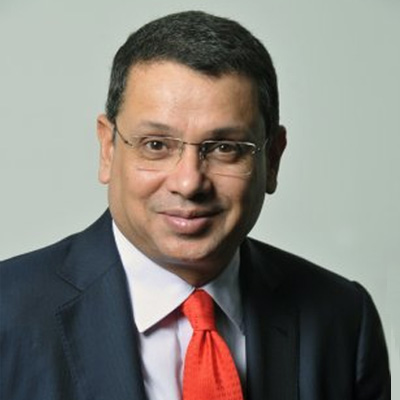
  • ‘Star to invest in India’s growth market and not be greedy about profits’ : Star India CEO Uday Shankar

    ‘Star to invest in India’s growth market and not be greedy about profits’ : Star India CEO Uday Shankar

    Uday Shankar had to wrestle with a thorny problem as soon as he took over as Star India CEO: How to be more successful than his predecessors Peter Mukerjea and Sameer Nair?

    Grown up as a journalist and in TV news for long, Shankar did not take long to take tough business calls in the television entertainment broadcasting business. He parachuted out of the Balaji Telefilms’ joint venture agreement as the popular long-running ‘K’ soaps were running out of steam and were turning out to be “expensively” priced. He brought in a bunch of young producers to connect with the changing India at a time when new players like Viacom18 (Colors), 9X (Mukerjea’s venture after quitting Star) and NDTV Imagine (headed by Nair) were making their entry.

    Shankar also quickly realised that Star’s creative, marketing and distribution strategies were not in sync to capture the new markets that had come into the C&S homes. He designed Star’s new strategy and laid out a clear road map for the Rupert Murdoch company’s growth in India which at that stage was heavily dependent on the flagship Hindi general entertainment channel (GEC) Star Plus.

    Asianet was acquired to get a footprint in the lucrative South Indian media market and Bengali and Marathi GECs were launched. He next launched the second entertainment channels in Hindi to house them under the ‘OK’ brand.

    Shankar knows well that India is a growth market and has, thus, decided to reinvest in the business aggressively to build a Star network that would grow and thrive in the future as well. “While we will always try to keep a very sharp eye on the profits, we will not be greedy about profit margins,” he says.

    In the third and concluding part of the interview with Indiantelevision.com’s Sibabrata Das, Shankar talks about how Star India is ring-fenced today to stay as a strong leader in the TV entertainment business and is ready to grow in a digitised environment.

    Excerpts:

     
    Q. How challenging was it for somebody who came from a news background to conquer the entertainment broadcast business as CEO of Star India? Or was the transition easier because TV news in India had imbibed entertainment content in its culture?
    Listen, the news that I was part of is very different from the news of today. I launched Aaj Tak which was a financially very healthy company. It did high quality news, it had a large number of viewers and it was profitable. Hence, it could invest in content. Today, the scenario is very different.

    I think too much is made out of this whole thing of news versus entertainment. At the end of the day, the viewer is the same. In a way, news allows you to engage with the consumer in a very dynamic environment and it gives you those insights. Those insights helped me.

    The other thing that helped me is that as a news editor or journalist you get to develop some understandings and insights about the Indian society which in all humility I think the entertainment guys lack completely. Their reference to India is a few films, a few shows and little stories that they pick up in newspapers. Sometimes I see what is portrayed in our films and stories and dramas about India is completely unrealistic. And that is what my advantage was in this aspect. Because I had done so many years of journalism, I understood India very well. My general understanding of this country, both as a journalist and as a student of social sciences, was fairly evolved. I think that helped.

    Q. When you inherited the chair, Star India had slipped into some sort of a management mess. What were the ills that you had to correct?
    No ills. Star was a great company even then and it had a solid leadership. It had an amazing brand; I don’t think there is or there ever will be a media brand in this country that would be as big as Star. The problem is that it was the victim of its own success. There was a sense of complacency that had set in.

    The other thing that had happened is that there was a disconnect that had developed between the channel and its viewers. The cable and satellite (C&S) TV universe had penetrated deeper into the countryside. And our creative, marketing and distribution strategies were not in sync to capture the new markets that had come into the C&S homes. I think that was the biggest challenge which I had to tackle. And that is what we have done slowly – by going regional, by creating stories which are more diversified and realistic. We got content which echoed the new sentiments, the new aspirations and the new women. We brought that into Star Plus by way of ‘Rishta Vohi Soch Nayi’.

    I also think that we changed the talent mix inside the channel and also the mix of the producers outside the channel. We brought in a bunch of young producers who were producing their first shows at that time. They brought in a fresh pair of eyes and a certain amount of freshness of creativity – and I would like to think that they were better connected. So that’s what helped.

    Q. Was there a need to bring about changes in Star Plus in phases? Are we seeing the Aamir Khan show as part of that content evolution?
    I don’t see those as different phases. I see them as a journey of evolution for a company, a channel, an entertainment network and for me as a professional.

    We were doing a certain kind of stories, we were reaching out to a certain kind of audiences and were addressing a certain kind of market. Slowly, we wanted to expand and diversify in all these three areas. First we started doing different kinds of dramas and then a different kind of non-fiction shows which finally evolved into ‘Satyamev Jayate’ (the Aamir Khan show launched in May 2012 and aired on Sunday mornings). However, it would be a mistake to say that ‘Satyame Jayate’ was the first such step that we took. As early as four years ago, we did a show with Kiran Bedi called ‘Aap ki kacheri…Kiran ke saath’ and in 2009 had ‘Sacch ka Samna’. In drama, we launched Kaali – Ek Agnipariksha.

    I go back to the philiosophy that I carry from my journalism background – we must constantly try out new things and must constantly innovate. Because the biggest story of yesterday becomes stale today. And that is something which is deeply ingrained in me.

    Q. When you earlier spoke about sports broadcast, you mentioned about drama becoming a bit of a commodity. What made you say that?
    Anybody who has the money and an idea can go and create a drama – lease the producer, the writer and the studio. But even if you have the money and the idea, you can’t go and create a sporting property because it is locked in IP. You have to have the teams and the sporting board has to back you up. In that sense, the access to drama is commoditised. But that is not the case with sporting content. If you want to create a cricket tournament, you can’t do it unless the BCCI is supporting it. And BCCI won’t go and support any cricket tournament.


    ‘My bosses and I are very clear about one thing: reinvesting in the business far more aggressively than taking out profits because India is a growth market and we are building a network that would grow and thrive in the future as well. This is the most critical phase of building the network. If we don’t continue to invest aggressively and ahead of the curve in a market that is so dynamic and evolving and segmenting, then the market forces might overtake us. While we will always try to keep a very sharp eye on the profits, we will not be greedy about profit margins‘


    Q. Is entertainment content limited by the fact that India is primarily a single TV household country? That is a bit of a concern. There is mature adult explicit content that you can’t do in a single TV household. Even otherwise, you can’t do that in multiple TV households because not everybody in his or her bedroom wants to watch adult content; the content consumption habits are heavily determined by our cultural systems. I am not sure whether Star as a network would want to do such kind of content even in multiple TV households.

    But what is bad is that the government, the regulator and a bunch of self-styled policemen want to act on behalf of the audiences. They act as guardians thinking that the audience is a mass of retarded, dumb, unintelligent people who do not know what is good for them. You go and show them one kiss and it is as if the whole culture of India will collapse. It doesn’t work like that. And these are the people who either have a vested interest and say this because they want to control media or their mindset is so corrupt and regressive that they think that because they have a dirty mind, the whole world has a dirty mind.

    Q. But isn’t the growth of niche content limited by single TV households in India?
    Surely, because niche content means content that is of interest to a very small set of people. It is difficult to have a business model for niche channels in an analogue cable environment where there is bandwidth constraint. A channel on health, education, classical music and serious political drama will not interest a large number of people and youngsters. Older audiences are not generally interested in science fiction; nor are women in crime or thriller-based shows. In a single TV household you will have to do content which appeals to a large common denominator.

    In Star Plus, for instance, we don’t want to put content that won’t deliver reach; it simply doesn’t work for us. But digitisation will change this whole content game. We can then create a channel only for youth or for older men or for teenagers. And audiences having digital cable can choose individual channels; in an analogue system they have to take the whole bunch of channels and pay for it. Why will a family having no youngster in the house want a youth channel? And if there is no old parent living with me, I wouldn’t want a channel meant for old people.

    Q. Star Plus made an effort in creating a Sunday morning band and we have seen other channels follow that. Is it possible to drive in audiences regularly in these time slots?
    I hope so. I do think that on Sundays there is an appetite that we as content providers are not able to satisfy. Sunday content is generally not satisfying except for a movie that gets shown once in a while.

    The quality and quantity of Sunday content is not adequate. Broadcasters should step in to fill that gap with all kinds of programming. What matters is the emotions that your content triggers, the stories that you tell and the connect that you build.

    Q. Haven’t all Hindi entertainment networks evacuated the afternoon band?
    This is kind of sad but reflects our economic compulsions. The advertising market is tough, rates are under pressure, subscription incomes aren’t going up much and the programming costs are up. That is why broadcasters have to do all kinds of things. But it is not good in the long run. There are a large number of people who tune in to watch TV in the afternoons. It is an audience that all of us had built over a period of time. I guess broadcasters have all had to take short sighted and tactical steps.

    I also think that there is another challenge. The creative capacity, particularly in Mumbai, is not developed enough. Or not broad enough to cater to the prime time, afternoon and the weekend needs of such a large number of Hindi entertainment channels. So somewhere the capacity construct is also influencing. You are not getting high quality content. At least that is what our experience has been.

    Q. Hindi GECs are almost entirely depending on prime time for ad revenues. As we are in the midst of an economic slowdown, is this the wrong time to make that shift and cultivate other time bands?
    There are challenges in opening other time bands. But there is never a right time and there is always a right time. The last few months have not been great for advertising. That has pulled back broadcasters from experimenting with the afternoon slots. But I see this as a short term tactical withdrawal.

    Q. Since Star is as you say an amazing brand, why did you create the OK brand for your second channels in the Hindi general entertainment and movie space?
    Though we have a big portfolio, each market in India is segmenting and new competition is coming. We were getting restricted because in Hindi we had only one channel and Star One was not doing well. When we were looking at fixing Star One, we thought why should we limit the company to just one brand. Though Star is an awesome brand property, we decided to create one more brand. That is how the OK brand was born.

    Q. Is Star being identified as premium and the OK brand with a more general appeal?
    I don’t see the positioning of Star Plus or Zee TV or Sony as any different but pretty much similar. If at all, we see Star Plus to be the channel that’s identified more closely with people who are more aspirational and OK with those who are satisfied with life. That is the only distinction we think we can make.

    Q. Is this more in tune with a flanking strategy?
    I don’t believe in flanking strategies at all. It is a very boring and owner-driven mindset. Viewers do not understand anything of that; they want to go to a channel and a programme that they like. Everything competes with everything in this market. It is a very dynamic and fluid market where one remote changes everything. Flanking is perhaps a product conceived by somebody who has been influenced by a military mindset and didn’t understand media much.


    ‘The C&S TV universe had penetrated deeper into the countryside. And our creative, marketing and distribution strategies were not in sync to capture the new markets that had come into the C&S homes. I think that was the biggest challenge which I had to tackle. And that is what we have done slowly – by going regional, by creating stories which are more diversified and realistic‘

     
    Q. Do you see the need of a second channel, particularly in a digital environment which will lead to further audience fragmentation?
    It will always help in segmenting the market. But there is no question of a second GEC. Who knows? The viewer doesn’t. That is why we have decided to keep Life OK totally separate from Star Plus. A large number of viewers may not be even aware that the two channels are owned by the same company.

    In a market where there is Star Plus, Life OK, Zee TV, Colors, Sony, Sab and Sahara, everyone competes with everyone. At an ownership level, you might have two channels. But in the marketplace, the two channels are relevant only when they are the only two channels.

    But yes, second channels help in aggregating audiences. And it is becoming increasingly difficult to address the entire Hindi heartland through one channel. Demographic segmentation is also taking place.

    Q. Was Movies OK conceived because Star had a vast movie library and a new channel gave it more ad inventory to sell?
    India is a very movie crazy market. TV attracts more audiences than cinema theatres for movies. We beefed up Star Gold. We thought we should go deeper into that market and so launched a second movie channel. In any case, we had invested in a big enough movie library.

    Movies OK gives more fizz to the OK brand. And opens up ad inventory.

    Q. Will we see more launches in the OK brand?
    It is always an option. In Hindi entertainment content, we have already got Life OK and Movies OK. Unless there is some clarity on the digitisation front, I am not sure we are going to launch more channels in the near future. We have a huge challenge on the sports front and need to build it after the deal (buyout of Disney’s stake in ESPN Star Sports) finds the necessary regulatory approvals. We also need to consolidate Life OK and Movies OK.

    Q. What led Channel [V] to shed its Bollywood music content to become a youth GEC from 1 July?
    In the ‘90s, Channel [V] and MTV connected to the youth through music offerings. But now music has become a commodity; it is accessible across many devices including FM radio, mobile and online sites. So we needed a different proposition to get to the youth segment. We came up with the idea of capturing their aspirations through regular TV viewing formats and dramas; we thought this way we would integrate more deeply with youth and address them more effectively.

    The other route some music broadcasters have taken is some kind of non-fiction content which reduces youth to being sex-starved and having non-thinking minds. Reality shows like Roadies (MTV) have painted the youth as a group that is sensually-driven. We have not gone through that path. We believe the youth is interested in society, career and education.

    Q. How is Zeel’s Ebitda margins from non sports business (Q1 Fy’13 at 34%) higher than Star’s which market estimates say is around 25-27per cent?
    First of all, I am not commenting on Ebitda margins because Star doesn’t discuss its financials. But my bosses and I are very clear about one thing: reinvesting in the business far more aggressively than taking out profits because India is a growth market and we are building a network that would grow and thrive in the future as well. This is the most critical phase of building the network. If we don’t continue to invest aggressively and ahead of the curve in a market that is so dynamic and evolving and segmenting, then the market forces might overtake us. While we will always try to keep a very sharp eye on the profits, we will not be greedy about profit margins.

    Q. Will digitisation increase content costs with many more channels being launched?
    Yes, but your earnings should also go up. If you have more channels, you will have more inventory to sell and your subscription income should be more if you succeed.

    Q. Will Star launch new channels or enter into new regional markets?
    No, I don’t see any immediate plans. In regional markets, the carriage capacity is even more constrained. Even if digitisation happens with contracts, its impact will not be felt for at least 2-3 years after the implementation.

    We might do small channels here and there. We just launched a movie channel in Kerala (in July) to take our bouquet of Malayalam channels to three – Asianet, Asianet Plus and Asianet Movies. In Tamil Nadu, we have Vijay TV which is a very successful Tamil GEC but is still not the leader. There is an opportunity to make it grow bigger. In Kannada, we have Suvarna which is doing very well now and is the No. 1 channel in prime time. But it is still not the unqualified leader in the Karnataka market. So there are certain unfinished agendas that we have to first complete before we launch something new.

    Q. Sun TV network is seeing some sort of market share erosion due to cable TV distribution being challenged by state-owned Arasu Cable. It is also losing control over movie studios in the state. Will Star be aggressive in Tamil Nadu to capitalise on this opportunity?
    Everybody has been talking about it (market share erosion) but it has not happened yet. And I don’t see that happening in a hurry, if at all. Don’t forget that despite everything, Sun has built a very loyal viewership profile. It also has many channels and is, thus, able to segment the market very well.

    The shift in viewership you are talking about is marginal, not gigantic. There would always be a bit of an opening in that market but it would be a mistake to swing to the other extreme. Sun has some very strong content and some very successful channels. And those are not easy to take away.

    I won’t launch anything where we don’t have clarity on breaking even and making the business profitable. Otherwise, it doesn’t make business sense. And right now there is no business model.

    Q. When Star expanded into regional-language markets why did it look at Bengali and Marathi GECs?
    Though the states of Bengal and Maharashtra form part of the Hindi TV viewing population, they are also distinct linguistic markets with strongly driven local creative communities. While Gujarat and Punjab are also attractive markets, the creative class does not work in the local language. Mumbai is more attractive for them and they find it lucrative churning out Hindi content. We, thus, decided to launch Bengali and Marathi GECs first.

    Q. Why are broadcasters pressing for a new television ratings system under the aegis of BARC?
    Television advertising is cheaply priced today. TAM (the sole TV audience ratings agency in India) does not map the entire C&S universe and only a part of India is measured. We want the ratings coverage to spread out into more areas and socio-economic demographics.

    The ratings system should primarily be for a broadcast market. BARC will reflect this need of the broadcasters and allow them to monetise the eyeballs that they deliver more effectively.

    Also read:

    ‘BCCI rights great opportunity to build Star‘s sports biz‘

    ‘Cross-media regulation has only discouraged clean, legitimate players in DTH & cable‘
  • ‘The last 20 years belong not to Star but to Zee’ : Star India CEO Peter Mukherjea

    ‘The last 20 years belong not to Star but to Zee’ : Star India CEO Peter Mukherjea

    Peter Mukerjea became the CEO of Star India at a crucial period of satellite television history in India when the relationship between two media moguls Rupert Murdoch and Subhash Chandra had soured.


    led Star against India’s homegrown broadcasting business of Chandra and took its flagship Hindi general entertainment channel (GEC) Star Plus to the top in 2000, the position it still enjoys after he quit to try his hands at his own private equity-backed broadcasting venture.


    The former Star India CEO admits that the last 20 years of private television broadcasting belong to Subhash Chandra despite himself being at the helm of a significant piece of Indian broadcasting history by successfully leading Star India.


    In a tete a tete with Indiantelevision.com’s Sibabrata Das, Mukerjea speaks candidly about how Chandra has outrun Star and Sony and today “runs the most effective broadcasting network, has a thriving cable business and was the first to launch DTH in India”.


    Excerpts:


    Q. Rupert Murdoch and Subhash Chandra started as allies and formed a joint venture. But this relationship turned stormy by the time you became Star India CEO. How bitter was it?
    The relationship with Zee was initially harmonious. But as News Corp started becoming more grounded in the Indian market and established its capability, Chandra’s views on Star, Murdoch and a multinational broadcaster changed.


    That in a way was inevitable to happen. So long as Star was in English and Zee in Hindi, the two companies operated in two ecosystems. The moment Star started Hindi content, Chandra saw it as a violation of the joint venture agreement and there was a major shift in relationship between the two partners.


    Q. And the beginning of the pay TV industry in India also helped in Chandra taking a hostile approach?
    Yes, it built a hostile environment. Alongside the personal stresses and strains, pay TV was becoming a reality in India. Murdoch has experienced pay TV in other markets and successfully developed it in his sprawling media empire. Chandra knew this.


    Though the two also ran an equal joint venture in Siticable (the cable TV outfit), there was mutual suspicion. The partnership became frigid and fell apart.


    I was in the hot seat as CEO. And the only way to progress was for Zee to buy out News Corp’s stakes in the joint ventures – which they eventually did. Having finished with that task, Star got an opportunity to do a total Hindi entertainment channel. Punit Goenka (son of Chandra and now in charge of Zeel and Zee News Ltd ) was a baby then and Chandra was running the company.


    Q. Were Chandra and Murdoch bitter even when they met after they split?
    Even when the meetings were pleasant, there was always tension in the background. Both were media moguls in different parts of the world and there was mutual respect. But it was always laced with a fair amount of rivalry.


    Q. In your early days as CEO, how did you find Chandra’s aggressive attacks?
    There were lots of questions put in Parliament and Star was accused of repatriating money from India and showing obscene content (Star Movies). Some of these were public petitions but we suspected that they were from our competitors. We, though, had no proof that they were Zee-backed.


    ‘Lobbying, having deeper pockets, being able to hire better executives – all these don’t matter. In love and war, all is fair. As a piece of history, it is Chandra who started DTH first in India. He has a strong presence in cable and runs the most effective broadcasting network in India. It is only in sports broadcasting that he needs an international partner‘


    Q. Murdoch always wanted to be the first to launch direct-to-home (DTH) operations in India. So what made Chandra beat Murdoch in this race?You can say it is because of lobbying or whatever. But the truth is that Chandra launched the first DTH platform in India. And he deserves credit for that.


    Q. Even Murdoch is known as a lobby master. Is that how you see this as a neutral proposition?
    Lobbying, having deeper pockets, being able to hire better executives – all these don’t matter. In love and war, all is fair. As a piece of history, it is Chandra who started DTH first in India.


    Q. So who would you say ruled the first 20 years of private satellite television broadcasting in India?
    The last 20 years surely belong to Chandra. He runs the most effective broadcasting network in India today. He has created an Indian product and has built a phenomenal international business with that content. He is the first to set up a regional-language network across India. And he has a strong presence in DTH and cable.


    Q. You say this even though you used to work in Star and later head it?
    Yes, you have to give credit to the man. He has worked so hard getting back, despite being knocked off in Hindi entertainment business in 2000. That was the time he expanded into different languages. Chandra has helped Zee stay probably as the largest broadcasting business in India today and as a publicly listed company. He had a longer part of the rule in these 20 years.


    Zee has outrun everybody else. It’s not Star, not Sony but Zee which is the leader of the pack. And this despite not having the backing of the multinationals which have an advantage in bringing truck loads of money. Look at the impact he has had in Indian society and entertainment culture. Zee has connected deeply with the Indians.


    Q. Do you see Chandra becoming a leader in sports broadcasting?
    He has to find an international sports partner. Though India is just cricket, he needs to step out of the base and bet much bigger. If he has higher risk-taking ability in sports and finds an international partner to provide richness in content, Zee will become a strong competitor to Star in sports broadcasting.


    Q. But didn’t he bid the highest for the ICC World CUP and also the BCCI rights?
    You can blame that on pedigree. The sad truth is that if you are a decision maker in allocating sports rights, you may go for a lower bid which has greater capability rather than give it to the one whose monetary bid was higher.


    Q. Chandra is now stepping into local languages in overseas markets like Middle East and Russia. Is the timing good?
    After building a solid business in India, Chandra is now stepping out to other parts of the world. There are great opportunities in eastern Europe or the entire Soviet Union country base. Parts of America are also a good hunting ground.


    I think it is a great strategy. Chandra has built the capability, the resources and the relationships. And it is not a bad time to strike. News Corp is going through a crisis and a lot of management time is wasted on external issues rather than businesses. Zee can capture market share and grow it.


    Q. Do you think Zee’s over-the-top (OTT) platform has a fair chance to succeed?
    There are serious rights issues and OTT is not still an open book. The bulk of the revenues in OTT is in the movie business. Chandra will have to wait it out. But it is creditable to pursue OTT and see it as a future growth business. Even in India, OTT will happen and grow alongside TV.


    Q. Would you have loved to work as CEO of Zee?
    That is difficult to say and I have never thought of it. I have never spent time with Chandra to understand him as an individual and what his goals are. A lot depends on the personal chemistry that you share with your personal boss. If goals do not match, then that relationship can’t work.


    Q. How much does an organisational culture matter?
    The promoter always brings a certain kind of personality into the organisation. But a lot depends on the CEO rather than the owner in influencing that culture; he brings his style and charm to the operations of the company.


    There are many critics who say the corporate culture in News Corp is not as wonderful as it is supposed to be. Citing the phone hacking issue, they say the organisational culture is wrong. There is, thus, no fixed solution to corporate culture.

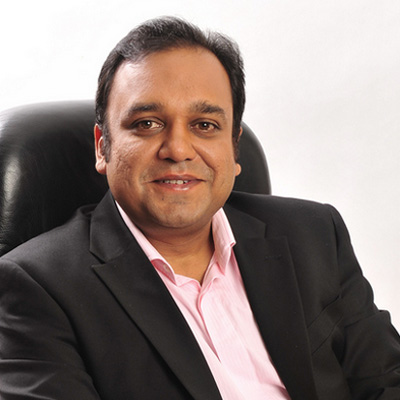
  • ‘We have a 3-tier growth plan and are eyeing a bn viewers internationally in 3 years’ : MD & CEO – ZEE Punit Goenka

    ‘We have a 3-tier growth plan and are eyeing a bn viewers internationally in 3 years’ : MD & CEO – ZEE Punit Goenka

    For Subhash Chandra the last 20 years has been one man‘s war. He has allied and fought against Rupert Murdoch, fallen and bounced back in winning spirit, triumphed over the competitors, and grown a media empire that can make anybody proud. A nationalist to the core, he has a strong footprint in all the value chains of the media business and stands independent in a media landscape that is occupied by the multinationals.

    When in my early years of journalism, I remember the day I rushed to my editor. I told him that I heard from a source that the merger talks between Chandra and Murdoch had snapped. He told me to go ahead with the story and I was afraid that I could be proven wrong.

    I felt happy that the divorce took place. Some may call this a sadistic pleasure but it made me feel nice that my story in The Financial Express was right and, more importantly, allowed me to observe the growth of a warrior who was blessed with intuitive powers, strong business acumen and an innate ability to get into untapped areas.

    Chandra showed his true colours very early in life and in 1991 got the better of Hong Kong tycoon Li Ka-Shing who asked for $5 million to lease a transponder on AsiaSat. He signed a deal with Richard Li a few months later that would kick-start his Zee empire.

    Zee‘s unchallenged growth from its origins in October 1992 halted in 2000 when Murdoch‘s Star launched Kaun Banega Crorepati (KBC) and the three Balaji ‘K‘ soaps. Chandra‘s convergence game also went nowhere and kicked in losses. But Zee expanded into the regional language markets and Chandra also ventured into online lottery with Playwin.

    The rebound in the Hindi entertainment business happened slowly. Chandra appointed Pradeep Guha as CEO in 2005 and inducted his son Punit Goenka  into the organisation.

    Zee Telefilms Ltd (ZTL) got demerged in late 2006 into Zee Entertainment Enterprises Ltd (Zeel), Zee News Ltd (ZNL), Wire and Wireless India Ltd (WWIL) and Dish TV (DTH). He acquired Ten sports and has a growing sports broadcasting business.

    Chandra‘s sprawling empire is not just in India but has strong positions in different corners of the world with his Indian content.

    Even in 2012, Chandra is not in full retreat. He has passed on the baton to his son but is still around. His overwhelming personality can‘t be missed in the Zee office.

    Asked to “get off the fence” and “get in the game” as head of Zeel in 2008,Goenka has proved that he definitely is his father’s son. He ended the rivalry with Murdoch and formed a distribution joint venture company in 2011 to correct revenue leakages and lift subscription revenues. He has identified growth areas in regional, international and new media. His target: to reach a billion viewers internationally in three years.

    Punit (as he is called by his colleagues in the Zee group) is hungry to grow his charge; whether it is sports broadcasting, entertainment, overseas or in niche genres. In a tete a tete with Indiantelevision.com’s Sibabrata Das, he speaks pretty forthcomingly about the road ahead.

    Excerpts:

    Q. When did you first realise that your father was building a media powerhouse in India and that you would be part of this momentous history of television broadcasting?
    For over 12 years, he was practically handling the business by himself. He was running around, surmounting all hurdles, and being a pioneer in all ways to spearhead private satellite television in India. I never thought I would run this kind of organisation. But when he told me to get into it, I quickly became a part of the Zee culture and liked it.

    Q. Now when you look back, do you see any lost opportunities amid this explosive growth of the company?
    The company has grown so rapidly in such a short span of time that it completely overshadows everything else. Zee started in 1992 from a single channel network and two hours of original programming – and look at where it is today! In fact, the first ten years were maddening growth. We have grown to 31 channels spread across genres, languages and geographies. Our international business is also very healthy. And today Zee (read Zee Entertainment Enterprises Ltd) is one of the top ranked Ebitda delivered companies in the media sector.

    Q. What did you feel when the joint venture with Rupert Murdoch collapsed and your father bought out New Corp‘s stakes in Asia Today, Patco and Siticable?
    The split was bound to happen. Murdoch violated the JV agreement and began to show Hindi content. The pact prescribed Star to focus only on non-Indian language programming. When Zee bought out the JV companies, it was a proud moment for all of us.

    Q. You broke this 12-year divorce three years after you took charge as CEO of Zeel and inked a JV agreement for the distribution business. What made you overcome the past enmity?
    We formed Media Pro Enterprise to correct the faulty distribution structures of the analogue cable TV business. It took us almost a year to finalise the agreement. The purpose is to fix the problems of the industry. There are revenue leakages in the distribution business and broadcasters get a small share of the subscription income collected by the cable networks.

    The media industry has matured and we are living in a period of history when there is need to both compete and co-operate. That is what Star and Zee are doing in India. And it has been beneficial for all the partners. Zee and Star were growing their subscription incomes from domestic cable by 6-7 per cent when they were handling the distribution of their bouquet of channels independently. But both the companies are seeing 15 per cent growth from cable subscription income in the first year of operations of Media Pro itself. We are happy with the way Media Pro is shaping up.


    ‘The industry can’t survive on ARPUs of Rs 180. Broadcasters have heavily subsidised the content cost to support the DTH companies to grow. A similar trend is happening in digital cable‘


    Q. Media Pro is currently distributing 75 channels and more launches are planned by the JV partners. Won‘t this be too heavy a load and the logic of a distribution JV become irrelevant in a completely digitised television carriage-services environment? Are we completely different from the rest of the world where broadcast companies manage their carriage agreements independently?There is no reason why we can‘t work independently in India as well. In a transparent environment, there may not be a need. In any case, the JV agreement is only for five years. We will weigh the market conditions then and take a call after that.

    But having said that, Media Pro has been set up not to just take care of revenue leakages. There are other challenges in the distribution side of the business. The industry can‘t survive on ARPUs (average revenue per user) of Rs 180. Broadcasters have heavily subsidised the content cost to support the direct-to-home (DTH) companies and allow them to grow. A similar trend is happening in digital cable. But content is worth much more and we will have to lift ARPUs.

    Q. Zeel gets subscription income of Rs 4.58 billion from content supply to 20 million paying DTH customers while domestic income from analogue cable is Rs 4.14 billion. What is the potential revenue growth from cable after the networks are digitised?
    We expect healthy growth in subscription income over the next few years. As the cable TV subscriber universe becomes transparent, the paying subscribers will automatically become much more than DTH. Zee will be able to monetise its digital cable subscribers and the revenue gains will be significant. ARPUs will also have to go up.

    Q. Since you have taken charge of Zee‘s broadcasting business, what are the future growth engines that you have identified amid new challenges of digitisation, audience fragmentation and competition from multinationals and big Indian corporates who are tiptoeing into the media business?
    We have identified three-tier strategies for our growth. On the domestic front, regional will drive growth for us. We will participate in fragmenting the regional markets. Our launch of a Bengali movie channel, Zee Bangla Cinema, is part of this game plan. We are working on other genres and in other languages.

    On the international front, we plan to expand our reach from 650 million viewers to 1 billion viewers within three years. We will not just restrict our focus on South Asian audiences; we will have to address local audiences in those geographies as well.

    We have identified Middle East as a key market for us and intend to invest between Rs 1 billion and Rs 2 billion over the next two years. We have just launched our second Arabic channel, Zee Alwan. This will complement Zee Aflam, our first Arabic channel that shows Bollywood movies dubbed in Arabic. We plan to invest $100 million in that market.

    Q. What made Zee so bullish about the Middle East market?
    We had success with Zee Aflam which is a profitable channel. We are also look aggressively at growing in Russia (digitisation by 2014 in that market) and Africa. Russian audiences love Bollywood and our drama content. Besides, we are doing extensive research for the Indonesian and Malaysian markets where we are growing in single digits.

    Q. Is new media a big growth piece for you?
    Yes, this forms the third pillar of our future growth strategy. We have launched our over-the-top (OTT) television distribution platform, Ditto TV, in India and plan to take it to the rest of the world next year. We also have India.com and will continue to offer content across leading genres. With these content formats and advanced distribution avenues, we intend to target new audience segments. I cannot give you a number (in terms of investments or revenues), but we are committed to see that these businesses become successful.


    ‘On the domestic front, regional will drive growth for us. Internationally, we plan to expand our reach from 650 mn to 1 bn viewers in 3 years.New media forms the third pillar of our future growth strategy‘

     
    Q. Digitisation will throw open a lot of growth opportunities. Will we see a more aggressive Zee launching new genre channels and addressing new geographies as distribution costs fall?
    We are getting into the kids TV segment and will be launching Zee Q. The content will aim at ‘learning through fun and entertainment.‘ In the past year, we have already launched six channels.

    But only the four metros will have digital cable. The real action will start in the second phase of digitisation when we go to the smaller towns. We have not studied the potential yet. We will have to wait for knowing the impact after the first phase of digitisation rollout. And then possibly you will see a flurry of channel launches.

    We will also have to keep in mind what we are launching and whether it is going to cannibalise on our Hindi product. And let us not forget that there may be free-to-air (FTA) opportunities in the broadcasting space as well.

    Q. Zeel is sitting on a cash pile of Rs 11 billion. Will you acquire channels to grow in a digital environment?
    We are looking at acquisition opportunities if they come at the right price and make business sense for us. But we are also aware that it is cheaper to build.

    Q. Zee has always been conscious of its costs and its Ebitda margins from non sports business is around 34 per cent and is higher than Star‘s. But with plans to increase original content hours on flagship Hindi GEC Zee TV and more channel launches in the pipeline, will Ebitda margins fall?
    There should be some fall. Even in this fiscal, we are increasing our original content from 24.5 hours to 32-34 hours. This in itself will amount to a rise in content cost by 14-15 per cent. Our revenue in the first quarter of this fiscal has also seen strong growth.

    Q. Zee has already renewed the South Africa and Zimbabwe cricket boards at around 10 per cent inflation cost. But Star has bought out Disney‘s stake in ESPN Star Sports and Sony, deprived of the BCCI rights, will be hungry for acquiring cricket rights. There is also the threat of ESPN entering the marketplace after the two-year non compete contract with Star is over. So will we see Zee bid aggressively to renew the rights for the three boards that are going to come up?
    We are in active negotiations with two boards. But we will be aggressive up to a reasonable level. We realise that sports is a strategic business for us. It gives us dedicated youth and male audiences and adds to our viewership base.

    Q. Will forex fluctuations affect the earlier target of the sports business turning around in FY‘14?
    Yes it could, as most of our sports content is contracted in dollars. But we expect our sports business to come out of the negative zone. We also realise at the same time that sports broadcasting across the world is a low Ebitda margin business.

    Q. Is Zee News Ltd planning to launch an English-language general news channel?
    At ZNL, we are working on our English language strategy. We believe the news channel business will go through a phase of consolidation.

  • Murdoch set to exit TV news biz in India

    Murdoch set to exit TV news biz in India

    MUMBAI: Rupert Murdoch is set to exit the television news business in India. Star India will sell its entire 26 per cent stake in Media Content & Communications Services (MCCS), the company that owns and operates three news channels, as it shares a rocky relationship with joint venture partner Ananda Bazaar Patrika (ABP) Group.

    Star will not look at any other Indian partner including NDTV till the regulatory climate allows for more foreign direct investment (FDI) into the news sector.

    “Star and ABP could split in June-July if matters are thrashed out by then as the relationship between the two partners has turned sour. It looks like ABP Group, which has 74 per cent holding in MCCS, will buy out Star’s stake,” a source familiar with the development said.

    Star India CEO Uday Shankar refused to comment on the issue.

    The divorce will mean that the ‘Star’ logo will be taken out of the Hindi, Bengali and Marathi news channels. ABP is likely to retain the Ananda brand in Bengali while the Marathi channel may continue with the Majha title. Star News, the flagship Hindi news channel of the JV, will have to be entirely renamed, though the buzz is that the Ananda brand may run common across the channels.

    Star News was launched in March 2004, a year after MCCS was formed, followed by Star Ananda (Bengali) in June 2005 and Star Majha (Marathi) in June 2007.

    The first strains came to public notice when ABP Group launched a Bengali general entertainment channel in July 2011 to compete against Star Jalsha (launched in September 2008). The JV partners have also been fighting over editorial and strategic issues.

    “Star had no control over the running of the organisation. It makes no sense for them to continue with the JV. It is a matter of time but not clear yet whether there will be a slightly longer cooling period,” said the source.

    Star has an ad sales and distribution arrangement with NDTV, which competes in the Hindi space with Star News. “The cracks widened when Star inked a pact with NDTV to handle its ad sales in April 2011. MCCS is in charge of ad sales for its own channels,” the source averred. In 2010, NDTV shifted its distribution from TheOneAlliance to Star Den, a JV between Star and Den.

    So is Star going to pick up equity in NDTV or is “the man who owns the news” going to give up TV news in India? “Star feels that the whole economics of the TV news business in India is not working. You either invest in any business with the hope of making money in future or you look at it as a strategic value. If you are not in the driver’s seat or have no significant say in the running of the operations, it doesn’t make strategic sense at all,” a source said.

    NDTV was earlier the sole news content provider and producer for Star News till Dr Prannoy Roy launched his own news channels in 2003.

    MCCS has operationally broken even since FY’11, from its loss of around Rs 60 million in the earlier year on a revenue of Rs 2.13 billion, according to market estimates. The FY’09 loss is estimated to have been Rs 460 million on a revenue of Rs 1.81 billion. The cumulative loss stood at around Rs 2.6 billion till FY’10, estimates suggest.

    In an emailed reply, MCCS CEO Ashok Venkatramani said, “We are a closely held private Ltd company and our financials are not in the public domain. So I would not like to respond to any of your questions.”

    Market sources say MCCS’ revenue has touched Rs 2.6 billion and it is an operationally profitable company now.

  • Political ads to go up 30% in US this election

    Political ads to go up 30% in US this election

    MUMBAI: The 2012 political elections has come as a boon for the local television channels in the US as candidates are expected to spend big monies on advertising.

    According to a report by Reuters, the hard-fought, and expensive, battles will provide a welcome windfall for TV stations, particularly in the most tightly contested states that will decide if President Barack Obama wins re-election or loses to his yet-to-be-decided Republican opponent.

    The experts believe that spending on political advertisement will go up by 30 per cent this year as compared to 2008. The increase might be attributed to the landmark “Citizens United” 2010 Supreme Court ruling, which ended most restrictions on donations by corporations and unions. This is the first presidential election since the ruling.

    As per Reuters, the Court decision encouraged the creation of Super Political Action Committee (PACs) fundraising committees that can spend money to support a candidate but cannot officially coordinate with campaigns.

    “Around 85 per cent of the money that is raised and spent on advertising historically goes toward local broadcast TV. In 2012, that could total between $2.5 billion to $3 billion,” Kantar Media‘s Campaign Media Analysis Group president Ken Goldstein told Reuters.

    It is expected that the ruling will help boost the fortunes of local TV stations.

    CBS Corp is among potential beneficiaries, which owns stations in Colorado, Florida, Pennsylvania and Michigan.

    Other beneficiaries include Rupert Murdoch‘s Fox controls stations in Michigan, Florida and Pennsylvania, and Gannett Co with channels in Colorado, Florida and Michigan.

    Meanwhile, which stations cash in the most will also depend on how quickly the Republican party settles on a nominee. A long, tightly-contested Republican Primary, for instance, could mean stations in the 6 March “Super Tuesday” states such as Massachusetts, Ohio, Tennessee and Virginia could see heavy activity from Republican spenders.

    Even California may get an unexpected shot of campaign spending right before its 5 June vote if the Republican race is still up in the air.

  • Murdoch launches The daily

    Murdoch launches The daily

    MUMBAI: Rupert Murdoch, one of the most ardent defenders of conventional media, has staked his reputation on the latest invention in newspapers.

    News Corp has launched its tablet newspaper The Daily.

    The media mogul has invested $30 million (18 million pounds) to come up with News Corp‘s digital newspaper.  
         
      Apple’s iPad has over 100 pages of content, including video, 365 days a year. The visual aspects of the app include 360 degree photos, immersive photography and interactive charts, amongst others. The app is available at Apple‘s App store for $ 0.99 a week or $39.99 a year.