
Tag: Rules

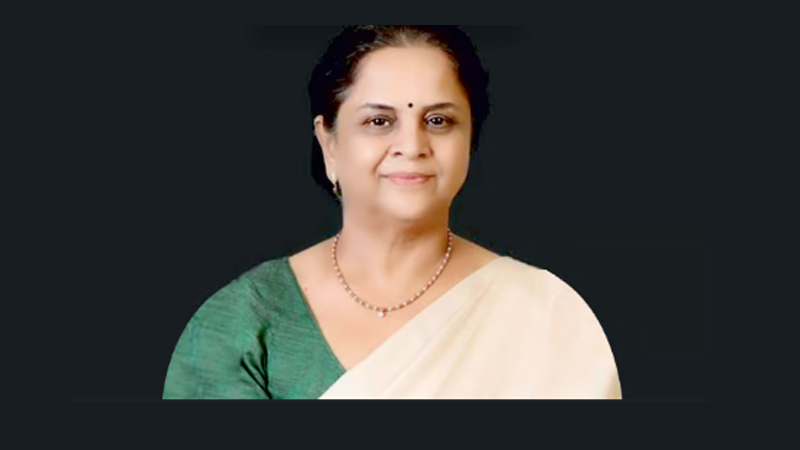
  • For India to become a gaming hub, it needs clear, consistent & credible policies: Dr Aruna Sharma

    For India to become a gaming hub, it needs clear, consistent & credible policies: Dr Aruna Sharma

    Mumbai: The online gaming industry in India is rapidly evolving amidst a backdrop of regulatory scrutiny and technological advancement. With a staggering 28 per cent CAGR from FY20-23 and a market valuation of ₹16,428 crore, it has caught the attention of global investors and developers alike. As policymakers navigate challenges around GST implementation and classification of games, the industry seeks a stable regulatory framework to propel it towards becoming a global hub for game developers, leveraging India’s vast potential and cultural richness.

    Delving deeper, Indiantelevision.com caught up with development economist and retired secretary of Government of India, Dr. Aruna Sharma, to gain more insights on how regulatory dynamics and technological advancements are shaping the future of the Indian online gaming industry.

    Edited Excerpts:

    On the current trends shaping the Indian online gaming industry

    The gaming industry in India is evolving rapidly. It is focusing on avoiding misleading ads, ensuring secure digital payments, and keeping an open dialogue with policymakers. The rise of smartphones, better internet access, and new gaming start-ups is exciting. We’re seeing challenges being tackled both with policymakers and in courts. What’s unique about India is how it differentiates between games of skill and games of chance. There’s also a growing perception of online games as valuable learning tools.

    On the implementation of GST impacting the online gaming industry, and the changes you would recommend for a more balanced taxation policy

    In 2023, the GST on online games of skill jumped from 18 per cent to 28 per cent, which was a big shock to the industry. Thankfully, courts have stayed with this increase, recognising the issue, and an inter-ministerial group is now looking into GST rationalisation. The retrospective application from July 2017 was especially tough. However, a recent amendment in Section 11A allows the government to waive these retrospective taxes and penalties, and a quick, positive decision on this is essential.

    Moreover, GST is currently imposed on the entire amount on the table, including player contributions and winnings, which aren’t classified as goods or services. This needs to be corrected, and hopefully, the Supreme Court will address it soon.

    On responsible online gaming contributing to India’s goal of becoming a $5 trillion economy and a global hub for game developers

    Responsible gaming involves several key practices: including SROs among its members, ensuring KYC for all players, mandating digital payments, storing all data on blockchain for easy retrieval and analysis, implementing filters for time spent, money limits, and age restrictions, reporting any signs of money laundering, and adhering to advertising codes to prevent misleading ads.

    For India to become a gaming hub, it needs clear, consistent, and credible policies. All gaming companies should register in India and pay taxes here. India has the talent to develop new, culturally relevant games and a significant potential for expansion. Games should be classified as either games of skill or games of chance, with no bans on any type of game.

    On cultural localisation impacting the success of online games in India

    Online gaming can be a great learning tool, especially for games of skill. People can learn game rules, strategise, and play in teams. India’s rich storytelling tradition can be transformed into engaging games. Online games can also teach kids important skills like color recognition, pattern identification, and grouping. They can even include lessons on civic sense and traffic rules in a fun way.

    On the convergence of online gaming with other digital sectors like fintech and e-governance

    Online gaming is a unique product. Its use of blockchain, digital payments, and KYC helps detect and prevent misuse like money laundering, with data that can be easily traced. While e-governance can use online gaming for skill development, the two remain distinct. Fintech has stricter rules to follow, as it involves finance. All digital transformation platforms need their own core discipline.

    On the impact of too many intrusive ads in mobile games, and the industry striking a balance between monetisation and maintaining a positive user experience

    Many digital platforms have moved to a subscription model instead of relying solely on ads. Plus, many platforms offer the option to pay extra for an ad-free experience, which users appreciate.

    On envisioning the future of the online gaming industry in India over the next decade, especially in terms of technological advancements, regulatory changes, and market growth

    Technological advancements will spread globally. If we delay implementing the right policies, online gaming might move offshore, and India could miss out. We need policies that are convergent, consistent, and credible.

    Today, 60 per cent of mobile phones in India are smartphones. With secure digital payments and expanding internet access, the market for online gaming will grow exponentially. India has the potential to become a hub for game developers and a leading platform for online gaming.

    Currently, games of chance are registered under the Gambling Act. However, online games of skill are only registered for taxation purposes, as MeitY has not yet established an SRB, set parameters to define money and non-money games as skill-based, or enabled all Indian and offshore developers to register in India and legitimise the process.

  • MIB amends Cable TV Rules for redressal of broadcast-related complaints

    New Delhi: The Centre has amended the Cable Television Network Rules to provide for a three-layer statutory mechanism for the redressal of consumer’s complaints relating to the content broadcast by TV channels.

    The Cable TV Networks (Amendment) Rules, 2021 was notified in an official gazette on Thursday.

    “The @MIB_India has by amending the Cable Television Network Rules, 1994, developed a statutory mechanism to redress citizens’ grievances & complaints against programmes of TV channels. The @MIB_India has also decided to recognize Statutory Bodies of TV channels under CTN Rules,” tweeted information and broadcasting minister Prakash Javadekar. 


    At present, there is an institutional mechanism by way of an inter-ministerial committee to address grievances of citizens relating to violation of the Programme/Advertising Codes under the Rules. Similarly, various broadcasters have also developed their internal self-regulatory mechanism for addressing grievances. “However, a need was felt to lay down a statutory mechanism for strengthening the grievance redressal structure. Some broadcasters had also requested for giving legal recognition to their associations/bodies,” said the ministry of information and broadcasting (I&B) on Thursday.

    The amended rules stipulate a three-layer grievance redressal mechanism — self-regulation by broadcasters, self-regulation by the self-regulating bodies of broadcasters and an oversight mechanism by the central government. The rules require each broadcaster to establish a grievance or complaint redressal mechanism, appoint an officer to deal with the complaints, display the contact details of their grievance officer on their website or interface and be a member of a self-regulating body.

    As per the rules, any person aggrieved by the content of a programme of a channel may file his/her complaint in writing to the broadcaster first. “The broadcaster shall, within 24 hours of a complaint being filed, generate and issue an acknowledgement to the complainant for his information and record. The broadcaster shall dispose of the complaint and inform the complainant of its decision within 15 days of receipt of such complaint,” the rules state.

    The complainants can file an appeal with the self-regulatory body of broadcasters if they are not satisfied with the decision of the broadcaster’s grievance redressal officer or the decision of the broadcaster is not communicated to them within 15 days. The complainant may prefer an appeal to the self-regulating body, of which the broadcaster is a member, within 15 days therefrom.

    The self-regulating body will be required to dispose of the appeal within 60 days of the receipt of the appeal, convey its decision in the form of guidance or advisory to the broadcaster, and inform the complainant of such a decision within 15 days. “Where the complainant is not satisfied with the decision of the self-regulating body, he may, within 15 days of such decision, prefer an appeal to the central government for its consideration under the oversight mechanism,” said the rules.

    The Advertising Standards Council of India (ASCI) will hear complaints regarding the violation of the advertising code, take a decision within 60 days of the receipt of a complaint and communicate the same to the broadcaster and the complainant.

    According to the amended rules, there may be one or more self-regulatory body of broadcasters, provided that every such body shall be constituted by a minimum of 40 broadcasters. The self-regulating body shall, after its constitution, register itself with the central government “within a period of 30 days from the date of publication of these rules, or within 30 days from the date of its constitution, whichever is earlier,” the rules stipulate.

    The government will set up an Inter-Departmental Committee (IDC) to take up the hearing of matters “arising out of the appeals against the decisions taken at Level I or Level II of the grievance redressal mechanism”. It will also hear complaints referred by the central government.

    According to the ministry, the notification is significant as it paves the way for a “strong institutional system for redressing grievances” while placing accountability and responsibility on the broadcasters and their self-regulating bodies.

    At present there are over 900 television channels that have been granted permission by MIB all of which are required to comply with the Programme and Advertising Code laid down under the Cable Television Network Rules.


