Tag: RTL+

  • Tresor TV to produce German adaptation of Nippon TV’s “Silent Library”

    Tresor TV to produce German adaptation of Nippon TV’s “Silent Library”

    Mumbai: Having announced a deal with Rabbit Films of Finland for Silent Library last year, Nippon TV, Japan’s leading multiplatform entertainment powerhouse, has announced that Tresor TV, one of the largest production companies in Germany that creates entertainment programs for national and international markets, has finalised the production of the German-language version of Nippon TV’s global hit unscripted gameshow format Silent Library. The German version features popular reality personalities David Helmut, Lena Meckel and Co, Cosimo Citiolo, Christina Dimitriou, Kate Merlan as well as TikTok stars Maria Ziffy, Rick Azas and Clemens Brock among others, and is set to start streaming on RTL+ from 18 January 2024.

    In the German adaptation, a team of five people competes in each of the eight 15-minute shows. Ready to face the merciless challenges of Silent Library, they tackle tasks that are fast, funny, nasty and vary from episode to episode. Some teams test their speed, strength, or dexterity, while others struggle with icky or painful tasks. Anyone who makes noises, laughs, or screams and exceeds the noise level, loses.

    Since its launch as an international format in 2007, local versions of Silent Library have been created in more than 20 countries around the world. Most notable is the hit U.S. version that launched on MTV in 2009 and became a global phenomenon; other versions have been produced in the U.K., Spain, the Netherlands, Belgium, Thailand, Vietnam, Mongolia, France in 2022, and Finland in 2023, showing the long-term success of this format that works today when rebooted formats continue to prove themselves successful.

    NIPPON TV – SILENT LIBRARY – GERMANY

    Originally first airing in 2001 on Nippon TV, Silent Library has been a primetime, family-oriented television sensation in Japan and is one of the most influential comedy shows in Asia. Created by the legendary Japanese comedian Hitoshi Matsumoto from the famed duo DOWNTOWN, and produced by Nippon TV in association with Yoshimoto Kogyo, Silent Library has been a hugely successful segment on Nippon TV’s long-running Sunday night entertainment show where contestants must always keep silent no matter what happens.

    Nippon TV format sales and licensing, global business Sayako Aoki: “Axel Kuehn and the fantastic team at Tresor TV have created another hysterically hilarious version of Silent Library. The new adaptation will definitely bring the biggest laughter of the new year in 2024, with RTL+ audiences witnessing dynamics they’ve never seen before, featuring familiar celebrities and reality show stars while enjoying the craziest pranks that have entertained global audiences for decades.”

    Tresor TV MD Axel Kuehn: “Silent Library is one of the global hit formats, that everybody in the industry knows. Being able to bring a ‘classic hit’ like this on the screen, is making us proud and happy and we are very thankful that RTL+ and Nippon TV gave us this opportunity. We are sure the German viewers will laugh a lot and ask for more”.

  • French groups TF1 and M6 propose merger

    French groups TF1 and M6 propose merger

    MUMBAI: Fierce competition forces alliances upon nations, people, and companies. As it is doing in the media and entertainment globally today. Close on the heels of the announcement of the merger between AT&T’s Warner Media and Discovery, reports of another fusion between two media groups in France have emerged. The two in question are TF1 and M6 (pronounced Seez) groups.

    TF1 is owned by the Bouygues group, while M6’s ownership lies with European production and TV broadcaster RTL, which is part of media giant Bertlesmann. The two will be housed in a new French company in which Bouygues would hold 30 per cent and RTL 16 per cent. The former will acquire 11 per cent equity from the latter for Euros 641 million.

    The proposal has got the go-ahead from the RTL, Bouygues, TFI, and M6 boards, but has to get over the regulatory hurdles from French authorities and is proposed to close by the end-2022. The merged company would have a 2020 pro forma revenue of €3.4bn and a current operating profit of €461M. The synergies potential (EBITDA run-rate impact) is estimated at €250M to €350M per year within three years from the closing of the transaction.

    M6 CEO Nicolas de Tavernost has been proposed as chairman & CEO of the merged entity while chairman and CEO of TF1 Gilles Pélisson will be nominated as deputy CEO of Groupe Bouygues in charge of media and development.

    A new ad-supported service, combining catch-up and live streaming and based on existing services MyTF1 and 6play, would be developed, alongside an SVoD service and a production hub for local and international content.

    What’s forcing the two to merge? Well a press release issued by RTL gives some insights.

    It says the two groups are active in a growing total video market where increasingly rich, original, and exclusive content is driving long-term audience growth. Even as linear TV remains powerful, it is undergoing a structural transformation with a strong shift towards on-demand consumption which is being led by global platforms making deep pushes in the French advertising market.

    “The combination of these two players, of the know-how of their employees and their strong brands, would allow the new group to invest more and to step up innovation. The proposed merger is critical to ensure the long-term independence of French content creation and to continue to offer diversified and premium local content to the benefit of all viewers,” said the statement.

    “The merger between Groupe TF1 and Groupe M6 is a great opportunity to create a French total video champion that will guarantee independence, quality of content, and pluralism – values that have long been shared by our two groups,” said Pélisson. “It will be an asset in promoting French culture. Groupe TF1 now approaches a new stage in its development, consistent with the strategic vision developed in the past five years.”

    “The consolidation of the French television and audio-visual markets is an absolute necessity if the French audience and the industry as a whole are to continue to play a predominant role in the face of exacerbated international competition, which is accelerating rapidly,” added de Tavernost. “The combination of the two groups’ know-how will allow for an ambitious French response. Furthermore, this proposed merger of Groupe M6 and Groupe TF1 is the only transaction offering value creation for all Groupe M6 shareholders.”

    “The audio-visual market benefits from long-term growth. In this context, Groupe Bouygues is pleased to contribute to the creation of a major French media group able to compete with the GAFANs,” highlighted Groupe Bouygues CEO Olivier Roussat. “We are pleased with this major development and partnership which confirms Groupe Bouygues’ commitment to the media since 1987. As shareholders with exclusive control over the new group, we will continue to provide it with our full support.”

    RTL CEO Thomas Rabe said the proposed merger of Groupe TF1 and Groupe M6 would be a major step in implementing the strategy to create national media champions across the European footprint. “It demonstrates how in-country consolidation creates significant value. As a strategic investor, we will be long-term industrial partners of Groupe Bouygues,” he added.

  • DoT takes on record spectrum sharing pact between RCom and RTL IN 800 MHz

    DoT takes on record spectrum sharing pact between RCom and RTL IN 800 MHz

    NEW DELHI: The Department of Telecommunications has taken on record 800 Mhz Spectrum Sharing in seven circles of Reliance Communications Ltd (RCom) and two circles of Reliance Telecom Limited (RTL), wholly owned subsidiary with Reliance Jio Infocomm Limited (RJIL).

    Giving this information to Bombay Stock Exchange, Reliance Communications Ltd said this was with effect from 21 April 2016.

    The development was with reference to the earlier letter dated 18 January 2016 informing sharing of spectrum in 800 MHz with RJIL.

    The Company and RTL are now able to share spectrum with RJIL in nine circles:  Mumbai, Uttar Pradesh (East), Madhya Pradesh, Bihar, Orrisa, Haryana, Himachal Pradesh, Assam and the North East.

    The DoT had in February approved sharing of active infrastructure like antenna used for transmitting mobile signals.

    It is learnt that RCom has already paid Rs 5,383.84 crores to liberalise its spectrum in 16 circles which include Delhi, Mumbai, Punjab, Himachal Pradesh, UP East and West, Gujarat, Madhya Pradesh, Kolkata and Bihar.

    A liberalised spectrum allows telecom operators to use any technology to deliver mobile service like 3G and 4G. Besides, it allows introduction of new technologies and sharing and trading spectrum with other operators for its efficient use.

    The Cabinet has earlier cleared liberalisation of spectrum allocated without auction to telecom companies – at prices recommended by the Telecom Regulatory Authority of India with the balance being collected after deriving market rate through bidding

  • DoT takes on record spectrum sharing pact between RCom and RTL IN 800 MHz

    DoT takes on record spectrum sharing pact between RCom and RTL IN 800 MHz

    NEW DELHI: The Department of Telecommunications has taken on record 800 Mhz Spectrum Sharing in seven circles of Reliance Communications Ltd (RCom) and two circles of Reliance Telecom Limited (RTL), wholly owned subsidiary with Reliance Jio Infocomm Limited (RJIL).

    Giving this information to Bombay Stock Exchange, Reliance Communications Ltd said this was with effect from 21 April 2016.

    The development was with reference to the earlier letter dated 18 January 2016 informing sharing of spectrum in 800 MHz with RJIL.

    The Company and RTL are now able to share spectrum with RJIL in nine circles:  Mumbai, Uttar Pradesh (East), Madhya Pradesh, Bihar, Orrisa, Haryana, Himachal Pradesh, Assam and the North East.

    The DoT had in February approved sharing of active infrastructure like antenna used for transmitting mobile signals.

    It is learnt that RCom has already paid Rs 5,383.84 crores to liberalise its spectrum in 16 circles which include Delhi, Mumbai, Punjab, Himachal Pradesh, UP East and West, Gujarat, Madhya Pradesh, Kolkata and Bihar.

    A liberalised spectrum allows telecom operators to use any technology to deliver mobile service like 3G and 4G. Besides, it allows introduction of new technologies and sharing and trading spectrum with other operators for its efficient use.

    The Cabinet has earlier cleared liberalisation of spectrum allocated without auction to telecom companies – at prices recommended by the Telecom Regulatory Authority of India with the balance being collected after deriving market rate through bidding

  • FremantleMedia sells ‘Deutschland 83’ to multiple countries at MIPCOM

    FremantleMedia sells ‘Deutschland 83’ to multiple countries at MIPCOM

    MUMBAI: FremantleMedia International has sold its gripping German language spy thriller Deutschland 83 (8 x 60) to multiple countries at Mipcom 2015. 


    So far the show has been acquired by 20 broadcasters and SVOD services around the world.


    Following its US success, the series has now been placed by FremantleMedia International with Channel One (Russia), Sky Italia (Italy), Hulu (US), Sundance TV (English-speaking Canada), Super Ecran (French-speaking Canada), RTE (Eire), Stan (Australia & New Zealand), Telenet (Belgium), RTL Klub (Hungary), Hotvision (Israel), TV4 (Pan-regional Scandinavia) and Kino Lorber (US – DVD and iTunes).


    FremantleMedia International CEO Jens Richter said, “Deutschland 83 has become the must-have European drama series of the year. Having attracted critical acclaim in the US and now the attention of this impressive list of buyers, the compelling series is all set to captivate viewers around the world.”


    The above acquisitions follow on from the previously reported deals with Sundance TV (US), CANAL+ (France), Channel 4/Walter Presents (UK), SVT (Sweden), NRK (Norway), DR (Denmark), YLE (Finland) and RUV (Iceland).


    Deutschland 83 is a suspenseful coming-of-age story set against the real culture wars and political events of Germany in the 1980s. The drama follows Martin Rauch (Jonas Nay) as the 24 year-old East Germany native is pulled from the world as he knows it and sent to the West as an undercover spy for the Stasi foreign service. Hiding in plain sight in the West German army, he must gather the secrets of NATO military strategy. Everything is new, nothing is quite what it seems and everyone he encounters is harbouring secrets, both political and personal.


    The series is produced by UFA Fiction, the creators of Generation War, for RTL Television in Germany. Created by Anna Winger and Joerg Winger, and executive produced by UFA Fiction’s Joerg Winger and Nico Hofmann. The series is directed by Edward Berger and Samira Radsi.

  • “Reliance’s Big brand is focusing on  the localised content, local IP space:”  Tarun Katial

    “Reliance’s Big brand is focusing on the localised content, local IP space:” Tarun Katial

    He is amongst a select lot of advertising professionals who have pole-vaulted over the fence to the broadcast side – and stayed there. In fact, not many recollect that Tarun Katial began his career at Saatchi & Saatchi as a media trainee. More might remember him from his O&M days when he headed TV media buying for the Mumbai office. The then Star India CEO Peter Mukerjea picked him up to work in programming along with Sameer Nair, and the rest, as they say, is history.  From Star, he moved onto head Sony Entertainment programming, before heeding the call from the Anil Ambani-Amitabh Jhujunwala combine to help take the billionaire businessman’s  entertainment ambitions further under the umbrella of  Reliance Broadcast Network Limited (RBNL). 


    It has been quiet a journey. He heads what is considered as India’s most widely spread private FM radio network – Big FM 92.7 which has a footprint of 45 stations. Katial also handles a clutch of TV channels – Big Magic, Big Magic Bihar and Jharkhand, Big Thrill – the TV production wing Big Productions and the group’s activation arm. 


    Despite arriving late in the broadcast TV game, Katial managed to forge alliances with US major CBS and German media megalith RTL. He launched channels in partnership with them quickly from 2010 onwards with the clear intent of building a strong network. The CBS joint venture unravelled end-2013 while the RTL one got unstuck a couple of months ago. Katial – with a sanguine look in his eye says “things happen, then they don’t and the other way round too. But they are all a part of learning and experiences.”


    A firm believer of differentiation and localisation of content, Katial has been at the helm of one of India’s youngest media houses. It was this approach towards business that got him the ‘NewsCorp Achiever for Asia’ award and later led to him being included among the best in ‘India Today 30 on 30’ list. Katial’s much older today and his hair has greyed in parts, but the man has retained his hankering, his drive for innovation and challenges. He got into a conversation with Indiantelevision.com’s Seema Singh and Meghna Sharma, to talk about his experience, his good moments and not so good ones too, and also about his future…


    Excerpts


    How has the journey been so far? The company has seen a lot of ups and downs, what do you have to say about them?


    It has been an interesting journey. When we launched, all our competitors were at least five to seven years ahead of us, well established brands with not only equity, but also ad-consumer connect and legacy of their media house ownership.


    But, we were neither a media house nor a recognisable brand. To add to that, our parent brand Reliance did not allow us to use its brand name, since that is a part of our branding guidelines. We didn’t have any legacy knowledge in the system either. So it was all done from scratch. 


    The team has almost remained the same, since the time we launched. The executive board of the company is also still intact.  Right from deploying CAPEX to building a brand, an identity to positioning the brand, to winning small victories to larger wars, it has been an interesting journey to say the least. 


    In the last two years, the brand has really come of age, We realised that while we fought the marginal differentiation game, we had to be exponentially different to be able to succeed. 


    So we decided to position our brands to recreate every local market and that’s when we decided to go retro for our radio station in Mumbai and Delhi, regional in Bengaluru, melody in Chennai and largely Bengali with Hindi retro in Kolkata. 


    Today, I am quite proud to say that in most markets that we operate, we are either number one or number two, with a huge gap between us and our competitors. 


    You were a late entrant in the game, have you been able to deliver on the challenges? Which have been the areas that you have succeeded and areas which still remain to be tapped?


    The initial challenges were basic understanding of the business to building a consumer brand to building a differentiated positioning and differentiated offering, then to be able to consolidate and work around it. 


    In the brand’s journey you are sometimes able to take risks and sometimes not, sometimes you are able to expand and sometimes you have to consolidate. And in all of that, I think a new brand is not at the same place as an established brand. 


    Radio lacked measurement and we have worked with the industry to introduce RAM. 70-80 per cent of radio spends, today, are in measured markets and advertisers are able to measure the ROI they get from radio. The coming in of measurement rapidly increased the number of brands that had faith in radio. What it also did was, it helped radio move away from being just a frequency medium to being a rich range medium and classic advertisers like the FMCG category started to rely on radio for their communication needs, which has been very good for the category and very good for us. 


    Again in the television business we were laggards. Every business takes time to find its strategy. We started from the English space and then decided to venture in the local language proprietary content space. What we’ve been able to learn and reconcile with this is that we want to be in the local space like we are in the radio business. 


    Television is a much younger business than radio and I think the success we have seen in the TV space in the past six months has been very good. With our Big Magic Bihar and Jharkhand channel, we are clearly the leaders. Whether it’s Big MemsaabBig Bahuriya or Police Files, we have  great content. 


    Also we are the only ones with local production capabilities in Patna and we have been able to build a new community of technicians, actors and producers there.


    On the national front, while we started with Big Magic in UP, it was in April-May this year, with the launch of Akbar Birbal that we decided to take the channel national. 


    There are obviously challenges and we have a great distance to cover but I think the two month report card has been very healthy and positive. We have been able to launch a whole slew of content like:  Uff Yeh Nadaniyaan with Upasana Singh, Raavi Aur Magic Mobile and Ajab Gajab Ghar Jamai with Himani Shivpuri and Sumit Vats. 


    We are going block by block, building on that channel. While today we have about 2.5 hours of original content, we would probably take it up to 3-3.5 hours by the end of this quarter. 


    We believe that regional content is the way forward. It allows you to connect with the audiences and stay centric to consumer’s needs.  Also when you own the intellectual property, you can take it international, deploy it on digital and on various forms and fashions. So I think that’s really our strategy going forward in the television space.


    Why did you think of starting a production unit in Patna? 


    We started our Patna operations four months back, as we believed that local and regional channels should be run from where they belong and a lot of the Bihar channels tend to run from Delhi or Mumbai. But, according to me, this prevents you from building a local connect or local relevance. So we decided to do shows which are locally relevant. 


    Big Bahuriya is a show which surfaces latent issues between mother-in-laws and daughter-in-laws. It has done very well for us and it has all been shot in Bihar and Jharkhand and in the homes of people. Then, Big Memsaab, a studio based game show for women, is also based out of Patna. We built the studio and shot there, giving opportunity to local contestants, local people to come and take part. Similarly, Police Files is a very gritty, in-your-face crime show, where we work with real footage and real issues and crime scenes in Bihar and Jharkhand. 


    These programmes have been produced by local producers like Abhay Sinha, Amitabh Verma and Kamlesh Guthi Singh.  


    Are you looking at rebranding Big Magic Bihar and Jharkhand?


    Yes. We are looking to rebrand and probably call it Big Magic Ganga.  This should be done by mid August. We have already got the approvals for the same. When we rebrand, we will launch in a fairly big way. 


    Your business model earlier looked very lucrative, with TV, Radio, Production and Activation arm, how do you plan to keep up the whole chain to make it look more lucrative? How do you plan to synergize what is under you? What is your current business model?


    Actually we have strengthened our approach a lot now. We have a strong activation business called ‘Big Rural.’ We probably are the only ones who do intellectual property work in the rural space. We have built some very good brands, like ‘Big Disha’, where we do rural career counseling, partnering with Gillette.


    In fact a number of brands partner with us, through which we do hundreds and thousands of activations across schools and colleges. 


    We have also built a new brand called ‘Mele Ka Big Star’ and ‘Hindustan Ka Big Star’ where we cover large melas across UP, MP, Bihar and Jharkhand. Through this, we do a big talent hunt partnering with successful brands like Horlicks, Hero, Godrej and Emami among others.


    We have built a very big property with on-ground activation called Close Up Antakshari. Also on the production side, we have done a lot of proprietary work. Like the Big Star Entertainment Awards and now the monthly Life OK Now Awards.  We do different kinds of work under Big Productions. 


    So your business model still remains the same?


    Yes it continues to be the same. But one of the differences we brought about in the business model is that instead of focusing on client specific activation, events or productions, we are now doing more branded content activation which has attracted   a lot of clients. Through this, a lot of clients can partner and benefit rather than a single client carrying the cost. We have also built some single client properties. For instance, the Hajmola Chatpata No 1, which has a deep penetration in UP, was a success and we plan to do a follow up this year. In short, we have built some long standing properties rather than just activation.


    Are you creating activations for your television channels as well? When will we see the transformation of Thrill? Also will it continue to being male skewed? Will it be in English? 


    We are in no rush to do more in our television space until we attain a critical mass market for  Big Magic and Big Magic Bihar and Jharkhand. For us, the next big thing will be to Indianise Thrill and add local content on it as it is our second priority in the television space. We are currently in the consolidation space. And we also have the phase III of radio rights on our head. So, I think we need to see how much of bandwidth we have for television.


    Thrill will be rebranded by end of this year and while comedy will be on Magic, Thrill will continue to have action. The content on Thrill will be in Hindi only. The whole point of a buyout from RTL was to start doing local content. We are working with some key producers in the space.


    Are you looking at an English channel?


    We won’t do English for some time now. We believe we want to be in the local IP space. We want to have our own IP.


    Was this the reason that the joint ventures ended?


    Our strategy is to be in the local content, local IP space. We want to be centric to the consumer and move around according to the changing trends and tastes. We want to be able to take the channels to different platforms. But in the English space, you are under the rental model. What we do after the license period gets over? What is your legacy in the space?


    Why did you decide to launch the channel with international partners – CBS and RTL?


    You learn with every category you get into. I think when we got ourselves into the English space, there were fewer partners, less competition, but over the three years the space became fragmented and crazy. 


    What is happening with Big Magic and Big Magic Bihar and Jharkhand and Big Magic International, post the breaking of the JV?


    We now own all the content and that’s the reason we launched Big Magic internationally. We are now available in the US, Australia, Canada and are planning to launch in some countries, this year. UK is one of the targets and the talks are already on. 


    If you see the financial statement of this year, the company has done better as compared to 2013. But the network is still incurring certain losses. How are you looking at improving this – especially on the television side?


    RBNL is in its investment phase on TV and it’s on the return phase on radio and that’s how we are balancing it. You need to have some initial losses for any network to grow. You can’t cut the investment short because there are loses in the business, right?


    I will not define them as loses; they are investments. For any business to grow you need investments and we are happy to make investments in the TV business. We are happy to reap the benefits of the radio business. The radio business is close to Rs 200 crore plus, which is not a small number.


    So, will you be pushing radio more?

    Both are different businesses and have different sets of challenges; and we want to grow in both the businesses. And you have seen what we have done with Big Magic. We have been launching a new show almost every week if not every month and the kind of investment that is going behind content, marketing is quite incredible. Last week, we launched the new season of Uff Yeh Nadaniyaan. We have brought in new faces; we have upgraded the look of the show. So, at every step of the way we are investing in the content of the channel.


    What kind of management reshuffle will we be seeing. Are you getting in  more new people?


    We have brought in more people to strengthen the team. On the sales side, we have created a vertical approach, keeping the customer at the centre of it. So we have done a vertical for single customers, a vertical for government sector customers, a vertical for key accounts, a vertical for corporate accounts and new business developments. So, we have a customer centric approach and we have got sales directors on all these verticals. We have got Gurudutt Jakhmola for the government side, Ajit Singh has been roped in for single accounts, Rajesh Mishra for corporate account side and Vijay Koshy on the key account side.


    So, we have got four vertical heads. On the creative side, we have got Manisha Tripathi as the creative and programming head of radio.


    Are you looking at fresh investments coming in to the company?


    Obviously, we will make investments into our radio business as we go into phase III of licensing; we will definitely make investments in current licenses migrating into 15 years and acquiring new licenses.


    And what about television?


    Television is now at the cusp of breakeven, but we will continue investing in Magic.


    What about the licenses of channels like Love? Will you be giving them away? Can we expect more channels in the future?

    We will keep them. Currently, they are in the hibernation stage.  We will be working with our three channels for now. And as and when opportunities come, we will tap into it. 


    How do you plan to get cash flow in the company? Why did you plan to delist?

    For now, we are a delisted company and so we do not need to worry.


    We didn’t want to live quarter to quarter and the promoter believed that he had great value in the business and so he should go behind it and give it all the investment it requires to give it a long term run. 


    For a business in its early stage it is tough to live in a quarter to quarter manner. I can tell you, I have worked at News Corp in my early days at Star and if we were to live on a quarter to quarter basis, we would have never made the kind of investments we did. 


    Also, we didn’t list because we wanted to. We listed because we have a legacy of Adlabs being listed. Our licenses were in the erstwhile Adlabs which demerged into Reliance Media Works which then became Reliance Broadcast Network. We have actually never done an IPO. 


    According to you, which is the most ad revenue generating channel? 


    Big Magic is actually at a 100 per cent inventory fill and it is doing exceedingly well. But I think the one that has real big potential going forward is our Bihar channel. It’s a media dark region and a lot of advertisers want to penetrate that market. Also, it has one of the fastest GDP growth in India. 


    Are you looking at geo-targeting at any stage?


    We had some options at doing geo-targeting with Big Magic because it’s very big in UP. We keep toying with the idea. With a 50 sales offices in the country for our radio business, it will be an easy task.  But we haven’t really tapped into that yet.


    Is distribution a challenge? Is it getting expensive now?


    It’s not very expensive, it is actually getting cheaper. Digitisation has clearly made distribution democratised. Placement is still expensive but distribution is not. And if you have differentiated content then placement is not a key challenge. 


    In fact, we have had a reduction in our carriage fees dramatically over the years across the network and I can tell you that some of the DTH platforms have been very welcoming for our channels.

    What is your budget for marketing on a yearly basis? Does it keep increasing year on year?


     See, we have priority markets, where we invest heavily. Also, we have great advantage of having cross network between radio and TV. So, what people can’t buy, we can buy very easily. Most networks have to buy on radio networks like us, but for us that’s a very big advantage. So between network media and third party media, I think our budget will be close to 20-25 crore. 


    According to me as the channel gains popularity, its marketing spends reduces. 


    I can tell you, our radio market budget has come down substantially from the years we launched it. It’s a set brand. When we launched the show with Annu Kapoor we did not do any marketing because the content was strong. I think good content markets itself after a point. The word of mouth, the advocacy becomes so strong that you don’t have to knock on any ones door.


    What made you change your whole content from recent Bollywood tracks to retro on Big FM? How big is your research team for both television and radio?


    You have to give yourself some serious delta of differentiation, it can’t be marginal differentiation. And you have to take some risks and risks pay off eventually. 


    We have an intense research team, which comprises music experts and even university graduates who have done a post graduation in music. We won’t take such a risk without understanding the consumer’s likes, dislikes and choices. Even within the retro music we have serious segregation on timeless music and time-bound music. 


    Similarly for television, we work closely with Dragon Fly for a lot of research. 


    There seems to be a sudden rise of in-programme advertising? Do you also use this tool to advertise?


    We do a little bit of it, but more in Bihar and Jharkhand because we have a game show on the channel and also because there is a lot of good opportunity there. But I still believe that you can’t make good content into a teleshopping network.


    I think the consumer is becoming extremely discerning so you need to be smart about the way you do these things. What we did with Clinic All-Clear on one of our shows on Big Magic called Raavi was that we spoke about educating the girl child, while soft branding the product with the message.


    Are you looking at doing more events apart from the current slate? 


    I think they need to make sense from a consumer perspective. You can’t just do them because you want to do them. You have to do them because there’s an insight in them. We currently have a slate of 20-30 events, which I don’t think is little by any standard. 


    Does the network make any content for only digital  consumption?


    We are currently not making content for digital only, but we are re-purposing a lot of content for digital. Like we do short stories of Akbar Birbal, only for digital. We have our own YouTube channel, where we condense interesting episodes and put on that channel. The content is such that it can be watched in about nine minutes. 


    Where do you see the network three years down the line?


    The network will be very consumer centric, adapting to changes in consumer trends, very well differentiated and distinct, whether it’s the TV network or the radio network and building on insights continuously. For us consumer-centricity is the key and that’s what we are working on and that’s why we have done what we have done both in TV and in radio. You can’t win by duplicating anybody.

  • Clement Schwebig joins Turner International Asia Pacific

    Clement Schwebig joins Turner International Asia Pacific

    MUMBAI: There’s a new member in the Turner International team who will handle its business development in the Asia Pacific region. Clement Schwebig has joined the network as the senior vice president and will look after the network’s growth strategy in the region.


    He will assist in the creation of new local and pan regional channels and develop local content as well. Schwebig has an experience of 15 years in TV operations in two continents – Europe and Asia. Recently, he was a part of the Europe’s leading entertainment company RTL group in Mumbai and led the launch of the channel BIG RTL Thrill. This was the first channel from the co-operation of RTL and Reliance Broadcast.


    Previously, he was the COO of Alpha Media Group in Greece and CFO of RTL Televizija in Croatia. His expertise includes TV broadcasting and production including strategy, finance and sales. 

  • Australian series Wentworth set for a German remake

    Australian series Wentworth set for a German remake

    MUMBAI: The Australian prison drama, Wentworth that has won millions of fans will now be adapted into German. The series will be produced by UFA Serial Drama, FremantleMedia’s German production arm UFA and RTL.


    FremantleMedia has always been known for hit formats like Idol and The X Factor that has been adapted in several languages. For the current deal, the commission will have 10 episodes of the German version which goes into production in Berlin in March next year.


    Based on FremantleMedia’s Australia series, the compelling and emotional Wentworth will follow the same gritty story of survival, rivalry, power struggles and unlikely allegiances within a female prison.


    The original series that was launched in Australia earlier this year became the most watched non-sports programme in the Australian subscription television history ever. Even in the UK, the series became the number one primetime Australian drama in the UK since 2002.


    Talking about the deal, RTL head of fiction Barbara Thielen said in a press release: “The stories and characters of Wentworth will polarise and initiate discussions among the audience. Many women whose fates we are telling are certainly guilty in a legal sense, but if you can condemn them in a moral sense as well, everyone will judge differently.”


    UFA Serial Drama chief creative officer Guido Reinhardt commented: “Wentworth is dynamic, controversial as well as emphatic. In this field of tension we present an uncompromising world, where friendship, trust and loyalty means everything and the question whether law and justice are actually the same is repeatedly raised. The answer to this is more than complex and thus a fascinating subject – packed in a highly emotional series.”


    The Australian drama airs on Foxtel Australia and the second season of the show is currently under production in Melbourne. The Australian version has been sold to Africa (MNET), Eire (TV3), Sweden (TV4), Scandinavia (CMORE), New Zealand (TVNZ) and UK (FIVE). It is also available in 15 markets through a pan-Eastern Europe deal with SPI. Additionally, deals for season two have been concluded for UK, Eire, Scandinavia, Sweden and New Zealand.

  • BIG RTL Thrill beefs up weekend programming

    BIG RTL Thrill beefs up weekend programming

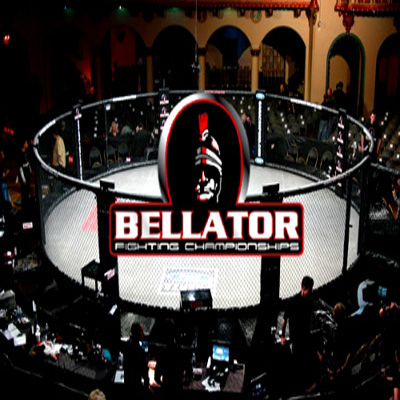
    MUMBAI: BIG RTL Thrill with its new additions is all set to turn up the entertainment quotient for men through the weekends. The channel which is available in dual feeds of Hindi and English will premier two internationally recognised shows – Bellator and Love in the Wild starting 5 October.

    The new line up will kick-start with Bellator, the largest tournament based mixed martial arts (MMA) promotion in the world. The world renowned series that was launched in 2008 has showcased nine successful seasons internationally and holds tournaments across weight classes. With Bellator, BIG RTL Thrill aims to give its audiences an hour of exclusive and exceptional action entertainment.

    Next on the anvil is Love in the Wild. The show is a reality based programme wherein ten young and single girls and boys are marooned on an island in Costa Rica. The boys and girls are paired as couples and participate in various adventurous activities while they seek love. In order to find true love, the contestants have to undergo hardships and challenges that will test their compatibility, chemistry and mental grit.

    BIG RTL Thrill vice president Vijay Koshy said, “We are delighted to bring these two new fantastic shows to our audiences over weekends. While Bellator is an internationally well established property amongst mixed martial art fans, Love in the Wild promises to provide for scintillating content in the late night slot. We are confident that this mix of action-entertainment shows will work well with audiences, while offering marketers with properties that promise best ROI.”

    The new shows on the channel aim to tap into the expanded market for BIG RTL Thrill following its dual-feed launch earlier this year. The channel, which is available on all leading networks, offers male viewers international action-programming in both Hindi and English across key 1mn+ HSMs.

  • RTL CBS Asia Entertainment Network gets Jonas Engwall as CEO

    RTL CBS Asia Entertainment Network gets Jonas Engwall as CEO

    MUMBAI: The newly formed joint venture between RTL Group and CBS Studios International (CBSSI), RTL CBS Asia Entertainment Network has a new leader in Jonas Engwall as CEO.Engwall will be based in Singapore and report to the new company’s board of directors.

    RTL Group executive VP of regional operations and business development for CEE and Asia Andreas Rudas and executive VP of international channels at CBSSI Reed Manville said in a joint statement: “We are delighted to announce the appointment of Jonas Engwall as CEO of our new Asian venture. Jonas has vast experience in international broadcasting, and a passion for television. He has been with RTL Group for many years and was instrumental in launching its first channel in India, BIG RTL Thrill. As head of the new venture, Jonas will lead a strong team which brings together the best of two global TV giants RTL Group and CBS.”

    Engwall said: “This is an unprecedented partnership between two leading global broadcasters in a region with huge growth potential. Together with my team, I look forward to launching our two first channels, RTL CBS Entertainment HD and RTL CBS Extreme HD, across Asia. Our new channels will offer world-renowned content including exclusive first runs of some of Asia’s favourite reality programmes America’s Got Talent, Fear Factor and The X Factor USA; dramas Under The Dome, Elementary and Beauty and the Beast and daily shows Entertainment Tonight and Late Show with David Letterman. I am very confident that these programmes will prove extremely popular across our footprint and represent a highly valuable proposition for all our partners. We have already had very positive feedback from all premier platform owners in the region.”