Tag: RSS

  • Why AAP Lost Delhi & Why BJP gained it: A Marketing Analysis

    Why AAP Lost Delhi & Why BJP gained it: A Marketing Analysis

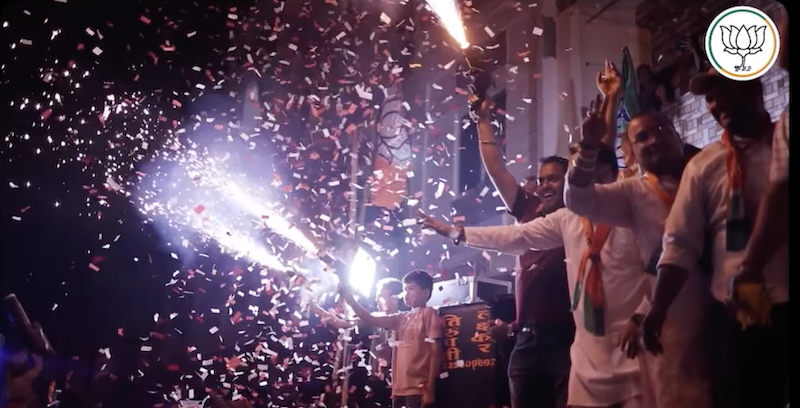
    MUMBAI: The BJP’s victory over AAP in Delhi can be examined through key marketing principles – product lifecycle, distribution strategy, and competitive positioning.

    Product Failure:
    * AAP as a ‘product’ failed to deliver on its core promises
    * The brand reached the end of its lifecycle without significant evolution
    * Core issues like pollution, garbage management and infrastructure remained unresolved
    * The product (AAP leadership) faced credibility issues with leaders facing legal challenges

    Distribution Strategy:
    * BJP outperformed in distribution through: 
    o RSS volunteers conducting extensive door-to-door campaigns
    o Thousands of drawing-room meetings across demographics
    o Strong presence in traditional AAP strongholds including slums and unauthorised colonies
    o Superior ground-level connect with voters

    Competitive Positioning:
    * BJP successfully countered AAP’s ‘freebie’ positioning by: 
    o Offering higher monetary benefits (Rs 2,500 vs AAP’s Rs 2,100 for women)
    o Matching and exceeding welfare schemes
    o Promising continuation of existing benefits while adding new ones
    o Building a stronger narrative around development and governance

    Brand Messaging:
    * BJP controlled the narrative effectively through: 
    o Consistent messaging on AAP’s unfulfilled promises
    o Focus on corruption allegations
    o Strong leadership projection
    o Clear communication of enhanced welfare measures

    Marketing Lessons for AAP:
    * Need for product reinvention and clear deliverable promises
    * Importance of maintaining brand credibility
    * Necessity of strong distribution network
    * Requirement for effective counter-narrative
    * Focus on tangible achievements rather than just promises

    The defeat highlights that tactical promotional offers (freebies) work only until a competitor provides better alternatives, emphasising the need for sustainable competitive advantages in political marketing.

    [Based on insights from Jayshree Sundar, author of “Don’t Forget 2004” and Meenakshi Menon, advertising veteran]
     

  • 72% satisfaction rate with Modi Government: CNN IBN, IBN7 poll

    72% satisfaction rate with Modi Government: CNN IBN, IBN7 poll

    MUMBAI: As Network18’s news channels CNN-IBN and IBN7’s special programming around Modi Government’s one year in power draws to a close, the channels presented a special poll for its viewers assessing the government’s performance from the citizen’s perspective.


    Marking a shift in leadership and style of governance, the Modi Government undertook a series of measures to achieve the vision of a better India. To evaluate the impact of these changes at the ground level, Axis MyIndia conducted a comprehensive survey across 23 states and more than 155 districts with a sample size of 20,000 across all age groups of society with a 70/30 urban-rural spread.


    The survey findings showed that over 72 per cent of the respondents said that they were satisfied with the performance of the Modi Government on account of development, skillful governance and lower prices in the previous year.  Close to 56 per cent of the sample, believed that Modi is an effective Prime Minister and has helped improve India’s image globally.


    Network18 news president Umesh Upadhyay said, “We have always ensured to follow the most robust and scientific research processes to truly capture the voice of the people. This survey is another initiative driven by this thought process and we believe that it reflects the sentiments of the common men and women of this country, most accurately, with regards to the performance of the Modi Government as it reaches the crucial milestone of an year in office.”


    On the issue of the relationship between the Government and RSS, 32 per cent of the respondents felt that there was no interference by RSS in the affairs of the government. On the impact of controversial statements such as those relating to Ghar Wapasi, approx 31 per cent of the respondent felt that such statement do not dent the image of the Government at all whereas approx 33 per cent felt that such statements do have an adverse impact; overall 43 per cent of the respondents felt that those making controversial statement should be controlled. 

  • RSS activists attack Aaj Tak, Headlines Today office in New Delhi

    RSS activists attack Aaj Tak, Headlines Today office in New Delhi

    NEW DELHI: The offices of Aaj Tak and Headlines Today at Jhandewalan area in Central Delhi were attacked by alleged Rashtriya Swayamsevak Sangh (RSS) activists today.

    Hundreds of suspected RSS members ransacked the private news channel office of the TV Today Group, smashed glasspanes and destroyed furniture, even as some police persons were present.

    It is learnt that the attack was triggered by the Headlines Today sting operation suggesting saffron leaders’ involvement in Malegaon and Ajmer blasts. The report, which was aired on Thursday, invited the ire of the Hindu activists.

    In the report, the channel had featured Bharatiya Janata Party leader BL Sharma, who made inflammatory remarks against a particular community. The story had said saffron leaders being involved in Malegaon and Ajmer blasts. Others who were put on dock were RSS leader Indresh Kumar, Delhi-based endocrinologist Dr RP Singh and Sharad Kunthe, head of the chemistry department at Pune’s Wadia College.

    Headlines Today “had exposed how elements in the saffron brigade had plotted Vice-President Hamid Ansari’s assassination and attacks on minorities and had links with the Mecca Masjid and Ajmer Sharif bomber,” says a report in India Today.

    The incident has been condemned by the Editors Guild, senior journalists including Rajdeep Sardesai and Upendra Rai, and several political leaders. RJD leader Laloo Prasad Yadav said the issue would be raised in Parliament in the session beginning later this month.

    The attack has been condemned by the Information & Broadcasting Minister Ambika Soni and media fraternity. Soni said the matter would be inquired into.

  • Al Jazeera Intl to go live from 15 November; no govt ok yet for India feed

    Al Jazeera Intl to go live from 15 November; no govt ok yet for India feed

    MUMBAI: After a number of delays, Doha-based Al-Jazeera Network has set the launch of its English news and current affairs channel AL Jazeera International for 15 November.

    The launch of the channel had earlier being deferred from April to September on account of series of constructions and technical glitches at its four centres in London, Doha, Kuala Lumpur and Washington.

    The Indian feed continues to remain in the realm of uncertainities.

    The English offshoot of the often controversial (at least to Western eyes) Al Jazeera Arabic language channel will kick off its inaugural broadcast from its headquarters at 12 GMT. The announcement of the launch coincides with the 10-year anniversary of Al Jazeera.

    To be beamed off Pas10, Al Jazeera International has already set up shop in India with a bureau headed by Anmol Saxena, who has been in the business of television for some years now.

    The Indian operation has been dogged by delays in government permission, which has also resulted in other aspects of the business of TV not being put in place.

    For example, though Al Jazeera is said to be negotiating with a senior distribution personnel in India for the channel talks haven’t been finalised as government permission is yet to come as of today, according to information available with Indiantelevision.com.

    In all probability, the distribution activity would be outsourced in India to a company that is headed by a person who has done similar work in various media organisation.

    Meanwhile on 15 November, the international channel will provide 12 hours of live news plus interview programmes and in-depth features and analysis from the world’s hot spots over a 24 hour day.

    According to an official release, the channel will be positioned to reverse the information flow from South to North and to provide a voice to under-reported regions around the world.

    With broadcast centres strategically placed in Doha, Kuala Lumpur, London and Washington DC, and supporting bureaux worldwide, Al Jazeera International aims to be a new force in the global English speaking media with the ability to seek out and cover different perspectives of news through on-the-ground reporting wherever news is made.

    Al Jazeera Network director general Wadah Khanfar said: “We are extremely proud of what Al Jazeera has achieved over the past ten years. Al Jazeera today is an international media organisation. Al Jazeera International will build on the pioneering spirit of Al Jazeera and will carry our media model, based in the South, to the entire world.”

    He added: “The launching of the English Channel offers the chance to reach out to a new audience that is used to hearing the name of “Al Jazeera” without being able to watch it or to understand its language. The new channel will provide the same ground-breaking news and impartial and balanced journalism to the English speaking world.”

    “It has been a fantastic endeavour to build this TV channel over the last two years with the support of the Al Jazeera network. Everyone involved in the project deserves credit,” said Al Jazeera International MD Nigel Parsons, adding, “We will extend the Al Jazeera spirit into the English-speaking world.”

    Al Jazeera’s English language website, aljazeera.net/english is being re-launched with the launch of the English language channel to reflect the channel’s look and feel and editorial content.

    It will showcase Al Jazeera International’s agenda setting editorial mission and will provide constantly updated coverage of news events from around the world, along with in-depth analysis and background.

    It will provide RSS feeds, live streams and downloadable clips from the channel, as well as interactive discussions and polling. Programme and presenter information as well as weather reports, live business data and sport will also be available via the website, informs the statement.

  • ‘Consolidation in news business is an inevitability’ : Laxmi Goel – Zee News Ltd director

    ‘Consolidation in news business is an inevitability’ : Laxmi Goel – Zee News Ltd director

    Laxmi N Goel, director Zee News Ltd and the second of the three brothers of Essel Group chairman Subhash Chandra, is not given to hype and hoopla.

    Even when he has to announce his organisation’s achievements, true to his style, he’s most likely to hold the event in modest surroundings. A case in point being the launch of the book Pehal, which he authored, done in Federation of Indian Chambers of Commerce and Industry auditorium in Delhi instead of a five star hotel. As he says, every paise or penny saved is that much earned, which can be reinvested into the company.

    He doesn’t have any formal training in business management or television programming, but has still managed to oversee the functioning of Zee News channel quite successfully over the years after it was decided to do away with professional CEOs at the helm to manage news.

    These days Laxmi Goel spends more time discussing annual budgets and increments of his colleagues than on the exercising cycle. After all, the restructuring of Zee Telefilms has landed him added responsibilities of all the Zee family regional channels, which have been hived off into Zee News Ltd to conform to government guidelines on foreign investment in television news entities. “I wish I could find some more time for my daily walks,” Goel rues.

    In an interview with Indiantelevision.com, held at the Zee News’ headquarters in Noida on the outskirts of Delhi, Goel discusses some aspects of the restructured Zee News.

    Excerpts:

    Why was the de-merger of Zee News necessary?
    When the organization becomes big, this type of de-merger helps in better control of various aspects of business. However, for me, things still remain the same. We have to do well and show good results to our shareholders. That was the theme earlier. It’s still so.

    Have you settled down in your new role and what would be the agenda now?
    It’s still early to spell out agendas as it’d take five to six months for things to settle down completely.

    But, as I said earlier, the basic process remains by and large the same. We have started a Bengali news channel (24 Ghanta or 24 Hours) and we would evaluate our expansion options as the market pans out.

    The Bengali channel seems to be a case of the Right shaking hands with the Left. Zee’s promoter family are said to be Bharatiya Janata Party and parent RSS sympathizers, while Bengali channel partner Akaash Bangla owners are known backers of the Left parties. Comment.
    I don’t understand what political ideologies, if at all there is one, has to do with business decisions? 24 Ghanta was a business decision where Zee News thought Akaash Bangla to be the right business partner. Moreover, as Akaash Bangla is an existing TV channel, its owners had the advantage of understanding the TV business.

    What would you like to do with the organization now that you have more properties to look after, apart from Zee News and Zee Business?
    The functioning of the organization remains more or less the same. It has just taken a different avatar. What is remarkably different is that there would not be any consolidated profit and loss account for Zee News any more. You journalists can say that we would not be able to hide behind Zee Telefilms with our financial performance any more. Now, that’s a challenge too. We would have to continue showing good results and keep our shareholders happy by nurturing the bottom-line.

    Apart from that, we are now free to take independent decisions on expansion, which will always be guided by market forces. At the moment, we are not actively considering any addition to the present crop of channels, but I cannot predict the future. If a sudden need arises to have a product in a certain segment of television business or geographical area, we can consider it then.

    Do you feel that so many news channels, including those from the Zee News stable, will survive in the long term?
    India is a growing market where increasingly people are formally getting educated. A combination of this has fuelled consumption of news. The trick lies in delivering news quickly and in a manner that is consumer friendly.

    But such mushrooming of news channels all over is unlikely to be supported by the market in the long term. The process of consolidation has started.

    We would have to continue showing good results and keep our shareholders happy by nurturing the bottom-line

    Will the economics of running news channels force consolidation?
    Partly yes. Let’s take, for example, a news channel that aims to have a national presence. On an average capital expenditure on national news channel can range between Rs 800 to Rs 900 million. At times it can go beyond that too. Then the running expense per month for a national news channel comes to approximately Rs 80 million, which would include expenditure on news gathering and marketing activities. Now these figures are not small, though not huge either.

    As different news channels have different business models, over the years mounting expenses will force consolidation. This can happen in the form of mergers and acquisitions or can result in cutting down cost on news gathering and infrastructure by evolving a model where some sharing is done by various players in the industry.

    Carriage fee that most TV channels pay to cable operators, coupled with growing employee wage bill in news organizations, also add to the cost. To outsiders, these costs might not look very important, but let me assure you that carriage fee and increasing pay packets of TV journalists do weigh down a TV news organization.

    Since the Indian news market is still very active, the exact shape of consolidation is difficult to predict accurately. But consolidation is an inevitability.

    How is Zee News Ltd addressing the problems of carriage fee and bloating wage bills?
    We are not as aggressive as other news channels in holding back people who want to leave for another channel for a better pay packet. We do talk to people who want to leave and try to reason out the advantages of Zee News Ltd. However, we feel that beyond a point it’s futile to negotiate on remuneration as the demands and wish list of some people just don’t seem to end. Such people would leave anyway. If not today, then tomorrow.

    In such cases, Zee News lets people go for the larger benefit of the company and its bottom-line. And, there have been innumerable cases when former Zee News employees have requested to be taken back at the salary that they had been drawing at the time of leaving.

    As far as carriage fee is concerned, we feel CAS is the solution. Newer technologies like CAS and DTH would help in arresting the demands of cable operators, which can be unreasonable at times.

    What is the revenue mop up level for Zee News and Zee Business channels?
    A majority of the revenue, of course, comes from Zee News, which is in the range of Rs 10-20 million per month. Out of this, subscription revenue is more than advertising money.

    How are the regional channels doing financially and ratings wise?
    Most of the channels are doing well, but the actual process of consolidation is still on. Only after the formal work is complete, we’d get down to evaluate the prospects of each channel in our company (which include Zee Bangla, Zee Telegu, Zee Gujarati, 24 Ghanta, etc).

    How many news channels do you foresee in the next two to three years?
    At the national level, I foresee 2-4 channels surviving in the next three to five years time.

  • MediaPost’s conference in the US looks at the efficacy of the net as a media solution

    MediaPost’s conference in the US looks at the efficacy of the net as a media solution

    MUMBAI: American publishing firm MediaPost which provides news and information to media and advertising professionals, is organising a conference OMMA Hollywood: Internet
    2006: The 100 per cent solution.

    The event for the business of online media, marketing and advertising takes place from 27 to 28 March 2006 in Los Angeles. The rash of technology innovations and content syndication deals over the past year, coupled with consumer adoption of broadband, DVRs, VOD and an unwavering insistence on media control, are taking the shape of an infrastructure the forward thinking people in the media industry had predicted.

    More than a communications platform, a channel for parking a given percentage of media budget, and a content viewer in homes and offices, MediaPost says that the Internet is now becoming what it was meant to be – the distribution channel for all media.

    Media Post adds that OMMA Hollywood embraces the desire online content producers, marketers and advertisers have for learning about the radical shifts in technology like Ajax, RSS, and video on demand. These marketers will leave OMMA Hollywood with the tools to integrate these technologies into their future business plans and make their businesses more profitable.

    Speakers will talk about the trends that are reshaping online advertising. ABC Television Group executive VP, digital media Al,bert Cheng will be kicking off the conference by presenting: Content 2006: Online’s Breakout Session.

    Denuo president Nick Pahade will challenge the audience by speaking about the theme of the conference and expo – Internet 2006: The 100% Solution?

    Networking site Myspace.com’s chief marketing officer Shawn Gold will offer his take on Marketing to the Online-Everywhere-Always Consumer.

    More than 50 people will address the general audience and as part of track sessions on media, marketing, advertising and online publishing. The tracks are designed to cover programme themes of search, behavioural targetting, podcasting, gaming,
    advertising and email marketing.

    MediaPost chairman and publisher Kenneth Fadner says, “All of our presenters share a forward thinking philosophy when it comes to online marketing and advertising innovations. MediaPost has committed to delivering an event that provides real value to our loyal audience of advertising and media
    professionals.”