Tag: RS Sodhi

  • Hero ISL helps create positive image among consumers: Amul MD RS Sodhi

    Hero ISL helps create positive image among consumers: Amul MD RS Sodhi

    MUMBAI: We’re halfway through the fifth edition of Hero Indian Super League (Hero ISL) and for now, Bengaluru FC leads the table to capture the coveted crown. Hero ISL has helped bring football to the mainstream and aided the popularity of the sport at the grassroots level.

    Season 5 kicked off on 29 September 2018 with six different languages- English, Hindi, Tamil, Malayalam, Bengali and Kannada.  While five languages are on the Star Sports network, the Kannada feed will air on the newly launched Colors Kannada Cinema. On the digital front, the league is also live streamed on Hotstar and Jio TV.

    This year, the league is being backed by Hero, DHL, Bisleri, Maruti Suzuki Arena, Dream11, Zeven, Nivia and Imperial Blue.

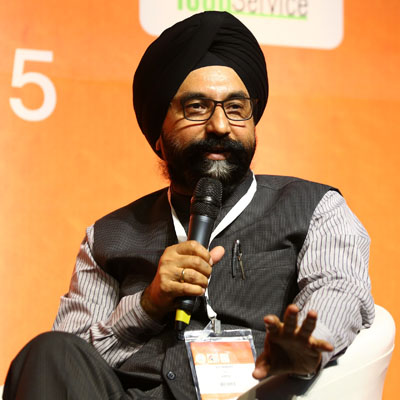
    With football becoming a prime sporting choice for a growing number of Indians, brands have realised the need to step in early in the game. Amul – probably the most ‘Indian’ brand there has ever been- has teamed up with the league for the last four years. The brand, which is famous for its catchy, witty and ironic campaigns with the Amul Girl, has been looking to cash in on the enthusiasm inside the stadiums. Indiantelevision.com caught up with Amul MD RS Sodhi to discuss his iconic brand’s collaboration with the league.

    Excerpts:

    The Hero ISL has become a powerful sporting property that brands want to piggyback on. Not many people thought this would be the case with football in India. What are your thoughts on it?

    The football culture of India has been an active sub-culture in its initial days which has grown over the last two decades significantly among the youngsters. This can be attributed to their exposure to international football events such as EPL, Bundesliga, La Liga, Euro Cup and the World Cup. Also, during this period, Indian football at school and district level leagues have increased, thereby adding to more interest among youngsters.

    Five years back when Hero ISL began, this generation was in between the age of 20 -30 years. It was a moment of awakening among Indians for we were able to see and appreciate this sporting culture in its vibrancy. A new format wherein this generation celebrated international footballers they grew up admiring and appreciating the raw tenacity and skill of Indian football. Many Indian brands saw the potential of the event and its ability to engage with the youth of India both on-ground and on-air through TV and digital.

    How does a brand further tap into the Hero ISL audience, which is young, affluent, informed and passionate?

    Hero ISL as an event has been well received among the youth of India and therefore a new media for brands to engage. However, as Amul, we are very careful to have meaningful engagement with them. For example, as a food brand we focussed on identifying moments where as a brand, we could address the needs of our consumers inside the stadium. We realised that the high levels of enthusiasm inside the stadium can tire our consumers. So we decided to nourish the energetic and health conscious youngsters with our milk, beverages and ice creams. We had our teams present in every match selling our range of beverages and ice cream. This gave the brand a positive image among our consumers as we were able to attend to their needs inside the stadium in every match. In addition, we were also reaching out to the audience across the country with our communication campaigns on TV.

    Grassroots football development appears to have got a boost with the Hero ISL. How can the football administrators build on this?

    The event has triggered conversation among brands, football associations, clubs, schools and parents regarding football in different contexts. This is a positive outlook as a country with a young growing population. Our country needs the youth to be physically active and they should be motivated to plan and pursue a career in sports.

    This has led to setting up of football academies by Pune FC for example and many other clubs and football associations will definitely take up such initiatives. This will help our youth to build a healthy lifestyle and alternate career opportunities where they will be more passionate.

    Do you thing the emergence of Hero ISL is among one of the key reasons behind the improved performances of the Indian national team in the last few years?

    It would not be fair to attribute the success of the Indian national team to Hero ISL alone, for our team has been playing really well. But we can definitely say that their exposure to playing in Hero ISL with international players of repute and experience would have helped them to improve their game plans and strategies. At the same time, there has been an increase among fans of the sport across age groups and genders which are motivational for our team. They follow the team as they travel from championship to championship and stand by them. All of these are positives which I am sure would be helping our team to help stay confident and perform to their best abilities in every game they play.

    CMOs of some of the most reputed brands have expressed their satisfaction over their association with top football leagues in the world (Barclays and the Premier League, Santander and La Liga). How can Indian marketers/brands help fuel a similar integration at scale?

    I believe for any brand to truly see results, they should invest in these events and not look at it purely as an advertising campaign. At Amul, we have been associated with the event for the last 4 years and have supported this initiative. We believe milk is the world’s original energy drink and associating with Hero ISL has helped to strengthen this communication among the youngsters of India. So, for Indian brands, it would be wise if they continue to pursue sporting events with similar mindsets and in the days to come they will see the results.

  • Analytics, tech, automation & digitisation aid Amul quadruple farmers’ income

    MUMBAI: The drive towards digital and cashless payments, which received a huge boost following demonetisation has brought about significant benefits to our farmers in rural Gujarat. Amul has actively helped its farmer-members to open bank accounts and have linked an additional 13 lakh farmers’ bank accounts to our system. Now, milk payments are cashless and directly transferred into their bank accounts.

    Gujarat Cooperative Milk Marketing Federation Ltd (GCMMF) vice-chairman Jethabhai Bharwad explained in detail: “Our digitalization drive has brought in complete transparency in payment to milk producer members. Farmer-members are aware of the exact amount due to them and the rationale behind the same. Payments going directly into their bank accounts also helps inculcate the savings habit in them. The need for an active bank account has brought large number of the Amul family farmer households directly into the formal banking network. Automated Milk Collection Systems installed at village dairy cooperative societies have now been linked through common online software applications. This helps to further enhance transparency among producer members using digital technology.”

    The chairman Jethabhai Patel added: “The drive towards digital and cashless payments, which received a huge boost thanks to Government of India’s demonetization initiative, has brought about significant benefits to our farmers in rural Gujarat. We have actively helped our farmer-members to open bank accounts and have linked an additional 13 lakh farmers’ bank accounts to our system. Now, milk payments are cashless and directly transferred into their bank accounts.”

    GCMMF, which markets the popular Amul brand of milk and dairy products, has successfully quadrupled the income of its dairy farmers in last seven years, demonstrating the efficacy of Amul model in exceeding the national goal of doubling farmer’s income in six years. During the last seven years, Amul’s milk procurement prices to its farmer-members more than doubled from Rs. 24.30 per litre for buffalo milk (Rs. 337 per kg fat) in 2009-10 to Rs. 49 per litre (Rs. 680 per kg fat) in 2016-17. Since the cooperative’s total milk procurement also doubled during this period, from 90.9 lakh litres per day to 176.5 lakh litres per day, this effectively increased the income of its dairy farmers, four-fold in the last seven years.

    Turnover of GCMMF has registered quantum growth of 238% in last seven years, which implies an impressive cumulative average growth rate (CAGR) of 19% during this period. The mantra of rapid expansion had yielded rich dividends with the GCMMF’s sales turnover increasing 3.5 times, from Rs. 8,005 crore in 2009-10 to Rs. 27,043 crore in 2016-17. Results of the apex body of dairy cooperatives in Gujarat were declared on 15 June 2017.

    GCMMF managing director R S Sodhi emphasised that Amul’s success has been driven by its ‘3E’mantra – Rapid expansion in milk procurement, rapid expansion in manufacturing facilities and rapid expansion in marketing & distribution network.

    “This year, we leveraged heavily on our technological capabilities and data analytics to enhance communication with our channel partners and expand our distribution reach”. “Product innovation has always been part of our DNA and has inspired us to launch more than 50 new products in the market during the last three years,” Sodhi added.

  • Amul to invest Rs 250 crore in Sankrail food park in West Bengal

    Amul to invest Rs 250 crore in Sankrail food park in West Bengal

    KOLKATA: Amul-owned Gujarat Co-operative Milk Marketing Federation is planning to set up a Rs 250 crore dairy processing plant at Sankrail in West Bengal.


    Additionally, Amul has planned an investment of Rs 5,000-crore for expansion of its own milk processing capacities in the next two to three years.


    “The new modern plant at Sankrail food park will cost us Rs 250 crore with optimum processing capacity of 15 lakh litres per day,” Amul managing director RS Sodhi said.


    The plant, which will come up on 16 acres of land at the food park, is expected to be operational in the next 15 months.


    Amul will be manufacturing fresh milk products, ice cream and beverages in the plant, Sodhi said.


    “Currently, Amul operates three plants in Kolkata on contractual basis with a total processing capacity of 7,25,000 litres of milk per day,” Sodhi said. “Milk collection for Kolkata and adjoining markets would be increased from local farmers, which accounts for just one-third of its milk requirement,” he added.


    Makers of Amul branded milk and dairy products will establish 10 new processing units in different regions of the country, he said talking about the company’s national plan.


    In tune with global milk price crash this fiscal, the milk prices in the country remained depressed. When being asked about the probable price hike, he said, “We have had our last price hike in May last year. This year prices may rise by around five per cent in tandem with inflation.”

  • Amul to invest Rs 5000-crore in expansion to achieve 2020 revenue target: RS Sodhi

    Amul to invest Rs 5000-crore in expansion to achieve 2020 revenue target: RS Sodhi

    MUMBAI: A household name in India, Amul, will invest Rs 5,000 crore to set up around 10 milk processing plants in the next financial year including two plants in Delhi, three in Uttar Pradesh, one each in Kolkata and Maharashtra and the rest in Gujarat.


    “The endeavour is to achieve its revenue target of Rs 50,000 crore by 2020,” said Amul managing director RS Sodhi.


    Speaking at an interactive session on the third and final day at the India Food Forum 2015, Sodhi, in conversation with Future Retail CEO Sadashiv Nayak, said, “Amul will be able to achieve annual revenues of Rs 20,000 crore this year.”


    While increasing milk productivity and improved breeds and feeding practices in India is a challenge for Amul, Sodhi emphasised on the need to encourage the next generation of the rural farmer to remain in animal husbandry business.


    “It is possible to earn Rs 40,000 per month with 30-40 cows and buffaloes at project cost of Rs 21 lakh including a loan component of Rs 15 lakh,” Sodhi said.


    Unperturbed about the new entrants in the dairy segment from the private sector and MNCs, Sodhi, welcoming the competition, said, “India’s organised sector only constitutes 20 per cent of the Rs 4 lakh crore market size for dairy products in the country and there is space and scope for everyone.”


    “Our philosophy for the past 60 years have been to ensure remuneration prices for our 3.5 million members and value for money for the consumer, using the best ingredient at a fair price,” Sodhi said.


    Stating that butter making was not a rocket technology and every housewife knows how to make butter, Sodhi said, that 100 grams of Amul butter was still be cheaper than 100 grams of premium soap, which was possible only because of Amul’s philosophy of keeping in mind the farmer and consumer.


    “Unlike industry practices, where you buy raw material cheaper and realised better in sales, Amul ensures that raw material is at the best price and selling price remains lower compared to peers,” he said.


    “Hence, we cannot spend more than one per cent of our revenue on advertising while other food companies spend 8-15 per cent annually,” Sodhi said, indicating that its advertising expenditure last year was 0.8 per cent.


    Sharing the secret of Amul remaining a youthful brand, Sodhi said, “Most of the top members of the management are at their first job working for over four decades and hence have neither changed their campaign nor their agency. Hence, continuity and consistency in communication has kept Amul young with the butter girl.”

  • Taste of India available at Sony’s ‘Cafe Rio’

    Taste of India available at Sony’s ‘Cafe Rio’

    MUMBAI: It was almost 65 years ago that a revolution started from a small village in Gujarat, and since then Amul has been a part and parcel of our lives, everyday.


    The company, which saw Rs 18,150 crore turnover last year, has become a part of our lives like its products. From just sarcastic hoardings on topical issues, Amul has now ventured into the television screens through its limited advertisements, but what has caught more attention is its association with various sporting events.


    The year 2011 saw the Anand-based Gujarat Cooperative Milk Marketing Federation (GCMMF) sponsoring the cricket team of Netherlands in the ICC Cricket World Cup and Switzerland-headquartered Sauber F1 team at the inaugural Indian Grand Prix. It took a step further when it decided to sponsor the Indian contingent at the London 2012 Olympic Games.


    And now with the football fever gripping the entire world, the ‘Taste of India’ can be seen on our screens every day before the game begins. Amul is the main sponsors of the shows – Cafe Rio and Football Extraa – on Sony Six.


    “Our sponsorship of Cafe Rio and Football Extraa was a good option as it gave an opportunity to cover the entire event very comprehensively right from pre-match discussion to post-match wrap up during the breakfast show next day,” says the company’s MD RS Sodhi.


    When asked why this sudden interest in sports, he says, “Milk is nature’s original energy drink and plays a pivotal role in building the physical and mental strength of the sportsmen. Nutritious dairy diet comprising milk, cheese, yogurt etc. is an important part in the diets of athletes around the world. India is the largest producer of milk in the world and Amul is not only India’s but Asia’s largest milk brand.  This association with sports and activities around it will help us in engaging with the youth so that they can enjoy a healthy life and strive to become more competitive in their endeavours.”


    It also believes that sporting events are now getting increasingly popular amongst all age groups, both men and women and hence, live sporting events provide a good opportunity for the brand. So much so, that it has become an integral part of its media plans. “We do not treat this as an additional spend,” points out Sodhi.


    The cherry-picking begins well in advance since the schedule of most of the sporting events is available much in advance. So far, it has associated itself with events like F1, Olympics, IPL, EPL and now the 2014 FIFA World Cup. Many more such associations with other events is on cards.


    The brand’s marketing strategy has changed as well. The girl in the polka-dot frock is inseparable from the brand’s identity, but through its recently launched digital campaign ‘Har ghar Amul ghar’, because it wanted a longer format that went beyond 40 seconds followed by a humorous campaign featuring a person with a milk moustache who ‘Eats Milk with Every Meal’, it has (finally) moved on with time.


    The audience plays the key role when it comes to media selection. “If a large number of our youth are on social media, we cannot ignore it. We have a very high traction on social media – be it Facebook or Twitter. Our topicals are first released on social media, then on hoardings, TV and print. The topicals are published in 35 newspapers every Wednesday with a print run of over 35 million copies,” informs Sodhi.


    At the recently concluded World Dairy Innovation Awards 2014 during the eight Global Dairy Congress, Amul bagged the ‘Best Marketing Campaign’ award for the ‘Eat Milk with Every Meal’ campaign. The full-page format across leading dailies like the Times of India, Hindustan Times, The Hindu, The Telegraph, Deccan Chronicle etc. highlighted the importance of milk and dairy products in every one’s diet. “We are happy that our efforts have got recognised at the global level,” says Sodhi humbly.


    FY14 was extremely good for Amul and with its expansion plans the brand is optimistic about 2015 as well. “Amul has been growing at a CAGR of 22 per cent since last five years. Our last year’s growth was 32 per cent. And we plan to grow by 20-25 per cent this year too,” concludes Sodhi.

  • Goafest’13: How to make client-agency relationships work

    VARCA,GOA: When Arvind Sharma was asked to kick off the Advertising Conclave at Goafest 2012, he said one line, which turned out to be more prophetic than he would have imagined. He started his speech saying “Some of the most meaningful conversations one has, are the ones he avoids the most.” He was referring to this year’s theme at the Advertising Conclave which was ‘Time to Listen’.

    The first day of the annual ad fest in Goa on 4 April witnessed advertisers across categories address an audience filled with the cr?me de la cr?me of the advertising world. They frankly shared their perceptions of the shortcoming of ad and media agencies and where the latter were not living up to their expectations.

    HUL MD Nitin Paranjpe delivered an insightful narration where he pointed out what in his experience are the kinks in the client and agency relationship. He started off admitting that it is not just the agency that should be held responsible; the entire marketing environment that needs to be looked at hard to find some answers.

    According to him, the biggest challenge today is the abundance of choice. There is an abundance of options for each product in the market and brands are vying for the TG’s attention in a heated environment. On the other hand, media itself is facing the tyranny of abundant choice where the audience is becoming increasingly fragmented and engaging it is very tough. “What we have is scenario where choice is abundant, but there is very little to choose between each,” Paranjpe explained.

    This has led to an urgent need for brands to differentiate themselves which in turn possibly leads to desperate measures. Tata Sky MD and CEO Harit Nagpal‘s view in this regard was that “in order to be different, it is necessary to actually be different rather than just standing different.” He supported this this statement with a picture of five zebras where the one in the middle had its rear facing the camera.

    Another point that was unanimously pointed out by all the advertisers was that the 30 second television commercial is becoming redundant and agencies need to strategise innovatively to factor in this change. The rise of social media also needs to be accounted for when planning in today’s environment.Amul MD RS Sodhi spoke from his experience with agencies – DaCunha Communications (outdoor), Draftfcb Ulka (creative) and Lodestar (media). He expressed that for any marketing strategy to work, there needs to be a long-standing relationship between the agency and the client. This builds the basis for trust and understanding that is required in any marketing relationship. It also offers consistency, which is paramount to maintaining a brand’s identity among the TG.

    “According to me, what agencies need to remember today, is that the goal of advertising is to sell the product and not the creator of the campaign. What the product stands for, what the audiences relate to with the product and the brand should be the first consideration,” he elucidated. “Accolades for the creator should not be the reason behind creating any campaign.”

    He also added that the whole concept of advertising awards should either be discontinued or be revisited and reworked upon. “These awards look at and honour work that is created by the industry and judge by the industry. What is the point? Either discontinue them or ask the clients and the audience to rate the ads,” he suggested. His suggestion was met with a thunderous applause fom the audience.

    SBI Capital Markets MD & CEO Arundhati Bhattacharya spoke about the importance of research. “It is important to understand both the brand personality and the TG profile in order to come up with a relevant campaign,” she said. She also feels that advertising should be done in order to further the business and it should be kept simple and short. It is the consumer whose minsdset has to be appealed to,she further said.

    Arunabh Das Gupta of BCCL feels that the death of planning as a practice in the industry has led to a lot of complications. Today one sees a gap in the marketing research done by agencies and this leads to a shortfall of breakthrough creatives. He also offered that creative agencies need to look at talent retention seriously since their employess are the touch points that the clients deal with and form the basis of building a relationship between the two.

    Tata Sky‘s Nagpal begged to differ from the rest on a couple of points. While most of the speakers felt that the fragmentation of the advertising agency into media, creative and account planning has led to a decrease in efficiency of client servicing, Nagpal feels that hiring specialised personnel for specialized work is the order of the day and if need be, this talent should be imported.

    He added that there should be clarity regarding wha the agency and the client expect from each other in order to have an efficient and fulfiiling working rapport. Suresh Bandi from Panasonic pointed out that what matters to a clients is the value that an agency gives them for a given price. “The way I see it, when an agency increases its fees, the value the agency brings to me decreases,” he said.

    Nagpal on the contrary feels that clients should not look at cost-cutting every time. Specialized work comes at a certain cost and while agencies in a bid to compete and win clients may lower their rates, it may lead to a lowering of quality. It is the basic princliple of “Itne mein sirf itna hi milega.”

    Another grievance recorded by each advertiser was that while the pitch process is spearheaded by a known senior agency executive/professional, once the pitch is won, the clients end up dealing with newbies who are not trained enough to handle the account or have no clue of the pitch in the first place. This creates a disjunct and gap in the dynamics and is often the reason why most client-agency relationships fail.

    In conclusion, the panel agreed that while agencies and clients needs to introsopect and make some changes, the key takeaway was that the relationship between the agency and the client is what decides the effecniency of a campaign. An integrated team will function much better than a fragemented one and a team that knows each other is the one that will take the brand all the way.

  • Amul launches new version of its signature song with Big FM

    Amul launches new version of its signature song with Big FM

    MUMBAI: Amul has launched a three-minute unedited version of its signature folk song titled ‘Mero gaam kathapare‘.

    Through a month-long campaign, the song will be marketed across multi-media vehicles. It will premiere on Reliance Broadcast Network‘s media network across radio, television, out-of-home (OOH) and digital.

    Celebrating women empowerment and making the video more relevant to the day and age, the new version has music and visuals that showcase ‘Bharat catching up with India like never before‘. The new version is sung by Sunidhi Chauhan.

    Gujarat Co-operative Milk Marketing Federation MD RS Sodhi said, “We are extremely happy to be part of this cooperative dairy development movement. It has always been our endeavor to create a positive impact and help enable rural women farmers to become more independent. India‘s milk production has increased from 25 Million MT in 1975 to 125 Million MT today. The video and music is a true depiction of where we were and where we have reached. We are happy to be telling this story of the bonding between rural milk producer and urban consumer to the nation through this campaign.”

    Originally inspired by the Shyam Benegal‘s Hindi film named Manthan, the song was conceptualised and first created in 1976 by the Gujarat Co-operative Milk Marketing Federation to celebrate the legendary story of the success of its co-operative movement in the lives of women farmers.