Tag: RS Sharma

  • The challenges & opportunities before incoming TRAI chairman PD Vaghela

    The challenges & opportunities before incoming TRAI chairman PD Vaghela

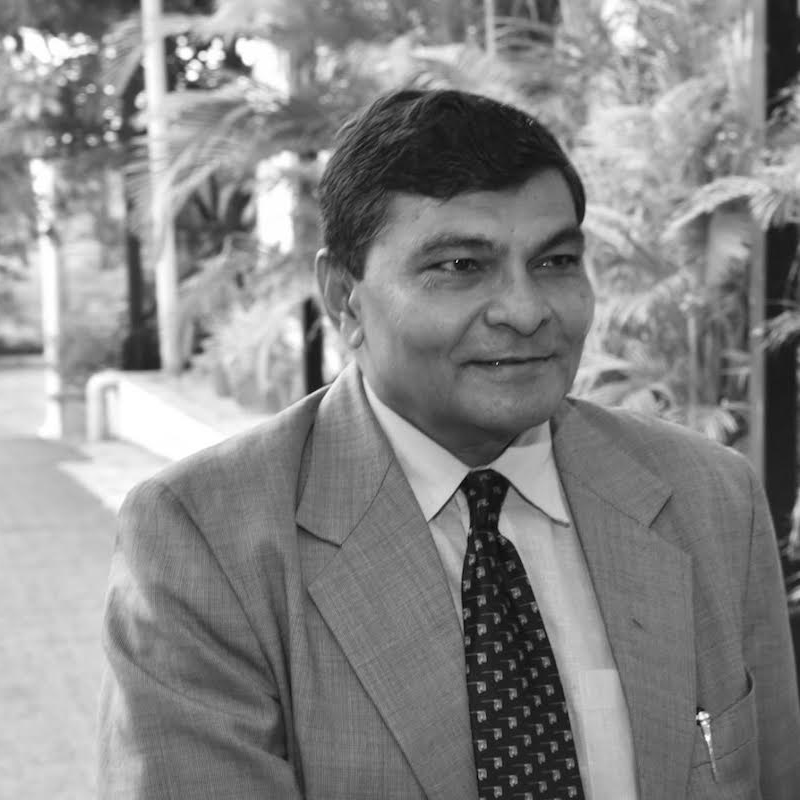
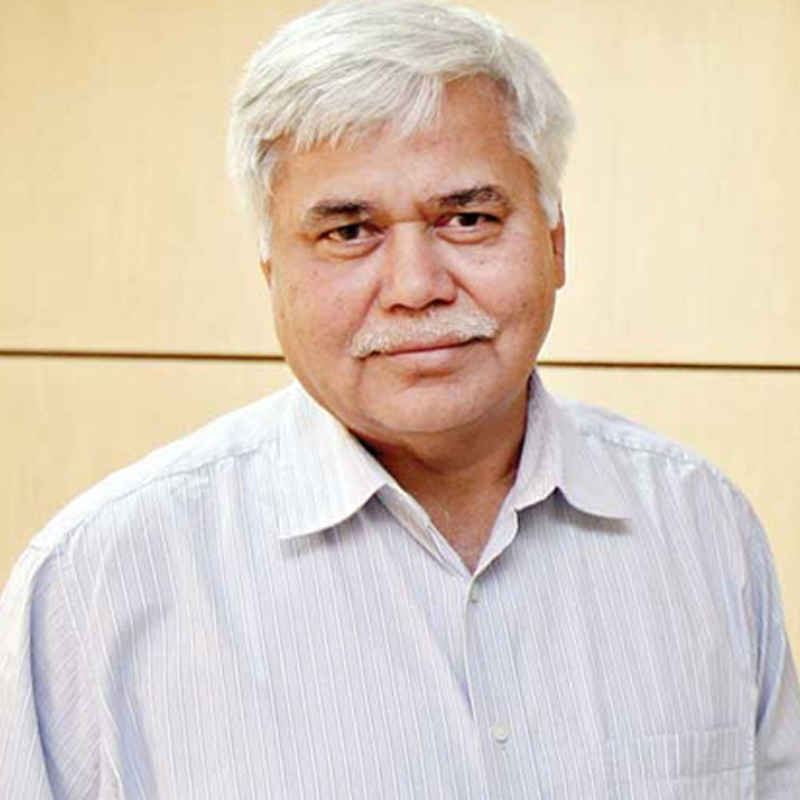
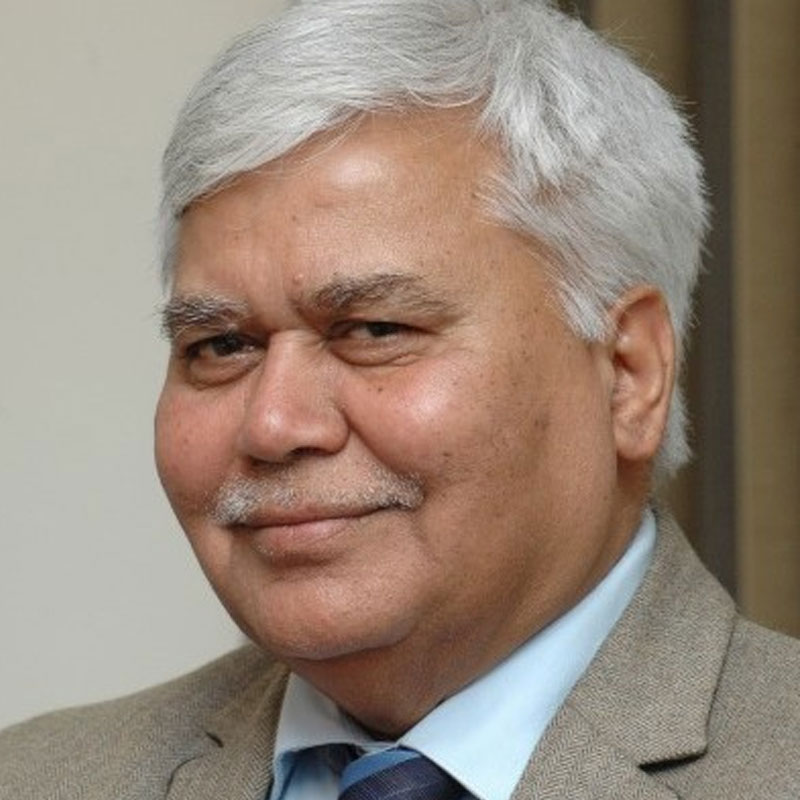
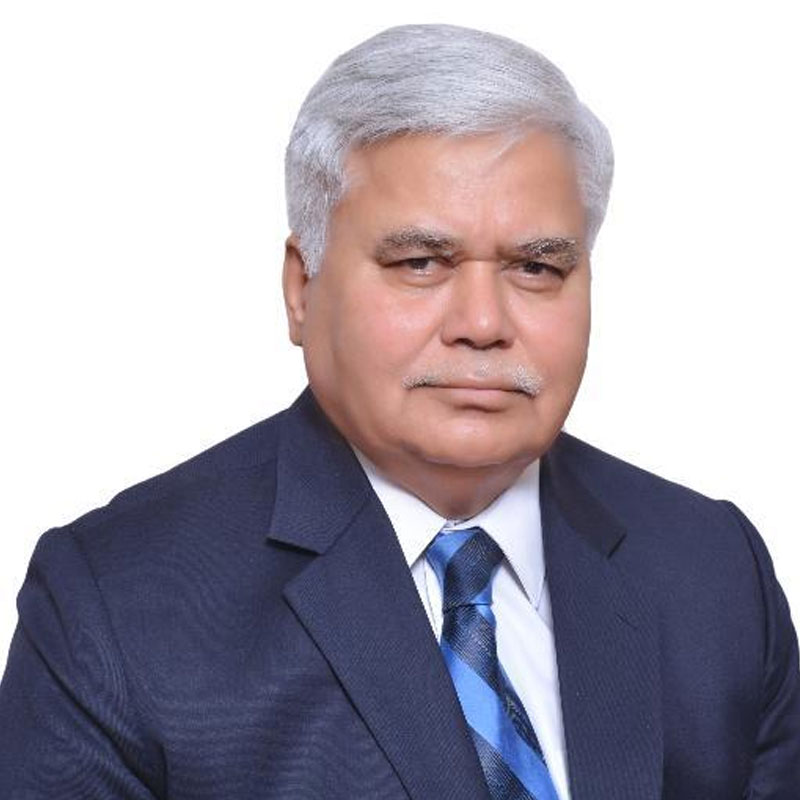
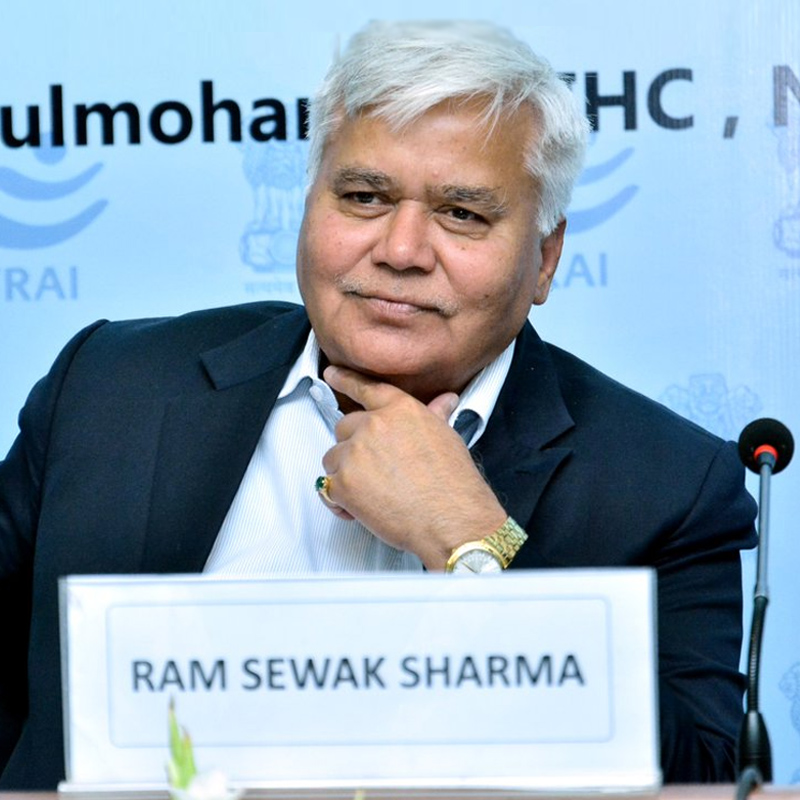
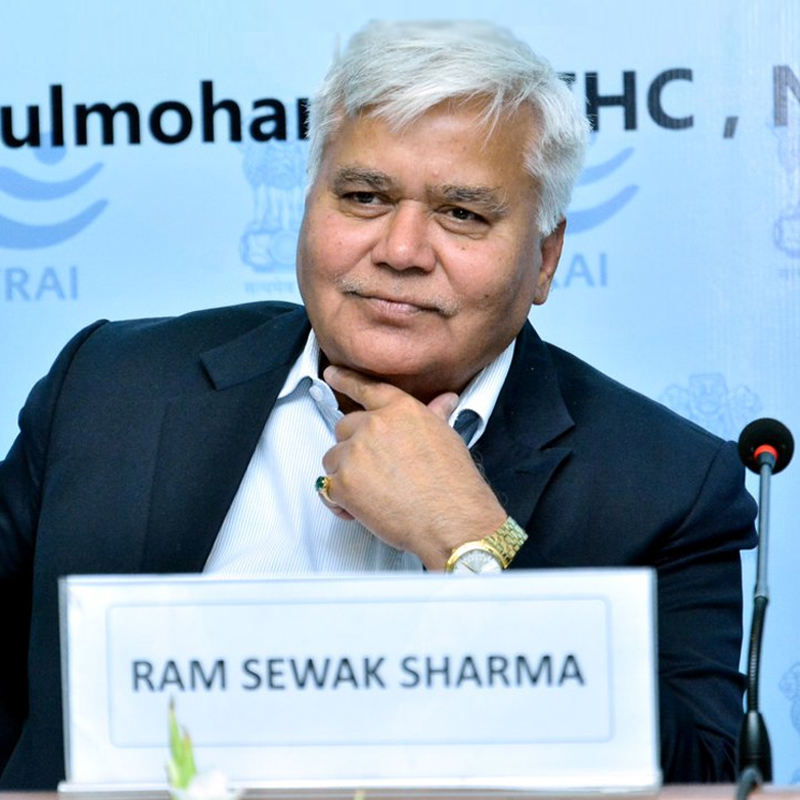
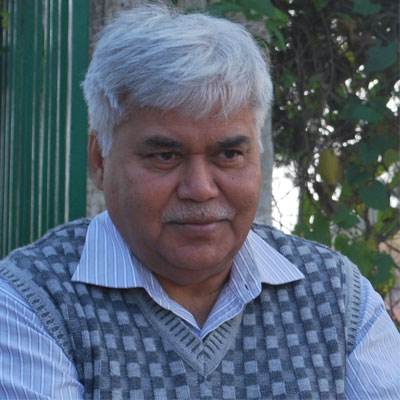
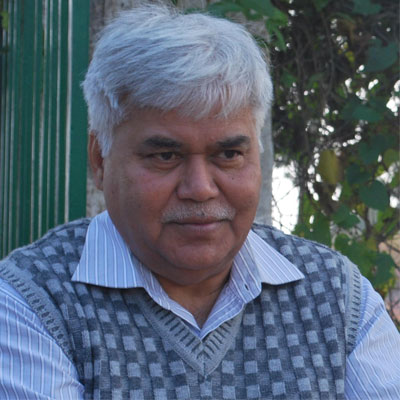
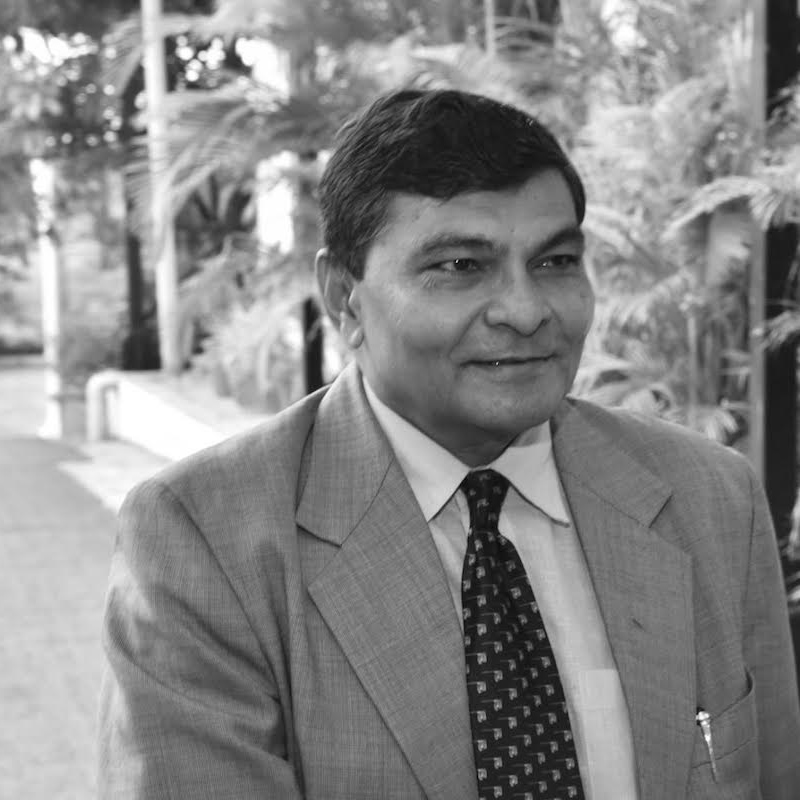
    KOLKATA: As the extended five-year term of Ram Sewak Sharma as chairman of the Telecom Regulatory Authority of India (TRAI) concludes today (30 September), industry will be looking closely at his replacement, PD Vaghela. The Gujarat cadre 1986 batch IAS officer is the outgoing  pharma department secretary who celebrated his sixtieth birthday on 22 September. Prior to that, he was the chief commissioner of commercial tax in Gujarat. He is also believed to have played an important role in the roll out of the goods and service tax in 2017. Also

    Vaghela is taking the chair at what can be termed a very crucial time for both the telecom and broadcasting sectors. While his predecessor has been widely criticised by stakeholders for over-regulating, Vaghela will have to bring more balance if he wants to narrow down the gap and sense of distrust between industry and the regulator.

    A task which could be challenging as he apparently has not had much to do with the broadcasting sector during his 34 years of being a civil servant. A B.Com graduate from Gujarat, he has masters degree from an institute in the The Hague, a post-graduation in business administration and finally a doctorate in sociology.

    Vaghela has held senior positions in the Kandla Port Trust, with Gujarat tourism, with the industries and mines department, the rural development department, as municipal commissioner (Bhavnagar), and in the home ministry.

    Read more news on TRAI

    One school of thought in the industry is that given his background and the circumstances during his appointment, Vaghela will mostly follow Sharma’s path during his tenure.

    At this moment, broadcasters are indulged in legal battles with the industry watchdog on many fronts including the ad cap and the amended new tariff order.

    A senior executive at one of the big four broadcasters says while the court’s verdict will have to be implemented by both broadcasters and the TRAI, Vaghela’s first challenge will be the direction TRAI will take once the litigation between industry and the regulator is adjudicated upon.  According to him, the new chairman has to also look after the viability of small cable operators who are worried about their future.

    The executive also adds that everyone is now perceiving broadband, not broadcasting, as the future of entertainment. Hence, he adds that the new chairperson can play an important role in carefully steering the future of the broadcasting industry.

    While there is a high chance that a number of consumers will shift to IP-based streaming content via OTT services, Vaghela will have to tread carefully, balancing digitisation and safeguarding traditional broadcasters’ interests.

     “The RS Sharma regime has failed broadcasters. He served an important role in UIDAI implementation. Hence, we had huge expectations from him but we have been disappointed at the end,” a senior industry source states. 

     Although the executive is not very optimistic about the new chairman being able to dilute this sentiment, he thinks the industry should at least observe him for the next few months, before pronouncing any judgements.

    However, another industry veteran claims Vaghela is quite likely going to continue to carry on in the same vein as Sharma. Like his peers in the industry, he acknowledges that there have been frequent changes in regulation which have been challenging, but he also credits Sharma for bringing in some semblance of order in to the TV distribution ecosystem.

    Read more news on NTO 2.0

    “There was so much of scrapping between MSOs, LCOs and broadcasters,” he says. “By pushing cable TV digitisation and mandating some sort of price standardisation through regulation, he forced the industry’s hand to try and work together, which they are doing currently. Yes, there is some irritation from time to time, but the value chain is working closer together, keeping rules modernisation, upgradation and customer service in mind.”

    The veteran also adds that Sharma played a large role in pushing ahead the Narendra Modi-led government’s digitisation agenda, by allowing new pricing models as far as mobility is concerned. “The Jio phenomenon of cheap data, free calls, has been a game changer for the spread of the internet where incumbents such as Airtel and Vodafone and Idea were working with legacy business and consumer models.”

    The CEO of a TV network points out that even though the court cases against NTO 2.0 continue in the courts, Vaghela will very much have to “balance value for consumers with the interest of broadcasters along with operators. He will also possibly play a significant role in OTT legislation as the government is gearing up its efforts to regulate this rapidly growing vertical.”

    “Along with working on major rollouts like 5G implementation, enhancing fibre-to-home broadband connectivity across the country on the telecom side, Vaghela can choose to leave his mark as far as cable TV amendments, a national broadcaster policy, DTH licensing are concerned. Additionally, he could things take a step further and start looking at drawing up a national video policy encompassing TV, streaming, and possibly mobile delivery of video,” says the CEO.

    On the telecom side, Vaghela has contentious issues like super high 5G pricing (at Rs 492 crore per MHz in the 3500 Mhz band) which could deter the ailing telecom service providers(TSPs)  from making a bid. The adjusted gross revenue ruling has gone against at least two of them who have been reeling courtesy the price war that Jio has waged for the past few years. The consultation paper on whether a floor price needs to be put in place for telecom services will also take up his attention. Then, he will have to decide on interconnect usage charges that TSPs charge each other for calls made by customers. They are due to be scrapped by early next year.

    Of course, he will have a bunch of old hands who have been at the regulator for a few years. There’s the TRAI secretary Sunil Gupta, and numerous other advisers who provided back end support for almost every decisive direction, recommendation, and regulation the watchdog has given over the years. How he takes their advice and inputs and formulate these into law for broadcasting and telecom will decide whether he will be blessed or vilified by the industry.

    (This piece has been penned following conversations with real executives from the business of television. Most of them requested that their identity be kept secret while using their quotes and views in this piece) 

  • PD Vagehla to replace RS Sharma as TRAI chairperson

    PD Vagehla to replace RS Sharma as TRAI chairperson

    MUMBAI: The speculation about who is going to head the Telecom Regulatory Authority of India has finally ended.

    When chairman Ram Sewak Sharma’s term ends on the night of 30 September, into his shoes will step PD Vaghela a 1986-batch Gujarat cadre IAS officer.

    His appointment today was approved by the appointments committee of the cabinet. Vaghela is currently the secretary of the department of pharmaceuticals. And his appointment to the TRAI is for three years or until he attains the age of 65. Prior to the pharmaceutical posting, Vaghela was the commissioner of commercial taxes and he is believed to have played an important role in the rolling out of the goods and entertainment tax in 2017. 

    Vaghela’s  predecessor RS Sharma held his position for five years. The normal term is three years, and Sharma’s tenure ended in August 2018, but he was given a two-year extension which is a rarity. During his stint, Sharma saw intense compeition in the telecom sector, with Jio playing price warrior, and emerging as the largest mobile operator in the country, leaving Airtel and Vodafone-Idea far behind.  

    Vaghela’s immediate challenge as far as the broadcast sector is concerned is dealing with NTO 2.0 which the industry has been opposing rather vehemently saying it is impacting them  extremely negatively.

  • TRAI backs NTO 2.0, says amendment to create level playing field

    TRAI backs NTO 2.0, says amendment to create level playing field

    MUMBAI: The Telecom Regulatory and Authority of India (TRAI) has backed the amendments made in the New Tariff Order (NTO) claiming it to be consumer-friendly. Issuing a statement, TRAI said that it will create a level playing field for all stakeholders in the broadcasting industry.

    The regulator believes that transparent mechanism needs to be adopted to encourage the market discovery of channel price, but any attempt to scuttle consumer choice through non-transparent pricing practices means need to be discouraged.

    Hence, the authority quoted that the intended benefit for consumers to enable the freedom of choice could not be achieved completely due to misuse of available flexibility by a group of service providers.

    Meanwhile, it also clarified that the concern of all the broadcasters regarding placement fee and misuse by few  distribution platform operators (DPO) manipulating Electronic Program Guide (EPG) has also been addressed.

    The release added that post the implementation of NTO, some broadcasters had enhanced their channel prices drastically. This price increase is anti-consumer and forces regulatory interventions. Adding further it said, “The broadcasters, however, continue to have full flexibility to price their channel as Maximum Retail Price (MRP) of any channel remains in forbearance.”

    It further said, “The amendments through NTO 2.0 have left the basic structure of the regulatory framework unchanged with very minor modifications. And it’s targeted to address teething problems relating to smooth implementation.”

    The new amendments provide complete freedom to broadcasters/ DPOs to price their services while ensuring that consumers get the freedom to choose the TV channels, the regulator explained.

    As the amendments provide appropriate time to stakeholders for implementation, consumers will be able to benefit as per the amended provisions with effect from 1 March 2020.

    TRAI also said that the new amendments will usher in better offerings, reduced NCF, more flexible tariff schemes and more choices for consumers.

    On 1 January 2020, the regulator had amended the NTO which created a panic-like situation within the broadcaster and service provider community to opt for the legal option against the new TRAI order.

    TRAI had come up with a slew of measures in the recent amended that it claims are customer-focused. It has asked the broadcasters to come up with the new price list of channels by 15 January 2020.

  • TRAI’s new tariff order has made ecosystem transparent: RS Sharma

    TRAI’s new tariff order has made ecosystem transparent: RS Sharma

    MUMBAI: The new tariff order has been rolled out aiming transparency in the cable and broadcasting sector of India. Telecom Regulatory Authority of India (TRAI) chairman RS Sharma reiterated that the new regulatory framework has brought transparency in the ecosystem along with non-discrimination and fair play. Sharma also asserted that it has reduced the bills of the average TV watcher.

    "The implementation of the new broadcast tariff regime is working out very well. The monthly bills of thousands of consumers have also been reduced. The consumer's bill is a function of how much he watches, if he or she watches hundreds of channels obviously the bills will go up. If someone watches 25 channels, the bill will come down to one-third," Sharma told as quoted by IANS.

    "The objective of the regulations is to essentially bring out a regime of transparency and allow the customers to choose channels which they want to watch, and then allow the market forces which were not in play earlier," he added.

    Earlier the market was only focused on distributors and broadcasters but consumers were not actively participating.

    He also added that the implementation of the new tariff regime has removed the difference between the small operator and a large operator, as they both get the channels at the same rate from the broadcasters. Moreover, he asserted that the basic objective of the new regime to create a buffet of channels where everyone is charged the same rather than reducing or increasing the bills.

    Sharma’s comment comes at a time when several reports, as well as surveys, have indicated that there has been a hike in the monthly bill under the new price regime. Due to the change in pricing, many experts predicted that consumers would shift to OTT platforms eventually. To decrease the churn rate, some of the DTH players have removed network capacity fee for long duration packs.

    Earlier, the regulatory body in February extended the deadline to pick new channels under the new regime till 31 March as well as gave a directive of Best Fit Plans. The subscribers that don’t opt for new channels would be moved to ‘Best Fit Plans’, which would be developed as per usage pattern, language and channel popularity, the sector regulator said in its statement.

  • TRAI chairman RS Sharma says STB portability possible by yearend

    TRAI chairman RS Sharma says STB portability possible by yearend

    MUMBAI: Telecom Regulatory Authority of India (TRAI) chairman RS Sharma has said that by the end of the year, set top box interoperability’s is likely to become functional.

    Speaking to news agency PTI, Sharma said, "Since last two years we have been trying to make STBs interoperable. Large part of problem has been resolved. There are some business challenges (which) remain… we are looking at this to happen by end of this year."

    He added that interoperability in a product should not come as an "after thought" but should be in place at the product planning stage itself. “Open systems are going to be the future. The entire back-end of Aadhaar has been developed on open source software except biometric de-duplication system," he said.

    Those who want to change their provider currently have to buy a new STB but soon they will only have to change the sim card, like mobile phones, for which the government is working on standard STB features.

    He released a study on open ecosystem for devices in India, prepared by the Indian Cellular and Electronics Association (ICEA) and consultant firm KPMG, which showed that 89 per cent of mobile phones in the country work on open source operating systems.

    Sharma further cited interoperability as one of the key factors behind the success of the Indian mobile phone industry where no subscriber is required to buy a new phone if he wants to change his service provider.

    The report found that Open OS mobile operating systems have expanded the smartphone market in India by reducing barriers to entry. The regulator has been working for quite some time, to introduce a similar system in the broadcasting sector. This will provider STB ownership to the consumer.

  • Broadcasters split over TRAI’s directive to BARC on TV viewership data

    Broadcasters split over TRAI’s directive to BARC on TV viewership data

    MUMBAI: The latest episode in the ongoing tariff order implementation saga saw industry watchdog and regulator, the Telecom Regulatory Authority of India (TRAI), direct TV ratings monitoring body – Broadcast Audience Research Council (BARC) – to publish ratings and TV viewership data from the week ending 8 February on its website with immediate effect. BARC, which was set up as an industry-funded body, citing the implementation of the new framework, has been releasing the data only to its subscribers. Earlier, the audience measurement firm published the weekly data on its website every Thursday.

    Indiantelevision.com spoke to several broadcasters, none of who wanted to be identified, about the latest development to gain perspective.

    “ISA has already advised that you should not use this data for planning. If there is a transition happening it will reflect in the data. Advertisers need to figure out how they want to maximise their investment in the market place. In my point of view, it (weekly data) should be used as a broad indicator. I’m in the favour of it being published,” the CEO of a news network said.

    “This is the transition period and they (BARC) are not publishing on the site but data is available between all the stakeholders, agencies, clients and broadcaster. In my opinion, the people who are not paying for the data should not get the data,” said another CEO of a news network.

    Recently, TRAI extended the deadline for consumers to select television channels under its new tariff regime till 31 March. Subscribers that don’t opt for new channels would be moved to ‘Best Fit Plans’, which would be developed as per usage pattern, language and channel popularity, the sector regulator said in its statement.

    “There are two ways to look at it—if the ratings are being published given the level of disruption, advertisers and marketers would want to know what is going on at the ground level. Implementation takes time and some markets may have done more implementation than other markets. So, if the data is viewed in that light then it is fine but if it’s not then it starts becoming a bit of an issue because people will plan based out of an erratic pattern and obviously no one wants that,” argued a business head of a major network.

    The Indian Society of Advertisers' (ISA) executive council had advised its members to not use the BARC data for media buying, planning and evaluation perspective during the transition period, which it feels will stretch up to six weeks.

    “If people view the interim data correctly and look at it and understand what it is over a period of time, then it is fine. But if they make decisions by viewing one week or two week data, then that’s when mistakes will be made. This is why there were two thoughts whether to publish the data or not. But on the other hand, it is good because people will see the progress of whether a channel is up or down. I think people should use this and make plans for the medium to long term,” he further added.

    The sector regulator had asked BARC to furnish compliance by 25 February 2019, "failing which, appropriate action would be initiated" under relevant sections of the TRAI Act.

    “According to me, BARC should publish the data. There’s no logic for them to not publish the viewership data. The only thing here is that consumers may be misguided because of the fluctuating viewership ratings of the channels,” opined the promoter of a regional network.

    According to TRAI, BARC has ignored its previous directives of publishing ratings and viewership data for television channels.

    Several industry watchers told Indiantelevision.com that it was in fact the broadcasters that weren’t keen on weekly data being published on the BARC website.

    “Yes, nobody was in favour of the data being published initially. Now that the system has somewhat stabilised, we are better equipped to tackle potential issues. TRAI’s directive is on expected lines,” said a senior executive of a major broadcast network.

    TRAI held a meeting on Friday with distribution platform operators (DPOs) where it was informed that almost all cable consumers have either made their channel preferences or moved to ‘best fit plan’ under the new tariff regime.

    The meeting was attended by multi-system operators (MSO) and all major DTH players to review the progress of migration of TV viewers under the new framework.

    "According to inputs received by the regulator from players, in the case of DTH services, about 43 per cent customers have made their channel preferences known. When combined with statistics for ‘best fit plan’, this number rises to 57 per cent," stated TRAI secretary SK Gupta.

  • TRAI says 6.5 cr cable, 2.5 cr DTH homes under new tariff regime

    TRAI says 6.5 cr cable, 2.5 cr DTH homes under new tariff regime

    MUMBAI: Telecom Regulatory Authority Of India (TRAI) has stated that nine crore of the 17 crore television homes in India have migrated to the new tariff regime. TRAI chief RS Sharma, who has been monitoring the transition closely, said the nine crore figure included 6.5 crore cable TV homes and 2.5 crore DTH homes.

    "The speed [of onboarding] has increased as per our data and we expect the rest of the people to also register their choice of channels soon," he told news agency Press Trust of India.

    With DTH operating on a prepaid model, Sharma pointed out that consumers with long and short duration packs will soon opt for their new channel preferences.

    "We are guiding and helping the operators wherever required and are calling regular meetings to clarify matters," Sharma noted.

    The regulator intends to ramp up its consumer outreach and awareness programmes to further increase the speed of the transition.

    "TRAI will take up a massive campaign on consumer awareness, through social media, print, advertisements, jingles and other programs," he said.

    Last week, TRAI had asked distribution platform operators (DPOs) to respond on special schemes for TV households with multiple connections.

    Reiterating its stand, the sector regulator had said that DPOs should permit individual set top boxes (STBs), even within the same home, to have separate choice of channels, should the consumer wish so.

    As per the new norms, DPOs can provide discounts, and even forgo the network capacity fee (NCF) of Rs 130 for subsequent connections in the same household, provided these discounts are offered in a uniform manner in a region and clearly stated on the website.

    According to Sharma, three operators have already reverted on the special schemes and plans for TV households with multiple connections. TRAI, however, is unlikely intervene into the matter for now.

    The new framework that came into effect from 1 February has been widely debated over in the cable and broadcast circles.

    Last week, the executive council of the Indian Society of Advertisers (ISA) advised its members against using BARC India viewership date for media planning, buying and evaluation perspective during the transition period, which it believes could last up to six weeks.

    While TRAI has left no stone unturned to ensure a smooth and seamless migration, it continues to battle several legal cases in various courts across India.

  • Tata Sky vs TRAI: Delhi High Court adjourns case to 13 February

    Tata Sky vs TRAI: Delhi High Court adjourns case to 13 February

    MUMBAI: The Delhi High Court on Friday adjourned Tata Sky’s ongoing legal battle, in which Discovery,  Bharti Telemedia-owned Airtel Digital TV and Sun Direct are a part, with the Telecom Regulatory Authority of India(TRAI) and its new tariff regime to 13 February.

    Earlier this week, the regulator had served Airtel a show-cause notice after several of its subscribers complained about a DTH blackout. Airtel Digital TV was handed a three-day period to respond to the notice.

    TRAI chairman RS Sharma also addressed a press conference in the national capital, rubbishing a Crisil report that claimed cable and DTH bills were bound to increase after the implementation of the tariff order.

    On Thursday, Indian Society of Advertisers' (ISA) executive council advised its members to not use the BARC data for media buying, planning and evaluation perspective during the transition periond, which it feels will stretch up to six weeks.

    On 4 February, after senior lawyer Kapil Sibal, representing Tata Sky, concluded his arguments including legal submissions, Discovery India Communication’s counsel Gopal Jain laid the foundation for his arguments.

    The broadcaster is likely to conclude its arguments during the next hearing of the case.

    The regulator informed the court that the new tariff order has already been implemented from 1 February.

    Earlier the TRAI had offered an extension till 31 January to the distribution platform operators (DPOs) for implementation.

    On 24 January, the Harit Nagpal-led company finally unveiled the new pricing of channels and packs after it was served a show-cause notice by the TRAI.

    TRAI's show-cause notice said, "Tata Sky has failed to provide options to its 17.7 million subscribers in compliance with the new framework to exercise their choices for TV channels. Tata Sky has put its subscribers in a situation of great difficulty despite no fault of theirs by not complying with the provisions of the new regulations and the tariff order.”

    Despite the delay in announcing channel prices, Tata Sky MD and CEO Nagpal is confident that his team can complete the tricky task of implementing the new norms within a relatively short span of time.

    “Tata Sky has always been compliant to regulatory requirements. We have gone live with our modes of communication across the Tata Sky website, Tata Sky mobile app and also equipped the dealers that subscribers can reach out to. We were confident that we would be able to complete the task in 1 week’s time. Hence we used this time to a seamless and smooth transition for all our subscribers. We have ensured that choosing channels and packs is as easy as 1, 2, 3 for any subscriber,” the veteran executive said.

    On 29 January, Calcutta High Court stayed the cable switchover till 18 February. The court’s directive was a result of 80 cable operators from the city filing a petition against the TRAI mandate. However, the high court later vacated the stay.

    The petitioners’ lawyer Debabrata Saha Roy argued that the revenue-sharing model under the new regime will significantly reduce the cable operators’ share to just nine per cent. With 80% will go into the broadcasters’ kitty, MSOs stand to get just 11 per cent, thus making it an unsustainable business proposition for operators.

    In 2017, Bharti Telemedia, Tata Sky and Discovery Communication India had filed petitions against TRAI, challenging its tariff order and the interconnect regulations.

    Unlike the position adopted by Star India wherein it questioned the regulatory powers of TRAI, the matter in the Delhi HC questions the regulator’s power to wipe out deals that operators enter into to fix commissions and rates for customers.

  • TRAI to DTH operators: Honour commitment on long-duration packs

    TRAI to DTH operators: Honour commitment on long-duration packs

    MUMBAI: Telecom Regulatory Authority of India (TRAI) on Wednesday asked DTH operators to honour pre-paid commitment on ongoing long-duration packs of consumers (if they want). TRAI chairman RS Sharma also reiterated that there would be no change in the February 1 deadline for consumer migration to its new tariff regime.

    According to a report by news agency PTI, Sharma statted that if a DTH subscriber with a long duration pack wants to choose new channels mid-way, then the balance amount should be adjusted by operator. He also expressed his confidence with regards to a smooth switchover without any inconvenience to viewers on the concerned day.

    The new regulatory framework by TRAI for broadcasting sector is set to overhaul the entire ecosystem. For the first time ever, consumers will be able to choose channels or packages for pay TV on their own. While the new regime puts power in the hands of consumers, many stakeholders remain sceptics about its impact.

    Moreover, the TRAI continues to face legal hurdles. While the verdict of a petition made by Tata Sky challenging the order is still pending in the Delhi High Court, Calcutta High Court on Tuesday stayed the implementation of the tariff order till 18 February.

  • TRAI optimistic about onboarding 90% consumers by tariff order deadline

    TRAI optimistic about onboarding 90% consumers by tariff order deadline

    MUMBAI: Before the 1 February deadline of consumer migration to new plans in line with the Telecom Regulatory Authority of India’s (TRAI) tariff order, chairman RS Sharma seems confident of onboarding 90 per cent consumers to the new regime.

    According to news agency PTI report, Sharma has noted a trend in the past few days of a sudden surge in the recording of customer preferences by service providers. Seeing the positive response from consumers, TRAI chairman thinks the desired figure of 100 per cent onboarding will be reached soon.

    “Looking at the trend, we feel, we will be able to reach the figure of over 90 per cent by January 31 there may be 10 per cent cases where people may be travelling or not present at home,” he said.

    For smooth implementation, as well as consumer awareness, the regulatory body has come out with advertisements and created YouTube videos. It is also holding regular meetings with broadcasters, direct to home (DTH) operators and multi system operators (MSO) to review the customer choice collection progress.

    “We are reviewing it on a day-to-day basis. We are also looking into apps of various DTH operators to see how customer-friendly they are for recording of viewer choices,” Sharma stated.

    The new regulatory framework puts power in hands of consumers to choose the channels they want to watch through a-la-carte and broadcaster or DPO packages as well. 

    Many industry experts have speculated that it will raise the monthly cable bill. Sharma feels that the monthly bills of those customers who only select the channels they watch will certainly go down. He also advised that viewers should not unnecessarily hoard channels as they can addchannels to cart whenever they wish.

    “Many a times, people buy goods they don't need today but think they will need tomorrow. Tomorrow, if they want to watch a channel they can buy it… why should they hoard the channel because it is a costly hoarding as they have to pay for it too,” he said.

    The regulator on 24 January said that 40 per cent of consumers have exercised their options of selecting TV channels under the new tariff order. 

    On the same day, TRAI published a cautionary note writing to all broadcasters and DPOs, asking them to comply by the new regulatory framework within the stipulated time.