Tag: Royal Enfield

  • The secret sauce to Royal Enfield’s success in India

    The secret sauce to Royal Enfield’s success in India

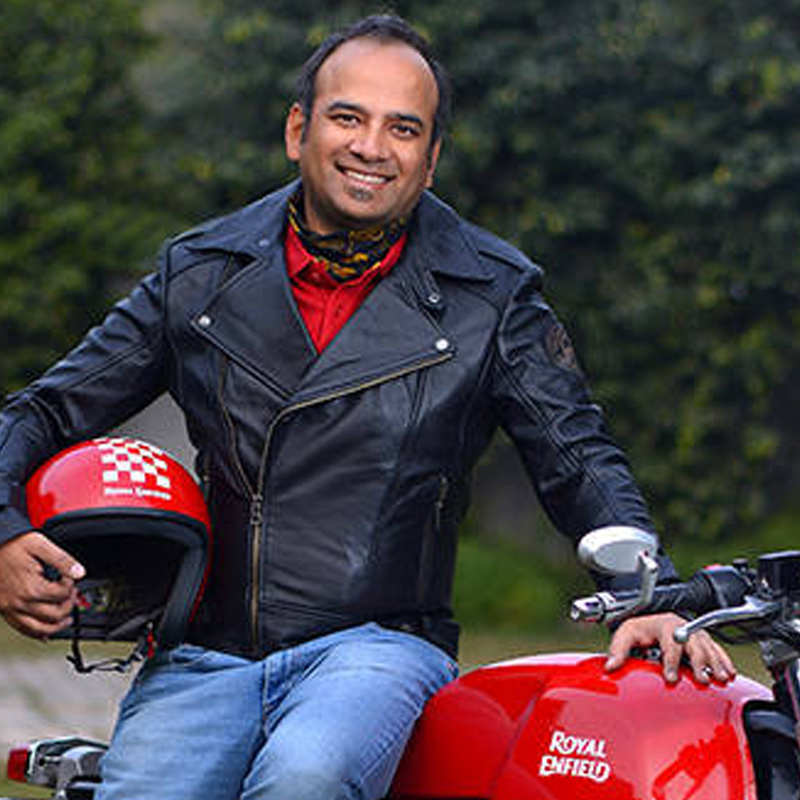
    MUMBAI: Royal Enfield or RE as it is popularly known has been one of the secretive brands that have forever been tight-lipped; never wanting to talk about its advertising, structure or business model. But it was a rare sight at Zee Melt 2018 where Royal Enfield president Rudratej Singh engaged with the audience for the first time to talk about why the brand stays away from advertising and its brand philosophy.

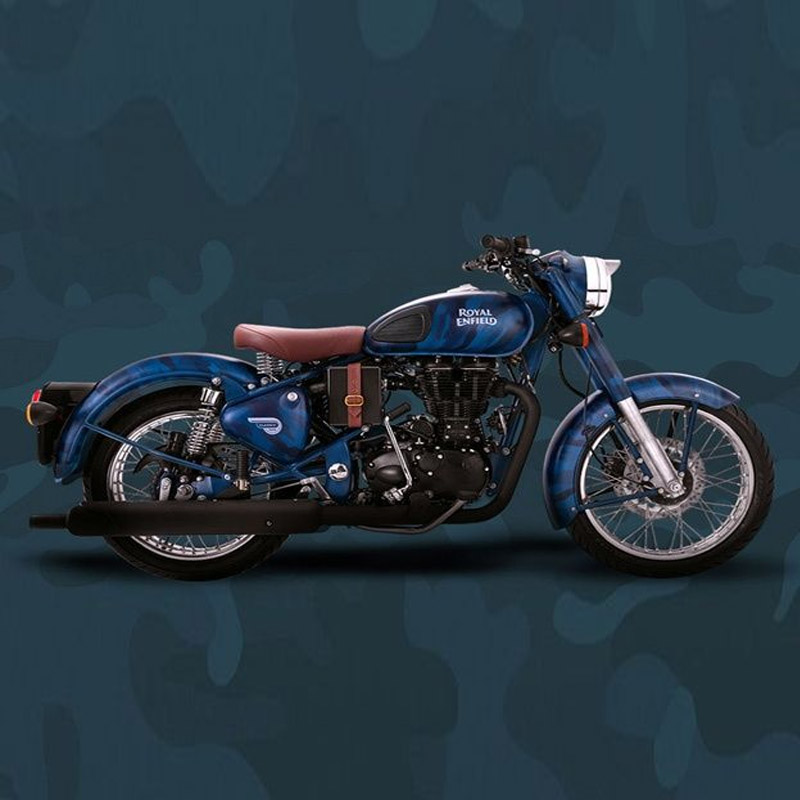
    First produced in 1901, Royal Enfield is the oldest motorcycle brand in the world still in production, with the Bullet model enjoying the longest motorcycle production run of all time.

    Singh kicked off his session with a short film that showcased how its consumers are not just consumers but rather a community who believe in the true spirit of riding. “We are a bunch of riders, for riders. We do not sell motorcycles but what your motorcycle can do in terms of experience,” he said.

    Singh thinks that the entire team at Royal Enfield is a bunch of storytellers trapped in an automative company and they like to express themselves via its motorcycles. Although RE is the world’s fastest growing automative company today, Singh modestly calls it a small organism that is trying to become an organisation.

    While other brands spend millions on advertisement and production, RE likes to keep it in-house and authentic. “Most of the communication and films for Royal Enfield are produced and directed in-house which saves us a lot of money rather than having an agency do it for us which would charge us nothing less than a few lakhs,” he says.

    While everyone’s guessing the secret sauce of RE’s success, it is simply a balance between keeping it aspirational and accessible. The former in being authentic for what the brand stands for and the latter in terms of cost, cost of ownership, availability and usability.

    Although the company sells motorcycles, it believes that it can motivate people to undertake travelling, something that RE owners definitely love to do, and self discover.

    RE doesn’t believe in being omnipresent. For it, context matters. Singh said, “We would rather be visible on contextual events and gathering which are relevant to us rather than being present everywhere.” Royal Enfield spends a major chunk of its time and money on creating events, experiences and products. Singh said that the company has rejected several associations where it could have had front page coverage but did not do that since it was not relevant to them and it doesn’t believe in “that kind of marketing”.

    The core of RE is to build meaningful relationships with its customers. This is done by sending frequent messages about joining its rides, attending events, being a part of the community and so on. This, in turn, has helped the brand in gaining consumer trust which is a huge asset for the motorcycle company.

    Although the company has always refrained from television commercials and major advertisements on any platform, it has always been dragged into controversy, if not by its own will then by its competitor’s statements and ads. On this, Singh said, “We always knew that we are here to expand our own market and not snatch somebody else’s market. We analyse ourselves rather than nitpicking on other companies in the segment.”

    Automation industry is all about product-led innovation and coming up with new products and launches but RE thinks of itself as a brand-led company which can do various things without being product led since brands tend to have a larger impact. Calling the company a zero GRP brand, Singh stated the reason for it being this way was because it has no money or time left and it becomes inauthentic the minute it tries to reach a large number of audience with similar communication. He said that a lot of focus for advertisers and marketers today is perennially on marketing and advertising. What you see now is only the lag of what has been happening in the industry for 15 years and the industry needs to buck up and do something about it. Marketers are trained to go for reach and frequency but the result of this approach is that people stop caring about the brand after a point of time because every communication they see around them is the same.

    “We believe in getting across our message with minimum content and minimum cost. We don’t want to blast the internet and television spots with visibility. We always struggle with having little communication with a large group of audience at RE but we are okay with that,” he concluded.
  • Jio, Sun Direct, Dish TV among top 50 as HDFC retains BrandZ crown

    Jio, Sun Direct, Dish TV among top 50 as HDFC retains BrandZ crown

    MUMBAI: HDFC Bank has continued to maintain its leadership position in fourth consecutive year, according to the BrandZ Top 50 Most Valuable Indian Brands 2017 report released by WPP and Kantar Millward Brown.

    HDFC Bank (24 per cent) is the India’s most valuable brand, almost doubling its brand value since the ranking started in 2014 from $ 9.4bn to $ 18.0bn.

    “It has a strong purpose – to improve lives by bringing world class financial services to all sections of India – and demonstrates it through increased access to banking in rural areas, an expanded digital presence and leveraging the latest technology to simplify its offering for customers. BrandZ data shows that consumers perceive the bank as increasingly innovative,” the report stated.

    India’s most valuable brands have increased their brand value by 21 per cent to US$ 109.3 billion in the last year. This compares with a two per cent decline in 2016, and is well ahead of the eight per cent value increase of the BrandZ Top 100 Most Valuable Global Brands 2017.

    There are seven newcomers in the overall ranking. Telecom provider Jio ranks at number 11 — only months after its launch, having disrupted its category with free-data promotions. The others are newly-listed retailer D-Mart (no.24), appliance brand Whirlpool (no.45), insurance brand Bajaj Allianz (no.49), Canara Bank (no.50) and entertainment brands Sun Direct (no.27) and Dish TV (no.47)

    The Store WPP CEO EMEA and Asia David Roth said, “Indian consumers seek authenticity and value for money, and the meaning of those things is being constantly redefined. As consumers become wealthier, they look beyond price to factors such as extra features, innovation and a personalised experience. As reflected in this year’s ranking the most agile Indian brands have recognised the complexity in the market, and achieved just the right balance between aspirational and affordable.”

    The automobile category, which also includes tyres, lubricants and motor fuels, grew 23 per cent in value. Brands responded to the changing market with new models that combined smart pricing and functionality with style and power. Royal Enfield, Maruti Suzuki and TVS were among the Top 10 overall fastest risers. Royal Enfield (no.40, 59 per cent) engaged with biker  groups on social media, and marketed a range of accessories. Maruti Suzuki (no.7, 56 per cent) extended the brand beyond its traditional appeal to the value segment of the market, while introducing new showrooms called NEXA to reach premium customers.

    India’s Top 50 faced successive disruptions in the last year, some global, some created by fast-growing competitors and others strategically imposed by the government – including demonetisation.

    The FMCG category, which includes alcohol, food and dairy, personal care and soft drinks, was significantly affected by these challenges but still managed to grow 6 per cent in total value. Some brands achieved impressive value increases by accurately understanding and responding to Indian sensibilities. Noodle brand Maggi (no.32; 66 per cent), the overall second-fastest riser, aligned itself with the trend for nostalgia. This helped it bounce back after a difficult couple of years; its rapid regrowth demonstrating how a strong brand can help a company weather a crisis and recover faster, although it is still some way below its peak brand value of $1.1bn in 2014. Health food brand Saffola (no.36; 24 per cent), meanwhile, introduced oats in new localised flavours and expanded its range of oils into a new super premium sub-segment.

    The financial services category increased its value by 26 per cent. The fastest rising banks were Punjab National Bank (no.39; 43 per cent), which is highly customer-focused and more agile than some of its competitors, and Kotak Mahindra Bank (no.6; 36 per cent), which has innovated in areas including digital banking. Both of these brands still have significant catching up to do, however, if they are to reach the top of the leader board.

    The BrandZ™ Top 10 Most Valuable Indian Brands 2017

    Rank 2017

    Brand

    Category

    Brand value 2017 (US$M)

    Change

    1 (-)

    HDFC Bank

    Banks

    17,965

    +24%

    2 (-)

    Airtel

    Telecom providers

    10,233

    +3%

    3 (-)

    State Bank of India

    Banks

    8,334

    +31%

    4 (-)

    Asian Paints

    Paints

    4,717

    +15%

    5 (-)

    ICICI Bank

    Banks

    4,697

    +19%

    6 (+1)

    Kotak Mahindra Bank

    Banks

    4,522

    +36%

    7 (+1)

    Maruti Suzuki

    Automobiles

    4,449

    +56%

    8 (-2)

    Bajaj Auto

    Automobiles

    3,564

    +5%

    9 (-)

    Hero

    Automobiles

    3,295

    +17%

    10 (-)

    Axis Bank

    Banks

    2,428

    +2%

    Other trends highlighted in this year’s BrandZ Top 50 Most Valuable Indian Brands include: The long-term growth curve of the Top 50 is positive, with the total brand value of the ranking up 57 per cent  since the study was first carried out in 2014, when it amounted to $69.6bn

    India experienced a resurgence in national pride, while also embracing globalization. This manifested in a desire for products and brands that best reflect Indian heritage, sensibilities and tastes, which benefited local brands and put pressure on multinationals to follow suit. Colgate (no 28; two per cent) launched a toothpaste with Ayurvedic properties to meet this demand.

    The top riser is insurance brand ICICI Prudential (no.35; 89%). It benefited from the ‘halo effect’ of other brands’ successful responses to rising consumer affluence, which led to an increase in sales of assets such as cars that need insurance protection

    Kantar Millward Brown MD — South Asia Vishikh Talwar said, “There are now ‘multiple Indias’. Consumers continue to love the brands they’ve loved for generations, while equally embracing the brands of the future. Brands must be completely in rhythm with the pulse of the market. Those that can accurately interpret Indian sensibilities, while ensuring smart pricing, are likely to be most successful. This is easier for local brands, but people will relate just as positively to a global brand if it uses insight to understand and meet their needs, and communicate in a way that builds trust.”

    For the first time, this year’s BrandZ Top 50 Most Valuable Indian Brands 2017 study incorporates new research from Y&R’s BAV Group into what it takes to build powerful nation brands. According to the 2017 Best Countries report, India stands out for its history, cultural influence, distinction and reputation for entrepreneurship; especially among the world’s business decision-makers.

  • CNN’s new weekday programme to start with Micromax CEO

    CNN’s new weekday programme to start with Micromax CEO

    MUMBAI: CNN is all set to put the spotlight on one of the world’s fastest growing economy, India. Starting 17 November, a series of vignettes will be featured in a show titled “India 20 Under 40.” The show will see 20 young Indian entrepreneurs who are re-shaping how India does business. 

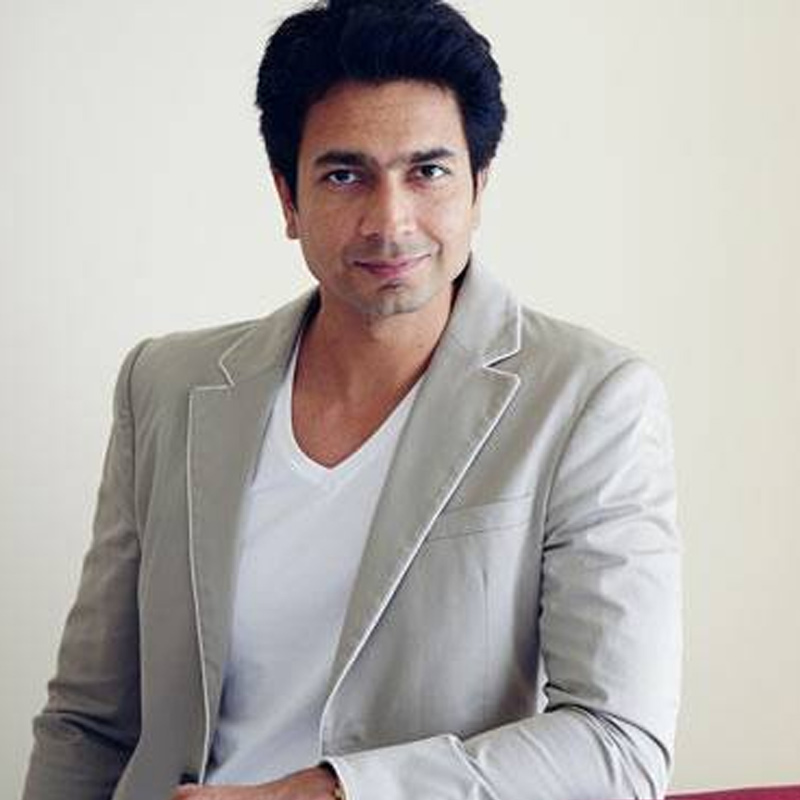
    A new entrepreneur will be featured every fortnight commencing with Micromax CEO Rahul Sharma. It will air within CNN Money with Maggie Lake airing from 7:30 pm to 8:30 pm every Monday to Friday.

    A week of special programming will be broadcast from 28 November on the channel. India 2020 will take viewers to meet some of the entrepreneurs who are overcoming various obstacles and bringing their ideas to life in India. These include visionaries and innovators across diverse industries. 

    An iconic motorcycle brand

    Royal Enfield is one of the world’s oldest motorcycle manufacturers with die-hard fans, who gather for weekend rides and huge festivals. The company was struggling when Siddhartha Lal took the helm back in 2000, at the age of 26. Now the Chennai-based company is expanding sales in the U.S. and Europe, and building a third manufacturing facility.

    The future of manufacturing

    The robotics industry is expected to double in India over the next 3-4 years. Hi-Tech Robotic Systemz is an up-and-coming company based in Gurgaon whose innovations include India’s first indigenous driverless car. The world’s first production brain controlled wheelchair, “Manav” is completely made in India by A-Set. As cutting-edge research continues to push the industry forward, CNN meets A-set’s Head of robotics and research Diwakar Vaish who is helping to lead the way. 

    Innovating from ancient tradition

    Indian innovators are finding new inspiration from old ideas. Take turmeric: an ancient, and common spice in Indian cooking is a hot commodity thanks to its applications in medicine and beauty products. The Himalaya Drug Company has a long tradition of creating products ranging from facewash to toothpaste, supplements to shampoo by applying scientific research to Ayurvedic principles. CNN catches up with CEO Philipe Haydon, who has helped transform the company, reaching consumers in 92 countries.

    Brighter businesses

    In India, two out of 10 people do not have access to electricity. Orb Energy manufactures and distributes solar energy systems with more than 100 branches across eight Indian states and employing about 500 people in the field. It’s opening a new factory to produce solar modules in Bangalore and aims to provide 2 gigawatts of solar energy by 2022, or 5 per cent of the national total. 

    Creating new opportunities

    India’s animation and VFX industry grew nearly 14% in 2015, and is projected to be a US$1.6-billion industry by 2020. One such leading studio is Makuta VFX. It’s working on the sequel to Baahubali, one of India’s highest grossing movies. Makuta is based in Hyderabad, which is trying to position itself as a hub for gaming and animation. The government has broken ground on a new facility to house more than 200 startups in multimedia and entertainment, and recently launched an initiative to connect those emerging companies to the global marketplace. 

    India 2020 half hour special airs at:

    http://www.indiantelevision.com/sites/drupal7.indiantelevision.co.in/files/styles/large/public/cnn_0.jpg?itok=pNoHnKRn

    November also marks the launch of a fully dedicated CNNMoney India subpage devoted to covering business and economic news coming out of the country. The launch of CNNMoney India underscores the company’s commitment to bringing global audience the latest economic developments from India and will highlight the most exciting young innovators from the region, and the successes and challenges of doing business here.


  • CNN’s new weekday programme to start with Micromax CEO

    CNN’s new weekday programme to start with Micromax CEO

    MUMBAI: CNN is all set to put the spotlight on one of the world’s fastest growing economy, India. Starting 17 November, a series of vignettes will be featured in a show titled “India 20 Under 40.” The show will see 20 young Indian entrepreneurs who are re-shaping how India does business. 

    A new entrepreneur will be featured every fortnight commencing with Micromax CEO Rahul Sharma. It will air within CNN Money with Maggie Lake airing from 7:30 pm to 8:30 pm every Monday to Friday.

    A week of special programming will be broadcast from 28 November on the channel. India 2020 will take viewers to meet some of the entrepreneurs who are overcoming various obstacles and bringing their ideas to life in India. These include visionaries and innovators across diverse industries. 

    An iconic motorcycle brand

    Royal Enfield is one of the world’s oldest motorcycle manufacturers with die-hard fans, who gather for weekend rides and huge festivals. The company was struggling when Siddhartha Lal took the helm back in 2000, at the age of 26. Now the Chennai-based company is expanding sales in the U.S. and Europe, and building a third manufacturing facility.

    The future of manufacturing

    The robotics industry is expected to double in India over the next 3-4 years. Hi-Tech Robotic Systemz is an up-and-coming company based in Gurgaon whose innovations include India’s first indigenous driverless car. The world’s first production brain controlled wheelchair, “Manav” is completely made in India by A-Set. As cutting-edge research continues to push the industry forward, CNN meets A-set’s Head of robotics and research Diwakar Vaish who is helping to lead the way. 

    Innovating from ancient tradition

    Indian innovators are finding new inspiration from old ideas. Take turmeric: an ancient, and common spice in Indian cooking is a hot commodity thanks to its applications in medicine and beauty products. The Himalaya Drug Company has a long tradition of creating products ranging from facewash to toothpaste, supplements to shampoo by applying scientific research to Ayurvedic principles. CNN catches up with CEO Philipe Haydon, who has helped transform the company, reaching consumers in 92 countries.

    Brighter businesses

    In India, two out of 10 people do not have access to electricity. Orb Energy manufactures and distributes solar energy systems with more than 100 branches across eight Indian states and employing about 500 people in the field. It’s opening a new factory to produce solar modules in Bangalore and aims to provide 2 gigawatts of solar energy by 2022, or 5 per cent of the national total. 

    Creating new opportunities

    India’s animation and VFX industry grew nearly 14% in 2015, and is projected to be a US$1.6-billion industry by 2020. One such leading studio is Makuta VFX. It’s working on the sequel to Baahubali, one of India’s highest grossing movies. Makuta is based in Hyderabad, which is trying to position itself as a hub for gaming and animation. The government has broken ground on a new facility to house more than 200 startups in multimedia and entertainment, and recently launched an initiative to connect those emerging companies to the global marketplace. 

    India 2020 half hour special airs at:

    http://www.indiantelevision.com/sites/drupal7.indiantelevision.co.in/files/styles/large/public/cnn_0.jpg?itok=pNoHnKRn

    November also marks the launch of a fully dedicated CNNMoney India subpage devoted to covering business and economic news coming out of the country. The launch of CNNMoney India underscores the company’s commitment to bringing global audience the latest economic developments from India and will highlight the most exciting young innovators from the region, and the successes and challenges of doing business here.


  • Royal Enfield releases new ad campaign

    Royal Enfield releases new ad campaign

    MUMBAI: Royal Enfield is releasing a new ad this week–created and produced by Wieden+Kennedy, Delhi.

    The film will be released across cinemas, digital channels and other select media channels. The film will be supported by print advertising.

    Said Royal Enfield head sales and marketing Shaji Koshy, “Over the years, Royal Enfield‘s communication has managed to keep the world coming back for more. We hope this latest advertisement from Royal Enfield will strike a chord with Royal Enfield consumers and create strong emotional engagements with them. We will be using traditional media like television, cinema and print but digital will form a key part of the communication as well.”

    Wieden+Kennedy Delhi V Sunil, executive creative director added, “For us, Royal Enfield always stood for ‘Keeping it Real‘, and that spirit extends to everything that Enfield does, including advertising. So we avoided the usual clichés i.e. slapstick humour, kitsch, melodrama or ‘aspirational‘ gloss. It‘s important for an iconic brand such as ours to stay true to character, and to be proud of what it represents and where it comes from.”