Tag: Ross Video

  • Ross Video acquires ioversal to offer clients  immersive experience solutions

    Ross Video acquires ioversal to offer clients immersive experience solutions

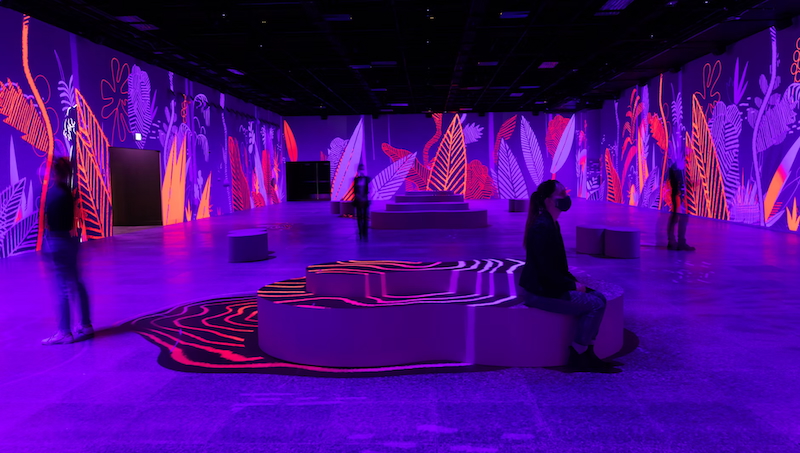
    OTTAWA: Ross Video is buying ioversal, the German creator of Vertex, a platform for immersive audiovisual experiences that has powered interactive exhibits and large-scale productions worldwide. The deal, announced on Thursday, marks the Canadian firm’s first serious push into experiential technology, extending its reach beyond traditional broadcast and live sports production.

    Vertex unifies video, audio, lighting and control systems into a single suite, allowing production teams to orchestrate complex installations—from projection mapping spectacles to interactive museum displays—without wrestling with multiple incompatible systems. The platform has earned its stripes through high-profile deployments, though Ross declined to disclose financial terms or specify which installations.

    “Vertex gives our customers a powerful new way to tell their stories,” said David Ross, chief executive of Ross Video, the family-owned firm his father founded in 1974. “It extends our live production solutions into the experiential world, opening creative possibilities that inspire audiences everywhere.”

    The acquisition fits Ross’s strategy of building an end-to-end production ecosystem that spans broadcast studios, sports venues, corporate events and cultural institutions. For customers already using Ross’s switchers, graphics systems and production control gear, Vertex offers a natural extension into permanent installations and experiential work—areas where margins can be fatter than in the commoditised broadcast kit business.

    Jan Hüwel and Martin Kuhn, ioversal’s co-founders, will join Ross along with their team, bringing decades of expertise in media servers and interactive control systems. “Joining Ross Video is a natural next step in our journey,” said Hüwel. “Ross shares our passion for empowering customers and our belief that innovation should always serve creativity.”

    Kuhn added that the tie-up would help Vertex reach a broader audience. “From the beginning, our mission has been to simplify complex audiovisual productions so creators can focus on storytelling,” he said. “Together, we’ll unlock incredible new possibilities for experiential media.”

    Ross Video, headquartered in Ottawa, has been on an acquisition spree in recent years as it seeks to fend off competition from software-defined production tools and cloud-based workflows. The privately held company does not disclose revenues but is estimated to generate several hundred million dollars annually from sales of production switchers, graphics systems and robotics to broadcasters and live-event producers.

    The firm plans to showcase Vertex through demonstrations and events in coming months, highlighting how the platform integrates with Ross’s existing production kit. Whether customers—many of whom are wrestling with tighter budgets—will embrace yet another platform remains to be seen. But Ross is betting that simplifying the chaos of experiential productions will prove irresistible to creative teams tired of duct-taping incompatible systems together.

  • “Indian broadcasters need to look at solutions not just products to get real value” – Ross Video’s David Ross

    “Indian broadcasters need to look at solutions not just products to get real value” – Ross Video’s David Ross

    At around 10 am on 12 September, long before the espresso machines hit their stride, Hall 8 of Amsterdam’s RAI convention centre throbbed with an unexpected chant: “Go Ross Go!” The source was not a marketing stunt but the chairman and chief executive himself. David Ross, head of Ontario-based Ross Video, stood shoulder-to-shoulder with his crew on the IBC show floor,  voice carrying across the cavernous hall. While rival executives do their glad-handing from glassy suites, David prefers to start the day in the trenches, rallying the troops like a regimental captain before battle.
    Engineering and enterprise run in his circuitry. He began programming at the age of nine, scooped up national engineering prizes as a teenager and left university with a computer-engineering degree heavy on business. Before joining the family firm in 1991 he cut his teeth at the CBC and Electrohome, fiddling with projectors and video-effects units. From product manager to head of R&D, then president in 2004 and chief executive two years later, his climb was brisk and unshowy at Ross Video.
    The numbers are anything but modest. Under his watch Ross Video has posted roughly 15 per cent compound growth every year since 1991—without a single downturn, recession or not. He owns more than four-fifths of the company yet has kept it employee-friendly, structuring it as an ESOP and keeping private equity at bay. The mantle of respect is heavy: an honorary doctorate from the University of Ottawa, fellowships from Canada’s Academy of Engineering and from the Society of Motion Picture and Television Engineers, and a trophy cabinet of industry awards.
    For all the laurels, David remains a kinetic learner. He trades ideas with fellow chiefs through TEC (Vistage in America) and gulps down management audiobooks while pounding out marathon miles. It is this mix of technical curiosity, fiscal discipline and boyish gusto that has made Ross Video one of broadcasting’s quiet powerhouses.
    When Indiantelevision.com founder and editor in chief Anil Wanvari caught up with him at IBC, the conversation roamed from the science of sustaining perpetual growth to the sheer pleasure of building kit that makes television sparkle—proof that the man leading the cheer is also the engineer behind the magic. Excerpts from the tete a tete:

    On what’s exciting him about IBC 2025.
    To start off we just bought a company. And we just had some fun with it. We are talking about, you know, peanut butter goes with jelly, movies go with popcorn and you know video goes with audio. So we bought Lama (Lean and Mean Audio) – a company that does audio entirely software-based in the cloud and on-prem. It’s quite a comprehensive feature set. It’s also got automix and things like that. They did 16,000 streams of audio for the Paris Olympics where they needed to match up commentators with crowd noise – and to have it automatically set up. They were doing hundreds and hundreds of them a day.  We are going to sell what we have and over time we are going to do more with it.

    On whether Ross Video’s acquisition streak is going to continue. 
    Lama was our twenty second acquisition. Acquisition number 23 is almost done. We can’t talk about that, But watch this space. We also do organic growth. If all we were going to do is grow through acquisition, we would not have 500 people in R&D like we do today. So that’s a major investment, especially when you consider that Ross Video is only about 1500 people. One in three are designing new products. And also considering we have our own manufacturing in-house. That  is a major commitment to new product development.  But we look at everything that is adjacent to- complimentary to – what we do. Everything has to connect with what we do in multiple ways.

    The first robot I actually bought was in house, and we bought it out. It was the Furio, which is on tracks. I did that around 2011 or so. It was a bit of a shock when I came back and said: “Stop everything. Let’s start building robots.” Then we did Cambotics three months later, and then we did an organic product, which was SkyDolly and and just last year, we launched Artimo, which was an organic product based upon acquisitions. So, how much is acquisition? How much is organic? It kind of gets all blurred after a while, because we’re doing brand new innovations, but because we are already in the market. Now we have that technology that we brought in house. You’re going to see the same sort of thing again, with Lama, you know, bringing in audio in house. Great. What’s next? That’ll be organic,

    On whether Ross Video will consider outsourcing production to cheaper locations such as India or China
    What we make in our industry is generally not interesting to make in India or China. They want to make a million of something. We make hundreds or thousands of something. Very, very complex products at lower volumes than the mass market. There’s a lot of enhancements and back and forth of R&D. It all makes sense to have all of that in-house. It might be more expensive for us to do the manufacturing in China as there’s a lot inefficiencies in working with an outside company and also it’s just not interesting to them. Our factories are designed to make studio robotics or routers or production switchers.
    On the product gaps in the company’s portfolio and how will Ross fill those.
    We’re already in broadcast, we’re in sports and live events, we’re in OB vans, we’re in mega churches, we’re in government, we’re in corporate, high end type production. We’re already in stadiums that’s actually our biggest market. What else can we do? I know there’s there’s other adjacencies. So I can’t quite tell you where our gaps are. You could say that we’ve got a great portfolio, and we can create some really great end-to-end solutions. I can also tell you that there’s 1000 companies that aren’t part of Ross; they do stuff that we don’t do. So you could say that we’ve got a thousand gaps. In other words, lots of opportunity in the future.

    On how long can the motivated and family like culture continue at Ross Video now that it is expanding aggressively.
    I think I enhanced it a little bit coming forward from what my father John had put in place. You know, there was a day when I had to move from the Iroquois in Canada  location, where we really started, and to Ottawa, an hour north. And not being in the factory, things started to go wrong, and culture started to change. And I’d hear stories about people not working well together and so on. That was only when we were around about 75 people, and I thought to myself  how are we going to get to 100 people and keep the culture? It’s already falling apart, so we sat down and wrote up the Ross Video code of ethics. We wrote down the Ross Video culture. We put it in everybody’s, you know, walls or their cubes and their offices, their home offices. We put it on the website. It sits on the doors of our meeting rooms. Here we live it. And when you do that, it’s a culture that can extend potentially indefinitely, because I’m already not in every location, but we’re able to bring people on. They understand what it is. We got a lot of people that live this culture and love it. And people who don’t match that culture, that don’t respect each other, that don’t help each other, that aren’t focused on customers, that sort of thing. They don’t last very long at Ross Video, sometimes they self-select and out they go. They just don’t fit. So how big can we go? I know, as big as you want.

    On how Ross Video deals  with a market like India where price plays a very important role in closing a deal and negotiations can be endless as compared to other countries.

    Well,  the thing is I am unaware of a major manufacturer of routers or production switchers or sports analysis tools or robotics out of India. We’re competing with the same players, for the most part, in India that we do with in the rest of the world. So really, the question is figuring out the right solution for the job and sharpening your pencil for India is but in the end, you know, it’s the same products. So I would love to be able to discount our products to 90 per cent but then it would be cheaper for us to just shovel money and not sell products, because we’d have been losing money on everything we sell.

    So, so from the point of view of price, I think India, like everybody else as well, does have certain minimum requirements for what they want. I mean, I was looking at a bid from Doordarshan just yesterday, actually,  “they didn’t just say we would need a production switcher. We want the lowest price.” They had, you know, a couple of dozen criteria the product. Before you can bid, you must have all of these high end features. And if you qualify for that, then we want to see the best price. So it’s not just a race to the bottom.

    These features are important to our customers in India like everywhere else, because they provide value. And I think what we need to start doing in India as well, like we have been doing everywhere else, that is not just talk about a product, its features and its price, but also the ecosystem and the solution that we provide.

    For example, you know, OverDrive works really well with our Carbonite production switchers. Carbonite production switchers work really well triggering XPression graphics. XPression graphics work really, really well with our with our weather system Raiden. Xpression workflows work really well with Voyager, which ties in sports analysis, which talk  to our instant replay systems and so forth. So you can see there’s a thread that goes through everything that we do that also has value. And I think if one of the things you have to have a conversation with locally is discuss the system that you want, the solution that you want, and not just bid for individual products. Because I think if India continues to just look at one product at a time, some features and a price, they’re missing out on unlocking real value and real savings in workflow and efficiencies.

    On whether Ross Video will consider serving the individual creator community at some stage.
    I’m going to say only at the highest end, yeah, one of the most important things when you have a company of any sort is the path to market. How are you going to be communicating with a market, and how are you going to service that market? Ross Video is very intentionally set up to have a close relationship with its customers. When somebody comes onto our booth in an exhibition, we know who they are, we know what they need. We understand their company, their needs. We often know the person, even have a relationship with that person, maybe over many years.

    When you’re talking about the creator community, and you say there’s a million creators out there, we can’t do that. That is a different type of a sale. It’s a sale where it’s about marketing, it’s about lead generation. It’s about no price negotiation. It’s about clicking and buying it on a website. We’re not set up for that. And also it’s about a larger mass market.

    And in the mass market as well is that’s where you have to build in millions at a very, very low price, very little customisation, if any. That’s not what we do either. We do more expensive products. That’s what our factory is set up to do. And we have, we would say, a more expensive but more intimate connection with our customers. When the creator community, you know, gets to a certain point, if you have one that’s making it, you know, has a lot of eyeballs, therefore making a lot of money, they want to transform from to a more professional look, and they want to create a studio, then we’re there for them. So we don’t need to move into the content creator business to be able to get to the billion dollars in revenue from the 500 million we have now, but to get to $2 billion in revenue, maybe, maybe that’s next. But right now, I think the way we want to leverage our customers and our brand and our go to market and our manufacturing capability and our design expertise, more so to be able to double the size of the company.

    On the role that AI is playing at Ross Video and in its products.
    AI is a really, really big topic. It’s everything like it’s interesting inside the company. You could say there’s inside, there is outside the products, and then there’s many types of AI as well. Inside the company, there’s AI everywhere. Pretty much everybody that wants chatgpt gets an enterprise copy of it inside of Ross video, so we’ve got like, 1000 copies of chatgpt running at any given time. We’re using it, developing our software. We’re using it developing our manuals. We’re using it to drive our website, our manuals. We’re using it writing our specifications, our market research, internal communications. We’re using it everywhere, and that’s on purpose, because I want to make sure that all of our employees, in all ways, become very, very familiar with AI and be able to get more ideas of how can it affect workflows and get that comfort.

    Now, inside of Ross Video, we have something called Ross Research Labs, and that is different and separate. Ross Research Labs is different and separate from all the product groups. So we got, you know, R and D team for production switches, another for routers, another for graphics, another for robots and so forth.

    Ross Research Labs is there for all of the different groups. So for example, recently, they were using AI to do player tracking for our Piero system, our sports analysis system, and be able to make sure that when one player goes through another player and comes out the other side, it doesn’t suddenly get identified as a new player. It can track them properly they had to go through we actually worked with universities to figure out the very best algorithms to be able to make player tracking work.

    We also take a look at the pitch, say for cricket or football or something like that, where we can look at that, and we can now use AI to calculate where the camera is that’s taking that image and what the zoom setting is on the lens and everything else, and understand where it is. The camera is in a three dimensional space, so we can overlay graphics with it. That was another thing that came out of Ross Research Labs.

    Another thing that we’re doing is Ross voice control. So this is speech to text, but we have examples of major broadcasters. I’ll say that that I’ve done hour long productions where the presenter is speaking, controlling the graphics, running maps and creating all these animations behind them. There is no one in the control room following this and pressing any buttons. It is all speech to text. That text goes into an engine that then drives through an API our products to be able to do the production. And when we did it, there was only one time that somebody had to reach in and press a button over a one hour or two hour production, which is just amazing, and it was running faster than  any human operator could could run in real time.

    There’s another thing that we’re just starting to work with as well, which we’re starting to do in stadiums where we’re doing closed captioning, basically, but for the big screen. So people who can’t hear that, or maybe the crowd is too loud they want to hear what a commentator said. We’re actually putting that up on the screen. We can also do it in real time. Translations. We’ve compared that to human translators, and we’re faster by like, five seconds, and more accurate as well. So that’s another use of AI that we’re starting to roll out, and that came out of some of our other R and D teams. There’s more going in that direction. The next side of things as well. Oh, of course, our Artimo, you know, has all sorts of facial tracking and body tracking and things like that for our cameras to be able to keep talent centered in a production quality way, but there’s more

  • Global media titans converge, creator economy ignites as NAB Show 2025 concludes

    Global media titans converge, creator economy ignites as NAB Show 2025 concludes

    MUMBAI:  The National Association of Broadcasters (Nab) Show 2025 concluded on 9 April, solidifying its position as the premier global platform for technology for the media and entertainment industry. The event drew 55,000 registered attendees from 160 countries, demonstrating its international reach and influence.

    Nab Show executive vice president  Karen Chupka highlighted  the show’s role in showcasing the latest advancements in storytelling and technology. A significant 26 per cent of attendees travelled from outside the United States, and 53 per cent were first-time participants, highlighting the show’s expanding appeal.

    The exhibition floor, spanning an area equivalent to eight football fields, featured nearly 1,100 global exhibitors, including 125 new companies. Industry giants such as Adobe, AWS, Canon, Sony, and Verizon Business presented their latest innovations, driving forward the evolution of content creation and distribution. David Ross, CEO of Ross Video, described the show as a crucial platform for showcasing their entire product portfolio.

    Key trends at the show included artificial intelligence, the burgeoning creator economy, and the convergence of sports and technology. High-profile speakers, including Gotham Chopra from Religion of Sports, Jody Gerson of Universal Music Publishing Group, and WWE executives Nick Khan and Paul “Triple H” Levesque, engaged audiences with insights into the future of media. Dhar Mann and Steven A. Smith also captivated attendees with their perspectives on content creation and sports media.

    The show featured over 550 conference sessions and more than 1,000 speakers, addressing critical industry topics. The inaugural Sports Summit explored the intersection of sports, media, and technology, while the Business of Entertainment track, in partnership with The Ankler, examined media dealmaking and content strategies. Sessions on AWS, artificial intelligence, and sports streaming saw high attendance, reflecting the industry’s focus on emerging technologies. The Creator Lab provided a dedicated space for digital creators to explore new tools and resources.

    Nab launched its Creator Council, an advisory group comprising influential creators and thought leaders, to amplify creator voices and guide Nab’s engagement with the creator economy. This initiative underscores Nab’s commitment to supporting the evolving needs of content creators.

    Major company announcements included Sony’s unveiling of the HDC-F5500V and HDC-P50A cameras, and Verizon Business’s introduction of a portable Private 5G Network framework designed to streamline live broadcasting.

    The Nab Show will return to New York from 22 -25 October 2025, and to Las Vegas from 18 to 22 April  2026.

  • Lynx Technik hires Ross Video’s Vincent Noyer as product marketing director

    Lynx Technik hires Ross Video’s Vincent Noyer as product marketing director

    MUMBAI: Lynx Technik, a  provider of modular signal processing solutions, has appointed Vincent Noyer as its director of product marketing. With over 20 years of combined experience as a technical product manager and software developer, Vincent brings an exceptional innovation and leadership track record in the live sports and broadcast market.

    At Lynx  Technik, Vincent will lead the product strategy, align product development with customer needs, and deliver go-to-market plans for the company’s portfolio of signal processing solutions, including the award-winning greenMachine, yellobrik, LynxCentraal and yelloGUI software, Testor, and Series 5000 solutions. His market-focused approach and technical expertise align with Lynx Technik’s mission to deliver high-performance, quality solutions that address the evolving needs of the broadcast, professional AV, and media markets.

    “I’m honoured to join Lynx Technik and collaborate with such a respected team and brand,” said Vincent. “Lynx offers a diverse portfolio of solutions, and I am excited to work alongside the development and product teams to support sustainable growth and innovation. I’m looking forward to designing and bringing to market products that truly make a difference for our customers.”

    Vincent brings a wealth of expertise in product design, full-stack software development, and real-time applications, with a special focus on live graphics, and video and image processing. Vincent joins Lynx Technik from Ross Video, where he most recently served as director of sports analysis. He helped turn the Piero sports graphics solution into a major revenue driver, and successfully introduced it to the US market, where it quickly gained ground and became a go-to technology in American football broadcasts. 

    Said Lynx Technik CEO Winfried Deckelmann:  “Vincent’s twenty years of experience in the broadcast and media industry, together with his strategic and commercial skills, will be invaluable in helping guide our business forward in its next phase of growth. I look forward to working closely with him as we continue to expand the business and bring to market the high-quality products and solutions that Lynx Technik is known for.”

    Vincent will be based out of the Lynx  Technik headquarters in Weiterstadt, Germany.

  • Ross Video shines at Broadcast India Show with cutting-edge solutions

    Ross Video shines at Broadcast India Show with cutting-edge solutions

    MUMBAI: The first day of the Broadcast India Show at the Jio World Convention Centre in Mumbai pulsated with the vibrant energy of the broadcast media and infotainment sectors. In an industry where technology evolves at lightning speed, the impact on broadcast and entertainment is profound. Yet, the full spectrum of innovative advancements often feels just out of reach-except for one remarkable occasion each year. For over 30 years, the Broadcast India Show has served as an interactive platform, showcasing groundbreaking shifts in infotainment technology while connecting attendees with the innovators behind these marvels.

    As we navigated the bustling trade show, overwhelmed by the cutting-edge equipment and technology on display, one booth captured our attention: Ross Video. Initially sceptical, we quickly found ourselves engaged in one of the most enlightening conversations of the day with Ross Video director- sales, Asia, Simon Roehrs along with Ross Video marketing manager, APAC, Irene Siah. Their enthusiasm was infectious and before agreeing upon giving an in depth interview, they provided a brief overview of the company’s journey.

    Founded in 1974 by John Ross in the basement of his Montreal home, Ross Video began with a bold vision. John sold a meticulously restored World War II trainer aeroplane for $3,500, using those funds to launch the company. Remarkably, this initial investment remains the only external funding Ross Video has ever received. Since then, the company has flourished through self-funding and organic growth, reinvesting profits back into the business. In the present, John’s son, David Ross, serves as the chief executive officer, owning over 80 per cent of the company, while dedicated employees hold the remaining 20 per cent.

    Now, Ross Video stands out in the ever-evolving media landscape with an impressive array of products and services. Their offerings include state-of-the-art cameras, real-time motion graphics, advanced production switchers, robotic camera systems and immersive augmented reality and virtual studios. Additionally, the company provides video servers, robust infrastructure and routers, social media management solutions, newsroom systems and comprehensive live event production services.

    Buckle up readers as Indiantelevision.com’s Rohin Ramesh and Sreeyom Sil dived into an in-depth interview with Simon and Irene. Both were eager to tackle a plethora of questions we had lined up.

    Edited excerpts

    On the evolution of the company with the increasing demand for cloud based solutions

    I’ve been frequently asked about our cloud strategy, both by journalists and customers. It’s a great question! At Ross, we recognise that the cloud is a crucial component of the future, and we’re committed to providing a comprehensive broadcast workflow solution for our customers.

    Currently, Ross already offers a substantial range of broadcast-related capabilities in the cloud. This includes video servers, streaming applications like NDI and SOP, as well as graphics, switching, and audio mixing—all the essential elements needed to establish a full broadcast workflow in the cloud.

    Additionally, we provide Software as a Service (SaaS) options for customers, particularly in areas like Media Asset Management (MAM). With our SaaS model, we handle the relationship with AWS and deploy the necessary microservices, allowing customers to simply subscribe to our service. This contrasts with our other model, where the customer manages their own relationship with AWS while we assist in deploying the workflow.

    Our SaaS offerings include not only MAM but also inception, our Newsroom Computer System (NRCS). This dual approach allows us to cater to different customer needs while maintaining a strong commitment to delivering effective cloud solutions.

    On the integrating AI and automation in your product lineup

    That’s another excellent question! Honestly, we don’t focus much on our competition. While they do their thing, we concentrate on how we can best serve our customers today and into the future.

    AI is not new to us; we’ve been working with it for years. Our research lab, which consists of nearly 500 R&D professionals, is dedicated to this effort. For example, we’ve integrated ChatGPT, one of the leading AI technologies, into our Media Enterprise Management System (MEMS) and our Inception Newsroom Computer System (NRCS). This integration helps streamline the daily tasks of journalists.

    Imagine a journalist returning from an assignment with a lengthy story. They may want to create a brief snippet for social media, like an audio or video highlight. ChatGPT can summarise the story into a few concise sentences, which the journalist can then review and approve before publication. This significantly reduces turnaround times for digital content.

    Another exciting development is rossbot, which is available on our website. This chatbot allows customers from countries like Japan or Thailand to ask questions in their native languages. Rossbot accesses our extensive documentation and continually learns to provide accurate answers. For instance, if a user asks about a specific company code, Rossbot can deliver a precise response within 10 to 15 seconds. This is a remarkable improvement compared to traditional support channels, where inquiries often take much longer to resolve.

    Since deploying rossbot, we’ve seen a stabilisation in the volume of support calls, which speaks to its effectiveness in addressing customer queries efficiently.

    On sharing any recent case studies where your company has significantly transformed globally

    One of our most successful products is our hyperconverged solution. A significant trend in the broadcast industry, highlighted during events like IBC, is the growing focus on operational efficiencies. Many countries are facing economic challenges, which impact advertising revenue, especially with the rise of social media platforms. As a result, broadcasters need to operate more efficiently, find synergies, and potentially reduce their workforce.

    Our hyperconverged clusters offer a remedy to these challenges. By combining switching, routing, and a variety of essential features into a single, compact unit, we simplify broadcast operations. This integrated solution eliminates the need for multiple separate devices, reducing cabling and streamlining setups.

    Additionally, our hyperconverged systems significantly lower costs, both in terms of total cost of ownership and deployment speed. For mobile operations, for example, you only need one hyperconverged unit instead of a large truck filled with equipment. This not only saves on costs but also allows for faster on-air readiness. Overall, our hyperconverged solution has tremendous potential for cost reduction in the broadcast industry.

    On the major sport you are targeting in India, given that cricket is already the most established one

    I really appreciate your questions so far! Currently, we cover over 20 different sports, and if you take a look at the screen right there, you’ll see kabaddi. This sport is primarily popular in India, and it’s well-known because of local teams that share their requirements and trends with us. That’s why we’re actively supporting kabaddi today.

    When we identify a trend or demand, we collaborate closely with our product teams to adapt our offerings to fit regional markets. For instance, cricket is incredibly important—not just in India, but also in countries like Australia, England and South Africa. Interestingly, we’ve seen a significant rise in cricket’s popularity in North America.

    Did you know that there are approximately two million Indians living in Canada? This vibrant community is driving interest in the sport, which is why we’ve hosted matches in locations like New York, Texas, and Los Angeles. For example, India faced Pakistan in a match in New York, demonstrating the strong audience demand. When you look at the global audience for cricket, it’s impressive—it dwarfs many other sports.

    On elaborating more on your other vertices besides sports

    As I mentioned earlier, our primary market focus is broadcasting, which encompasses various aspects, especially sports broadcasting. Currently, about half of our revenue comes from this sector, making it a crucial vertical for us. However, we recognise that the broadcasting industry faces increasing challenges.

    We are also looking into live production and sports, as these are two of the most effective ways to capture audience attention. News and live sports are unparalleled in their ability to engage viewers, especially when it comes to thrilling moments like cheering for a cricket team.

    Beyond broadcasting, there is a growing demand for video solutions across other sectors, including government, education, and corporate environments. We see significant potential in corporate markets in India, particularly with large organisations like Tata and Accenture, as well as major banks. These companies are increasingly interested in video solutions for purposes such as video conferencing, board meetings, and town hall events.

    In the U.S., we have a strong customer base that uses our latest Carbonite switchers alongside Microsoft products. For instance, our switchers offer USB-C webcam output, allowing users to easily feed a high-quality video signal into their laptops or PCs. This setup can then be displayed on a TV, providing a professional-grade production quality for executive meetings and other large gatherings.

    On the future of broadcasting in India

    I see a bright future for the Indian broadcast market, and here’s why.

    First, about 50 per cent of broadcasting is still being done in standard definition (SD), which presents significant opportunities for upgrading to high definition (HD) and even ultra high definition (UHD).

    Second, the number of TV channels is steadily increasing. My team informs me that more than 100 new news channels are launched each year. This growth reflects the importance of news in India, a country characterised by its remarkable diversity.

    With distinct differences across the North, South, East, and West, and around 115 languages and dialects spoken, India’s diversity is truly unparalleled. This unique landscape creates a rich environment for broadcasting, with ample opportunities for tailored content that resonates with various audiences.

    On venturing into the post production market in the coming future

    In post-production, creativity is paramount. We are proud to offer a range of creative tools to support this. Additionally, we have a department called Rocket Surgery, which is truly exceptional. This team comprises approximately 40 to 50 talented individuals and is one of our notable acquisitions, showcasing Ross’s commitment to growth.

    Rocket Surgery specialises in bespoke projects tailored to our customers’ needs. When clients come to us with a vision and aren’t sure how to bring it to life, this team steps in to map out their ideas and provide innovative solutions. Some of these solutions are so groundbreaking that they’ve never been seen before in the industry.

    Looking ahead, we certainly see the potential to expand further into the entire production market.

  • Highly-beneficial interactions take place at Broadcast India ’16

    Highly-beneficial interactions take place at Broadcast India ’16

    MUMBAI: The 26th Broadcast India Show concluded over the weekend in Mumbai, and was easily the most exciting Broadcast India Show yet. With thousands of eager, high-quality trade visitors swarming the show floor, a sentiment signalling highly-beneficial exchanges and interactions echoed through the halls of the Bombay Exhibition Centre and was at the tip of our exhibitors’ tongues.

    As the number one professional trade show focused on the technology that powers India’s vast entertainment and infotainment industry, the Broadcast India Show delivered yet again on its promise of showcasing the latest in film, television, pro-audio, 3D, broadcasting, digital cinema, radio, mobile, IPTV, and also VR technology from across the world and within the subcontinent.

    The two-day Conference held on 20–22 October was well attended; with 26 speakers presenting papers on the state-of-the-art development in broadcast technology and related subjects. Leading manufacturers like Blackmagic Design, Panasonic, Sony, AVID, RED Digital, Canon, Datavideo, Ross Video, FOR-A, On Air Asia, Adobe, Grass Valley, AJA, PlayBox, IHSE, Primestream, Canare, Ikegami, Hitachi, Chyron Hego, Monarch, Boston, Netweb, Seagate, ARRI, Canara Lighting, GoPro, Atomos, Carl Zeiss, Cooke Optics, DJI, Vitec Group, Panther, Yamaha, Sennheiser, Digigram and Planetcast Media Services, to name a few, were present with their latest innovations at the show.

    “We saw more active engagement between visitors and exhibitors this year than we have seen in the past,” said Saicom Trade Fairs director Kavita Meer. “And since we collect feedback during show days, we came to realise that over a handful of years, our profile of visitors has changed from those who were content with just buying and selling to an audience that questions and challenges these advances in technology as well. That kind of back-and-forth is vital for the growth of the creative industry, not just in India but all over the world,” Meer said.

    Like always, a standard has been set for an arena that provides end-to-end technology solutions for serious visitors, buyers and decision-makers. The overwhelming response to the 2016 show only opens more doors for participation from the world’s most forward-thinking brands. And Broadcast India is committed to making sure this annual tech pilgrimage grows from strength-to-strength. Higher levels of participation from China and European countries as compared to previous years were seen. In total, 36 countries and over 590 companies participated in the show
    this year, with a visitor footfall of 20,143. Broadcast India Show 2017 will take place on 12-14 October 2017 at the Bombay Exhibition Centre in Mumbai.

  • Highly-beneficial interactions take place at Broadcast India ’16

    Highly-beneficial interactions take place at Broadcast India ’16

    MUMBAI: The 26th Broadcast India Show concluded over the weekend in Mumbai, and was easily the most exciting Broadcast India Show yet. With thousands of eager, high-quality trade visitors swarming the show floor, a sentiment signalling highly-beneficial exchanges and interactions echoed through the halls of the Bombay Exhibition Centre and was at the tip of our exhibitors’ tongues.

    As the number one professional trade show focused on the technology that powers India’s vast entertainment and infotainment industry, the Broadcast India Show delivered yet again on its promise of showcasing the latest in film, television, pro-audio, 3D, broadcasting, digital cinema, radio, mobile, IPTV, and also VR technology from across the world and within the subcontinent.

    The two-day Conference held on 20–22 October was well attended; with 26 speakers presenting papers on the state-of-the-art development in broadcast technology and related subjects. Leading manufacturers like Blackmagic Design, Panasonic, Sony, AVID, RED Digital, Canon, Datavideo, Ross Video, FOR-A, On Air Asia, Adobe, Grass Valley, AJA, PlayBox, IHSE, Primestream, Canare, Ikegami, Hitachi, Chyron Hego, Monarch, Boston, Netweb, Seagate, ARRI, Canara Lighting, GoPro, Atomos, Carl Zeiss, Cooke Optics, DJI, Vitec Group, Panther, Yamaha, Sennheiser, Digigram and Planetcast Media Services, to name a few, were present with their latest innovations at the show.

    “We saw more active engagement between visitors and exhibitors this year than we have seen in the past,” said Saicom Trade Fairs director Kavita Meer. “And since we collect feedback during show days, we came to realise that over a handful of years, our profile of visitors has changed from those who were content with just buying and selling to an audience that questions and challenges these advances in technology as well. That kind of back-and-forth is vital for the growth of the creative industry, not just in India but all over the world,” Meer said.

    Like always, a standard has been set for an arena that provides end-to-end technology solutions for serious visitors, buyers and decision-makers. The overwhelming response to the 2016 show only opens more doors for participation from the world’s most forward-thinking brands. And Broadcast India is committed to making sure this annual tech pilgrimage grows from strength-to-strength. Higher levels of participation from China and European countries as compared to previous years were seen. In total, 36 countries and over 590 companies participated in the show
    this year, with a visitor footfall of 20,143. Broadcast India Show 2017 will take place on 12-14 October 2017 at the Bombay Exhibition Centre in Mumbai.

  • Ross Video Appoints Yevgen Khovanskyi as Sales Director

    Ross Video Appoints Yevgen Khovanskyi as Sales Director

    MUMBAI: Ross Video is very pleased to announce that Yevgen Khovanskyi has joined the company as Sales Director for the Russian Federation. Yevgen joins Ross Video from Riedel Communications where he worked firstly as International Sales Manager for Russia, the CIS and Baltic states before helping to establish the company’s Moscow office and taking the role of Sales Director for Russia.  
     

    “Ross Video is a company that I’ve always admired,” notes Yevgen. “The company has enjoyed 23 straight years of incremental growth and that’s an incredible achievement given that it spans two recessions. There’s no doubt in my mind that Ross has the right product range and the right philosophy to become the number one player in live production in EMEA.”

     
    “We are really excited to welcome Yevgen to the Ross EMEA team,” comments David Dowling, Director of Sales for EMEA. “He’s a highly experienced sales professional with an enviable track record in the region. This appointment is our fourth new addition to the team in the last six months and, given our ambition for Ross in EMEA, I would expect to be making several similarly exciting announcements over the six months to come.”