Tag: Roopa Badrinath

  • Roopa Badrinath curates ‘Pathways to Inclusive Leadership’

    Roopa Badrinath curates ‘Pathways to Inclusive Leadership’

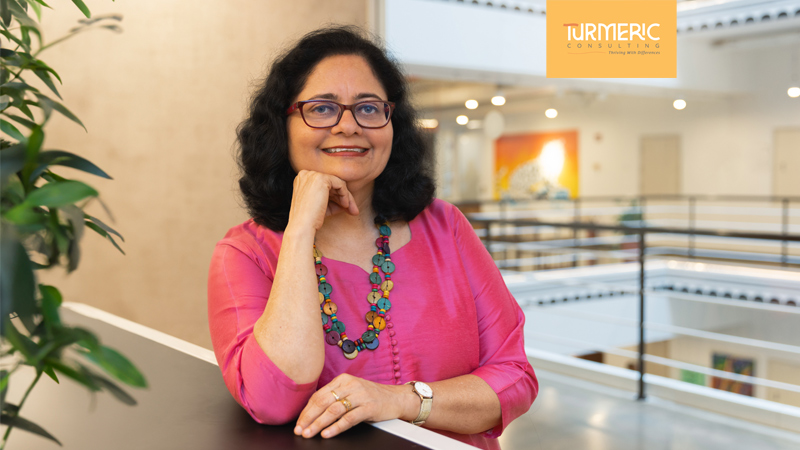
    Mumbai: HR veteran and ex-chief talent officer of Wunderman Thompson  South Asia, Roopa Badrinath who launched her diversity, equity, inclusion (DEI) consultancy – Turmeric Consulting in August has curated a bespoke program ‘Pathways to Inclusive  Leadership’. The program looks at the merits of a diverse workforce that is resilient, operates fearlessly, and recognises and harnesses the potential of everyone under an army of inclusive leaders across the organisation. While giving some pointers to interrupt biases, the program shines the light on the importance of acknowledging privilege and power and deploying it for the good of under-represented people. It delves into why people take mental shortcuts and how some daily workplace decisions in the employee lifecycle are impacted by unconscious biases leading to exclusionary practices. Gleaning from her vast experience in the A&M industry in helming the talent function for about 15 years across two large multi-national communications conglomerates, Roopa will be curating a series of programs that will benefit the A&M industry immensely.

    The uniqueness of this program is its ability to help the leaders connect the disparate dots into a  cohesive narrative. The program helps leaders establish the link between business success in a  VUCA world and DEI; how DEI and ESG are indelibly connected; reflect on the World Federation of Advertisers (WFA) DEI Charter for change, Global Media Charter, Planet Pledge, Sustainable  Marketing 2030, UN’s Sustainable Development Goals (SDGs), and World Economic Forum’s audience representation maturity framework. The program also sheds light on the role of biases,  identity, intersectionality, identity-based stereotyping, privilege, and power in pursuing inclusive leadership.  

    Commenting on the uniqueness of the program, Turmeric Consulting founder and principal consultant Roopa Badrinath said, “Just having a diverse workforce without embedding inclusion into the DNA of the organization is like putting the cart before the horse. The dividends of having a diverse workforce can be reaped only with an inclusive culture. Creating an inclusive culture requires the ongoing commitment of employees at all levels more so the leaders to drive a  cultural shift.

    ‘Pathways to Inclusive Leadership’ aspires to rouse the collective conscience of all people leaders in creating an inclusive culture where diversity and equity thrive, creating a sense of belonging and leading to deep employee engagement which in turn results in positive business outcomes.

    “While the industry has been conscientiously working on improving representation across levels,  it might be missing out on a critical aspect to make diversity thrive. And that is Inclusion. Inclusion fosters an environment of mutual respect where differences are valued and welcomed. On the other hand, Equity ensures that all individuals have access to the same opportunities while being treated fairly,” added Badrinath.

  • Wunderman Thompson South Asia’s ex-CTO Roopa Badrinath launches Turmeric Consulting

    Wunderman Thompson South Asia’s ex-CTO Roopa Badrinath launches Turmeric Consulting

    Mumbai: With a vision of helping organisations create diverse and equitable spaces for people to thrive for who they are, Roopa Badrinath, HR veteran and ex-chief talent officer of Wunderman Thompson South Asia has officially launched Diversity, Equity Inclusion (DEI) consultancy – Turmeric Consulting.  The Volatile, Uncertain, Complex, Ambiguous (VUCA) world that we live in demands resilience and sustainable operating models from organisations.  Diversity of thought emanating from a diverse workforce with different lived experiences is the need of the hour.  Turmeric Consulting is a response to the times, offering a holistic and intersectional approach to its services and specialised offerings.  This helps organisations embrace differences, create inclusive work cultures, enable them to conduct their business with purpose and engage more meaningfully with all their stakeholders.

    An award-winning professional with over 25 years of experience in the realm of DEI, HR, Training & Development, Badrinath is a DEI Practitioner and Certified Diversity Auditor (ISO 30415:2021).  She is also a Google-certified #IamRemarkable Gold Tier facilitator having trained more than 350 women worldwide in self-advocacy skills. A ‘talent enabler’, Badrinath is passionate about leveraging her vast experience in people strategy and employee experience to enable behaviour and mindset shifts through systemic interventions.  Prior to launching Turmeric Consulting, Badrinath served as the chief talent officer at Wunderman Thompson South Asia.

    The world has been inflamed by exclusionary practices based on gender, sexual orientation, caste, abilities, social status, and age, to name a few. Turmeric Consulting truly believes that workplaces can be catalysts for social change. It aspires to enable organisations to create a culture of belonging where all people feel included and welcomed irrespective of their identities.

    Deriving its name from Turmeric, known for its healing properties, to its carefully curated brand identity where each letter supports and ‘enables’ the other, the consultancy intends to partner with organisations in their DEI journey by offering end-to-end consulting, assessments, audits, and customised training programs for better business outcomes and social impact.

    Commenting on the launch of her new venture, Turmeric Consulting founder Roopa Badrinath said, “DEI is about being intentional and intersectional. It is about deliberately providing opportunities for all, creating level playing fields and ensuring that all voices are heard, so that people can realise their full potential by knowing that they matter, and their opinions and perspectives make a difference.

    Every employee wants to be valued and treated with respect and have an opportunity to succeed. They want to belong, feel supported and be able to advance. Today, Gen Z and millennials who make up much of the workforce, are extremely purpose-driven and want to see companies not only champion social causes, but also walk the talk. With organisations being held accountable for inclusive and equitable practices by multiple stakeholders, the need for DEI interventions have never been greater.

    Organisations are on the lookout for a partner who can conceptualise and contextualise scalable DEI strategies, curated to match their requirements. With Turmeric Consulting, my goal is to partner with organisations in their DEI journey, to help change mindsets and attitudes, so eventually an equitable future gains momentum.”

    “DEI is not just about compliance.  It has a business, talent, and social justice case.  A diverse workforce with diversity in thinking leads to better ideas, creative problem-solving, collaboration, and innovative products and services. Employees are emotionally and intellectually connected to the organisation, leading to a reduction in attrition.  All of this has a direct positive impact on the top line, margins, and profits of the organisations.  You can only get there when the status quo is challenged, and all the systems and processes are looked at from a DEI lens. I chose to launch Turmeric Consulting in the Independence Day month as freedom for me is embracing diversity and differences and fostering change to free us from the shackles of prejudice, biases, and judgment. While it requires consistent effort and commitment, I deeply believe in the intentionality of organisations to spark meaningful change and be a force for good. I see Turmeric Consulting as an enabler to help organisations translate their intent into action,” added Badrinath.

  • Are women able to make their presence felt in M&E industry?

    Are women able to make their presence felt in M&E industry?

    Mumbai: Media and entertainment companies must take deliberate action to foster gender diversity at the workplace. This includes instituting mentorship programmes for emerging leaders, flexible work policies and empowering the female workforce to take up non-traditional roles.

    In the corporate world, women are not just encumbered by low female labour force participation of 27 per cent, they also face deeply embedded biases in leadership roles and emerging disciplines such as technology, product development and data science. Women have always been an integral part of the Indian media and entertainment (M&E) industry since its inception. The sector which employs four million people, both directly and indirectly, has a higher female labour force participation compared to other industries with more women represented in leadership roles every year.

    In the last decade, the M&E industry has seen a transformative shift led by increasing digitisation of workflows and emerging technologies. While women are well represented in creative fields they still lack a presence in management positions. Although this trend is changing, corporates have an outsized role to play in ushering in an era of gender inclusivity and diversity at the workplace. This includes policy changes that engender not just an egalitarian work culture but also encourage women to aspire to leadership roles. For example, the Companies Act 2013 mandated that every board should have at least one woman and today women hold 17.1 per cent of board seats in India.

    “I don’t think any organisation begins by saying ‘I do not want a woman for this role’.  Nor women begin by saying ‘I do not want a challenging role’,” remarked Wunderman Thompson South Asia chief talent officer Roopa Badrinath. “By now, all organisations are aware of the benefits of having more women in their workforce.  I would like to believe that it is not that organisations do not want to hire women, it is just that they do not know where to find them.”

    “With digital becoming mainstream only in the recent past, tech and product are still relatively new roles. However, of late, we have seen the emergence of many women entrepreneurs who are creating their own digital businesses,” observed Josh country manager Rubeena Singh. “We are also seeing more women in management roles today, as compared to a few years ago. It takes years of work and experience to get to the top step and with more women today in middle management roles, there is hope of seeing many more women leaders in the coming future.

    A recent study by Grant Thornton India showed that the percentage of women in senior management roles in India is at 39 per cent versus 31 per cent globally. This pace of change has been aided by changing perception of women in the workplace as well as the shift towards hybrid style of working. “Covid-19 has taught us all to work from home at scale. This has provided women with the luxury of flexibility, a big positive, as it has enabled us to balance work and family responsibilities seamlessly,” explained Singh. “With this increased flexibility, women now have the opportunity to explore more with their careers and experiment with it.”

    In India, women do seven times more unpaid labour, i.e., household chores, as compared to men. This huge disparity was considerably reduced during the lockdown, enforced in 2020, when both men and women were working from home and divided domestic duties more fairly. “Work from home is a blessing for both genders. I see men enjoying it equally as much as women. Women are more challenged to work from home because while working from home, and you are expected to take care of the home chores, cooking, cleaning, kids, exams, tuition, teachers, etc. So, yes, I think work from home or a hybrid model is good, and it should encourage more diverse talent to come into the industry. It is suitable for the companies because A) your infrastructure cost is less and you can hire talent from vast geography,” said Altbalaji SVP marketing partnerships and revenue Divya Dixit.

    “Organisations like ours were quick to understand this and relentlessly emphasized on the importance of an empathy and trust driven leadership.  We encouraged our leaders to course correct their leadership style if need be and be more mindful of such challenges of women and focus on the well-being of their people.  The hybrid workplaces where we do not work 100 per cent from home or 100 per cent from the office will be empowering this under-served population to make choices which will be in their career interest and eventually be beneficial to the organisations,” said Badrinath.

    According to an industry observer, women in M&E have been confined to traditional roles such as HR, creative, media planning, business development, legal, corporate communication and marketing and have shied away from male dominated roles such as distribution, product development, strategy and operations. Strongly disagreeing with this view, Dixit said, “I’ve seen women take up leadership roles and challenges across industries and not just in the M&E sector. I think what needs to be kept in mind is that more women are reinstating themselves in non-traditional roles despite the glass ceiling. Today, I still think the male workforce is paid about 15-20 per cent more than women.”

    Women in corporate roles are judged by different standards by men and often face gender biased appraisals, found a McKinsey study. There is a need to retrain HR managers in the way they evaluate women candidates for leadership roles. “As an industry which almost always works on changing perceptions, attitudes and behaviours of consumers, we have a huge role to play through the work we do in breaking societal stereotypes imposed upon women,” noted Badrinath.

    “Social change takes a long time and we’re in the process of change,” according to Zee Entertainment Enterprises chief creative officer special projects Shailja Kejriwal. “If you’re a business leader you’re expected to be the ‘alpha’ and until you change the concept of a leader being ‘alpha’ a business won’t be run by women leaders who are perceived as empathetic.”

    I think as an industry and society we are heading towards a more empathetic way of working, whether it is flexible working hours or leave policies, and this is brought about by the pandemic,” she added. “It has made people question a lot of embedded beliefs and, therefore, you see things such as ‘The Great Resignation.’ What happens if corporates start realising that you need to nurture talent regardless of whether it is a man or a woman, otherwise your business won’t run? Then there is no choice but to go in the direction of dealing with things differently.”