Tag: Roop Sharma

  • TRAI urged to ensure signals to LCOs not disrupted following withdraw its hike-linked tariffs

    TRAI urged to ensure signals to LCOs not disrupted following withdraw its hike-linked tariffs

    NEW DELHI: Following the decision of the Telecom Regulatory Authority of India to withdraw its hike-based tariff orders of 27.5 per cent, the reguator has been urged to issue orders asking multisystem operators not to disconnect the signals received by last mile networks (LCO) during this crucial period of observing the tariff and arrears adjustment period (TAAP).

    The regulator has also been urged to ask MSOs to to make any package alterations, activations or deactivations in set top boxes for the smooth adjustment of the increase / hike made payable by LCOs from 1 April 2014 till 30 June 2016.

    In a detailed letter to TAI Chairman R S Sharma, both National Cable and Telecommunication Association and Cable Operators Federation of India has said that a similar direction may be given to the Pay TV Broadcasters and they be directed to bring back the tariff as existing on 31 March 2014.

    In the pre-paid MSO business model, adequate credit should be maintained by the MSO in the system during this period of our observing TAAP, for the adjustment of the increase / hike made payable by us from 1 April 2014 till 30 June 2016.

    The two organizations have also said that in case of any discrepancy or for reconciliation of accounts by the MSO, if needed, Rendition of the “Separate Accounts “kept be made in order to ascertain the discrepancy and reconciliation of the accounts.
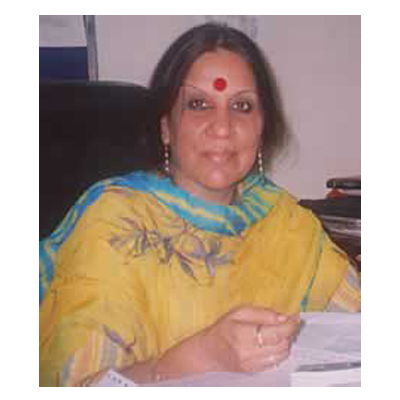
    The letter by NCTA President Vikki Choudhry and COFI President Roop Sharma have pointed out that the regulator had itself withdrawn its tariff-linked tariff orders in the light of the Telecom Disputes Settlement and Appellate Tribunal setting aside the two orders which had allowed for one installment of 15% from 1 April 2014 and the second hike of 12.5% allowed both at the retail and wholesale levels from 1 January 2015.

    In view of the TDSAT order and subsequent withdrawal of the orders, there is an immediate need to adjust the increased payments if made by the subscribers to the LCOs, LCOs to the MSOs and MSOs to the broadcasters.

    “This TAAP observed to adjust our rightful and legitimate arrears due, upon the MSO, should not be construed as a default in payment or non-payment of agreed / negotiated / invoiced payments due, under an interconnection agreement entered with the MSO in any manner whatsoever or otherwise. Statutory payment obligations towards applicable Entertainment Tax and Service Tax will continue to be fulfilled as is, during this period of observing TAAP by the stakeholders”, the letter said.

    The last mile LCOs will also enclose a copy of the last paid invoice / bank statement of the payments made / released to the respective MSO in order to also certify that there are no outstanding dues payable on them as on date.

  • TRAI urged to ensure signals to LCOs not disrupted following withdraw its hike-linked tariffs

    TRAI urged to ensure signals to LCOs not disrupted following withdraw its hike-linked tariffs

    NEW DELHI: Following the decision of the Telecom Regulatory Authority of India to withdraw its hike-based tariff orders of 27.5 per cent, the reguator has been urged to issue orders asking multisystem operators not to disconnect the signals received by last mile networks (LCO) during this crucial period of observing the tariff and arrears adjustment period (TAAP).

    The regulator has also been urged to ask MSOs to to make any package alterations, activations or deactivations in set top boxes for the smooth adjustment of the increase / hike made payable by LCOs from 1 April 2014 till 30 June 2016.

    In a detailed letter to TAI Chairman R S Sharma, both National Cable and Telecommunication Association and Cable Operators Federation of India has said that a similar direction may be given to the Pay TV Broadcasters and they be directed to bring back the tariff as existing on 31 March 2014.

    In the pre-paid MSO business model, adequate credit should be maintained by the MSO in the system during this period of our observing TAAP, for the adjustment of the increase / hike made payable by us from 1 April 2014 till 30 June 2016.

    The two organizations have also said that in case of any discrepancy or for reconciliation of accounts by the MSO, if needed, Rendition of the “Separate Accounts “kept be made in order to ascertain the discrepancy and reconciliation of the accounts.
    The letter by NCTA President Vikki Choudhry and COFI President Roop Sharma have pointed out that the regulator had itself withdrawn its tariff-linked tariff orders in the light of the Telecom Disputes Settlement and Appellate Tribunal setting aside the two orders which had allowed for one installment of 15% from 1 April 2014 and the second hike of 12.5% allowed both at the retail and wholesale levels from 1 January 2015.

    In view of the TDSAT order and subsequent withdrawal of the orders, there is an immediate need to adjust the increased payments if made by the subscribers to the LCOs, LCOs to the MSOs and MSOs to the broadcasters.

    “This TAAP observed to adjust our rightful and legitimate arrears due, upon the MSO, should not be construed as a default in payment or non-payment of agreed / negotiated / invoiced payments due, under an interconnection agreement entered with the MSO in any manner whatsoever or otherwise. Statutory payment obligations towards applicable Entertainment Tax and Service Tax will continue to be fulfilled as is, during this period of observing TAAP by the stakeholders”, the letter said.

    The last mile LCOs will also enclose a copy of the last paid invoice / bank statement of the payments made / released to the respective MSO in order to also certify that there are no outstanding dues payable on them as on date.

  • TRAI extends time for interconnect agreement reactions

    TRAI extends time for interconnect agreement reactions

    NEW DELHI: Several stakeholders have complained to the Telecom Regulatory Authority of India that most consumers are not even aware of the rates of various television channels and so the local cable operators were at the receiving end as they had to deal with the viewers.

    At an Open House discussion on the interconnection network for broadcasting TV Services distributed through addressable systems most stakeholders comprosing local cable operators and multi system operators raised issues that they said needed greater introspection. Cable Operators President of India President Roop Sharma said there was shortage of set top boxes and the consumer was not aware of what STB he should acquire.

    K K Sharma who edits Cable Quest said that no attention had been paid to the entry of OTT and the cross ownership that has come with this new phenomenon. The agreement has to be clear on this issue.

    Later, TRAI extended the date by one week to 10 June for comments on its consultation paper on
    Interconnect agreements for DAS areas. The date for counter-comments will remain the same – 17 June.

    TRAI had asked stakeholders to give suggestions on how a level playing can be created among different service providers using different addressable systems.

    It wanted to know whether there should be a common interconnection regulatory framework be mandated for all types of addressable systems.

    In the Consultation Paper issued on 4 May, it asked if there is any need to allow agreements based on mutually agreed terms, which donot form part of RIO, in digital addressable systems where calculation of fee can be based on subscription numbers. .

    The Paper has been issued not merely because the country is marching towards the last phase of DAS, but also in view of several judgments of the Telecom Disputes Settlement and Appellate Tribunal where it has disallowed payments in the absence of agreements despite mutual oral agreements.

    TRAI wants to know how the interconnection agreements entered on mutually agreed terms meet the requirement of providing a levelplaying field amongst service providers can be ensured, and the ways for effectively implementing non-discrimination on ground.

  • TRAI extends time for interconnect agreement reactions

    TRAI extends time for interconnect agreement reactions

    NEW DELHI: Several stakeholders have complained to the Telecom Regulatory Authority of India that most consumers are not even aware of the rates of various television channels and so the local cable operators were at the receiving end as they had to deal with the viewers.

    At an Open House discussion on the interconnection network for broadcasting TV Services distributed through addressable systems most stakeholders comprosing local cable operators and multi system operators raised issues that they said needed greater introspection. Cable Operators President of India President Roop Sharma said there was shortage of set top boxes and the consumer was not aware of what STB he should acquire.

    K K Sharma who edits Cable Quest said that no attention had been paid to the entry of OTT and the cross ownership that has come with this new phenomenon. The agreement has to be clear on this issue.

    Later, TRAI extended the date by one week to 10 June for comments on its consultation paper on
    Interconnect agreements for DAS areas. The date for counter-comments will remain the same – 17 June.

    TRAI had asked stakeholders to give suggestions on how a level playing can be created among different service providers using different addressable systems.

    It wanted to know whether there should be a common interconnection regulatory framework be mandated for all types of addressable systems.

    In the Consultation Paper issued on 4 May, it asked if there is any need to allow agreements based on mutually agreed terms, which donot form part of RIO, in digital addressable systems where calculation of fee can be based on subscription numbers. .

    The Paper has been issued not merely because the country is marching towards the last phase of DAS, but also in view of several judgments of the Telecom Disputes Settlement and Appellate Tribunal where it has disallowed payments in the absence of agreements despite mutual oral agreements.

    TRAI wants to know how the interconnection agreements entered on mutually agreed terms meet the requirement of providing a levelplaying field amongst service providers can be ensured, and the ways for effectively implementing non-discrimination on ground.

  • Cable operators demand a 10 year licence for better operations

    Cable operators demand a 10 year licence for better operations

    MUMBAI: If the entire digitisation process has affected any of the related bodies the most, it is the local cable operators (LCOs), who are unsure about their future completely. Keeping this in mind, the Cable Operators Federation of India (COFI) has written to the Information and Broadcasting (I&B) Minster Manish Tewari requesting him to give the LCOs a 10 year licence so that they can work on various expansion plans.


    The letter was sent to the minister on 18 December. However, the association still awaits a response.


    What is notable is that when COFI earlier met the minister on 29 October along with the Cable Operator Association of Gujarat and Rajkot, member of parliament, Mohan Bavaliya requesting for a 10 year licence for the LCOs, Tewari had accepted the proposal, but there was no development on the issue thereafter.


    In the absence of a response, the association has resorted to sending a reminder letter to Tewari.  


    “You had assured us that the licensing for registered cable operators will be for 10 years at par with the multi-system operators (MSOs) and direct-to-home (DTH) operators and that ‘registration’ for LCOs in post offices will cease,” writes COFI in the letter.


    The move, according to the association president Roop Sharma, will help cable operators show more interest in upgradation of technology and expanding business. “When the MSOs and DTH players have been given 10 year licence citing security of business as a reason, why should the LCOs not be given such a security,” she says.


    While the MSOs and DTH operators are given the licence by the I&B Ministry, “the LCOs are the only distributers of content without a licence and have registration in post offices for more than 20 years”, states the letter.


    MSOs currently have to pay Rs one lakh for a 10 year licence. “The LCOs are anyway paying Rs 1000 to the post office for one year registration. So why not charge them for a 10 year licence? At least this will guarantee them security,” informs Sharma.


    In fact, the LCOs have become more certain about attaining a 10-year license because as per the new DAS rules, the LCO has to seek permission from the MSO for renewal of the yearly post office registration. Though the association hasn’t received any response to the letter, Sharma says, “We will soon meet the minister again.”


  • LCOs give their views to parliamentary committee on IT

    LCOs give their views to parliamentary committee on IT

    MUMBAI: If one thought that the local cable operators (LCOs) would give up without a good fight for their rights, one was surely mistaken. When around 10 LCOs from across states met the Parliamentary Committee on Information and Technology today in New Delhi, they ensured that their voices were heard on digital addressable systems (DAS). The meeting that went on for two and half hours was attended by 20 members of parliament.


    While each LCO was heard by the committee, it was ABS 7 Star CMD Atul Saraf who said that the LCOs were not against digitisation, but against mandated digitisation. “Digitisation should be voluntary,” he said in the meeting.


    The LCOs represented the trials and tribulations of the cable TV consumer to the committee. “We spoke on consumer interest and what they had gained with digitisation,” informed Cable Operators Federation of India president Roop Sharma. The operators opined that the consumer should be able to choose his set top box (STB).


    Apart from Saraf and Sharma, the others who were a part of the committee included: Pramod Pandya, Swapan Chowdhary, Jeevan Khanna, Ajeet Singh, Sudhish Kumar, GS Oberoi, Gaurav Gupta, Chandradeep Bhatia and Paramjit Singh.


    “The consumer should be able to buy portable STBs which gives him access to internet, video-on-demand and other facilities. Why should every consumer be burdened with the same quality of STB. There should be a provision that if someone wants to buy an expensive STB they should be able to do so,” said Sharma.


    The operators also suggested that since it is the consumer who pays for the STB, they should be allowed to own it. “Also consumer should have the option to change STBs and his service provider. Currently if Hathway seeds a STB in a consumer’s house, they cannot switch to another MSO,” said Sharma to the committee.


    The LCOs also raised concern over their own existence. Many in the meeting felt that the LCOs have been left at the mercy of the MSOs. They also said that the process of billing and the power to switch off STBs should be with the LCOs and not MSOs.


    The operators put a point stating that TRAI should first successfully complete digitisation of phase I and II and then start the work in phase III and IV.


    On the issue of entertainment tax, the LCO representatives opined that there should be uniformity in taxation throughout. “Also we told them that entertainment tax should be collected per household and not per TV set,” informed Sharma.


    The MPs asked the LCOs for solutions to the issues with digitisation, to which the LCOs suggested that the long pending Broadcasting Bill and the DTH Act needs to be brought in to regulate and control the  the broadcasters and DTH players respectively.


    Also a point on implementation of vertical monopoly and cross media holding on immediate basis, before going ahead with further digitisation was made.
    The committee will also be meeting Information and Broadcasting Minister Manish Tewari in a couple of days, after which they will come out with a recommendation which will be submitted to the I&B Ministry.

  • Kanpur LCOs forced to pay user charges for cable despite any provision by TRAI

    Kanpur LCOs forced to pay user charges for cable despite any provision by TRAI

    NEW DELHI: Although there is no reference to any charge being levied on right of way given to cable television operators to use electricity poles after launching of digital access system, the Kanpur municipal corporation has forced LCOs to deposit up to Rs 10,000 even as a final settlement has yet to come.

    Sources in the Information and Broadcasting Ministry as well as the Telecom Regulatory Authority of India denied to indiantelevision.com any mention of charges and said the law only spoke of facilitating the work of LCOs.

    Furthermore, LCOs and MSOs in Kanpur confirmed to indiantelevision.com that no such charge is being levied in the other cities in Uttar Pradesh – Allahabad, Lucknow, Agra, Ghaziabad, Meerut and Varanasi – covered in Phase II of DAS.

    The Kanpur municipal corporation had recently imposed user charges of Rs 0.50 per meter on cable operators who operate via Kesco, Nagar Nigam and telephone poles.

    The LCOs had gone on strike last week when Nagar Nigam officials set a deadline for depositing user charges and also cut the cable lines of some operators at various places.

    During the meeting with state chief minister Akhilesh Yadav, the operators urged him to make an inquiry as they were being heavily taxed, which included central tax, state tax or entertainment tax and now the new user charges. Yadav had then asked the divisional commissioner of Kanpur to make an inquiry and settle the issue.

    However, municipal commissioner N K Singh Chauhan told LCOs that the government had issued the order for charging the operators with user charges.

    Cable Operators Federation of India president Roop Sharma and All India Dish Antennae Aavishkaar Sangh president A K Rastogi strongly condemned the action. Rastogi said his organisation would help the LCOs in whatever manner possible.

  • TRAI decides to restrict entry to Open House on Media Ownership

    TRAI decides to restrict entry to Open House on Media Ownership

    NEW DELHI: Alarmed by the disruption of the Open House on Media Ownership in Hyderabad by local cable operators and multi-system operators, the Telecom Regulatory Authority of India (Trai) today issued a notice restricting entry into the Open House to be held in Delhi on the same issue later this week.

    In a mail sent to some prospective participants, Trai asked them to come with indentity cards and to register themselves in advance.

    The Cable Operators Federation of India President Roop Sharma said this would mean cutting out a large section of consumers since the mail has been sent to a select few, and also bar those who have not received the mail. The initial notice on the Trai website says ‘Interested Stakeholders/industry representatives are invited to participate.’

    She said that this also amounted to a violation of the transparency clause enshrined in Section 11(4) of the Trai Act.

    During the Open House in Hyderabad yesterday, a large number of LCOs and MSOs wanted the Trai officials to attend to their queries and the meeting had to be called off mid-way.

  • LCOs say taxes have to be paid by MSOs under DAS

    LCOs say taxes have to be paid by MSOs under DAS

    NEW DELHI: Organisations of cable operators in Delhi have expressed surprise at reports that the Delhi Government is attempting to charge some local cable operators with evading taxes.

    The local cable operators (LCOs) say that all the set top boxes are being imported by the multi-system operators (MSOs) and the exact number is also available with these MSOs who file their records with the Telecom Regulatory Authority of India (Trai). The action of Delhi Government is therefore misplaced, the LCOs say.

    Cable Operators Federation of India president Roop Sharma said it was for the importer of the MSO to pay VAT or other taxes and this did not fall in the realm of the LCO.

    Under the Digital Addressable System (DAS), even the entertainment tax has to be paid by the MSO who generates the bill, and the LCO does not come into the picture. Prior to digitisation, the LCOs generated the billing for the consumers, Sharma added.

    She stressed that the LCOs had supported digitisation as they were consistently being accused of under-reporting, and wanted to ensure transparency.

    Earlier reports had said that the Delhi government had alleged that LCOs had been evading taxes by concealing the number of connections.

    The Department of Excise and Entertainment Tax had issued notices to nearly 1,000 of 2,200 operators in the city warning them of cancellation of licences.

    The process is likely to take two to three months, according to officials. According to 2011 census, Delhi has 3.341 million households with 88 per cent TV penetration, which implies that about 2.9 million households have TV connections.

    It is understood that the government has collected nearly Rs 1.21 billion against a target of Rs 670 million, of which Rs 300 million has been collected from cable operators. This collection last year was nearly Rs 330 million.

  • CAS REVIEW: MSOs claim adequate STB stocks, admit consumer order slowdown

    CAS REVIEW: MSOs claim adequate STB stocks, admit consumer order slowdown

     NEW DELHI: Multi-System Operators have told the sector regulator that there is no shortage of STBs anywhere in the country, but admit that there has been a slow-down of consumer orders, for which the MSOs themselves and broadcasters need to make various changes in their strategies.

    “None of the players, neither the cable operators, nor the broadcasters, not even us, have been reading the consumers’ minds, and we better take care of that from now,” a senior official of one MSO told indiantelevision.com today.

    Meanwhile, although these are “early days”, the trend that has emerged as a result of data analysis of customer choices as expressed in the forms submitted (for those who have opted for Cas in Delhi and Mumbai) “is bound to create major upsets in the market, especially in how the media buyers look at where to put their monies,” the official said.

    This was in the offing since the early days of Cas implementation, and the announcement could cause a mild to heavy temblor in the market.

    Meanwhile, cable operators here reported also that in some pockets people were not taking STBs because of regional preferences. In the predominantly Bengali neighbourhood of Chittaranjan Park, a fairly posh colony, many have stayed with the Bengali FTAs and decide to hang on to whatever rest they are getting in the FTA basic tier package (Rs 77, plus taxes).

    Likewise, in the Nepali dominated Vasant Gaon area and for people in RK Puram, where there is a predominance of South Indians from various states, it has been noted that since their most popular regional channels are FTAs, they have stayed away from STBs, Roop Sharma, president of Cable Operators Federation of India told this correspondent.

    None of the three MSOs approached in Delhi by this correspondent so far have divulged the clear analysis, saying that the Telecom Regulatory Authority of India (Trai) has asked for these and they can reveal the data only after reporting to it.

    But it is known by now that most of those who have taken the STBs have opted for a la carte and not packages or bouquets. “This clearly shows that the Indian customer knows its mind far better than we had anticipated,” sources admitted.

    CUSTOMERS IGNORED: In the soul searching process, media experts are now saying that the slowdown has been because of various reasons, primarily ignoring the customer.

    First, the DTH players promised to supply boxes and dishes but could not do so on time. In the first instance, they gave dishes but not the STBs. Then, they gave prepaid boxes, so when the month was over, the streaming was disconnected. Then, people started comparing that this never used to happen with the “cablewallahs”, who would wait till you paid and not disconnect.

    In fact, the “facelessness” of the DTH players, who operate through the BPOs, have been one reason for people in chunks getting put off by them, though it is a fact that DTH players have scored heavily in the bordering areas of Delhi proper by giving attractive prices to housing colonies.

    At the same time, MSOs admit that they too had failed to gear up to the search in the first 14 or 20 days of Cas implementation. “The packages that we gave did not meet the needs of the consumer,” said one MSO spokesperson.

    “We also did not make a clear statement on what package a cable home having two or more TV sets would get as discount, and no clear policy emerged in the beginning, and the packages were arbitrarily decided by us,” he added.

    Analysis and feedback from ground level fitters from cable operators show that due to this, most families set a budget for themselves as per their pockets, and decided to take channels they wanted, which is why they chose a la carte.

    This has caused major changes in the viewership patterns, and a lot of “myths” of TRP supremacy claimed by channels could come for a shake up, media experts aver.

    FENCESITTERS APLENTY: Data analysis shows that a lot of people are sitting on the fence, so far as fresh demand for STBs is concerned.

    As reported by indiantelevision.com earlier, MSOs say that there could be some kind of pace picking up with the World Cup cricket coming up, but they hold that much more than a global sporting event has to be looked into for the “second phase of Cas rollout” to be successful.

    MSOs have told broadcasters to tie-up with them to push for boxes. They have made several proposals so far on this with the major broadcasters.

    Though a recent seminar in Mumbai generally held that availability of STBs would be crucial for success of Cas and would rake in the moolah for all the players, reports emanating suggest that there is no shortage of boxes.

    All three MSOs, WWIL, Hathway as well as Incablenet have ample number of boxes, “which we have informed Trai about”.

    “We have told Trai that there is an urgent need for MSOs and broadcasters to tie up and create packages that are of substance to the consumers, which will be in their own best interest,” the official said.

    As of now, however, there is no such consensus emerging on a market that is there for the taking.