Tag: Ronnie Screwvala

  • Disney India announces Siddharth Roy Kapur to replace Ronnie Screwvala

    Disney India announces Siddharth Roy Kapur to replace Ronnie Screwvala

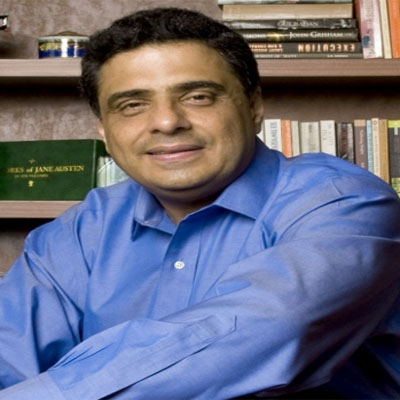
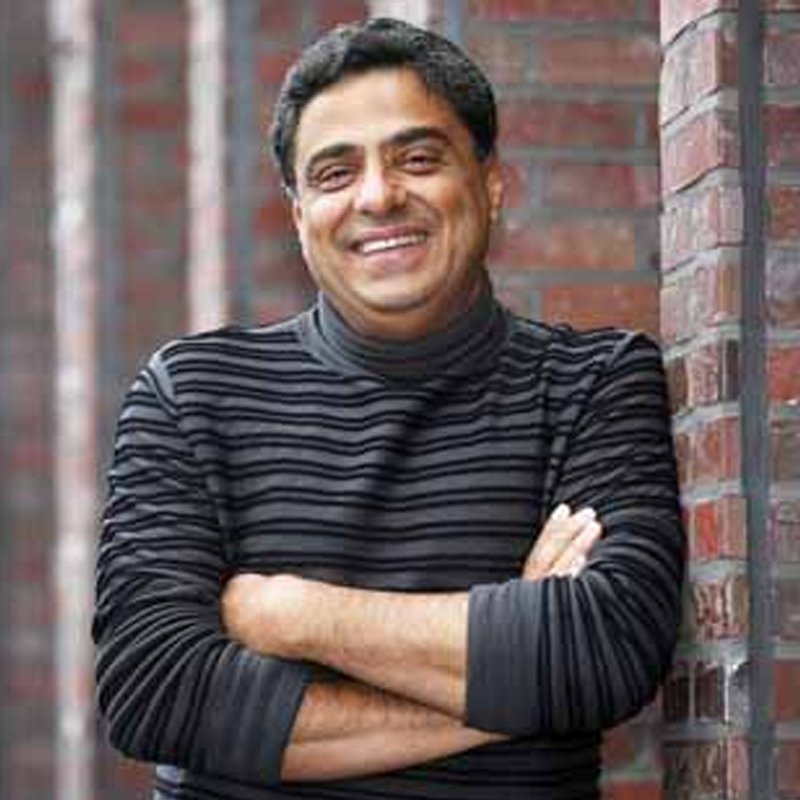
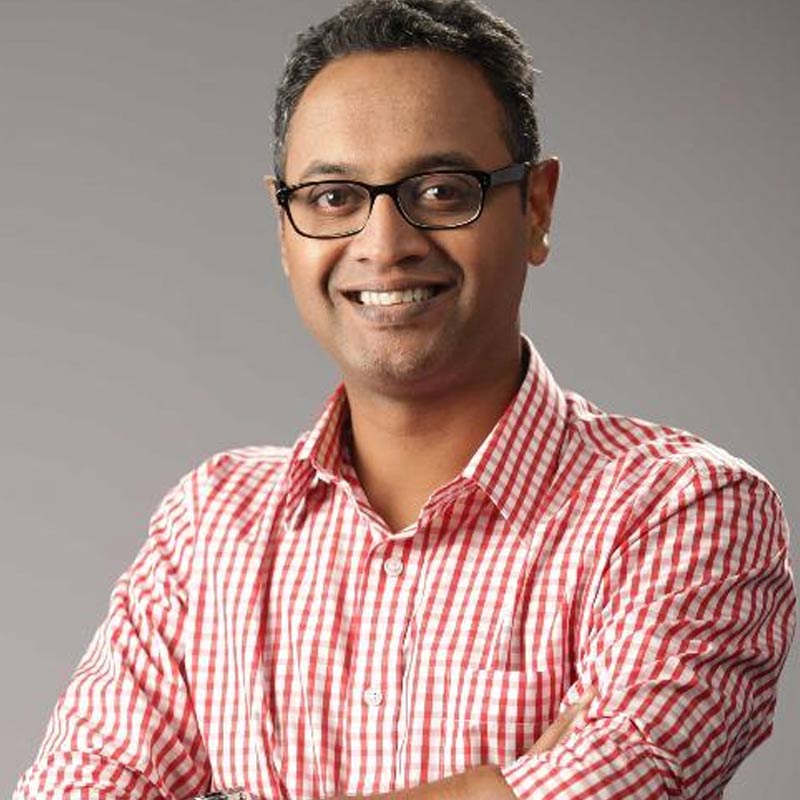
    MUMBAI:  The Walt Disney Company (TWDC) today announced that Managing Director Ronnie Screwvala will step down on 30th June 2014 and  Siddharth Roy Kapur, currently Managing Director of Disney UTV’s studio’s business, will take over the Company’s India operations.  Siddharth Roy Kapur will become managing director of TWDC India effective 1st January 2014, and Ronnie will assist in the transition until 30th June 2014.


    Ronnie, started off as a local cable TV operator in Mumbai with cable TV service under the name ‘Network’ in 1981. He then went to work with Western Outdoor Studios and then started  UTV Software Communications in 1990 along with Zarina Mehta, and Deven Khote.  It was in February 2012 that the Walt Disney Company acquired a controlling interest in UTV by buying out Screwvala and other shareholders interest and it later even delisted it from the stock market. Since then he has been ranked among the most influential people by several publication right from Time magazine to Esquire and what have you.


    Ronnie is throwing an early farewell party tonight for his colleagues at his south Mumbai residence. A well deserved celebration if there ever was one!

  • Shahid: This one is for the critics

    Shahid: This one is for the critics

    MUMBAI: Shahid is a bio-pic of a Mumbai lawyer, Shahid Azmi, whose story itself is a readymade film plot with so many twists and turns and an untimely death as he was shot down in his office at the young age of 32.

    Shahid and his three brothers, along with their mother, occupy a mezzanine one-room house in a congested Muslim locality of Mumbai. Shahid is keen to study and for this purpose argues with his family to keep the lights on at night even though it disturbs them. One such night, Shahid hears some commotion in the area and steps out to check the cause. There he sees bodies burning or slain with swords. Wanting to return home, he keeps knocking but the family is not sure it is him. The incident makes an instant impact on Shahid who, on an impulse, leaves home to head to Pakistan-occupied Kashmir to train as a terrorist. He soon realizes that he was in the wrong place and runs away to head back home.

    But here he is arrested for plotting against the state and charged under TADA to serve seven years in Tihar jail, Delhi. Like Shahid, there are also others behind bars even though they are innocent. The jail also has an inmate belonging to a terrorist group who tries to brainwash Shahid and other Muslim inmates to join the group. But Shahid is lucky to meet a character played by Kay Kay Menon, and a professor, both framed under false charges. Menon warns him to keep away from bad elements and advises that if he wanted to change the system, he needed to join it. Shahid decides to study further from within the jail and the professor helps him. Soon he is acquitted.

    Producer: Ronnie Screwvala, Siddhartha Roy Kapoor, Anurag Kashyap, Sunil Bohra.
    Director: Hansal Mehta.
    Cast: Rajkumar, Kay Kay Menon, Mohammed Zeeshan Ayub, Tigmnshu Dhulia, Vipin Sharma, Prabhleen Sandhu, Yusuf Hussain.

    After being freed, Shahid goes on to finish his masters in law and joins a renowned law firm where he lasts only few months before going on to work independently. He fights for the Muslim youth charged under another stringent law, POTA, but who Shahid thinks are innocent. Shahid fights these cases pro bono on requests from NGOs, winning 17 acquittals in his seven-year career before being shot dead defending a 26/11 accused who too was later acquitted by the Supreme Court.

    The film’sportrayal of the Muslim pockets of the city looks authentic. While it would have been tempting for the director to linger a bit longer on riots and the Kashmir training parts, he wisely avoids it, keeping only as much footage as needed to make the point. The jail portion is made to look too easy and the inmates look like they are on a picnic. Though a lot of the film is shot in court rooms, the court rooms look shoddy. However, the court duels between Shahid and opposing lawyers are interesting. Rajkumar playing Shahid is excellent throughout the film, whether in his interactions with family or clients; his portrayal of a concerned lawyer is lifelike. Kay Kay Menon, in a brief role, is pleasant. Mohammed Zeeshan Ayub, Prabal Punjabi, Tigmanshu Dhulia, Vipin Sharma, Prabhleen Sandhu and Baljinder Kaur (as Ammi) are all very good.

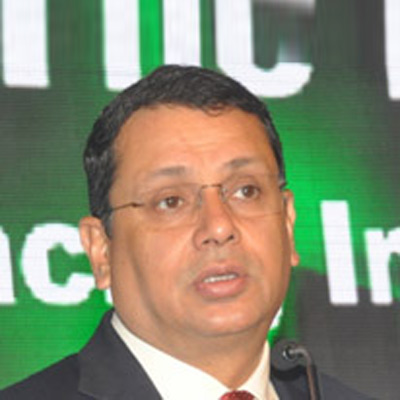
  • Absence of regulation is as bad as over regulation :Uday Shankar CEO Star India

    Absence of regulation is as bad as over regulation :Uday Shankar CEO Star India

    All of us took stewardship of our companies in the last two decades, when robust economic growth created an air of optimism and confidence in the country, and about India in the world. We gather today in the midst of an extremely turbulent time for the Indian economy. Beyond shrinking GDP growth and falling currency, what is truly remarkable is that the spirit of optimism seems to have been replaced by one of apprehension and despondency.

    It is therefore appropriate that this industry forum has as its theme, renewal and innovation. In my mind, the forces that unleashed our exciting growth story are the very same as those that can inspire innovation and renewal in our industry. And at its heart is our willingness to be resolutely open to the world, to new capital and to new talent. But no renewal can happen, either in our economy or in our industry, if we are not brazenly open to new ideas.

    It is in this context that I had made the point a few months ago that there is no media industry without free expression. If anything, the last few months have proven to us that there is no Indian growth story without free enterprise. Because free expression and free enterprise go together. Our ability to improve the lives of millions of Indians is firmly tied to our ability to unshackle businesses; in allowing them the space and the imagination to create new products and services.

    Every time we have made it a bit easier for entrepreneurs to conduct business, we have generated enormous dividends through growth and new jobs. Every time we have made it easier for investors to bring in capital, we have created new markets and services.
    _____****_____

    In many ways, the dramatic economic reforms of 1991 were accidental. It did not emerge from a strong national consensus that we needed to change the direction of our post-independence path. It came from a shocked polity that opened the country for business only when there was no other conceivable option left on the table. And, yet, that accidental moment created the space for a new generation of Indian entrepreneurs whose enterprise and initiative not only created wealth but resulted in millions of new jobs. It also helped India achieve a near double digit annual growth triggering a social transformation the pace of which, if sustained, was capable of lifting India out of poverty in a generation. Today, there is a vociferous debate in play on whether India can afford a $22 billion food program. 

    What is truly remarkable is it is evidence of how much distance we have moved. Two decades ago, the topic would not even have come up!

    Of course, business cycles can ebb and flow. But, what stalled India’s growth and employment creation was our remarkable ability as a country to create a web of processes, regulations and norms that make it extremely difficult for entrepreneurs to conduct business. And in a hyper competitive global economy, where countries actively nurture promising sectors and constantly renew themselves to attract new investments, we really run the risk of being left behind.

    While skepticism about reforms could have been justified 20 years ago, what is surprising is that we are still debating the value of reforms and unshackling businesses when our own recent history is the most compelling testimonial to the power of entrepreneurship. Every time we have made it a bit easier for entrepreneurs to conduct business, we have generated enormous dividends through growth and new jobs. Every time we have made it easier for investors to bring in capital, we have created new markets and services.

    Nowhere is this dichotomy more prevalent than in the media and entertainment industry. Twenty years ago, the real face of liberalisation for most Indians was the appearance of dish antennas on roofs. It was a compelling signal to the world outside that India was open for business. We were ready to embrace new ideas, wherever they originated. And we were confident enough in our own identity to be open to new worlds.

    (L-R) Walt Disney India MD Ronnie Screwvala, Star India CEO Uday Shankar, I&B Minister Manish Tewari, CII Director General Chandrajit Banerjee

    And in that period, the industry saw a remarkable transformation in its size and in its scale. From one state run broadcaster with limited reach and less than five hours of daily content, we now have over 800 channels telecasting more than half a million hours of original content to 700 million viewers. From around 3,000 newspapers in 1991, we have grown to more than 80,000 newspapers today, with most of the growth coming in the vernacular languages. Our movie industry has grown 20 times. The industry has evolved from a disorganised community dominated by a few players to a highly competitive sector that is increasingly better organised and better run. From 750 million in 1991, it is now an industry worth 15 billion dollars. It supports six million jobs directly and probably twice more indirectly. It has both facilitated and absorbed new technologies. And, it has created a compelling platform to showcase India to the world. So much so that last year we set ourselves an ambitious target of $100 billion for the sector.  And, yet, this spectacular success in serving the Indian consumer and in creating employment has not been met with more reforms and more openness. Surprisingly and frighteningly, we seem to have regressed in many ways. Successive governments have created a web of policies and regulations which while they may have had the honorable intent of protecting the consumer has had exactly the opposite effect.

    Today, I would like to call out two big challenges the combination of which have had stifling impacts on innovation in the industry.

    Our television viewers today have easy access to global content, whether through online portals, through network broadcasters who are airing shows closer and closer to global launch dates, or simply through piracy. This has brought about a burning need for innovative, original content. However, for an industry that boasts of over half a million hours of original programming every year, how much of it is innovative content that we are proud of having brought on to the screen?

    The reason is simple. Our ability to charge for content has nothing to do with the scale of our investments in it. If a bold producer does decide to risk capital on cutting-edge, new idea, today he has no liberty to price his creative work. Why then should he take a risk when he stands no chance of getting a decent return on his investment even if his production becomes a blockbuster success? The result is tired, stagnated, insipid content for the consumer. No policy has done more damage to this industry than that of price controls on television content.

    What is amazing is that we have compelling evidence in the same industry that shows that abolishing price controls can dramatically improve consumer choice. Freeing up ticket pricing in cinemas created the foundation for a dramatic improvement in the quality and diversity of movies that came to the market. Without raising costs substantially for the price conscious consumer, it has financed a generation of content that has appealed to both niche and mass audiences.

    It is difficult today to avoid the persistent debate about the quality and health of news channels. But, there is no question at all that it is the restrictive tariff regime that has prevented news broadcasters from producing high quality content for an audience that is much smaller than that available for general entertainment or sports. Ironically, a regime that was brought to protect the consumer has ended up doing the most damage to consumer choice and quality.

    Even more frightening than price control is the creeping controls on free speech. For a country that prides itself on its deep democratic ethos, the last decade has been characterised by a creeping inclination to impose controls on speech and expression. It may have started with opposition to a book but controls on expression seem to mark new grounds every year. Small film makers who decide to invest in off-beat movies are plagued by having to defend their movies in litigation because a minority is offended by it. Films cleared by the censor board are banned by state governments, and often blocked by non-state actors under the threat of violence. TV shows attempting to break through the clutter find their characters’ voices beeped out. Even the titling of a movie as the Dirty Picture seems to be an open invitation to trouble. The result is work that is so mundane that it sparks no questions, elicits no debate and pushes no creative boundaries.

    This month, Star will launch Mahabharat on television. It is a show that we have made with a lot of passion and on a scale and grandeur that has never been seen on television to date. And, yet, a few days before the launch, what worries me the most is not the quality of the series. What keeps me awake is that some lunatic fringe somewhere in the country would raise some absurd objection to the show.

    It is no surprise then that this tyranny of the minority has now reached the central halls of Parliament. Today, a small but vocal group can claim both the moral high ground and have the political legitimacy to hold to random India’s legislature for a session, a day and sometimes more. This should not come as a shock at all. For, behind this practice, is the very same culture that we have nurtured and indulged for too long. The culture that grants legitimacy, cover and sometimes state protection to the very few who are offended or bothered by the expression of another group, and who can take to the streets and can vandalise private and public property with impudence. It should not be surprising that when we start putting limits on new ideas and free expression in our cultural space, they will find their way into our political and economic spaces too.

    It is difficult today to avoid the persistent debate about the quality and health of news channels. But, there is no question at all that it is the restrictive tariff regime that has prevented news broadcasters from producing high quality content for an audience that is much smaller than that available for general entertainment or sports.
    _____****_____

    The collective impact of regulation and the creeping tyranny of the minority have stifled innovation in our industry and, dare I say, in the economy as whole. At 15 per cent, we may grow at thrice the rate of the GDP but that is more a reflection of our topline economic growth than the health of our industry. At this rate, it will take us another 15 years to hit $100 billion in value and by then, we will be just three per cent of the world media market. This is just unacceptable.

    Make no mistake. I am definitely not arguing for a world without regulation. History has taught us that free enterprise is well served by clear rules and policies. Absence of regulation is as bad as over regulation.

    But what is desperately needed is a consensus on what to regulate and how much. It is this lack of consistency in regulation that is impacting multiple industries. At exactly the moment when our economy is poised for the next big leap, we have found a way to make it harder and harder for our companies to innovate, to create new products and services, and to find new markets.

    Ladies and gentlemen, I do hope that over the next two days, as we explore new ways to grow our sector, the resounding message from this Summit is that, as a sector and as a country, we will remain stubbornly open to new ideas and committed to expanding the spaces for free expression.

  • UTV Stars and bindass big on digital

    UTV Stars and bindass big on digital

    MUMBAI: If one could say that digital and youngsters go hand-in-hand, then it won’t be wrong considering the amount of time youngsters spend online.

    A look around would be proof enough – almost everyone is busy with their mobiles, tablets or laptops. Therefore, for a youth channel to have an online presence is as important as breathing!

    Disney-UTVnetwork which has two channels – bindass and UTV Stars – under its banner caters largely to youngsters. And the channels are making/taking full efforts to take these brands where the youth are.

    “A strong online presence across YouTube, Facebook, Twitter and web destinations is a significant step in that direction… Our strategy is to provide our web users with constant updates on our programming and also create a platform for the youth to get together and enjoy content on Bollywood and youth oriented themes,” says Disney UTV’s COO – Digital Sameer Ganapathy.

    The number game

    Both channels – binadss and UTVStars – have a strong presence on Facebook, YouTube and Twitter wherein they try to give their audience something different from the rest. For example, when the IPL was on, unlike others who just give the score or the wickets which were available on all portals the channel gave its target audience behind-the-scenes insights on cricketer’s wives and how they were egging on and cheeringfor their spouses as they battled for India on the cricket pitch.

    Disney UTVs COO – Digital Sameer

    Ganapathy feels constant updates

    on the digital platforms will create

    traction among the youth

    Apart from that, the network gives importance to humorous content in its posts across genres such as technology, automobiles, Bollywood, travel, sports etc.

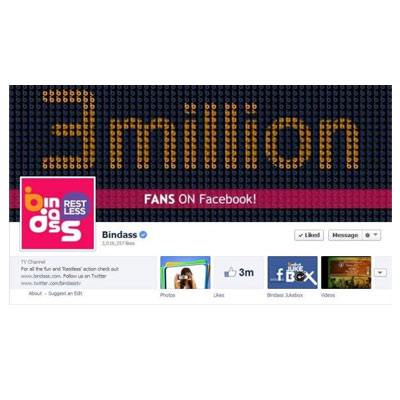
    On Facebook, bindass has over three million fans which lets them boast of being the most engaged youth entertainment (channels) on the social networking site in the country. As for, other networking sites, on twitter it has more than 6,600 followers and on YouTube (for which bindass creates original content) it has more than 64 million views with close to 90,000 subscribers.

    UTVStars which was launched around two years ago (Aug 2011) has 900,000 fans on Facebook, 20,000+ followers on twitter and 88 million views on YouTube with 96,000 subscribers who have access to all the shows and behind the scene videos.

    The channel’s digital team knows that all three platforms differ, but each is important in its own way as the objective it serves varies. Facebook and Twitter let them interact and engage with their fans. YouTube channels serve two purposes – the first as a destination for viewers to catch up on TV shows that might have been missed out on TV, and the second as to lure new audiences on the back of original content.

    Connecting with content

    UTV group CEO and founder chairman Ronnie Screwvala is normally known to quip: “I’m original, so I want original.” And the entire group has made that it’s mandate: hence, the initiative to create fresh original content online too. “80 per cent of the audience on YouTube is male. 

    Hence, we created a new destination for young men looking for the edge in the mating game – AXE Chickipedia, an entertaining webisodic original content series around a young guy and the funny situations he faces in the mating game! We took engagement and participation to a whole new level by giving viewers a chance to share their own mating game experiences, and the funniest ones became a Chickipedia episode. Eventually, 40 per cent of our 26 episodes were made from stories shared by our viewers themselves.” brags Sameer.

    Chickipedia has 2.1 million video views, with 60 per cent audience retention.

    Chickipedia’s success encouraged the team to come up with a new show MENtals. Launched earlier this year, it focuses on situations reqular girls in romantic relationships face – albeit with a humorous undertone.

    Music is one of the main categories which the channels focuses on.

    “Music is an important aspect of the lives of youth and particularly at bindass we have always maintained a compelling and healthy mix of shows and music. Following that philosophy, another unique proposition that we recently launched is bindass Jukebox”, says Sameer.

    The application combines the experience of Facebook with that of television viewing making it interactive. Through bindass Jukebox users are able to rank music by voting for their favorite songs listed and interact with other users as well.

    It gives users a chance to select their favourite song, dedicate the song to their friends and loved ones and most importantly watch their dedication message along with their profile image live on the channel. The playlist is created on the basis of users’ Facebook votes and is then played out on television within three hours from the time voting starts. This works well as it provides almost instant gratification to young folks, as it allows them to get peer recognition, especially when their profiles are seen on TV.

    Similarly, UTV Stars has Tia’s Request show. Users vote for their fav songs on the UTV stars Facebook page and this gets aired on the TV channel along with their dedications.

    Money matters

    When asked to explain the sources of revenue on the online platform, Sameer says, “With YouTube, monetisation occurs through run of network inventory that YouTube runs, sponsorships through show integrations as well as now with subscriptions. We are exploring subscriptions for our premium content while building audiences and viewership through ad-support both via run of network inventory monetisation as well as sponsorship integration.”

    As for Facebook and Twitter, they are yet to come up with a native monetisation model for publishers. “However, through using our engaged audience base on these platforms, we are creating transmedia properties like bindass Jukebox on Facebook as well as platforms such as sponsored tweets to monetise audiences there. We plan to increase such media properties that can be monetised,” he adds.

    One thing is clear that since youth entertainment is a dynamic genre and hence, it is important to go beyond TV and create a strong presence where young people tend to spend their time whether it is Facebook, Twitter or YouTube. And gauging from their ongoing initiatives, Bindass and UTV Stars, seem to be taking the right steps.

  • M&E industry need to grow at more than 12%

    M&E industry need to grow at more than 12%

    MUMBAI: The Media & Entertainment industry needs to get its act together to grow at a rate of more than 12.5 per cent to be on par with other sunshine sectors, said The Walt Disney Company India MD Ronnie Screwvala.

    Srewvala said the India M&E sector has success written all over it provided the industry comes out of its complacency. He also said that innovation and disruption will be the norm.

    "The industry is projected to grow at 12 per cent. However this growth is not enough as other sunshine sectors are growing at a much faster pace," said Disney India‘s head honcho.

    Screwvala was convinced that India has the creative talent that would help it take the next big leap.
    He also said that digitisation will change the dynamics of the broadcast industry. The early results of digitisation has been encouraging, he said.

    The benefits of digitisation will only trickle down after two to three years.

    "We have been waiting for digitisation for 20 years and it has finally happened," he said in a closing keynote address at Ficci Frames.

    Joining debate with the industry on ratings system, Srewvala said the solution for a robust television ratings agency lies within the industry. The fact that almost 70 per cent of television households are outside the current ratings system is a matter of concern, he added.

    On an optimistic note, he said that TAM is now covering more homes than it was covering earlier.

    New media is a huge opportunity for the industry. However, the key is to find the right business model. India is one of the biggest mobile phone markets, which is also encouraging.

    A Rs 1,000 crore blockbuster is not out of reach in future, he asserted.

    Print, unlike other markets, is still growing in India at a healthy pace. The India DTH market is the biggest in the world. However, monetisation remains a concern.

    On the contentious issue of censorship, an optimistic Screwvala said that India‘s track record is still commendable. The need, though, is to take it to the level of matured democracies.

    Regional market‘s, he said, had shown phenomenal growth and are the future growth markets. Understanding consumer will also be key to growth.

  • Kai Po Che: Newcomers put up an impressive performance

    Kai Po Che: Newcomers put up an impressive performance

    MUMBAI: Kai Po Che is an adaptation of the Chetan Bhagat novel, Three Mistakes Of My Life, about three friends living the Gujarat dream – to become entrepreneurs. This is Bhagat‘s third book to be made into a film after One Night @ The Call Centre (Hello) and, Five Point Someone (3 Idiots).

    Producers: Ronnie Screwvala, Siddharth Roy Kapoor.

    Director: Abhishek Kapoor.

    Cast: Sushant Singh Rajput, Raj Kumar Yadav, Amit Sadh, Amrita Puri, Digvijay Deshmukh, Manav Kaul.

    Raju Hirani‘s 3 Idiots turned Five Point Someone into a cinematic miracle which went on to become the highest Hindi grosser so far. Kai Po Che has the tough task of bettering it or, at least, living up to it. To start with a small correction with spellings, it is ‘Chhe‘ in Gujarati language and ‘Che‘ means nothing in Gujarati.

    A pol in Ahmedabad is a congested one-track settlement where households live as one family; the main doors are always open and you don‘t have to knock to enter. It is typically an old Ahmedabad phenomenon and Hindu and Muslim localities usually share demarcations by a lane or two.

    Govind (Raj Kumar Yadav), Ishaan (Sushant Singh Rajput) and Omi (Amit Sadh) have grown up together in one such pol and are more like brothers than friends. Still, all three are poles apart. Yadav is practical and ambitious with entrepreneurial instincts, Rajput is a cricket fanatic and Sadh is all brawn and no brains, just happy to belong. The centre point of this pol is a temple where Sadh‘s father is the chief priest while his mama, Manav Kaul, is the trustee and treasurer with heavy leanings towards a political party.

    Yadav gives tuitions to local kids and helps his mother with her home industry of delivering popular Gujarati snacks like khakhras and theplas. However, his entrepreneurial side won‘t let him rest with just so little. Since Rajput is a cricket enthusiast and spends time coaching the neighbourhood kids, and Sadh‘s family controls the temple, he suggests they set up a shop in the temple premises selling sports goods. Nobody is convinced initially with the idea but, Sadh being his only nephew for whom he has grand plans in politics, Kaul finances and encourages them to go ahead. The shop is quite a success and there are picnics and celebrations for the trio.

    The lives of three friends are soon destined to follow different tracks. Yadav carries on with his zeal to expand and is in search for a bigger outlet somewhere in the developing parts of the city, finally settling on a mall, Sadh is gradually drawn into politics by Kaul while Rajput has finally found his calling; he has met a young Muslim boy, Digvijay Deshmukh, in who he sees potential to be a cricket star some day. Rajput takes it upon himself to train the boy with all his time and resources. That is when the 26 January, 2001 earthquake hits Gujarat. Among others it has also destroyed the mall in which the three had invested Rs 500, 000 loaned by Kaul.

    No sooner has the calamity been forgotten, the infamous Sabarmati Express episode happens a year later, leading to communal riots. The three have different priorities: Yadav is worried he has impregnated Rajput‘s sister, Rajput wants to save Deshmukh and his family members while Sadh, who has lost his parents in the train disaster, wants to avenge them and is on the move with rioting mobs.

    The first half of the film is all about three friends, their carefree life and finding a cause while post interval, the perspective changes to wider issues, the riots and how they changed lives.

    The feel good film suddenly turns heavy, stuffing in too much. The story of three friends through various moments in their lives does not touch the viewer at anytime. Being a period-specific story, the director has not been very particular about the city he is dealing with. The pol in the story opens on the main road showing traffic, there are green and yellow CNG rickshaws in 2001, and many malls in the making. None of this is accurate. The interiors are shown to be dull and drab which don‘t make for pleasant viewing. There is extensive use of Gujarati language but it neither has Ahmedabadi twang nor is pronounced properly by non Gujarati artistes. The title Kai Po Che has no relevance to the story and the film has just one passing kite-flying scene while kite flying is a passion in the city climaxing on 14 January every year. Also, the title, which is a cry that goes when an opponent‘s kite is cut, it means little to those outside of Gujarat and Mumbai. The songs are soothing.

    The new faces in the film, Yadav, Sadh as well as Rajput do very well while Amrita Puri in her brief role is suitably apt alternating between a coy girl and a bold one romancing her brother‘s best friend on the sly. Deshmukh is impressive. Kaul lives up to his part.

    Kai Po Che has been much hyped yet falls short of expected opening response. While some improvement may be expected over next two days, it may not be enough. 

    Zila Ghaziabad: Of gangs, guns and gore
    Producer: Vinod Bachchan.

    Director: Anand Kumar.

    Cast: Sanjay Dutt, Arsad Warsi, Vivek Oberoi, Paresh Rawal, Ravi Kissen, Chandrachur Singh, Sunil Grover, Minissha Lamba, Charmy Kaur, Eijaz Khan, Ashutosh Rana.

    Zila Ghaziabad is one of those local stories from Ghaziabad, UP, and considering the region, it is about violence and gang wars blended with politics and police to complete the chowkdy (gathering of four).

    The film is supposed to be inspired from a real life war between two Gujjar community gangs of the town, only turned up many notches in violence. In fact, the film is all about violence with a few item/dance numbers thrown in while all other aspects like relations and emotions are mere props.

    Vivek Oberoi wears desi garb, teaches youngsters under a tree and quotes Mahatma Gandhi. That is not all. He is a multi-talented man: a lawyer by qualification, he romances the town head‘s daughter and can even take to arms if it comes to it. The headman, Paresh Rawal, usually engages muscleman Arshad Warsi but is convinced when Oberoi suggests a legal route to solve a land dispute with Ravi Kissen. The sarpanch being the judge and jury, Oberoi wins the day for Rawal whose brother in law, Sunil Grover, is not pleased with his proximity either with Rawal or with his daughter, Charmy Kaur. Thus a couple of enmity angles have opened up.

    Grover, playing the old-fashioned villain, creates a rift between Warsi and Oberoi. Blood flows getting the media attention and it is time for the super cop, Sanjay Dutt, to enter. He metes out instant justice. There are no arrests and no court cases in his law book. Dutt seems to plan his strategies on a chessboard. He studies it like a tarot card and decides to let Oberoi and Warsi loose on each other and for them to fight it out between themselves. Dead bodies drop like nine pins: Chandrachur Singh, Rawal, some women and a horde of henchmen. Nobody is counting.

    Being UP, the politics and gangster nexus is inevitable. It is election time and gangster Kissen, aided by Warsi, decides to throw in his hat, with Oberoi‘s brother, Eijaz Khan, opposing him. Kissen wins hands down giving him a licence to rule the district and eliminate anybody who crosses his path. But before that, he has to eliminate Warsi who has now become a nuisance for him. So there are going to be some more gun fights and some hand-to-hand combat as well. In fact, the film is all about fights except when it breaks for an item number.

    All the while when the gangs are shooting at each other, Dutt does support one of them from behind the scene. You can‘t have Dutt in the cast and not have him be part of the action. Finally, when all the baddies have gone down, Oberoi survives to resume spreading Gandhi‘s philosophies again. His is one case where Dutt has made an exception and got him his due punishment instead of giving justice on the spot, a bullet in the head.

    Zila Ghaziabad has a number of artistes in its roster and as a new one arrives on screen, an old one makes way. Dutt, Oberoi, Warsi, Rawal, Singh, Kissen are all apt. The one who stands out in the lot is Grover. The girls Kaur, Minissha Lamba, and Divya Dutta appear intermittently with nothing substantial to do. Direction is routine and the locations, except a couple of passing ones, have no identification with Ghaziabad or the district. Cinematography is below par while editing is slack. Except for one item number, Baap ka maal…, music has no appeal. The fights are repetitive and the kind seen in many South remakes recently.

    Zila Ghaziabad is a poor fare, the kind they stopped making by 1980. It has been received very well in Ghaziabad and neighbouring districts but is poor elsewhere.

  • Disney, Mumbai Indians in licensing pact

    Disney, Mumbai Indians in licensing pact

    MUMBAI: Mukesh Ambani-owned IPL franchise Mumbai Indians has inked a licensing deal with The Walt Disney Company India to launch co-branded merchandise products targeted at under-14 kids segment.

    The co-branded merchandise will be sold in around 5,000 Reliance retail outlets and will be also be promoted through the digital medium.

    The two partners see a brand fit. Mumbai Indians have India’s favourite cricket icon Sachin Tendulkar at its helm who has huge following among kids particularly under-14. Mickey Mouse, Disney’s famous cartoon property, is also a popular character among kids..

    With this association, the merchandise revenue of Mumbai Indians is expected to climb in comparison to last year’s revenue of Rs 50-60 million, according to Mumbai Indians co-owner Nita Ambani.

    Ambani further said that her vision for Mumbai Indians was to make it a strong and satisfactory brand that is financially independent without the support of RIL. She also said that the franchise will break even in the long run.

    Walt Disney India MD Ronnie Screwvala is delighted with this alliance. “Disney being the most acclaimed brand internationally has only bonded with brands that are commercially feasible in its nature,” he said.

    He also feels that this coalition of Mumbai Indians and Walt Disney will expedite the aggrandizing of brand equity for both .
    The former entrepreneur cum CEO of UTV also mentioned that the under 14 segment has high potential and will keep burgeoning in the next few years. He pegs the licensing market for kids in 4-14 age group at Rs 14 billion.

  • UTV to screen Paan Singh Tomar for I&B Ministry

    UTV to screen Paan Singh Tomar for I&B Ministry

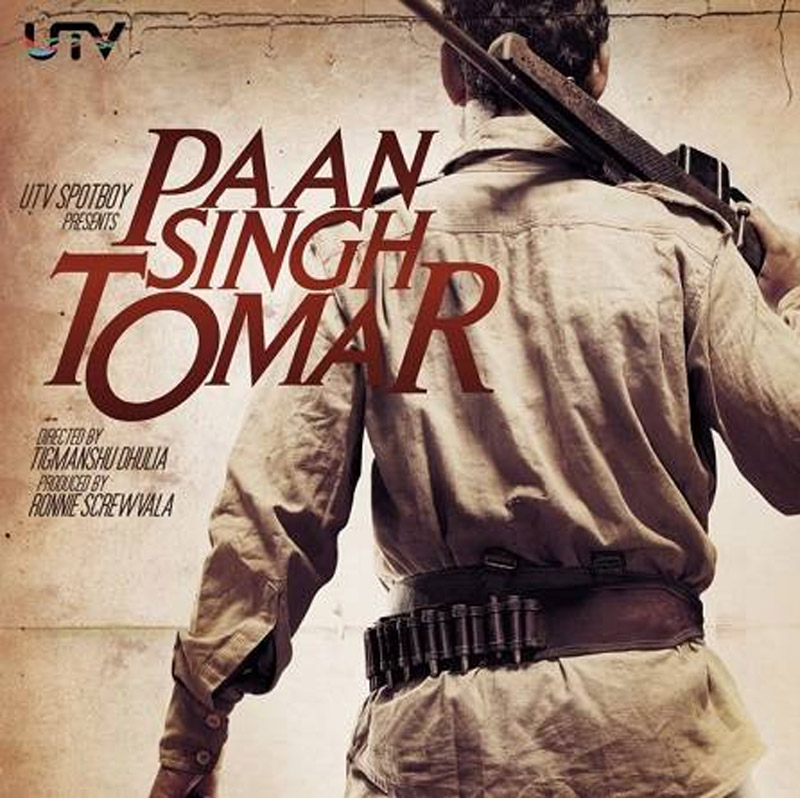
    MUMBAI: On a special request, UTV has decided to screen UTV Spotboy’s Paan Singh Tomar for the Ministry of Information and Broadcasting.

    The screening will be attended by I&B minister Ambika Soni along with director Tigmanshu Dhulia and actor Irfan Khan on 14 March.

    Said Walt Disney Company India managing director Ronnie Screwvala, “We are very heartened with the box office and the critical acclaim the film has got and we think it is an Oscar contender, no less. It is thus apt that the I&B Ministry arranged this screening and we are very proud of the recognition that the Ministry and Ambikaji has given to our work and commitment.

  • Govindraj Ethiraj quits Bloomberg UTV

    Govindraj Ethiraj quits Bloomberg UTV

    MUMBAI: Bloomberg UTV Editor-in-Chief Govindraj Ethiraj has put in his papers at the business news channel. He will remain with the channel till the end of September,working with the business leadership team to ensure a smooth transition.

    Ethiraj will be joining Nandan Nilekani to be a part of the Unique Identification Authority of India (UIDAI) project being undertaken by the Government of India.

    Ethiraj was one of the founding members of Bloomberg UTV (then UTVi) and has played a crucial role in establishing Bloomberg UTV’s operations in the country and growing it from the pilot stage in 2006.

    UTV Group chairman and CEO Ronnie Screwvala said, “Since Bloomberg UTV’s inception, Govind has been one of the key catalysts in ensuring the genesis and birth of a new business entity and successfully navigating it though it’s pilot stage. His departure will be a loss for us, but we fully understand and support his decision to answer to a higher call of duty in being of service to our country. The strong leadership team that Govind has built on the editorial side will ensure that Bloomberg UTV is well set for its next stage of growth across television, internet and mobile.”

    Ethiraj added, “I have always wanted to work on a project that reflected ambition and scale and, at the same time, helped understand my country and its real issues better. The UIDAI project gives me the opportunity to do that and work with an exciting and committed team led by Nilekani.”

  • ‘Regional language content has a huge scope in volume biz’ : UTV Television COO Santosh Nair

    ‘Regional language content has a huge scope in volume biz’ : UTV Television COO Santosh Nair

    UTV Television, one of the foremost television production studios in India, has seen many ups and down in the past. At one stage it was one of the premier TV production houses in the country. Then a clutch of upstarts – Balaji Telefilms, BAG Films, Big Synergy, Sphere Origin, Director‘s Kut, Shakuntalam, and Endemol – came and swept business from under its feet.


    But over the past couple of years, the division of UTV – promoted by Ronnie Screwvala – has been piecing together its story show by show. It began by venturing into the production of Marathi and southern Indian language shows. Then it focused on putting together a slate of Hindi non-fiction shows. The fact that the quantum of fiction shows on its genre sheet all but disappeared did not perturb the pioneer of TV in this country.


    The man helming the division is Santosh Nair, who was earlier in UTV‘s air time sales division. Nair spoke to Indiantelevision.com‘s Gaurav Laghate about the developments so far and the roadmap ahead.


    Excerpts:


    What are the changes you introduced in UTV‘s television content business after taking over as head a year back?
    I joined UTV in May 2005 but was taking care of the airtime sales division down south. Since last year, I have taken over the overall television business.


    We have really worked towards putting together the best creative team. We got back Indrajit Ray as chief creative officer. And we have put the right people at the right place.


    Now we are concentrating on developing show formats. Two major and much talked about formats that our team has developed are – Dance India Dance (season one) and Emotional Atyaachaar.


    Apart from this, I can say a lot of thought has gone into setting the roadmap for the future.


    Was there a need to change the team structure?
    We have different teams looking after fiction and non-fiction content. Both the verticals have their development teams also, which develop home grown ideas. Dance India Dance was part of that, and recently Emotional Atyaachaar was internally homegrown.


    All these separate teams are driven by different individuals.
     
     
    We are seeing a greater focus on non-fiction shows rather than fiction. Why?
    Yes, in the last couple of years, our strategy had been to focus on an area, which was very wide open, that is non-fiction. And now we are the only content company that produces shows in Hindi, Marathi, Tamil, Kannada, Malayalam and Telugu.


    But why was the focus greater on non-fiction shows?
    We wanted to fill the vacuum that was sitting over there in terms of a content delivery vehicle for non-fiction content. I think we have been fairly successful in doing that because in that span of two years, we did only non-fiction.


    We had non-fiction shows like Chhota Packet Bada Dhamaka, Dance India Dance first season (on Zee TV), Ek Haseena Ek Khiladi (Colors) and Cash Cab (Bindass).


    Apart from one long running saga Bhabhi (on Star Plus), we didn‘t have any other fiction to look at.


    But don‘t you think the fiction quotient, what generally is termed as the staple diet, has come down?
    These shows clearly established us as a non-fiction brand. But yes, having said so, people started looking at us as a pure non-fiction content provider. They forgot that we started as a company which delivered great fiction content.


     ‘People started looking at us as a pure non-fiction content provider. They forgot that we started as a company which delivered great fiction content‘


    So how are you positioning yourself now?
    We are focused on growth. 2009-10 has been to cement this entire platform in terms of being looked as both a fiction as well as a non-fiction provider.


    Talking about projects, how many new shows do you have in the pipeline ?
    The second quarter is when we will go all guns blazing. We have many shows in the pipeline; we are starting with a primetime show on ETV Marathi.


    We also have four fiction shows for Hindi GECs including one (Rakt Sambandh, a remake of a Telugu show) for Imagine TV. For the other three shows, I can‘t share the details as we are in the process of signing the LoI. But I can tell you that we are working with the top channels.


    There are also two non-fiction shows, out of which one is the mother of all reality shows. But again I cannot give details right now.


    Are these standalone initiatives or are they being done in partnership with others?
    We have a partnership with UTV Tele Talkies Ltd (UTTL), wherein we have on board Prashant Jadhav, the man behind Kasauti Zindagi… We are working on a fiction show for Imagine TV. It will be on air by end of this quarter.


    We have also been producing Sonu Sweety with Rajesh Berry Entertainment Ltd for Sab.


    And about your recent entry in the regional space…
    In Marathi yes, but for Southern languages our association with Sun has been since the time of the network‘s inception.


    But you were not producing shows for the Sun Network. You were primarily doing airtime sales…
    In the last couple of years, we have moved from being purely an airtime sales outfit to a more of a mix and match of own productions and marketing the same.


    How do you see the growth in regional markets like Marathi?
    In the last couple of years, regional markets have been systematically growing. And if you look at pan-India or Hindi GEC, you will see shows catering to the Marathi audience, like Pavitra Rishta.


    There is huge scope, but only if you do volume business as margins are very less. But yes, it is a growing market and we are looking at it in a serious manner. The Bengal market is also where we are looking to expand, but only after establishing ourself in the Marathi space.


    Coming to your content, you are producing Emotional Atyachaar, which is a bit edgy in nature. How is the response for the show? You are planning a second season also?
    Emotional Atyachaar has really cut the ice with audiences as far as Bindass is concerned. The audiences actually liked it. It has got the channel to a GRP level where it had never reached before. It had also beaten cult shows on competitive channels.


    And talking about Bindass, it is a youth channel, so it is okay to have edgy content. Anyway there is a very thin line. And yes, the second season of Emotional Atyachaar is coming in very soon.


    So you see a change in viewership trends?
    Viewership patterns are definitely changing. People are ready to experiment; they are looking at some kind of differentiation of content and that‘s where you see successes like Sach Ka Saamna and Emotional Atyachaar.


    For example, in the midst of a huge crowd of Hindi GECs, Colors came in. Everyone thought what is this? But they took their punt and it worked. See it is the small differentiator, which will drive the content. Otherwise it is going to be one mundane thing where daily sagas are coming in. So for the daily soaps also that we are working on, we are trying to do something different. The story might remain the same, but it is all about the treatment, how you take it forward. 

     
    You said DID was your format, but the IPR remains with Zee?

    With Hindi broadcasters, what happens is that the IPR remains with the channel. And historically it has been happening this way. But we took a bold stand when we decided to retain the IPR of Shararat.


    But that was a long time back, now all the IP is vested with the broadcaster. It is as simple as that. Emotional Atyaachaar‘s IPR is with Bindass, although it‘s a group company. 

     
    So if you don‘t have IPR, how are you intending to grow? If you see international production houses like Endemol and Frementle, they all retains their IPRs.
    We have already started working on some projects where we can retain IPR as it is going to be the future. We are working on certain finite series, where we will retain the IPR. We will produce it first, before even going to the channel and pitching it.

     
    And how do you intend to fund it?
    We will opt for internal funding. And we will de-risk it by producing four episodes and sampling it to broadcasters.


    In case we have a very solid finite – 13 or 22 – episodic series, then we can think of producing it in full. 

     
    Internationally, we see the syndication model in the television business. It allows producers to take on the risk of production and getting the reward by selling it to various outlets globally. Why can‘t we have such a model here?
    See, in India since we don‘t retain IPRs we cannot have the syndication model. And channels that run repeat content, are mostly low cost in operations.


    And even if some demand comes from international markets, the broadcaster, with the IPR, makes most of the money. 

     
    But with shows on Sun Network you can guard the IP.
    The benefit any company that works with Sun has, is that they can retain their IPR. The model there is completely different – you produce, you market, you pay slot fees. That‘s the benefit with Sun. So you have shows which are running there, which you can remake in other languages. We have a long standing relationship with Sun Network.


    And at the same time you can not produce content for competitors. That‘s the condition Sun has?

    Well, in terms of revenue and feasibility it makes sense to work with Sun as it is the biggest network down south. 


     So apart from the IPR issue, what other challenges are there for a production house?

    We have already seen one big challenge when recession happened. Channels were looking at cutting down expenses including production costs. They want the same product at a lesser cost. So that was the biggest challenge and learning that we got in the last so many years.


    We really had to sit back and think on how to strategise and minimise the cost. Not only in terms of our business but on a macro level also.