Tag: Ronnie Screwvala

  • “While we want films to be our anchor, we are equally excited about digital & TV:” Ajit Thakur

    “While we want films to be our anchor, we are equally excited about digital & TV:” Ajit Thakur

    From transitioning from Unilever in London to the Indian media space, Trinity Pictures CEO Ajit Thakur was lucky enough to get mentorship from two of the best minds in the media space – Ronnie Screwvala and Ekta Kapoor. Having learnt a lot from Screwvala in terms of business in media and from Kapoor, the madness of creativity, Thakur couldn’t have asked for a better learning ground.


    Since the time he came to India in 2007, he always wanted to make films, but then only landed up doing television stints with Sony and Life OK, which he found equally exciting.


    With a specific agenda on films that is to create his own label, he then finally got a platform in Eros International (with Trinity Pictures) to realise his dream.


    In conversation with Indiantelevision.com’s Disha Shah, Thakur speaks about his movie making passion, what Trinity Picture stands for, his journey from TV to films and more.


    Excerpts:


    What are the three core elements that you envisioned while launching the Trinity Pictures banner?


    Since the time I came back to India in 2007, I always wanted to make films. But when I came here I realised that all the platforms were equally exciting. Even after having moved to films, I still believe that television is as exciting a medium. But I had done two very good stints in TV with Sony and Life OK, so I thought it was time for me to do something in films now.


    My agenda was to be very specific – create a different studio and when I met Sunil Lulla and Kishore Lulla at Eros, they were both excited about it. Most importantly, they had the ideal platform for me to do what I wanted to do. So in February, Trinity Pictures was set-up as an in-house production house within Eros.


    There are three unique things about Trinity. Firstly, as a company we will focus only on developing franchises films because I believe focus gets you success. Keeping in mind Indian and global box office trends, there is space for franchise films. In India, as of June the top two films are returning films like Tanu Weds Manu Returns and Furious 7. While India is slowly waking up to the power of franchises, Hollywood has been tasting success with it for more than a decade. Even if we do come across a great script, which we can’t convert into a franchise, Trinity will pass it on to Eros. Our focus is very clear.


    Secondly, at Trinity we are not looking at ourselves as being just a film franchise studio. We will create franchises that can go across and beyond screens. It can happen that we develop a idea for digital, take it to TV and then to films. We are keen at making digital comics and character games for each franchise. One franchise might start with a comic and then become a film, while another might begin as a film and then hop on to the gaming platform. The possibilities are endless.


    Thirdly, we will be the first studio to have an in-house writers’ room. We are hiring 10-12 writers and three are already on-board through this unique open application that we have. We will have all these writers developing concepts and ideas for us in-house.


    From Yash Raj Films to UTV, many studios today have multiple film banners to cater to different genres. Why did Eros feel the need to launch a separate banner too?


    I think it is not about the need for a separate banner as much as about the fact that all these films could have been done under Eros. However, when I presented the idea to Kishore, he saw the merit in having a separate identity to these franchise films. So, while Eros stands for certain kind of big films across genres, Trinity will stand for big films within the franchise space. And moreover, I believe it sits in well as a strategic thing from a market’s promise that both the brands can grow.


    Eros is at the threshold of really aggressive growth in the next five years. It fits in the plan to have a second brand under it. More importantly, Trinity is not like the second label of other studios. Other studios use the second label to make small and alternative films; Trinity will cater to mainstream and big films.


    From TV to films, what were the initial challenges that you faced and how have you adapted to the new medium?


    There were no challenges, just opportunities. I am a curious person and for me it’s a process of evolution, so I don’t see them as challenges. Between Ronnie Screwvala and Ekta Kapoor, I couldn’t have asked for a better learning ground. My stints in broadcasting were also fantastic. I never thought I would do TV for so long but I did enjoy it a lot.


    At Sony, it was a great learning curve. It was a place where I really felt confident for the first time as we did Kaun Banega Crorepati and Crime Patrol and a lot of alternative shows. At Sony, we moved away from the saas-bahu sagas and experimented with alternative programming, which worked. I had great support from Man Jit Singh and NP Singh.


    Post Sony, Life OK was a dream job and I couldn’t have asked for more. From the foundations of Screwvala and Kapoor to witnessing growth as a person and professional, my Star India experience was fantastic. I haven’t seen a company with more talented people between Uday Shankar and Sanjay Gupta and all the colleagues I have worked with. I was learning everyday at Star.


    Life OK is like my baby, but more than Life OK, it is about just how much I learnt from the Star system. I couldn’t have asked for a better place to get to that level of confidence. And I believe it was great I did that and then jumped into films. I wish I had given more time to Channel V but my dream was to make films. I am now applying a lot of my learnings from there. Finally, it is about content and how you create it.


    Bollywood has a different set of dynamics and the only challenge has been to get to know big stars and directors and telling them that how somebody who has not made films before wants to make big films.


    What was the mandate that was given to you for launching this new banner? Walk us through your responsibilities at Eros.


    Eros is at a threshold of the next level in its journey. What we have charted out for the next three-five years is to become one of the leading global players in entertainment. Not just film entertainment, but also across digital, TV etc. Trinity Pictures fits in well with that plan for Eros to go to the next level. Eros’ top brass comprising Kishore, Sunil and Jyoti Deshpande believe that we can create four-five valuable franchises in films and beyond over the next three years.


    The second thing within that is to get the best talent to work with us directly. Traditionally, we have been following the acquisition model as well as producing our own films. Trinity will produce all of it in-house. The idea is to build relationship with talent because Trinity is a content production studio, which goes beyond just films. I am also helping develop content for Eros Now in space of original mini-series.


    How are you going to use all the different mediums? What is your strategy?


    The only difference between all the mediums is the target group that we are looking at. There is a certain target group that goes to theatres to watch films, a different group that watches digital content and a slightly different group that watches TV. More women drive television and more men drive films in terms of the demographic profile. That is the only thing I have to keep in mind.


    All we are looking for is good ideas and once the idea comes, we slot it for television, films or digital and then we will move it around. The main beauty of franchises is that it is platform agnostic. We can take the same franchise across mediums. The key point is where we want to start from and the target audience.


    Trinity is a multi-screen studio. Of course, we want to anchor ourselves in films but we are equally excited about digital and television.


    Give us an insight into the working of Trinity Pictures? What is the team structure like?


    It is a very small team. Till a month back, I was the only employee along with my assistant. We are taking time to find the right people. The aim is to have three teams comprising project managers, production heads and in-house writers. We already have on-board one of the top writers of Bollywood – Shridhar Raghavan, working with us as a consultant.


    As of now we have three full time writers. On 22 June, we are holding our first writer’s assessment workshop, wherein 250 applicants have evinced interest. Hopefully by next month, we should have 10 writers on-board. We are also looking at scouting for writers in Delhi and Kolkata.


    What is the potential that you see in building franchises in the Indian market?


    Significant. Like I said, this year the top two grossing films have been franchises. Look at Hollywood in the last one year, out of top 12 films, 10 films were franchises. Moreover, from 2008 onwards it has been the same. While franchises have tremendous potential, it needs a lot more development. It is almost like television where you build characters, even if the story gets over, people come in for characters and that is what franchises are about. You invest in characters and once when people fall in love with characters, they come for the next film.


    For example, Jurassic World has done the highest weekend ever in US. It is another returning franchise! The truth is all around this, but yes these are big films and you have to mount it well and get it right.


    What genres will Trinity Pictures be looking at to build movie franchise? How many films you have pitched to the management till now? When can we see first movie going on-floor?


    We are looking at full range of genres. We are looking at Superheroes, action – thrillers, spy and detectives, super natural horror, period and mythological as well as teens and kids. Within franchises, we want to explore everything.


    We have an agreement on eight projects and we will hopefully lock four by next month. We are hoping that a couple of these films to go on floors by September-October and we will definitely have two releases next year.


    Are Superhero films the best bet as far as franchises go or do other genres like comedy, thriller, horror have potential too?


    Making superhero films in India is difficult. I think, Hollywood has set a benchmark that we have to really find a right idea to be able to compete with them. If you make something like a pale replica, it won’t work.


    Will Trinity be making films that have a wider reach and appeal than just the Indian market?


    Yes. The franchises have the potential to reach out to the global audiences because they are universal themes and not just Indians. We are looking at all markets like UK, US and the Middle East for our films.


    Will you be looking at producing only Hindi films or is regional cinema also on the cards?


    At Trinity, we want to first focus on Hindi films and we might look at couple of English language films. However, regional cinema is part of Eros portfolio. We have a massive presence in South and we are expanding in Marathi and Bengali. Eros will continue doing a lot of regional cinema, while Trinity will focus on Hindi currently.


    Mythology as a genre has been working great guns on Indian television. However, as far as films go, Indian producers have so far failed to exploit the genre on the big screen. Will Trinity be looking at building on mythological films?


    I definitely relate to mythology and historicals, but obviously they have to be at a scale that is very different for TV for it to be worth being a film. I have a couple of subjects but I want to make sure that the right investments and right technicians are available to make it happen. Mythology in films has to be much bigger. Moreover, the average filmgoer is younger, so just mythology pitched like that won’t work. You will have to make it larger than life to pull in the younger audience.


    What is your target in the first year of operations?


    To have four films ready, make two films till next year and also make one very big franchise. For the four films, the story is done. We will be now be getting into screenplay writing. Over three years, we are aiming to have four-five big franchises across mediums and are also hoping to create a mini-series that completely changes the way content is seen for digital.


    What about the other talents like directors, actors?


    Like I mentioned earlier, that films is not the only criteria at Trinity Pictures. Having said that, we definitely want to work with established directors for our bigger films. At the same time, I am also very open to new directors and writers. However, some films will need experienced hands. The great thing is that all the directors I have spoken to, have been very excited about what Trinity wants to do in terms of franchises, having a writers’ room etc. We are in discussions and negotiations with a few directors.


    As far as actors go, we have not thought about it at the moment. Directors will finally decide on the actors. Our focus is to create good scripts and get good directors in.


    Is Trinity Pictures looking to exploit the film franchises for merchandising, animation etc?


    Absolutely. Like I said, gaming and comics will be a part of merchandising. We will also be looking at animation films but that will take some time. First, we want to get a couple of good films and franchises rolling… but everything will travel from one medium to another.


    What kind of budgets is Trinity Pictures looking at for making films?


    All kinds of budgets from Rs 5 crore to Rs 50 crore to even Rs 100 crore films.
     

  • Media fraternity welcomes GST; few pose doubts over implementation

    Media fraternity welcomes GST; few pose doubts over implementation

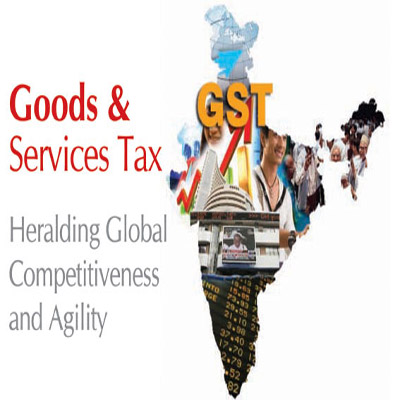
    MUMBAI: Amidst strong controversy, Arun Jaitley led finance ministry of India tabled the Goods and Service Tax (GST) in the parliament for further debate. GST is often termed as India’s most ambitious indirect tax reform plan by economists, which aims to stitch together a common market by dismantling fiscal barriers between states. It is a single national uniform tax levied across the country on all goods and services.


    The indirect tax system in India is currently mired in multi-layered taxes levied by the Central and State governments at different stages of the supply chain such as excise duty, central sales tax (CST), value added tax (VAT) and octroi tax, among others. In GST, all these will be subsumed under a single regime. 


    Even as the entire opposition party, led by Sonia Gandhi, posed a walk out from the Parliament in protest against the procedure and particulars of the amendment, Indiantelevision.com took the opportunity to seek reactions of the vanguards of the media, cable and Direct-to-Home (DTH) industries on GST. While industry stalwarts welcomed the thought behind GST unanimously, a few posed doubts over its successful implementation.


    Dish TV CEO RC Venkateish says, “It will be good for the DTH sector. At present we are victims of multiple taxation system where we pay various taxes in entertainment tax, service tax etc. With GST, it will all get rolled under one. If the GST is approved and rolled out, we will have a tax reduction of three to 3.5 per cent and hence it will be a good move for the sector.”


    Welcoming GST wholeheartedly, Videocon D2H CEO Anil Khera opines, “GST is a welcome move. It will help the DTH sector to prosper. DTH is the biggest victim of multiple taxation policy and GST will simplify that. The industry needs a uniform taxation system and the sooner it comes the better it is.”


    Explaining why GST is good for the economy in the long run, Times Network CEO MK Anand says, “GST brings uniformity and transparency and therefore better administration. However, in the short term, there are expected to be issues. Broadcasting will move from CST, which we believe will be lower than GST as we expect and that is going to put pressure on our pricing. The broadcast ecosystem at the bottom end has elements like consultants or local operators, who may try to push for absorbing into prices. The other thing is the state wise registration and filing of GST as against the current centralised filing. This is also an additional activity that we will now have to account for and so it increases costs to some extent.”


    GTPL Hathway COO Shaji Mathews supports the concept behind GST but has doubt on its successful implementation. He explains, “Taxation has been the biggest issue when it comes to digitisation. With digitisation, often only three stakeholders are associated namely: multi system operators (MSO), broadcasters and local cable operators (LCO). However in actuality, there are two more parties involved – the government and consumers. Government has been the major gainer so far from digitisation and they have been trying to shift the tax burden on to the consumer. However the consumer is not ready to take it and hence operators have been bearing the brunt of it all. With GST, the concern is over entertainment tax, which varies from state to state. No clear information is provided whether entertainment tax will be included in GST and if yes, then at what slab. So overall, while the thought behind GST is good, there are a lot of question that are still unanswered. Moreover, since the government hasn’t made any efforts to rationalise taxation, the implementation is something that remains to be observed closely. The problem is with the mechanism that the government follows, where they don’t consider the tax payers’ point of view while implementing an amendment.”


    Another senior official from the cable fraternity asserts, “GST has the potential to emerge as a blessing in disguise. As we proceed with digitisation, uniformity in taxation is the least that we can expect. It has been very harsh on us, as we operate across different states and at times we end up paying tax for an already taxed item, which is not something that we should be facing. Overall, I welcome GST and see it as an encouraging move though only time will unfold the real story.”


    NDTV executive vice chairperson KVL Narayan Rao adds, “Frankly, GST deals more with Goods and Service providers and doesn’t impact us directly but I consider it as a beneficial move. For example, if I have to set up a new studio at a new location, GST will help me as I won’t pay multiple taxes and hence it affects the pricing.”


    Backing GST, entrepreneur Ronnie Screwvala opines, “A business friendly environment had to be developed in India and taxation is a key element to that. With the Goods and Service Tax, service tax will come down to 16 per cent, which solves many problems. Hence GST is a firm step forward towards developing a business friendly scenario in India and it will surely help the country to ensure economic growth.”


    As per information available, the government is expected to rollout GST by April 2016.With absolute majority in the Lok Sabha, it will not be a challenge for the government to pass it through in the lower house. However the bigger obstacle will come from the Rajya Sabha as Jaitley and company will have to penetrate through a larger opposition. The entire business fraternity will keenly observe the next few days of proceedings in both houses of the Parliament.

  • Shopclues.com organises Mumbai’s first Sellers’s Summit

    Shopclues.com organises Mumbai’s first Sellers’s Summit

    MUMBAI: While it’s a general trend to see e-commerce companies organising events for their consumers, Mumbai saw its first Sellers’ Summit for the benefit of all the merchants organised by Shopclues.com.


    Close to 250 top retailers across categories of ShopClues attended the event from all over Maharashtra and Gujarat, including companies like Sukkhi, Gitanjali and HUL amongst others.


    Commending the organisers for a refreshing concept like this, entrepreneur and social philanthropist Ronnie Screwvala said, “I appreciate the efforts of the ShopClues team for conceptualising the unique initiative of the Sellers’ Summit to acknowledge the contributions of merchants across the country. E-commerce has fuelled the startup community in India and ShopClues has taken this potent phenomenon to its next stage.”


    Shopclues.com CEO and co-founder Sanjay Sethi added, “The objective is to show them our appreciation for the significant contributions they make towards our inventory and customer service excellence. Without them playing the role of pivotal stakeholders, we wouldn’t have been able to reach our present-day success.”


    The highlight of the Sellers’ Summit was when Screwvala handed over the Merchant Awards to handpicked retailers for their outstanding work in various spheres.

  • “Good ideas always find an investor, so there is no point compromising with the idea:” Ronnie Screwvala

    “Good ideas always find an investor, so there is no point compromising with the idea:” Ronnie Screwvala

    20 years back when the word entrepreneur was rarely pronounced correctly, a 19 year old man in the midst of great legacy businesses turned out to be a stand-out first generation entrepreneur, who fearlessly kept invading into undiscovered territories.


    After starting as a local cable operator, he went on to finding United Television Group (UTV), ventured into sports with Kabaddi and funded e-commerce enterprises like Lenskart and Zivame. While the world was witnessing catastrophes, he decided to turn philanthropist with the Swadesh Foundation. From Shanti on Doordarshan to Swadesh on the big screen, from Rang de Basanti to Dev Dhe has enumerable number of trophies in his cabinet.  


    The distinguished voyage that ignites million minds, the role model for aspiring entrepreneurs in India – Ronnie Screwvala in conversation with Indiantelevision.com’s Anirban Roy Choudhury, shares his priceless guidelines for young aspirants.         


    Excerpts:  


    What triggered you to pen Dream with Your Eyes Open?


    Entrepreneurship is a challenge and the perception that only people with huge initial capital can become an entrepreneur is a myth and that’s the message I wanted to convey and that’s where the book came into picture.


    Dream With Your Eyes Open is not an autobiography but a voyage that has both highs and lows, failures and success, encouragement and demotivation. Another reason behind penning down the book is to encourage aspirants to go for entrepreneurship passionately and not take it as a second option.


    What do you think is stopping India from becoming a global leader when it comes to entrepreneurship?


    20 years back when I started, people could hardly pronounce the word entrepreneurship. Even today, while on the one side, there are a fair amount of businesses, on the other, there is huge parental pressure of going and getting a good job. Entrepreneurship has always been plan B. But that doesn’t stand true.


    One can either go and get a good job or turn an entrepreneur – both are equally respectable. The most important reason for less growth is the fear of failure. In India, people don’t talk about this fear and if they do, they can’t handle it. For most people, failure means the end of the game… the fear that everything is over is what acts as an obstacle.


    The thought process needs to be that if you failed yesterday, you should see today as another day and move forward. When you have such a fear about failure, you don’t start. That is one of the reasons why India is ranked between 140 to 150 when it comes to entrepreneuring nations.


    How does an aspiring entrepreneur deal with the intriguing question of ‘How do I get funded’? Do you think in order to find that answer, the basic idea gets feeble or compromised?


    Everyone in India thinks that you need an investor to start a business and finding one is the biggest challenge. In my opinion, that’s not the procedure that you need to follow always. If we look at the entrepreneurs who are prospering today, all of them bootstrapped themselves on their own. Bootstrapping is a must when it comes to entrepreneurship. You have your idea and you should start executing it and only after you reach a particular level, should you go for an investor.


    Your success ratio goes up if you bootstrap first and then go for an investor. If you get an investor early on, you get spoilt. The entire work culture changes and half the time the investor runs the business that you are supposed to run. The hunger is much more when you are doing it on your own and hence if you have an idea, you should start executing it and after you have concept proofed it to yourself, you go for the investor. A good idea will always find an investor therefore there is no point compromising with the idea.


    Is stagnancy another reason behind the low rate of entrepreneurship growth in India? Do you think one should have the hunger of invading into new territories?


    It’s good that these questions are coming now because a few years back, no one thought about what happens after the substantial establishment of a business. In India, after a certain level we refrain from moving forward, get stagnant and eventually start downscaling.


    In business, downscaling begins the moment stagnancy sets in. So, one should always be open to venturing into new territories as entrepreneurship doesn’t mean earning a livelihood but generating employment. The more we explore, the more are our chances of succeeding.


    Do you think digital can give birth to a non-advertiser source of revenue model, which will be subscription based?


    If we see globally Google, which is the world’s number one company, has taken its platform YouTube and left it free. It runs on advertising. Facebook is also on advertising. If we look at it from that perspective, that’s where it’s going.


    Let’s face it, in two weeks’ time, a newly released movie is available on Tata Sky for Rs 75 but people are refraining from opting for that as there are pirated DVDs available for Rs 35. Piracy is a huge barrier of subscription based model and to counter piracy we need consumer behaviour to change, which is a slow process and will take time.


    Digital media is cost efficient. The capital investment is less when compared to the other mass medium platforms and hence there is a slim chance of having a subscription based revenue model. However, it will take time as there are bandwidth and technological issues that need to be sorted first. For now, I think advertising is going to be a long-term stay.


    Don’t you think an investor, after financing the concept, at some point of time starts regulating the strategic affairs?


    If you are a strong entrepreneur, you will never let anyone regulate you. I think there is a misconception that an investor comes in to regulate. Investors have two aspects: firstly, his risk capital is higher than most entrepreneurs because he is choosing one out of 999 and secondly, all investors get into a portfolio investment mode where they know out of 10, five will fail, three will somehow sustain and two will succeed. Who else in the entire cycle has got a risk of five failures out of 10? So, investors are seasoned veterans, who take their decision after enormous number of research and knowledge so that they put their money in right place. 


    Investors’ key is to back entrepreneurs with whatever they are doing and not regulate them. So it’s a misconception that an investor regulates. Yes, if things go wrong, an investor may get hyper and interfere with a perception that he can add value. It’s a myth that investors regulate a company.


    What’s your opinion on the Indian eco-system? Is there enough encouragement and support from the Government’s side for an aspiring entrepreneur?


    I don’t think it’s the government’s job to support. The thing that everyone is looking at is ease to do business. So the business environment has to be simplified by the government. When it comes to taxation, with 30 per cent tax we are one of the least taxed nations of the world. The tax structure in the UK and the US is higher than India. With the Goods and Service Tax (GST), it will come down to 16 per cent, which solves many problems. In the UK, value added tax (VAT) is at 17 per cent so there is no room for blaming the government.


    The reason why service tax was increased is to bring it closer to GST. The complication lies in the number of regulations and multiple-window clearances. The media is the least controlled in India. In the US, you have to be a citizen of the United States to be able to operate any digital or broadcast media, whereas in India anyone can operate an entertainment venture and hence when it comes to democracy and freedom, India beyond question beats the rest.


    Regulations make doing business complicated in India as there is no single body that deals with all the regulatory issues, which makes opening a business in 10 days impossible.


    Do you think it’s important to add entrepreneurship as one of the major aspect when it comes to academic upbringing of the youth in India?


    There are 10 million graduates coming out of college every year. Do we have jobs for all of them? The answer is a big no. The only way of tackling that problem is adding entrepreneurship in the curriculum as early as possible. I started at 19, so an early start is possible provided you think about it at an early stage. The manifestation should be there. The target should not be to get a job and then become an entrepreneur.


    Managers and presidents of big companies should think about where they will stand ten years down the line when there will be a hundred million skilled youth looking for jobs. Hence they should devote time into entrepreneurship, which will provide job to those skilled people.


    You are venturing in motorsport now. Can you throw some light on it?


    Well, yes I am venturing into motorsport. However, the report stating an investment of Rs 300 crore is incorrect. Nowadays, whatever you do, a zero gets added automatically. Here motor sports doesn’t mean cars. It caters to bikers in India, which is the largest bike selling nation of the world. The over 250cc category has grown at an incredibly high rate in last five years and we are looking at a tourism based sport. Currently, we are researching on the ten most exotic places in India, where on television one will enjoy India’s natural beauty along with skilled bikers. The plan is to make it a tourism cum sporting event.


    In the beginning, we will get a mix of Indian and international bikers, as the aim is to make it world class. Each team will have one Indian and one foreign biker for the first two years and after that we would look at making it a 100 per cent Indian event.


    From the first super-flop Dil Ke Jharoke Mein to the blockbuster entrepreneur writing his book, how will you describe the versatile voyage of yours?


    The opening four lines in my book is about the biggest failure of my life Dil Ke Jharoke Mein, which is what I started with. The concept behind starting the book with that was to convey that failure is just a part of life and not the end of the world.


    My journey so far has been to not stop after a failure but to keep moving on. Cable was different, UTV was different and sports is different. I have always rediscovered myself and for me that’s the way forward.


  • Forcing exhibitors is no solution for Marathi cinema revival: Ronnie Screwvala

    Forcing exhibitors is no solution for Marathi cinema revival: Ronnie Screwvala

    NEW DELHI: Reacting to the Maharashtra government’s directive to all multiplexes in the state to screen at least one Marathi language movie in prime time, media and entertainment veteran Ronnie Screwvala said it was more important for the exhibition sector itself to “open its eyes to regional cinema.”


    “Forcing some regulations on people but not enforcing it only creates problems,” he said.


    Founder of one of India’s largest media and entertainment conglomerates – UTV, Screwvala launched his book with a coffee session with Karan Johar in an event held at the capital on 8 April.


    “Inject humour and laughter and look people in the eye even when you are telling them about failures. Make failures completely acceptable, and it will work,” he voiced.


    Screwvala has clearly learnt from his disruptions, and broke new ground by creating radio and television advertisements for his book Dream with Your Eyes Open, which he claims is not a biography about encouraging entrepreneurship.


    Referring to his weekly television programme on ET Now, he said that was also about entrepreneurship and not about him. Screwvala opined that his own entrepreneurial journey had been filled with innovation and disruption.


    Referring to his career in filmmaking and his 1997 film Dil Ke Jharoke Mein, he said, “Sometimes you are ahead of your times and therefore you fail.”


    The basic thought is about how more people can be encouraged to venture into entrepreneurship of their own. The ambition and aspiration level has to be charged, instead of just providing infrastructure to people, he said.


    Johar added that it is important to dream, but one should dream with one’s eyes open so that one can distinguish between what is right and wrong and rationalise.“Ronnie’s journey is an inspiration, to say the least. His innate ability to merge creativity with commerce is remarkable,” he said.


    Rupa Publications managing director Kapish Mehra added that the publication of the book had in itself been an entrepreneurship and it had done a landmark sale of 50,000 for a first time author within a week of its launch.

  • Ronnie Screwvala to mentor start-ups in ET Now’s new show

    Ronnie Screwvala to mentor start-ups in ET Now’s new show

    MUMBAI: Times Television Network’s business news channel ET Now has launched a new show Starting up with Ronnie Screwvala to provide a platform to millions of aspiring entrepreneurs who, tomorrow can shape country’s economy.


    Screwvala, one of the few first generation entrepreneurs, will mentor aspirants from across the country in a six episode series, which will go on air from 11 April. The show will air every Saturday at 10.30 am. As part of each episode, three entrepreneurs will get a chance to seek Screwvala’s advice on specific issues they may be facing in their business. From scaling it up to funding, from finding talent to talking on the Goliaths, ET Now has put all cards on the table for discussion.


    The entries have been selected after various rounds of filtration. The show will have premature ideas to evolve concepts addressed and mentored by Screwvala.


    Speaking about the association, Screwvala says, “I have recently released my book Dream With Your Eyes Open, which aims to champion the cause of entrepreneurship in the country. This show is a perfect extension of the book and through this we want to inspire success, demystify failure and urge people to dream, and dream big. I am glad to partner with ET Now, who is also working towards the same cause. I hope my book and this show gives people the conviction to follow their dreams and make them believe that it’s all possible and can be done.”


    ET Now managing editor R Sridharan adds, “ET Now is a channel that provides differentiated content in the business news genre. We go beyond being a provider of information, and want to maintain our standing as the go to channel for anyone wanting to understand more about the finance and investment. As a business news channel, we have always tried to be the first to identify and define development in the financial ecosystem of the country. This show will act as a platform for the entrepreneurs and will reinforce the current Make in India philosophy of the country.”


    “Television is a powerful medium to convey a message and that’s something that triggered me to come on board with ET Now. We all think India is a highly ranked entrepreneurs nation but the reality is something else. We are ranked between 140 and 150 and Israel is way over us and that’s because what we have is family legacy, and tremendous lack of first generation entrepreneurs. We have to understand entrepreneurship is not about earning livelihood but generating employment in huge number. Moreover entrepreneurship is not restricted to male gender. More female entrepreneurs today will ensure a dignified tomorrow. We have to come out of the society perception of grasping a quality job as soon as possible and one who fails to get a job goes on for entrepreneurship. The show is not a promotion of my book and there will be no investing to the ideas during the show. I will just mentor ideas by asking ten questions,” Screwvala tells Indiantelevision.com.


    The editor and anchor of the show Sonali Krishna adds, “Start ups today are extremely important for the country, but on one side where we have encouraging success stories making headlines, on the other hand there are numerous failures. The show is to convey a message to India at large that don’t start something for the sake of doing it but back it with substantial conceptualisation. Getting Ronnie on board for the show is a great feat and we are looking ahead to provide essential inputs that may help a start up to convert itself to established.”


    The show will be cross-promoted within Times Television Network and at the moment, there are no sponsors on board, ET Now spokesperson informs Indiantelevision.com.

  • Narendra Modi congratulates Ronnie Screwvala on his debut book

    Narendra Modi congratulates Ronnie Screwvala on his debut book

    MUMBAI: India, under the leadership of Prime Minister Narendra Modi, is seeing an unprecedented wave of optimism with a high focus on making India an entrepreneurial country, tapping into its unbridled power. Giving the current scenario, Ronnie Screwvala one of India’s most celebrated first generation entrepreneurs announces the launch of his book – Dream With Your Eyes Open that encapsulates his 25 yearlong entrepreneurial journey.

    With the book, Screwvala shares his failures and triumphs and strives to instill a belief of it’s all possible and it can be done within this generation.

    What’s more, Modi sent in his congratulations and wishes to Screwvala appreciating his effort to evangelise entrepreneurship in the country through his book.

    “I am happy to learn that Shri Ronnie Screwvala has written a book on the theme of entrepreneurship, Dream With Your Eyes Open. I hope the book will encourage the youth of India to pursue their dreams, and in doing so, devote their energies to find innovative ways to build better lives for millions of Indians. On this occasion, I convey my best wishes to Shri Ronnie Screwvala and hope his effort will serve as inspiration or many,” Modi said.

    “It is humbling to receive such encouraging words from such a visionary and communicative leader and our country’s Prime Minister. I am delighted that Shri Narendra Modi emphasizes on the power of entrepreneurship, I myself feel that the country should have more entrepreneurs and even today, 99 per cent of people don’t feel confident enough to start a business on their own. Dream With Your Eyes Open shares failures and triumphs, thoughts and anecdotes of my journey. It details out my vast experiences and myriad lessons learned from more than two decades of building some successful (and some not-so-successful) businesses. The idea of the book was born from the need to share my learnings and hopefully inspire young and well established entrepreneurs at all stages of their journey,” added Screwvala.

    “This book is small contribution from my end towards tapping the entrepreneurial potential of our country. It is encouraging that my friends and colleagues have come forward to show their support for the book and the cause it aims to champion. I hope this book inspires people to dream and dream big,” he said.

  • Ranbir Kapoor unveils first look of Ronnie Screwvala’s book

    Ranbir Kapoor unveils first look of Ronnie Screwvala’s book

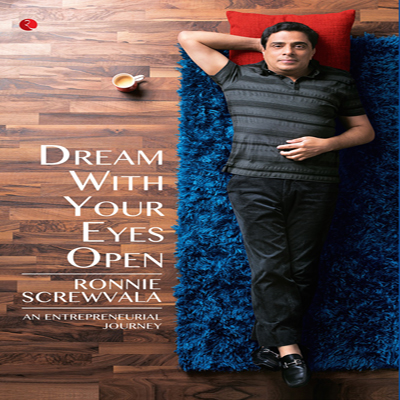
    MUMBAI: Ronnie Screwvala’s entrepreneurial journey is an inspiration, to say the least. Founder of one of India’s largest media & entertainment conglomerates UTV, Screwvala has now penned a book on his journey called Dream with your Eyes Open. 


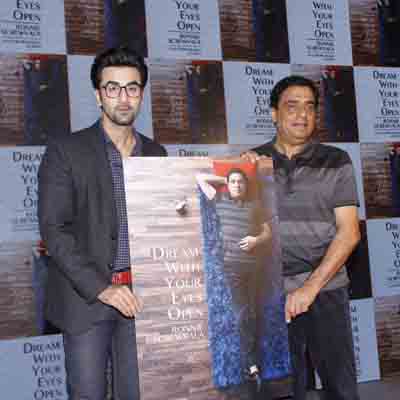
    Published by Rupa, Ranbir Kapoor unveiled the cover of the book, which will be on stands from 2 April, 2015. In the meanwhile, online bookings have commenced for for Dream With Your Eyes Open.


    Encompassing Screwvala’s journey from cable TV to toothbrushes manufacturing, from theatre to media and entertainment, Dream with your Eyes Open, aims to champion entrepreneurship in the country.


    “Ronnie is an inspiration for everyone who dares to make their dreams come true. His conviction in an out-of-the-box film like Barfi made me realize that when belief meets innovation, it creates magic! I am delighted to launch the cover of his book and look forward to its release. I will definitely be buying the first day, first copy,” said Kapoor.


    Screwvala added, “Dream With Your Eyes Open shares failures and triumphs, thoughts and anecdotes of my journey. It details out my vast experiences and myriad lessons learned from more than two decades of building some successful (and some not-so-successful) businesses. This book is about ‘it can be done’, not ‘I did it’. It’s all possible. Just dream your own dream—and when you do, dream with your eyes open.”


    Demonstrating an innate ability to merge creativity with commerce, Screwvala is credited with pioneering Cable TV in India, building one of the largest toothbrush manufacturing operations – before founding UTV, which he later divested to The Walt Disney Company.


    Onto his second innings, Screwvala is driven by his interest in championing entrepreneurship in India, and is focused on building his next set of ground up businesses in high growth and impact sectors. His more recent commitment to being a first mover in sports has made him lend his support to Kabaddi and football.

  • Pro Kabaddi League season 2 pushed to July

    Pro Kabaddi League season 2 pushed to July

    MUMBAI: The Pro Kabaddi League was a surprise package last year wherein the sport managed to grab eyeballs on television and heavy presence of audience at the stadiums too.


    While the first edition of the league was held from 26 July to 31 August 2014, League promoter Anand Mahindra had said on the day of the finale, “We are very happy with the response for the League and Kabaddi and so will be back as early as March 2015.”


    However, now official sources have confirmed to Indiantelevision.com that the second edition of the League will not be kicked off in March but during the same window period as last year, i.e July to August 2015.


    The reason for the shift in schedule is being attributed to the evident clash with this year’s biggest sporting spectacle, the ICC Cricket World Cup 2015.


    Official broadcaster of the World Cup, Star Sports is also the broadcast partner for the Pro Kabaddi League. With Star Sports having its hands completely tied up with the Cricket World Cup, the League’s second season will now only kick off in the July to August 2015 period.


    Pro Kabaddi League was conceptualised by Mahindra and commentator Charu Sharma through their venture Mashal Sports. Sharma, known for his knowledge of the game, will also be seen playing the role of a cricket commentator during this edition of the World Cup.


    The last maiden season of the league was won by Abhishek Bachchan owned Jaipur Pink Panthers, which defeated Ronnie Screwvala owned U Mumba. Sources also confirmed that the second edition will not see any additional franchises taking part.

  • Ronnie Screwvala enters digital biz; B Sai Kumar to head venture

    Ronnie Screwvala enters digital biz; B Sai Kumar to head venture

    MUMBAI: Media and broadcasting veteran Ronnie Screwvala has joined hands with B Saikumar to form a new age ­digital media company. Based out of Mumbai, in its first phase, the venture aims at launching a digital brand, which will offer multi-genre­, multi—lingual content across video, audio, text and other traditional and new age art forms. The investment envisaged is an outlay of up to Rs 150 crore across two phases. While the first phase would be largely domestic-f­ocused, the platform will evaluate new geographies and verticals in its second and subsequent phases. 


    The venture, with Sai Kumar as managing director, has also roped in former Network18 COO Ajay Chacko as CEO and has begun a global search for talent in creative, product and technology functions across entertainment, current affairs and infotainment spaces.


    Digital media across the world has been competing with the traditional broadcast television, radio and print in terms of choice of consumers and marketers. With over 300 million Internet users and around 200 million of these using mobile, India is slated to become the world’s third largest digital media market. This is expected to get a further boost with the government’s Digital India plan and the launch of pan-India ­broadband services by existing operators and well-cap­italized new players.


    At a time when the world is witnessing a range of digital-first ­media brands and companies generating tremendous stickiness, impact and value across markets, Screwvala’s new venture aims at becoming a valuable Indian digital media company with  footprints across geographies and content spaces. 


    Over the last two and a half decades, Screwvala has built some of the country’s valuable media businesses and has been an entrepreneur known for disruption and innovation across many verticals and genres; from cable to broadcast, from animation and gaming to motion pictures.


    Sai Kumar has been instrumental in taking Network18 from a single channel company to a $1 billion plus enterprise, while Chacko played a pivotal role in the launch of many of Network18’s flagship brands across print, TV and digital.