Tag: Ronnie Screwvala

  • ‘We have never got the cable television pay model right’: Ronnie Screwvala

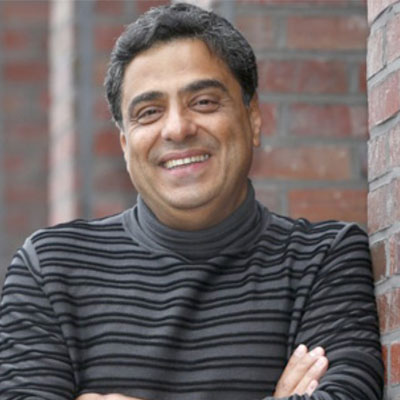
    ‘We have never got the cable television pay model right’: Ronnie Screwvala

    Despite having a negative connotation more often than not, “disruption” can be a good thing, especially when it’s planned and executed in a strategic manner. And if there’s one person who is known for good disruption time and again in the Indian media and entertainment industry, it’s Rohinton Soli Screwvala or Ronnie, as he is popularly known as.

    With a quest to grow and excel in whatever he undertakes, Screwvala belongs to the rare breed of first generation media entrepreneurs in India. For him, trying is not enough for he believes in achieving all his dreams as he dreams with his eyes open!

    The pioneer of cable television in India, Screwvala has been best known to build brands and enter untapped territories. From a humble beginning in the cable industry, erecting one of India’s well known media company UTV, grabbing The Walt Disney Company’s attention, foraying into Kabbadi – a sport that was never televised robustly to breaking even in the second year, Screwvala has always pushed the boundaries.

    Complacency and failure are two words that don’t exist in his dictionary. In a country where entrepreneurship means legacy business, Screwvala is the flag bearer for first generation entrepreneurs.

    In a conversation with Indiantelevision.com’s Anirban Roy Choudhury, Screwvala goes back in time and shares his views on the Indian cable TV industry, Disney, sports and more.

    Read on for more :-

    The Disney – UTV deal is touted as a landmark deal in the Indian broadcast space. How does it feel when you look back at it today?

    I feel very proud when I look back at Disney India. We have a phenomenal team, which is doing an incredible job across the board. The channel is doing well and the movie studio is doing fantastic. The live show Beauty and the Beast has given live experiences in India a new benchmark. The best part is that they did it with local talent. It was not some imported show that travelled in here and went away.

    So it’s an incredible job done by the Disney team in India and I am proud of them. The easiest thing would have been to get a travelling show in, but they took the difficult route with local talent so it’s a local Disney show. The Disney team makes me feel proud.


    As a pioneer of cable television in India, you played a pivotal role in building it from scratch. What is your view on the evolution?

    When I look at cable, I have to say I have a little bit of regret because we are the only country in the world where we have to explain what cable TV is!

    The concept of local cable operator (LCO), multi system operator (MSO) is not there anywhere in the world other than India. A cable operator means that you need to pay for content. There are cable operators who are actually aggregators of channel. We have never got the pay model right! It started because nobody wanted to pay. Then there was a whole decade of under-declaration and nobody made capital investment.

    There are two things: Firstly, after 25 years of cable we are still not paying for content and secondly, serious investments have not gone into cable. You need billions of dollars……. we are still using the same cable that we were using 25 years back. We are still using the same model that we were using 20 years back. Yes, there have been some improvements, but we cannot call it cable TV. We are not cable TV like the world understands cable TV and that’s my problem.

    On the flip side, I must say it’s an incredible cottage industry. Look at the number of jobs it has created! It’s such a gigantic industry and for that matter if it was not the way it flourished, TV might not have been that popular the way it is. People could still be watching terrestrial TV and there would have been no satellite programming. So the fact that it has spread because of its entrepreneur spirit is a proud moment.

    I am proud of the entrepreneur spirit that has gone in there. However, I am regretful because no serious investment has been made there and we could not manage to get the pay model right.

    Speaking about the pay model, are we getting it right in digital? We are providing content for free and hence making free content consumption a behaviour.

    Let’s be very clear… people think online is free, but we are not doing anything for free. The first entrepreneurship course that we are launching is for Rs 50,000 for three months. Yes, people are skeptical to pay but that’s the way forward.

    The problem with the digital platform is that the biggest player in the ecosystem – YouTube is for free. That becomes habit forming. Things will change on digital once we go to experiential viewing. There has to be something for you other than just watching… I don’t have any idea what that is but we are trying very very hard to figure it out.

    I think the digital paid space will be experiential where you are not paying for watching but for watching plus plus… We are trying to figure out what those plusses are.

    Do we have a content strategy ready for digital? People still consider it to be a platform for 2 to 3 minutes video consumption.

    You will be shocked to hear that since last year, people are watching 30 to 40 minutes of content online even while everyone thought that digital means two to three minutes. 

    There are more people now watching 20 to 30 minutes of content online compared to the ones watching two – three minutes. What’s more, people have been also heard saying that the smaller duration content is snaky. That habit is changing because there are increased offerings. You give people quality content, they will consume it.

    Quality of content and storytelling in digital is changing. People are ready to watch a full movie on digital but they cannot now because of the bandwidth issue. So content size is not an issue, it’s the quality that matters.

    Talking about films on digital, Netflix recently simulcast The Beasts of No Nations. What’s your take on Netflix and what is the revenue model that Indian players should follow?

    Today Netflix’s market cap is as much as 21st Century Fox’s, it is as big as Time Warner and higher than Viacom… with the sole exception of Disney, which is the largest media company in the world.

    The road ahead for digital has to be ad revenue. We cannot fool ourselves on that. But the frustrating part is that we are dealing with people who do not understand digital. So the problem is that when you start a new digital medium, the main constituent – the advertisers – do not understand it at all. They still think it’s niche. They just don’t get it that today movies can be launched on digital.

    There are huge advantages of the platform. Sorry to generalise on the advertisers but the fact is that they do not understand digital and it’s going to take them three to four years to understand it. The big challenge is that while digital players will rely on advertisers, there will be no one available to experiment. So players will have to experiment, prove and only then will advertisers come on board.

    Are you saying that the next few years will be very tough for digital players?

    It will be tough, but it will be tough in a good way. It won’t be scary tough. Only serious players in the ecosystem will stay. The others that are coming with a herd mentality, the MCN players etc… I have no idea what they are up to.

    You cannot wake up to 20 different channels. What is the need? What is the model? Where will it go? What will happen to it? And the worst part is, you got investors backing those models. I fail to understand what they are up to. But yes, serious players who want to be in the ecosystem for good will be there.

    After your successful stint with Kabaddi, are you eyeing any other sport?

    We are investing in football. We are doing global grass root training programmes but it’s not the training that everyone is doing here. The training that we are giving is very different wherein we will take 60 kids to Germany for six years of training.

    Since the cost of something like this is very high, the expenses will be shared by us and the candidates. The will pay for the lodging and boarding, whereas we will pay for the training. We will manage their careers for the next 10 years. The age group that we are looking at is under 12, under 14, and under 16. We have to catch them really young and that’s the challenge.

    There are people who do three months training and summer courses, but you cannot become football stars by that. In our initiative, the kids will have to be away from home for six years. The peer pressure to meet global standards, the environment, discipline and the commitment is what we plan to offer them.

    So is this a business proposition of USports or are you doing this to uplift the sport?

    (Laughs). Of course it is a business proposition! Swades is the only social initiative that I am in for non-profit. Everything else is pure business. I think we are in the process of developing 300 future football stars. Then we will manage their careers for 10 years, that’s our business model.

    What is the progress of your motor-sport innovation?

    My motor-sport venture is an attempt to start a destination sport in India involving two-wheelers. Lakshadweep, Daman and Diu, Leh and Ladakh and Puducherry are the locations that we have in mind. The infrastructure has to step up to it, and the most important part is not the track but safety.

    This year India will be number one in terms of bike consumption, larger than China. The two-wheeler population is massive in India. Therefore, sports is an interesting way to go forward with that. But to us, the most important part is safety. It’s not a rally that we are planning so we cannot do it on a muddy paddy field. The infrastructure will take time to grow. There will be one domestic team and one international. The domestic riders will go abroad and train for six months.

    How much more time do you think it will take to match the quality you need? Are there any other investors involved?

    I would have liked to start it in next six months but the safety level that we are targeting will take at least 18 months more.

    I am doing it on my own and there is no partner involved to start the league. Here, we are going to be a league owner and our partners will be the ones we sell our franchises to.

    You have entered into online education with UpGrad. What are your plans with the venture?

    UpGrad is in the education space for post-grads. We are eyeing 14 to 16 completely different online courses, which will all be post-grad and specialised courses.

    We kicked off on 25 November with our entrepreneurship course. UpGrad received 2000 applications and then eventually we shortlisted 600 participants for the first cohort that started on 25 November. This would be the first time someone is doing a course of such high scale on entrepreneurship. The number that we roped in is huge. For every hundred students, there will be a teacher associate, who will interact with them at regular intervals. There will be a continuous process of mentorship. The course on entrepreneurship is of three months. After that the next one on Big Data will be of nine months to a year. We are launching three new courses, which will be out between March and May.


    You recently wrote a book and that inspired many igniting minds. Are you planning a second one too?

    I am not an author for sure! A book takes a lot of effort, I am happy being a business man. I am not even thinking about one more book at this stage.


    What are your plans with Swades? How much do you invest in it both in terms of money and time?

    Swades to me is not an investment. We are putting our heart and soul in it. Zarina, my wife, is working full time for that. We are not cutting cheques. Philanthropy is when you cut a few cheques and give it to an NGO. We are building a foundation from ground up. Yes, we are putting our own money but we are also putting our sweat and toil. We have 1200 people working for Swades, which is also quite big. It is a life-long commitment for us and there is no running away from it.


    You are too much of a TV person to not be in TV. When are you going back? What’s next?

    I don’t feel I am being left alone. Look at the things we are doing with Football, UpGrad and with Kabaddi. If because of Filmfare, five people used to come for selfies, now at least 50 of them come because of Kabaddi. It’s the same in rural areas too. When we travel for Swades related work, we get to know the popularity and the craze of the sport.

    I am happy with what we are doing and have no plans of going back. Swades is a key focus for me and Zarina both and we will continue to do what we are doing.
  • Ronnie Screwvala’s UpGrad platform attracts entries from over 20 countries

    Ronnie Screwvala’s UpGrad platform attracts entries from over 20 countries

    MUMBAI: The online education platform UpGrad founded by Ronnie Screwvala, Mayank Kumar, Ravijot Chugh and Prabhav Phalgun went live with its first course on entreneurship on 25 November. The 15 week program, in its first outing, has received entries from 100 cities over 20 countries. Close to 2000 participants applied for course. 


    The program features five distinguished faculty members from academia, 30+ entrepreneurs like Ola Cabs co-founder Bhavish Aggarwal, MakeMyTrip.com founder Deep Kalra, Zomato co-founder Pankaj Chaddah and over 10 industry stalwarts from various fields to provide deep insights and first-hand experiences to the student base. 


    The courses will vary from a duration of six weeks to nine months and will have multiple start dates through the year. Going forward, UpGrad will also be available on the mobile platform through an android app.  


    Speaking on the response, UpGrad CEO & co-founder Mayank Kumar said, “The fact that we received close to 2000 applications across various demographic sections during the first leg of the launch, stands testament to the need for quality online education in India. We aim to bridge this need gap through UpGrad.”


    “With UpGrad, we aim to revolutionise the online education industry by bringing credibility and scale. The response to our first course is a strong validation that we are on our way of achieving our vision. Our strong academics & media production team providing quality content, and our technology team building the most innovative learning platform enable us to provide a unique and first of its kind education experience to create industry ready professionals. Our programs will also offer a strong support services to ensure students have a seamless learning experience,” signed off UpGrad founder Ronnie Screwvala.

  • Ronnie Screwvala’s grand plans for Kabaddi

    Ronnie Screwvala’s grand plans for Kabaddi

    MUMBAI: If you’ve got to invest in sport in India, then it has to be the multibillion cricketing extravaganza the Indian Premier League (IPL) which attracted audiences like a zillion bees to a honeypot. Nothing else comes even close to it. Well at least that was the perception a couple of years back.


    But cricket’s hypnotic influence is waning, as other sports have begun to attract a following. And that’s mainly because game changing innovators have got into develop the business of sports. Amongst them figure Mashal Sports promoter and TV commentator Charu Sharma, Star India boss Uday Shankar and firm believers in disruption like Ronnie Screwvala. The trio picked up a game you and I have all played at some time or the other during our school days.


    A game that is played in each and every part of India, a game which the national team has emerged triumphant in each and every level it has participated; a game that we all know but did not talk about much. In no time, it has  emerged as the second most popular sport on television.


    We are talking about the game called kabaddi which has flowered as the Star Sports Pro Kabaddi League, a tourney that Screwvala’s Unilazer Sports had an eye on from day one. The entrepreneur invested and acquired the Mumbai franchise and named it U Mumba. The first season saw his team play well. Well enough to reach the finals. But not well enough to take home the gold and the trophy; second place was all that it could manage.


    But second best was not good enough for Ronnie. Came ProKabaddi League Season II, and Ronnie’s boys took home the gold.  What helped them across the winning line?


     “It’s teamwork. From day one we focused on teamwork, and it has worked for us,” pat comes Screwvala’s response. “Ours was the only consistent team which reached the finals in both the seasons. In sport, talent nurturing, morale and teamwork are most important things, so once you get that right – the body language, the aura around it, and the perfection falls in place.”


    The success of U Mumba was not limited to the ground. It was reflected in the number of sponsors on the team jersey, in the full houses at the arena when the team played, and in the balance sheet as well in terms of revenue generation.


    “I think we had a very focused approach to winning, to perform and that’s what sport is all about, and I feel that’s what has worked for us,” explains Ronnie.  “So when people look at it and say this is the organization which is committed to take sports further, it is committed to its people. It is unlike any other organization when you see the body language and when you see the culture of the company; people invest in the culture of the company. We want to win.”


     He has been working on another level too: that of building the franchise of kabaddi. Like other team owners he realized that there were limitations with the ProKabaddi League. Being a once-a-year competition played over a few days, it could not stack up against other sports like cricket or tennis or football that are played throughout the year and have large mind spaces amongst sports lovers. Hence, sustaining its brand value would be difficult[ – forget about enhancing it – which is what most team owners want: an appreciation in the value of their investment in their teams.


    So he initiated a discussion with the other stakeholders and they came up with an answer, make the ProKabaddi League a twice a year proposition.


     “The thought we had was very clear and I think it came from everybody saying that we should have a longer season or two seasons. In cricket you can have a six weeks league and it still captures people’s minds as the sport is played throughout the year. Our point was that if you want to make a  sport a national interest sport and build it up into an even bigger property, you can’t play it just six days a year. We were pushing everyone and proposing to everyone that we should have two seasons a year and that was our goal. It took all of a year but fortunately now we will we will have season three in January 2016,”  says Screwvala.


    The ingredients are all there to make kabaddi a national phenomenon like cricket. The sport has its popularity across India but it was considered to be a non-glamorous sport played on the streets or on dusty grounds by the not so-well-off Indians; not something the rich or the upper middle-class could enjoy. Earlier coverage of the sport on television, especially Doordarshan, had also made it look unappealing.


    Hence, kabaddi needed many an innovation to make it look exquisite on television. And there came the great collaboration between Mashal Sports, Star India and the Kabaddi federations. Making the game compact was an important first step, explains Screwvala,  


    Says he: “I think what Star and Mashal have done to the sport is incredible. What Mashal did is put the sport on a platform that would make everyone look good. And that’s where the line, time, mat came into picture. If the game was played on mitti (soil) in an open field the compactness would have been missing. The sport would be even more engaging when the spectators were close enough to feel like they were a part of the action.”


     Star India too brought its production and creative skill sets to the table and made the sport look larger than life. Ronnie highlights out that Star did not film the league like they would cover a local sport, rather they went the Full Monty, with all the bells and whistles to make it look like a global spectaclur sport.


    “Indians like action. The action genre is very big here and the gladiator feel that Star’s coverage has brought is incredible” says Ronnie praising Star India. 


    Having tasted success and taking home the booty with his team U Mumba as the champ, Ronnie is brewing further plans relating to ProKabaddi.  


    “The sport needs to become aspirational. And we can do that through an animation series, TV series, movies and games. At least two of them will be unveiled in the coming one year,” says the billionaire media baron turned investor. “We have a plan drawn out for the next 18 months and we will do everything possible to make kabaddi an aspirational and regular sport in India. We are investing in a national hunt for new talent, so that we have future stars ready. This is a program to develop kabaddi at the grassroots level. It is an initiative to discover 100-200 Kabaddi talents across pan India. The interaction in rural area has been quite magical so far.”


    He is pretty happy with the returns he has got. “Last year we had revenues of Rs 12 crore,” he reveals with a wide smile on his face. “In 2016 we are targeting Rs 40-50 crore.  Mashal kept the acquisition price low and reasonable and thanks to that break even has already happened.”


    In terms of sources of revenue, despite the ticket prices being high, sponsorships and alliances lead the tally, followed by gate collections and TV revenue.


    “We did decently well in first season but now we are looking for a FourX jump,” he clarifies.” We cannot undersell Kabaddi rather we should not undersell Kabaddi. It is the number 2 sport in the country in terms of viewership…above football so it cannot be the number 4 sport in terms of advertising. It is watched by urban as much it is watched by rural so why do we under sell it?”


    He believes a lot more can be achieved if advertisers and agencies correct their perceptions about kabaddi.  Says he with a lot of passion in his voice:  “My only problem is certain advertisers who are in complete la la land.. the complete dinosaurs in my opinion. They still ask questions like:  are urban people watching it? Lets do a research and see who is watching it. And my answer to them is that we will find urban is as much into it kabaddi as rural is. So these perceptions are amateurish.”  


    Indeed this is a man who has made it a business to build enterprises and then finding customers who buy into them. And making a fat packet in the process for himself. Not once but several times over. The last one was when he got a very stringent media and entertainment major, the mouse house, Disney to buy out his interests in UTV. Kabaddi is definitely going to be a lot easier. 

  • Arré to launch provocative docu-reality series on gender-swap

    Arré to launch provocative docu-reality series on gender-swap

    MUMBAI: Come January 2016 and the Indian digital landscape is poised to get a new player Arré, which is the brainchild of media veteran Ronnie Screwvala and his A-Team B Saikumar and Ajay Chacko.

    The Arré digital media brand housed under UDigital, has already chalked up its content strategy and is looking at disrupting the Indian digital ecosystem by launching the first digital reality series. The provocative docu-reality series, which is based on the Israeli format Re-Gender distributed by Armoza Formats, gives men and women a chance to experience life as the opposite gender.

    While Arré has not yet zeroed in on the title of the show in India, it will begin shooting the series in two – three weeks’ time at Chhatarpur in Delhi.

    In Re-Gender  six men and women will explore their own nature and the other gender ‘s as well. The series is modeled on a psychological-social experiment, dealing with the essence of the male and female experience, through the other gender’s eyes . The show is a daring social experiment that breaks down the rules of gender perception and challenges society-defined gender stereotypes. In the series, men will become women and the women, men. Through their assignments out in the real world as well as through dynamics with each other in the house, where they will live cut off from the world for a month, the contestants will discover certain not-so-obvious truths about the opposite sex.

    The six participants will undergo intense gender training as well as emotional and physical transformations. Each participant will make a personal journey on the show to better understand themselves and their relationships.

    Armoza Formats founder and CEO Avi Armoza said, “We’re extremely excited about this venture with Arré and to see Re-Gender become the flagship series for this fresh new platform. The issues that the show deals with not only make for riveting viewing but also provoke important discussions in our society.”

    UDigital co-founder and managing director B. Sai Kumar added, “We are hoping to break new ground with a show like Re-Gender on digital media, in India. The definition of gender roles and expectations are evolving everyday and is a much talked about and debated subject in India. We wish to bring our lens to the topic through a first of its kind entertainment series with elements of drama, reality, emotion, new experiences with social learnings all rolled into one.”

  • Five reasons why Pro Kabaddi League is a hit and not a hype

    Five reasons why Pro Kabaddi League is a hit and not a hype

    MUMBAI: When the first edition Pro Kabaddi League (PKL) garnered enormous fan following, many a naysayers pooh-poohed it as a one-time wonder. Media pundits even predicted an out of mind – out of sight situation. However, PKL’s second season has certainly managed to zip the lips of the killjoys and their critical analysis.


    While Ronnie Screwvala’s UMumba won against hard fought Bengaluru Bulls to win the tourney, the larger victory was of the format as PKL season 2 saw constant acceleration in each and every rating parameter. In the first edition of the tournament, there were no brands involved. However, the second edition saw multiple brands associating with the game, which only goes on to prove that the league was not only acknowledged by sport enthusiasts but also saw commercial interest peaking.


    Based on an interaction with various people involved in the execution of PKL, Indiantelvision.com lists five broad reasons as to why PKL is a hit format and not just buoyed temporarily by hype.


    Star India and its 360 degree packaging


    Broadcaster and owning partner of the league Star India left no stone unturned to make it an extraordinary exhibition. From special point of view commentators to multilingual feed, from quality pre and post match programming to timely highlights, Star was right up to the mark on every aspect. “You cannot ask for anything more when it comes to TV presentation, Star has covered it all,” says Mashal Sports director Charu Sharma.


    Not just TV, thanks to Star’s OTT platform Hotstar, the league matches were easily available for streaming on mobile platforms too. Star created Kabaddi based original content featuring Ranvijay Singha in Le Panga and Javed Jafri in Jabaddi to keep the buzz going on digital platforms.


    To the point Marketing


    All marketing and promotional steps that were taken before and during the league had a clear purpose and concise message. Kabaddi is a native sport played all across the country by a certain group of people and it was very important to connect to them. PKL’s TVCs that were launched this year had mass connect and social impact. The journey began with Le Panga where a young boy litters in the middle of the road. Seeing that, a few senior citizens approach him in a deadly way chanting ‘Kabaddi Kabaddi.’ The young boy picks the trash up and gently throws it into the dustbin.


    This year’s campaign actually kick-started with Bollywood legend Amitabh Bachchan singing PKL season 2’s anthem Le Panga. The social and emotional connect was kept intact even during the matches as every match started with the National Anthem. Indians follow their heroes and like to talk about them and Star made full use of that very philosophy. Every city saw an icon singing the national anthem, Bachchan in Mumbai, Sourav Ganguly in Kolkata, Sunidhi Chauhan, Allu Arjun in South India and Alia Bhatt in the finals. The organisers also teamed up with Prime Minister Narendra Modi’s hygiene campaign ‘Swachh Bharat’ to give it a boost and enhance social connect.


    Strong Revenue Generation


    While the broadcaster did not have any brands on board in the first edition of the tournament, this time round as many as eight associate sponsors and two partners were on board. The broadcaster is said to have made more than Rs 55 crore from season 2. “From 0 to Rs 55 crore is a big jump forward. If the format will stay or not, is now out of question. The question now is on how big will it grow. If the fundamentals are not struck by an unwanted force, I see the sport creating history in the near future,” says an expert on condition of anonymity.


    At this stage the league looks to be a profitable proposition not just for the broadcaster but for the franchises too. If sources are to be believed, UMumba has already broken even in terms of revenue generation. 


    Even Bengaluru Bulls is close to breaking even. Bengaluru Bulls promoting company Kosmik Global CEO Uday Sinh Wala says, “We are close to breaking even. We would have drawn level this year if only we had not refused to sell cheap. There are not many leagues in the world where you can think of drawing level at the end of the second season.”


    UMumba generated maximum revenue from sponsorships followed by Bangaluru Bulls who charged Rs 1.5 crore for the title sponsor’s slot. Franchises are looking towards a 15 per cent increase in their revenue generation next season, which will definitely get them closer to level.


    Twice a year proposition


    With more and more sporting actions springing up month on month, the one year wait might turn out to be a tad too much. Hence Star India has now decided to hold the league twice a year. “While the wait is good, too much action is bad. However, too much wait may lead to out of mind – out of sight situation, which is dangerous. Why take the dangerous route? The twice a year proposition looks promising as the sport will have way more exposure. I believe the interest level will go up, and people will enjoy the tournament with same enthusiasm twice a year,” says Sinh Wala, welcoming the move.


    Close association between Federation and League owners


    Star India and Mashal Sports work very closely with International Kabaddi Federation (IKF) and Amateur Kabaddi Federation of India (AKFI) to ensure smooth processing. A conflict between the two can often take the flair out of the game but for PKL, it’s not an issue. Moreover, there isn’t a situation where players are not available to play or are restricted by the authorities.


    According to Sharma, PKL’s biggest success lies in the success of the honest and humble Kabaddi players. “The players are now known to everybody in the entire country. They have an identity. They always made India proud, yet no one ever tried to know them. We are number one in Kabaddi and still no one bothered to talk about it. Now the entire world wants to take part in this event and that’s the outcome of PKL,” he adds.


  • Cyrus Oshidar launches youth centric digital venture 101India.com

    Cyrus Oshidar launches youth centric digital venture 101India.com

    MUMBAI: Digital ventures are mushrooming in the country nineteen to a dozen. With the big daddys of Indian media and entertainment like Raghav Bahl and Ronnie Screwvala leading from the front in the space with new ideas and bags full of investment, it doesn’t take much to figure that digital is where the future lies. And another such media personality, who is putting his money where the mouth is, is the former MTV man Cyrus Oshidar.


    When it comes to interacting with the youth in India, there’s no bigger name than Oshidar. Under his supervision at MTV India, iconic creative series targeted at the youth were launched, which successfully managed to garner the TG’s attention. Be it Roadies, or the musical voyage in Sound Trippin, uniqueness was forever visible in each and every concept.


    The man who played a pivotal role in establishing youth market in India with multiple innovations, is now set to connect with the youth yet again and this time with the digital portal 101India.com. The portal was launched a month ago with the aim of providing unique and differentiated content for young Indians. What’s more, his team’s unique skill sets were also used to create deeper and more relevant brand solutions. With 101India, Oshidar and his team aim to lead the digital content movement in India.


    Speaking exclusively to Indiantelevision.com, 101India.com MD and chief creative officer Oshidar says, “It was at the 2012 Cannes’ first branded content and entertainment contest that the concept of 101digital.com came into my mind. It’s time for the movement to begin. We need to talk to the youth in a creative manner, which they will acknowledge and then eventually interact with.”


    Combining adverts in a subtle manner with content on the platform is how the portal will look at making an impact on the youth’s mind. Oshidar says, “We are not a million hits platform and hence we are not going to go pitching to advertisers with promises to millions in return for their crores. We know how to speak to the youth of the country and that’s all we will do. Gone are the days of putting ads in between content. Now we have to fit the brand in the content itself and that’s what we will do in 101India.com.”


    The content publishing platform will target educated metro youth aged between 21 – 25 years and hence majority of the marketing and promotional activities to promote the venture will revolve around social media.


    Broadband speed in the country is poised to get a major fillip what with Airtel 4G already hitting the market and Reliance Jio impending launch by year end. Oshidar is of the opinion that these rollouts will enhance the infrastructure and bridge the gap between quality streaming and content.


    While internationally acclaimed over the top (OTT) venture Netflix is speculated to start its India operation in 2016, another player HOOQ has already launched its India ops. The space is getting cluttered by the day with the addition of Indian OTT players like Ditto TV, Hotstar and Eros Now amongst others. There’s cut-throat competition in the market and established ventures can often overpower startups. However, Oshidar believes that quality content will always sustain. “Game Of Thrones will remain Game Of Thrones and people will consume it irrespective of the platform. So we need to have premium content to sustain in the long run,” he asserts.


    101India.com will soon launch an app to reach out to more mobile customers. In terms of content, the venture has created a documentary on the issue of transgenders in association with Times of India’s online venture Indiatimes.com. Also in the pipeline are a series of fiction shows along with a few short movies.


    The entire production is taken care of by the in-house team at 101India.com. “We are blessed to have a group of creative talents, who have worked closely with me at MTV and we execute the production all among ourselves,” Oshidar concludes.


    More digital power to Oshidar we say!

  • Ronnie Screwvala’s Unilazer invests Rs 15 crore in on-demand platform Timesaverz

    Ronnie Screwvala’s Unilazer invests Rs 15 crore in on-demand platform Timesaverz

    MUMBAI: Ronnie Screwvala’s Unilazer Ventures has pumped in Rs 15 crore in an on-demand home services platform Timesaverz. This Series A funding will be used to expand services of the startup in new markets.


    Founded in 2013 by Debadutta Upadhyaya and Lovnish Bhatia, the Mumbai based startup operates in six key metros namely Bangalore, Delhi, Gurgaon, Hyderabad, Noida and Pune, growing at a 100 per cent rate QoQ. The service is available for both Android and iOS users.


    Screwvala said, “On-demand home services comprise the new frontier of e-commerce where service is now a product. Large companies are going to be created in this space and we will work closely with the founders to make Timesaverz a leader in an existing $5 billion industry with immense growth potential.”


    Timesaverz co-founder and CEO Debadutta Upadhyaya added, “Timesaverz started as a 2-hub operational company in Mumbai two years ago and has since grown to cater to one service request every three seconds and manages fulfilment through a 1000+ Timesaverz partner network. Since the launch of its both on web and mobile application, it has been witnessed growth in visitations and 80 per cent of the traffic is through mobile. The recent round of funding is aimed at bolstering our technology solutions and strengthening our product portfolio.”

  • Ronnie Screwvala to launch mobile games, animation series & movie on Pro Kabbadi League

    Ronnie Screwvala to launch mobile games, animation series & movie on Pro Kabbadi League

    MUMBAI: 10 Kabaddi, 9 Kabaddi will soon reach mobile screens as serial entrepreneur Ronnie Screwvala invests in setting up a mobile game with all the Pro Kabaddi League (PKL) franchises and players in it. 


    What’s more, Screwvala also envisions television and animation series alongside a movie around PKL. Screwvala, who is also the owner of PKL’s UMumba franchise, is of the opinion that such innovations around the traditional sport will help in making it more aspirational.  


    Kabaddi saw a decent beginning in its first year, attracting over 435 million television viewers, which prompted Screwvala to plan an array of properties around the sport. What’s more, the second season of Pro Kabaddi League picked up not only in terms of sponsorships, but also viewership. According to the TAM Sports analysis, PKL season 2 has seen a 60 per cent growth in viewership as compared to the last season for the first 26 matches. “It is a popular sport. Now, we want to make it into an aspirational one, give it some stature,” Screwvala was quoted as saying in an ET report. 


    Not only Screwvala, the sport’s success also garnered appreciation from veteran media mogul Subhash Chandra. “Star Sports is doing a great job and is packaging the sport well. It is sports like these, which will make India a sporting nation and not just a cricket nation,” he had said recently.


    The mobile game around PKL being built for all platforms will seek to initially build brands out of some recognisable UMumba players such as Anup Kumar and Shabeer Bapu. Later, as the game grows, Screwvala plans to integrate other teams as well. His team at USports has been fielding queries from people to make a live action television series and an animation series around Kabaddi. For the animation series, Screwvala is looking at a feel-good kind of underdog story of a young kid, where characters from the UMumba team will guide the protagonist. “Eventually, we want to create characters. The idea is that kids should play this in school, make it more of an aspirational sport,” Screwvala said. 


    The ET report further suggests that in the live action TV series, the story is likely to focus on three friends who come from three different states and how their lives intertwine, through kabaddi. “Our experience also teaches us that if you want a game to arrive, you want to have a big screen attachment to it. So, therefore, a movie is also being planned,” he said, pointing out that scriptwriters are right now understanding the back story of kabaddi players. 

  • U Mumba partners Enerzal for Star Sports Pro Kabaddi League 2

    U Mumba partners Enerzal for Star Sports Pro Kabaddi League 2

    MUMBAI: Ronnie Screwvala owned Kabbadi team U Mumba has partnered with energy drink Enerzal as its official ‘Hydration Partner’ for this season of Star Sports Pro Kabaddi League.


    With this alliance, Enerzal will be featured on the back of the players’ jersey and on LED display panels at match venues.


    Supporting sports has been an integral part of Enerzal’s profile and consumer engagement. Prior to this, the brand has associated with events such as Standard Chartered Mumbai Marathon, Airtel Delhi Half Marathon and Tata Consultancy Services World 10K amongst other sporting properties.


    FDC executive director Ameya Chandavarkar said, “Enerzal is delighted to be associated with U Mumba as the Official Hydration Partner. This association is our first step into the spectator sporting arena and we are excited to further our role in the sporting revolution India is experiencing. Enerzal is a balanced energy drink and will ensure that the players are optimally hydrated during training as well as the Pro Kabaddi League matches. We wish the entire U Mumba team all the success and hope they continue their winning streak in the competition.”


    U Mumba, runner-up in season one of the League, is leading the points table in this season led by captain Anup Kumar and coached by Bhaskaran Edachery. The team concluded their home leg undefeated and will be playing next in Patna, after winning their games in Kolkata and Jaipur.


    “We’re delighted to have Enerzal on board as our Official Hydration Partner. They’re one of the leading brands in the category and the product will certainly be vital in helping the team maintain optimum energy levels during their matches as well as training,” said U Sports CEO Supratik Sen.

  • UDigital launches new brand viz Arré

    UDigital launches new brand viz Arré

    MUMBAI: Ronnie Screwvala, B Saikumar and Ajay Chacko founded digital media venture UDigital has announced a new brand named- Arré. The venture plans to go live with it later this calendar year.


    Arré portrays a range of emotions; from the ‘surprised and the questioning’ to the ‘friendly thumbs up affirmative’ to ‘disagreement and protest’ to ‘Arré yaar!’ It crosses boundaries of language, audience groups and geographies. Arré  will be an original  content  destination  which will  be  a  unique  storytelling  platform  across  genres and formats.   


    Arré will express itself across mediums, from text to graphic art to podcasts and video in multiple genres such as reality and fiction, factual and opinionated as well as pure entertainment. It is working with collaborators across the spectrum in developing original content;   from   writers,   artists,   journalists   and   storytellers   to   independent   filmmakers, established production houses as well as upcoming talent in fiction, reality and non-fiction genres.


    UDigital, managing  director B Saikumar said,  “Arré  was  born  out  of  the  need  to  create  a  truly  disruptive  digital  product.  Our  philosophy  is  to  continuously  challenge  the ‘moulds’ of format, media and structure to create content that is reflective of good storytelling in a digital environment. Much like the name, we hope to make Arré, the brand, a part of daily conversation in India and globally!”  


     The word Arré is one of the most commonly spoken Indian colloquial term which signifies ‘Hey’. While its origins are in Hindi, it is an expression that’s not only understood throughout the length and breadth of the country but has also been included in the Oxford dictionary of the English language, as an ‘all purpose Indian-English interjection’.


     The accent on the é in Arré is reflective of the varied expressions and emotions that the brand will straddle, as well as its international outlook. 


    The logo and visual identity of Arré is being designed and developed by AREA 17, an interactive agency based in Paris and New York. AREA 17 has an acclaimed body of work on international brands in media such as Vice, Quartz, The Atlantic, Style.com, Facebook, Pinterest and more.