Tag: Romil Ramgarhia

  • BARC India data shows how Tamil Nadu leads regional TV viewership, content and advertising trends

    BARC India data shows how Tamil Nadu leads regional TV viewership, content and advertising trends

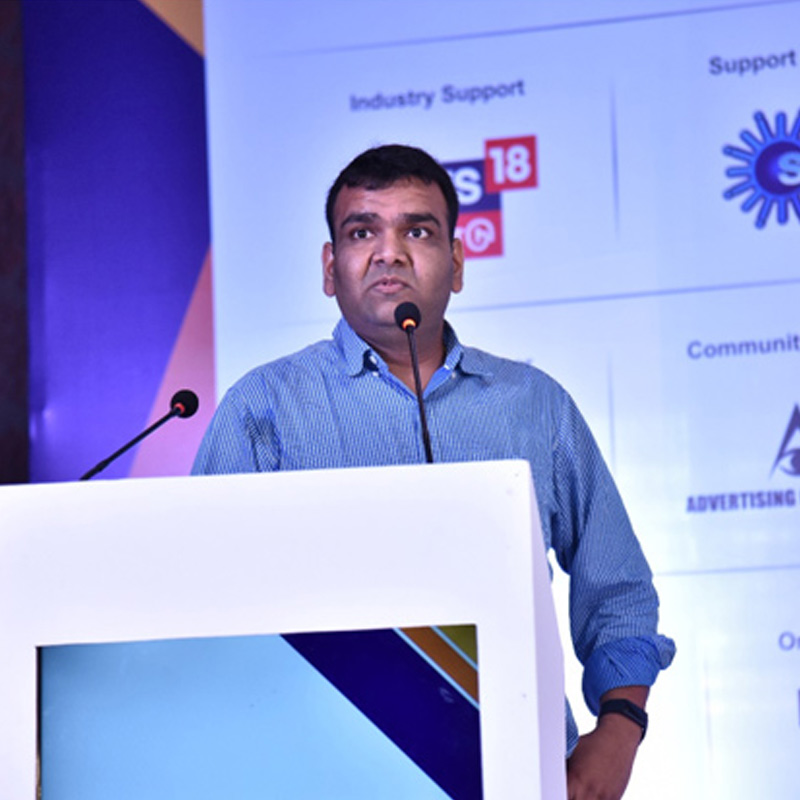
    MUMBAI: The inaugural edition of Tele-Wise Tamil saw BARC India COO Romil Ramgarhia share some interesting numbers related to TV consumption, viewership, advertisement and average time spent (ATS) in Tamil Nadu (TN). He also gave an understanding of trends and behavioural patterns of different genres in the dominant regional market.

    Ramgarhia began his session by explaining how demographically TN is different from other states in India. The state is dominated by 53 per cent of women viewers. 34 per cent of all India population belongs to NCCS AB home but Tamil Nadu has 47 per cent of NCCS AB home. In spite of smaller family size, Tamil Nadu’s TV consumption is high. Ramgarhia informed that NCCS A home consumes more TV in the state.

    While total TV consumption in India per week is about 1000 billion viewing minutes, TN itself gets 110 billion viewing minutes.

    “Over the last two years, overall TV consumption in India has gone up by 21 per cent largely aided by digitisation that happened in the state a little later compared to others states. Despite NTO coming in, the market was resilient and though it had some dent it bounced back much faster compared to other states that we have witnessed,” said Ramgarhia.

    He added, “Generally, the overall consumption of TV in India goes up by 15 per cent in the third quarter but in Tamil Nadu the consumption in that quarter went up to 20 per cent. This year we are hoping to see the same trend compared to 2018-19.”

    Around 9 per cent of the population resides in Tamil Nadu and it contributes 12 per cent of total TV viewership. Tamil Nadu is the only state in the South which has a higher viewership from urban areas. The state has 55 per cent viewership from urban areas and 45 per cent from rural. Telangana has 57 per cent of viewership from rural and 23 per cent from urban. Karnataka has 52 per cent of rural and 48 per cent of urban viewership. Kerala has 50 – 50 per cent of rural and urban viewership.

    Overall in India, the daily TV consumption is about 3 hours 37 minutes whereas Tamil Nadu sees more than 4 hours a day with 74.8 per cent daily tune-ins. Almost 94.2 per cent of the people consume TV at least once in a week and 75 per cent of them consume every day. “It is one of the largest time-spent markets across India,” said Ramgarhia.

    Going further, Ramgarhia explained that viewership in the state also shoots up when there are big events. The state consumed around 8 hours of content on the day of former chief minister Karunanidhi’s demise.

    GEC contributes 63 per cent of total TV consumption in the TN market. Speaking on the primetime, Ramgarhia highlighted that there is no prime time. “The top three Tamil channels have 42 original fictions and 15 non-fictional shows which means the state produces 52 original content in a week whereas the top 3 Hindi GECs have an average of 43 original shows. The market sees a lot of focus on producing more and more content which is also consumed in non-prime time as well," he said

    The data also revealed that the overall TV penetration was high in South and Tamil Nadu had seen 97.5 per cent TV penetration whereas Karnataka had 96.1 per cent TV penetration, Telangana had recorded 94.3 per cent and Kerala has 92.8 per cent.

    TRAI’s new tariff order (NTO) came in force in week 6 of 2019. 43 per cent of TV viewers in TN were consuming all four channels before NTO and now it is down to 35 per cent. There was a drop in reach from 75 per cent to 71 per cent. Pay Tamil GECs went down from 70 to 65. The reach was impacted by five per cent for pay channels post NTO implementation. But ATS went up by 6 per cent from the previous year. “People shift their consumption basket to their choice of channel. Rather than spending time across all the GECs, they just choose a different consumption basket,” said Ramgarhia.

    Throwing some light on the advertising trends in Tamil Nadu, Ramgarhia said, “After Hindi GEC, South GEC is the second largest segment for advertisers as it contributes 31 per cent to total TV viewership. If there are 500 categories in India, roughly 12 per cent of all categories are present in TN. From 11,000 advertisers in India, 15 per cent advertise in TN. If there are 19,000 to 20,000 brands in India roughly 13 per cent of the brands advertise in TN."
  • BARC data shows upward trend for kids’ viewership

    BARC data shows upward trend for kids’ viewership

    MUMBAI: Once upon a time, the kids’ genre was the most sidelined of them all but now broadcasters have figured out how to make magic work – localised content. At the ATF Kids’ Summit 2018 in Hyderabad, Broadcast Audience Research Council (BARC) COO Romil Ramgarhia threw light on Indian kids and their viewing habits.

    According to BARC, younger kids in the age group of two to eight years prefer watching Indian content. As far as mixed content is concerned, Indian and international, Cartoon Network garners 49 per cent of viewership from 2-8 years of age group, whereas 51 per cent from the 9-14 years of kids. Talking about the international content consumed by the viewers in the age group of 2-8 years, 45 per cent of the viewers watch Disney channel, 40 per cent and 43 per cent viewership watch Disney XD and Hungama channel respectively. Moreover, Nick channel raked in 58 per cent from the kids on Indian content, followed by 56 per cent, 54 per cent and 62 per cent viewership for Pogo TV, Discovery Kids and Sony Yay channels respectively. 

    Ramgarhia also said that the regional flavour is catching up in the kids’ segment too. Sun TV is already broadcasting in this space. Kochu TV (Malayalam) gets 56 per cent of viewership, whereas Kushi TV (Telugu) and Chutti TV (Tamil) secured 24 per cent and 21 per cent viewership respectively in the age group of 2-14 years kids.

    The duration of home-grown content on national kids’ channels has grown by 18 per cent. In 2016, kids’ channels aired 33 per cent of Indian content and now in 2018, it jumped to 39 per cent.

    Despite the fact that kids spend about 26 per cent of their time on Hindi GECs, the time spent on kids’ channels have also witnessed a hike in the last two years.

    [[{“fid”:”836512″,”view_mode”:”default”,”fields”:{“format”:”default”,”alignment”:””,”field_file_image_alt_text[und][0][value]”:”Channel”,”field_file_image_title_text[und][0][value]”:”Channel”},”link_text”:null,”type”:”media”,”field_deltas”:{“1”:{“format”:”default”,”alignment”:””,”field_file_image_alt_text[und][0][value]”:”Channel”,”field_file_image_title_text[und][0][value]”:”Channel”}},”attributes”:{“alt”:”Channel”,”title”:”Channel”,”height”:393,”width”:700,”class”:”media-element file-default”,”data-delta”:”1″}}]]

    29 per cent kids like watching Hindi GECs, followed by 18 per cent for Hindi movies and only 11 per cent kids consume kids’ channels. Since 98 per cent of Indian homes still owns a single TV, co-viewing is high.


    From week 1 to 32 of 2018, as per the BARC data, the total TV viewership of boys and girls in the age group of 2-14 years was 52 per cent and 48 per cent respectively. 61 per cent boys and 39 per cent girls watch animated content more on TV. Segregating the genre’s viewership on TV to rural and urban areas, urban viewership is 61 per cent while rural is 39 per cent for kids channels. The same shows a different side when it comes to overall TV viewership by kids with 46 per cent urban and 54 per cent for rural.

    The BARC data further showed that animation films on kids channels delivered higher viewership as compared to animated shows and games/quiz programmes.

    [[{“fid”:”836515″,”view_mode”:”default”,”fields”:{“format”:”default”,”alignment”:””,”field_file_image_alt_text[und][0][value]”:”Channel”,”field_file_image_title_text[und][0][value]”:”Channel”},”link_text”:null,”type”:”media”,”field_deltas”:{“3”:{“format”:”default”,”alignment”:””,”field_file_image_alt_text[und][0][value]”:”Channel”,”field_file_image_title_text[und][0][value]”:”Channel”}},”attributes”:{“alt”:”Channel”,”title”:”Channel”,”height”:448,”width”:803,”class”:”media-element file-default”,”data-delta”:”3″}}]]

    When it comes to sports, according to BARC data, kids dig kabaddi. Apart from this, cricket is the universal game that is liked by 69 per cent of the population.

    [[{“fid”:”836516″,”view_mode”:”default”,”fields”:{“format”:”default”,”alignment”:””,”field_file_image_alt_text[und][0][value]”:”Channel”,”field_file_image_title_text[und][0][value]”:”Channel”},”link_text”:null,”type”:”media”,”field_deltas”:{“4”:{“format”:”default”,”alignment”:””,”field_file_image_alt_text[und][0][value]”:”Channel”,”field_file_image_title_text[und][0][value]”:”Channel”}},”attributes”:{“alt”:”Channel”,”title”:”Channel”,”height”:450,”width”:800,”class”:”media-element file-default”,”data-delta”:”4″}}]]

    Also, the data stated that on weekends, vacations, festivals and cricket, kids tend to watch more television, especially during events like T20 World Cup, Navratri, Diwali and Christmas.

    [[{“fid”:”836517″,”view_mode”:”default”,”fields”:{“format”:”default”,”alignment”:””,”field_file_image_alt_text[und][0][value]”:”Channel”,”field_file_image_title_text[und][0][value]”:”Channel”},”link_text”:null,”type”:”media”,”field_deltas”:{“5”:{“format”:”default”,”alignment”:””,”field_file_image_alt_text[und][0][value]”:”Channel”,”field_file_image_title_text[und][0][value]”:”Channel”}},”attributes”:{“alt”:”Channel”,”title”:”Channel”,”height”:448,”width”:800,”class”:”media-element file-default”,”data-delta”:”5″}}]]

  • BARC shows it cares for children

    BARC shows it cares for children

    MUMBAI: BARC India is treading the path of altruism by adopting four public schools and an alumni hub in Mumbai to provide them with better educational facilities and make it fun.

    The initiative titled BARCares will commence from Diwali and the schools cater to the underprivileged parts of the community. BARC India CBO Romil Ramgarhia says, “We believe an initiative like this, on behalf of our stakeholders, not only adds value but also adds commitment for an overall enthused and motivated performance as a responsible joint industry body representing the three apex bodies of IBF, AAAI and ISA in our country.”

    The ratings agency isn’t bound by law to undertake any Corporate Social Responsibility (CSR) activities. “We are taking education for a cause to contribute for the sake of society,” adds Ramgarhia.

    BARC India has tied up with NGO Akanksha Foundation that has been working in this space for over 20 years and runs more than 20 schools in Pune as Akanksha schools helping more than 7000 students so far. The NGO conducts the first assessment to identify schools that need help.

    The four adopted schools are Wadi Bunder Mumbai Public School in Mazgaon, DN Nagar Mumbai Public School in Andheri, Natwar Nagar Mumbai Public School in Jogeshwari and Mahatma Phule Jyotibha Mumbai Public School in Masjid Bunder. Donated items include functional desktops, laptops, whiteboards, atlas, desks, chairs, curtains, fans, paints and paintbrushes.

  • BARC India and DEN Networks join hands for RPD; move to boost TV viewership measurement

    BARC India and DEN Networks join hands for RPD; move to boost TV viewership measurement

    MUMBAl: TV viewership measurement in India is set to get a boost. In a major development, BARC India has partnered with the cable distribution giant DEN Networks for measuring TV viewership using Return Path Data (RPD) via its digital set-top boxes (STBs).

    As part of this partnership, BARC India will fetch data from STBs of DEN Networks. DEN networks, will also use this data for subscriber management, packaging opportunities and to drive advertising revenue on their in-house channels.

    BARC India, will use a portion of DEN Networks subscriber base to augment its TV measurement service. The large pool of panel households will also help address the issue of panel home tampering.  

    BARC India had recently upped its panel home size to 30,000. These RPD partnerships will enable BARC India to capture viewership from an exponentially larger panel.

    “Collecting viewership data using RPD is a global practice. However, for BARC India it will be another global-first as we integrate this as part of the currency. Our partnership with DEN is the first step towards using RPD for TV viewership measurement,” said BARC India CBO Romil Ramgarhia.

    BARC India, which is looking at partnering with more Cable and DTH operators for RPD, believes that this approach will allow expansion of panel households to over 150,000 in the near future.

    “Currently, most cable / DTH operators in India do not have information on how their subscribers consume content. With more interactive services being launched, this will be a very valuable information for the platform owners. This partnership is a win-win for both and will benefit the larger ecosystem,” added Romil.

    DEN Networks CEO SN Sharma said, “Data gathering and analytics is becoming increasingly relevant in a vast and heterogeneous society like India.  With this partnership, we have taken the first steps towards world class data analytics of subscriber viewing patterns which will help us to serve our customers in a far more effective way and enabling us to offer personalised services.”

    Also Read:

    BARC India in talks with DTH ops, MSOs for RPD to boost robustness 

    BARC India to TRAI and MIB: Tweak legislation to make data tamper-proof

    BARC India to halt analogue measurement from July, up overall data collection

    Industry needs to understand on-ground changes in distribution, not question flux in data, says Partho Dasgupta

  • BARC to host digital measurement roadshows in Delhi, Mumbai & Bengaluru

    MUMBAI: After setting up a robust TV viewership measurement system, BARC India is gearing for a successful launch of EKAM, its digital viewership measurement venture. In keeping with its policy of transparency and inclusivity, BARC India, is hosting a series of multi-city roadshows for members of the digital ecosystem. This is part of the planned rollout of its digital measurement products under the EKAM brand.

    BARC India in the past had conducted four roadshows at several stages before launching its TV viewership measurement service. The aim behind these roadshows is to constantly engage with the stakeholders and understand their needs.

    Themed “EKAM: Unifying Measurement”, this is the first digital roadshow which has been planned to familiarize the industry with EKAM digital measurement products. These roadshows will also provide a platform for exchange of views on industry expectations and how the EKAM suite of products will meet those goals.

    The EKAM roadshows will be held in Delhi, Mumbai and Bengaluru between 31 July and 2 August.

    “We are aware that industry has expectations as well as several questions with regard to digital measurement. Through our direct engagement programs, we will hear them and also use the opportunity to familiarise them with our plans,” said Romil Ramgarhia, CBO, BARC India.

    “Currently, different platforms use different metrics to measure digital viewership. BARC India, being a third-party digital measurement body will bring in uniformity. The roadshows reinforce BARC India’s philosophy of transparency and inclusivity,” added Jamie Kenney, Business Head- Digital, BARC India.

  • BARC India on role of big data in ad effectiveness: Zee MELT 2016

    BARC India on role of big data in ad effectiveness: Zee MELT 2016

    MUMBAI: BARC India’s Think session on ‘Role of Big Data in Driving Ad Effectiveness’, at the just concluded Zee MELT, delved into the need for Big Data and its use in ad campaigns. The session featured Romil Ramgarhia, Chief Business Officer, BARC India, Bjoern Kroog, Global Head POS Analytics and Integrated Market Intelligence, GfK and Sukanyya Misra, Senior Vice President, Mastercard Advisors Shared Services, India.The session was moderated by Senior Journalist Gurbir Singh.

    Romil opened the session by centering the conversation on the aim of ad campaigns: which is to increase sales, uplift brand KPI, stay ahead of competition and help sales forecasting.

    Romil underlined the need to drive ad effectiveness, especially in the highly fragmented Indian market, with 8000+ advertisers, 12000+ brands, and 90000+ new campaigns every year. He said that a combination of data engines, machine learning algorithms and advanced analytics are key to ensuring ad effectiveness, which would in turn lead to incremental uplift in sales for each rupee spent, understanding of cross channel synergies, less uncertainty with effective prediction, optimum utilisation of media budgets, real time analysis and sharper targeting.

    Sukanyya, spoke about transforming big data into actionable insights. She said, “We should focus on not just big data but the right data.” According to her Big data can yield benefits with right testing and learning.Speaking from the perspective of MasterCard, she elaborated on how purchase patterns can help infer motivations, priorities and preferences of consumers.

    Bjoern took the position that it is smart data and not just big data that drives ad effectiveness. He said that big data can be combined with reference data to yield smart data. He offered insights into how big data can be transformed into smart data. While globally Digital has already taken over print and is forecasted to become more important in TV in 2018 in terms of spending, in India he showed that based on surveys the majority of respondents watch TV and read newspapers on a daily basis. Therefore, instead of taking an either-or position, smart integration of big data and traditional approaches will guarantee valid and deep insights.

  • BARC India on role of big data in ad effectiveness: Zee MELT 2016

    BARC India on role of big data in ad effectiveness: Zee MELT 2016

    MUMBAI: BARC India’s Think session on ‘Role of Big Data in Driving Ad Effectiveness’, at the just concluded Zee MELT, delved into the need for Big Data and its use in ad campaigns. The session featured Romil Ramgarhia, Chief Business Officer, BARC India, Bjoern Kroog, Global Head POS Analytics and Integrated Market Intelligence, GfK and Sukanyya Misra, Senior Vice President, Mastercard Advisors Shared Services, India.The session was moderated by Senior Journalist Gurbir Singh.

    Romil opened the session by centering the conversation on the aim of ad campaigns: which is to increase sales, uplift brand KPI, stay ahead of competition and help sales forecasting.

    Romil underlined the need to drive ad effectiveness, especially in the highly fragmented Indian market, with 8000+ advertisers, 12000+ brands, and 90000+ new campaigns every year. He said that a combination of data engines, machine learning algorithms and advanced analytics are key to ensuring ad effectiveness, which would in turn lead to incremental uplift in sales for each rupee spent, understanding of cross channel synergies, less uncertainty with effective prediction, optimum utilisation of media budgets, real time analysis and sharper targeting.

    Sukanyya, spoke about transforming big data into actionable insights. She said, “We should focus on not just big data but the right data.” According to her Big data can yield benefits with right testing and learning.Speaking from the perspective of MasterCard, she elaborated on how purchase patterns can help infer motivations, priorities and preferences of consumers.

    Bjoern took the position that it is smart data and not just big data that drives ad effectiveness. He said that big data can be combined with reference data to yield smart data. He offered insights into how big data can be transformed into smart data. While globally Digital has already taken over print and is forecasted to become more important in TV in 2018 in terms of spending, in India he showed that based on surveys the majority of respondents watch TV and read newspapers on a daily basis. Therefore, instead of taking an either-or position, smart integration of big data and traditional approaches will guarantee valid and deep insights.

  • Changing dynamics in consumption of kids content

    Changing dynamics in consumption of kids content

    MUMBAI: Producing content to consume for today’s kids is no child’s play. Data and trends on kids content consumption across media-electronic and print goes a long way in impacting decisions made by commissioning editors and TV programmers. A panel at the just concluded FICCI Frames 2015 titled “Decoding Kids’s Content Consumption” presented such data and trends.


    On the panel were Eurodata TV Worldwide International senior sales manager Eric Lentulo, Viacom 18 Media EVP and GM Sonic and Nickelodeon India Nina Jaipuria, BARC chief business officer Romil Ramgarhia, IMRB International group business director Ashish Karnad and Stratagem Media CEO Sundip Nagpal. The session was moderated by FICCI AVGC Forum chairman Ashish Kulkarni. 


    Lentulo shared some crucial insights from various reports of studies conducted by the company. He said that kids in Asia were viewing less amount of kids content as compared to their US and European counterparts with an average viewing daily time of 2:32 minutes. In Germany, sports worked best for kids with nearly 95 per cent of the kids under the research having watched the FIFA World Cup Final. In Canada, the Super Bowl brought in large traction kids viewers. “Kids are watching content on smart phones as well as tablets but television is the firsts screen for children,” Lentulo observed. 


    Providing an Indian perspective, Nagpal said, “Younger kids spend just 30 per cent of their time watching kids channels in India, 35 per cent of GEC content, and the remaining 30 per cent of other content.” He went on add that TAM data showed that young mothers spend just six per cent of their time watching the content viewed by their wards. “The kids genre is popular across metros and one million plus towns and even in towns with population less than one lakh people. While Maharashtra and Gujarat were well performing markets for the genre, Kerala is missing out on children’s content.”


    On the other hand, as per Karnard’s study in 2013, two out of three kids seek entertainment primarily to reduce stress and tension from studies. The second primary reason was to seek information. “Three out of the four kids prefer watching content in Hindi rather than in English, while they love animated characters that help others. When they are alone, they would use mobile phones and computer games, they would utilise television to watch music and shows. On the other hand, when in company of their friends and family, they would play outdoor sports and watch movies and sports on television,” Karnard stated.


    Having the last word on the subject, Jaipuria said, “While kids today are consuming content on various devices, TV is here to stay for a while.” According to her, kids latched on to television for two reasons: 1) They were terribly bored and seek it as a form of entertainment value. 2) They wanted an escape route where they are able to run from a competitive world to one of fantasy. “Animation is the only medium that can transform them to an imaginative world,” she added.


    Highlighting an important point from the perspective of a kid’s broadcaster, she said that they were a safe genre and hence parents trusted the network for its content. Storytelling too was crucial along with quality dubbing and environmental sounds that together made up for solid content. “The primary factor that drives this category is the element of fun and being mischievous and kids are looking for honest values,” she said.


    The other elements that children looked for in a character were looks (dressing, style and smile), fantasy (talking about gadgets) and values that the characters stood up for. Throwing light on whether language made a difference, Jaipuria said, “It is the character, bond and relationships which brings them to TV. Language only breed familiarity. Local content is currently edged out because we started off late.”


    For the category that is growing at nine per cent and sees under two per cent ad revenue, Jaipuria informed that with carriage fees going down and subscription going up, there was space for further segmentation.


    Ramgarhia added that with the coming of BARC, the audience measurement platform would cover everything that India watched including the rural markets. “As more segmentation takes place, a lot of thrust will be placed on kids channels. Nine is the new 14,” he said, adding that moving ahead it would be their endeavour to expand the panel that monitors channels.


  • Zeel gets a new chief commercial officer in Monojit Indra

    Zeel gets a new chief commercial officer in Monojit Indra

    MUMBAI: Zee Entertainment Enterprises Limited (Zeel) is on a hiring spree. The company has not only created a new position of chief business officer (CBO) and appointed Sunil Buch to head it, but also got a new chief commercial officer (CCO) in Monojit Indra on board.


    The position was vacant after Romil Ramgarhia had quit Zee in the month of August 2014. Indra joined the company on 3 November and will report to Zeel MD and CEO Punit Goenka. Sources close to the development confirmed the news to indiantelevision.com.


    An MBA student in rural management, prior to joining Zee, he has headed various roles at Marico. He had joined the company in 2001 as manager-buying and left as Marico International head supply chain and new country development after successful stint of 13 years. He has also worked at other companies like Nagarjuna Fertilizers and Chemicals, Clause International and AgriNet Solutions.


    When contacted, Zee spokespersons were unavailable for comment.

  • Romil Ramgarhia quits Zeel, joins BARC India

    Romil Ramgarhia quits Zeel, joins BARC India

    MUMBAI: Broadcast Audience Research Council (BARC) India has appointed Romil Ramgarhia as its chief business officer. This is a move to strengthen its core management team as the joint industry body moves closer to the launch of its services. In his new role, Ramgarhia will report to BARC CEO Partho Dasgupta.


    Ramgarhia brings with him more than 12 years of experience across media, telecom and manufacturing sector. In his last role, he was Zeel chief commercial officer. Before Zeel, he was also associated with Viacom18, Bharti Airtel, Asian Paints and ACC, in different capacities.


    Zeel MD and CEO and BARC chairman Punit Goenka said, “Romil has played a key role during his limited assignment at Zeel. It is unfortunate that he has quit the company, however I am confident that his rich experience will bring greater value to BARC India. As he now moves on to a new challenge in a new role and domain, I wish him luck for his continued success.”


    Dasgupta added, “BARC India is moving closer to launch. Romil has an excellent background in broadcast, in telecom and in other industries. He was already associated with BARC India as part of its commercial committee and hence is well initiated in the processes. With his great business acumen he will further strengthen the organisation.”


    Talking about his appointment, Ramgarhia said, “My assignment with Zeel and Viacom18 has been one of my most challenging as well as gratifying periods of my professional career. It is great to be a part of a start-up which is slated to be the biggest audience measurement system across the world.”