Tag: Romain Bausch

  • Ses: Continued Robust Performance

    Ses: Continued Robust Performance

    MUMBAI: SES S.A. (NYSE Euronext Paris and Luxembourg Stock Exchange: SESG) reports financial results for the nine months and three months ended 30 September 2013.
    Romain Bausch, President and CEO, commented:

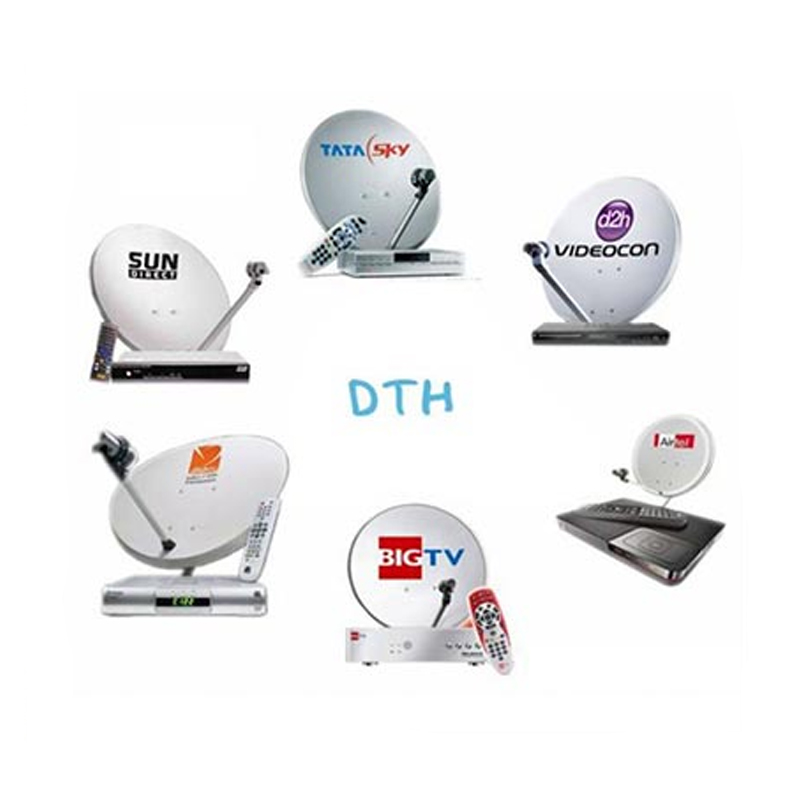
    “SEShas delivered a robust performance in the year to date. We have increased our capacity and are commercialising new market opportunities. Forthcoming launches will further develop this capability and create the conditions for future growth. Our European business, which is almost entirely Video DTH, continues to grow (revenue +5.6%, when excluding analogue). New business and renewals with major customers, including Sky Deutschland and Arqiva, have contributed to an increase in the contract backlog to EUR 7.4 billion. In the International segment (revenue +12.5%) we have added a number of new DTH platforms, in Latin America, Africa, and the Asia-Pacific region. Although the launch schedule continues to be subject to some delays, total revenue growth (excluding analogue) was 5.7%, with considerable momentum from the video business.”

    “Despite some delays experienced earlier this year with regard to new satellite launches, we have significantly expanded our capacity with the launch of SES-6 in June and ASTRA 2E in September, and we now expect to launch SES-8 later this month, followed by ASTRA 5B in early December.”

    “SES’ 2013 revenue and EBITDA growth guidance at constant FX, of 3-4% and 2.5-3.5% respectively, and 5.5-6.5% excluding analogue, is reiterated.”

    “Our performance to date as well as our fleet development underscore SES’ commitment to growing its presence in the developed markets and to accelerate inroads in emerging markets. Our investments are focused on growth opportunities based on differentiated offerings and secured anchor customers in the video business. We are continuing to build DTH neighbourhoods.In the data business, the numerous contracts signed so far this year underscore the complementarity of SES’ geostationary satellite capacity with the High Throughput Satellite (HTS) capabilities of the O3b Networks Mid-Earth Orbit (MEO) constellation.”

    “SES is now entering a period in which capital expenditure will reduce significantly, even while additional growth investments are pursued. This, coupled with rising revenue and EBITDA, will deliver strong growth in free cash flow, which may be applied to further profitable investments and acquisitions and/or be returned to shareholders.”

  • Chandra, Carey to attend APOS 2013 pay-TV summit

    Chandra, Carey to attend APOS 2013 pay-TV summit

    MUMBAI: Media moghul Subhash Chandra and News Corp president COO Chase Carey are among the executives who will attend the fourth annual Asia Pacific Pay-TV Operators Summit (APOS).

    Taking place from 22 – 24 April in Bali, it is being organised by Media Partners Asia. APOS (www.visitapos.com) is a regional event for TV and broadband industry executives with intent to drive bold thinking, strategy, deals and policy.

    Media Partners Asia executive director Vivek Couto said, “Both emerging growth markets and mature, value geographies in Asia Pacific are increasingly vital to future of strategic global majors This year‘s APOS is a testament to this trend while the line-up and themes are also a significant nod to the growing aspirations of leading local players with currency to expand in domesticand international markets.”
     
    Other speakers include SES president, CEO Romain Bausch, CJ HelloVision CEO DS Byun, Saban Capital Group president, COO Adam Chesnoff, Foxtel CEO Richard Freudenstein, KT Media Hub CEO Joosung Kim, Hathway Cable & Datacom CEO Jagdish Kumar, Multi Screen Media CEO Man Jit Singh and NBCUniversal International Television president Kevin MacLellan.

  • SES-5 satellite launched, to boost capacity across EMEA

    SES-5 satellite launched, to boost capacity across EMEA

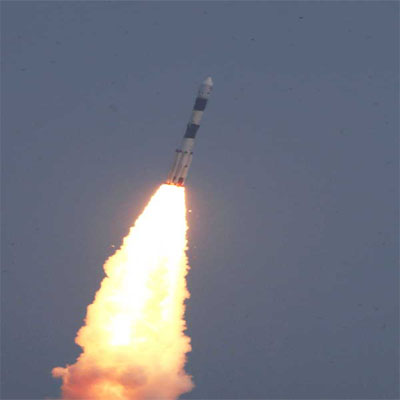
    MUMBAI: Leading satellite operator SES has said that the SES-5 satellite has been successfully launched into space on board an ILS Proton Breeze M booster.


    After a 9-hour, 12-minute mission, the Breeze M upper stage of the Proton rocket released the SES-5 satellite directly into geostationary transfer orbit.


    The SES-5 satellite was designed and built for SES by Space Systems/Loral (SS/L), a leading manufacturer of commercial satellites.

    The spacecraft, to be positioned at the orbital slot of 5 degrees East, features 36 active Ku-band transponders and up to 24 active C-band transponders.


    SES-5 has two Ku-band beams, one serving customers in the Nordic and Baltic countries and one serving Sub-Saharan Africa, as well as two C-band beams, one with global coverage and one with hemispheric coverage over Europe, Africa and the Middle East. The satellite provides Ku-band uplink capability, allowing for flexible operations between Europe and Africa.


    SES-5 is designed to deliver high performance and extensive coverage for direct-to-home (DTH) services, broadband, maritime communications, GSM backhaul, and VSAT applications in Europe, Africa and the Middle East.

    The satellite also features the L-band payload for the European Geostationary Navigation Overlay Service (EGNOS). The EGNOS payload, which was developed for the European Commission (EC), will help verify, improve, and report on the reliability and accuracy of navigation positioning signals in Europe.


    SES President and CEO Romain Bausch declared, “SES-5 marks the second successful ILS-Proton launch in 2012 for SES and the third SES satellite delivered by Space Systems/Loral in the last ten months. SES-5 furthermore hosts the EGNOS payload for the European Commission. The powerful new satellite enters the global SES fleet as Number 51.


    “We would like to thank the launch teams of Space Systems/Loral, ILS, Khrunichev and SES for their dedicated work that ultimately ensured total mission success. We would also like to thank the European Commission for entrusting SES with the EGNOS hosted payload. After thorough in-orbit testing, SES and its customers can now look forward to SES-5 providing new, state-of-the-art satellite capacity across Europe, Africa and the Middle East.”

  • SES, Eutelsat in JV to serve mobile broadcast markets

    SES, Eutelsat in JV to serve mobile broadcast markets

    MUMBAI: Sateelite operators SES Global and Eutelsat have announced a joint investment in the first European satellite infrastructure for broadcasting video, radio and data to mobile devices and vehicle receivers.

    In view of the innovative nature of this market SES and Eutelsat have agreed to join forces to form a new company, which will operate and commercialise the S-band payload on W2A. The company will be set up by SES Astra and Eutelsat following approval from relevant regulatory agencies. The S-band space segment represents an investment of
    approximately 130 million euros.

    The S-band (2.0 and 2.2 GHz), which represents a new frequency band for both SES and Eutelsat, provides a set of frequencies optimised for supporting a wireless distribution network for delivering video and other services to mobile devices, including phones, PDAs, laptops and vehicle receivers. Mobile video services represent a large and currently undeveloped market in Europe, emerging today through existing terrestrial solutions.

    The development of mobile video services through a satellite-based hybrid network will provide content providers and operators with alternative or complementary solutions to terrestrial based networks and will bring the benefit of the universal coverage that satellites can provide.

    Eutelsat has commissioned the W2A satellite from Alcatel Alenia Space for launch on Sea Launch in the beginning of 2009. W2A will be operated at 10 degrees East, with a state-of the art S-band payload which will be an essential building-block for a hybrid infrastructure over Europe, combining satellite and terrestrial networks, to provide both universal coverage and indoor penetration for mobile video services. The S-band payload has also been optimised for a broad range of business applications such as security surveillance and other commercial data services including two-way communications.

    SES Global president and CEO Romain Bausch says, “This joint investment will allow for the development of new, innovative satellite delivered mobile broadcast services thereby enabling satellite to compete with as well as to complement terrestrial infrastructure solutions in the mobile television and radio distribution chain. Satellite provides a unique and highly efficient coverage and the joint investment will therefore increase choice and convenience for consumers, content providers and service providers.

    “Mobile applications form an important element of our strategic development plan, and by joining forces with Eutelsat, this infrastructure investment offers an attractive business opportunity in line with our internal investment hurdle rates.”

    Eutelsat chairman and CEO Giuliano Berretta says, “Digital content and the mobility afforded by new portable devices lie at the heart of the current dynamic in the communications landscape, bringing new revenue streams for electronics manufacturers, content and service providers, as well as new products for consumers.

    “Through a resource, which is optimised in terms of bandwidth and universal coverage, satellite services using S-band frequencies can make a vital contribution to the overall success of the mobile broadcasting market while the design of the S-band payload is also fully suited for two-way communications. By adding this new payload to a platform using our traditional set of Ku-band and C-band frequencies it has also been possible to put in place an efficient and cost-effective solution for entering a new frequency band.”

  • Asiasat sees HK $475 million sales till 30 June ’06

    Asiasat sees HK $475 million sales till 30 June ’06

    MUMBAI: Asian satellite communications provider Asiasat has announced interim results for the six months ended 30 June 2006.

    It managed sales of HK $475 million which represents a rise of seven per cent.

    Profit attributable to equity holders HK$239 million a rise of 29 per cent. Overall utilisation rate up four per cent despite overcapacity in many Asian markets. During this period it expanded blue-chip customer base with long-term contracts. It started the process of construction of Asiasat 5 in May.

    Turnover for the first half of 2006 was HK $475 million including a one-time receipt of HK $46 million for early termination of a contract, an increase of HK $30 million. As of 30 June 2006, the Group held contracts worth HK $2,785 million , of which approximately HK $381 million will be recognised in the second half of the current year.

    Despite the slow market, Asiasat says that it has been able to make a number of improvements and maintain its backlog level.

    Asiasat chairman Romain Bausch said, “Despite some encouraging signs, there is little evidence emerging to indicate that these will make significant changes to Asiasat’s results for the second half of 2006.

    “Thus, it is unlikely that the results for the full year will be materially different from those of the prior year. However, the group is in excellent shape and is making solid progress wherever possible in the development of our customer products and services, particularly with the contracting of our new satellite. As the market leader in the region, we recognise our role in setting the standards for quality and service and we remain optimistic about future growth. Asiasat’s reputation for excellence and its market leadership position the company well for the future.

    “The economic improvements that we have noted in recent reports continue to be evident in the Asia-Pacific region. However, the persistent overcapacity present in many markets across the region is still holding down transponder rates and causing the satellite market to remain stubbornly flat. As a result, despite an increase in demand in our business and a concerted effort to capitalise on opportunities, little positive impact has come through in the results for the first six months of 2006.

    “In these circumstances and with a view to the longer term, it is pleasing that I am able to report that, following the 18 per cent increase in our overall utilisation rate during last year’s difficult market, we achieved a further four per cent increase in the first half of 2006. This is an encouraging improvement amidst otherwise unimpressive results.

    “Asiasat, however, continues to attract and maintain an enviable blue-chip customer base with long-term contracts. The company is also debt free and has no need to make any provisions for doubtful debts in the period under review. Looking at the longer term, our confidence in a bright future for satellites in the Asia Pacific is unchanged, as is our belief in Asiasat’s potential to benefit from this in due course. For these reasons, we continue to focus on our customers and on enhancing our products and services so as to further consolidate our market leadership and be ready for the next growth phase.

    “Underlining our continued confidence in the future of the Group, in May this year we announced the signing of the construction agreement to design and build AsiaSat 5, and we also announced its Launch contract. This new satellite, a replacement for Asiasat 2, is scheduled for launch in the second half of 2008,” said Bausch.