Tag: Roku

  • IBC2025 conference lines up global media heavyweights and bold ideas

    IBC2025 conference lines up global media heavyweights and bold ideas

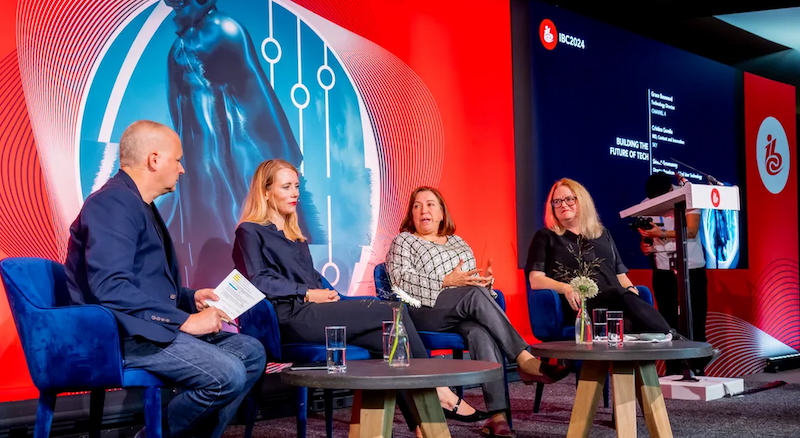
    LONDON: IBC 2025 has pulled back the curtain on a turbocharged conference programme packed with power players from across the global media, entertainment and tech ecosystem. From 12 to 14 September at RAI Amsterdam, the three-day summit promises to tackle media’s defining challenges—AI disruption, fragmentation, collapsing business models, and the war for attention.

    Top brass from Netflix, Walt Disney Studios, Paramount Global, Snap, TikTok, YouTube, Roku, TelevisaUnivision, PGA Tour, kweliTV and India’s JioStar are among the featured speakers. Industry provocateur Evan Shapiro will headline with a data-fuelled keynote, while seasoned commentator Mike Darcey closes the show with a sharp take on rights, economics and the shape of future broadcasting.

    “This year’s agenda is urgent, imaginative and provocative,” said IBC head of content Sally Watts. “We’re bringing together disruptors and legacy leaders to map the media universe as it shifts beneath our feet.”

    The conference kicks off with a heavyweight CTO roundtable featuring Avi Saxena (Warner Bros. Discovery), Simon Farnsworth (ITV) and Phil Wiser (Paramount). Big tech meets broadcast in sessions like YouTube’s Pedro Pina in conversation with Channel 4’s Grace Boswood, and Snap’s Jorrit Eringa alongside execs from Yahoo, Sky, Sling TV and A1 Group dissecting the future of content collaboration.

    TikTok’s Rollo Goldstaub will explore how short-form video is rewriting the rules of sports engagement, while Netflix’s Victor Marti and Vancouver Media’s Migue Amoedo offer a behind-the-scenes look at storytelling innovation.

    In a major AI-focused session, ABC’s Damian Cronin unpacks how the broadcaster is embedding machine learning into its core workflows. Meanwhile, DeShuna Spencer (kweliTV), Brad Danks (OUTtv), Rajat Nigam (JioStar India) and others weigh in on what’s next for the streaming wars.

    ‘MovieLabs – Leading the Vision’ sees Disney, Sony, Warner Bros. and Paramount map the road to 2030 for content creation, moderated by MovieLabs president Richard Berger. Sunday’s schedule spotlights Fremantle’s Jens Richter on global distribution in a post-peak TV world, while PGA Tour execs reveal how they deployed live AR shot-tracking across all 18 holes — winning a Sports Emmy in the process.

    In the closing session, Mike Darcey, now managing director at Tide End Consulting and former News UK boss, breaks down how rights, economics and regulation must evolve to fit the new media order.

    Beyond the main stage, the IBC Technical Papers Programme offers 10 peer-reviewed sessions delving deep into bleeding-edge R&D across 5G, 6G, AI, immersive formats and content authentication. Topics include:
    * AI in speech, postproduction and curation
    * Provenance, privacy and content trust
    * Wireless tech advances from 5G to 6G
    * IP Studio 2.0 and live production
    * Sport tech, AR, avatars and AI-enhanced streaming

    Registration is now open at show.ibc.org.

  • Streaming ahead of the curve with springserve’s ad tech revamp

    Streaming ahead of the curve with springserve’s ad tech revamp

    MUMBAI: Magnite is turning up the volume in the streaming ad world with the next-gen launch of its Springserve video platform, an upgraded OTT/CTV solution that fuses the precision of its award-winning ad server with the programmatic prowess of Magnite’s Streaming SSP. It’s a bold move aimed at simplifying ad delivery and maximising monetisation for major players like Disney, Roku, LG, Paramount, Samsung and Warner Bros. Discovery.

    Tailored for the evolving needs of global streaming giants, the platform now connecting buyers to 99 per cent of US streaming supply and has been validated by Jounce Media’s March 2025 Supply Path Benchmarking Report. For media owners, the new tech means smarter yield, streamlined workflows and real-time visibility across ad operations.

    “As the CTV space matures, there’s a significant opportunity to enhance the advertising process for media owners and buyers,” said Magnite president for revenue Sean Buckley. “We’re building this next generation of Spring Serve specifically to help our clients and partners stay ahead of these emerging opportunities. By unifying the programmatic layer as a complementary step in the buying process, not only does it give buyers greater transparency, predictability, and control over their ad placements, but it lays the foundation for more effective monetisation and yield management for media owners.”

    “Disney continues to expand our global streaming footprint in collaboration with Magnite—unlocking more premium inventory and making it even easier for advertisers to access our portfolio at scale,” said Disney SVP for addressable sales Jamie Power. “Together, we’re advancing a shared vision for innovation—one that prioritizes automation, flexibility, and smarter tools to help our partners drive meaningful impact in the live streaming space.”

    “Controlling demand sources and optimizing ad placements in real time is essential to our strategy,” said LG Ad Solutions SVP of operations Kelly McMahon. “SpringServe gives us the power to orchestrate everything in one platform balancing programmatic demand and direct deals more effectively, without compromising the viewer experience.”

    “Working with valuable partners like Magnite has enabled Paramount to further optimize our programmatic demand sources, driving greater efficiency and performance while preserving a seamless viewing experience for our audiences,” said Paramount SVP of partnerships Christopher Owen. “Continued advancements in programmatic play a meaningful role in our ongoing success both as a company and as part of the broader industry.”

    “Together with Magnite, we can create more opportunities for advertisers that offer platform transparency and flexibility across monetization, demand access, and user experience optimization,” said Roku SVP of global media revenue and growth Jay Askinasi. “SpringServe connects us more directly with DSPs, streamlining operations and augmenting revenue potential. This is an approach we believe will help attract greater advertising investment into the CTV ecosystem.”

    “Our long-standing partnership with Magnite has been instrumental in shaping our video monetization strategy, and we’re excited to partner with Magnite as they advance the SpringServe video platform,” said Warner Bros. Discovery SVP for revenue strategy and operations Jill Steinhauser. “We’re particularly looking forward to benefiting from the performance enhancements that enable faster ad loads and real-time pacing.”

    “Magnite helps fuel the premium, open internet,” said The Trade Desk SVP of inventory development Will Doherty. “Combined with tools like OpenPath, the next generation of SpringServe is accretive to advertisers and publishers and most importantly so consumers can continue to enjoy the content we all love like CTV, journalism and more.”

    “Magnite’s unified SpringServe platform offers significant clarity and cohesion in the streaming TV marketplace,” said Groupm US  chief media officer, Susan Schiekofer. “By providing deeper insight into the supply path and stronger alignment with premium inventory at scale, it empowers us to make smarter, faster buying decisions and ultimately deliver better outcomes for our clients.”

    “At OMG, we believe it’s a core right for advertisers to control and know where their ads deliver,” said Omnicom Media Group SVP of video and programmatic Ryan Eusanio. “Magnite’s SpringServe video platform helps us give our clients more control of their premium video strategy and enables better curation and targeting for campaigns.”

    The new SpringServe boasts a centralised deal dashboard, intelligent ad decisioning, automated routing for optimal ad delivery, and seamless integration with Magnite Access for data-driven targeting. It also simplifies operations with a revamped user interface and real-time reporting tools.

    As competition in CTV heats up, Magnite’s play positions it as the adtech partner of choice for streaming’s biggest names where precision meets premium, and innovation gets centre screen.

  • TGM brings Swift TV to Big Screens, Partners with Android TV,Amazon Fire Stick, DorTV and Cloud OS to Transform Free Live TV Streaming

    TGM brings Swift TV to Big Screens, Partners with Android TV,Amazon Fire Stick, DorTV and Cloud OS to Transform Free Live TV Streaming

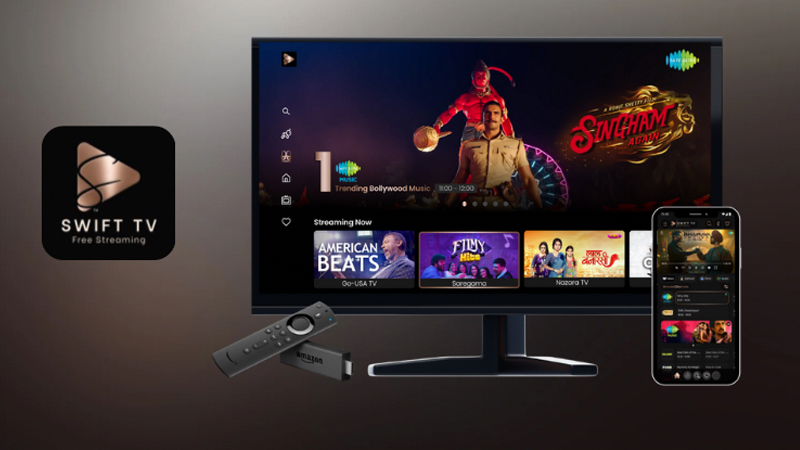
    Swift TV, a prominent name in the Free Ad-Supported Streaming Television (FAST) market, has officially launched on Android TV and Amazon Firestick. This strategic move is set to reshape the Indian streaming scene by offering over 125+ live TV channels completely free of charge. The platform caters to a wide range of preferences with content spanning movies, news, music, lifestyle, and regional entertainment, ensuring there’s something for every viewer.

    Expanding Reach: Swift TV Now on Android TV and Amazon Firestick
    By launching on Android TV and Amazon Firestick, Swift TV becomes accessible to a larger audience, delivering smooth entertainment experiences across devices. It features an easy-to-use interface and optimized streaming quality tailored to the needs of today’s digital-savvy viewers. This expansion lets users enjoy high-quality content on their preferred devices, changing how Indians engage with entertainment.

    Strategic Collaborations: Enhancing Content and Technology
    To strengthen its content lineup and technological framework, Swift TV has joined forces with prominent players like DorTV and Cloud OS.

    DorTV: This partnership brings an exclusive mix of regional and international content, enriching Swift TV’s diverse channel selection. Viewers can now explore a wider variety of shows, from local favorites to global hits, all curated to resonate with Indian audiences.

    Cloud OS: To provide a seamless streaming experience, Swift TV uses Cloud OS’s advanced technology. This collaboration ensures fast, secure streaming without interruptions, even during peak hours, showcasing Swift TV’s dedication to delivering top-notch service.

    A New Chapter in Free Entertainment
    The growth of Connected TV (CTV) viewership in India is reshaping the way audiences consume content, and Swift TV is perfectly positioned to lead this change. With the Indian CTV user base expected to reach 80 million by 2025, the demand for premium, on-demand entertainment on large screens is at an all-time high. The FAST model is uniquely suited to serve this audience, delivering a high-quality TV experience without subscription fees.

    Advertisers are also recognizing the power of CTV and FAST platforms, with ad spend on CTV in India projected to grow by over 40% annually. This surge reflects a shift in consumer behavior, as viewers increasingly prefer the flexibility and premium feel of streaming on larger screens. Swift TV capitalizes on this trend, offering a vast range of live TV channels for free, perfectly catering to the evolving entertainment needs of Indian households.

    By embracing the FAST model and leveraging the rapid growth of CTV in India, Swift TV is not just providing free entertainment—it’s revolutionizing the viewing experience, making premium content accessible to all while creating valuable opportunities for advertisers.

    Why Swift TV Stands Out
    100+ Live Channels: Covering entertainment, news, lifestyle, and regional programming, Swift TV provides a comprehensive lineup suitable for all age groups.

    User-Friendly Design: The platform is crafted for an intuitive viewing experience, ensuring easy navigation across devices.

    Exclusive Programming: Thanks to its partnership with unique channel partners like History connect, Filetcopy, Raaj Jones etc. features unique regional and international shows, bringing fresh and exciting content to Indian viewers.

    Advanced Streaming Technology: Powered by Cloud OS, the platform offers fast, secure streaming with minimal buffering, ensuring a superior viewing experience.

    Redefining Digital Entertainment
    Swift TV’s debut on Android and Amazon Firestick isn’t just about expanding its reach; it’s about revolutionizing how Indian audiences consume content. As a Free Ad-Supported Streaming Television platform, Swift TV bridges the gap between traditional TV and digital streaming, meeting the growing demand for flexible, on-demand entertainment.

    About Swift TV
    Swift TV is a trailblazing Free Ad-Supported Streaming Television (FAST) platform featuring an eclectic mix of live TV channels. With a rapidly growing user base and strategic partnerships, Swift TV leads the digital entertainment wave in India. Its commitment to quality programming and seamless streaming makes it one of the most promising entertainment platforms in the country.

    Looking Forward
    Swift TV is set to launch the app on Tizen, Web OS, Roku and Vidaa etc. followed by a web app. By delivering premium content and always expanding content Library for free and ensuring a high-quality streaming experience, Swift TV is raising the bar for digital entertainment.

    Discover the Future of Entertainment Today! Swift TV is now available on Android and Amazon Firestick. Download it today and start a new entertainment journey.
     

  • Roku reports strong growth in 2024, surpassing $4bn revenue

    Roku reports strong growth in 2024, surpassing $4bn revenue

    MUMBAI: Streaming platform specialist Roku has announced robust financial results for 2024, with total net revenue reaching $4.1 billion (£3.2bn), marking an 18 per cent year-over-year increase. Platform revenue grew to $3.5 billion, up 18 per cent year-over-year, or 15 per cent excluding political advertising spend. Gross profit rose 19 per cent to $1.8 billion.

    The company reported significant growth in its user base, with streaming households reaching 89.8 million, representing a net increase of 9.8 million from 2023. Streaming hours climbed by 21.1 billion to 127.1 billion hours, whilst average revenue per user reached $41.49 on a trailing 12-month basis, up 4 per cent.

    In a letter to shareholders, Roku highlighted its fourth quarter achievement of surpassing $1 billion in platform revenue, a 25 per cent year-over-year increase. The company noted that its US market penetration has exceeded half of all broadband households.

    Device Business Performance:  The company maintained its position as the leading TV operating system in the US, Canada and Mexico. Device revenue rose 20 per cent to $590.1 million in 2024, with fourth-quarter revenue of $165.7 million, up 7 per cent. However, increased seasonal discounts affected fourth-quarter device gross margins, which stood at negative 29 per cent.

    Content Platform Growth:  The Roku Channel, the company’s content platform, reached approximately 145 million people in US households during the fourth quarter, maintaining its position as the third most popular app on the platform. Streaming hours on the channel increased by 82 per cent year-over-year, with more than 80 per cent of streaming hours originating from the Roku Experience in December.

    Future Outlook:  For the first quarter of 2025, Roku forecasts total net revenue of $1.005 billion, a 14 per cent increase year-over-year. The company projects platform revenue growth of 16 per cent, whilst device revenue is expected to remain flat due to elevated inventory levels following the holiday period.

    For the full year 2025, Roku anticipates total net revenue of $4.61 billion, with platform revenue reaching $3.95 billion, representing 12 per cent growth. The company expects to achieve positive operating income by 2026.
    The company will discontinue quarterly reporting of streaming households and average revenue per user metrics from the first quarter of 2025.

  • Mipcom Cannes unveils lineup for Mip Innovation Lab

    Mipcom Cannes unveils lineup for Mip Innovation Lab

    Mumbai: Mipcom Cannes announced the full details and programme for its newly expanded Mip Innovation Lab, which brings together a high-profile lineup of key players from over 60 international companies for a series of thought-leading talks, summits, networking events and demonstrations at the forthcoming 40th edition of the international co-production & entertainment content market (21-24 October).  

    Covering the area at the intersection of content, technology and changing audience behaviours, and housed in a new dedicated purpose-built space within the Palais des Festivals, The Mip Innovation Lab will host a daily curated programme with dedicated summits on FAST, AI, streaming and connected TV aimed at equipping companies with the latest insights and introductions to potential partners in these rapidly evolving sectors.

    “The fastest developing areas that are shaping the future direction of the television industry are now at the heart of the Palais and of the market.” said Mipcom Cannes and Mip London director Lucy Smith. “We’ve built a destination with a ‘who’s who’ of key players speaking, a host of cutting-edge technology-led companies exhibiting and unrivalled matchmaking opportunities. Everything in the Mip Innovation Lab is geared to helping businesses adapt, identify opportunities, find potential partners and unlock further potential revenue streams. We expect it to be energising, prescient and highly productive.”

    Global Streamer Talks – New for 2024

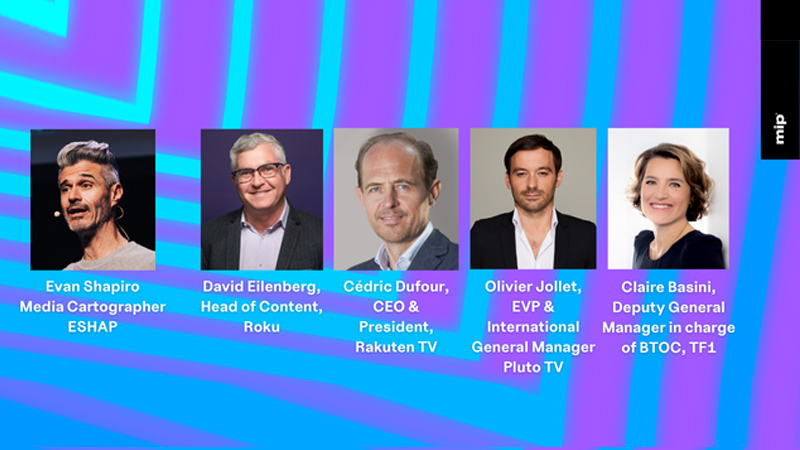
    A series of interviews by media cartographer Evan Shapiro with leaders from streaming and digital platforms on their strategies, market challenges, and effective collaborations. Speakers include David Eilenberg, head of content, Roku; Claire Basini, deputy general manager, TF1; Olivier Jollet, EVP and international general manager, Pluto TV, Paramount; Cédric Dufour, CEO & president, Rakuten TV; Maxime Carboni, chief business officer, Euronews; and Justin Sampson, chief executive, Barb Audiences. Starting on Tuesday, 22 October at 09:00.

    Connected TV Summit – New for 2024

    This summit covers the influence and innovations in TV operating systems, including user experience dynamics and advertising models. Speakers include key players from All3Media International, Anoki, NEW ID, Numila Advisory, Samsung TV Plus, TVREV, Veed Analytics, VIZIO, Whale TV, and Wurl. Starting on Wednesday, 23 October at 09:00.

    Global FAST & AVOD Summit

    An established summit at Mip markets since 2022, focusing on the international growth of FAST and AVOD through talks and round tables. Speakers include representatives from Banijay Rights, BBC Studios, Blue Lucy, Dataxis, FilmRise, Fremantle, Gracenote, Little Dot Studios, OKAST.TV, Roku, Samsung TV Plus, The Local Act, Tubi, Vevo, Warner Bros. Discovery, Whale TV, Xumo, and ZDF Studios. Starting on Tuesday, 22 October at 14:30.

    Applied AI Summit

    A day dedicated to demonstrating the latest applications of AI in production and monetization, as well as ethical and legal challenges. Leading companies include Adventr, Aive, Alix Partners, Banijay Entertainment, BetaSeries, Calliope Networks, DLA Piper, FanTrust, Google, Largo.ai, TF1 Group, Newen Studios, Papercup, Runway, Social Department, and Variety Intelligence Platform. Starting on Monday, 21 October at 10:15.

    Why YouTube Matters: Engaging Audiences & Boosting Revenue

    A session analyzing trends and opportunities in driving viewership and revenue on YouTube, featuring Neil Price, UK film and TV partnerships lead, YouTube, and Wayne Davison, chief revenue officer, Little Dot Studios. On Wednesday, 23 October at 14:00.

    Insights That Matter: Fueling Your Next Strategic Move

    A wrap session featuring three trend reports and takeaways from RTLAdAlliance, 3Vision, and Omdia. On Wednesday, 23 October at 14:45.

    Partners for the Global FAST & AVOD Summit include Xumo, OKAST.TV, Vevo, Gracenote, Blue Lucy, Abema, OTTera and Tevefy; and for the Connected TV Summit, Samsung TV Plus and Wurl. DLA Piper is the conference partner of the Applied AI Summit.

    Companies confirmed to exhibit in the new Mip Innovation Lab include Amagi, aurbit by Adease Media Intelligence, Dubformer, ElevenLabs, FASTHub by MuxIP and Largo.ai; with Bango, Dramatify, Digital Convergence Technologies, Motion Tech and Triforce both exhibiting and demonstrating within the new set up.  

    The mother of all entertainment content markets, Mipcom Cannes was attended by over 11,000 delegates from over 100 countries in 2023. The 40th edition takes place in Cannes 21-24 October 2024.

  • IAB Tech Lab finalises framework for streamlined Ad supply chain privacy compliance

    IAB Tech Lab finalises framework for streamlined Ad supply chain privacy compliance

    Mumbai: IAB Tech Lab, the global digital advertising technical standards-setting body, announced today the release of the final Data Deletion Request Framework, following the conclusion of two extensive public comment periods. This milestone signifies an important step forward in handling consumer data privacy concerns within the digital advertising supply chain.

    The Data Deletion Request Framework establishes a standardized mechanism for transmitting data deletion request signals throughout the digital advertising ecosystem. It provides provisions for validating request origins, ensuring requester authenticity, confirming receipt, and employing cryptographic signatures for authentication. By offering a holistic solution for handling data deletion requests, the framework aligns with the ‘Right to Delete’, a Data Subject Right (DSR) which is currently protected by the GDPR, 16 US state privacy laws, and additional privacy legislation, including Quebec Law 25.

    “The industry has long struggled with the need for a standardized solution to manage data deletion requests,” said IAB Tech Lab director of product, privacy & addressability Jared Moscow. “The Data Deletion Request Framework addresses this challenge head-on, providing clear guidance and strategic insights into effectively handling these requests. Acting as the industry’s first signal for upholding consumer data subject rights, the Framework equips industry players with the technical tools necessary for efficiently managing data deletion requests.”

    The Data Deletion Request Framework builds upon IAB Tech Lab’s portfolio of privacy compliance initiatives, including the Global Privacy Platform, the Accountability Platform, and the Privacy Taxonomy project. Collectively, these initiatives form a foundational framework for streamlining privacy regulatory compliance and advancing responsible data-handling practices in digital advertising.

    Several organizations, including Google, Roku, Ketch, Sourcepoint, Dstillery, Raptive, Mediavine, and Index Exchange, were highly active in shaping the framework during the development process. Their close involvement exemplifies the collaborative nature of this industry-wide effort.

    Google senior staff software engineer Mary Xiaoyong Liu Wang: “The Data Deletion Request Framework addresses a longstanding industry challenge. This framework provides a helpful foundation for managing data deletion requests at scale, and reflects a collaborative commitment to upholding privacy standards.”

    Roku senior product manager, global privacy infrastructure Kale Smith: “The Data Deletion Request Framework is a vital tool for managing privacy at scale. This standard facilitates smoother communication of deletion requests across the ecosystem, significantly simplifying compliance efforts for large organizations like ours.”

    Ketch head of solutions Jonathan Joseph: “The Data Deletion Request Framework will bring much-needed efficiency to the entire ecosystem, helping to automate what has, to date, been a manual, arduous process. We will be adopting and integrating it into our product solutions so our clients can take advantage of the new Framework.”

    Sourcepoint product director Gabe Morazán: “Sourcepoint believes that Data Deletion Request Framework is a significant step forward for the industry. This Framework will help vendors better communicate with each other which will foster more collaboration and communication.”

    Dstillery principal engineer Brian May: “We’re excited about the potential of the Data Deletion Request Framework to streamline efforts to honour user choices. By standardizing the process of communicating data deletion requests, the framework addresses a major pain point for the industry and creates an easier, lower cost path to compliance.”

    Mediavine director of product management John Rosendahl: “The Data Deletion Request Framework solves critical challenges publishers face in transmitting data deletion requests. This new framework reduces the technical complexities in transferring data and provides publishers with the tools they require to remain compliant.”

    Index Exchange senior product manager Patrick Cool: “Index Exchange will support the Data Deletion Request Framework for its ability to ensure secure and efficient propagation of requests to downstream partners. The framework’s use of signing and cryptography enhances trust and interoperability, which are crucial for maintaining privacy compliance across the ad tech supply chain.”

    This interoperable framework supports compliance with existing privacy legislation and lays the groundwork for future privacy initiatives within the ad-tech ecosystem. To encourage adoption and implementation, IAB Tech Lab is offering a 90-day implementation period with increased support for early adopters. In response to requests from working group members, this period ensures that companies adopting new specifications receive a dedicated timeframe during which IAB Tech Lab provides extra assistance and guidance, ensuring they have the support they need during the initial phase.

  • Ease Live IBC launch enables sports fans to interact on all devices – including connected TVs

    Ease Live IBC launch enables sports fans to interact on all devices – including connected TVs

    Mumbai: Ease Live (an Evertz company), the interactive sports experts, today announced that it has developed the capability for its interactive platform to provide perfectly synced interactive experiences on Connected TVs, on top of its existing ability to enable TV viewers to interact with the action on mobiles, PCs and tablets. In addition, IBC will also see Ease Live (IBC: 1. B79) launch and demonstrate a new soccer pack that is integrated with leading sports data providers, and includes templates and functionality designed specifically for operators with soccer rights.

    A hand holding a phone and watching a football game on a televisionDescription automatically generated

    As an industry first, Ease Live recently launched connected TV interactivity for a major US regional sports network, which enabled fans to engage with interactive baseball overlays on Apple TV, Roku, Fire TV and Google TV as well as mobile devices.

    “That the Ease Live platform now enables sports video to be interactive on all connected screens is a huge step forward in engaging the audiences across the screens,” said OTT Advisors & managing partner Chris Wagner. “It’s really a game changer for broadcasters and operators with sports rights looking to drive fan engagement while also unlocking new ad inventory and monetization opportunities.”

    Ease Live is a Software-as-a-Service (SaaS) solution embraced by sports leagues, broadcasters, and content providers globally. This interactive graphics platform gives leagues and media companies streaming live sports and other live events the necessary tools to create, build, and provide interactivity to millions of fans and other viewers across multiple platforms in real time. The platform delivers edge-rendered graphic overlays, adding interactive experiences to existing TV, Over-The-Top (OTT) services and apps. With Ease Live, sports fans can interact with in-game statistics, participate in watch parties, polls, trivia, access instant replays and gaming – all without leaving the event.

    Ease Live has enabled streaming service operators to boost viewing duration and engagement by over 50 per cent through interactivity synced to the TV and accessed via PCs, tablets and mobile. The result is that Ease Live helps its customers create exciting new advertising inventory and monetization opportunities.

    “Interactivity on mobile and tablets drives sports fan engagement and lengthens duration of viewing, leading to increased revenue opportunities,” said Ease Live CEO Kjetil Horneland. “The new Connected TV interactivity we’re launching at IBC enables sports leagues, broadcasters and OTT service providers to make all of this possible on the primary screen in the home, the Connected TV, and control the experience through the TV remote. In addition, we are launching a new Soccer pack, that is pre-integrated with feeds from leading sports data providers. By combining ease of launch with device universality and packs for all major sports, Ease Live enables broadcasters and operators to get interactive quickly on all connected devices, while fans can get closer to the action through interacting however they choose, with the sport they love.”

  • Roku unveils Advertising Watermark to protect from ad spoofing

    Roku unveils Advertising Watermark to protect from ad spoofing

    Mumbai: Roku Inc on Thursday announced its Advertising Watermark free technology to help advertisers and publishers validate the authenticity of video ads originating on the Roku platform. Touted as the industry’s first authentication solution built for TV streaming, Roku’s Advertising Watermark gives marketers the confidence that their advertising spend is reaching real Roku users.

    “Today, device spoofing occurs when scammers pretend that a desktop or mobile device is a TV streaming device. Roku’s Advertising Watermark integrates with the Roku operating system to automatically verify publisher ad requests and impressions so that advertisers know they are reaching genuine Roku users,” said the statement. “While ad spoofing in TV streaming remains rare, this technology will help the industry deter bad actors and improve ad effectiveness.”

    Ad technology providers integrating Roku’s Advertising Watermark at launch include Basis Technologies, Google, Human, Innovid, and Magnite. Publishers using Roku’s Advertising Watermark to sell their own ad inventory include Discovery, Fox, and more. Additionally, OneView by Roku will be the first ad buying platform to offer ad inventory automatically validated by Roku’s Advertising Watermark.

    “As America’s top TV streaming platform, we are uniquely positioned to help the industry preempt device spoofing,” said Roku VP of product management Louqman Parampath. “This is powerful and free technology that will help advertisers accelerate their shift to TV streaming with even more confidence.”

    Human co-founder and CEO Tamer Hassan remarked, “Roku is moving the industry forward with a solution that combats spoofing across the ad supply chain before it becomes a major issue. Together in partnership with Roku, we are creating a collectively protected ecosystem that brings even more trust and quality in a world where all TV will be streamed.”

    “Roku’s Advertising Watermark assures our advertiser clients that they are buying genuine Discovery inventory on Roku devices. We’re excited that Roku has brought its data, operating system, and ad technology together to easily prevent ad spoofing,” added Discovery VP – programmatic solutions Bill Murray.

  • CTV behind the growing dissatisfaction with Nielsen’s audience measurement system

    CTV behind the growing dissatisfaction with Nielsen’s audience measurement system

    Mumbai: Nielsen is in the eye of the storm once again following the suspension of accreditation for National and Local TV Ratings service in the US by the Media Ratings Council, effective mid-September. The TV measurement company had long been facing criticism from the Video Advertising Bureau (the trade organisation representing the advertising sales departments of networks and distributors) over the accuracy of its ratings. The months-long feud culminated in the VAB formally petitioning MRC to strip Nielsen’s accreditation citing undercounting TV viewing during the pandemic, and the exclusion to-date of broadband-only homes as primary reasons.

    Submitting an in-depth 10-page document to the MRC, the VAB detailed the five specific violations of minimum standards committed by Nielsen starting March 2020. “Although Nielsen has taken steps to rectify the issues with its sample, our current analysis proves the issue persists.  With nearly 18 per cent of respondents still missing, the sample still does not accurately represent the TV viewing population, particularly diverse and younger homes,” it stated.

    While Nielsen cited Covid-related disruptions as an explanation for undercounting during the pandemic, the growing dissatisfaction with its panel-based measurement system stems from the more fundamental problem around both the underrepresentation as well as the misrepresentation of the large universe of the audience that has either completely cut the cord or is consuming both linear and CTV across devices and platforms. The numbers which were already on the rise witnessed unprecedented growth in the past 18-20 months in the US.

    According to database company, Statista’s research titled ‘Connected TV advertising in the US – statistics & facts’ published this June, the number of CTV users in the US reached an impressive 203 million in 2020. CTV ad spend at $13.41bn amounted to 4.7 per cent share in total ad spend, with the most common share of ad budget dedicated to CTV being 10-20 per cent. CTV ad household reach stood at 78 per cent. Stating targeting and efficiency as the top reasons, 42 per cent of advertisers were planning to increase spend on OTT/CTV.

    On 1 September, Nielsen CEO David Kenny had also, in a letter addressed to clients, said, “Broadband-only homes are an important audience now representing nearly 30 per cent of TV households in some local markets. We believe it is critical to include them in local measurement as soon as possible, but we agree that we need to move to an explicit universe estimate. Their exclusion to-date means a gap and bias in measurement and we have been and continue to commit to integrating them in a responsible way.”

    Last month, the firm had announced its intention to add Broadband-Only (BBO) homes to its panels in October, but that did not deter MRC from revoking Nielsen’s accreditation. The Council had expressed reservation about the effectiveness of the plan, given the need for fundamental changes in the current measurement system which oversimplifies viewing across CTV by extending linear TV measurement standards to it and/or combining two viewing data sets that do not have common metrics.

    For this very reason, the clamour for evolving a unified identifier has only grown since the groundbreaking innovation began redefining broadcast in the US close to a decade ago; however, the complexity and fragmentation of the ecosystem have kept the industry from arriving at it so far.

    The pandemic and other recent developments seem to have put the exercise on fast forward.

    Matters were further compounded by NBCUniversal launching a measurement RFP in August, calling for “measurement independence”.

    Hopes are now pinned on Nielsen ONE, the single cross-media product which will provide reach and frequency metrics by delivering a holistic, de-duplicated view of both content and ad performance regardless of screen, device or platform. The new flagship currency expected to launch in 2022 aims to address the pressing concern of duplication in CTV measurement, at the same time bringing linear TV measurement on par with digital viewing.

    Noteworthy here is the fact that Nielsen has been on an extended hiatus for its digital ad ratings (DAR) service since October last year. In January, it entered another six-month hiatus for its local TV ratings service, which was also extended through the end of 2021. On August 11, Nielsen had further initiated the accreditation hiatus process for its National TV ratings service with the MRC; all in an attempt to concentrate its audit-related efforts on continuing to address panel concerns alongside the transformation of the National TV product and development of Nielsen ONE.

    In fact, going beyond the unifier currency, Nielsen has been heading in his direction for quite some time now.  The big highlights were its decision to measure CTV campaigns on YouTube and YouTube TV for the first time (announced October 2020) and the Roku-Nielsen strategic alliance in March 2021.

    YouTube, vice-president – global solutions, Debbie Weinstein had said, “Over 100 million people in the US watch YouTube and YouTube TV on their connected TVs every month. Advertisers are asking for third-party measurement partners like Nielsen to provide a complete view of YouTube and YouTube TV audiences, so they can understand the scale of the audience they’re able to reach through CTV campaigns.”

    In March, Roku entered into an agreement to acquire Nielsen’s Advanced Video Advertising (AVA) business which includes Nielsen’s video automatic content recognition (ACR) and dynamic ad insertion (DAI) technologies. The objective of the acquisition was to accelerate Roku’s launch of an end-to-end DAI solution with TV programmers. Additionally, Nielsen and Roku forged a strategic partnership to integrate complementary Nielsen ad and content measurement products into the Roku platform and further advance Nielsen ONE. Roku is a leading American manufacturer of digital media players. The Company also operates the No. 1 TV streaming platform in the US as measured by hours streamed (Kantar 2020).

    Given that tech-led innovation has a history of effecting the worldwide industry overhauls in a not-so-organic manner, these developments, though specific to the US, are being carefully studied in India. While the connected TV/OTT ecosystem in the country is not as well developed and deeply entrenched yet, it is relevant here to recall Barc India’s intent to initiate ‘one video view’ measurement, announced last September by former CEO Sunil Lulla. The much-awaited and much-touted Nielsen ONE may well serve as a template or the indicator of the nearness of an inevitable change, if not a universal go-ahead for players globally.

  • Is Comcast eyeing a mega-streaming deal?

    New Delhi: The world is moving towards streaming at a pace like never before. And, the media titans are eyeing every opportunity they can get to consolidate their digital entertainment businesses and brace up for the streaming war.

    After AT&T and Amazon, it is now the turn of the US cable giant Comcast to make its move to turbocharge its streaming operations. According to media reports, the company is mulling a mega-deal with one of the two media giants- Roku or ViacomCBS.

    However, the question that Comcast’s CEO Brian Roberts is wrestling with is- whether to build something internally or buy to become a streaming powerhouse, reported The Wall Street Journal on Wednesday. The merger seems unlikely, but Roberts is evaluating his options, which include a potential tie-up with ViacomCBS or acquisition of Roku Inc, the business daily reported citing unidentified persons.

    All three companies have declined to comment on the matter and issued no statements so far.

    The US cable giant Comcast had branched out from its cable and broadband into entertainment in 2009 with the acquisition of NBCUniversal, whose streaming service Peacock is yet to catch up with the likes of Netflix or Disney+. However, its broadband business has continued to grow. As the first wave of the pandemic ravaged the world last year, its broadband business added nearly two million customers and the unit’s revenue rose 10 per cent to about $21 billion.

    An acquisition of streaming giant Roku at this stage could help it to step up its streaming game against the industry titans – Netflix, Disney, and Amazon. Roku’s valuation has more than tripled in the past year to $53 billion.  

    On the other hand, a transaction with ViacomCBS which owns streaming service Paramount+ could provide the much-needed boost to its streaming operations, but it is too early to say.

    However, several analysts say, the latest buzz could be just ‘speculation’ as a merger at this stage seems unlikely. One of the reasons is that Comcast has been largely focussing on developing the software behind its Xfinity cable boxes, called X1, and its Flex streaming boxes which resemble Roku. The other being its potential partnership with Walmart to further the Smart TV technology.

    The reports come close on the heels of two major media deals that happened over the last few weeks. First AT&T announced its decision to spin off entertainment giant WarnerMedia and merge it with Discovery becoming the world’s second-largest media firm by revenue after Disney. The new entity Warner Bros. Discovery is now led by Discovery CEO David Zaslav. Soon thereafter, Amazon made its most ambitious move in the entertainment business and announced that it is buying MGM Studios.

    So, whether or not Comcast is considering a transaction with ViacomCBS or the acquisition of Roku, it has definitely stirred many questions on the cable giant’s next step.