Tag: ROI

  • ‘Advertising is only a sliver of marketing:’ Pratap Bose

    ‘Advertising is only a sliver of marketing:’ Pratap Bose

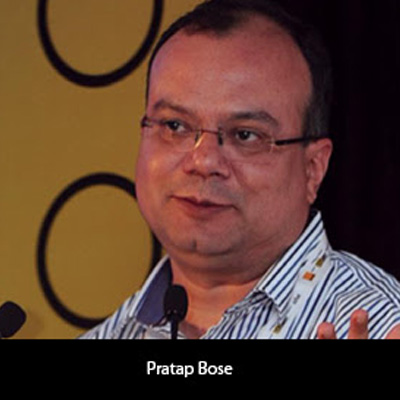
    Seven months back ad man and former Ad Club president Pratap Bose embarked on his entrepreneurial journey with The Social Street, a digitally driven agency that looks at advertising as part of the many marketing solutions that an advertiser seeks. Joining him in the initiative were partners Mandeep Malhotra, Arjun Reddy and Pradeep Uppalapati — all pioneers in different fields.

    After his exit from DDB Mudra as the chief operating officer, it was natural that The Social Street’s launch would make headlines with all industry’s eyes trained on its proceedings. Now, seven months later, with the buzz receding, we find the workings of this new fledgling agency becoming more and more shrouded in mystery. “It is a conscious decision to not reveal our account wins, as we don’t want to be in that game,” Bose simply answers when queried about the same. 

    Currently operating through 10 satellite offices with 160 employees who handle over 50 clients to boot, The Social Street credits its quick growth to its unique positioning in the market. In a candid chat with Indiantelevision.com’s Papri Das, Bose speaks on the advertising philosophy the start-up agency holds, their game plan for 2016, his thoughts on retail and shopper marketing and why their focus is not advertising.

    Excerpts:

    How has life been as an entrepreneur? What are the biggest changes that you have observed from your past role?

    Not much honestly. I am not someone who has worked in 10 agencies in the last 25 years of my career. In terms of work hours, the pressure and handling people, it comes very naturally to me. The only thing that has changed is that it’s my business and I am not answerable to any chain of superiors or hierarchy. I am the one accountable. There is no reporting to New York or Hong Kong, for example. It certainly brings a fresh perspective now that I am on the other side. Now I can see things far more realistically from a client’s point of view.

    When you work for a large agency, I think fundamentally you are chasing revenue rather than cultivating good strategic work. I am not saying that has always been so but in the last five years or so, the pressure on margins and revenues from an agency’s point of view is getting more acute than ever before. And performance, no matter what the industry says, is evaluated on a quarter by quarter basis on revenue target achievements. 

    How does The Social Street differ from that mindset? What is its advertising philosophy? 

    In any business numbers are very important, especially so for start-ups, though I prefer not to call us one. Because if you are not profitable as an agency, whether you operate with 20 people or 200 people, there is always going to be a strain on the business. But you are not accountable to every person in the organisation who wants to know what the numbers are. If your fundamentals in the strategy is bang on then we believe the numbers will happen in any which way. We have an offering and range of services that really sets us apart from most agencies. I am not competing with any creative agency as the market I want to penetrate, is world apart. 

    If I have to round up, we have seven buckets of businesses, which includes out of home, traditional media like television, print and radio, experiential, branded content, shopper and retail, rural, youth and sports marketing and cause marketing. Then there are specialisations that come with each.

    How was year 2015 for The Social Street? Did you set any benchmarks when it comes to the work and mandates? How was it in terms of new business?

    It takes time to build an organisation. Nothing happens in six months’ time. Having said that, have we done well? I think so, yes. The fact that we have opened 10 satellite offices and three main offices, hired around 160 people, and managed to get over 50 clients onboard is great progress, I feel. It was a conscious decision to not publicise about the account wins. We prefer to put all the investments upfront so in that regard I feel we have broken traditions in the business as well. And the experiment has paid off for us. Clients are happy with us. For seven months, I feel that is a pretty large amount of progress.

    Your expertise is legendary in the industry and now you have Deepak Singh onboard. Tell us how this appointment helps the agency reach its advertising philosophy? 

    The creative process and approach we take to a client is one of our differentiating aspects. So therefore, the kind of people we are looking for are new age thinkers who are willing to look beyond TV commercials and newspaper ads. 

    Today the market needs creatives to think like clients who are seeking accountability. So I am looking for creatives who are not afraid to talk about how we are delivering incremental sales through the most creative process, of course. So Deepak fit the bill perfectly and hence he is onboard with us. He shares the same advertising philosophy as we do. 

    The Social Street was recently making headlines for its partnership with Rediffusion. Please tell us the thought behind this partnership and how it will play out?

    The Social Street and Rediffusion have worked together twice in the past during our initial days. It worked well for both the companies and the vibes were just right. The clients were happy too. That led to the idea of taking our partnership on a bigger scale. We decided to offer the entire gamut of our services to the entire group. We are having a separate unit of about 35 – 40 people, for that who will closely work with Rediffusion on all their clients. We will cater to their Out of Home needs, experiential, digital and other requirements, rather than core media. We won’t be making TV commercials for them, Rediffusion will cater to their creative needs instead.

    Being a fairly new company, was it difficult to penetrate the market?

    Though we deal in core media, I am not really focusing in the advertising part of it. I am not looking forward to making TVCs and newspaper ads. There will be some as they are bread and butter and I need to pay the bills as well. But at the end of the day my focus is to deliver business solutions in a way that delivers ROI for the client. Therefore I don’t see creative agencies as competition. For us, it’s more about solving business problems or finding innovation business solutions with data consulting and analytics. We have a unique positioning in the market thanks to the various and distinct services we can offer, all under the same umbrella. Clients see value in going to one agency and getting all their requirements fulfilled than knocking at 10 different doors.

    Though several forecasts predict that digital ad spends are growing by leaps and bounds, television still remains the most preferred medium for advertisers to invest in. What do you have to say to that?

    I am not looking into advertising budgets of brands, I am looking into marketing budgets. The advertising spends are a fraction of what brands and clients have put together for their marketing. For example’s sake, if there is a large retailer owning 500 stores in india, those 500 stores are the most important part of his business. He puts in way more effort and money into those stores, which could be easily ten times of what he spends on advertising them. If I have the ability to measure every customer who is walking in his store and profiling and understanding them, to help him create a marketing strategy for them in a creative way, they will see far more value in it. It is very important to understand the distinction between marketing and advertising. Advertising is only a sliver of marketing.

    What are your thoughts on the current landscape of marketing?

    I feel that shopper marketing, which is one of the most important tools in the western world, should be paid more heed to. If a shampoo brand spends Rs 50 crore in advertising but doesn’t get picked up by the shopper in the mall, what use is that? So at the moment of truth, whether you go to the roadside kirana store or a mall, you go from being a consumer to a shopper. That science, research and understanding is massive and we need young professionals to understand that.

    What is interesting is that the same shopper market is now turning to digital marketing as well, as more and more consumers choose to shop online, which calls for completely different game plans. There are studies done in western markets on ways to influence customers even in their online shopping experience.

    Where do you see most of your business coming in from? 

    From clients who are seeking solutions in anything that is process and tech driven, because that’s where there is a huge amount of incremental value to the clients. That is where the growth will happen for us.

    If I were to break it down, I see the entire experiential marketing space coming back in the business. Obviously digital will grow, there’s no doubt about it. I also see some clients looking for content based solutions, which may even be viral videos etc. I also see a huge scope in the rural marketing category as there are hardly any players in the business who have a strategy in place, but that’s where brands are spending. And last but not the least, retail and shopper marketing, as I said, holds a lot of promise for us.

  • ‘Advertising is only a sliver of marketing:’ Pratap Bose

    ‘Advertising is only a sliver of marketing:’ Pratap Bose

    Seven months back ad man and former Ad Club president Pratap Bose embarked on his entrepreneurial journey with The Social Street, a digitally driven agency that looks at advertising as part of the many marketing solutions that an advertiser seeks. Joining him in the initiative were partners Mandeep Malhotra, Arjun Reddy and Pradeep Uppalapati — all pioneers in different fields.

    After his exit from DDB Mudra as the chief operating officer, it was natural that The Social Street’s launch would make headlines with all industry’s eyes trained on its proceedings. Now, seven months later, with the buzz receding, we find the workings of this new fledgling agency becoming more and more shrouded in mystery. “It is a conscious decision to not reveal our account wins, as we don’t want to be in that game,” Bose simply answers when queried about the same. 

    Currently operating through 10 satellite offices with 160 employees who handle over 50 clients to boot, The Social Street credits its quick growth to its unique positioning in the market. In a candid chat with Indiantelevision.com’s Papri Das, Bose speaks on the advertising philosophy the start-up agency holds, their game plan for 2016, his thoughts on retail and shopper marketing and why their focus is not advertising.

    Excerpts:

    How has life been as an entrepreneur? What are the biggest changes that you have observed from your past role?

    Not much honestly. I am not someone who has worked in 10 agencies in the last 25 years of my career. In terms of work hours, the pressure and handling people, it comes very naturally to me. The only thing that has changed is that it’s my business and I am not answerable to any chain of superiors or hierarchy. I am the one accountable. There is no reporting to New York or Hong Kong, for example. It certainly brings a fresh perspective now that I am on the other side. Now I can see things far more realistically from a client’s point of view.

    When you work for a large agency, I think fundamentally you are chasing revenue rather than cultivating good strategic work. I am not saying that has always been so but in the last five years or so, the pressure on margins and revenues from an agency’s point of view is getting more acute than ever before. And performance, no matter what the industry says, is evaluated on a quarter by quarter basis on revenue target achievements. 

    How does The Social Street differ from that mindset? What is its advertising philosophy? 

    In any business numbers are very important, especially so for start-ups, though I prefer not to call us one. Because if you are not profitable as an agency, whether you operate with 20 people or 200 people, there is always going to be a strain on the business. But you are not accountable to every person in the organisation who wants to know what the numbers are. If your fundamentals in the strategy is bang on then we believe the numbers will happen in any which way. We have an offering and range of services that really sets us apart from most agencies. I am not competing with any creative agency as the market I want to penetrate, is world apart. 

    If I have to round up, we have seven buckets of businesses, which includes out of home, traditional media like television, print and radio, experiential, branded content, shopper and retail, rural, youth and sports marketing and cause marketing. Then there are specialisations that come with each.

    How was year 2015 for The Social Street? Did you set any benchmarks when it comes to the work and mandates? How was it in terms of new business?

    It takes time to build an organisation. Nothing happens in six months’ time. Having said that, have we done well? I think so, yes. The fact that we have opened 10 satellite offices and three main offices, hired around 160 people, and managed to get over 50 clients onboard is great progress, I feel. It was a conscious decision to not publicise about the account wins. We prefer to put all the investments upfront so in that regard I feel we have broken traditions in the business as well. And the experiment has paid off for us. Clients are happy with us. For seven months, I feel that is a pretty large amount of progress.

    Your expertise is legendary in the industry and now you have Deepak Singh onboard. Tell us how this appointment helps the agency reach its advertising philosophy? 

    The creative process and approach we take to a client is one of our differentiating aspects. So therefore, the kind of people we are looking for are new age thinkers who are willing to look beyond TV commercials and newspaper ads. 

    Today the market needs creatives to think like clients who are seeking accountability. So I am looking for creatives who are not afraid to talk about how we are delivering incremental sales through the most creative process, of course. So Deepak fit the bill perfectly and hence he is onboard with us. He shares the same advertising philosophy as we do. 

    The Social Street was recently making headlines for its partnership with Rediffusion. Please tell us the thought behind this partnership and how it will play out?

    The Social Street and Rediffusion have worked together twice in the past during our initial days. It worked well for both the companies and the vibes were just right. The clients were happy too. That led to the idea of taking our partnership on a bigger scale. We decided to offer the entire gamut of our services to the entire group. We are having a separate unit of about 35 – 40 people, for that who will closely work with Rediffusion on all their clients. We will cater to their Out of Home needs, experiential, digital and other requirements, rather than core media. We won’t be making TV commercials for them, Rediffusion will cater to their creative needs instead.

    Being a fairly new company, was it difficult to penetrate the market?

    Though we deal in core media, I am not really focusing in the advertising part of it. I am not looking forward to making TVCs and newspaper ads. There will be some as they are bread and butter and I need to pay the bills as well. But at the end of the day my focus is to deliver business solutions in a way that delivers ROI for the client. Therefore I don’t see creative agencies as competition. For us, it’s more about solving business problems or finding innovation business solutions with data consulting and analytics. We have a unique positioning in the market thanks to the various and distinct services we can offer, all under the same umbrella. Clients see value in going to one agency and getting all their requirements fulfilled than knocking at 10 different doors.

    Though several forecasts predict that digital ad spends are growing by leaps and bounds, television still remains the most preferred medium for advertisers to invest in. What do you have to say to that?

    I am not looking into advertising budgets of brands, I am looking into marketing budgets. The advertising spends are a fraction of what brands and clients have put together for their marketing. For example’s sake, if there is a large retailer owning 500 stores in india, those 500 stores are the most important part of his business. He puts in way more effort and money into those stores, which could be easily ten times of what he spends on advertising them. If I have the ability to measure every customer who is walking in his store and profiling and understanding them, to help him create a marketing strategy for them in a creative way, they will see far more value in it. It is very important to understand the distinction between marketing and advertising. Advertising is only a sliver of marketing.

    What are your thoughts on the current landscape of marketing?

    I feel that shopper marketing, which is one of the most important tools in the western world, should be paid more heed to. If a shampoo brand spends Rs 50 crore in advertising but doesn’t get picked up by the shopper in the mall, what use is that? So at the moment of truth, whether you go to the roadside kirana store or a mall, you go from being a consumer to a shopper. That science, research and understanding is massive and we need young professionals to understand that.

    What is interesting is that the same shopper market is now turning to digital marketing as well, as more and more consumers choose to shop online, which calls for completely different game plans. There are studies done in western markets on ways to influence customers even in their online shopping experience.

    Where do you see most of your business coming in from? 

    From clients who are seeking solutions in anything that is process and tech driven, because that’s where there is a huge amount of incremental value to the clients. That is where the growth will happen for us.

    If I were to break it down, I see the entire experiential marketing space coming back in the business. Obviously digital will grow, there’s no doubt about it. I also see some clients looking for content based solutions, which may even be viral videos etc. I also see a huge scope in the rural marketing category as there are hardly any players in the business who have a strategy in place, but that’s where brands are spending. And last but not the least, retail and shopper marketing, as I said, holds a lot of promise for us.

  • Brands enhance ROI with TO THE NEW Digital’s Social Media Analytics

    Brands enhance ROI with TO THE NEW Digital’s Social Media Analytics

    MUMBAI: The ICC Cricket World Cup has been the most talked about event on digital platforms recently, with most official broadcasters providing live online and mobile streaming and users consuming digital content on the go.


    TO THE NEW Digital, a Social, Mobility, Analytics, Cloud and Knowledge (SMACK) player and an internet solutions company across Asia, has derived Social Media Analytics on trends and real time conversation taking place amongst users across all social media channels.


    One of the key aspects tracked by them is: how brands have used different social media channels to capitalize on this World Cup. For millennial population, who are born in the 21st century, the social media has emerged as the most preferred channel to consume cricket content and therefore brands leveraged this event to a great extent.


    A lot of them have launched some innovative campaigns on social media channels, spent a lot on these campaigns and engaged many social users especially the millennial, but at the same time it is important for them to measure the impact of the Buzz about their brand.


    TO THE NEW Digital’s Social Media Impact Index served as an effective framework for brands to derive hardcore insights on their social media campaigns and suggestive future course of action. This innovative framework combines the insights from the number of social media mentions and impressions along with net sentiment to arrive at a holistic metric called Social Impact Index.


    For brands, unlike TRPs, it is not right to measure the effectiveness of social media campaigns on the basis of a single metric like total number of views of World Cup videos on YouTube channels, number of tweets, re-tweets, mentions and impressions generated. However, with the advent of Social Media Monitoring and Analytics, Social Media Sentiments have become an important metric to gauge the true reflection of how the audience reacts offline.


    On the basis of these analytics, TO THE NEW digital CEO Deepak Mittal gave his recommendation on social media strategies for brands. He said, “For brands who’ve managed to capture low media sentiments, should invest in Online Reputation Management exercise and brands who have got low Social Media Mentions should invest heavily in improving outreach by investing in Paid Social Media campaigns and seeding their content to relevant Target Groups. The Brands who haven’t received favourable response both on social mentions and social sentiment front should engage in Online Reputation Management exercise to improve their Net Sentiment as well as paid social media campaigns to improve their outreach. They can also think about evaluating their campaign further and move to a new positioning for their brand on social media front.”

  • Indian ad spends to grow by 11.3% in 2016; digital to lead way: Carat

    Indian ad spends to grow by 11.3% in 2016; digital to lead way: Carat

    MUMBAI: Global media network Carat’s first forecast for worldwide advertising expenditure in 2016 shows that Indian advertising spend is poised to grow by 11.3 per cent in 2016.

    Following the formation of a stable government in 2014 led by Narendra Modi, the economic prospects look bright in India.While Indian advertising spends increased by +8.7 per cent in 2014, as per the agency’s forecast, it is poised to leap by double digits of +11 per cent in 2015.

    Carat’s also released its latest forecasts for 2015 and actual figures for 2014, with all markets ring-fencing digital media spending, even when faced with negative economic headwinds.

    Asia Pacific

    In the Asia Pacific market, advertising spend is forecast to grow by a solid +5.2 per cent in 2015. This has however been revised down from the +5.9 per cent previously forecast in September 2014, with its major market Japan moderating forecasts from +1.7 per cent to +0.9 per cent, alongside a number of other markets including Hong Kong, Taiwan, Malaysia and Vietnam. Growth is expected to pick up pace in 12 out of the 14 markets in 2016 with growth overall of+5.8 per cent in 2016. 

    Based on data received from 59 markets across the Americas, Asia Pacific and EMEA, Carat’s global advertising expenditure forecast showsthat digital media, with a predicted $17.1 billion or +15.7 per cent increase in spend in 2015, is outpacing previous Carat predictions from September 2014. Powered by a dramatic rise in mobile ad spending globally of +50 per cent and online video of +21.1 per cent predicted in 2015, Carat forecasts that digital will, for the first time, account for more than a quarter of all advertising spend in 2016 with a market share of 25.9 per cent.

    From a global perspective, Carat forecasts that in 2015, advertising spend across all media will increase by $23.8 billion to reach $540 billion, accounting for a +4.6 per cent year-on-year increase. Market optimism continues into 2016 with Carat’s first forecast for the year predicting a year-on-year global advertising growth of +5.0 per cent.

    Carat Advertising spend forecast -March 2015

    Digital media spend continues to be the star driver of growth in the global advertising market, with a predicted $17.1 billion increase in spend in 2015 corresponding to a 15.7 per cent year-on-year growth rate, outpacing previous Carat predictions from the September 2014 report.New predictions for 2016 highlight that digital will continue to grow at double-digit levels, at 13.8 per cent, and will account for more than a quarter of all advertising spend globally.

    Trend Highlights from the report:

    ·Digital’s unwavering positive trajectory is being powered by a dramatic rise in mobile, online video, social media and programmatic spending. Carat predicts that in 2015, global mobile spend will increase +50 per cent, and online video will be up +21.6 per cent. US programmatic display advertising spending is predicted to grow +137 per cent to reach $10 billion this year, accounting for 45 per cent of the US digital display ad market.

    ·Digital media spend is being ring-fenced by advertisers even in markets with significant negative economic headwinds.In Central & Eastern Europe for instance, while total advertising spend is predicted to decrease by 2.2 per cent this year, digital media will see a double-digit growth of +12.9 per cent. Digital media is the only media expected to grow in this region this year.

    ·Carat’s first advertising expenditure forecasts for 2016 show elevated confidence in the advertising market, a robust +5 per centgrowth despite a still-recovering economic climate boosted by a year of events- the UEFA European Football Championships, Rio 2016 Olympic Games and US presidential elections.

    ·Global forecasts for 2015 have been revised down from the +5.0 per cent previously forecast in the September 2014 report, to +4.6 per cent. This is due to a reduction in advertising spend predictions in key markets including Russia, Japan and Brazil.

    ·The recovery in Western Europe has driven a second consecutive year of growth in 2015, predicted at +2.8 per cent. This follows a +2.3 per cent increase in advertising spend in the region in 2014. Growth is driven by the UK market, which is predicted to grow strongly by +6.4 per cent, and Spain by +6.8 per cent following the improved economic climate and consumer sentiment there. Greece (+8.0 per cent), Ireland (+5.7 per cent) and Portugal (+9.4 per cent) are also showing relatively high growth rates this year recovering after suffering severely from the global economic recession. Growth of advertising spend in Western Europe in 2016 is forecast to continue at the predicted level for 2015 of +2.8 per cent.

    By media, whilst Digital is the star performer in terms of growth, achieving higher that predicted levels in 2014 of +17.4 per cent and accounting for 21.7 per cent of market share, TV will continue to command the majority of market share for the foreseeable future, reaching 42.7 per cent in 2014, and is predicted to grow by more than +3 per cent year-on-year in 2015 and 2016. The steady decline in Print is expected to continue, however Out-of-Home is now positioned as the second fastest growth media, behind Digital, with a global market share of spend of 7.1 per cent. For the first time, Out-of-Home is predicted to outpace Magazines global share of advertising spend, with Magazines forecast to achieve 6.9 per cent market share in 2015, and with continuing declines for this media, it is predicted to fall behind Radio for the first time in 2016.

    Commenting on the Carat Advertising Expenditure forecasts, Dentsu Aegis Network, CEO Jerry Buhlmann said, “The strength of Digital continues to dominate discussions and the new distribution of spending. With a quarter of the global population now owning and relying on their smartphones daily, they are our second brain in our hands. Mobile dominates the way consumers access information, view content, browse products and purchase goods and this is reflected in the innovative services and approach we are discussing with our clients.

    By media:

    Globally,digital media spend is forecast to increase by $17.1 billion this year to reach 23.9 per cent of total global media spend in 2015.Digital’s growth far outpaces all other media types with a forecast increase of +15.7 per cent in 2015 and +13.8 per cent in 2016.

    Growth in digital spend is high in all regions. The highest in Asia Pacific at +20.1 per cent in 2015, followed by an impressive +16.4 per cent in North America and +16.2 per cent in Latin America. Even in Central & Eastern Europe, which is showing overall sluggish ad market growth, digital spending is predicted to achieve double digit growth this year of +12.9 per cent. In Western Europe growth is in high single digits (+9.8 per cent) this year.

    Mobile spend is notably rising dramatically at +49.7 per cent in 2015 with circa 50 per cent growth in each of the regions – Western Europe, Asia Pacific, North America and double digit growth in Latin America and C&EE. With the rise in smartphone ownership rates and data usage, mobile is playing a huge role in the way consumers access information, view content, browse products and purchase services and goods.

    Carat is seeing a major shift in behaviour with internet usage on mobile devices catching up with PC usage and exceeding it in some markets yet at an investment level, there is still a significant discrepancy with the amount of time spent with mobile media disproportionate to the advertising share mobile attracts.A factor, which is holding back investment in mobile is the difficulty in proving the ROI for more traditional businesses. Much of the early investment in mobile advertising has been amongst pure-play, app economy brands and business for whom there is an easily demonstrable ROI for investing in mobile.

    Mobility is the primary reason behind social’s explosive growth. Facebook and Twitter will continue to be the big winners in the mobile social space. Facebook leads the way in mobile advertising investment with their cost effective solution to advertisers, non-intrusive native advertising experience to audiences, targeting capabilities and selection of ad formats. Twitter is moving up with an increase in spending behind promoted tweets, its Amplify pitches and improvements to its targeting options such as the development of its TV targeting offering. One of its big plays this year is the introduction of Promoted Video for advertisers – a new way for brands to post videos that users can play in their timelines with a single tap.

    Online Video demonstrates continuing strong growth, +21.6 per cent forecast for 2015, with growth partly driven by a shift of investment away from TV. Expectations are particularly high for original content. In the US, nearly half (48 per cent) of online video budgets will go to ’made for digital’ video.

    Display spends including Video and Social is forecast to increase by 15.8 per cent in 2015. However it is ‘Search’ that continues to command the highest share of total Digital spend at 45 per cent, with growth of+12.6 per cent this year and +11.5 per cent in 2016.

    TV continues to command the highest share of spend, 42.2 per cent globally in 2015, remaining popular particularly in Latin America and the Middle East with share of spend above the global average in APAC and C&EE.

    There are indications, however, of TV’s share slowly eroding as it has decreased by 1.2 per cent points over the past five years. Growth was boosted last year by a slew of events with +4.4 per cent growth. TV spend is predicted to increase by +3.6 per cent this year, picking up in 2016 a quadrennial year – to +3.9 per cent.
  • BIG RTL Thrill beefs up weekend programming

    BIG RTL Thrill beefs up weekend programming

    MUMBAI: BIG RTL Thrill with its new additions is all set to turn up the entertainment quotient for men through the weekends. The channel which is available in dual feeds of Hindi and English will premier two internationally recognised shows – Bellator and Love in the Wild starting 5 October.

    The new line up will kick-start with Bellator, the largest tournament based mixed martial arts (MMA) promotion in the world. The world renowned series that was launched in 2008 has showcased nine successful seasons internationally and holds tournaments across weight classes. With Bellator, BIG RTL Thrill aims to give its audiences an hour of exclusive and exceptional action entertainment.

    Next on the anvil is Love in the Wild. The show is a reality based programme wherein ten young and single girls and boys are marooned on an island in Costa Rica. The boys and girls are paired as couples and participate in various adventurous activities while they seek love. In order to find true love, the contestants have to undergo hardships and challenges that will test their compatibility, chemistry and mental grit.

    BIG RTL Thrill vice president Vijay Koshy said, “We are delighted to bring these two new fantastic shows to our audiences over weekends. While Bellator is an internationally well established property amongst mixed martial art fans, Love in the Wild promises to provide for scintillating content in the late night slot. We are confident that this mix of action-entertainment shows will work well with audiences, while offering marketers with properties that promise best ROI.”


    The new shows on the channel aim to tap into the expanded market for BIG RTL Thrill following its dual-feed launch earlier this year. The channel, which is available on all leading networks, offers male viewers international action-programming in both Hindi and English across key 1mn+ HSMs.

  • Converging guest experiences from across the web onto Facebook via a dynamic cover photo

    Converging guest experiences from across the web onto Facebook via a dynamic cover photo

    MUMBAI: “The challenge we have been trying to address through social media is not to get a higher fan or follower count. That’s easy. But, to get a relevant fan base & thus, drive ROI which frankly is pretty tough – One needs to keep optimizing with content, media, campaigns etc”-said Saurabh Parmar from Brandlogist the marketing consultancy managing Sahara Star’, the 5 star hotel in Mumbai.

    Thus, when they reached the benchmark of 1 lakh facebook fans & 1000 twitter followers for Sahara Star, instead of focusing on a gimmicky campaign they continued their focus on relevancy & ROI.

    One big challenge which any hospitality brand today faces is that guests are sharing their experiences across the web- tripadvisor, blogs, forums, twitter etc & as a brand you would want that all these get aggregated in an interesting way onto your primary platform which is usually Facebook. Especially for a luxury brand these are strong drivers of consumer interest.

    To address this Brandlogist, designed a Facebook cover photo which got updated with a new review from across the web after every like. So, a user may tweet something on twitter today about the brand & the people on the Facebook page see his/her experience in their newsfeed via a cover photo.

  • Nickelodeon-Unilever-Amagi enter advertising geo-targeting deal

    Nickelodeon-Unilever-Amagi enter advertising geo-targeting deal

    MUMBAI: Advertisers and their agencies always want a bigger bang for their buck. Especially if it is buying expensive air time on TV channels. And one player that has been working at getting them that extra zing is the Bengaluru-based Amagi Media with its geo-targeted advertising DART technology platform.


    With almost 15 channels as clients and a reach of about 200 million viewers, the hot shot tech firm today announced that it has done a deal with arguably India’s biggest advertiser Hindustan Unilever Ltd (HUL) and the Viacom18 kid’s channel Nickelodeon.


    As part of that deal, an HUL TV commercial will run simultaneously on Nick nationally in different versions , depending on geographical location using Amagi’s DART platform. .Lo and behold, HUL will be micro-targeting its communication, something which would surely delight the savvy marketing behemoth. .


    Terming this pact as ‘creative-versioning’ Amagi claims that it addresses crucial needs of advertisers as well as broadcasters to make the most of the ROI from the television spot.


    Says Viacom18 group CEO Sudhanshu Vats: “We are pleased to partner with Amagi and Hindustan Unilever on this unique concept of micro-targeting. This initiative further builds on our strategic thrust of sharper segmentation.”


    Amagi was rated as the second fastest growing technology company in India by Deloitte Touche Tohmatsu.


    Amagi Media co-founder Srinivasan K.A explains: “This is the first time worldwide in television advertising that a single spot bought nationally has been used to communicate different brand messages in different regions. Such micro-targeting is going to be the future of television advertising.”


    What Amagi does for its other broadcast partners is buy ad slots on their channels and then resells them to regional advertisers. A bar code is added to the ad which is used to identify the placement of ads in specific regions.


    Broadcasters have been wary of this kind of advertising as it would mean giving up national inventory for lower-cost local advertising.


    This is probably why Nick is letting HUL do its own micro-targeting rather than selling its ad space to Amagi to get regional advertisers on board. However it is a boon to local advertisers who only pay for advertising in a particular region of a national channel at a much lesser cost as well as those who want to mould their ad to suit geography-specific cultural demands.


    About Rs 70 crore has been invested in Amagi and it aims to break even somewhere in 2014-2015. Its current yearly revenues are a little less than Rs 50 crore.


    It already has a long list of broadcast partners such as TEN sports, Times Now, CNBC Awaaz, IBN7, CNN-IBN, UTV Movies, Maa TV, Zoom, Udaya TV as well as Tata Sky as its DTH partner. Zee News and Zee Business were recently added to its kitty. Its list of advertiser clients includes Chevrolet, Toyota, Fortuna, Skoda apart from local ones such as Kuberan Silks, YLG, Mysore tarpaulins etc.With Unilever being roped in will other top notch advertisers also follow?


    That’s for later, but the news now is that soon a kid watching Nickelodeon in Kolkata will not see the same ad as a kid watching the channel in Kolhapur. Wonder whether he or she will notice the difference?

  • Retailers get creative; engage with consumers through digital media

    Retailers get creative; engage with consumers through digital media

    MUMBAI: Changing consumer trends have got retailers on their toes. The fight for attracting consumers and keeping them hooked has just got fiercer. The short attention span of consumers and return on investment (ROI) are the two challenges that retailers are currently struggling with.

    What is interesting is that changing consumer purchasing trend have just made the retailers go more creative. Especially on the digital media front.

    Customers even today want to feel the fabric and try the clothes they purchase says Andrew Campbell – Reliance Industries chief brand and marketing officer

    “Tomorrow starts today. Are you ready for it?” asks Reliance Industries chief brand and marketing officer Andrew Campbell. The retailers are going big on their social media campaigning. “Consumers even today want to feel the fabric and try the clothes they are buying. This isn’t possible online. But, they do check out the online collection to compare prices and designs,” he informs. Though the channels, scale and technology for reaching out to customers has changed; trust, value, service and growth in retail still remains the same.


    “Consumers are energetic and want more out of life. They lead packed lives and are constantly looking for new experiences,” opines Madura Fashion and Lifestyle brand head-Allen Solly Sooraj Bhat Ullal. Allen Solly embraces digital in all its forms. “We recognise that the consumer lives in the offline and online world simultaneously and seamlessly. Hence, from seeing digital as a channel/medium that is peculiar and separate – we need to move to seeing it in an integrated manner with the online world,” he adds.

    The marketing strategy for both online and offline customers is same for Allen Solly says Sooraj Bhat Ullal – Madura Fashion and Lifestyle brand head

    Digital media has brought consumers worldwide on the same platform. Allen Solly has more than one million fans on its Facebook page. “We are actively evaluating our presence in other social media like Pinterest, Four Square and Instagram,” informs Ullal. The youngsters which Allen Solly targets are screenagers.

    “They are all on various social networking sites, making it easy for us to target them,” he says.

    Converting a facebook fan into a customer is a function of engagement and relevance. “Our ‘Hot Fridays’ social media initiative, launched in October last year, was a huge success. We had been successful in engaging with the customer,” informed Ullal.


    Shoppers Stop has gone way ahead in building relationships with its customers. ‘Perfect for me,‘ ‘First Citizen’, ‘Gift Box’ are the apps Shoppers Stop has launched to engage with its customers. “Our facebook page is interactive. We also keep a tab of what our consumers are doing through their facebook page. We customise our services based on the facebook activity of our fans,” says Shoppers Stop customer case associate and VP, marketing and loyalty Vinay Bhatia.

    Our digital strategy has helped us gain a huge fan following on facebook and twitter says Vinay Bhatia – Shoppers Stop customer case associate and VP, marketing and loyalty

    Shoppers Stop has also made around 100 YouTube videos which have been widely viewed and its channel has recorded 1.06+ million YouTube viewers. It has increased its fan base from 200,000 in 2011 to 4.6 million+ today. “We have the ‘most fashionable profile picture contest’ which also helps us engage with our customers,” he adds. “We have consumers who visit our website, facebook page and follow us on twitter. But, we are still looking at ways to convert these fans and followers into our loyal customers,” reiterates Bhatia.

    Retail brands have gone big in creating a buzz on digital media. How will they get their return on investment? Only time will tell.