Tag: ROI

  • Clickbait to clean slate as HUL leads media trust reset drive

    Clickbait to clean slate as HUL leads media trust reset drive

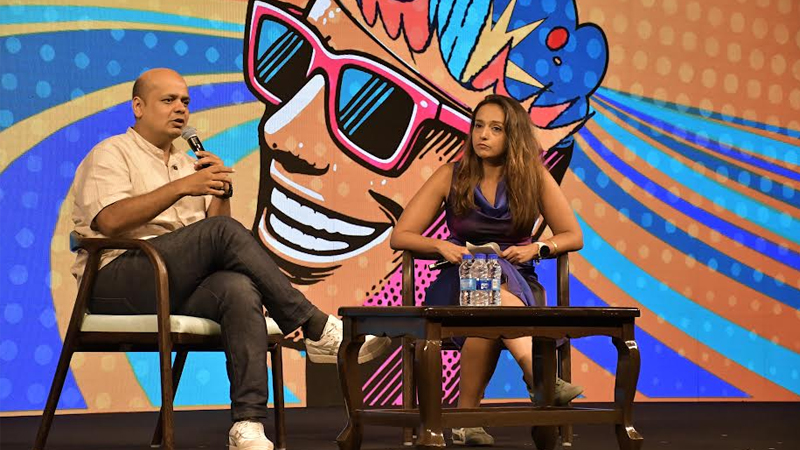
     MUMBAI: What’s invisible, expensive, and possibly not even human? Thirty percent of your ad impressions. Hindustan Unilever Ltd (HUL),  head of media and digital marketing Tejas Apte didn’t mince words at Goa Fest 2025 as he peeled back the pixel-perfect surface of digital advertising to reveal a mess of murky metrics and media mayhem.

    Speaking in a session titled ‘Building a Safer, Smarter, Cleaner Media Ecosystem’, Apte laid bare the underbelly of modern marketing where ad fraud, bot views, and misuse of data are quietly eating away at ROI and trust. With up to 30 per cent of digital impressions possibly fake, brands aren’t just losing money; they’re losing credibility.

    “Legacy media had a balance subscription and ad-funded models. But digital is almost entirely ad-funded,” he noted. “And that makes transparency and safety non-negotiable.”

    As part of the Indian Society of Advertisers (ISA), HUL has taken a lead in drafting a four-point media charter that aims to disinfect digital with real-world rigour:Safe placements for both brands and users, Viewability standards to filter out the fake, Fraud prevention that spans all formats and platforms, Responsible first-party data usage grounded in clear consent.

    Apte underscored that these principles weren’t just boardroom theory, they were co-created with platforms like Google and Meta, ensuring that everyone speaks the same metric language. The focus is shifting from shallow click metrics to meaningful business outcomes.

    The ad world’s changing algorithm isn’t just affecting platforms, it’s rewriting agency job descriptions. With automation and AI replacing mechanical tasks, Apte sees agencies morphing from campaign vendors to strategic business partners. “In-housing is real, but rarely complete. Agencies remain critical, if they evolve from service delivery to impact delivery.”

    While some brands are building internal muscle, the ISA charter pushes for an ecosystem-wide adoption from nimble startups to legacy giants. The ultimate goal? A future where every impression counts, every ad is seen by a human, and every click has consequence.

    Practising what they preach, HUL has already implemented these guidelines internally. The result? Sharper first-party data strategies, better media ROI, and a wave of new, trustworthy media partners.

    So, next time your ad gets a million impressions, pause to ask were any of them real? Or are we all just chasing ghosts in the machine?

    As Apte put it with a smile, “Click fraud is not just a tech issue. It’s a trust issue.”

  • SW Network expands with SW Growth Labs, focused on data-driven brand growth

    SW Network expands with SW Growth Labs, focused on data-driven brand growth

    MUMBAI : SW Network has launched SW Growth Labs, a dynamic new vertical dedicated to performance marketing, media buying, and strategic brand growth. Built to drive measurable ROI, SW Growth Labs offers cutting-edge solutions in analytics, SEO, website development, and D2C scaling, empowering brands to thrive in an ever-evolving digital landscape.

    For nearly a decade, SW Network has built a reputation for branding, lead generation, and media buying. The launch of SW Growth Labs strengthens its capabilities, offering a data-driven, results-oriented approach that blends creativity with precision to drive sustainable success.

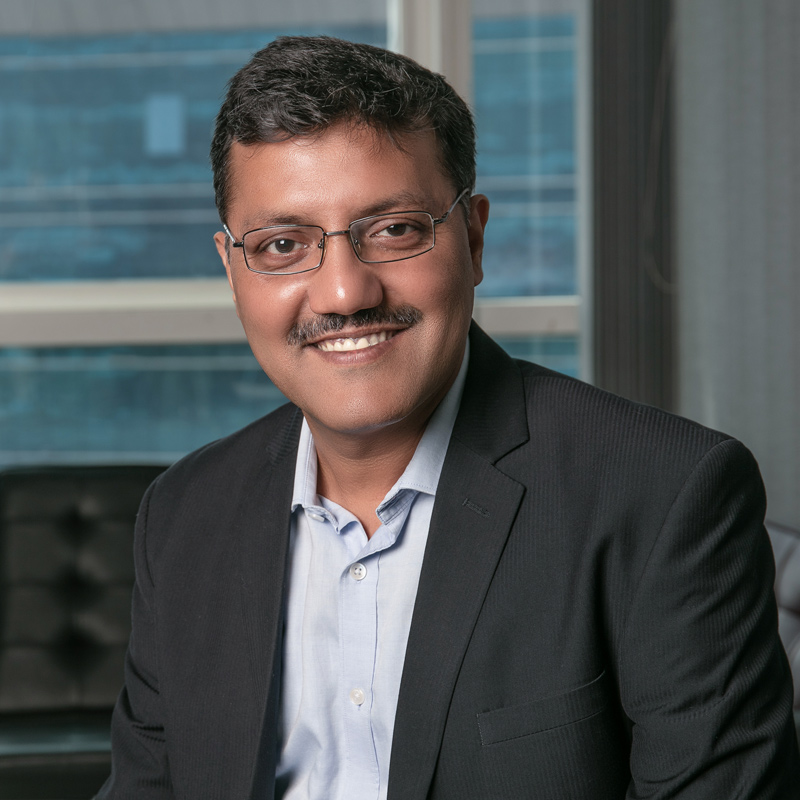
    Speaking on the launch, SW Network co-founder Raghav Bagai said, “SW Growth Labs is an extension of our commitment to integrated marketing solutions. By combining performance-driven strategies with our expertise in creative media, we aim to take brand growth to new heights.”

    SW Network co-founder Pranav Agarwal highlighted the agency’s evolution, stating, “This isn’t just an expansion—it’s the next step in our journey. SW Growth Labs will focus on high-impact, ROI-driven campaigns with a strong emphasis on D2C growth, lead generation, and digital excellence.”

    SW Growth Labs director Shlok Hari emphasised the vertical’s role in tactical media buying, marketplace expansion, and advanced analytics, adding, “We are here to push boundaries while maintaining transparency and innovation at our core.”  

  • We are projecting to increase our revenue by 250% and double our client base in FY 22-23: Revex Media founder & CEO Utkarsh Arora

    We are projecting to increase our revenue by 250% and double our client base in FY 22-23: Revex Media founder & CEO Utkarsh Arora

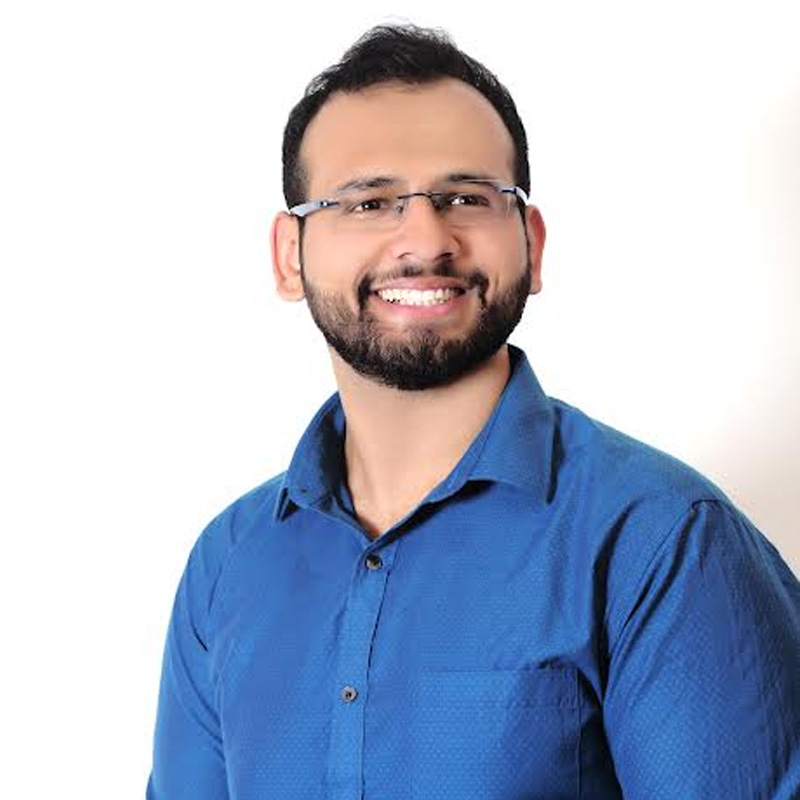
    Mumbai: Revex Media, founded in 2017 and based in Gurugram, is an integrated business growth services firm that serves as an incubator and accelerator for brands. The company was conceived by two cousins, Utkarsh Arora and Nishant Bagla. Arora, who is the CEO, is steering the business so that it grows in alignment with the ultimate vision of the brand.

    The founders initially started Revex to solve their own problems in terms of the gap in the services provided by different players in the industry that reap lesser outcomes. The founders noticed that all of the agencies utilised a one-size-fits-all approach, delivering commodity services without a proper strategy or a focus on the end goal and actual outcome.

    Also, the founders examined how service providers try to hide their results behind equivocal numbers and how few take full responsibility for delivering top-line revenue. After identifying existing gaps, the founders created Revex, which stands for revenue with experience. Revex Media strives to work with clients as partners and to be fully involved in their growth journey. The firm acts like an extended team for 35+ brands to manage their end-to-end marketing and sales strategy and operations.

    Indiantelevision.com caught up with Revex Media founder and CEO Utkarsh Arora. His responsibility is to steer the strategy for all departments. He is in-charge of brand development and growth, as well as client network expansion. He is also leading the business vertical expansion for Revex to become a house of brands and an active partner in some of the D2C brands.

    Arora graduated from Skyline Business School with a BBA. As an entrepreneur, he has years of experience in the digital space, dating back to his early college days. He witnessed the growth of the digital world during his college days and started working with a few new age brands to help them with their digital marketing needs. He joined a few companies in education, SAAS, and marketing service providers to lead their digital marketing departments. The role allowed him the opportunity to understand the industry.

    At Revex Media, besides scaling D2C brands and working closely with the founders, he has also served 50+ diverse digital-first brands via Revex, assisting them in determining the best marketing and growth strategy. He is an active partner in a few emerging D2C brands, leading Revex Media to become a group of businesses in multiple growing verticals and investing in potential digital-first brands in his personal capacity.

    His goal as a business enthusiast is to run a house of brands in various business verticals and create value for customers and team members. He has a vision with Revex to form a business building machine that can assist 100’s of businesses to grow and bring significant change by creating employment.

    In addition, he seeks to build a 500-person team and establish a global presence for Revex Media over the next five years. His goal is to create a skin-in-the-game incubator for potential brands and help 50+ brands achieve more than one million dollars in ARR in the next 24 months. His long-term vision is to make Revex Media as a group of businesses that is becoming a catalyst for potential brands to grow in their categories.

    He is a movie buff who enjoys watching films with his family and friends in his spare time. Arora tries to create a balance by slowing down on weekends, which acts as a window to take a break from the fast-paced business life. He enjoys meditation and nature as it helps him gain clarity and deeper thought control. He is also a fitness and health enthusiast as it enables him to be the best version of himself. In addition, he is a philanthropic person and loves doing charity on occasions to uplift the underprivileged.

    Edited excerpts:

    On the agency’s effectiveness

    Utkarsh: As an agency, we have successfully scaled 10+ brands by 500 per cent in the last 24 months and are also working with some young and potential brands to help them grow.

    On the impact of Covid-19

    Utkarsh: Covid-19 has been the worst time for many, but we looked at the adversity as an opportunity where we started digital transformation services for brands to go digital. We not only accelerated our growth rate in the last two years but also doubled our workforce and didn’t cut any salaries for any of our team members.

    On the company’s goals for 2022

    Utkarsh: In fiscal year 22-23, we expect to increase revenue by 250 per cent and double our client base.  

    On the company’s USP

    Utkarsh: Revex treats clients as partners by bridging the smartest minds under one roof, which results in a productive and accelerated approach.

    However, beyond following the performance-oriented work culture, the brand sees its USP in real, outcome-based strategies that it executes. This has resulted in catalysing the growth of some brands by 10x.

    There are a few marquee agencies in India that work primarily with brands that have financial backing, and most low-cost agencies do not provide the service quality that established and growing agencies are offering. Revex’s strategy, on the other hand, is to build brands rather than reap all profits from the start-ups.

    The goal is to work with selected brands and collaborate with them to help them grow without compromising on talent or quality. Revex offers a more in-depth approach that operates on a more holistic model by doing revenue share and performance-based compensation deals with potential brands. The brand’s motto is to make its partners big in order to make Revex big.

    Revex Media collaborates with a group of visionaries in business growth, marketing, communications, and technology to raise the bar for promising businesses. The company’s existence is based on exponentially scaling its partner brands and empowering their businesses to make a massive impact in their industry.

    Revex has formed numerous alliances with technology partners, RBF partners, and product manufacturing partners. The brand works closely with a few other agencies that specialise in various fields to complete the project. There are hundreds of agencies with fewer than 25 team members that are targeting the same audience. However, Revex’s goal is to compete with agencies with 80-100 team members, 20 crore+ yearly revenue, and a strong portfolio of clients.

    The brand distinguishes itself from its competitors because its funnel growth approach is focused on the real outcome; pricing is better than the other established players for at least 24 months; the brand understands not only marketing but business fundamentals; and the brand facilitates accountability and performance-led DNA, which many large agencies lack.

    On the big challenges

    Utkarsh: We have seen the fundamental gap in founders’ understanding concerning how important branding is for their business in the initial stage. Nowadays, there are so many commoditised products being launched without a storyline. It is a fact that to be successful in today’s digital world, your ‘why’ is more important than your ‘what.’ Therefore, from day one, keeping a clear understanding of the brand and how it is different is imperative.

    On reaching the company’s goal

    Utkarsh: Revex closely worked with Tintbox to scale the brand from Rs 4,00,000 in revenue to a Rs 5 million monthly revenue run rate. This is just one of the many case studies and success stories the brand has created. To state one more time, Revex worked with NutriZoe to double its revenue in the last six months.

    On the definition of ROI

    Utkarsh: We define ROI as pure top-line revenue in comparison to the investments we are making. In the digital media space, it is possible to hedge losses with consistent improvisation in the strategy. It is much easier to change digital campaigns compared to traditional media.

    One of our core values is ‘clarity’. We do not engage in any project until we have clear numbers in front of us that are to be achieved, factoring in all the costs. This has helped us to reduce our chances of any failure. In our observation, we see many brands do marketing just because their competitors are doing it. In this case, they lack understanding, objective, and commercial viability. Mere spray and pray doesn’t work in the real world.

    On scaling up manpower

    Utkarsh: We are following the concept of talent density. We aim to be 100+ this year while maintaining a talent-dense organisation. We are working with brands on big commitments and responsibilities. Therefore, our focus is to bring the brightest minds in the digital world to work with us.

    Our strategy is to become the digital-first industry leader in the next 12 months, partnering with 30+ potential brands. The brand attributes its success to two things: team size and revenue. For team size, we are projecting 100 team members for FY 22-23; 200 team members for FY 23-24; and 300 team members for FY 24-25. Revex anticipates revenue growth of 100 per cent in FY 22-23, 120 per cent in FY 23-24, and 250 per cent in FY 24-25. Furthermore, Revex Media intends to expand its presence in Dubai, Canada, and the US in order to attract more international business.

    On SEO strategy

    Utkarsh: SEO has changed a lot in the last few years. To win SEO, one first needs to quantify ‘value’ in the strategy. What value does the content bring to the audience, and should that be the main question? If one is not including content marketing in the SEO strategy, then it will be challenging to materialise anything productive.

    On paid campaign’s selections

    Utkarsh: Paid campaigns are now a part of the entire content marketing mix. At the end of the day, it is more about what is visible to the audience than mere targeting. We see most of the targeting is now moving to AI-based audiences, which honestly is surpassing the manual campaigns. Here, the only game changer now left with the campaigns is the content. It has to be well thought out as the audience is smart enough to sniff the authenticity and credibility of the communication served.

    On LinkedIn’s role in social media marketing

    Utkarsh: LinkedIn is currently in its growth phase. Therefore, it’s definitely the right platform for the brands to cash in. We are seeing some great results from LinkedIn now, which we didn’t get before.

    On how adtech is evolving

    Utkarsh: As digital spending goes up year over year and we step into cookie-less environments, the ad tech platforms are going through a massive change. Privacy changes are bringing the need for innovation. In the coming years, we will see a lot of automation and AI/ML-based targeting becoming the core of ad tech platforms.

    On the impact of web3, the metaverse, and NFTs in the next three years

    Utkarsh: The fundamentals of marketing will remain the same. Wherever the consumer’s attention goes, the brands will flock to it to reach and engage with them. Even though the tech is early, it would be a mistake not to take it seriously. In the coming three years, we will see it becoming the mainstream, and it will be on every brand’s strategy list. We are preparing for it!

  • Only 26% of global marketers are confident in their audience data: Nielsen study

    Only 26% of global marketers are confident in their audience data: Nielsen study

    Mumbai: The digital dominance in marketing dollars notwithstanding, with continued digital fragmentation, marketers report data accuracy, measurement, and ROI as paramount concerns. While 69 per cent of marketers believe first-party data is essential for their strategies and campaigns, 72 per cent of marketers believe they have access to quality data, and only 26 per cent of global marketers are fully confident in their audience data, according to the global survey conducted by Nielsen.

    Nielsen’s 2022 annual marketing report titled ‘Era of Alignment’ surveyed nearly 2,000 global marketers between December 2021 and January 2022 to reveal a digital dominance in how dollars are being spent and exposed marketers’ lack of confidence in the data behind those decisions. As per the report, brands’ top priorities for 2022 are increasing brand awareness, breaking down measurement siloes, developing personalised strategies, and becoming more purpose-driven.

    As marketers are prioritising a digital-first approach, the social media spend increased by 53 per cent across global marketers, significantly more than the aggregate increase of TV and radio spend. However, they have struggled over the past two years to keep up with consumers’ changing media habits. The report illustrates how marketers need confidence in their data to focus equally on brand building and customer acquisition, doing so through both upper-funnel and lower-funnel planning and execution.

    The ‘Era of Alignment’ report found marketers around the world are experiencing similar areas of success and challenges, as shown by:

    Brand awareness is marketers’ top objective: To reach this goal, brands need to leverage an array of channels to reach the widest audience. Nearly two-thirds (64 per cent) of respondents stated that social media is the most effective paid channel with TikTok and Instagram dominating spend. Customer acquisition is their second objective, showing that marketers must focus efforts on the entire customer journey.

    Increased media fragmentation amplifies the need for holistic measurement: Marketers’ confidence in measuring the ROI of the full-funnel is only 54 per cent. Remove online and mobile video and confidence in measuring ROI across all other channels are under 50 per cent globally, and while nearly half of marketers plan to increase their spending on podcasts, their confidence in measuring the ROI of that investment is 44 per cent.

    It’s vital for marketers to use data to champion personalised marketing strategies: The increasing proliferation of channels produces an abundance of unique data sets. However, 36 per cent of marketers still claim that data access, identity resolution, and deriving actionable insights from data is either extremely or very difficult. The rise of connected TV (CTV) presents new challenges to traditional targeting solutions. CTV is a growing focus for global marketers, with 51 per cent planning to increase their over-the-top/CTV spending in the coming year. In 2021, Americans streamed almost 15 million years’ worth of content across subscription- and ad-supported platforms.

    Also Read: Connected TV: A growing market in India   

    By placing a greater emphasis on purpose-driven initiatives, marketers can better connect with consumers: Nielsen research shows over half of US consumers (52 per cent) purchase from brands that support causes they care about; similarly, more than 36 per cent expect the brands they buy to support social causes. While global marketers say their brands are emphasising purpose, Nielsen data shows that 55 per cent of consumers aren’t convinced that brands are fostering true progress.

    “The research reaffirms that marketers want to put money into channels to deliver immediate ROI, but this must be balanced with overall brand lift. As media engagement shifts, agility and data are critical to optimise the entire marketing funnel,” said Nielsen chief marketing and communication officer Jamie Moldafsky. “With the upcoming depreciation of third-party cookies, it’s understandable to see marketers prioritising personalisation and aligning their brand with causes their customers care about. Through our solutions – and this report – we’re continuing to help brands and marketers get actionable insights to make more informed, and quicker decisions.”

    This is the fifth annual marketing report produced by Nielsen. “The report is based on survey responses from marketers who manage marketing budgets $ one million or more; who work across a variety of industries (auto, financial services, FMCG, technology, health care, pharmaceuticals, travel, tourism, and retail); and whose focus pertains to media, technology, and measurement strategies,” according to data and market measurement firm.
     

  • Guest column: Why online reputation plays a key role in sales and ROI

    Guest column: Why online reputation plays a key role in sales and ROI

    MUMBAI: ROI (return on investment) can be improved with online reputation management. Technology has ensured everyone from the general public to potential investors are gathering information regarding specific businesses online. Managing the online reputation of the business has become the best possible way to achieve trust, growth, sales and success.

    There are two sides to the return on investment equation. First, there is the actual benefit made from building a positive online presence and the resulting sales generated. Second, there is the calculation of lost revenue due to negative content showing up on the first page of Google. ROI for reputations can now be predicted using a few different approaches.

    When it comes to social listening, social media data is tracked in real-time to test your brand’s loyalty among the audience. Such data could be customers’ feedback, direct mentions, competitors, products, and many more. As the media industry is always in focus both online and offline, following the consumer preference is essential for their success. It helps to identify crisis indicators in the media industry so that you can take the initiative to optimise your content to get better ROI by measuring your company’s impact on consumers. Social media monitoring is an effective approach to generating new leads and ensure satisfied customers. According to smartinsights.com, there are over three billion social media users worldwide. The number keeps growing annually. A section of these social media users is your customers while others are potential customers. You need to monitor the conversations they are having online to identify an opportunity. Thus, online reputation management (ORM) became a necessary strategy in treading the waters of digital marketing. Past and future clients are inclined to discuss the reputation of the business in order to assure success in the long run.

    Free Value of Reviews

    The value of positive reviews shouldn’t be overlooked. Reviews are the number one factor consumers consider when making a purchasing decision.

    It is now a universal notion to believe that bad reviews and ratings on popular social media networks can bring an entire industry down if left unresolved. This is because most people tend to question the credibility and integrity of the business only with a single comment or review along the lines of “this is the worst company ever” or “I had a horrible experience.” A business impression can be built based on reviews alone, and this is why many digital strategists and marketers ask happy and satisfied customers to post their reviews online. By all means, reviews also increase understanding of a brand and business perception. Many people, especially those who are searching to invest in highly valuable and expensive products or even services, will always read individual reviews, not just overall star ratings.

    It is now safe to say that the overall growth and future success of a certain industry heavily relies on their online reputation. That is why businesses have taken the step to remain wary of how the general public sees them online so they can check these issues and nip them in the bud right away. Indeed, online reputation is an important aspect of a successful business, but let’s take a step further and see how it plays a vital role in sales and return of investment. Another critical thing to consider when evaluating the ROI of your ratings and reviews is the impact they have on your local search rankings and overall visibility. 84 per cent of consumers conduct a local search at least once a week. If your business has a strong base of local ratings and reviews, you will appear more frequently in local search results, increasing your overall visibility and boosting your ROI.

    We should understand that full control regarding online reputation cannot be achieved, and running a business or managing a company is never an easy task. But, it is important to keep in mind that business actions can be controlled and how you respond to customers, whether positive or negative will say a lot about your business. Online reputation can be managed to a certain degree and there are things that can be adjusted with proper online reputation management.

    Make online reputation management a key focus of your business. Get ahead by investing in the right reputation management tool, then start planning ahead by setting goals and committing to drive success and sales.

    Invest in efficient, timely and perhaps multilingual customer service. Your customers will appreciate it. And in the end, you will find that you can save a lot in advertising if you pamper your acquired customers a little more.

    (The author is ORM Head, BC Web Wise. The views expressed in this article are his own and indiantelevision.com may not subscribe to them.)

  • Video delivers highest ROI: Octane online marketing report

    Video delivers highest ROI: Octane online marketing report

    NEW DELHI: Spending on video content to reach consumers during the lockdown period yielded the highest return on investment, stated the Digital 2021: Adapting to the New Normal report by Octane Research and DMAasia.

    Octane Research engaged with over 250 of India’s leading chief marketing officers (CMOs) and leaders as part of its research study to gain first-hand insights and perspective on outflanking the impact of the Covid2019 pandemic.

    As many as 62 per cent of CMOs in India said that spends on video for consumer outreach delivered the highest return on investment.

    "The digital industry and streaming video players like Netflix, Amazon, Facebook, YouTube and others decided to temporary default their video quality to SD. This initiative was in consumer interest to ensure better access to the internet by maintaining the robustness of cellular networks," said the Octane's annual state of online marketing report published on its 10th anniversary.

    The report said video continues to be the most stimulating type of content for the consumer, as well as offering maximum engagement.

    Marketers said that video along with live-streaming gave their brands the maximum amount of customer engagement, only social media had more. It was also noted that blogs and email campaigns have continued to be among the top five channels for customer engagement. Promotion and updates through the use of traditional SMS are also among the top five.

    "Content marketing in India has finally found its place as a separate line item on the marketers’ budgets. Online is driven through effective content management practices and we anticipate a surge in this area for the 2021 Annual. Engaging new audiences emerge as the no. 1 area of opportunity for India brands," it said.

    Video continues to be the most stimulating type of content for the consumer. It continues to offer a solid ROI (return on investment), as 61.8 per cent of our responders deploy content marketing strategies within the videos and webinars.

    “With the movement of people severely limited during the lockdown and even after that, companies swiftly adopted digital mode to reach out to a wider section of people, the evidence suggests that the strategy worked,” said Octane Research chief research officer Punit Modhgil. 

    About 51 per cent of the CMOs interviewed admitted having leveraged branded pages, microsites and social media handles for marketing promotions and consumer engagement. Promotional microsites allow consumers to have a quick, focused journey based on their immediate need, rather than dispersing their attention. They are also cost-effective in increasing a consumer’s engagement by promoting brand-specific content.

    CMOs in India also leveraged their brand’s social media handles to actively reach out and engage with their followers. They used their Instagram and Twitter handles to showcase emerging creative talent —and commissioned select creative work to help tell the brand story. The brand Converse ran a campaign on new ways to create progress together with consumers.

    2020 is the year influencer marketing became mainstream with marketers in India and a majority of them plan to invest in 2021 in influencer marketing programs because of its high impact in driving awareness and engaging consumers. Celebrities regularly conducted Instagram Live sessions to engage their followers. In addition, a number of BFSI (banking, financial services and insurance) and e-wallet brands utilised influencers to inform consumers on how their services were relevant during the lockdown. An overwhelming 88 per cent of the participants said they would be trying influencer marketing in the next 12 months as "consumers trust what influencers say about brands far more than what brands say about themselves in their advertising.”

    As regards emailers and newsletters, 43 per cent of India CMOs participating in the study ranked email third in terms of impact and return on investment generated. According to Campaign Monitor, open rates for email increased by 16 per cent in March and email sends increased by 19 per cent.

    33 per cent of CMOs feel they would be running seasonal campaigns on loyalty programmes and an almost equal number vouched for such initiatives in the short-term.

  • Guest column: A favourable ROI is a must for a successful influencer engagement

    Guest column: A favourable ROI is a must for a successful influencer engagement

    It has become quite evident that influencer marketing is gaining popularity and prominence rapidly over a span of 3-4 years. There are reports after reports that depict how this form of social media marketing is growing in leaps and bounds. These reports also showcase how companies are increasingly devoting a considerable amount from their marketing budget to influencer marketing. While it has been established that influencer marketing has flourished quite a bit, it is also crucial to develop a framework to evaluate its effectiveness.

    In order for a brand to evaluate the effectiveness of an influencer engagement, it needs to focus on gaining maximum ROI in terms of reach, conversions, awareness, etc. For assessing the ROI of an influencer engagement activity, a brand needs to keep a few factors in mind.

    Firstly, the goal and objective of the marketing campaign need to be clearly established. The brand might want to reach new target audiences, improve brand advocacy, increase product sales, generate more leads, manage the reputation of the company or just simply increase brand awareness.

    Second of all, the brand should clearly establish the key performance index (KPI). This takes into account how much success the company is getting with respect to the investments it is making in an influencer engagement activity. If a brand is investing 3 lakhs in an influencer campaign and getting 6 lakh-worth of impressions, reach and other parameters, the brand has attained a KPI of 1:2 that signifies a favourable ROI.

    Thirdly, the influencer should ensure that the content created is visually and aesthetically pleasing. So all the background elements, characters, plot, props, etc. need to be in line with the campaign objectives. Along with that, they should be visually attractive to grab attention.

    After that, one needs to ensure that there is some synergy between the brand and the influencer. Apart from fulfilling the campaign objectives, the influencer should be a right for the brand’s overall tonality and ethos. For instance, an influencer who is big on spirituality and natural living may be a suitable fit for promoting a herbal soap/supplement brand. The influencer’s content and tonality will be in line with the herbal brand. Not just that, his/her followers would expect brand content similar to that.

    Lastly, a brand should be able to identify the key messaging used in the influencer engagement. Ths key messaging can act as the unique selling proposition of the influencer campaign. Whether its the dialogue delivery, the funny music or the emotions the video espouses, as long as there is a touchpoint,  the campaign ROI would be in the brand’s favour.

    So every brand should invest in an influencer engagement strategy that promises a favourable ROI as only then will the brand achieve success.

    (The author is founder & CEO, Whoppl. Indiantelevision.com may not subscribe to her views.)  

  • Event virtualisation: The Need of the hour

    Event virtualisation: The Need of the hour

    Even as it promotes physical interface, the exhibitions industry has always had an intrinsic rapport with digital platforms. There is consensus that digital is the way to go for the obvious advantages they have and to cater to the ever-expanding business needs of our customers. Therefore, some turnkey organisations were turning into early adopters with significant investments in digital expertise including products ranging from full online marketplace project, lead generation campaigns and webinars — always, though, as supplements to the much-revered face-to-face trade expos.  

    The Covid-2019 crisis has put global professional sourcing in disarray. Worldwide, the industry has seen a string of event cancellations and postponements amid the existing pandemic. Considering these disruptions, businesses across the globe turn to digital solutions to sustain productivity and organizing virtual exhibitions where one can virtually participate in an event at their own time wherever they may be. It is also anticipated that even after the situation stabilizes, a certain caution may still be maintained among exhibitors about travelling for participating in international trade fairs and exhibitions which are key while hosting large scale exhibitions. 

    Companies are working towards using all the technologies at their disposal to ensure business stability and build the expertise to mitigate these challenges. Virtual conference platforms can analyze a lot about conference-goers, including data on which sessions were attended the most and for how long, which booths had maximum interaction, and more. This kind of insight is invaluable for developing targeted content and for making your next virtual conference even more successful. The virtual world can offer the perfect solution by combining the best of brand experience with the digital engagement people crave. 

    Then again, it aids in attracting and tracking diverse exhibitors and attendees, creating massive online audiences for companies to share their innovations along with access to various forms of media to enhance the sales experience.  Its ability to track leads, quantitatively measure event performance and gauge event ROI down to the most basic statistics is also extremely useful. 

    With most exhibitions organisers having joined in the inevitable transformation towards the virtual platform, the impactfulness of these platforms will really depend on the stage of preparedness and experience the organisations have had, from before Covid2019. Most significantly, the success also will be about how well we understand our customers’ requirements, pain points, their work from home dynamics and provide relevant solutions for their issues, based on how well engaged and connected we have been with them. Our being able to pin-point on their future short term and long-term requirements and their brand loyalty and trust for us have also been honed by deep professional relationships and human-to-human interactions, that got promoted by the face-to-face trade expos and engagements.

    With almost half the world’s population under lockdown, virtual platforms are helping us in a big way to stay connected and run businesses. The virtual trade shows are also likely to be leveraged even better to offer efficient, impressive, and state-of-the-art digital solutions for a prosperous future of the market. Yet, one’s bet is on a hybrid engagement, with physical expos supplemented by digital engagements. This is a feedback we have also got from our customers, especially newly launched start-ups or SMEs, who might feel unnoticed in a virtual platform but use other means of brand advocacy in a ‘brick and mortar’ trade expo. 

    Besides, at the end of the day, all of us prefer face to face meeting, want to shake hands (better still, a namaste), exchange thoughts, and of course party together. It provides an environment of friendliness which, in turn, boosts the success of our relationships, whether they are personal or professional.

    The author is managing director, Informa Markets in India

  • OOYALA POWERS STARHUB’S NEW STREAMING BOX

    OOYALA POWERS STARHUB’S NEW STREAMING BOX

    Singapore: StarHub, a leading broadcaster and telco operator in Singapore, launched a brand new all-in-one entertainment destination – the StarHub Go Streaming Box, powered by the Ooyala Online Video Solution. This box is the first in the world to run on the Operator Tier version of Android TV Oreo, and comes pre-loaded with the best of StarHub’s content catalog. With the Ooyala Online Video Solution simplifying and streamlining the OTT content preparation and publishing process, StarHub can deliver a great viewing experience for its audiences.

    “The StarHub Go Streaming Box offers customers seamless and easy access to our breadth of content, our Partners’ apps, as well as the Google Play Store,” said Chong Siew Loong, Chief Technology Officer, StarHub. “Ooyala’s Online Video Solution plays a vital role in content management and video playback, ensuring that our customers enjoy a fuss-free content viewing experience.”

    The Ooyala Online Video Solution is a suite of content management and video publishing apps that deliver high quality, personalized video experiences across multiple devices for media owners, allowing them to keep their viewers engaged, and monetize their content easily.

    “Media companies today invest heavily in content and look to maximize their ROI by making the content available through multiple channels,” said Jonathan Huberman, CEO, Ooyala.  “Ooyala solutions allow them to do exactly that, by simplifying millions of workflows and delivering content anytime, anywhere, to any device.”

    “We’re excited to expand our collaboration with StarHub, a major entertainment provider in Asia,” said Huberman. “StarHub is an important customer of Ooyala, and we have once again proven that our platform is flexible to support integrations with other applications to meet our customers’ requirements. Our strong Asia Pacific services team, based in Singapore, worked closely with StarHub to deliver the project on time, allowing them to launch this innovative service successfully.”